Annual Tax Planner
Annual Tax Planner for Photographers
Track photography income, equipment costs, business expenses, and quarterly estimated payments - built for the financial reality of running a photography business.
In Depth
Seasonal Income and Equipment Costs in Photography Taxes
Photography businesses tend to follow strong seasonal patterns that directly affect tax planning. Wedding photographers often earn 60-80% of their annual income between May and October, with portrait mini-sessions adding another spike in October through December. January through April can bring minimal revenue - sometimes only a few hundred dollars from print reorders or stock licensing. This concentration means quarterly estimated payments look very different across the year. A Q3 payment based on peak wedding season income might be several times larger than a Q1 payment covering the slow winter months.
Equipment depreciation is one of the most significant tax considerations for photographers, and the approach taken can meaningfully affect the annual tax bill. Section 179 allows the full cost of a $3,000 lens or $5,000 camera body to be deducted in the purchase year, while standard depreciation spreads that deduction across five to seven years. Some photographers strategically time major gear purchases - buying a new body in a high-income year to offset the additional revenue, rather than buying it during a slow year when the deduction provides less benefit. Tracking each piece of equipment with purchase date, cost, and business-use percentage creates the documentation needed to support either method.
Per-shoot profitability has tax implications that extend beyond simple income tracking. A wedding that generates $4,000 in revenue but involves $400 in second shooter costs, $200 in travel, $50 in meals, and $100 in gallery hosting fees produces a net profit significantly lower than the headline number. Tracking these per-event expenses throughout the year - rather than estimating them at tax time - produces a more accurate Schedule C and often reveals deductions that flat estimates miss. Mileage to venues, parking fees, equipment rental for specialized shots, and even wardrobe costs for formal events all factor into the true cost of each booking.
The Challenge
Why Photographers Need Year-Round Tax Planning
Photography businesses have unique tax characteristics - expensive equipment, seasonal income patterns, and a mix of product and service revenue that requires careful tracking.
Equipment costs are high and ongoing
Camera bodies, lenses, lighting, backdrops, computers, editing software, and storage - the capital investment in photography is substantial. Deducting these properly makes a significant tax difference.
Income is often seasonal
Wedding season, holiday mini sessions, and graduation portraits create income peaks. Off-season months may have minimal revenue. Tax planning needs to account for this rhythm.
Multiple income types coexist
Session fees, print sales, digital file licenses, workshops, and stock photography - different income types may have different cost structures and deduction profiles.
Client payments are irregular
Deposits, final payments, and retainers arrive on client timelines, not yours. Tracking income by receipt date keeps quarterly estimates accurate.
Ready to take control of your photographer finances?
What You Get
Tax Tools for Photography Businesses
Photography income tracker
Record session income, print sales, digital licenses, and other revenue. Track by client and income type.
Equipment and gear deduction tracker
Log camera bodies, lenses, lighting, computers, and accessories. Track depreciation or Section 179 deduction for major purchases.
Photography business expense categories
Pre-built categories for software subscriptions, studio rent, props, marketing, insurance, and continuing education.
Seasonal income quarterly tax planner
Calculate estimated payments based on seasonal income patterns and year-to-date deductions.
Self-employment tax tracker
Calculate SE tax on photography income. See the full tax picture for your business.
Tax year wrap-up for photographers
Total revenue, equipment costs, business expenses, net income, and estimated tax liability. Organized for Schedule C.
See It In Action
What the template looks like
Browse through the template to see how it handles income tracking, deductions, quarterly payments, and tax projections.
- Tax overview dashboard
- Income source tracking
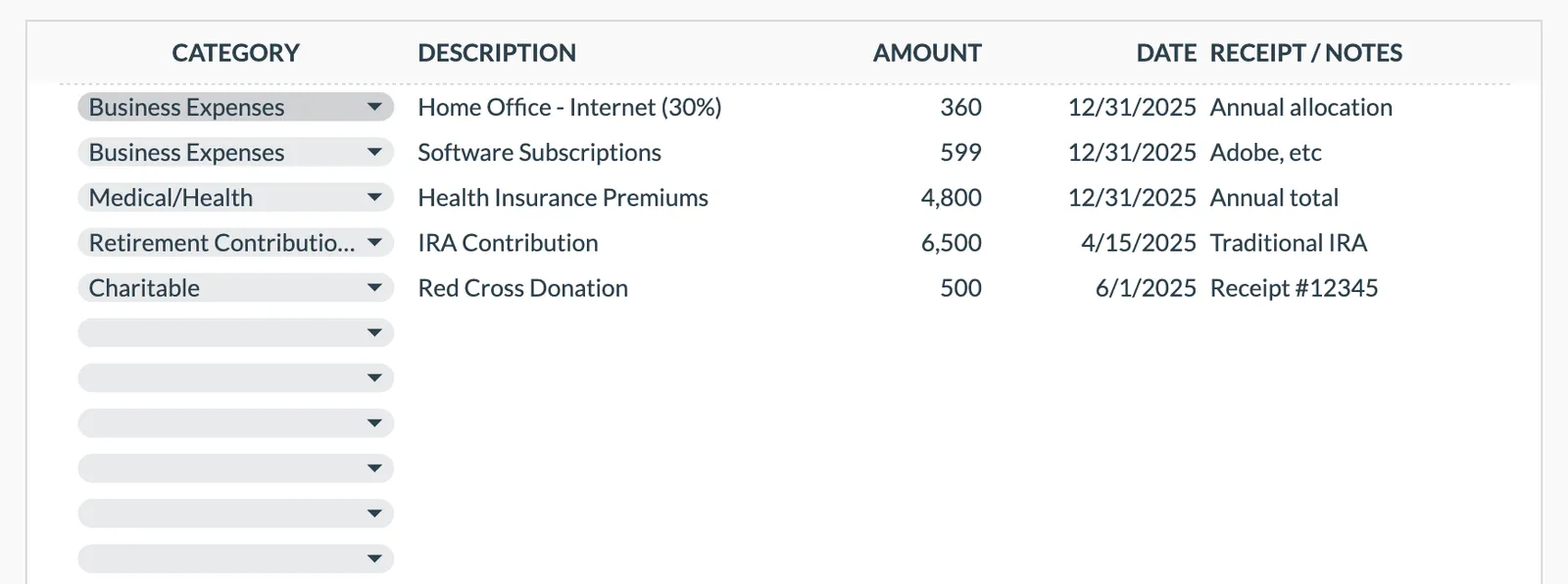
- Deduction organization
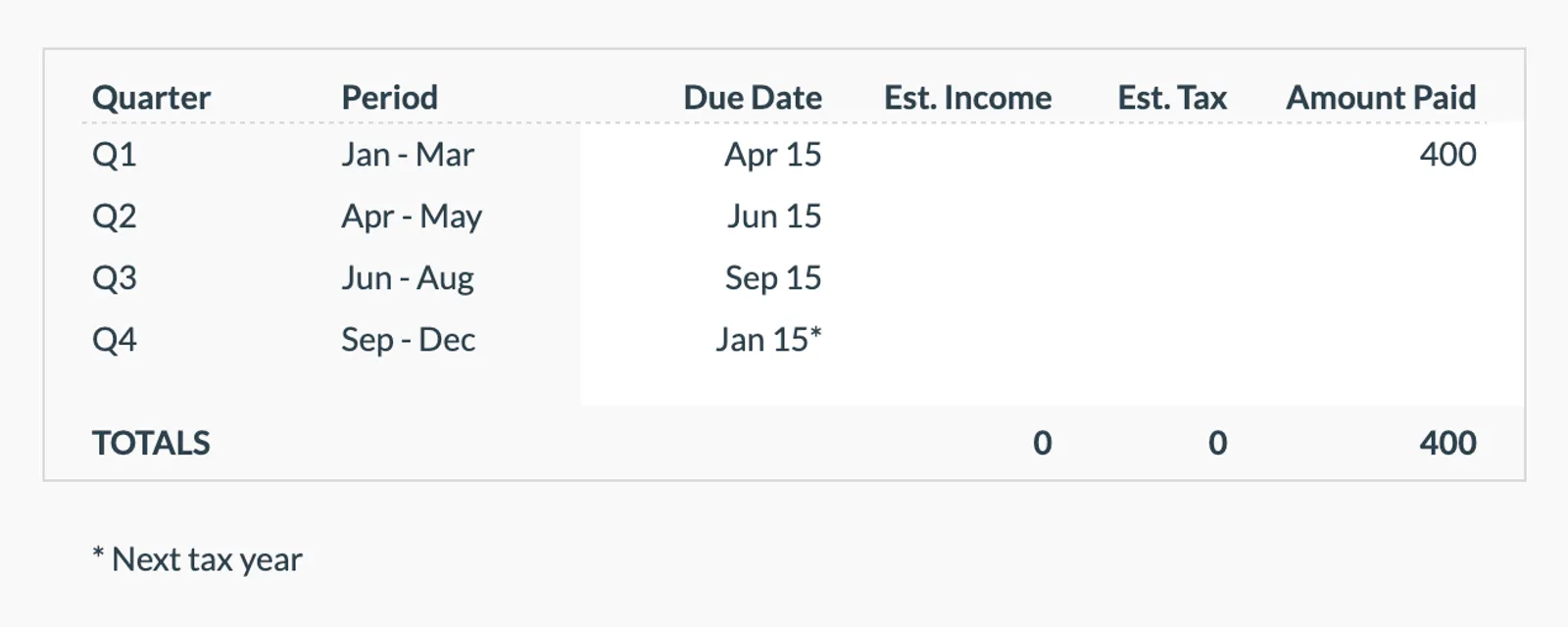
- Quarterly payment planning
- Tax projection estimates
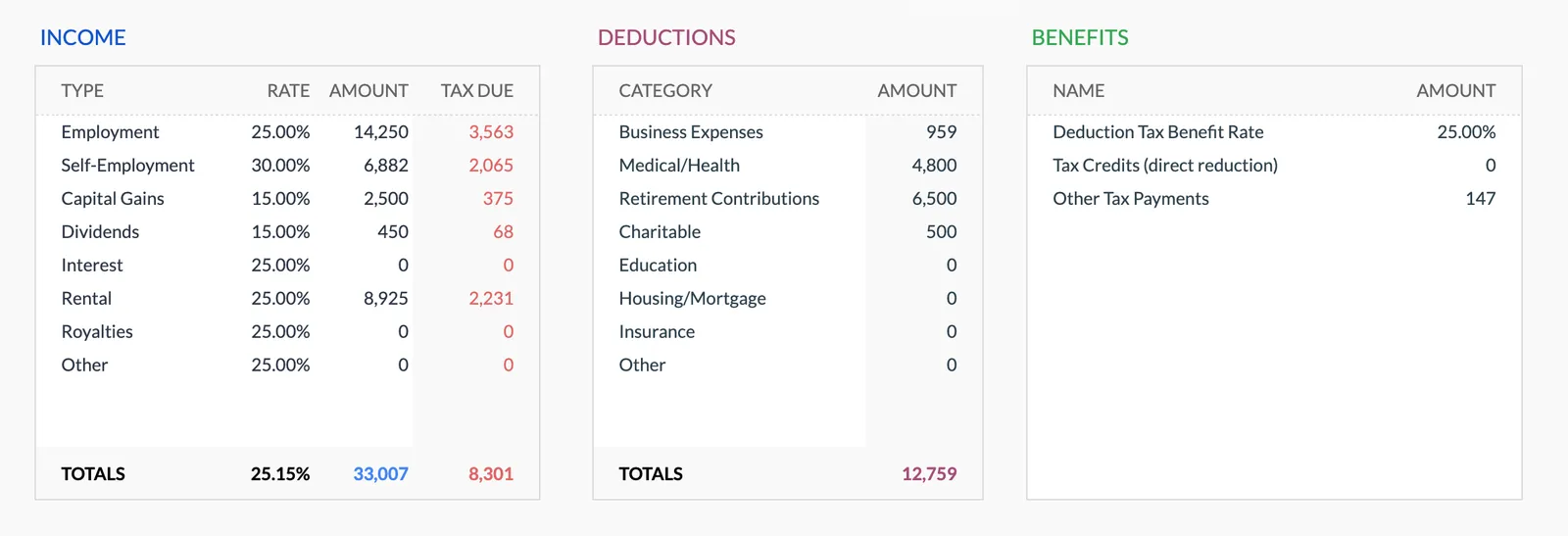
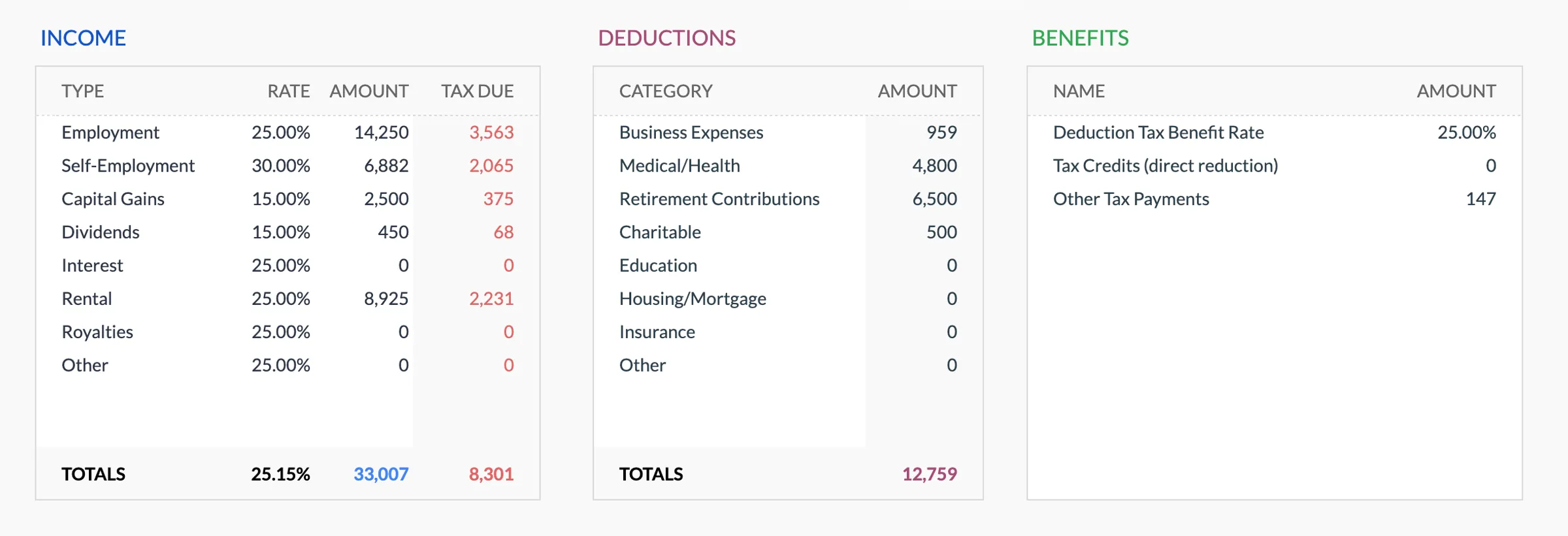
Annual tax overview with key figures
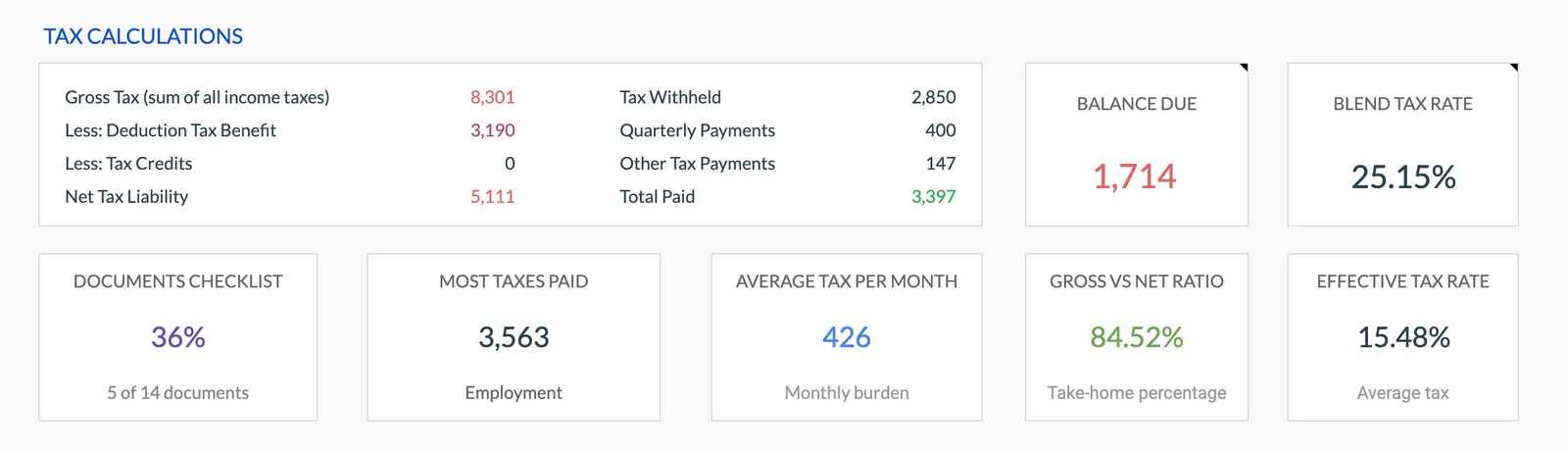
Detailed tax breakdown and projections
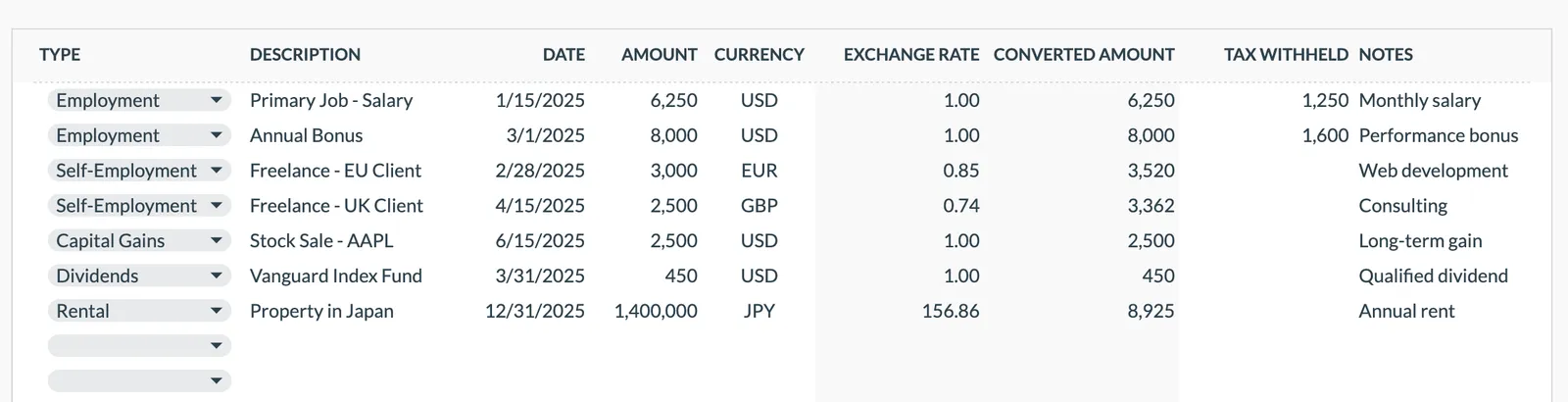
Track all income sources for tax purposes
Organize and track tax deductions
Plan and track quarterly estimated tax payments
Getting Started
Begin Organizing Your Photography Taxes
Record every booking and payment
Enter deposits, session fees, and product sales as payments are received.
Log equipment purchases immediately
New gear is a significant deduction. Enter purchases with cost and date the moment you buy.
Track ongoing expenses monthly
Software subscriptions, cloud storage, marketing spend, and insurance - enter monthly costs consistently.
Adjust quarterly estimates for seasonality
Higher payments during busy season, lower during slow months. Match estimated payments to actual income pace.
Review and compile at year end
The summary provides a complete picture. Reconcile against bank statements and prepare for filing.
Common Questions
Tax Planner for Photographers - FAQ
Can I deduct a camera body in the year I buy it?
Section 179 may allow full deduction in the purchase year for business equipment. Track the full cost and decide the deduction method at filing time with your tax preparer.
What about second shooter payments?
Payments to second shooters are a deductible business expense. Track them and issue 1099s to contractors you pay $600 or more in a year.
Is my home editing space deductible?
If you use a dedicated area regularly and exclusively for editing and business work, the home office deduction may apply. Track the square footage and related costs.
How do I handle retainer payments?
Record retainers as income when received, not when the event takes place. Tax is based on when you have access to the money.
What about workshop and teaching income?
Teaching photography workshops is business income subject to SE tax. Track it alongside session income but categorize it separately for your records.
Can I deduct travel to shooting locations?
Travel to client sessions, destination shoots, and scouting trips is deductible. Track mileage for local travel and full costs for destination work.
How do I handle equipment depreciation versus Section 179?
Track each gear purchase with cost, date, and business-use percentage. At tax time, compare Section 179 (full deduction in the purchase year) versus standard depreciation (spread across several years). In high-income years, Section 179 often provides more immediate benefit. The template records the information needed for either approach.
Can't find the answer you're looking for? Contact our team
Start tax planning as a photographer
One-time purchase. No subscription. Your financial data stays in your Google Drive.