Annual Tax Planner
Annual Tax Planner for Consultants
Track consulting income by project, business deductions, and quarterly estimated payments - organized for how consulting businesses actually operate.
In Depth
Tax Planning for Project-Based Income
Consulting income arrives in a pattern that makes traditional tax planning difficult. A large engagement might deliver $80,000 over three months, followed by a quiet period while the next project ramps up. This lumpiness means quarterly estimated payments based on equal distribution across the year often miss the mark - overpaying in slow quarters and underpaying in busy ones. The annualized income installment method exists for exactly this scenario, though many consultants are not aware of it.
The deduction landscape for consultants tends to be broader than many realize. Beyond the obvious expenses like software and office supplies, consulting businesses often incur significant travel costs, professional liability insurance, subcontractor fees, and continuing education expenses. Each of these reduces taxable income, but only when tracked and categorized. Some consultants find that their legitimate deductions amount to 20-30% of gross income once they capture everything.
One aspect of consulting tax planning that deserves attention is the interplay between business structure and tax obligations. Operating as a sole proprietor means all net income flows through to personal taxes. Some consultants eventually explore S-corp elections to potentially reduce self-employment tax on a portion of their earnings. Whatever the structure, organized income and deduction records make the decision clearer and the filing process more straightforward.
The Challenge
Why Consultants Need Proactive Tax Planning
Consulting income is project-based, often lumpy, and always arrives without taxes withheld. Proactive tracking prevents quarterly payment surprises and maximizes legitimate deductions.
Project-based income creates uneven quarters
A $50K project in Q1 and nothing in Q2 makes equal quarterly payments impractical. Tax planning needs to match income timing, not arbitrary quarter divisions.
Business expenses are substantial and varied
Travel to client sites, professional tools, subcontractor fees, professional liability insurance, conference attendance - consulting deductions are significant when tracked properly.
Retainers and project payments have different timing
Monthly retainers arrive predictably. Project payments arrive at milestones. The tax planner needs to accommodate both patterns.
Higher income means higher stakes
Consulting rates often produce higher income than traditional employment. Higher income means higher marginal rates and bigger consequences for poor tax planning.
Ready to take control of your consultant finances?
What You Get
Tax Tools Built for Consulting Work
Income tracking by client and project
Record payments by client and project. See income by quarter, by client, and year-to-date totals.
Consulting-specific deduction categories
Pre-built categories for travel, professional tools, subcontractors, insurance, home office, marketing, and professional development.
Estimated tax due dates for consultants
Calculate estimated payments based on actual income pace and projected annual totals. Adjust each quarter as the picture becomes clearer.
Self-employment tax calculation
Track the SE tax portion of your obligation. See the combined income tax and SE tax picture.
Payment log
Record each estimated payment. See cumulative payments versus estimated annual obligation.
Full-year tax overview for consultants
Total consulting income, total deductions, net income, estimated tax, and payments made. A complete snapshot for filing.
See It In Action
What the template looks like
Browse through the template to see how it handles income tracking, deductions, quarterly payments, and tax projections.
- Tax overview dashboard
- Income source tracking
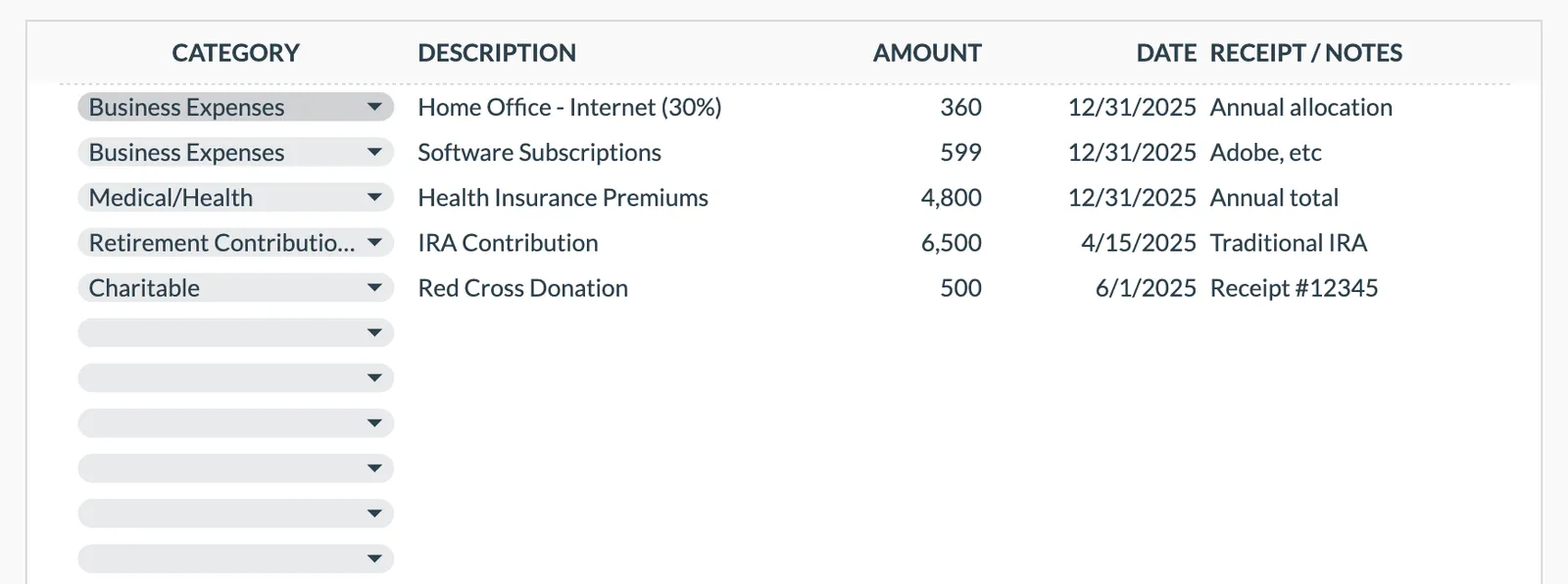
- Deduction organization
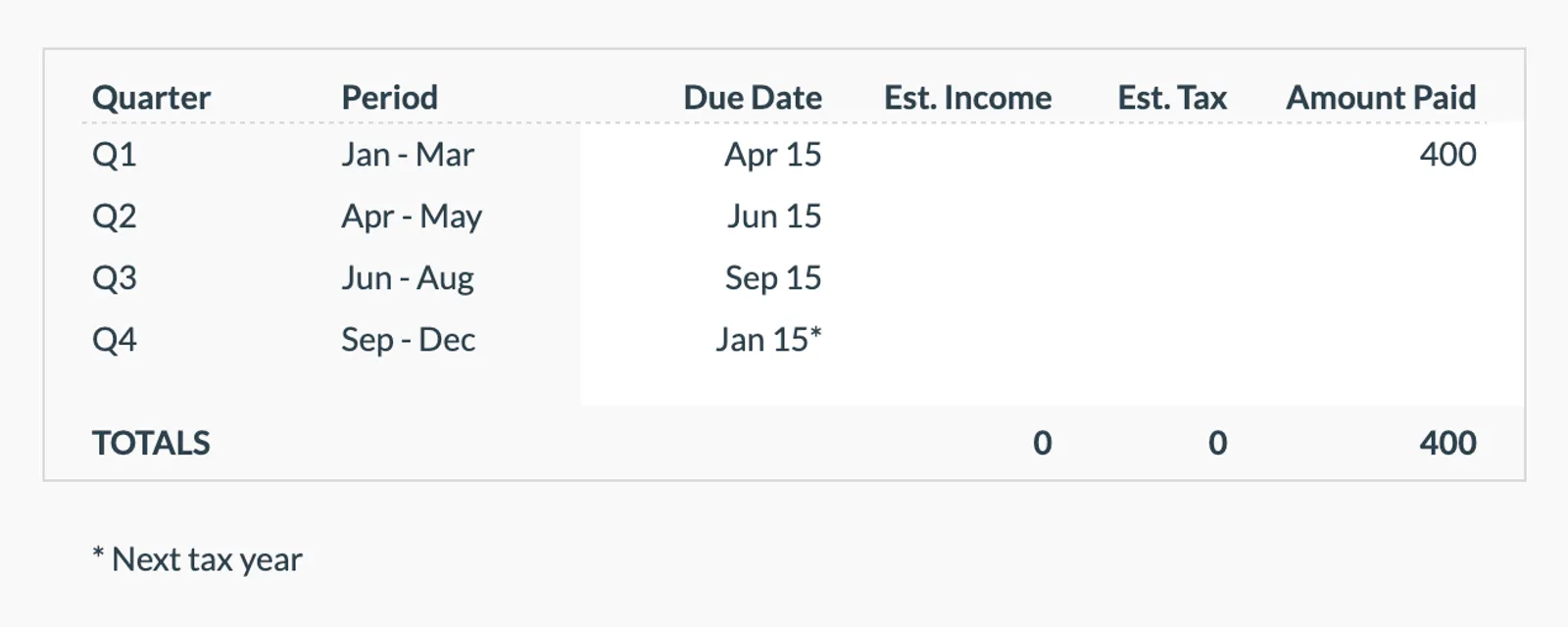
- Quarterly payment planning
- Tax projection estimates
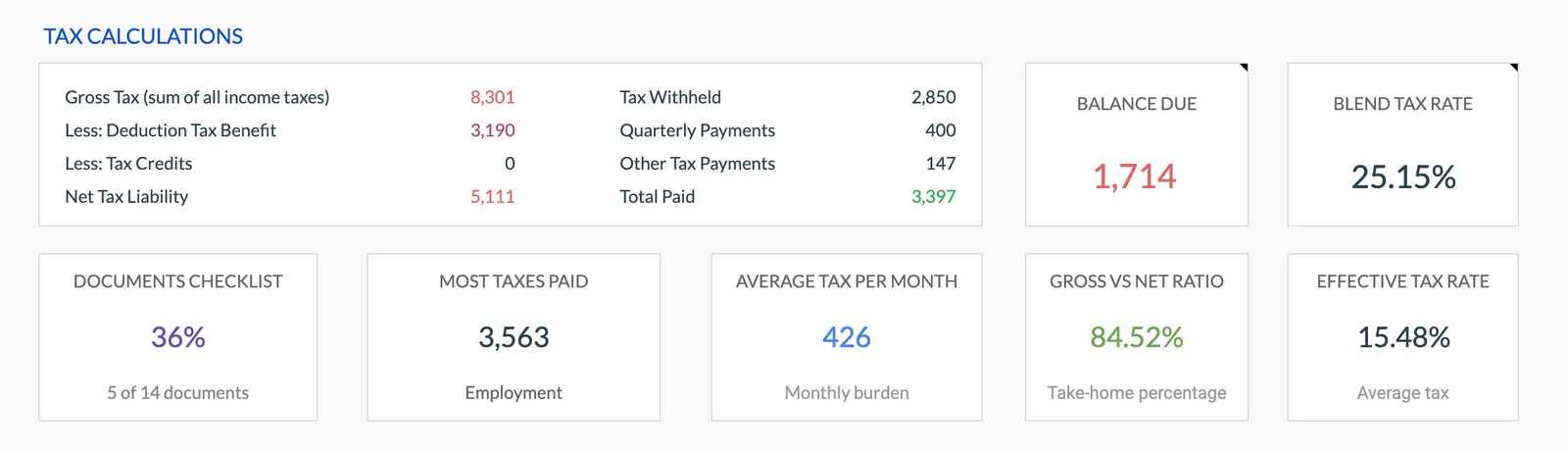
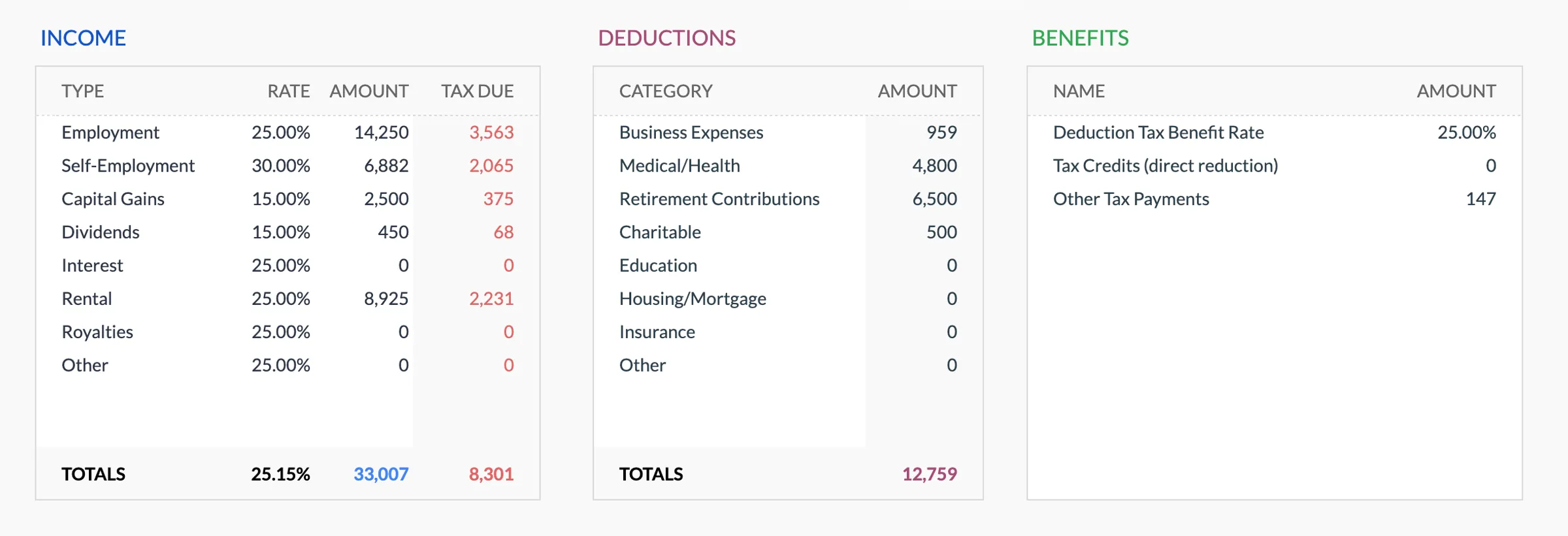
Annual tax overview with key figures
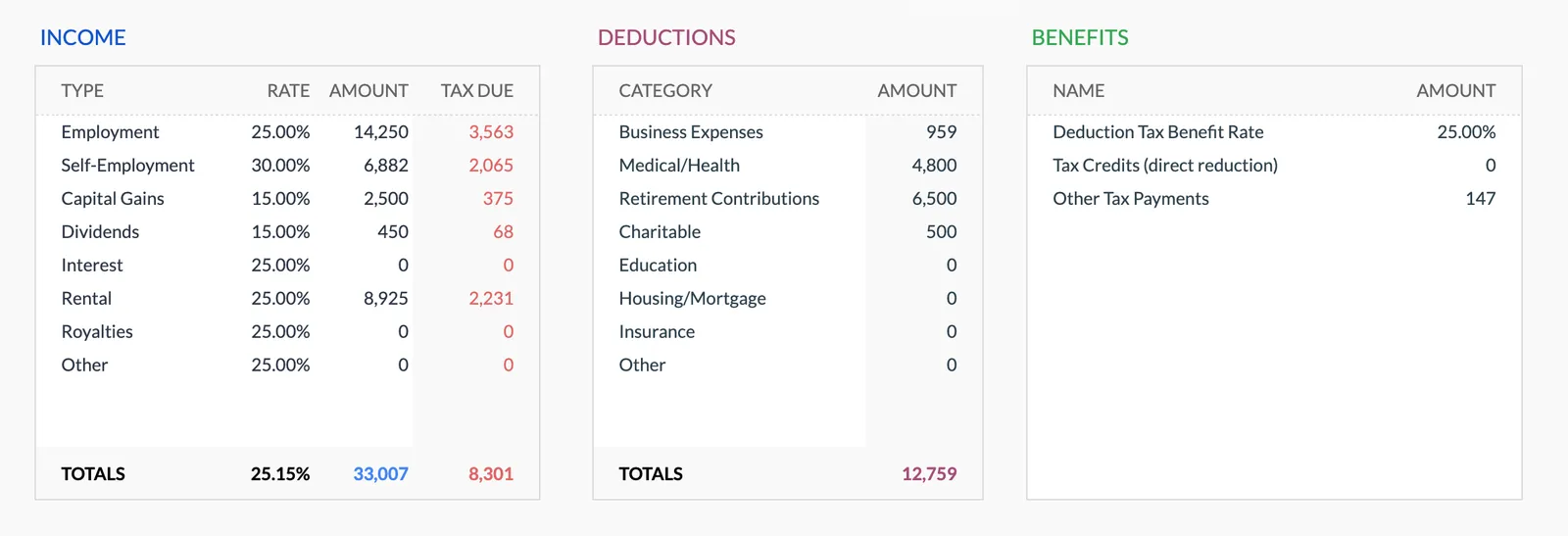
Detailed tax breakdown and projections
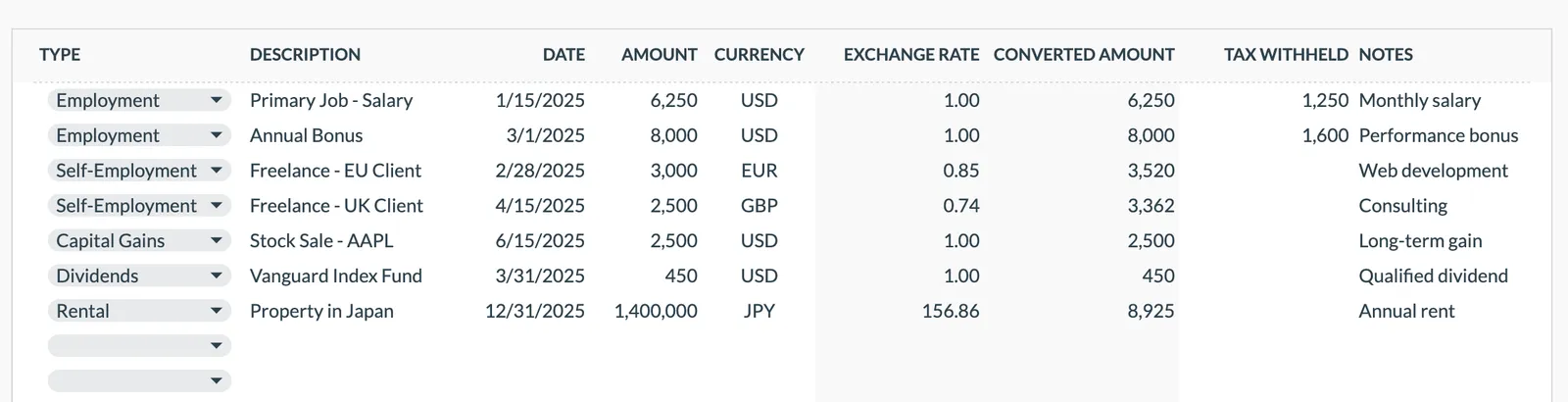
Track all income sources for tax purposes
Organize and track tax deductions
Plan and track quarterly estimated tax payments
Getting Started
Begin Planning Your Consulting Taxes
Set up client and project tracking
Enter your current clients and active projects. The template organizes income by source.
Record income as invoices are paid
Log each payment when received. The template updates quarterly and annual totals.
Track deductions in real time
Enter business expenses as they occur - travel receipts, software purchases, subcontractor payments.
Calculate quarterly payments before deadlines
Review the estimated payment calculator before each quarterly due date. Adjust for actual income.
Prepare for filing with the year-end summary
The summary compiles a full year of income and deductions. Share with your CPA or use for self-filing.
Common Questions
Tax Planner for Consultants - FAQ
What if I have both retainer and project income?
The template tracks all income types. Retainer payments are recorded monthly while project payments are recorded at milestones. The totals combine both.
Can I track subcontractor payments?
Yes. Subcontractor fees are a deductible expense. Track them in the deductions section and use the totals for 1099 reporting at year end.
How do I handle travel to client sites?
Track flights, hotels, meals, and ground transportation as they occur. The template has a travel category to capture these expenses throughout the year.
What if I also have W-2 income?
The template focuses on self-employment income and deductions. If you also have W-2 income with withholding, factor that into your overall tax picture when calculating quarterly estimates.
Does this replace a bookkeeper?
For tax planning purposes, the template provides organized income and deduction tracking. For full business accounting, a bookkeeper or accounting software may still be needed.
What about retirement contributions as deductions?
SEP-IRA, Solo 401(k), and other self-employed retirement contributions are deductible. Track them in the appropriate deduction category.
Can't find the answer you're looking for? Contact our team
Start tax planning as a consultant
One-time purchase. No subscription. Your financial data stays in your Google Drive.