Annual Budget Template
Annual Budget Template for Teachers
Plan 12 months of finances around the school year calendar - summer income gaps, back-to-school expenses, and annual classroom costs.
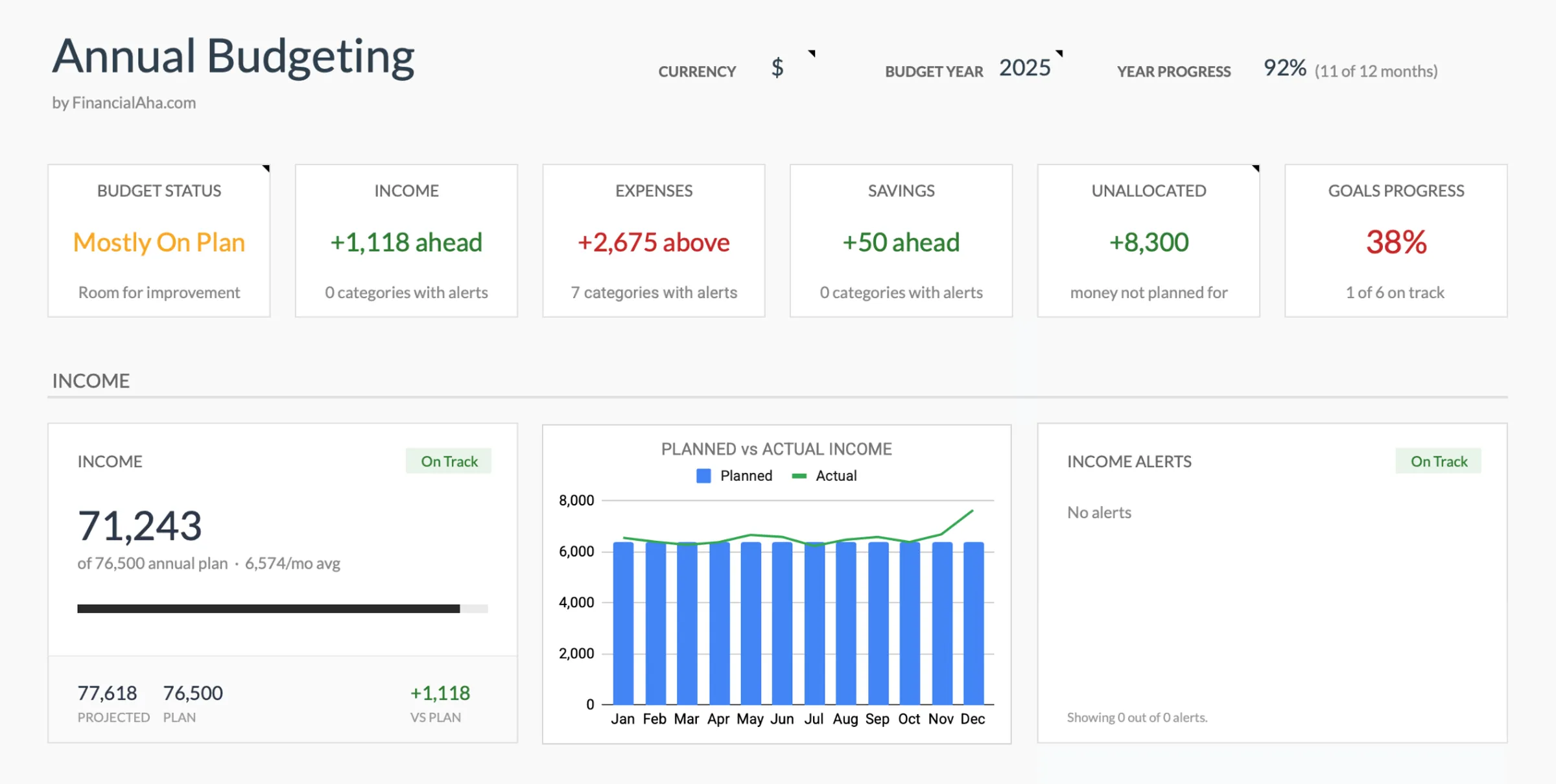
In Depth
Why Teachers Benefit From the Twelve-Month Perspective
The annual view transforms the 9-month versus 12-month pay decision from an abstract preference into a concrete financial plan. A teacher earning $55,000 on 10-month pay receives approximately $4,583 per check during the school year but faces two months of zero income. The same salary on 12-month pay delivers $3,819 per month year-round. The annual planner shows both scenarios side by side - the higher monthly income with the summer cliff versus the smoother but tighter monthly amount - and makes it clear how much needs to be saved per month under the 10-month option to bridge the gap (roughly $760/month set aside from September through May).
Summer income planning is where the annual view becomes most valuable. Summer school positions typically pay a fraction of the school-year rate and last 4-6 weeks. Tutoring income may dry up when students are on break. Coaching or camp counselor work brings a defined stipend but consumes the weeks that might otherwise go toward rest and professional development. Mapping all of these income sources across June, July, and August - alongside the expenses that continue regardless - shows the real financial gap that needs to be funded from school-year savings or supplemental work.
The $300 educator expense deduction (the current federal limit for unreimbursed classroom supplies) is an annual figure that benefits from year-round tracking. Teachers who spend $500-$700 per year out of pocket can only deduct $300, but knowing the exact total informs both the budget and the tax filing. The annual planner captures classroom purchases month by month - the August back-to-school surge, the mid-year replacement supplies, the spring testing materials - creating a complete record without requiring a separate tracking system.
Pension and 403(b) contributions are annual decisions that compound over a career. A teacher contributing the mandatory 7% to a state pension ($3,850/year on $55,000) plus $200/month to a 403(b) is saving $6,250 annually for retirement - a 11.4% savings rate. The annual planner shows how these contributions affect take-home pay across all twelve months and makes the long-term picture tangible. For teachers considering whether to increase 403(b) contributions, the annual view shows the monthly impact immediately.
The Challenge
Why the School Year Needs an Annual Budget
Teaching finances follow the academic calendar, not the standard one. The annual view is especially powerful for teachers because income, expenses, and opportunities shift dramatically between school year and summer.
Summer creates a 2-3 month income gap
Whether you are on 10-month or 12-month pay, summers bring reduced or restructured income. The annual planner shows exactly how much needs to be set aside during the school year to fund summer months.
School year expenses cluster
Back-to-school supply purchases, September conferences, spring testing materials, end-of-year celebrations - classroom expenses cluster at predictable points. An annual view shows these spikes in advance.
Supplemental income varies by season
Tutoring peaks during the school year. Summer school, camp counseling, or curriculum work fills summer months. The annual planner maps all income sources across their natural seasons.
Professional development has annual costs
Conference attendance, graduate coursework, certification renewals, and professional memberships have annual cycles. Planning these into the right months prevents them from being surprises.
Ready to take control of your teacher finances?
What You Get
Annual Budget Features for Teacher Salaries
12-month school-year financial planner
See the full year with school-year and summer months clearly distinguished. Plan around the academic calendar.
Summer savings calculator
Calculates how much to set aside each school-year month to fully fund summer expenses.
Classroom expense tracking
Track out-of-pocket classroom spending by month. See the annual total for tax deduction purposes.
Supplemental income planner
Map tutoring, summer school, coaching stipends, and other supplemental income across the months they are earned.
Annual goal tracking
Set savings, debt payoff, or investment targets for the year. See monthly progress and year-end projections.
School-year plan vs. summer spending reality
Compare planned versus actual for each month. See whether school-year savings are sufficient for summer.
See It In Action
What the template looks like
Browse through the template to see how it handles income tracking, expense budgets, savings goals, and spending analysis.
- Dashboard with key metrics at a glance
- Transaction logging with categories
- Budget vs actual comparison
- Visual charts and breakdowns
- Fully customizable categories
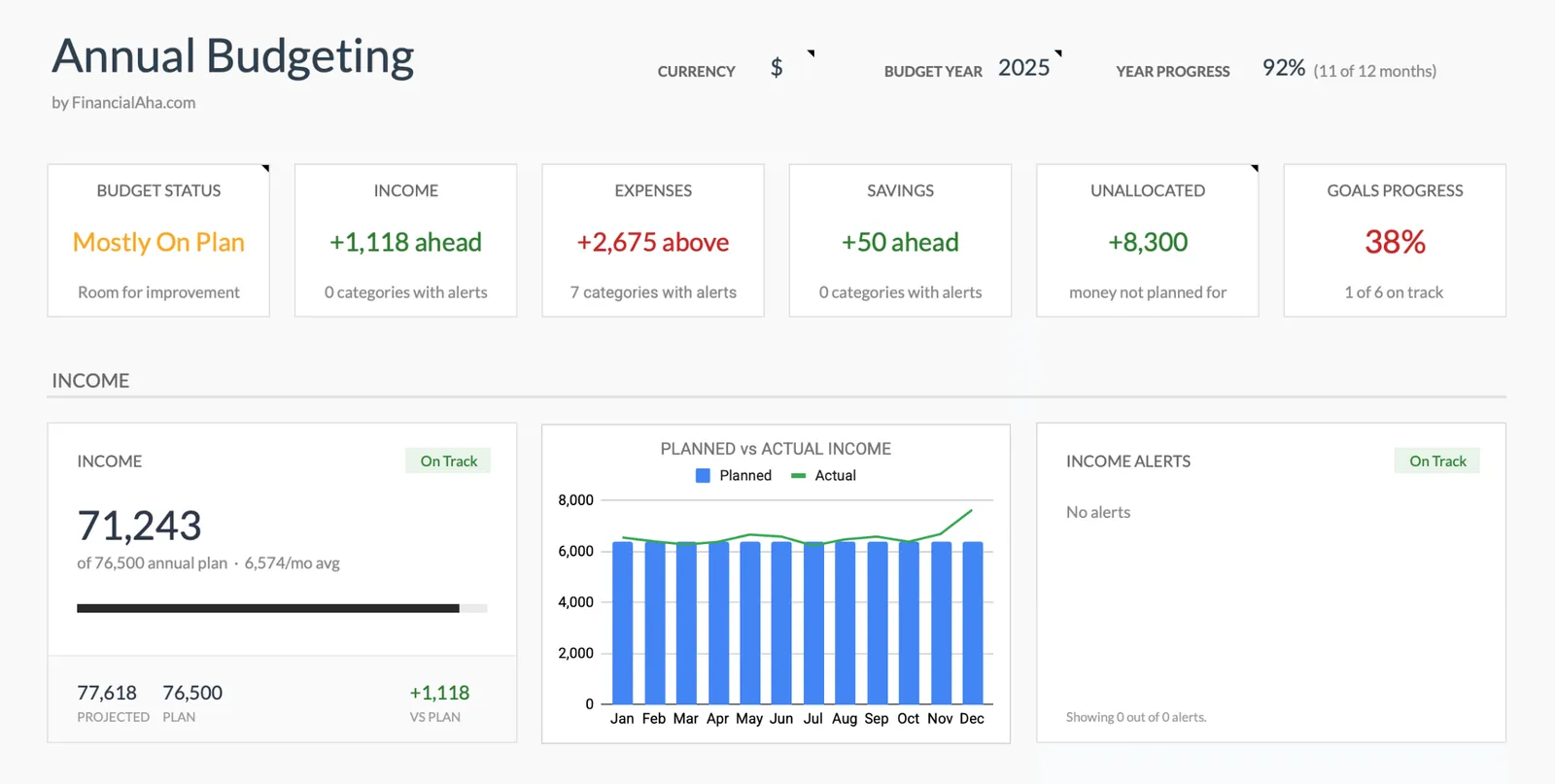
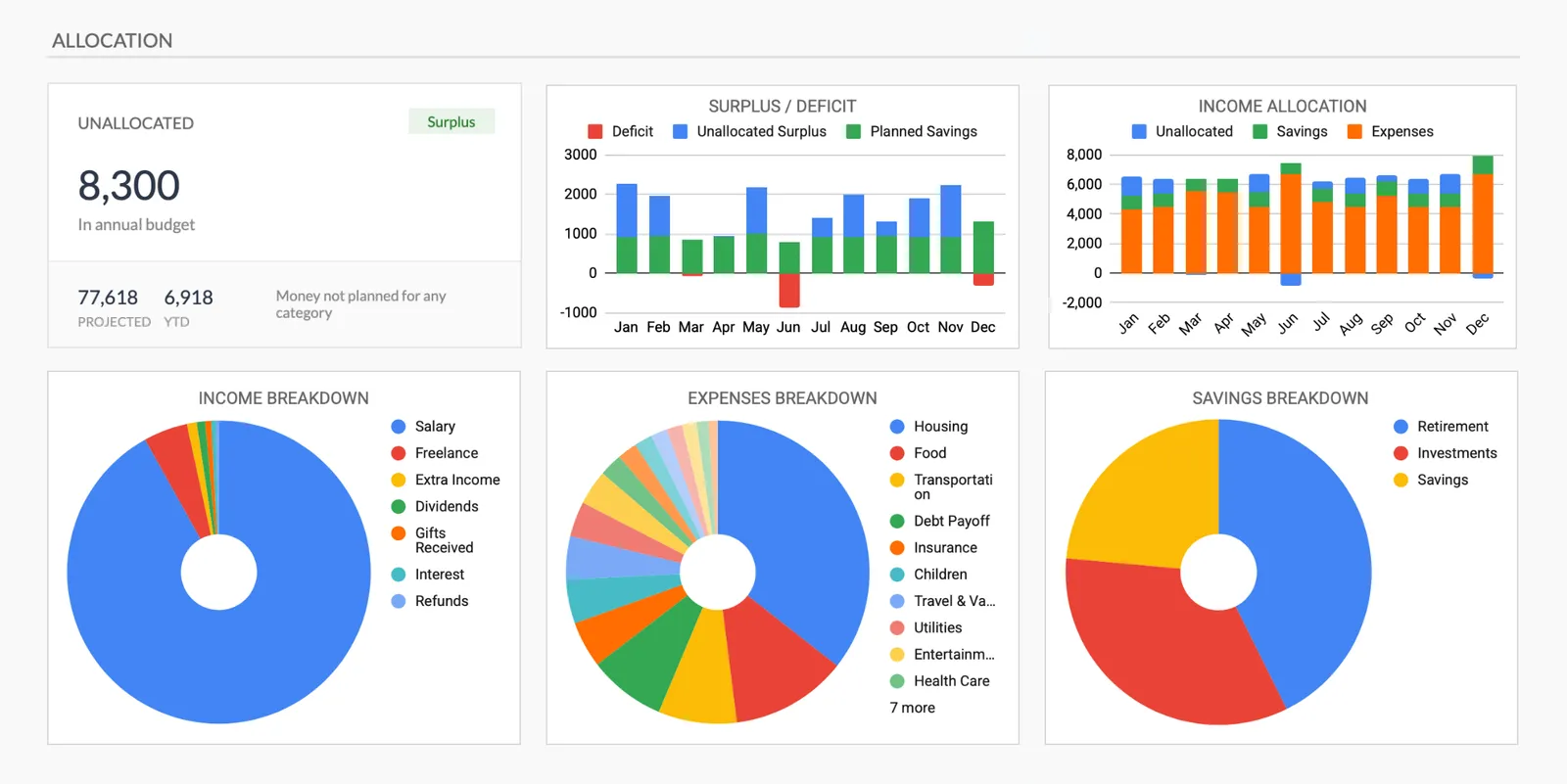

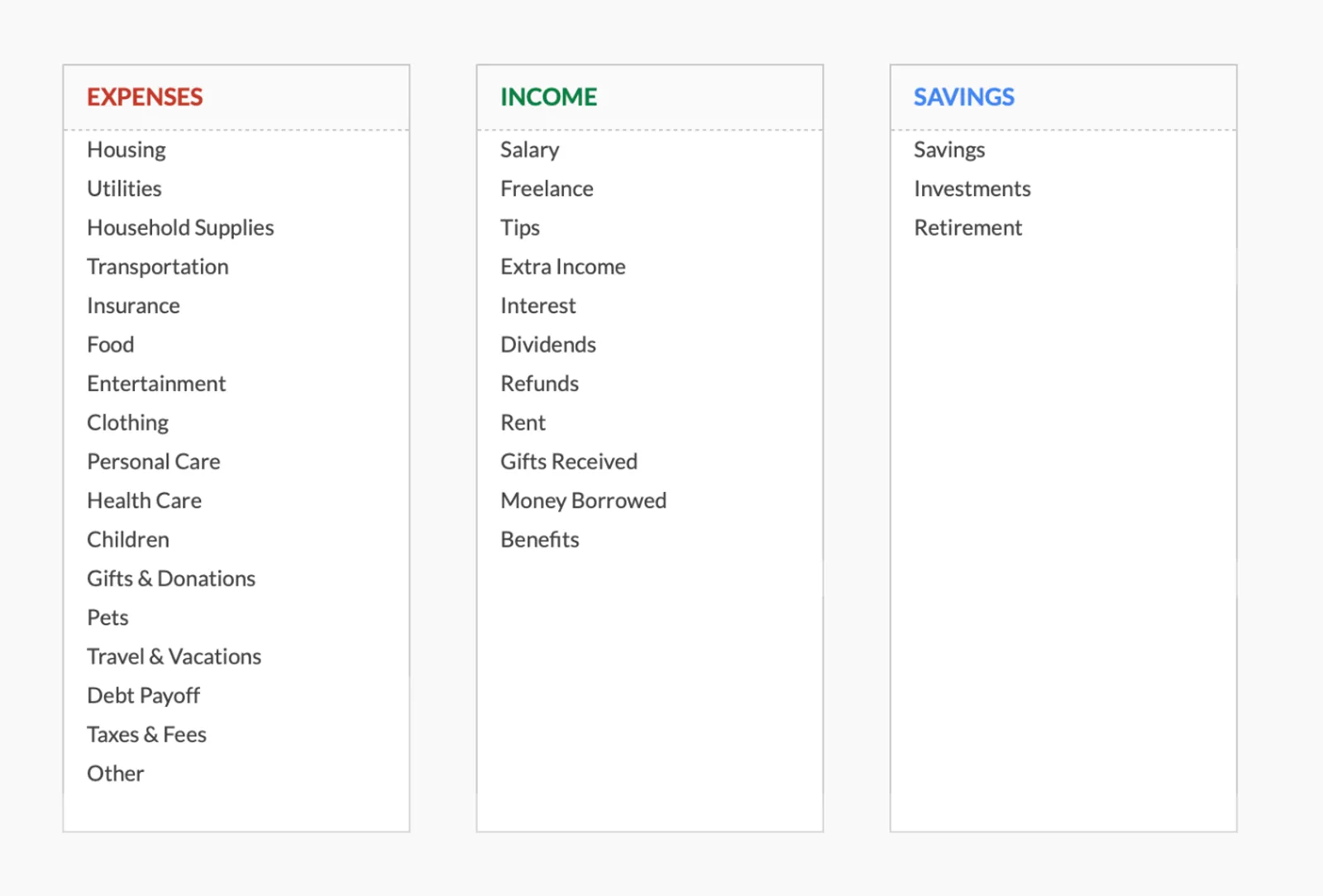
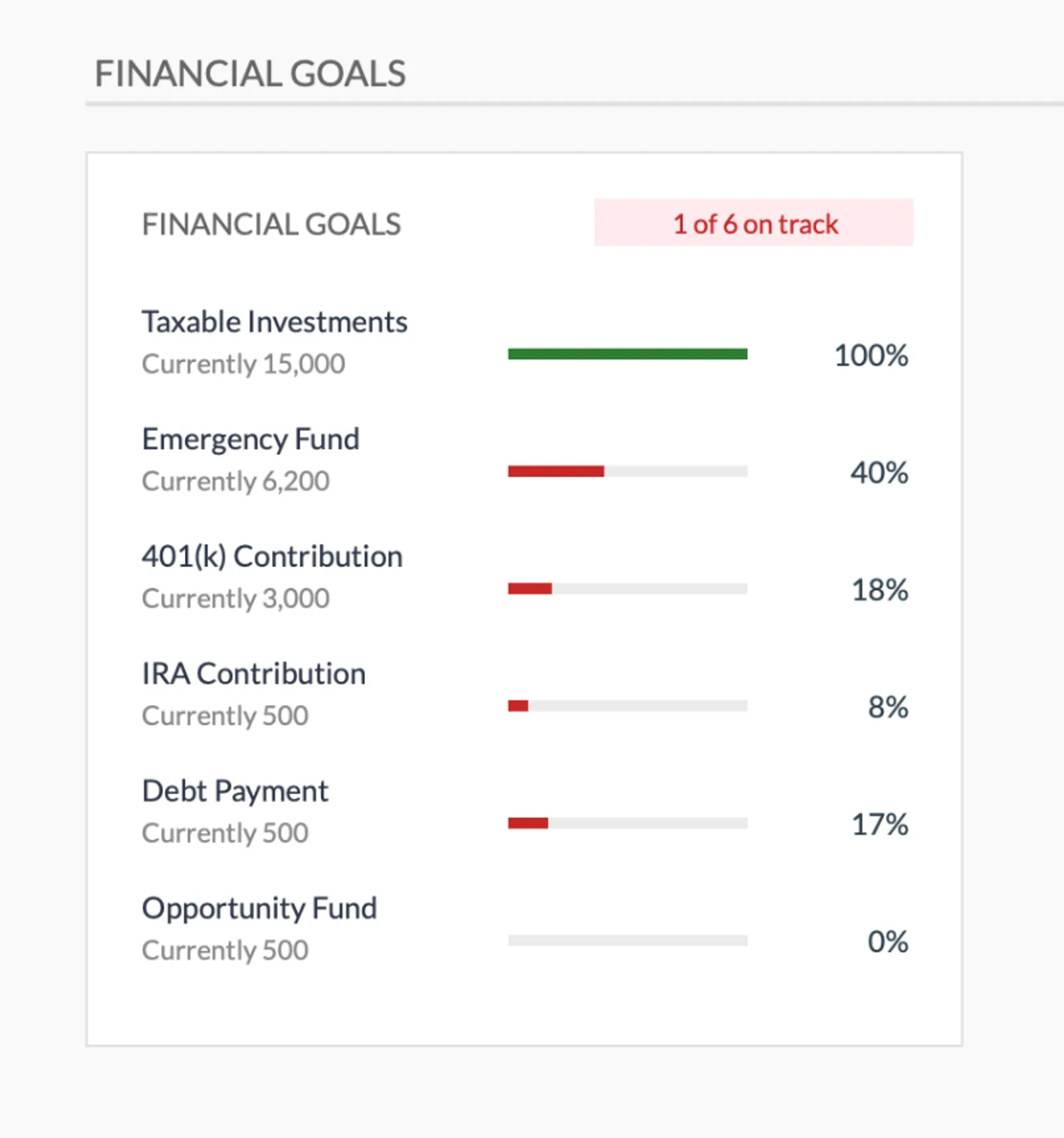
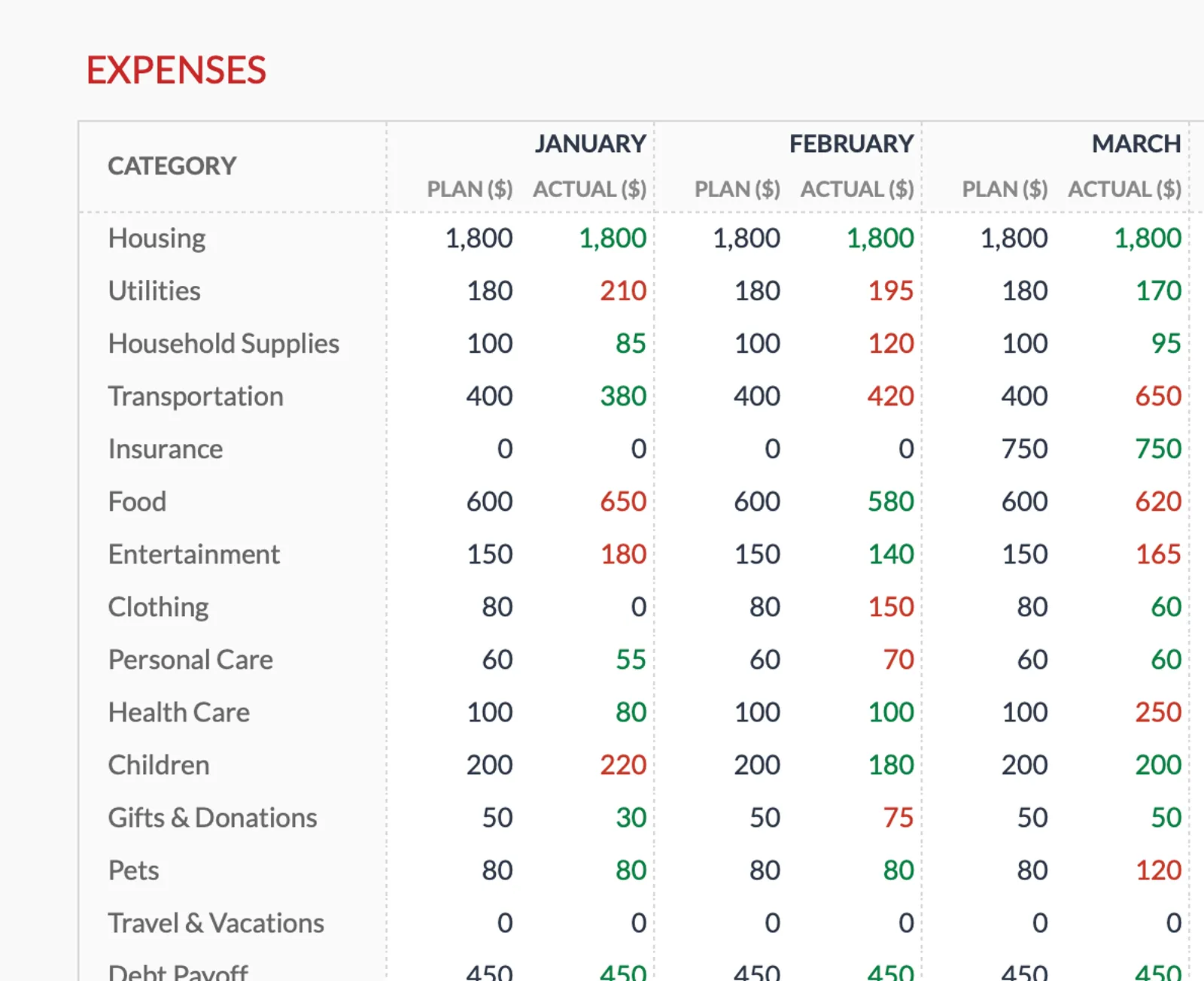
Full year budget overview with monthly breakdown
See how your budget is allocated across categories
Track key metrics across the year
Customizable categories for your annual plan
Set and track annual financial goals
Track expenses month by month across the year
Getting Started
Setting Up an Annual Teacher Budget
Map your teaching income across 12 months
Enter your salary by pay period. If on 10-month pay, leave summer months at the actual amount (which may be zero).
Add supplemental income in its months
Place tutoring, summer school, coaching, and other income in the months earned.
Identify seasonal expense spikes
Back-to-school supplies in August, holiday spending in December, professional development in spring - put these costs where they belong.
Calculate your summer savings need
Total your summer expenses and divide by school-year months. This is the monthly set-aside needed to bridge the gap.
Review at semester breaks
Use winter and spring breaks as natural review points. Are school-year savings on pace for summer?
Common Questions
Annual Budget for Teachers - FAQ
How much do I need to save per month for summer?
Total your summer expenses (2-3 months of living costs) and divide by the 9-10 school-year months. The template calculates this automatically when you enter your expense budget.
What if I pick up summer school or camp work?
Add that income in the summer months. It reduces the amount you need to save during the school year, which the annual view makes immediately clear.
Can I track my classroom supply deduction?
The template tracks classroom expenses by month. At year-end, the total shows your deductible amount (currently $300 for the educator expense deduction).
How do I handle a pay freeze year?
Enter your current salary with no changes. The annual view shows what that means for savings goals and whether any adjustments to spending targets are needed.
What about moving to a new district mid-year?
Update income to reflect the new salary starting in the month of the change. The annual view recalculates everything and shows the impact on year-end targets.
Is this useful for part-time or substitute teachers?
Yes. Variable income makes annual planning even more valuable. Enter estimated work days and pay per month - the template shows the full-year picture regardless of employment type.
How do I plan for both pension contributions and a 403(b)?
Enter your mandatory pension deduction and any 403(b) contribution as monthly expenses across all 12 months. The annual view shows the combined retirement savings and its total impact on take-home pay, making it easier to decide whether to adjust the voluntary 403(b) amount.
Can't find the answer you're looking for? Contact our team
Start annual budgeting as a teacher
One-time purchase. No subscription. Your financial data stays in your Google Drive.