Life Event Guide
Financial Planning When Downsizing
Downsizing can free up significant equity and reduce monthly costs - but the transition itself involves expenses and decisions that benefit from careful planning.
Financial Impact
The Financial Impact of Downsizing
Downsizing is often associated with retirement, but people downsize at all life stages - after kids leave, after a divorce, for a career change, or simply to reduce financial pressure. The financial impact extends beyond just a cheaper house.
Freed-up home equity can be substantial
Selling a $500,000 home and buying a $300,000 home frees up roughly $200,000 in equity (minus transaction costs). After agent commissions (5-6%), closing costs on both transactions (2-3% each), and moving expenses, the net equity freed is typically $160,000-$175,000. This can fund retirement, eliminate debt, or build an investment portfolio - depending on timing and goals.
Monthly housing costs drop across the board
A smaller home means lower: mortgage payments (or none, if you buy with cash from equity), property taxes (often 30-50% less), insurance ($50-$150/month less), utilities ($100-$200/month less), and maintenance costs ($200-$400/month less). Total savings of $500-$1,500/month are common. Over a decade, that is $60,000-$180,000 in reduced housing expenses.
Transaction costs are higher than most expect
Selling and buying homes simultaneously is expensive. Selling costs: agent commission ($25,000-$30,000 on a $500,000 home), repairs and staging ($2,000-$10,000), closing costs ($5,000-$10,000). Buying costs: closing costs ($6,000-$12,000 on a $300,000 home), moving ($2,000-$8,000), setup and modifications ($1,000-$5,000). Total transaction costs of $40,000-$75,000 are typical - reducing but not eliminating the financial benefit.
Capital gains tax may apply
If your home has appreciated significantly, capital gains on the sale may exceed the $250,000 exclusion (single) or $500,000 exclusion (married filing jointly). A couple who bought for $200,000 and sells for $750,000 has a $550,000 gain - $50,000 above the exclusion, potentially taxable at 15-20%. This is uncommon but worth checking, especially for long-term homeowners in high-appreciation markets.
Getting Ready
How to Budget for Downsizing
Calculate the true financial benefit
Start with expected sale price minus outstanding mortgage, then subtract all transaction costs (commissions, closing costs, moving, repairs). Compare this to the total cost of the new home. The difference is your freed-up equity. Then calculate monthly savings by comparing current housing costs to projected costs in the smaller home. Both numbers - lump sum and monthly savings - tell the full story.
Plan for the transition period
The gap between selling and buying (or the overlap if you buy first) creates temporary costs. Bridge loans ($500-$1,500/month in interest), temporary housing ($1,500-$3,000/month), storage ($100-$300/month), and double moves all factor in. Having $10,000-$20,000 accessible for transition expenses prevents using credit cards during a time-sensitive process.
Decide what to do with freed-up equity
Having a plan for the equity before it arrives prevents it from being slowly absorbed into daily spending. Common approaches include: investing for retirement, paying off remaining debts, creating or topping up an emergency fund, or buying the new home outright to eliminate mortgage payments entirely. Modeling different scenarios in a financial planning spreadsheet helps clarify which approach fits your goals.
Create your new, lower-cost monthly budget
Downsizing affects multiple budget lines: housing, utilities, insurance, maintenance, and possibly property taxes and HOA fees. Build the new budget with actual numbers from the smaller home rather than estimates. Also account for any new costs - a condo may have HOA fees that a house did not, or a smaller kitchen may increase dining out frequency.
Factor in the emotional and practical costs
Downsizing often involves selling or donating furniture and belongings, which may have both sentimental and financial value. Estate sale services take 30-40% commission but handle everything. Self-managed sales through online marketplaces take time but keep more proceeds. Budget for both the disposal of items and the purchase of any right-sized replacements.
See The Templates
Tools for this stage of life
Browse the templates that help with financial planning during major life transitions.
- Financial planning dashboard
- Monthly budget tracking
- Net worth over time
- Goal setting and tracking

Track your net worth over time with charts
Breakdown of all your assets
Track all debts and liabilities
Key financial health indicators
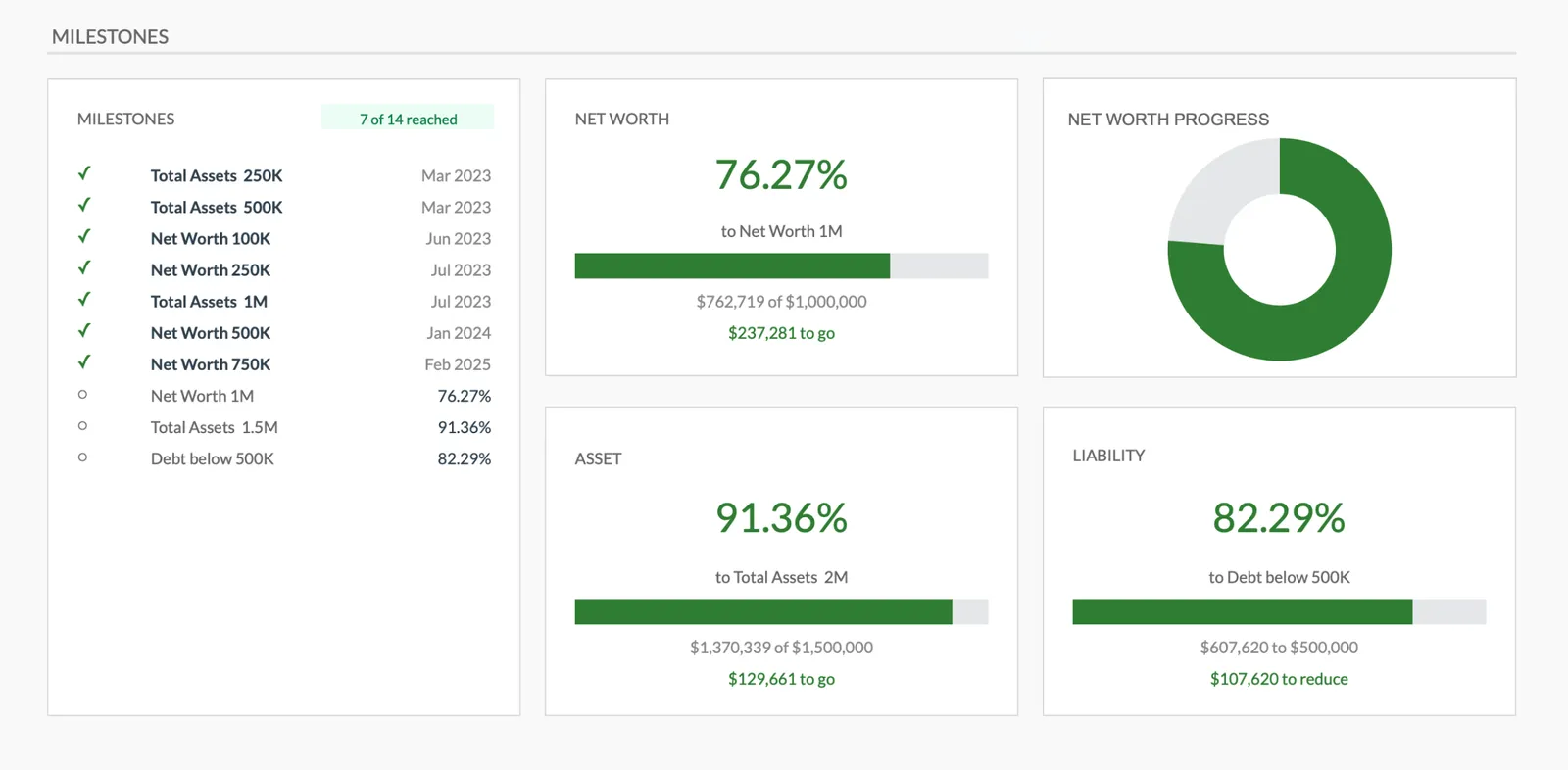
Set and celebrate net worth milestones
Recommended Templates
The Right Templates for This Stage
Downsizing is a financial transition with both immediate and long-term effects. These templates help manage both:
Build your new lower-cost budget and see the monthly savings clearly. Compare pre- and post-downsizing budgets side by side to understand exactly how the move improves your cash flow.
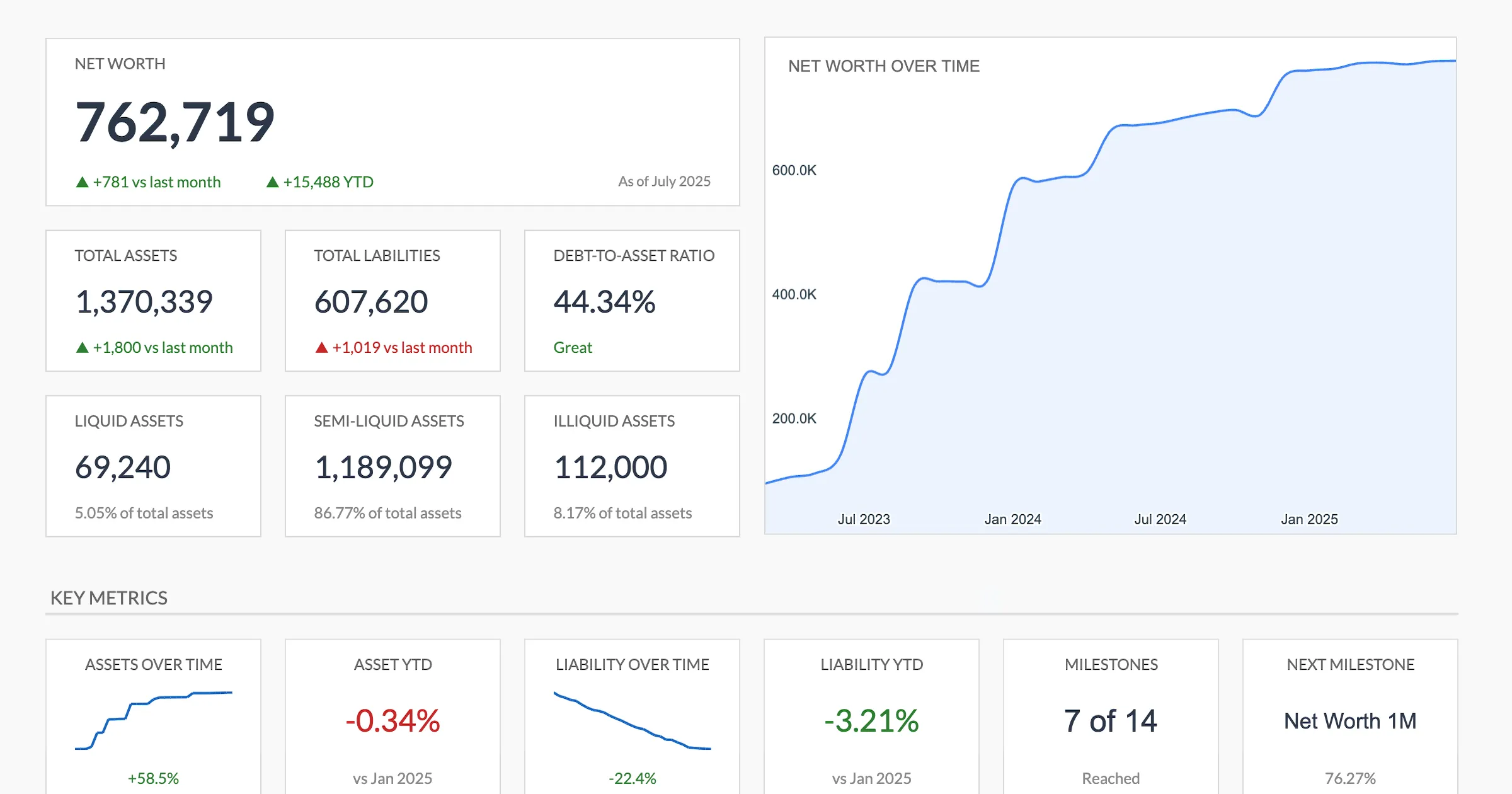
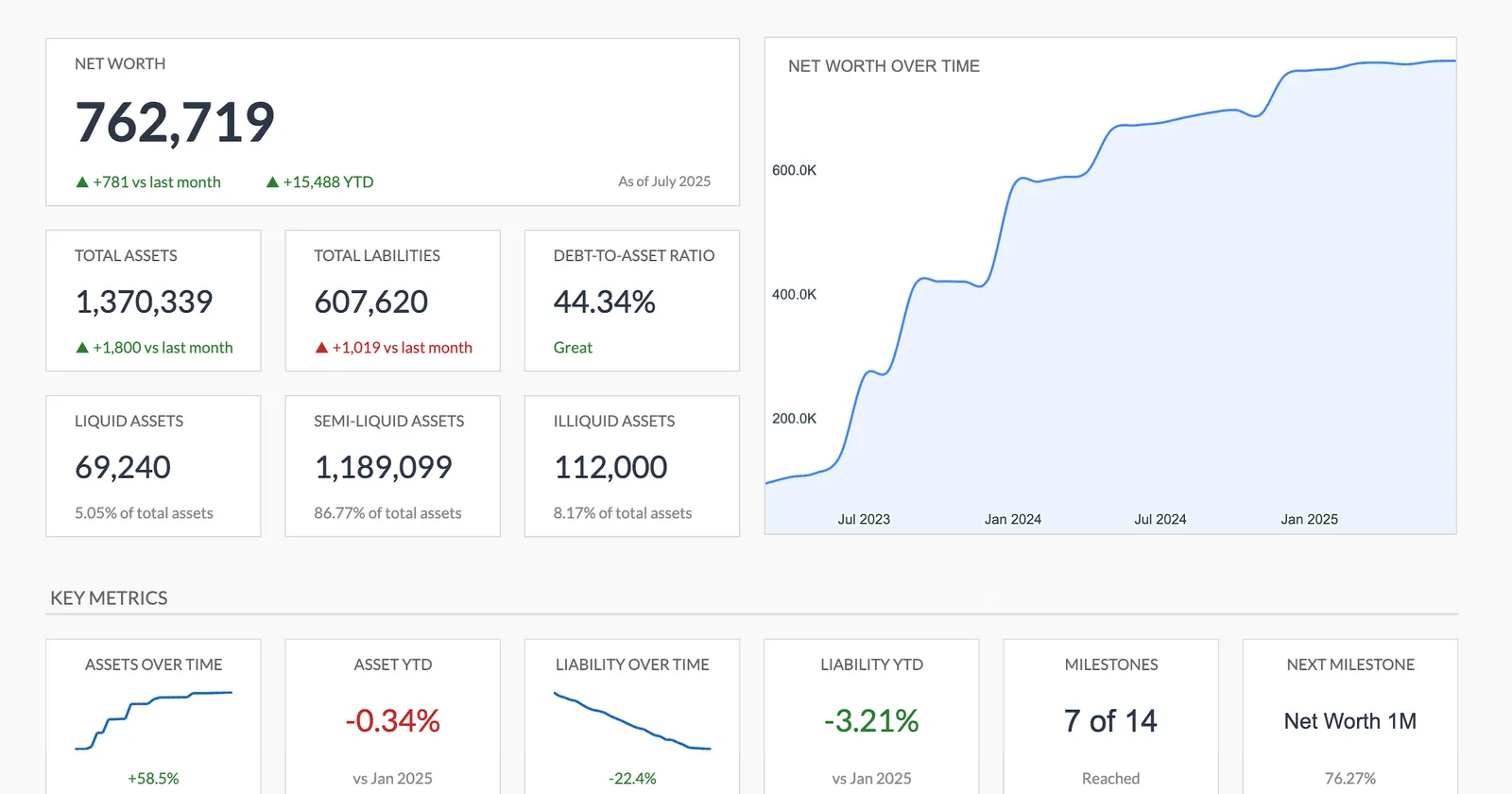
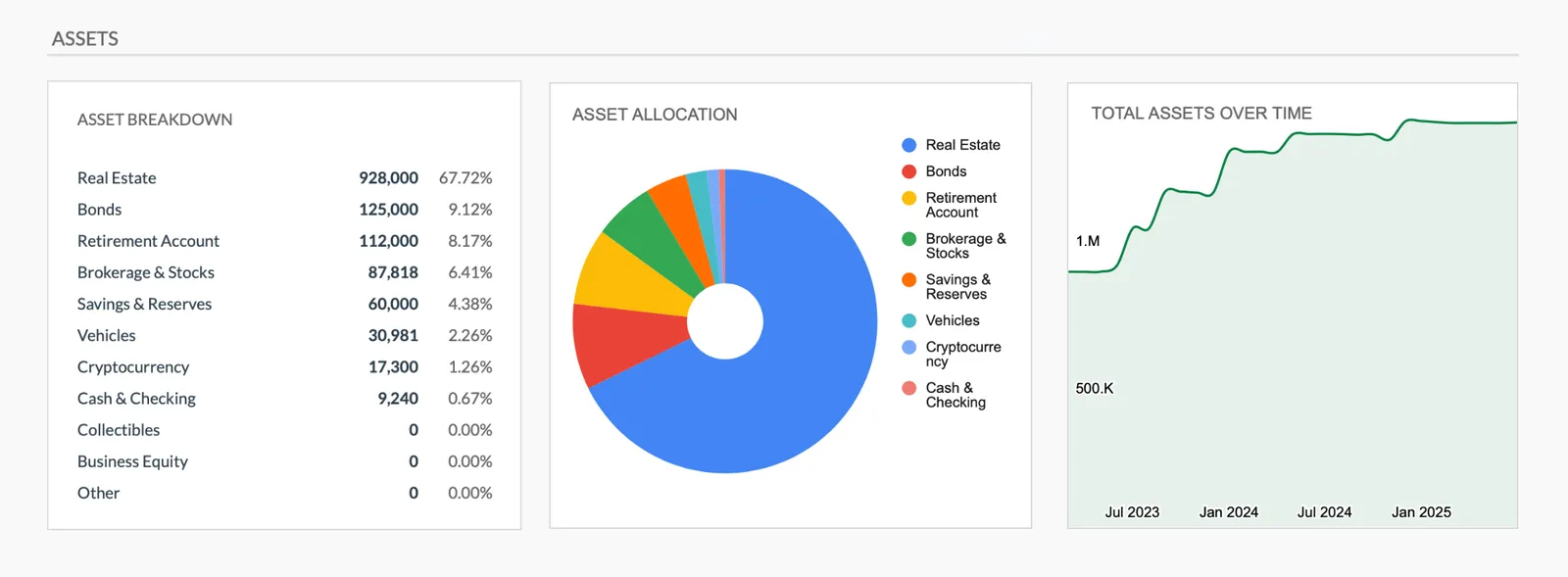
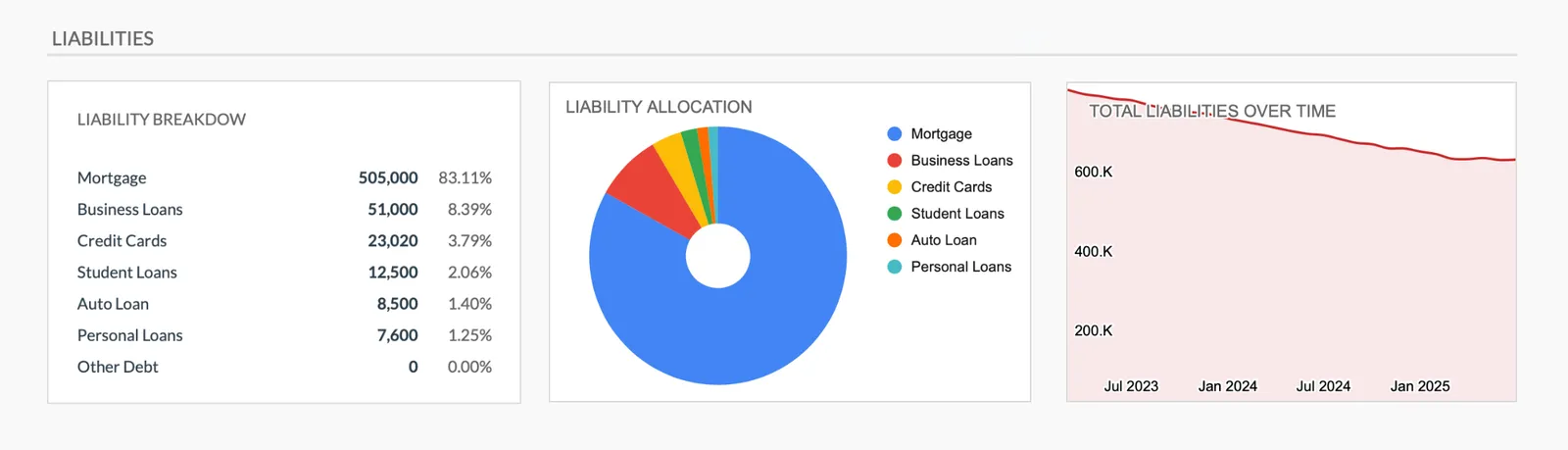
View templateTrack how downsizing affects your overall net worth. The shift from home equity to liquid assets (or from mortgage debt to debt-free) changes your financial picture in ways that are worth monitoring.
View templateFree Tools
Calculators to Help You Plan
Common Questions
Downsizing - Financial FAQ
How much can I save by downsizing?
Monthly savings of $500-$1,500 are common from reduced mortgage, taxes, insurance, utilities, and maintenance. The freed-up equity varies widely - selling a $500,000 home and buying at $300,000 nets roughly $160,000-$175,000 after all transaction costs. The total financial impact depends on your specific situation: home values, mortgage balances, and local cost differences.
What are the hidden costs of downsizing?
Common costs people underestimate: real estate commissions ($15,000-$30,000), closing costs on both transactions ($10,000-$25,000), moving expenses ($2,000-$8,000), temporary housing if timing does not align ($3,000-$9,000), storage ($300-$1,000), and replacement furniture for the new space ($1,000-$5,000). Total hidden costs can reach $30,000-$75,000.
Is downsizing worth it financially?
For most people, the long-term financial benefit outweighs the transaction costs. If transaction costs total $50,000 but you save $1,000/month in ongoing housing costs, the breakeven point is about 4 years. Beyond that, every month is net savings. The freed-up equity provides additional financial flexibility. The calculation is worth running with your specific numbers before deciding.
How do I track the financial impact of downsizing over time?
The Net Worth Tracker shows the shift in your financial picture: home equity changes, liquid assets increase (if you receive cash from the sale), and debt decreases (if you pay off the mortgage). Comparing monthly housing costs before and after in the Monthly Budgeting template quantifies the ongoing savings. Together, they tell the complete story.
Can't find the answer you're looking for? Contact our team
Ready to get started?
Download instantly and start managing your finances, or contact us to design a custom template package for your needs.