Life Event Guide
Financial Planning When Buying Your First Home
From saving for a down payment to budgeting for your first mortgage payment - a structured approach to the biggest purchase of your life.
Financial Impact
The Financial Impact of Buying a Home
Buying a home changes almost every line in your budget. Understanding the full financial picture before you start house hunting prevents the uncomfortable surprises that catch many first-time buyers.
The down payment is just the beginning
A 20% down payment on a $350,000 home is $70,000 - a significant savings goal on its own. But closing costs add another 2-5% ($7,000-$17,500), and you'll want cash reserves for move-in expenses, immediate repairs, and the gap before your first paycheck-to-mortgage rhythm stabilizes. Realistically, plan for 25-30% of the home price in total upfront costs.
Monthly housing costs extend well beyond the mortgage
Your mortgage payment (principal + interest) might be $1,800/month. But add property taxes ($300/month), homeowner's insurance ($150/month), PMI if you put less than 20% down ($100/month), maintenance reserves ($300/month at 1% of home value annually), and possibly HOA fees ($200/month). That $1,800 mortgage quickly becomes $2,850 in real monthly costs. Many first-time buyers underestimate this by 30-40%.
Your emergency fund needs increase
As a renter, a broken appliance is your landlord's problem. As a homeowner, a failed HVAC system is $5,000-$15,000 you need to find quickly. Financial advisors generally suggest homeowners maintain 6 months of expenses in emergency savings rather than the 3 months often recommended for renters. Building this buffer should happen before or alongside your down payment savings.
Opportunity cost of the down payment
That $70,000 down payment could have been invested in the stock market. Over 30 years at 7% average returns, it would grow to approximately $530,000. Home equity builds differently - through forced savings (mortgage payments) and potential appreciation. Neither approach is universally better, but understanding the tradeoff helps you make an informed decision about how much to put down.
Getting Ready
How to Prepare Your Budget for Homeownership
Calculate your true affordability
The bank will tell you the maximum you can borrow. That number is almost always higher than what's comfortable long-term. A common guideline: keep total monthly housing costs (mortgage, taxes, insurance, maintenance) under 28% of your gross income. For a household earning $100,000/year, that's about $2,333/month total - not just the mortgage payment.
Build a down payment savings plan
Set a target date and work backward. Saving $70,000 in 3 years means $1,944/month. If that's too aggressive, extend the timeline or adjust the home price target. Track this in a dedicated savings goal - mixing it with other savings makes progress invisible. High-yield savings accounts (currently offering 4-5% APY) are appropriate for down payment funds you'll need within 1-5 years.
Practice the mortgage payment before you commit
Before house hunting, add the expected mortgage payment minus your current rent to your monthly savings. If you currently pay $1,500 rent and expect $2,800 in total housing costs, save an extra $1,300/month for 3-6 months. This reveals whether the new payment is actually sustainable and builds additional savings. If it feels painful during the test period, adjust your price target.
Budget for the transition period
The month of closing is expensive. You may need to pay rent and a mortgage simultaneously, cover moving costs ($2,000-$5,000 for a local move), buy essential furniture or appliances, handle utility setup fees and deposits, and make immediate repairs. Budget $5,000-$10,000 beyond your down payment and closing costs for this transition.
Create your post-purchase budget
Your budget categories change significantly after buying. Add: mortgage payment, property taxes (if not escrowed), home insurance, maintenance fund (1% of home value per year), lawn care or HOA, and home improvement savings. Remove or reduce: rent, renter's insurance. The net change is often a 15-25% increase in total housing-related spending.
See The Templates
Tools for this stage of life
Browse the templates that help with financial planning during major life transitions.
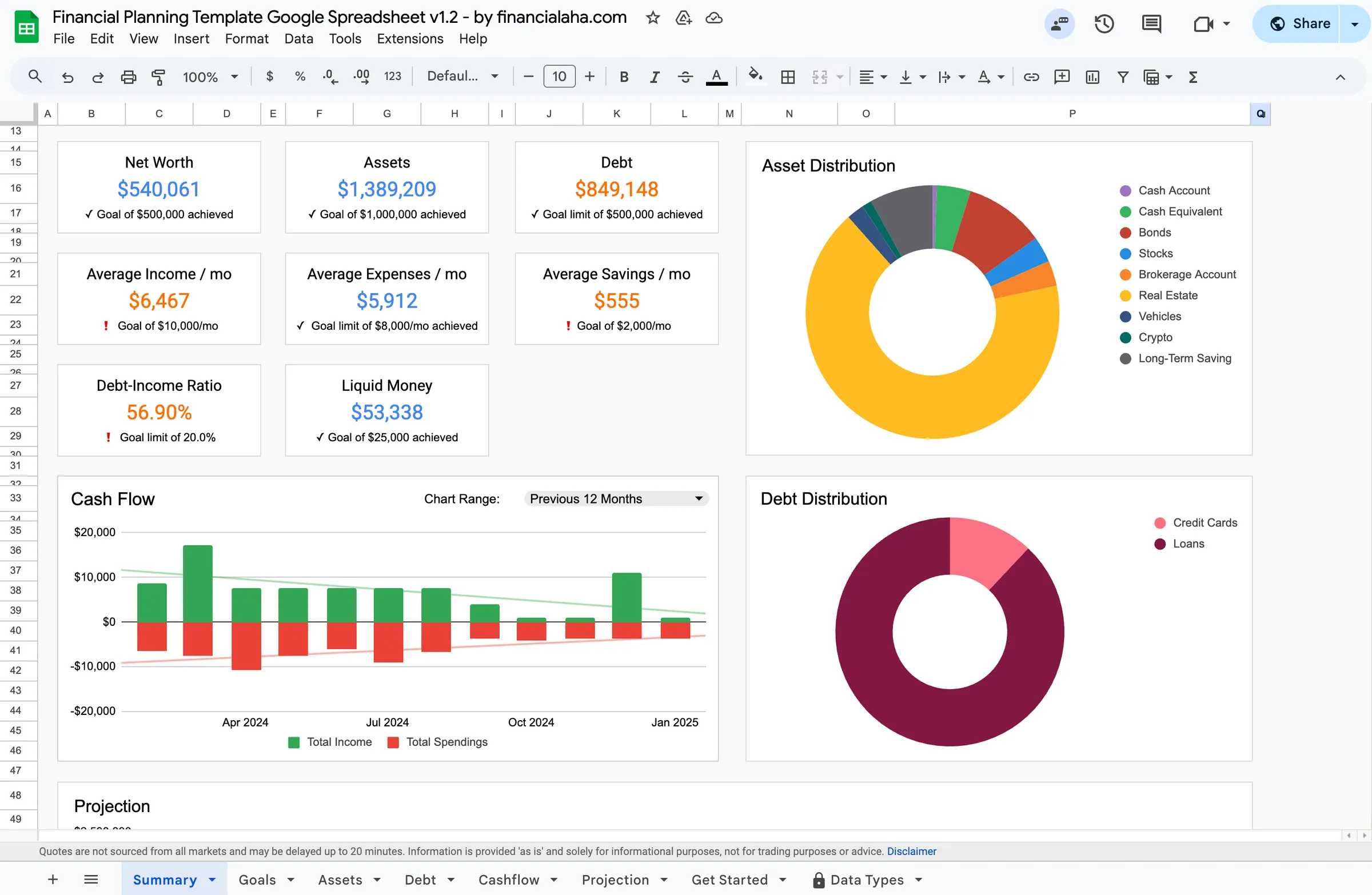
- Financial planning dashboard
- Monthly budget tracking
- Net worth over time
- Goal setting and tracking
Complete financial overview with net worth and goals
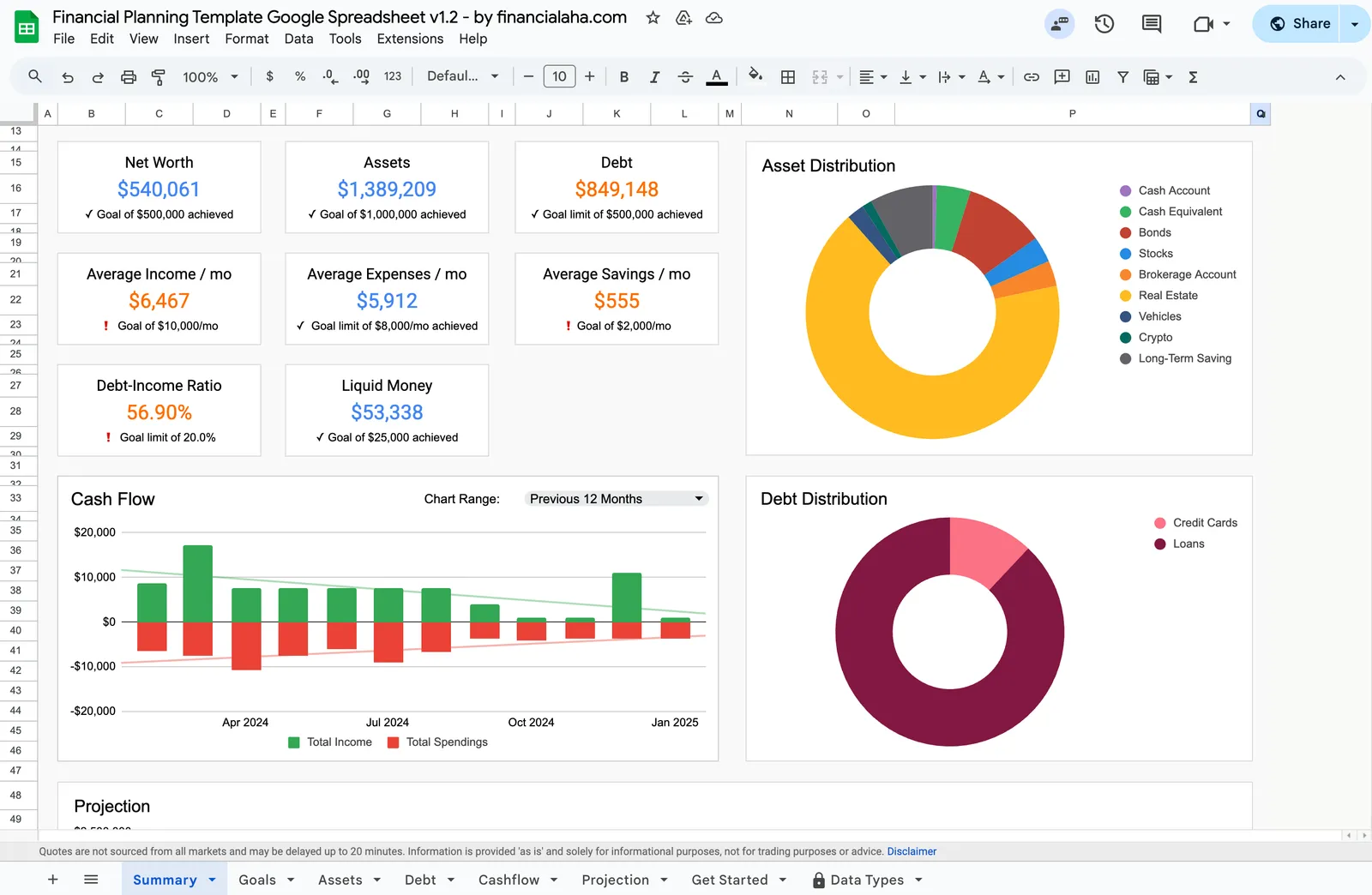
Set and track progress toward financial milestones
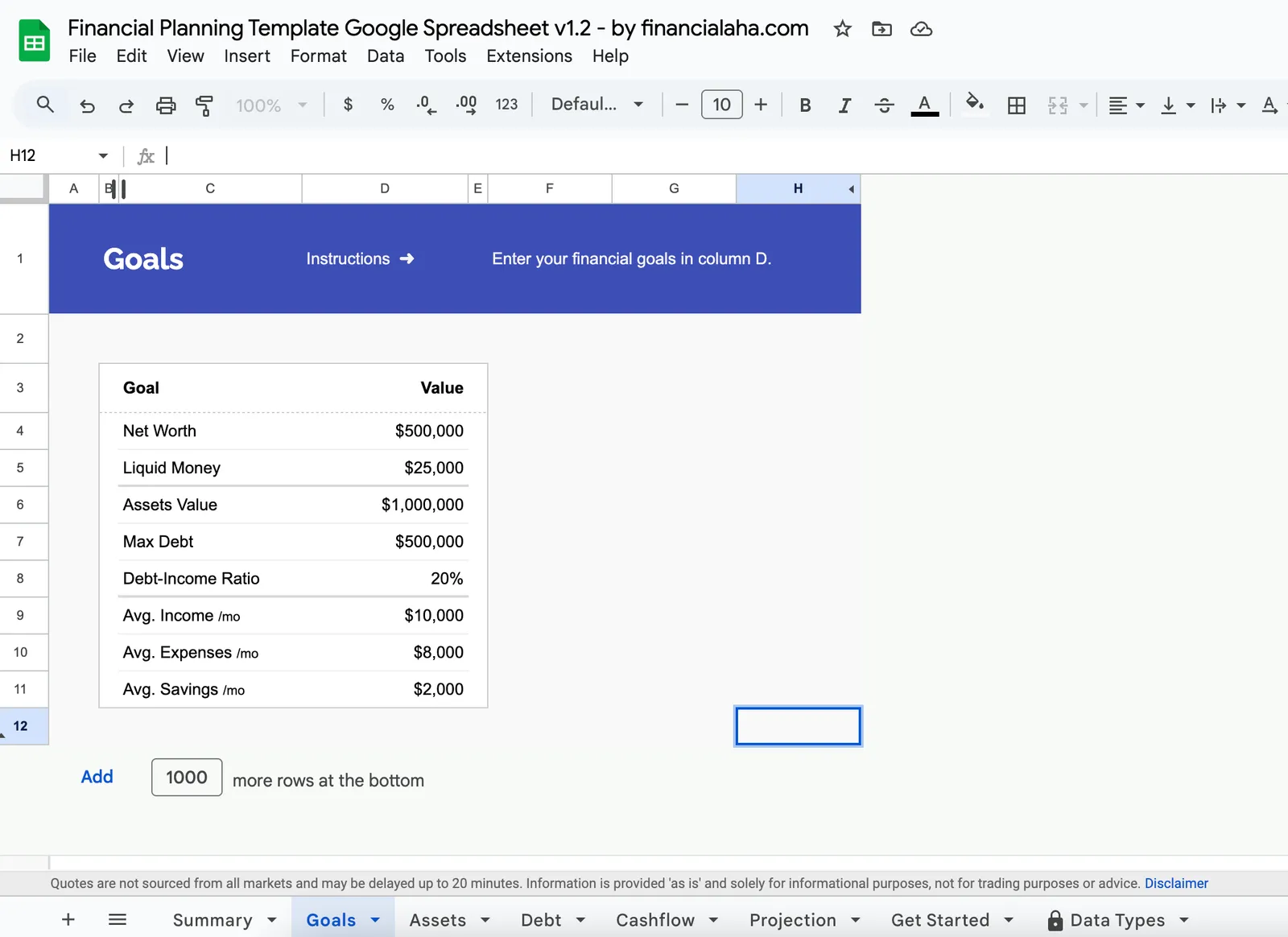
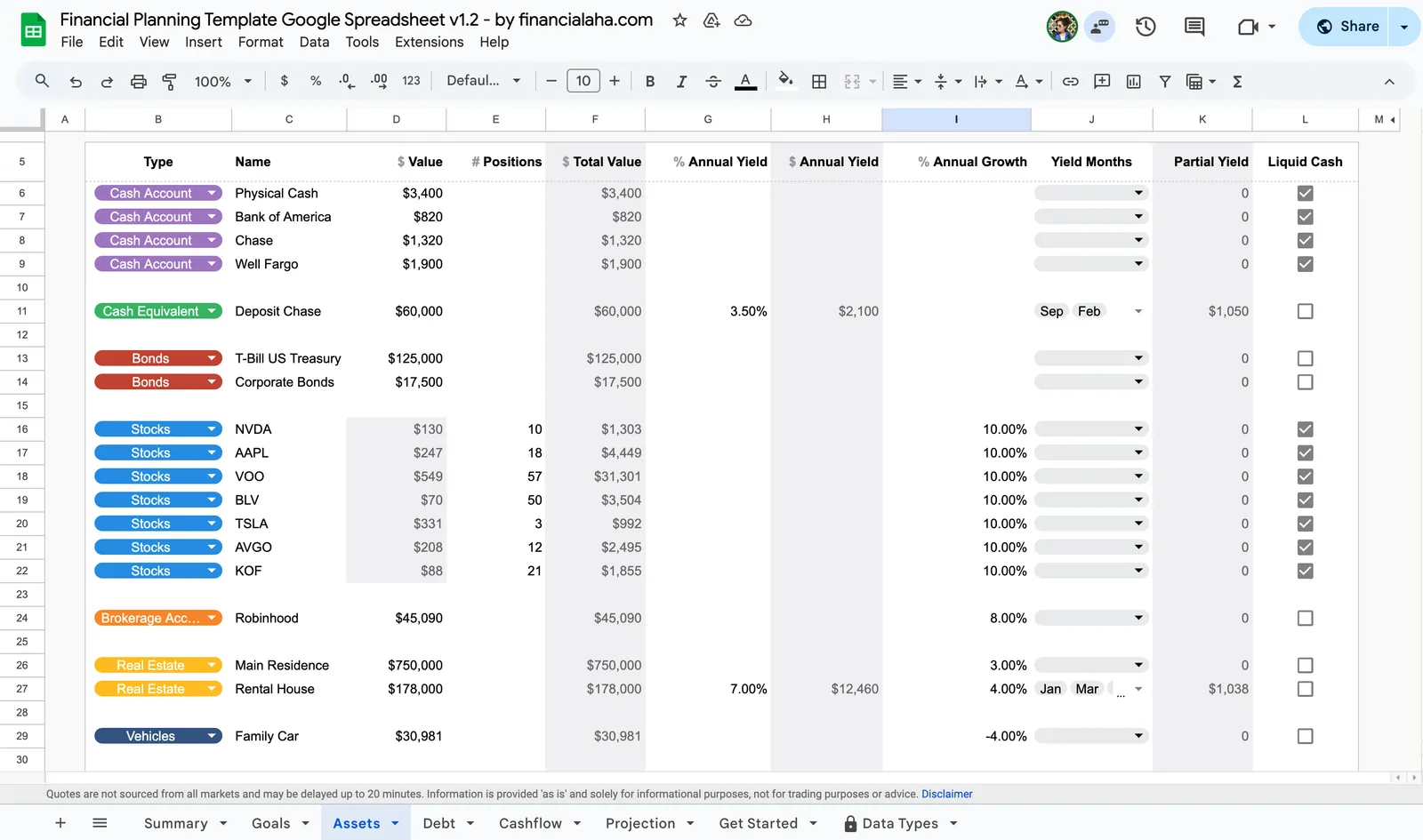
Track all your assets in one place
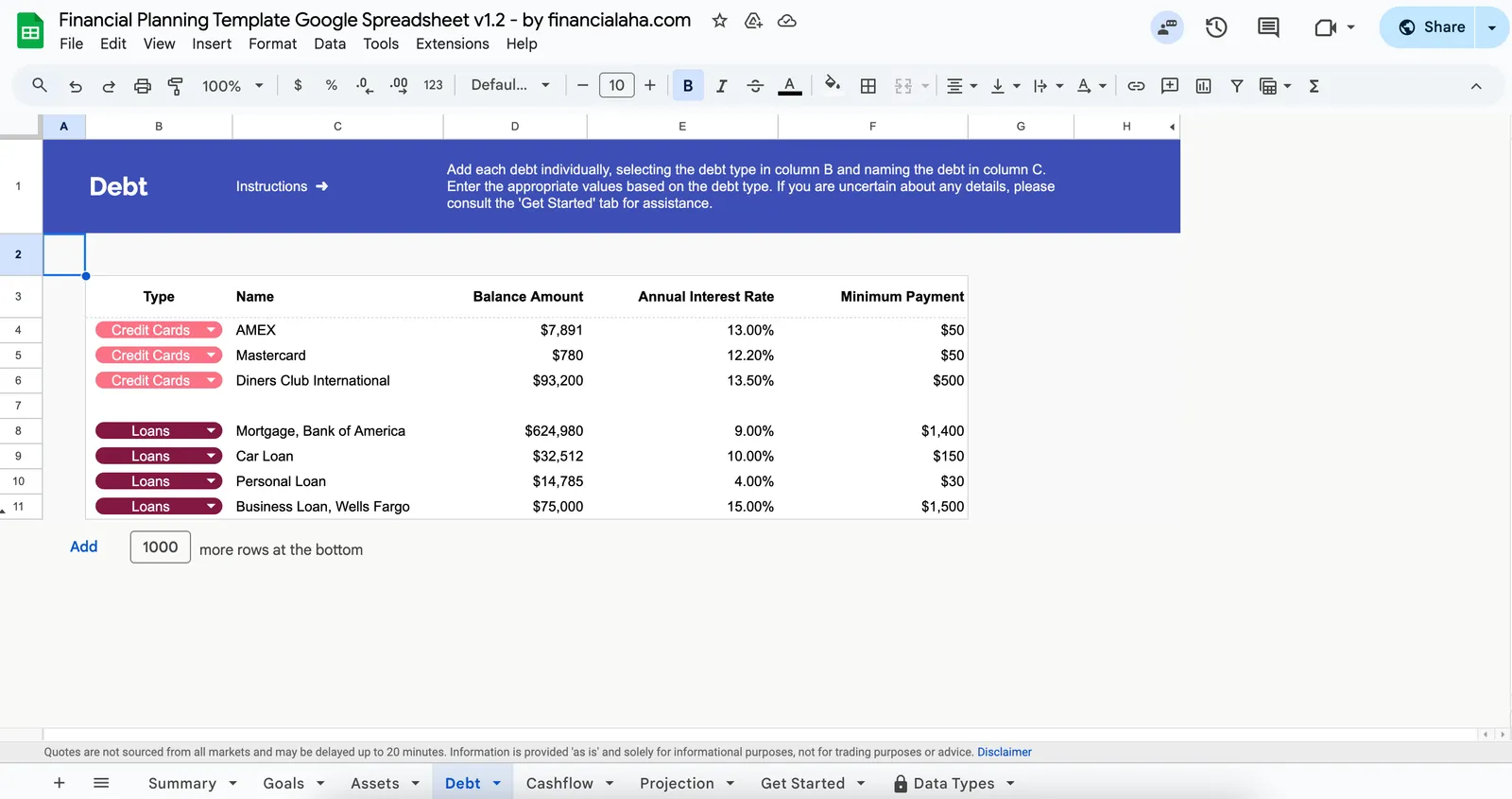
Monitor and plan debt repayment
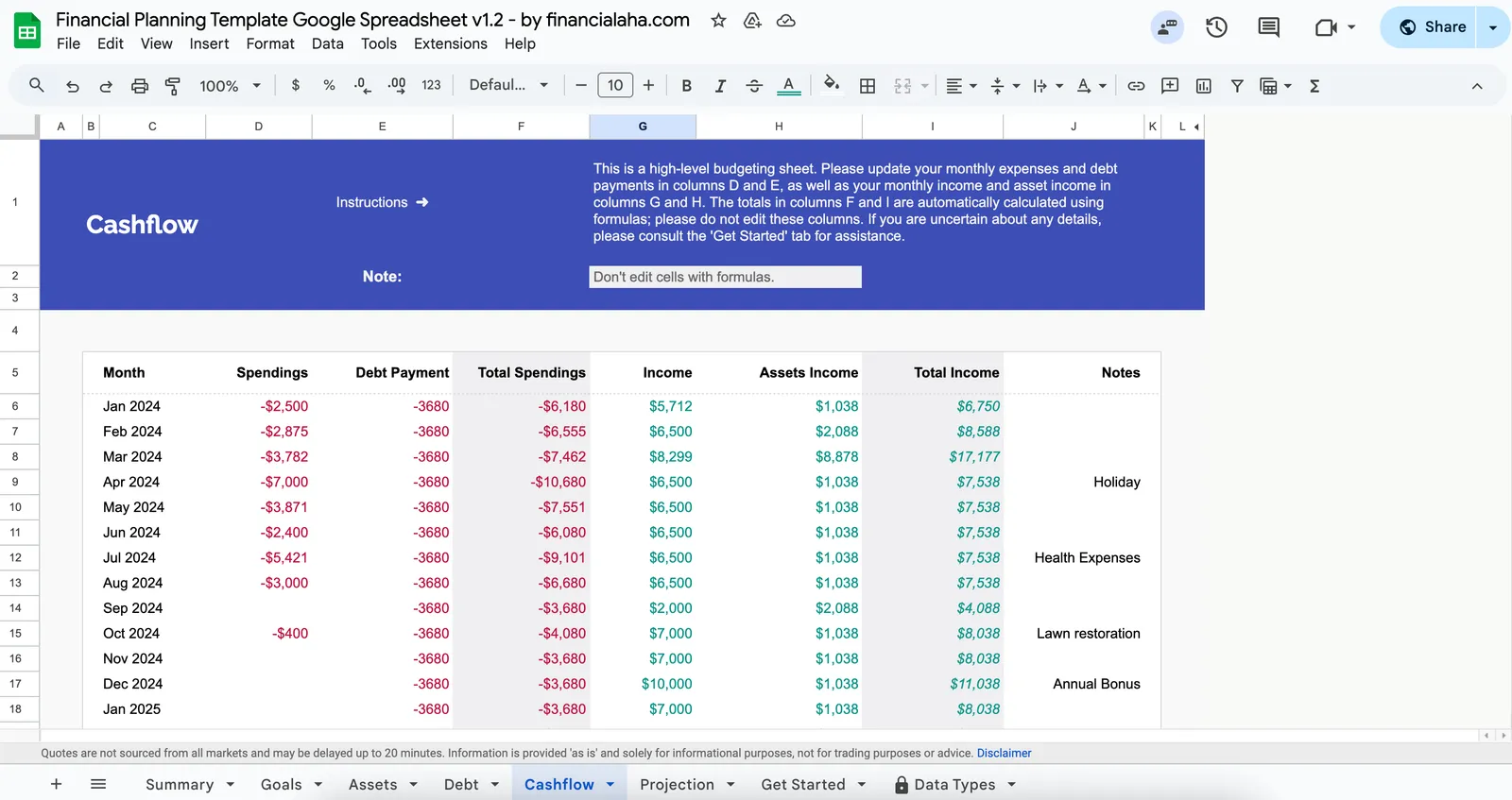
Visualize your income vs spending over time
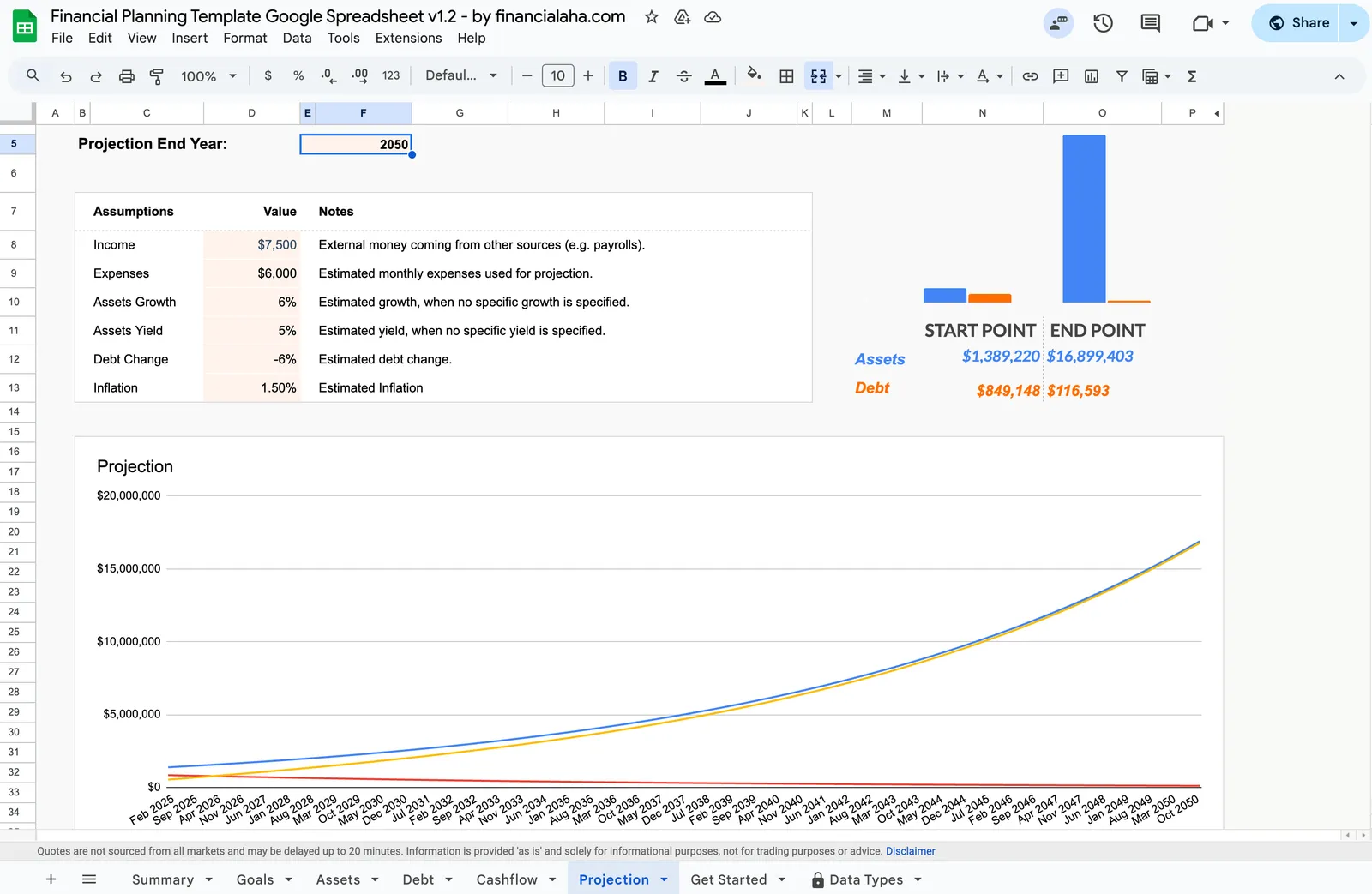
Project your financial future
Recommended Templates
The Right Templates for This Stage
Home buying touches multiple aspects of your finances. Here's which templates help at each stage:
Track your down payment progress alongside your overall financial picture. See how the home purchase affects your net worth projections and long-term goals. Useful from the moment you start saving through years after the purchase.
View templateCreate the post-purchase budget that accounts for all new homeowner expenses. Use it during the "practice period" to test whether the mortgage payment is sustainable before committing.
View templateTrack how your home equity builds over time alongside other assets. Particularly useful for seeing the full picture - your home is an asset, your mortgage is a liability, and watching the net effect motivates continued financial discipline.
View templateFree Tools
Calculators to Help You Plan
Common Questions
Buying Your First Home - Financial FAQ
How much should I save for a down payment?
20% avoids private mortgage insurance (PMI) and is the traditional target. But many first-time buyers put down 3-10% through FHA or conventional low-down-payment loans. The tradeoff: lower down payment means higher monthly costs (PMI typically adds $100-$200/month) and more interest over the life of the loan. Use the Financial Planning template to model different scenarios.
Should I pay off debt before buying a home?
It depends on the debt type and interest rate. High-interest credit card debt (15-25% APR) should generally be eliminated first - it hurts your debt-to-income ratio and costs more than mortgage rates. Student loans at 4-6% are less clear-cut. Lenders look at your total monthly debt payments relative to income, so reducing debt directly improves your borrowing capacity.
How do I budget for home maintenance?
The common guideline is 1% of your home value per year for maintenance. A $350,000 home means budgeting about $3,500/year or $292/month. This covers routine maintenance and builds a reserve for larger repairs. Some years you'll spend less, some years more - the key is having the funds available when something breaks.
Can I track my home equity in a spreadsheet?
Yes. The Net Worth Tracker includes property as an asset category and mortgage as a liability. Update your home value estimate annually (using comparable sales in your area) and your mortgage balance monthly. The difference is your equity, and the template shows how it grows over time.
When should I start financially preparing for a home purchase?
Ideally, 2-3 years before you plan to buy. This gives time to build a down payment, improve your credit score, reduce debt, and practice living on the post-purchase budget. Starting earlier makes the process less stressful and may qualify you for better mortgage rates.
Can't find the answer you're looking for? Contact our team
Ready to get started?
Download instantly and start managing your finances, or contact us to design a custom template package for your needs.