Life Event Guide
Financial Planning When Building Wealth
Building wealth is a long game - tracking your progress, maintaining a high savings rate, and staying consistent through market cycles matters more than picking the right stock.
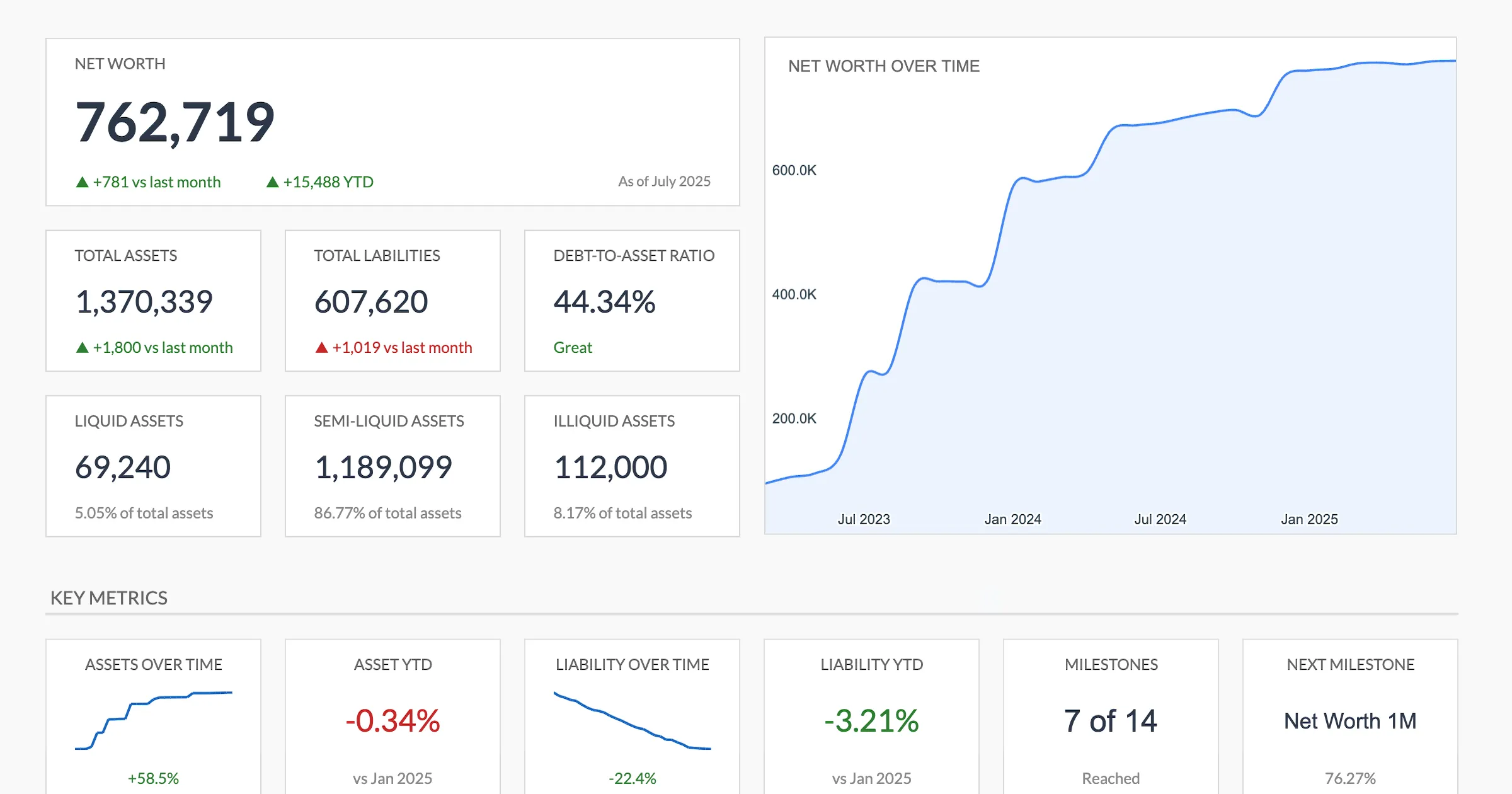
Financial Impact
The Financial Dynamics of Wealth Building
Wealth accumulation follows a predictable pattern for most people - slow at first, then accelerating as compound growth takes over. Understanding the mechanics helps set realistic expectations and identify the levers you actually control.
Savings rate drives early wealth accumulation more than returns
In the first 5-10 years of wealth building, how much you save matters more than investment returns. On a $80,000 salary, the difference between a 15% and 30% savings rate is $12,000/year - or $120,000 over a decade before any growth. Market returns add perhaps $15,000-$30,000 on top during that period. The savings rate is the variable you fully control, and it has an outsized effect early on.
Compound growth eventually does the heavy lifting
After 10-15 years of consistent saving and investing, compound returns start to exceed annual contributions. A portfolio of $300,000 growing at 7% generates $21,000 in a year - more than many people save annually. After 20-25 years, your money is earning more than you are contributing. This is the inflection point where wealth building accelerates, but reaching it requires patience and consistency.
Lifestyle inflation is the primary wealth destroyer
Earning more does not automatically build wealth - spending more at the same rate cancels it out. A household earning $150,000 that spends $140,000 builds wealth more slowly than one earning $80,000 that spends $55,000. The gap between income and spending is the only part that builds wealth. Tracking this gap over time reveals whether raises and promotions are actually improving your financial position.
Net worth milestones provide meaningful checkpoints
Tracking net worth monthly or quarterly shows real progress that is otherwise invisible. The first $100,000 often takes 5-7 years. The second $100,000 typically takes 3-4 years thanks to compound growth. Each subsequent milestone arrives faster. Having clear milestones and tracking progress toward them turns an abstract goal into something concrete and measurable.
Getting Ready
How to Structure Your Finances for Wealth Building
Calculate and track your savings rate
Your savings rate - the percentage of gross or net income you save and invest - is the single most important metric for wealth building. Calculate it monthly: (income minus spending) divided by income. A 20% savings rate is a solid foundation. 30-40% accelerates the timeline significantly. Tracking this number month over month reveals trends and keeps spending discipline visible.
Automate investments before spending decisions
Set up automatic transfers to investment accounts on payday - before the money can be spent on anything else. 401(k) contributions come out before you see the paycheck. Automatic transfers to IRA and brokerage accounts work similarly. This "pay yourself first" approach makes saving the default rather than something that requires willpower each month.
Track net worth monthly to see the full picture
Net worth (assets minus liabilities) captures everything - retirement accounts, taxable investments, real estate equity, cash, minus debts. Income and spending are flows; net worth is the cumulative result. Seeing this number grow month over month, even in months where the market is flat or down, provides motivation and catches problems early.
Set milestone targets with approximate timelines
Break the wealth-building journey into milestones: first $10,000 invested, first $50,000, first $100,000, and so on. Estimate when you expect to reach each one based on your savings rate and expected returns. These intermediate targets make a 20-30 year journey feel manageable and give you something concrete to work toward in the near term.
Review and optimize annually
Once a year, look at the full picture: savings rate trend, net worth growth, investment allocation, and any changes in income or expenses. Annual reviews catch lifestyle inflation that creeps in gradually, identify tax optimization opportunities (like maximizing retirement account contributions), and check whether your investment allocation still matches your timeline and risk tolerance.
See The Templates
Tools for this stage of life
Browse the templates that help with financial planning during major life transitions.
- Financial planning dashboard
- Monthly budget tracking
- Net worth over time
- Goal setting and tracking
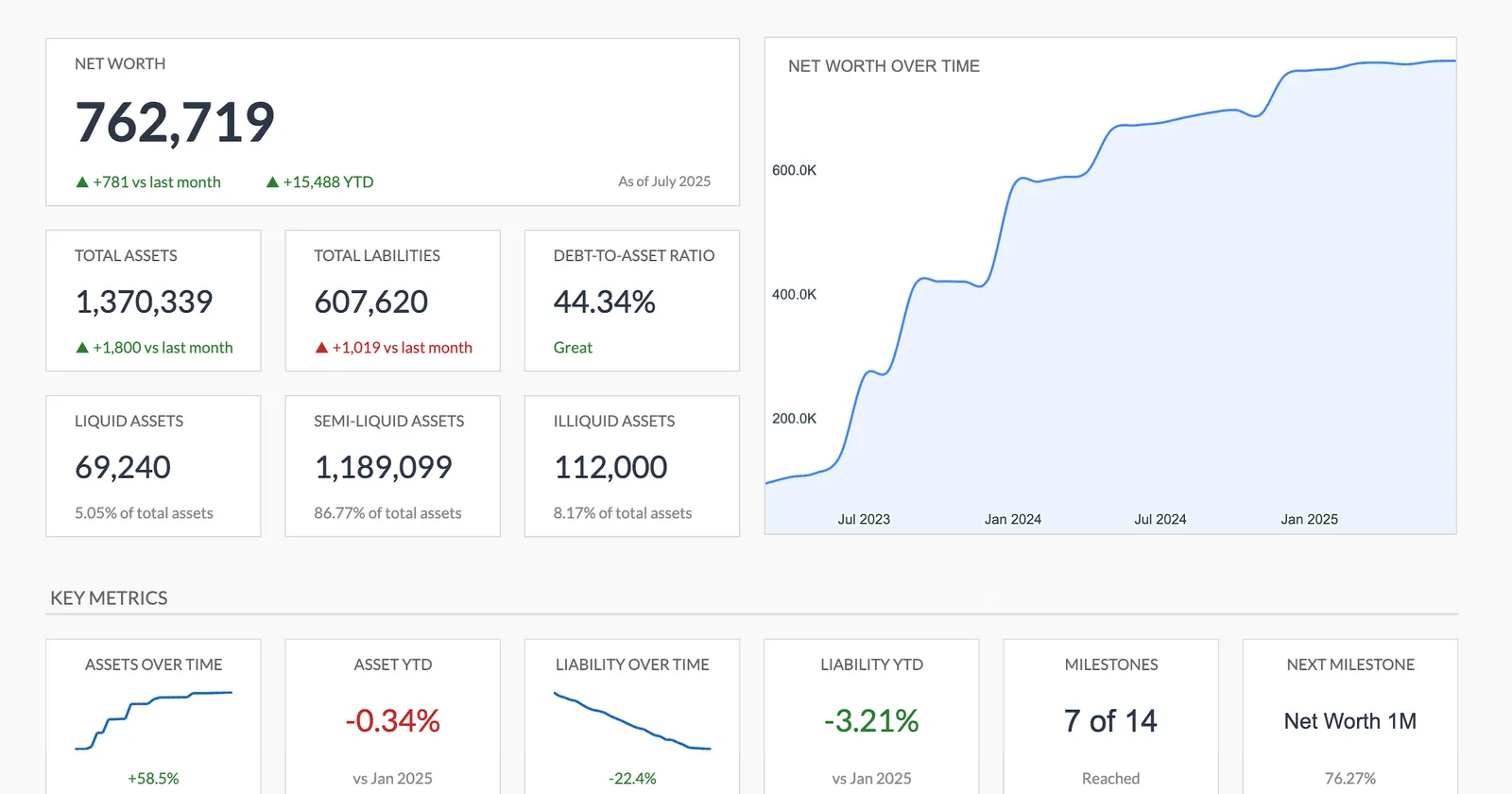

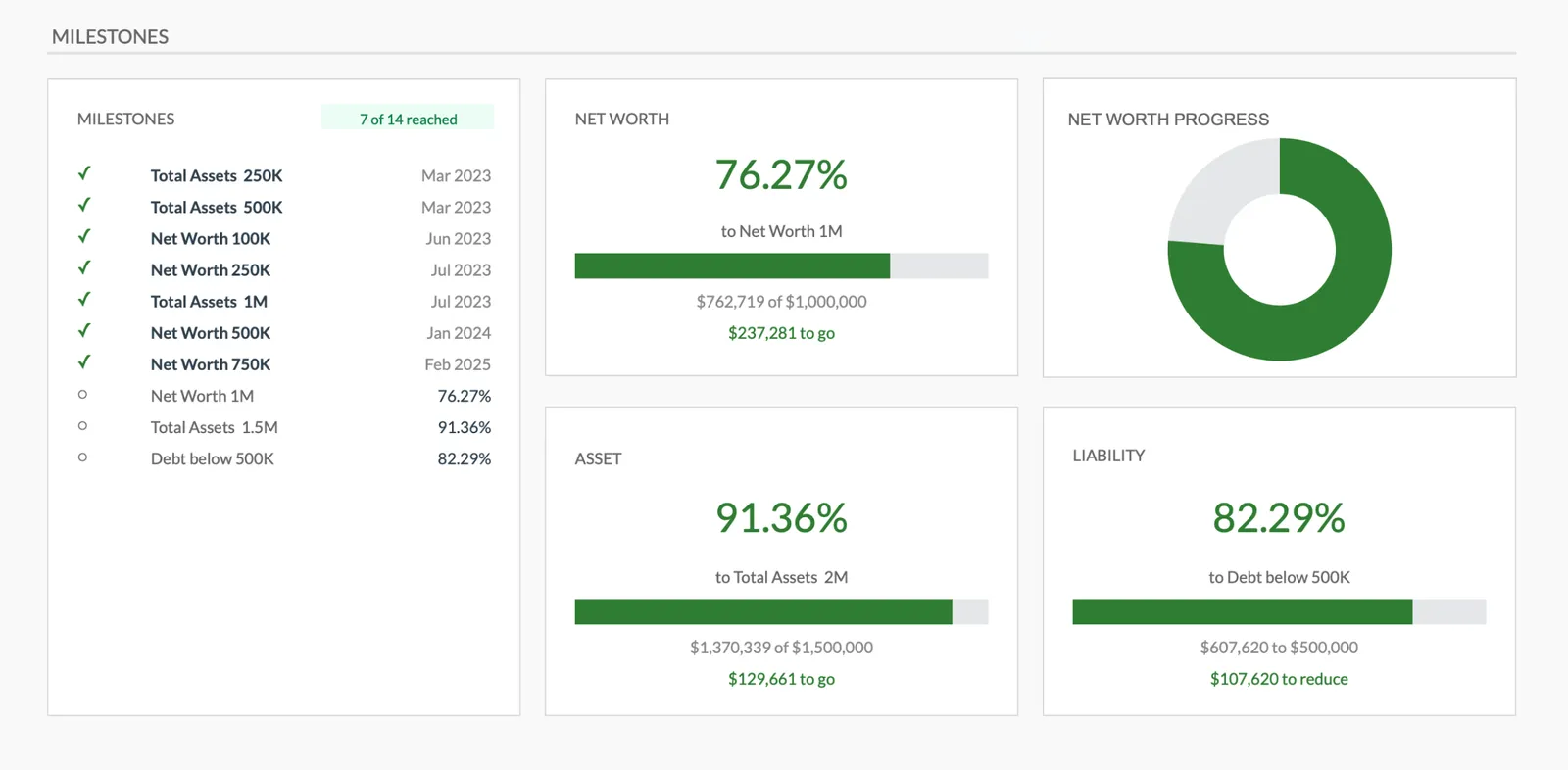
Track your net worth over time with charts
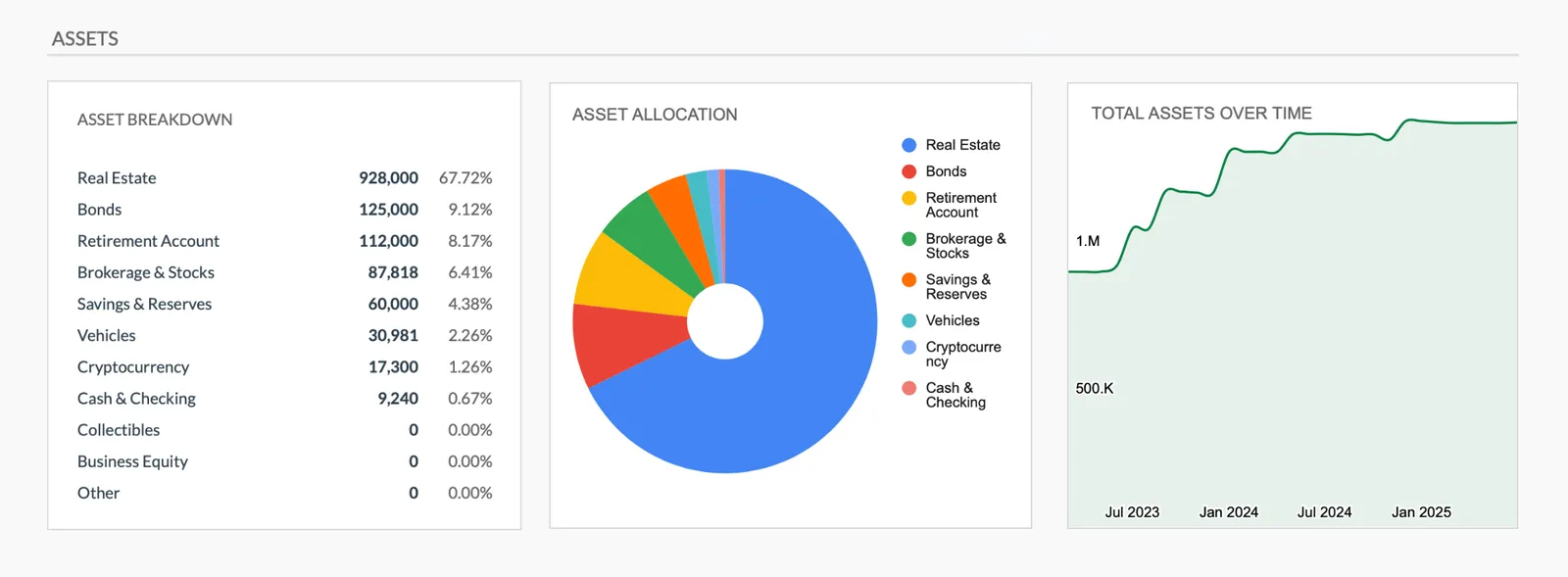
Breakdown of all your assets
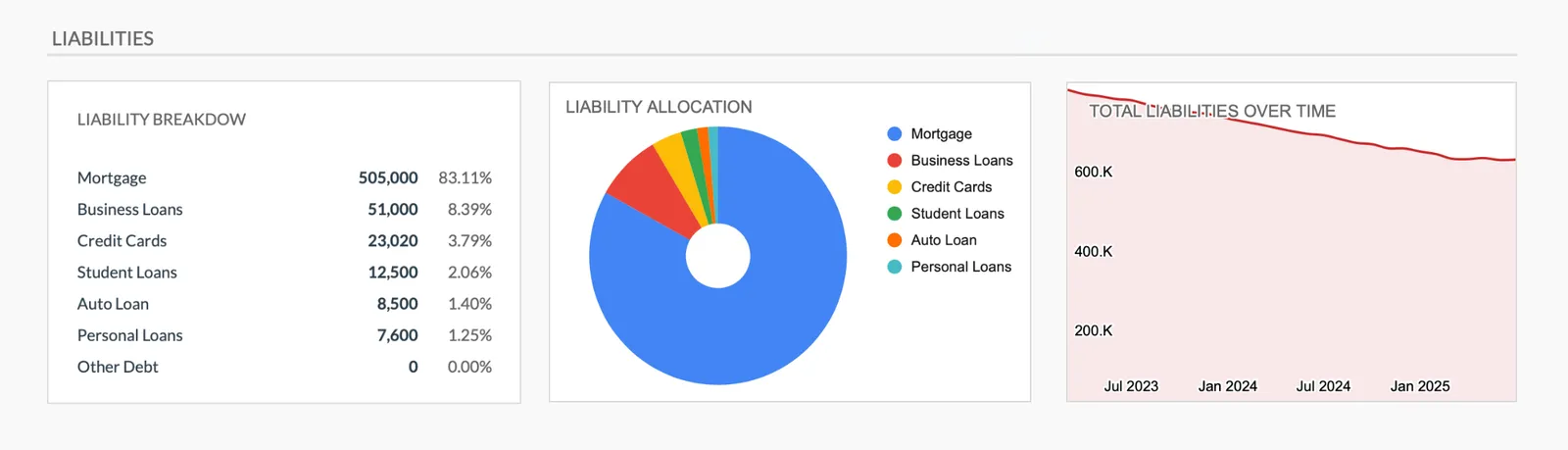
Track all debts and liabilities
Key financial health indicators
Set and celebrate net worth milestones
Recommended Templates
The Right Templates for This Stage
Wealth building is a multi-year journey that benefits from consistent tracking and periodic review. These templates cover the essentials:
Track all assets and liabilities in one place. Watch your net worth grow month by month, set milestone targets, and see how each financial decision moves the needle. This is the scoreboard for wealth building.
View templateMap out the full financial picture - income, expenses, investments, and projections. Model different savings rates and see how they affect your wealth-building timeline. Useful for annual planning and milestone setting.
View templatePlan spending and saving across all 12 months with a year-long view. Identify seasonal spending patterns, plan for large irregular expenses, and track whether your savings rate stays consistent throughout the year.
View templateFree Tools
Calculators to Help You Plan
Common Questions
Building Wealth - Financial FAQ
How much should I be saving to build wealth?
There is no universal right number, but many financial frameworks suggest saving at least 20% of gross income for meaningful wealth accumulation. The FIRE community often targets 50% or more. What matters most is consistency and the trend - a savings rate that increases over time as income grows (rather than lifestyle expanding to match) is a strong indicator of wealth-building progress.
How do I track wealth-building progress?
Net worth tracking is the most comprehensive method. Update all account balances monthly - retirement accounts, brokerage accounts, bank accounts, real estate estimates, and subtract all debts. The month-to-month change is less important than the 6-12 month trend. Plotting this over time shows whether your overall financial trajectory is heading in the right direction.
What is more important - earning more or spending less?
Both matter, but they work differently. Spending less has an immediate, guaranteed effect on your savings rate - every dollar not spent is a dollar saved. Earning more creates opportunity but only builds wealth if the extra income is actually saved rather than spent. In practice, the combination of increasing income while keeping spending relatively stable is what accelerates wealth building the most.
How long does it take to build meaningful wealth?
With a 20% savings rate and 7% average investment returns, reaching a portfolio of 10x annual spending takes roughly 20-25 years. A 30% savings rate shortens this to about 15-18 years. The timeline depends heavily on starting point, income trajectory, and market conditions. The first few years feel slow, but compound growth creates noticeable acceleration after the first 7-10 years.
Can't find the answer you're looking for? Contact our team
Ready to get started?
Download instantly and start managing your finances, or contact us to design a custom template package for your needs.