United States
Personal Finance Tracker for United States
Bring your entire financial life into one view - income, expenses, savings, investments, and debt - in a Google Sheets template built for daily use.
United States
Personal Finance Tracking in the United States: What Matters
Keeping track of personal finances in the US means managing multiple income types, account structures, and financial obligations. A centralized tracker makes this manageable.
Multiple income streams are increasingly common
Between W-2 employment, freelance 1099 work, investment income, rental properties, and side hustles, many Americans earn from multiple sources. A finance tracker that accommodates different income types - each with different tax implications - gives a clearer picture than tracking just a paycheck.
The US has many account types to monitor
Checking, savings, high-yield savings, 401(k), Roth IRA, HSA, 529, brokerage, crypto - Americans often have 5-10+ financial accounts. Tracking balances across all of them in one place prevents the "I have money somewhere but not sure where" feeling.
Debt management is a core part of US finances
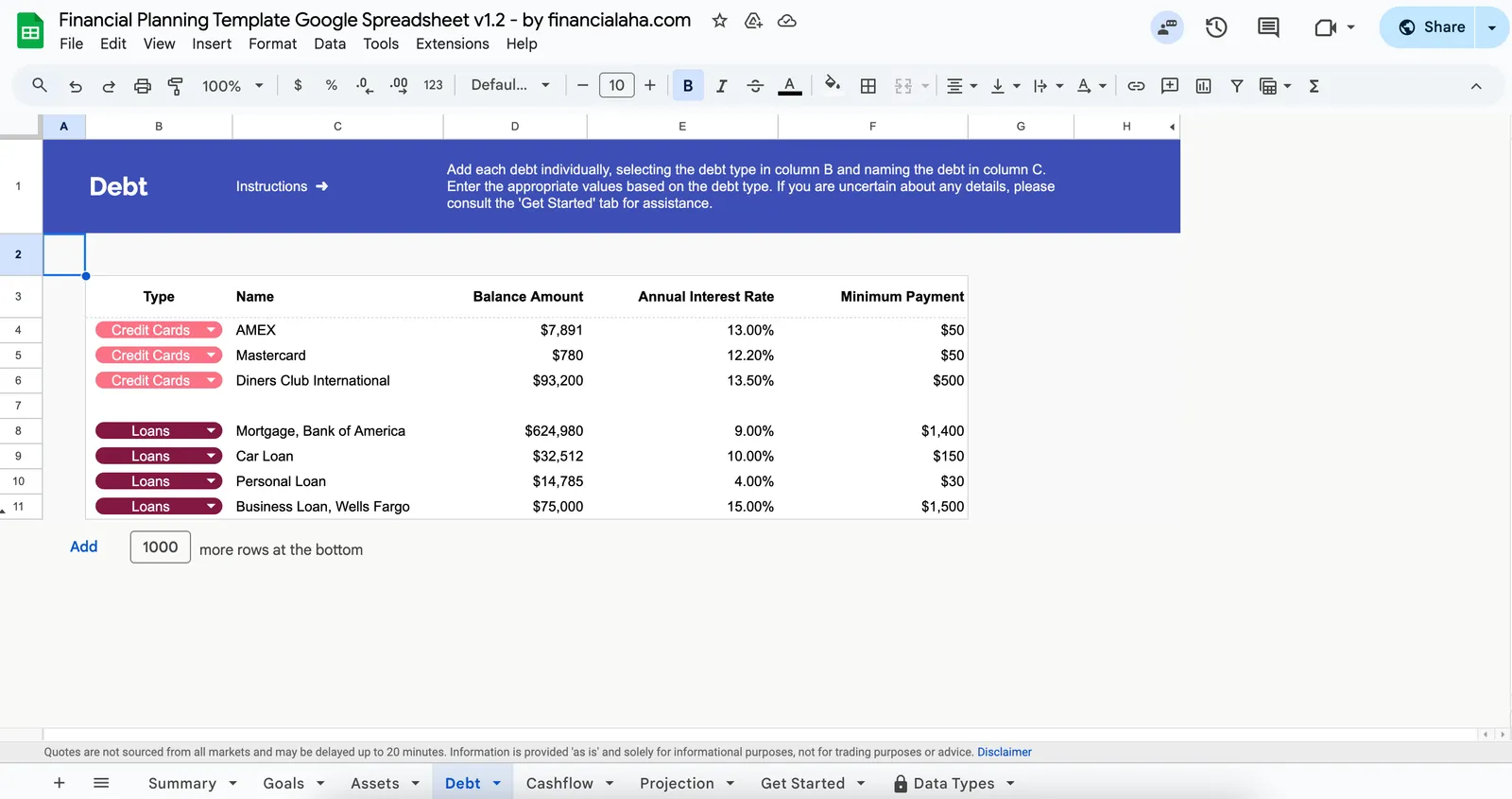
Student loans, credit cards, auto loans, mortgages, and personal loans all compete for monthly cash flow. Tracking minimum payments, interest rates, and total balances helps prioritize which debts to address first - whether using the avalanche (highest interest) or snowball (smallest balance) approach.
Savings rate is the key metric
The US personal savings rate has fluctuated between 3-7% in recent years. Tracking your savings rate - the percentage of income you keep and invest - provides a single number that captures your overall financial trajectory. A finance tracker that calculates this automatically makes it visible at a glance.
Get the Personal Finance Tracker
Getting Started
How to Set Up This Template for the United States
Connect all income sources
Enter every income source: primary job (net pay), side work, investment dividends, rental income, and any other sources. Use after-tax amounts for W-2 income and gross amounts for 1099 income (noting the tax obligation).
Set up spending categories
Create categories that match your life: housing, utilities, groceries, dining, transportation, healthcare, insurance, subscriptions, personal care, and discretionary spending. Start broad and add detail where you want more visibility.
Add all account balances
Enter current balances for every financial account - bank accounts, retirement accounts, investment accounts, and all debts. This creates your starting snapshot and enables net worth tracking alongside daily finance tracking.
Set savings and debt payoff goals
Define targets: emergency fund amount, monthly savings goal, debt payoff timeline. Having these visible in the tracker makes it easier to align daily spending decisions with longer-term objectives.
Establish a regular tracking routine
Pick a frequency - daily, every few days, or weekly. The key is consistency. Some people log expenses each evening, others do a weekly review. The template works with any cadence as long as you're capturing all transactions.
See It In Action
What the template looks like
Browse through the template to see how it handles budgeting, categories, and expense tracking - all adaptable to your local financial setup.
- Built-in currency selector
- Customizable categories
- Budget vs actual tracking
- Visual charts and summaries
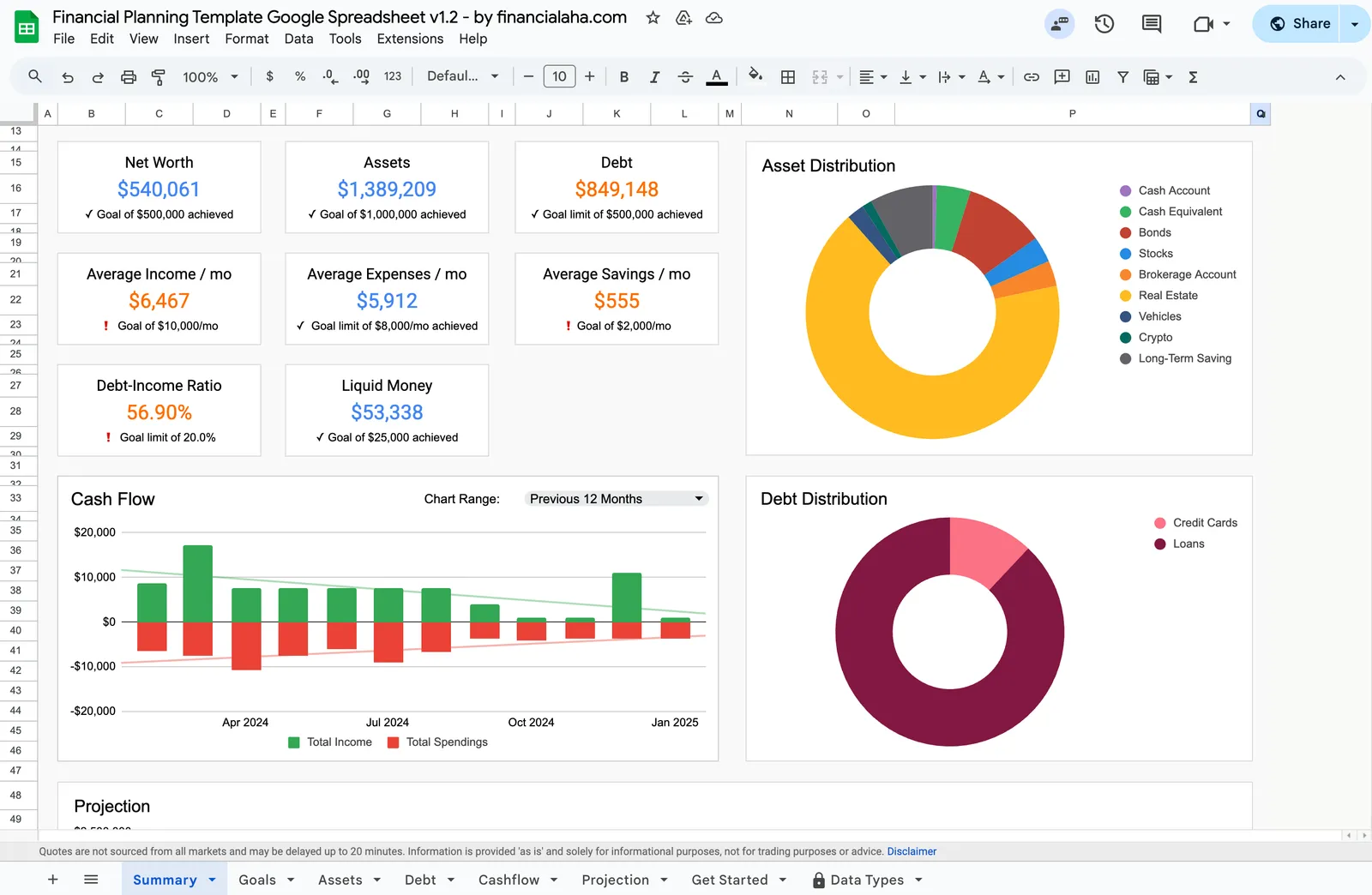
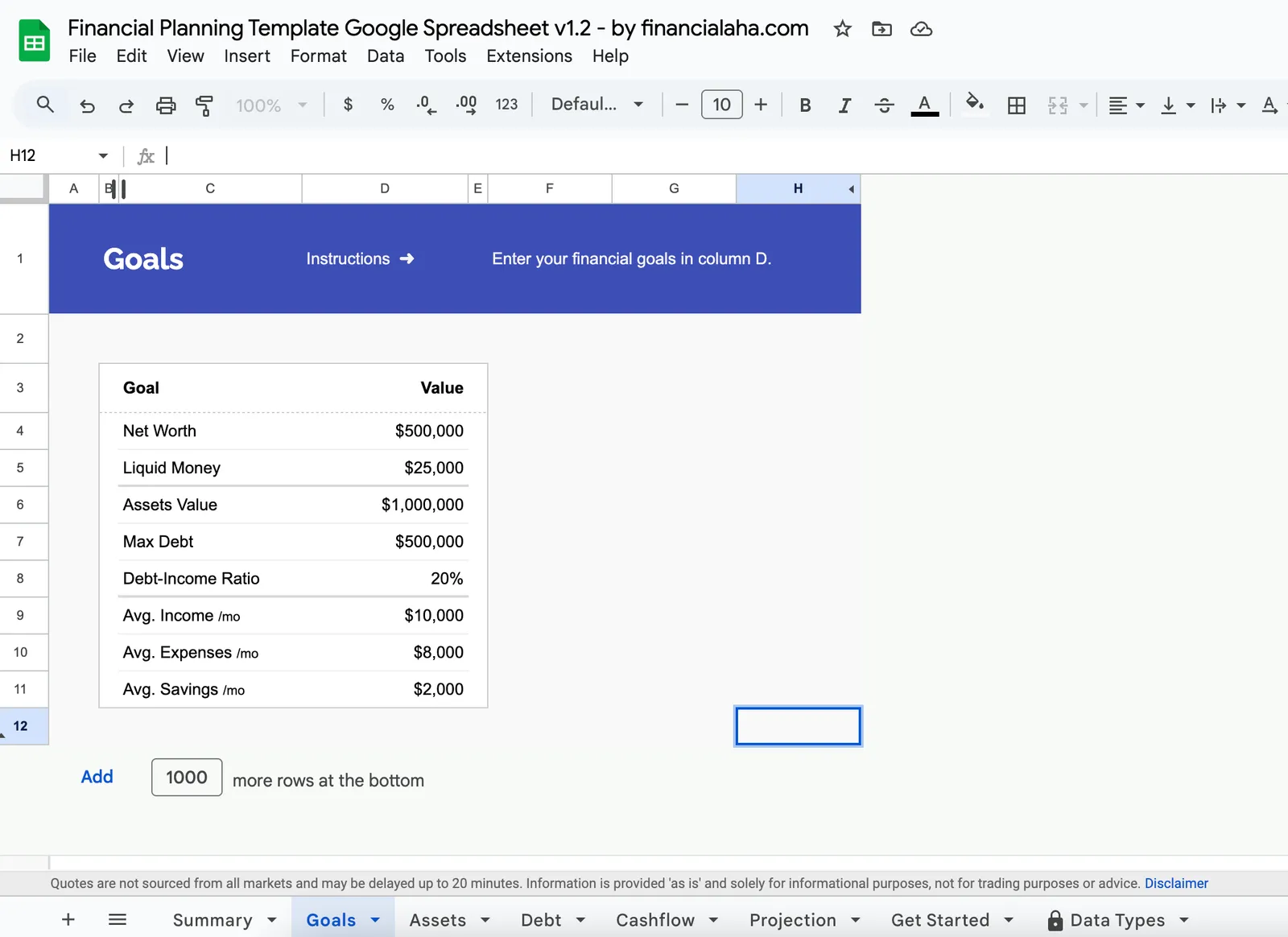
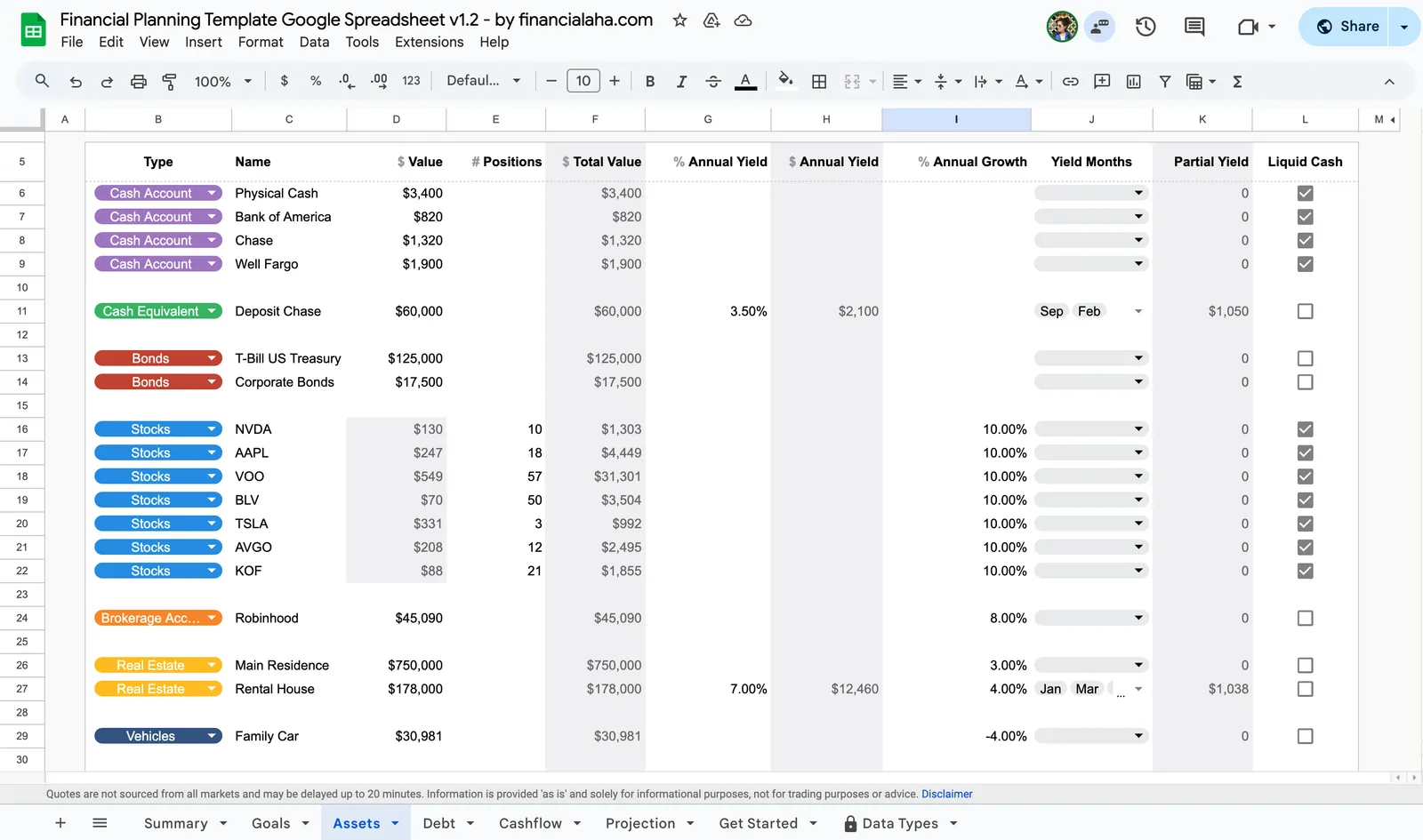
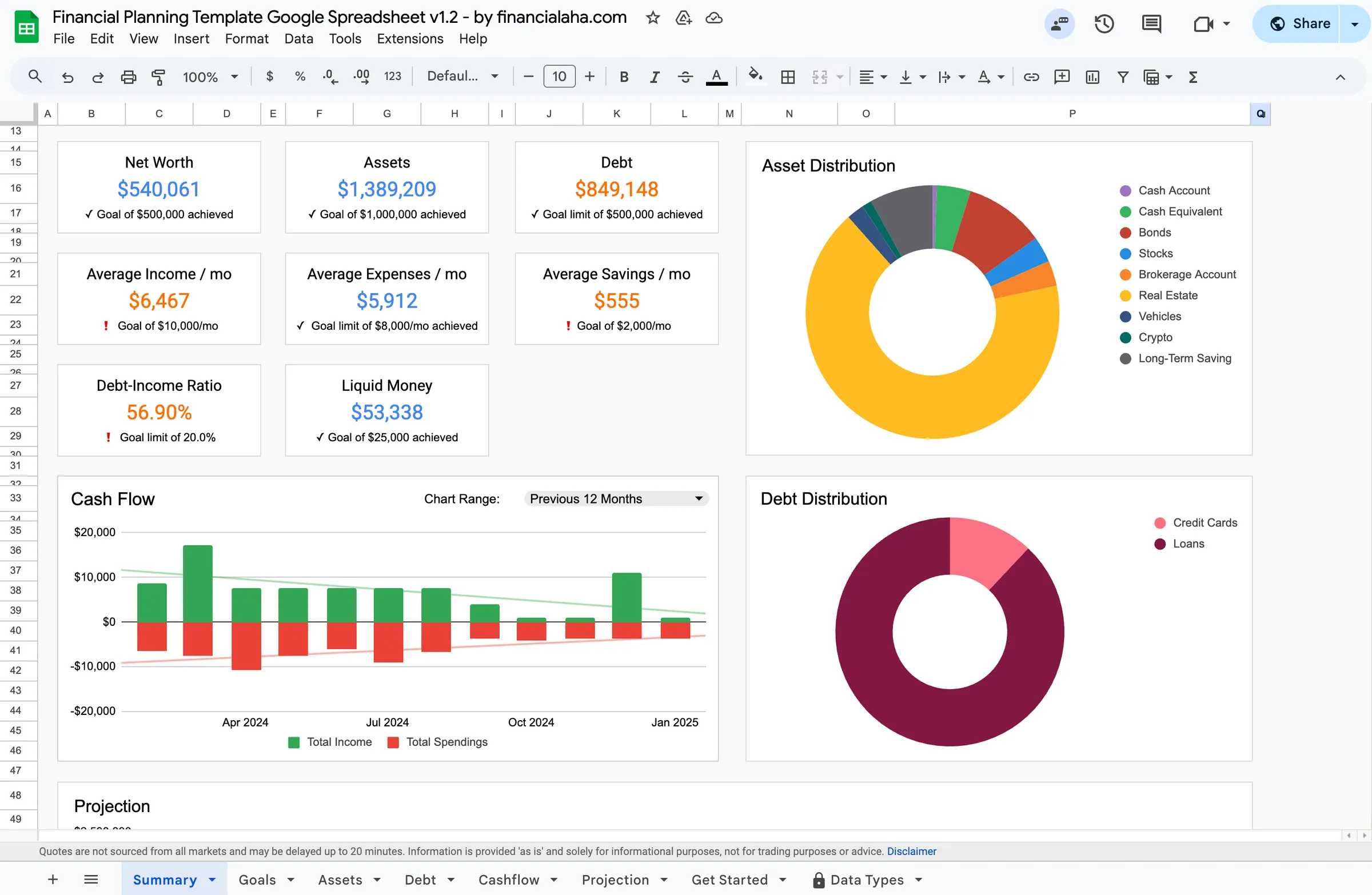
Complete financial overview with net worth and goals
Set and track progress toward financial milestones
Track all your assets in one place
Monitor and plan debt repayment
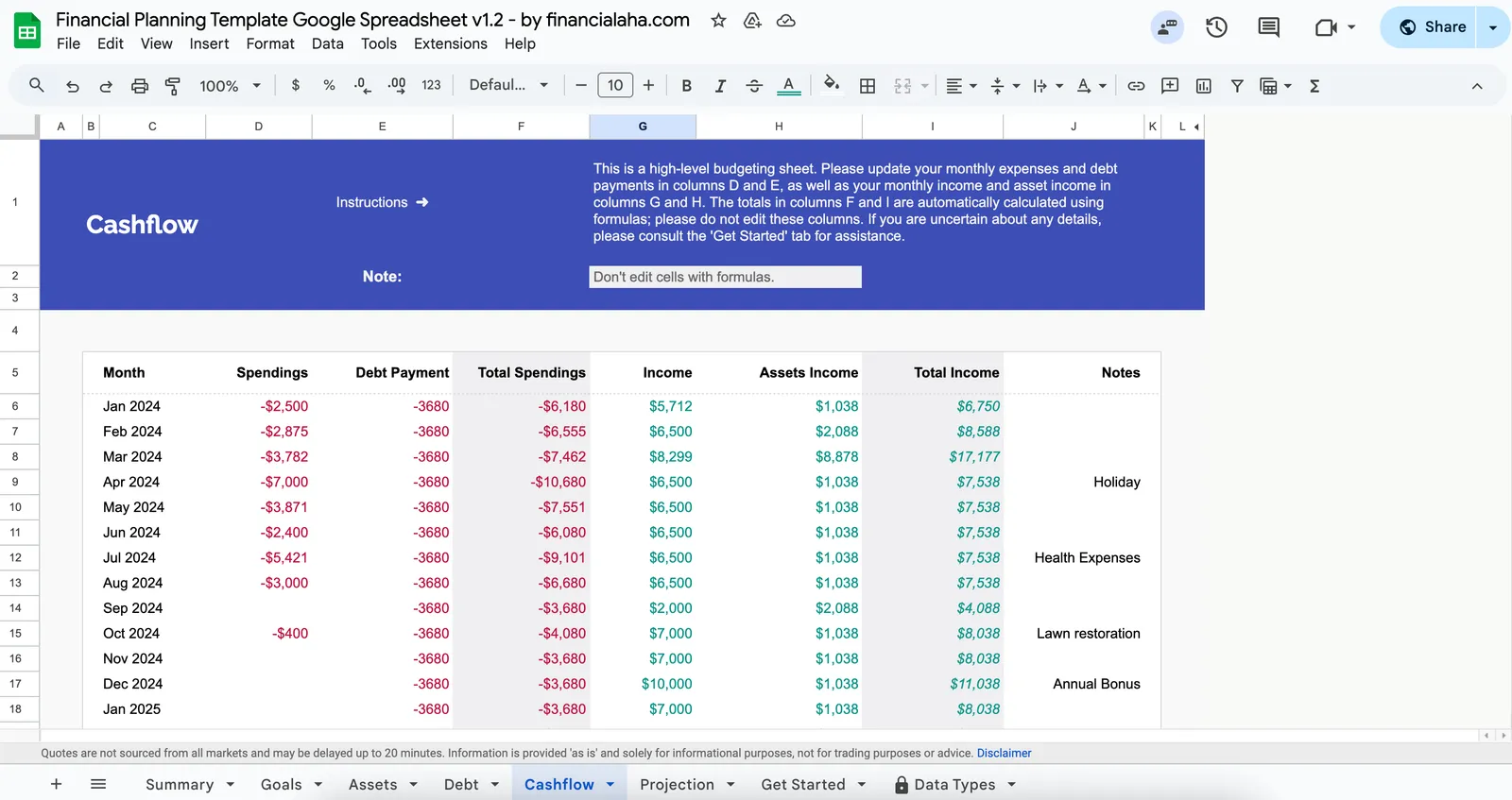
Visualize your income vs spending over time
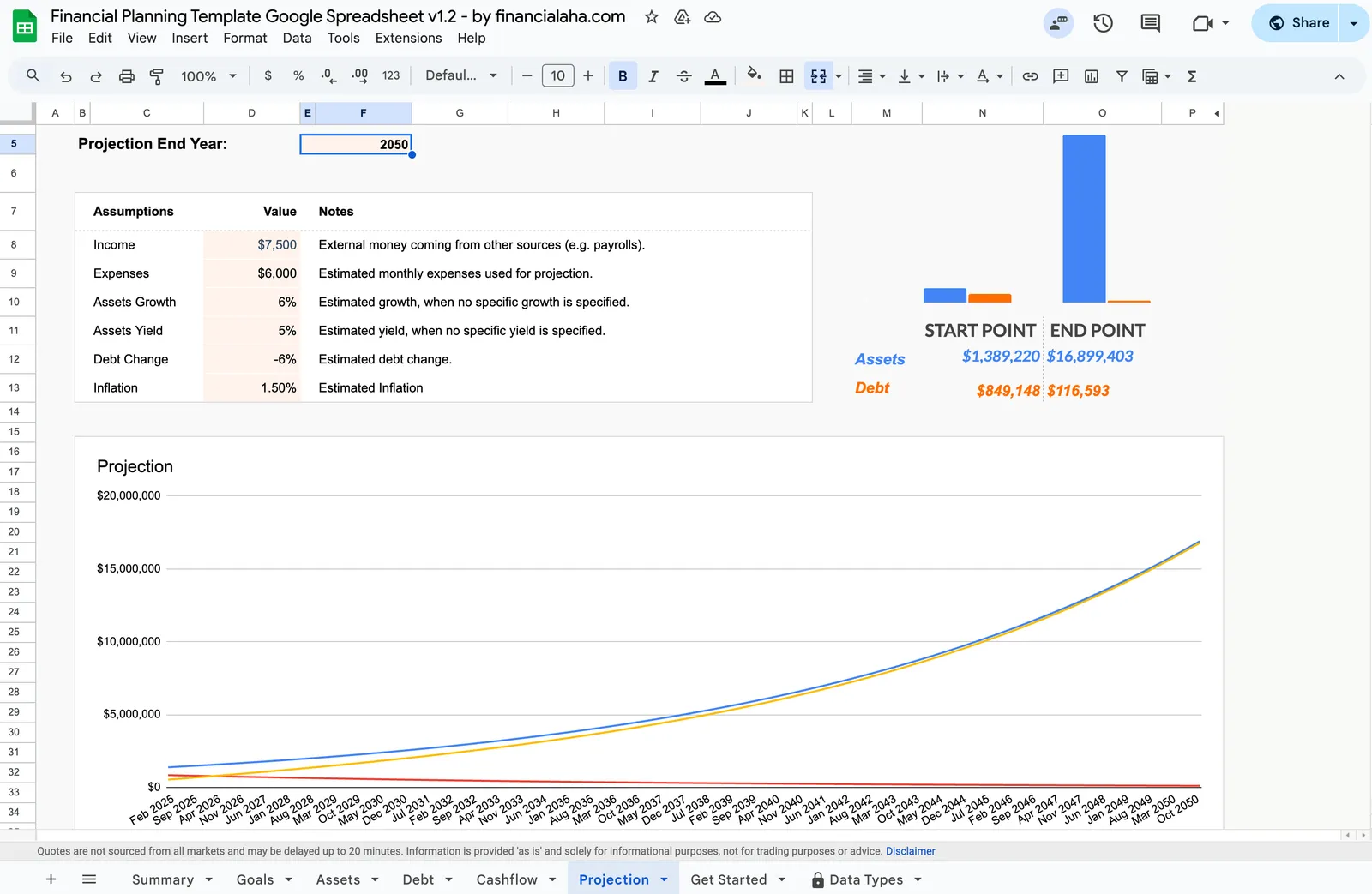
Project your financial future
Common Questions
Personal Finance Tracker for United States - FAQ
How is this different from Mint or YNAB?
Apps like Mint and YNAB connect to bank accounts for automatic transaction imports. This template uses manual entry in Google Sheets, which means more work but also more control, privacy, and customization. You own your data in your own Google Drive - no third-party access to your financial information.
Can I track investments and their returns?
You can track investment account balances and contributions. For detailed performance tracking with specific holdings and returns, a dedicated investment tracking tool is more appropriate. This template is about the big picture - how much goes in, overall balance changes, and your savings rate.
Does it work for couples or families?
Yes. Add income lines for each earner and shared expense categories. Some couples prefer a single combined tracker, while others maintain separate trackers and share only joint expenses. The template is flexible enough for either approach.
How do I handle irregular expenses?
Log them as they occur in the appropriate category. For large annual expenses (insurance premiums, property tax, holiday spending), some people divide the annual cost by 12 and "budget" monthly even if the payment is annual. Both approaches work.
Can I use this for a small business?
This is designed for personal finance, not business accounting. For side hustles or freelance income, you can track the income and basic expenses. But if you need to manage invoices, track inventory, or prepare business tax documents, dedicated business accounting software is more appropriate.
Can't find the answer you're looking for? Contact our team
Ready to get started?
Download instantly and start managing your finances, or contact us to design a custom template package for your needs.