United States
Monthly Budget Template for United States
Track your income in USD, manage 401(k) contributions, HSA deposits, tax withholdings, and everyday expenses - all in a Google Sheets template you own.
United States
Budgeting in the United States: What to Know
The US financial system has unique elements that shape how people budget. Understanding these can help you set up a template that reflects your actual financial picture.
Pre-tax deductions change your take-home pay significantly
Between 401(k) contributions, HSA deposits, health insurance premiums, and federal/state/local taxes, the gap between gross and net pay can be substantial. Some people find it useful to budget from their actual direct deposit amount rather than their salary figure. If you contribute to a 401(k) or HSA, those amounts leave your paycheck before you see it.
Federal and state taxes vary widely
The US has a layered tax system - federal income tax (10-37% marginal rates), plus state income tax in most states (some states like Texas, Florida, and Washington have none). The standard deduction for 2025 is $15,000 for single filers and $30,000 for married filing jointly. Your effective tax rate depends on your specific situation, so using your actual paycheck amount is more reliable than estimating.
Health insurance is a major budget category
Unlike countries with universal healthcare, US health insurance premiums can be a significant monthly expense - whether through an employer plan, the ACA marketplace, or COBRA. Deductibles, copays, and out-of-pocket maximums add another layer. Worth tracking these separately to see the full picture of healthcare spending.
Credit and debt play a large role in US finances
Student loans, auto loans, credit card balances, and mortgages are common in the US. The average American household carries multiple forms of debt. A budget that gives these their own line items - rather than lumping them together - tends to provide clearer visibility into where money goes each month.
Get the Monthly Budget Template
Getting Started
How to Set Up This Template for the United States
Start with your net pay
Enter your actual take-home pay - the amount deposited into your bank account after taxes, 401(k), HSA, and insurance deductions. If you have multiple income sources (W-2 job plus 1099 freelance work), add each as a separate income line.
Set up US-relevant expense categories
Add categories that reflect American financial life: health insurance copays, student loan payments, car insurance, property tax (or rent), gas/electric utilities, and subscriptions. The template is fully customizable - rename any category to match your spending patterns.
Track retirement contributions separately
If you contribute to a 401(k) through your employer, that money leaves your paycheck before you see it. Track Roth IRA contributions or brokerage investments as a budget category since those come from your take-home pay. The 2025 IRA contribution limit is $7,000 ($8,000 if 50+).
Account for irregular US expenses
Some expenses hit at specific times: property tax bills (often semi-annual), annual insurance renewals, estimated quarterly tax payments for freelancers, and open enrollment health insurance decisions. Building these into the months they occur helps avoid surprises.
Use the currency selector for USD
The template includes a built-in currency selector. Choose USD or $ as your display currency. All calculations are currency-agnostic, so the math works regardless of which symbol is shown.
See It In Action
What the template looks like
Browse through the template to see how it handles budgeting, categories, and expense tracking - all adaptable to your local financial setup.
- Built-in currency selector
- Customizable categories
- Budget vs actual tracking
- Visual charts and summaries

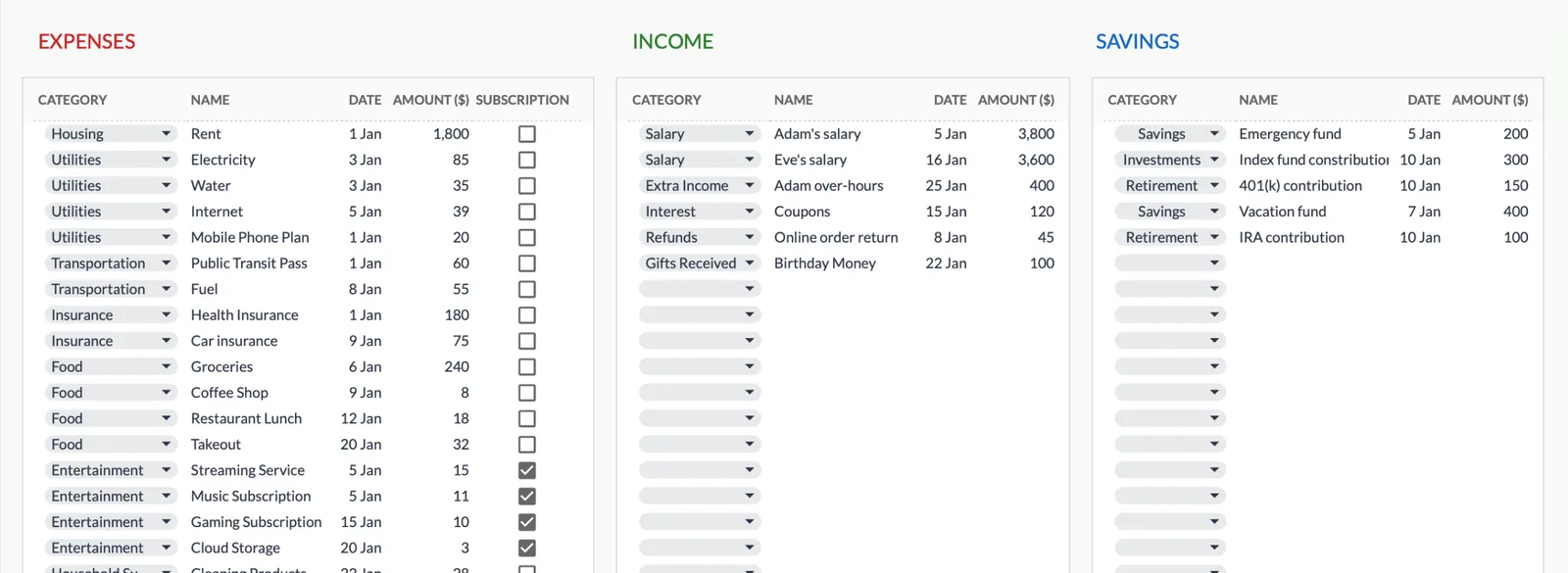
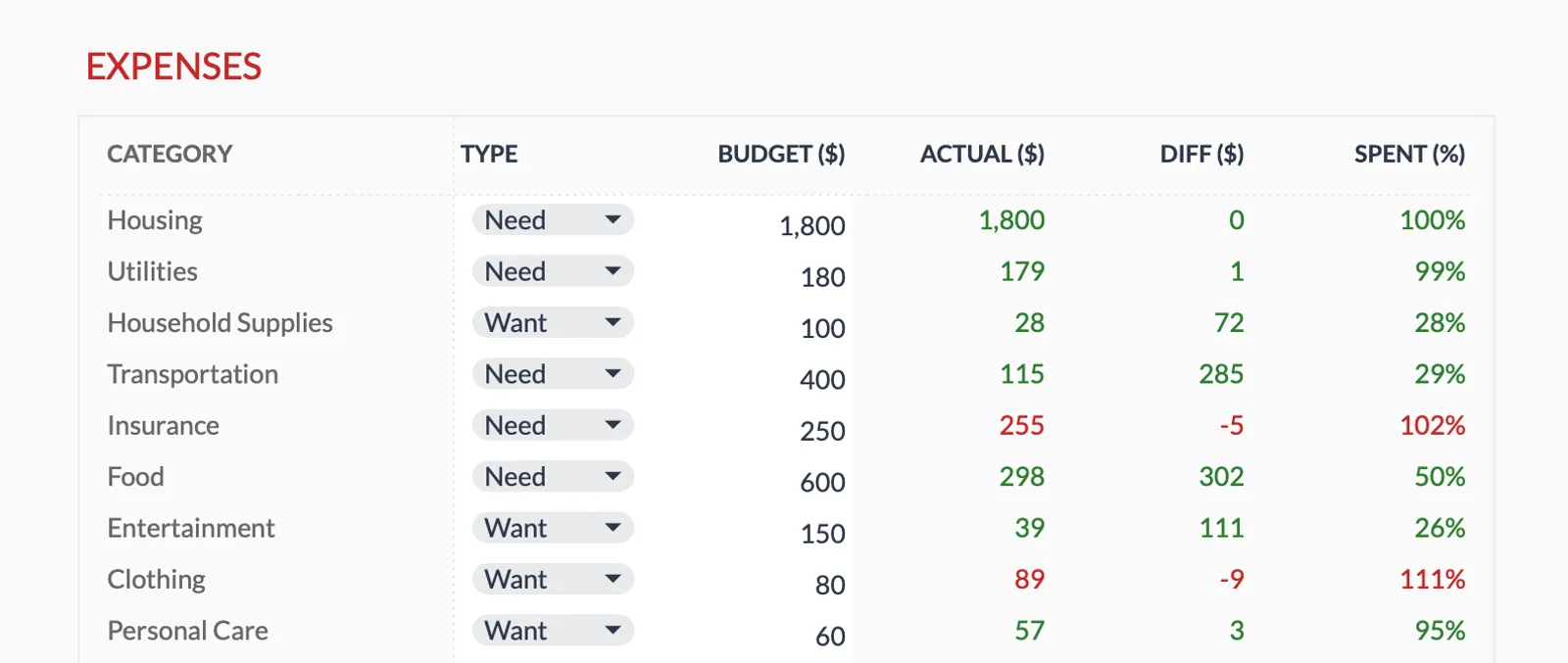
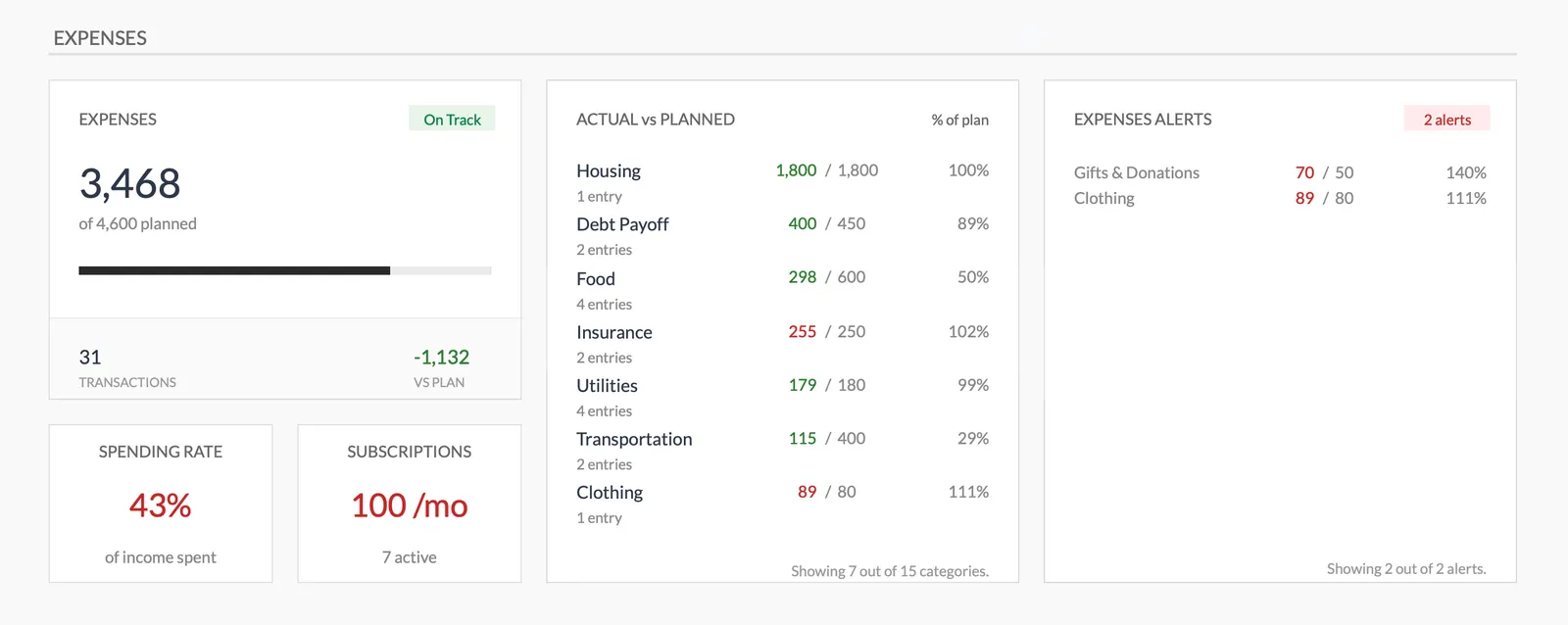
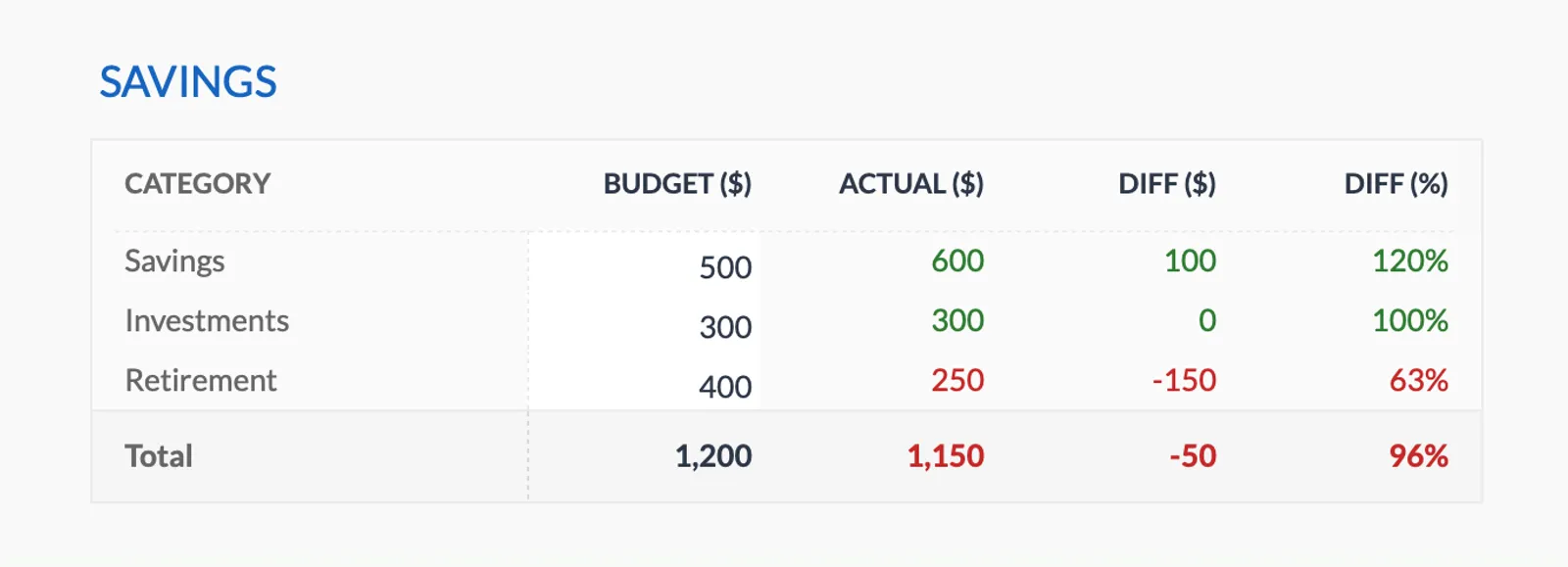
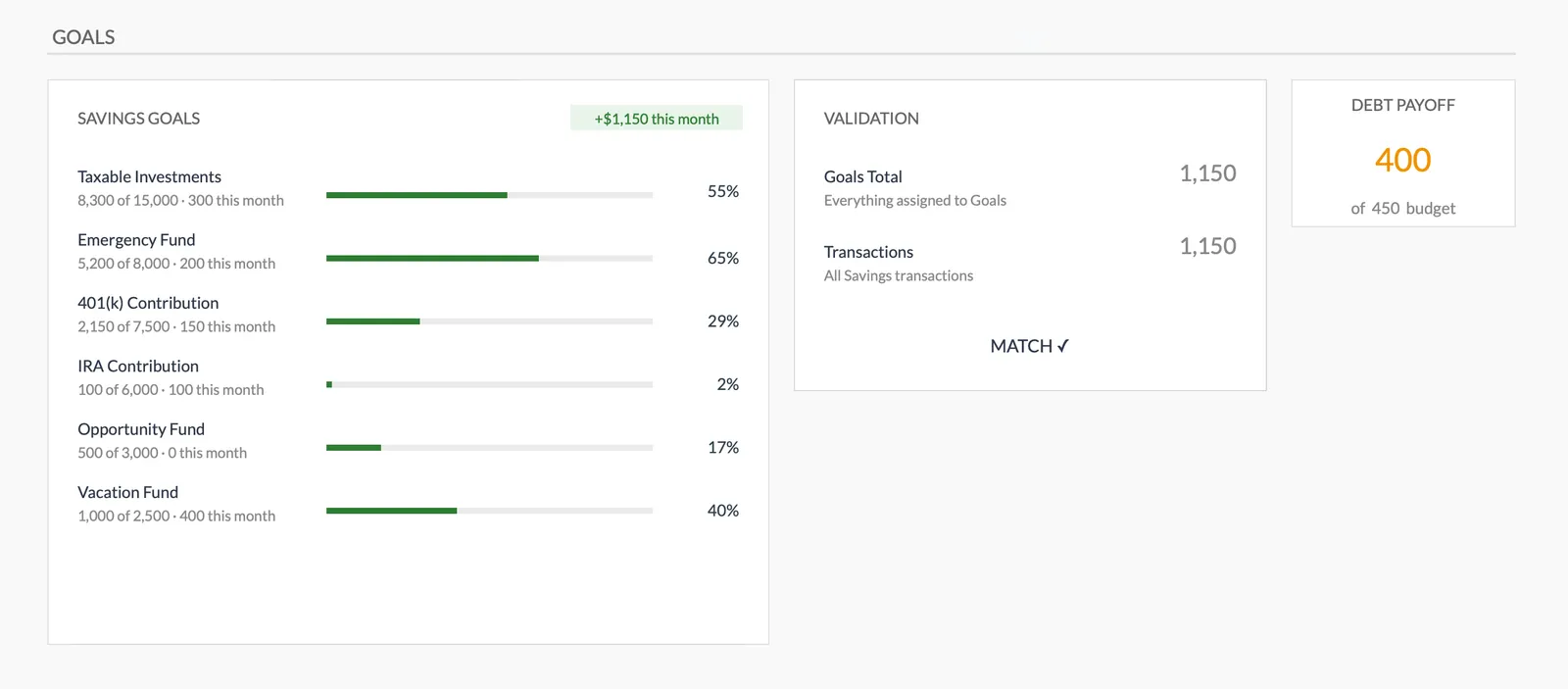
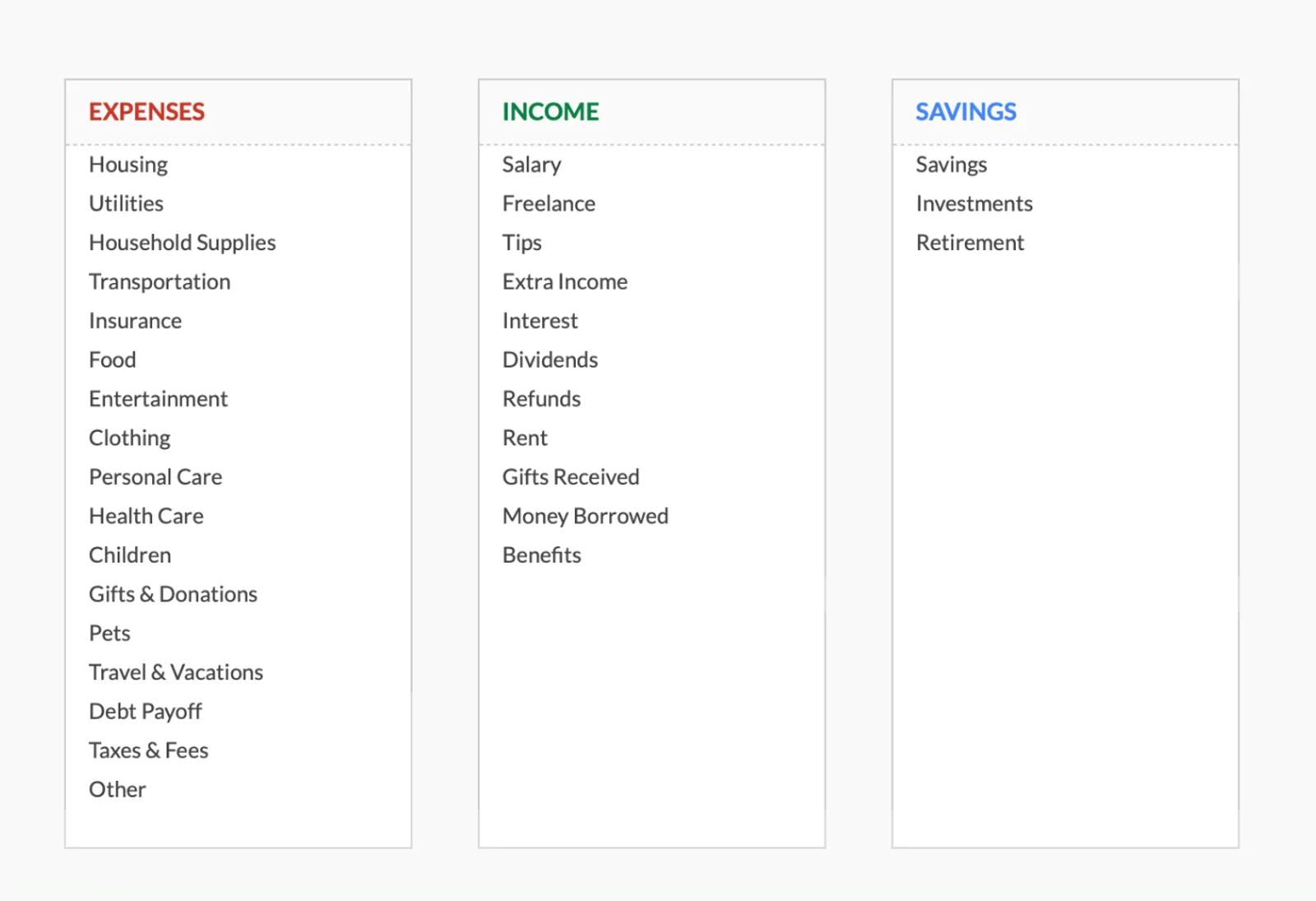
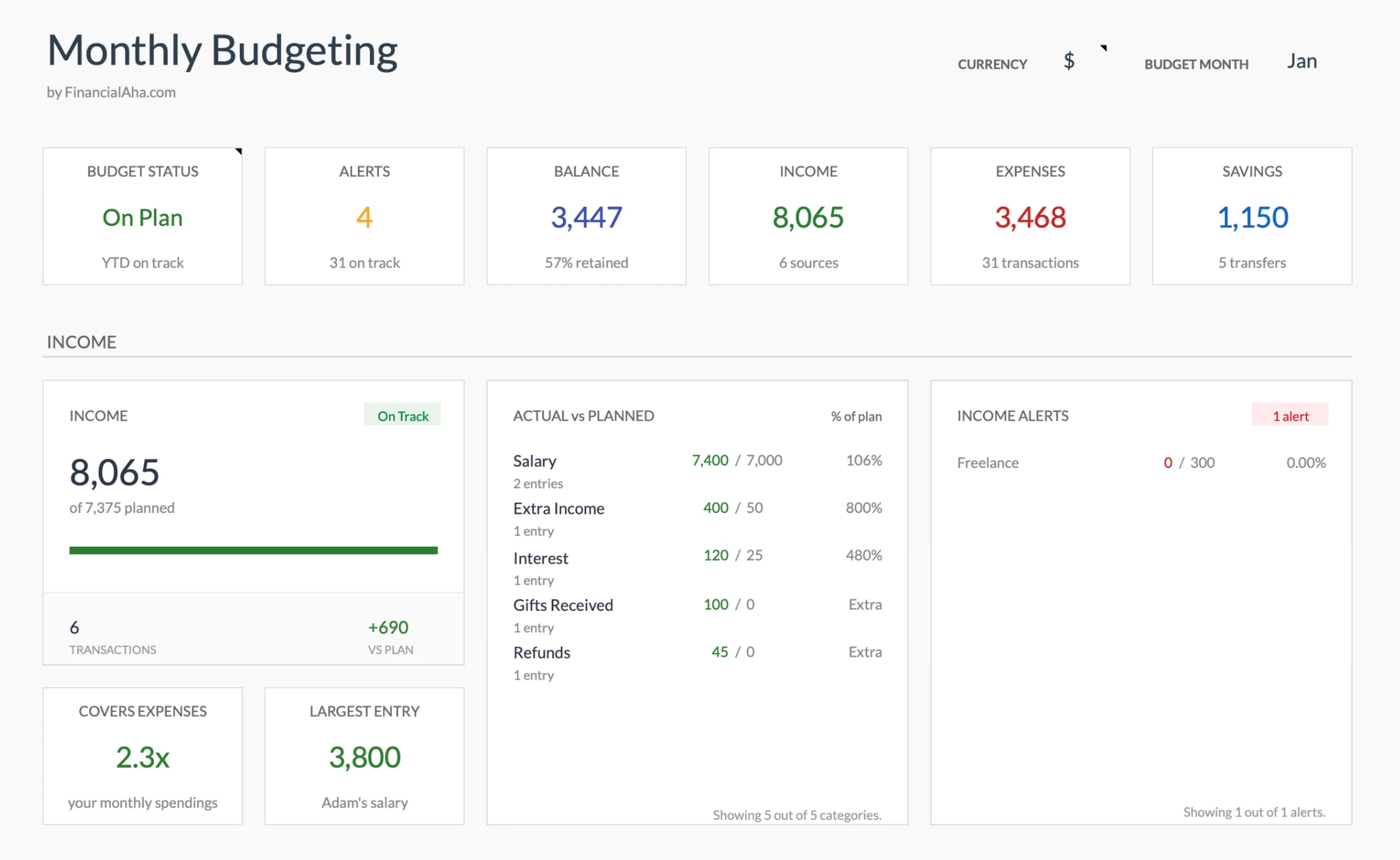
Dashboard with income, expenses, and savings at a glance
Log transactions with automatic categorization
Set targets per category and track actual spending
Visual breakdown of where your money goes
Track savings goals alongside your budget
Monitor progress toward financial goals
Fully customizable expense, income, and savings categories
Common Questions
Monthly Budget Template for United States - FAQ
Does this template work with US dollars?
Yes. Use the built-in currency selector to display USD. All calculations are currency-agnostic, so the formulas work the same regardless of your chosen currency display.
Can I track 401(k) and IRA contributions?
Employer 401(k) contributions are deducted before your paycheck, so they don't need a budget line - just use your net pay as income. For Roth IRA or taxable investment contributions you make manually, add those as a budget category to track against contribution limits.
How do I handle variable income from freelance or 1099 work?
Add each income source as a separate line item. For variable income, some people enter their lowest typical month as the baseline and treat anything above that as a bonus. Don't forget to set aside roughly 25-30% of 1099 income for self-employment and income taxes.
Can I budget for multiple bank accounts?
The template tracks total income and total expenses - it doesn't connect to bank accounts. You can enter income and expenses regardless of which account they flow through. Some people find it helpful to add a note in the category name indicating which account a payment comes from.
Is this template updated for current US tax brackets?
This is a budgeting template, not a tax calculator. You enter your actual take-home pay rather than calculating taxes within the sheet. For tax estimation, the free income tax calculator on this site can help approximate your federal and state tax burden.
Can't find the answer you're looking for? Contact our team
Explore More
Free Tools for United States
Ready to get started?
Download instantly and start managing your finances, or contact us to design a custom template package for your needs.