United Kingdom
Retirement Planning Template for United Kingdom
Map out your retirement - State Pension, workplace pension, SIPP, ISAs, and projected expenses - in a Google Sheets template you own.
United Kingdom
Retirement Planning in the United Kingdom: Key Factors
UK retirement planning revolves around the State Pension, workplace pensions, and personal savings. Understanding how these fit together is essential for a realistic plan.
The State Pension provides a foundation
The full new State Pension is £221.20/week (2025-26), requiring 35 qualifying years of National Insurance contributions. You can check your record and projection at gov.uk. For many people, this provides a baseline income in retirement, but it's typically not enough on its own - the full amount is roughly £11,500/year.
Workplace pensions are the primary savings vehicle
Since auto-enrolment, most employees contribute at least 5% of qualifying earnings, with employers adding at least 3%. Over a career, these contributions compound significantly. The annual allowance for pension contributions is £60,000 (2025-26), with tax relief at your marginal rate making pensions one of the most tax-efficient savings vehicles available.
SIPPs offer more control and investment choice
A Self-Invested Personal Pension (SIPP) allows you to choose your own investments, often with lower fees than workplace pension default funds. Contributions receive the same tax relief as workplace pensions. Some people use a SIPP alongside their workplace pension to access a wider range of investment options.
Pension access rules have changed significantly
Since pension freedoms in 2015, you can access your defined contribution pension flexibly from age 55 (rising to 57 in 2028). You can take 25% tax-free and draw the rest as income (taxed at your marginal rate). This flexibility is powerful but requires planning - drawing too much too early is a real risk.
Get the Retirement Planning Template
Getting Started
How to Set Up This Template for the United Kingdom
Enter current pension values
List all pension pots: workplace pension(s) from current and previous employers, any SIPP, and any defined benefit (final salary) pension entitlements. For defined benefit schemes, note the annual pension income rather than a fund value.
Check your State Pension forecast
Visit gov.uk/check-state-pension to see your projected weekly State Pension and qualifying years. Enter this into the template as future income starting from your State Pension age.
Add ISAs and other savings
ISAs, GIAs, and other savings supplement pension income. Enter current values and any regular contributions. These provide flexible, accessible income alongside pension withdrawals.
Estimate retirement spending
Project monthly retirement expenses. The Pensions and Lifetime Savings Association (PLSA) provides useful benchmarks: minimum (£14,400/year single), moderate (£31,300/year), and comfortable (£43,100/year) retirement living standards. Your target depends on your lifestyle expectations.
Run scenarios with different retirement ages
Test retiring at different ages to see how it affects the plan. Even a year or two difference changes both how long you save and how long the money needs to last. The template makes it easy to compare scenarios side by side.
See It In Action
What the template looks like
Browse through the template to see how it handles budgeting, categories, and expense tracking - all adaptable to your local financial setup.
- Built-in currency selector
- Customizable categories
- Budget vs actual tracking
- Visual charts and summaries
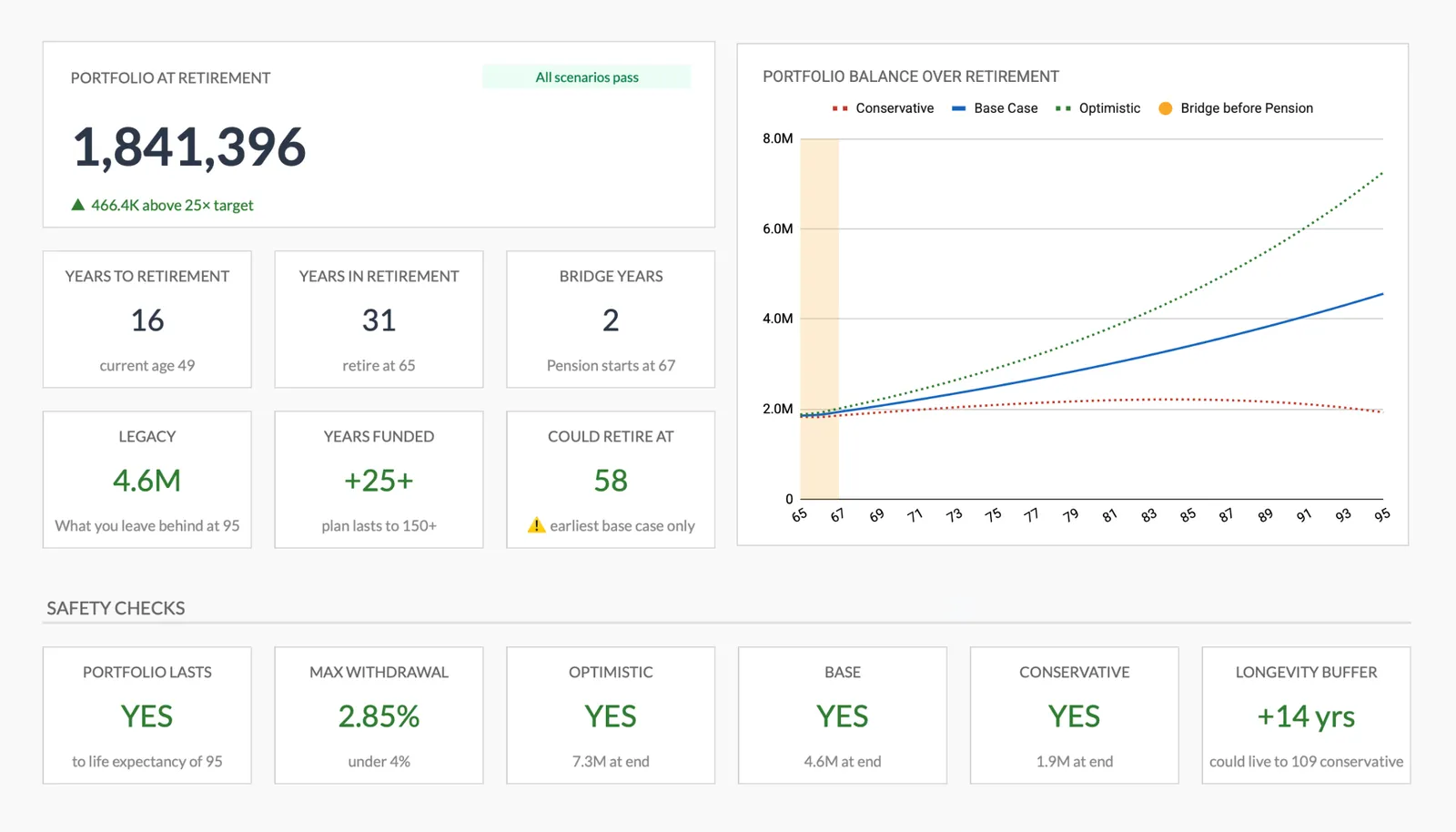
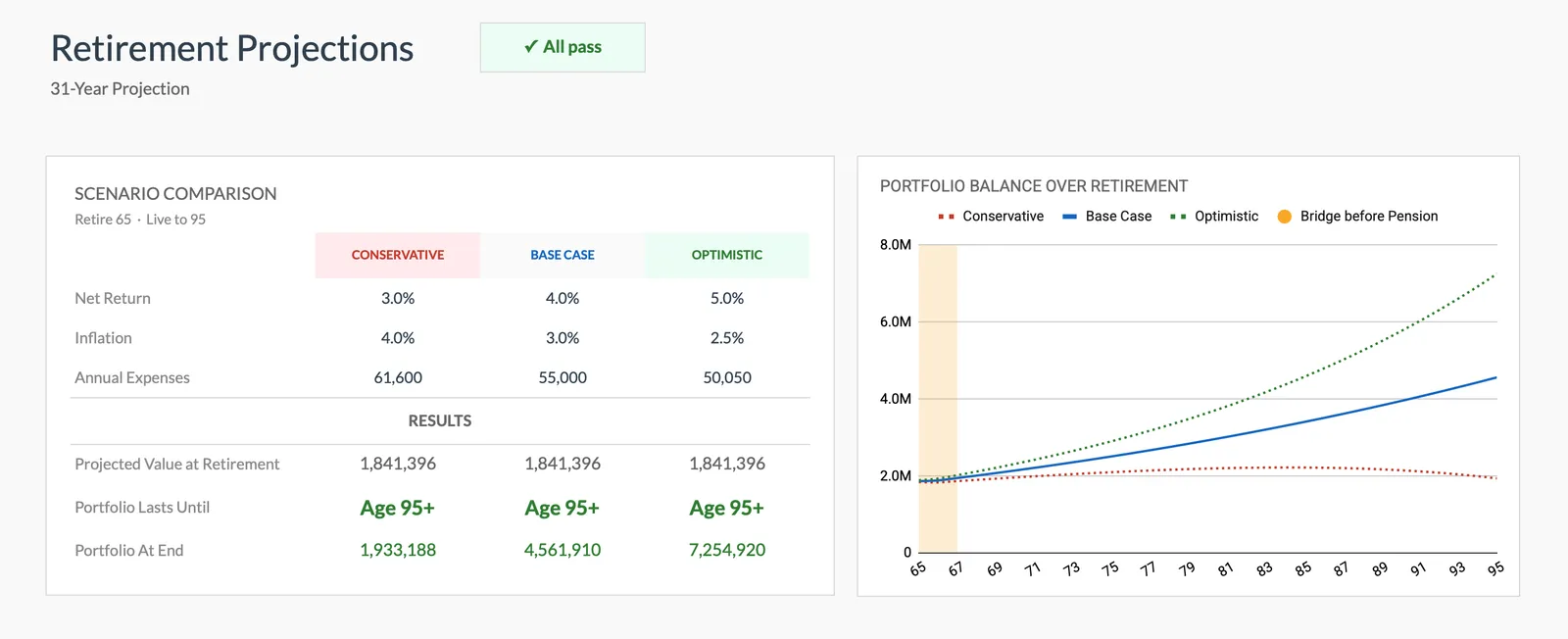
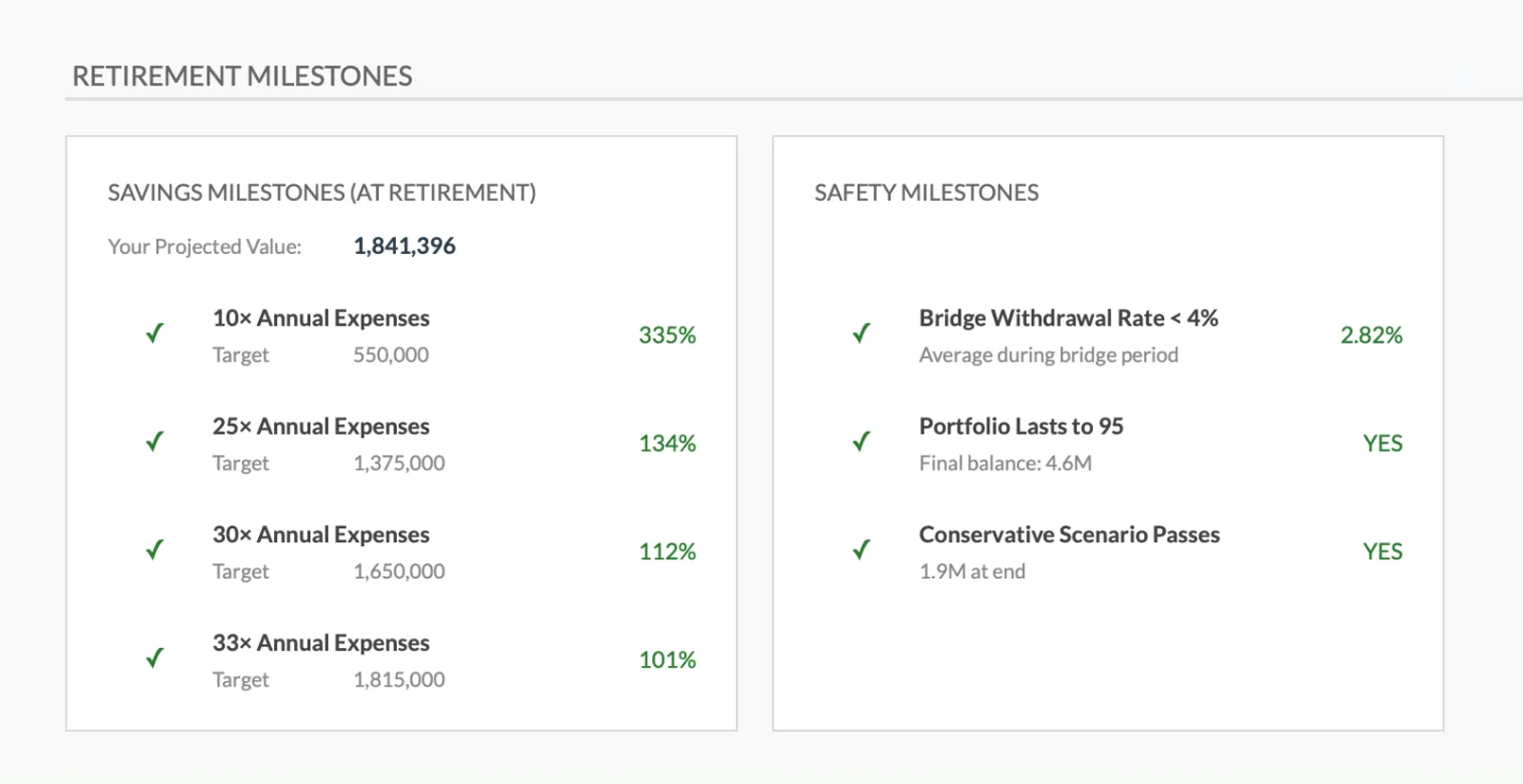
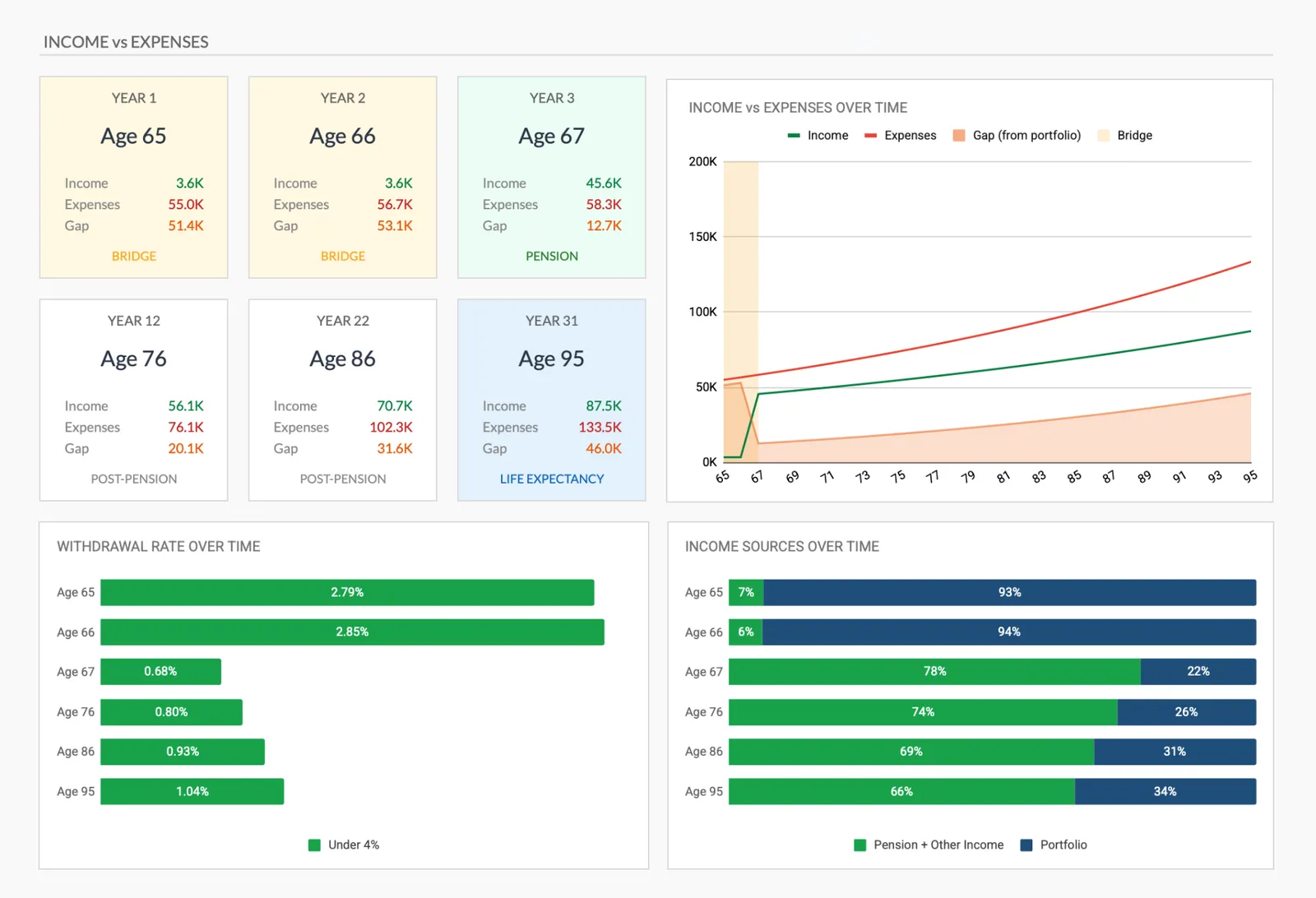
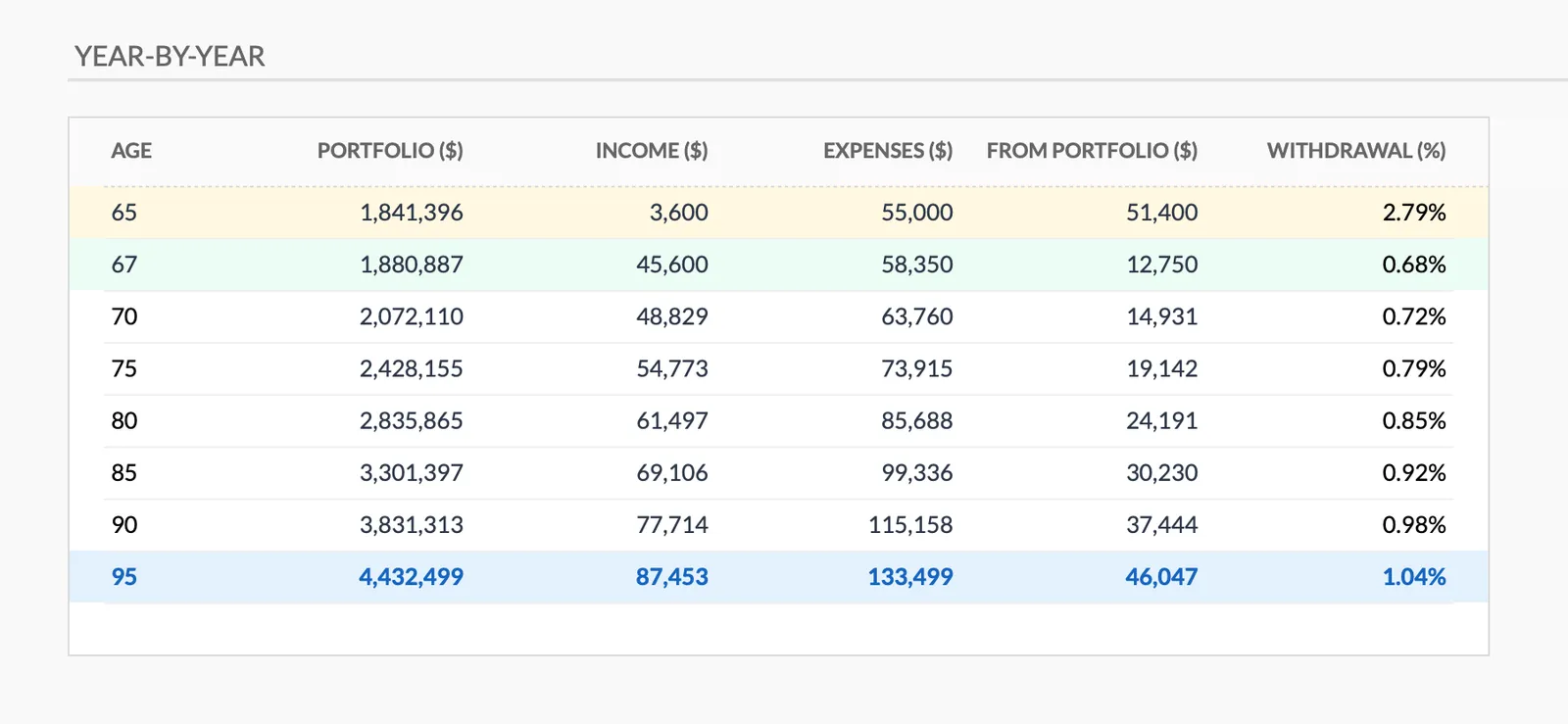
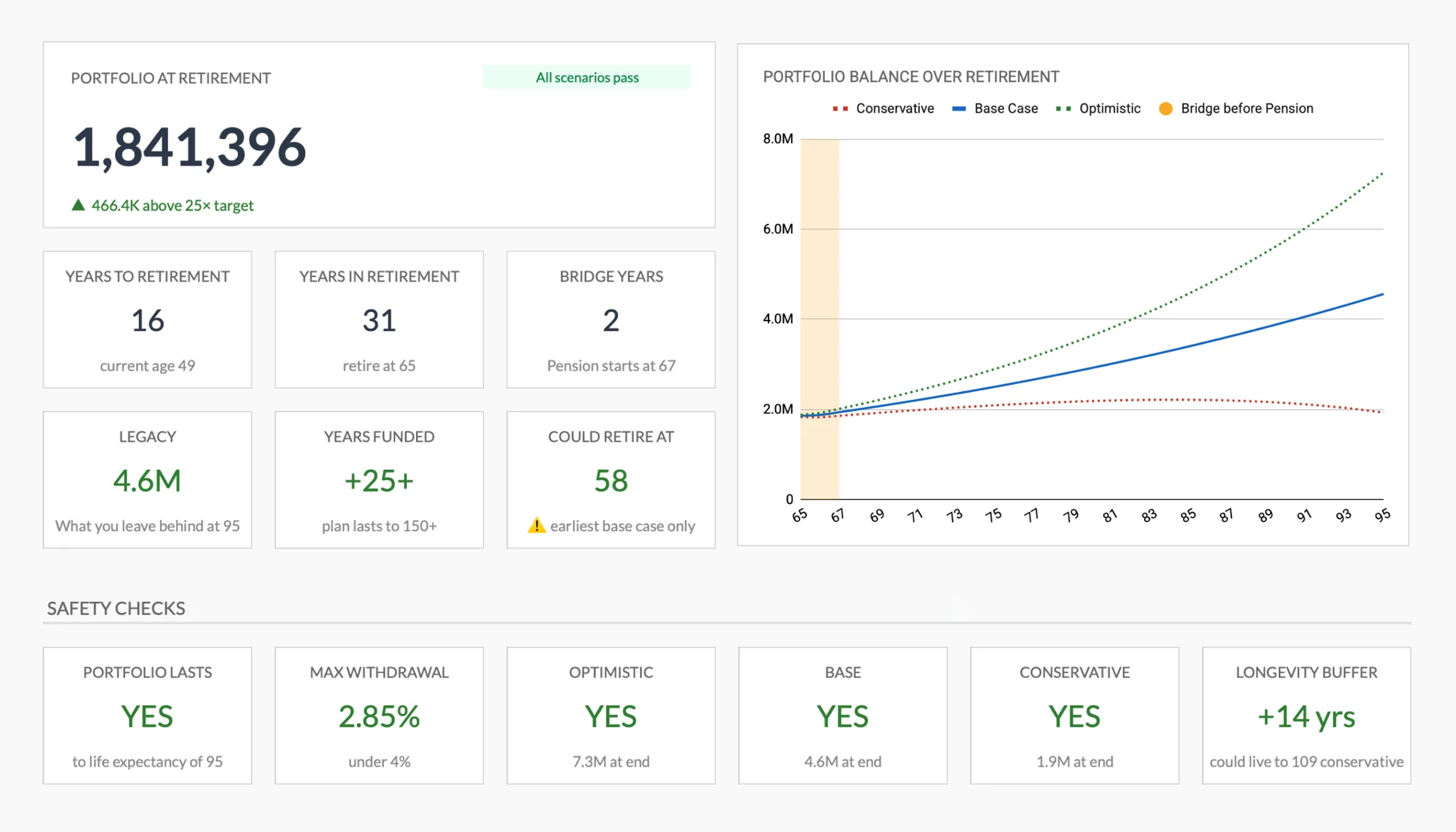
Complete retirement overview with projections
Project your retirement savings growth
Track progress toward retirement goals
Plan your retirement income against expenses
Detailed year-by-year retirement projection
Common Questions
Retirement Planning Template for United Kingdom - FAQ
When can I access my pension?
Currently at age 55, rising to 57 from April 2028 (linked to the State Pension age minus 10 years). You can take 25% tax-free and the rest is taxed as income. The State Pension starts at State Pension age (currently 66, rising to 67 by 2028).
How much do I need to retire in the UK?
It depends on your desired lifestyle. The PLSA suggests pension pots of roughly £76,000 for minimum, £320,000 for moderate, and £524,000 for comfortable retirement (single person, including State Pension). These are benchmarks, not targets - your situation will differ. The template helps calculate your specific number.
Should I consolidate old workplace pensions?
Multiple small pension pots can be harder to track and may have higher fees. Consolidating into a SIPP can simplify things and reduce costs. However, some older pensions have valuable guaranteed benefits - worth checking before transferring. This template helps by showing all pots in one place.
How do I handle the 25% tax-free lump sum?
You can take 25% of your pension tax-free, either as a single lump sum at retirement or in stages through drawdown. The template can model both approaches. Taking it in stages (known as uncrystallised funds pension lump sum or UFPLS) spreads the tax-free benefit over time.
Is the State Pension enough to live on?
The full new State Pension (£221.20/week, roughly £11,500/year) is below what most retirees consider adequate on its own. It's designed as a foundation to build upon with workplace and personal pensions. The template helps you see the gap between State Pension income and your target retirement spending.
Can't find the answer you're looking for? Contact our team
Explore More
Free Tools for United Kingdom
Ready to get started?
Download instantly and start managing your finances, or contact us to design a custom template package for your needs.