Singapore
Net Worth Tracker for Singapore
Track every asset and liability - CPF balances, property equity, investments, SRS, and loans - to see your complete financial picture over time.
Singapore
Net Worth in Singapore: What to Track
Singaporeans typically hold wealth across CPF accounts, property, and investments. A net worth tracker brings all of these into one view.
CPF is often the largest asset for many Singaporeans
With mandatory contributions of up to 37% of salary (employee + employer), CPF balances grow significantly over a career. The three accounts - Ordinary, Special, and MediSave - serve different purposes and earn different interest rates (2.5% to 4% base, plus additional interest on the first SGD 60,000). Including CPF gives a complete picture, though these funds have withdrawal restrictions.
Property equity is a major wealth component
Whether HDB or private property, real estate often represents the largest single asset for Singaporeans. Track market value (check recent transactions on HDB or URA websites) minus outstanding mortgage for your equity position. Property in Singapore has historically appreciated, but past performance varies by location and type.
Investment portfolios add diversification
Stocks (SGX and international), REITs, robo-advisors (Syfe, Endowus, StashAway), and unit trusts contribute to net worth. Singapore's lack of capital gains tax means the full value of investment gains is yours. Track at current market value for accuracy.
Outstanding loans are the primary liabilities
HDB loans, bank mortgages, car loans, renovation loans, and education loans form the liability side. HDB loans currently carry 2.6% interest, while bank mortgage rates fluctuate. Tracking these declining balances alongside growing assets shows your real financial progress.
Get the Net Worth Tracker
Getting Started
How to Set Up This Template for Singapore
List all assets with current balances
Enter bank savings, CPF Ordinary Account, CPF Special Account, CPF MediSave, SRS balance, investment portfolios, property market value, insurance cash value, and any other assets.
List all liabilities
Include HDB loan or bank mortgage outstanding, car loan, renovation loan, education loan, credit card balances, and any other debts. Be thorough for an accurate net worth picture.
Use the currency selector for SGD
The template's built-in currency selector lets you display amounts in SGD. Select your preferred format and all values display consistently.
Update monthly or quarterly
Monthly updates work well for most people. Check CPF balances on the CPF website, investment values on your brokerage or robo-advisor, and property estimates periodically. The template calculates net worth automatically.
Track the trend over time
A single snapshot is less useful than seeing the trajectory. Whether you're paying down an HDB loan or building investments, the direction of change tells the story of financial progress.
See It In Action
What the template looks like
Browse through the template to see how it handles budgeting, categories, and expense tracking - all adaptable to your local financial setup.
- Built-in currency selector
- Customizable categories
- Budget vs actual tracking
- Visual charts and summaries
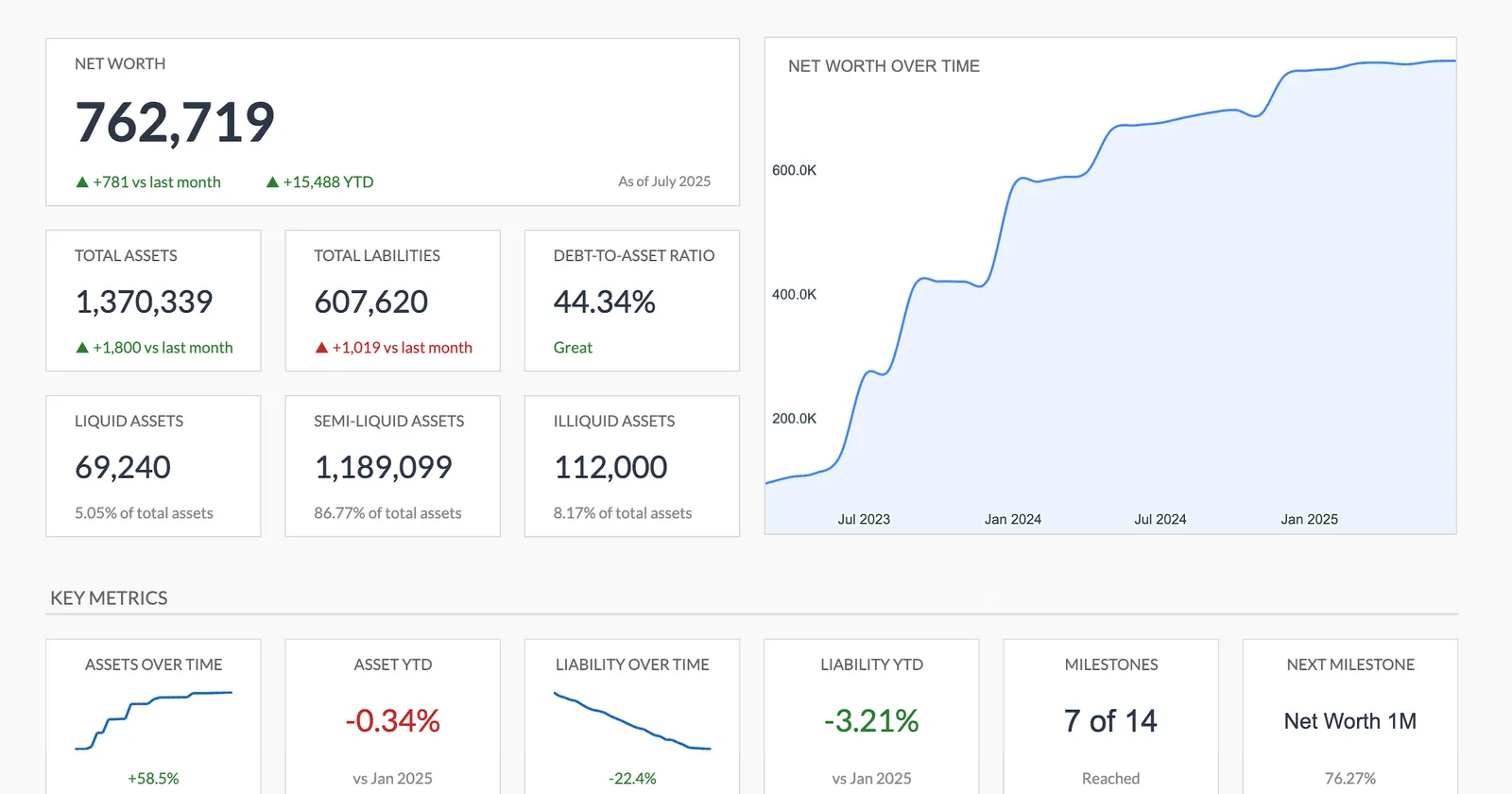
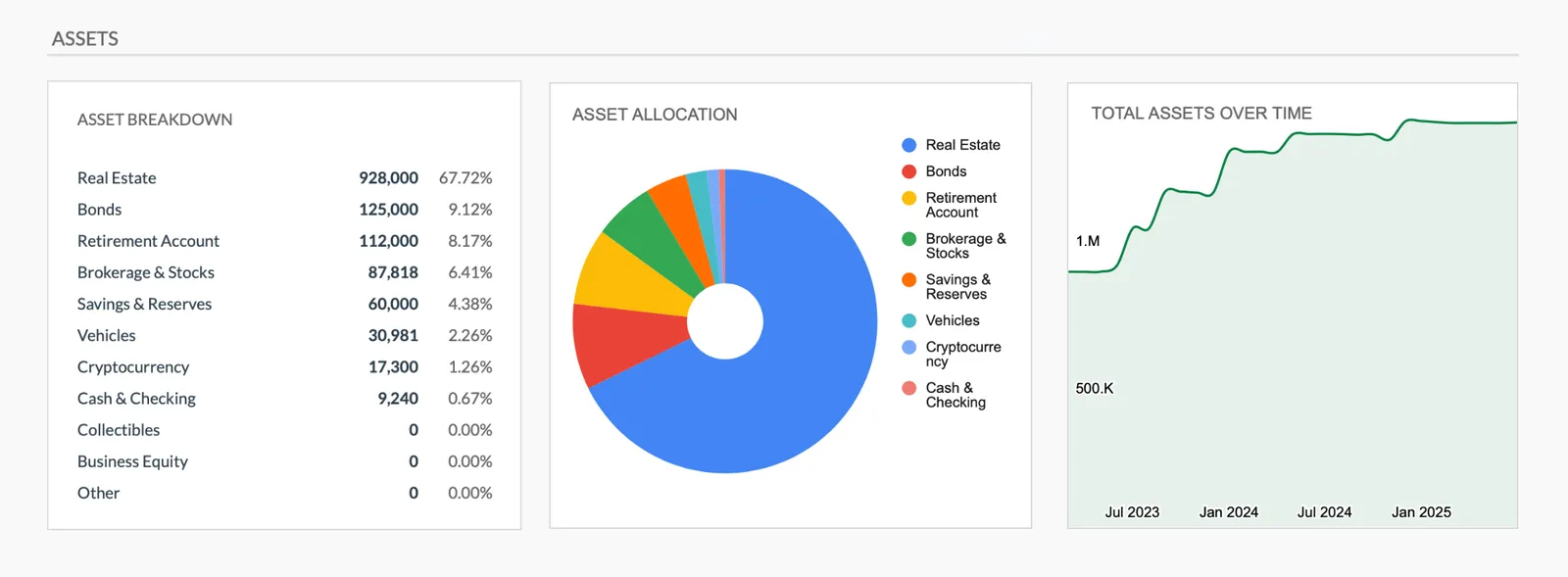
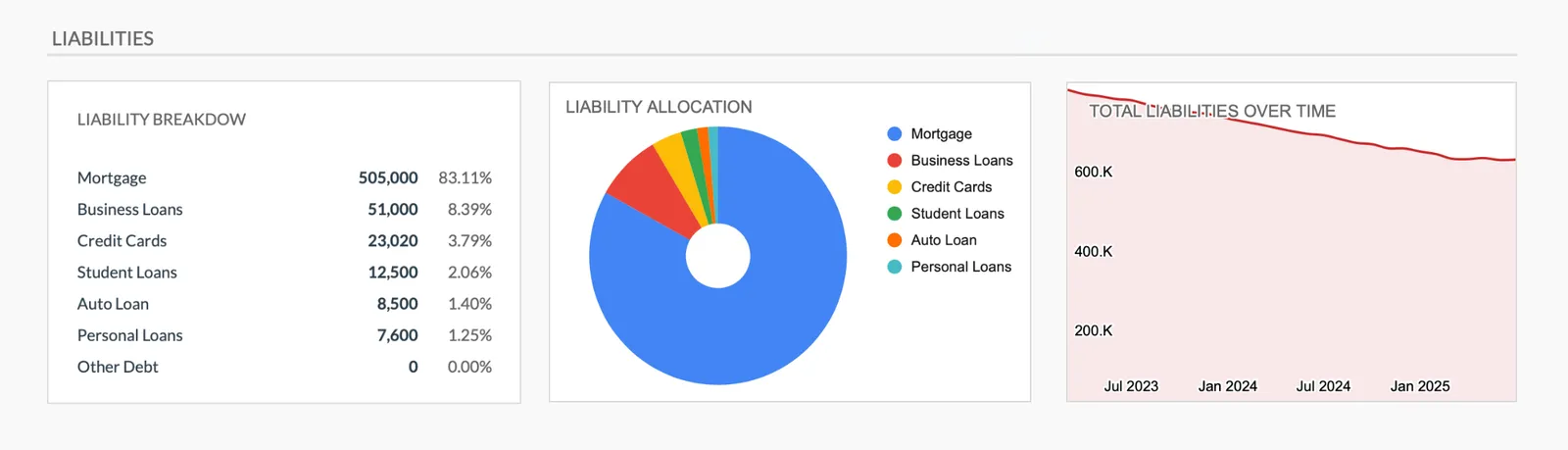

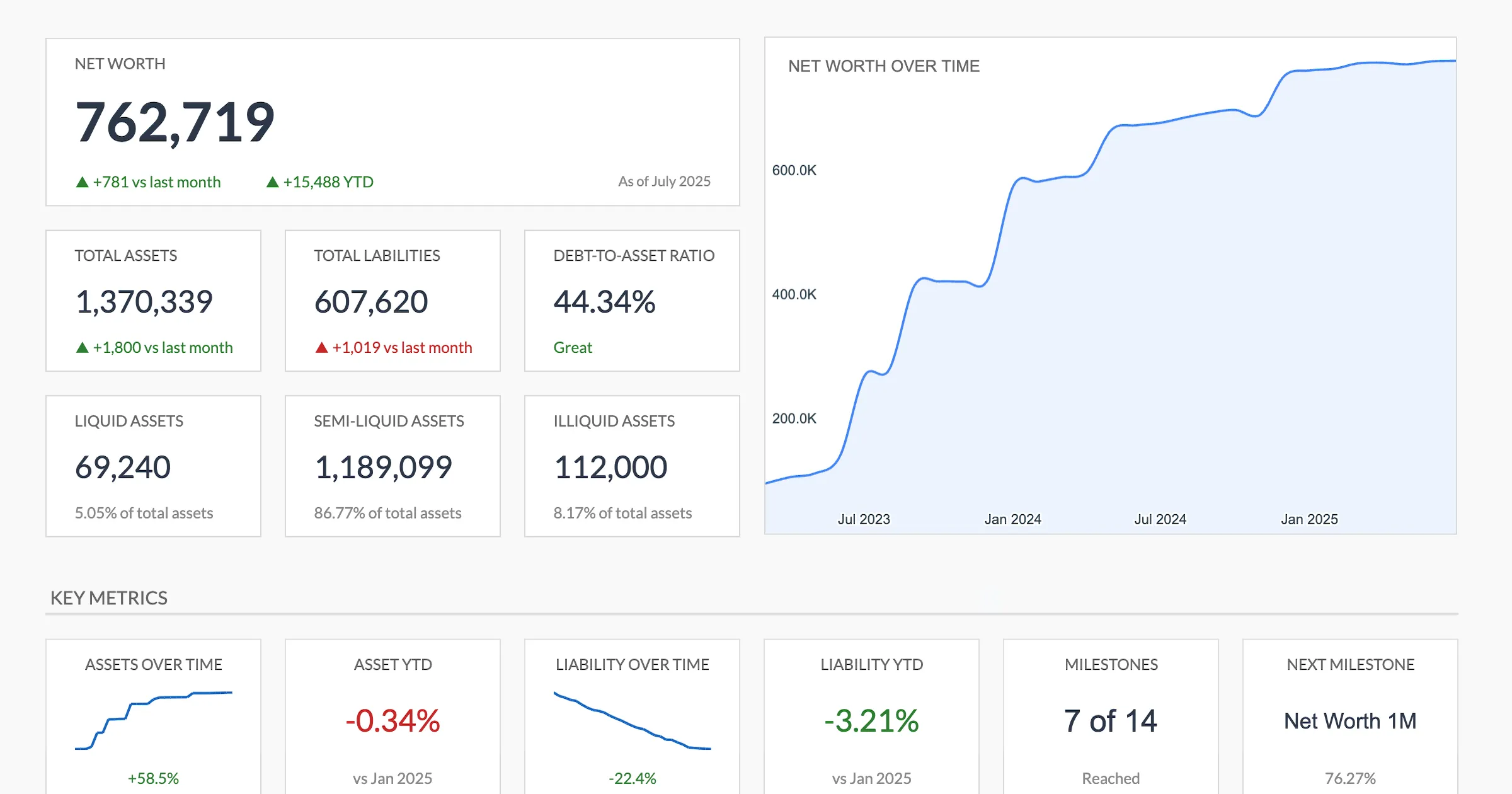
Track your net worth over time with charts
Breakdown of all your assets
Track all debts and liabilities
Key financial health indicators
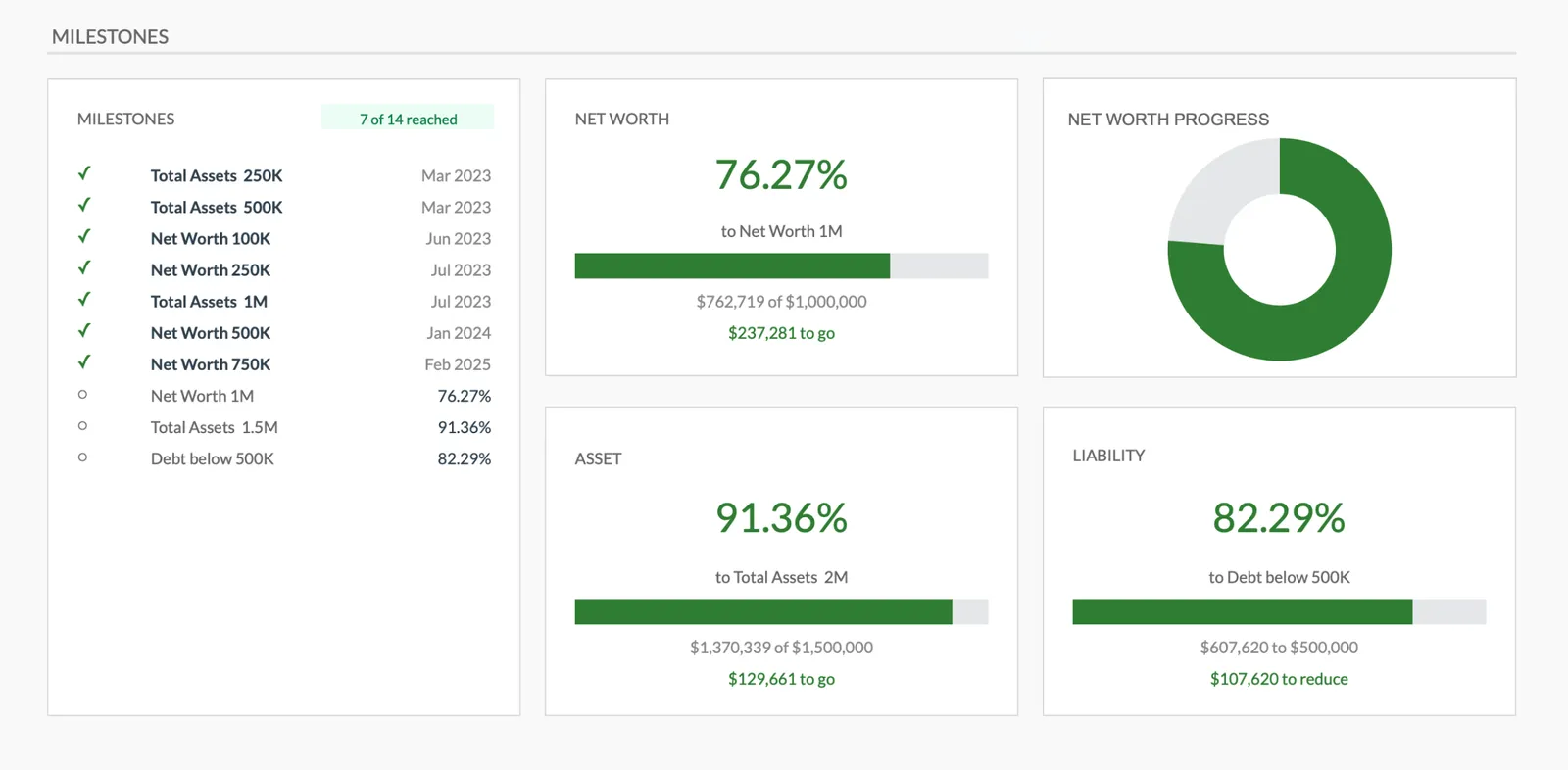
Set and celebrate net worth milestones
Common Questions
Net Worth Tracker for Singapore - FAQ
Should I include CPF in my net worth?
Yes. CPF is your money, even with withdrawal restrictions. Including it gives a complete picture. Some people also track "liquid net worth" separately - excluding CPF and property - for a view of what's immediately accessible.
How do I value my HDB flat?
Check recent resale transactions for similar flats in your area on the HDB Resale Flat Prices portal. Use a conservative estimate rather than the highest comparable sale. Subtract your outstanding mortgage for your equity position.
Should I include my car?
Cars depreciate rapidly in Singapore due to the COE system. If you include it, use the current market value (not purchase price). Some people exclude vehicles since they're depreciating assets. Either approach is valid - just be consistent.
What about insurance policies with cash value?
Endowment plans and whole life policies with surrender values can be included as assets. Use the current surrender value from your insurer, not the projected maturity value. Term life insurance has no cash value and wouldn't be included.
How often should I update?
Monthly is the most common cadence. CPF updates after each salary credit, and investment values change daily. Quarterly works too if monthly feels excessive. The key is consistency rather than frequency.
Can't find the answer you're looking for? Contact our team
Explore More
Free Tools for Singapore
Ready to get started?
Download instantly and start managing your finances, or contact us to design a custom template package for your needs.