Canada
Retirement Planning Template for Canada
Map out your retirement - RRSP, TFSA, CPP, OAS, employer pension, and projected expenses - in a Google Sheets template you own.
Canada
Retirement Planning in Canada: Key Factors
Canadian retirement planning involves government programs (CPP, OAS), registered accounts (RRSP, TFSA), and potentially employer pensions. Understanding how these work together is key.
CPP and OAS provide a meaningful income base
The maximum CPP retirement benefit at age 65 is approximately $1,364/month (2025), though most people receive less based on their contribution history. OAS provides up to $727/month at age 65. Together, these can provide $20,000-25,000/year for those with full entitlements. CPP can be taken as early as 60 (reduced) or deferred to 70 (increased by 42%).
RRSP is the primary retirement savings vehicle
RRSP contributions reduce current taxes, and the funds grow tax-deferred until withdrawal. At age 71, you must convert the RRSP to a RRIF (Registered Retirement Income Fund) and begin mandatory withdrawals. Planning the drawdown strategy - when and how much to withdraw - affects your lifetime tax picture significantly.
TFSA complements the RRSP for retirement flexibility
TFSA withdrawals are tax-free and don't affect OAS eligibility (unlike RRSP/RRIF withdrawals, which count as income). For retirees, TFSAs provide a source of income that won't trigger OAS clawback ($90,997 threshold for 2025). This makes the TFSA valuable for retirement even beyond its contribution-year tax treatment.
Employer pensions vary widely
Some Canadians have defined benefit pensions (guaranteed income based on years of service and salary) through employers or government. Others have defined contribution plans, group RRSPs, or no employer pension. The type and quality of employer pension significantly affects how much additional personal saving is needed.
Get the Retirement Planning Template
Getting Started
How to Set Up This Template for Canada
Enter current retirement account balances
List RRSP, TFSA, employer pension (current value or projected benefit), non-registered investments, and any other retirement savings. Current values are your starting point for projections.
Estimate CPP and OAS benefits
Check your CPP estimate through My Service Canada Account. For OAS, use the full benefit amount if you expect to have 40+ years of Canadian residency. Enter the age you plan to start each benefit.
Add annual contribution amounts
Enter how much you contribute annually to RRSP, TFSA, and any employer pension (including employer match). This drives the growth projections. Include any planned increases as your income grows.
Project retirement expenses
Estimate monthly retirement spending in today's dollars: housing, food, healthcare (prescription drugs, dental, vision not covered by provincial health), travel, and hobbies. Provincial healthcare coverage means basic medical costs are lower than in the US, but supplemental needs vary.
Test different scenarios
Try different retirement ages, CPP claiming ages (60, 65, or 70), and spending levels. The difference between claiming CPP at 60 vs. 70 is about 72% more monthly income at 70 - a significant decision. The template helps visualize these tradeoffs.
See It In Action
What the template looks like
Browse through the template to see how it handles budgeting, categories, and expense tracking - all adaptable to your local financial setup.
- Built-in currency selector
- Customizable categories
- Budget vs actual tracking
- Visual charts and summaries
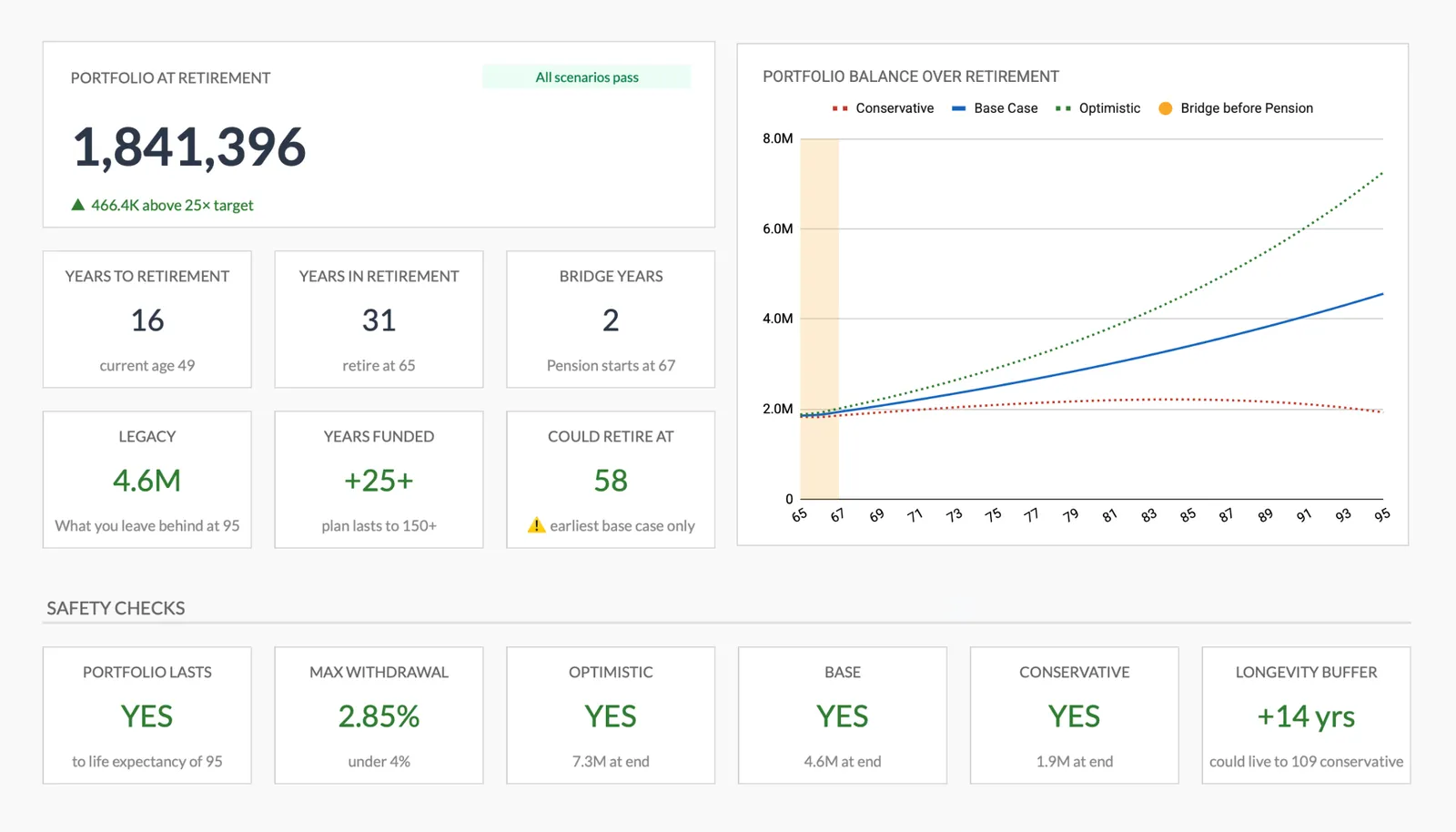
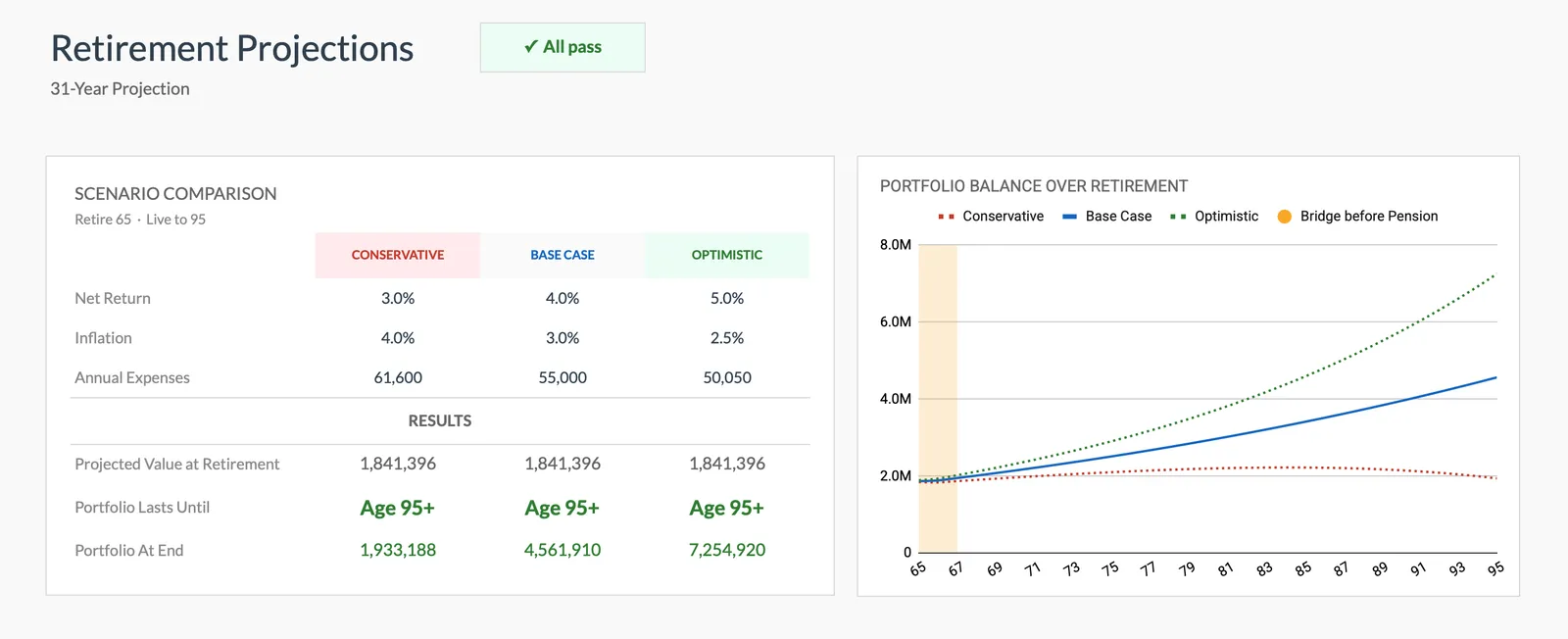
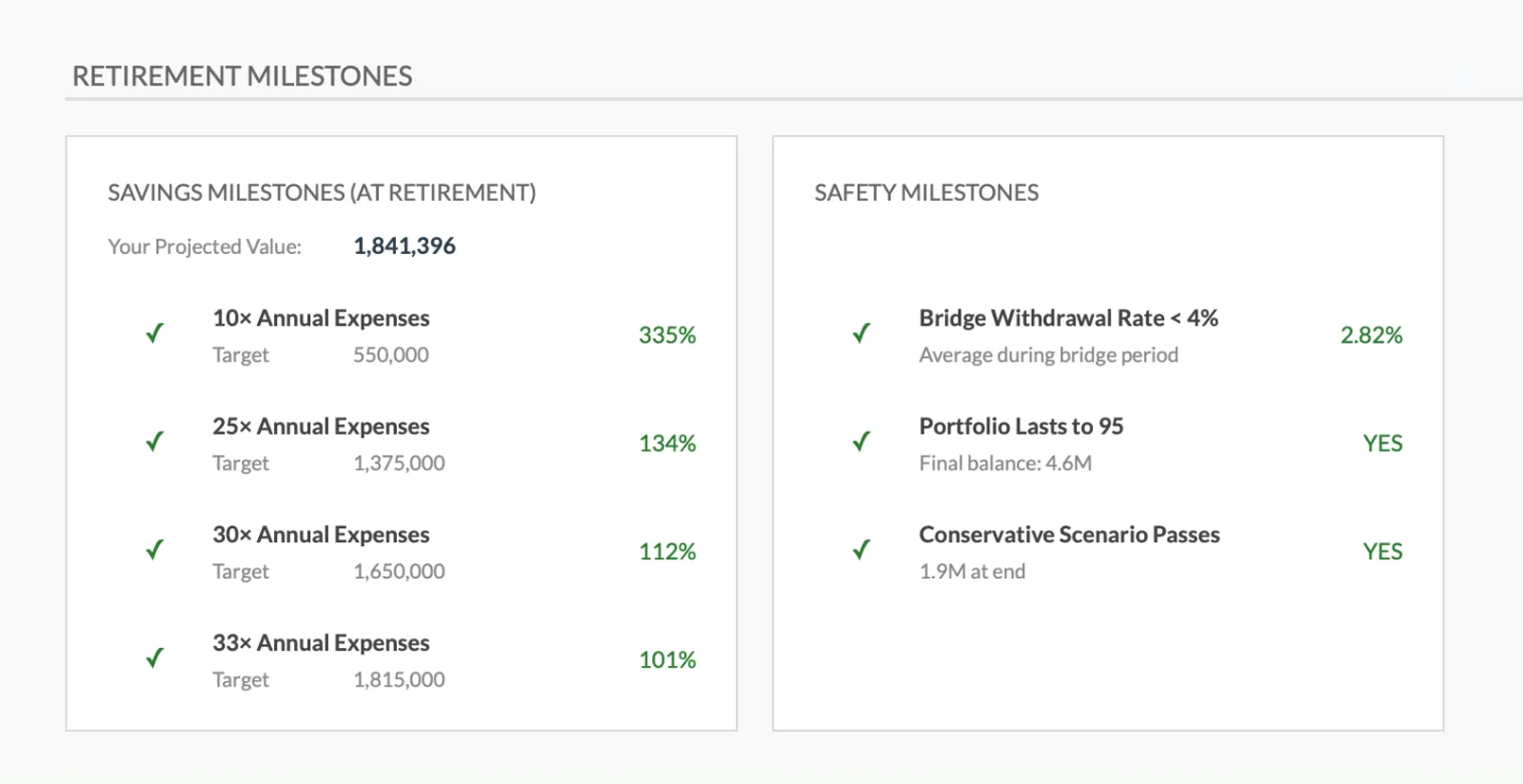
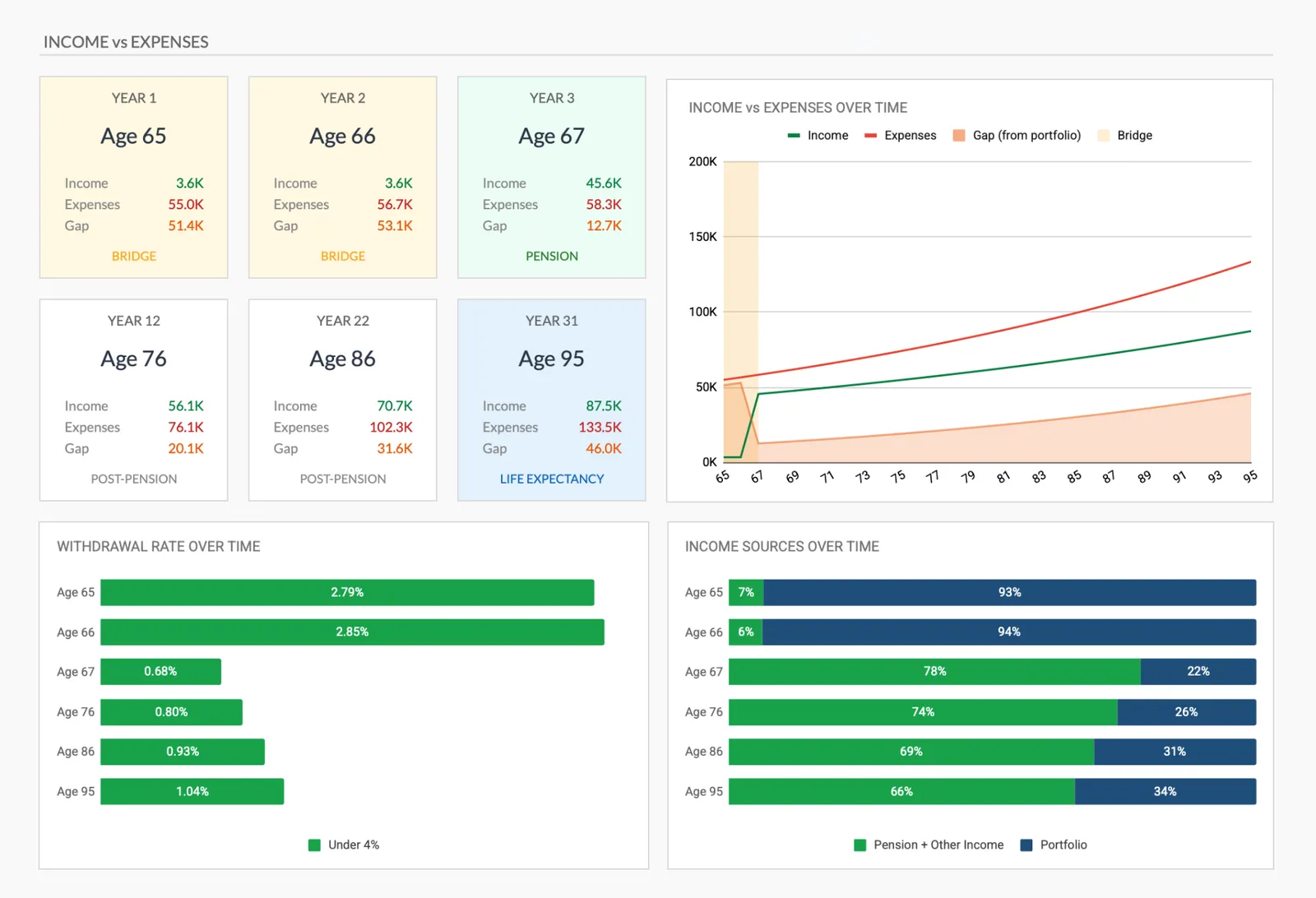
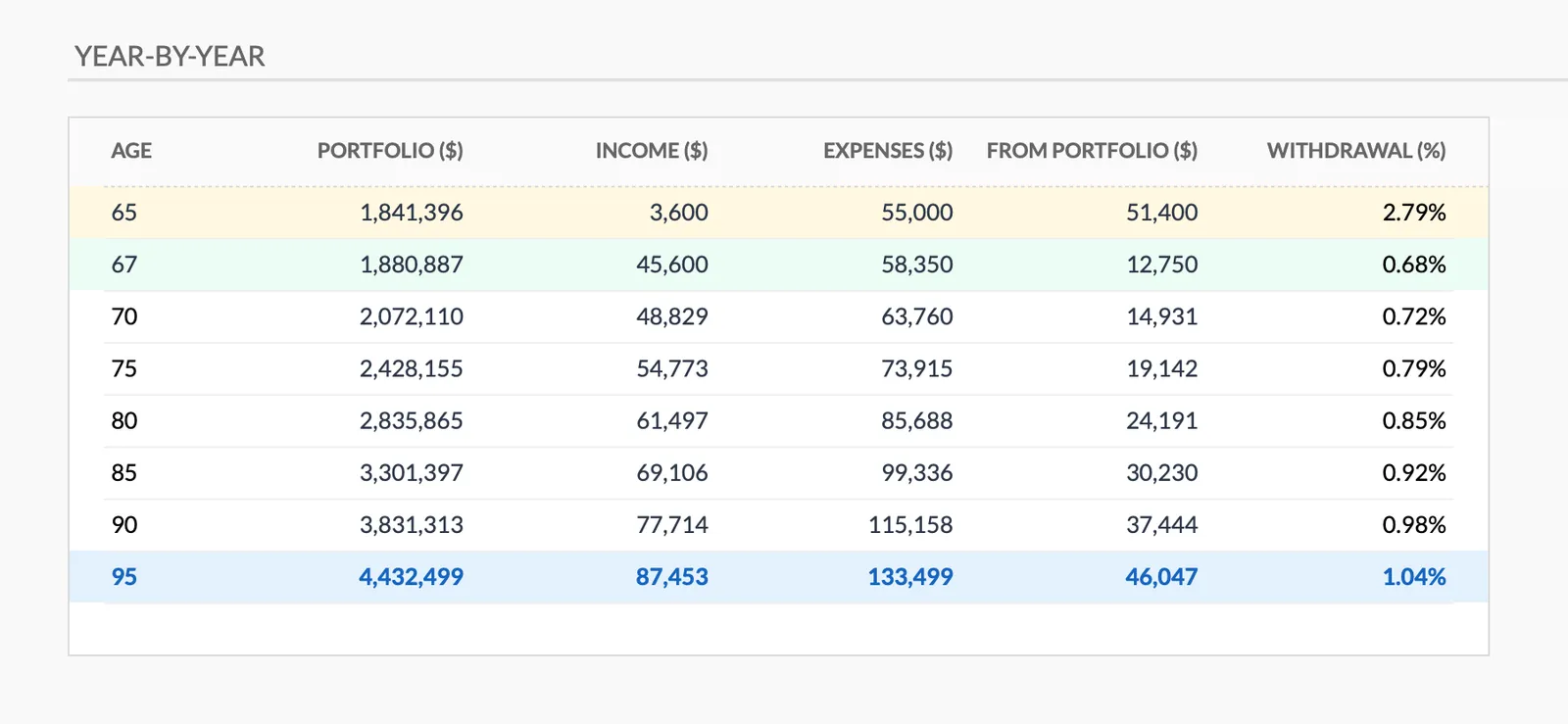
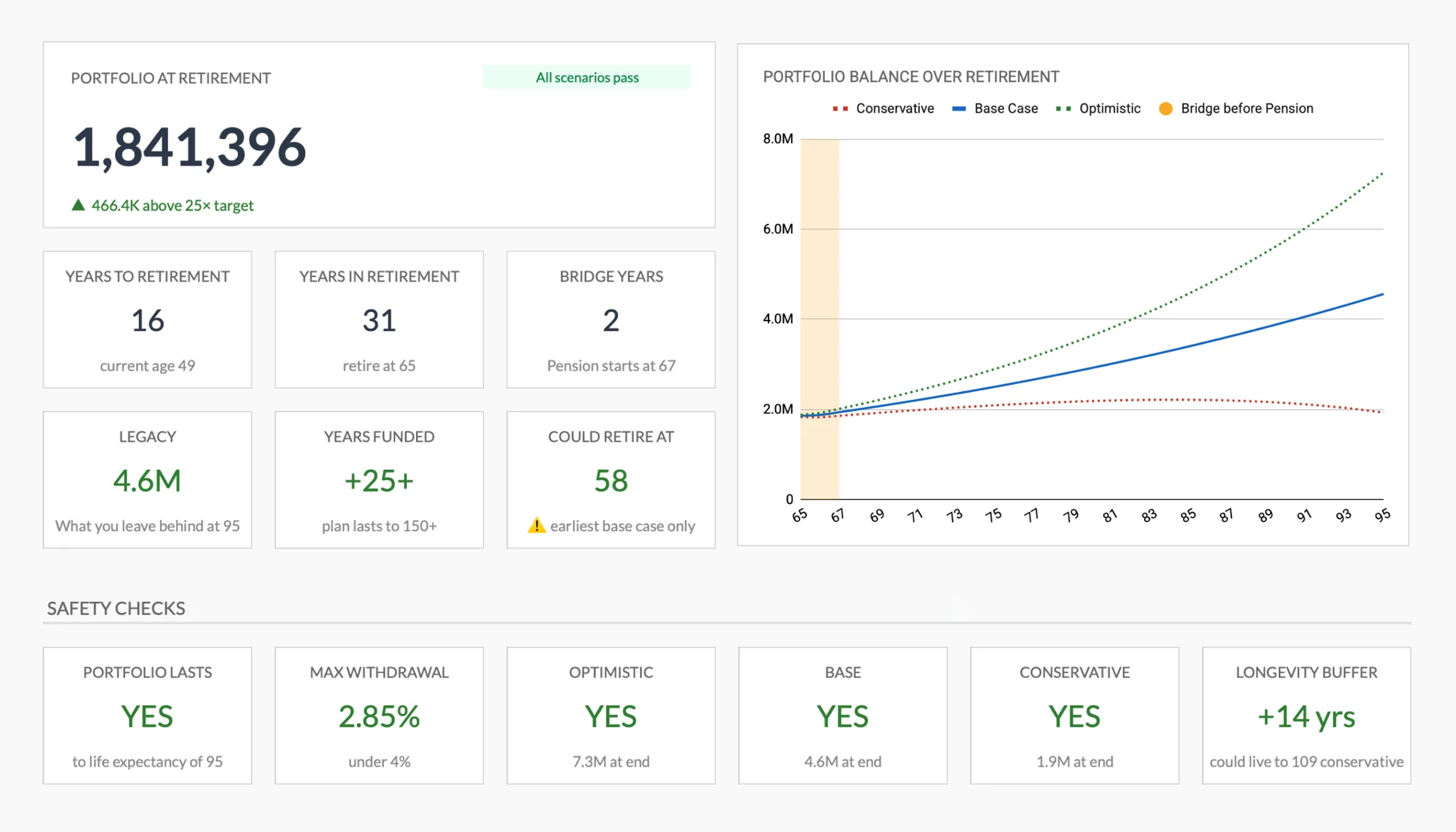
Complete retirement overview with projections
Project your retirement savings growth
Track progress toward retirement goals
Plan your retirement income against expenses
Detailed year-by-year retirement projection
Common Questions
Retirement Planning Template for Canada - FAQ
When should I start taking CPP?
CPP can start as early as 60 (reduced by 0.6%/month before 65) or as late as 70 (increased by 0.7%/month after 65). Starting at 70 gives about 42% more than at 65. The right choice depends on health, other income sources, and financial need. This is one area where individual circumstances vary greatly.
How much do I need to retire in Canada?
It depends on your spending, location, and government benefit entitlements. A common starting point is to determine annual retirement expenses, subtract CPP and OAS income, and calculate how much savings are needed to cover the gap (using a 4% withdrawal rate as one guideline). Someone needing $25,000/year beyond CPP/OAS would target roughly $625,000 in savings.
Will OAS be clawed back?
OAS is reduced if your individual net income exceeds $90,997 (2025). For each dollar above this threshold, OAS is reduced by 15 cents, disappearing entirely at about $150,000 of income. RRIF withdrawals count as income for this purpose, but TFSA withdrawals do not - making TFSA particularly valuable for higher-income retirees.
What about healthcare costs in retirement?
Provincial healthcare covers doctor visits and hospital care, but not prescription drugs (for most provinces), dental, vision, or hearing aids. These costs increase with age. Some provinces offer drug coverage programs for seniors. Private health insurance or employer retiree benefits can fill gaps.
Should I convert my RRSP to a RRIF early?
You must convert by December 31 of the year you turn 71. Some people convert earlier to start gradual withdrawals and manage tax brackets. Others delay to maximize tax-deferred growth. The optimal strategy depends on other income sources and your tax picture. The template helps model different conversion timelines.
Can't find the answer you're looking for? Contact our team
Explore More
Free Tools for Canada
Ready to get started?
Download instantly and start managing your finances, or contact us to design a custom template package for your needs.