Canada
Net Worth Tracker for Canada
Track every asset and liability - TFSA, RRSP, RESP, home equity, investments, and debts - to see your complete financial picture over time.
Canada
Net Worth in Canada: What to Track
Canadians hold wealth across registered accounts, real estate, and other assets. A net worth tracker consolidates everything into one view for clearer understanding.
Real estate is often the largest asset
Canadian home prices, especially in Vancouver and Toronto, mean property equity frequently dominates net worth. Including home value minus mortgage balance gives the complete picture, though some people also track "liquid net worth" excluding the home since that equity isn't easily accessible.
Registered accounts grow tax-efficiently
TFSA, RRSP, and RESP balances represent tax-advantaged wealth. TFSA withdrawals are tax-free, while RRSP withdrawals are taxed as income. For net worth tracking, include the full balances, but keep in mind that RRSP values will be reduced by taxes upon withdrawal.
Mortgage debt is common and significant
The average Canadian mortgage balance is substantial, especially in hot markets. In Canada, mortgages typically renew every 5 years (the amortization may be 25 years, but the rate resets). Tracking mortgage balance declining over time is a clear measure of progress.
Canadian net worth benchmarks vary by age
Statistics Canada data shows median net worth varies significantly by age group - from around $48,000 for under-35 families to over $540,000 for those 55-64. These figures include all assets. Knowing where you stand provides context, though personal progress is more meaningful than comparisons.
Get the Net Worth Tracker
Getting Started
How to Set Up This Template for Canada
List all assets
Enter chequing accounts, savings, TFSA, RRSP, RESP, FHSA, non-registered investment accounts, home value, vehicle value, and any other assets. Use current values from your latest statements.
List all liabilities
Include mortgage balance, HELOC, student loans (federal and provincial), car loans, credit card balances, and lines of credit. Be comprehensive - the goal is an accurate total.
Set the currency to CAD
Use the built-in currency selector to display CAD. All calculations are currency-agnostic.
Update regularly
Monthly or quarterly updates track the trend effectively. Investment account values fluctuate with markets - focus on the direction over months and years, not weekly changes.
Watch the trend over time
Net worth tends to grow slowly at first and accelerate later as compound growth kicks in and debts are paid down. The template's historical tracking lets you see this progression clearly.
See It In Action
What the template looks like
Browse through the template to see how it handles budgeting, categories, and expense tracking - all adaptable to your local financial setup.
- Built-in currency selector
- Customizable categories
- Budget vs actual tracking
- Visual charts and summaries
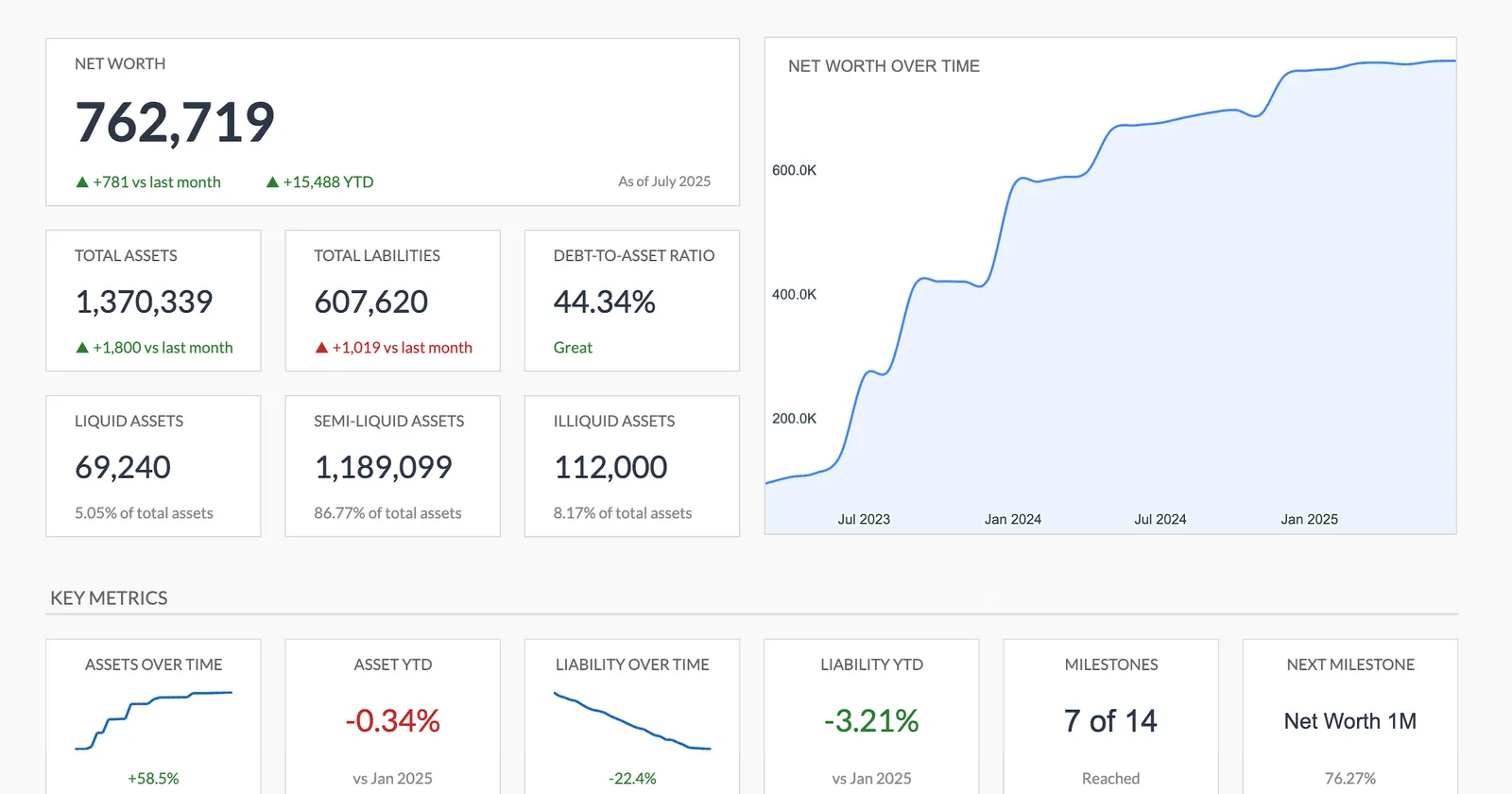
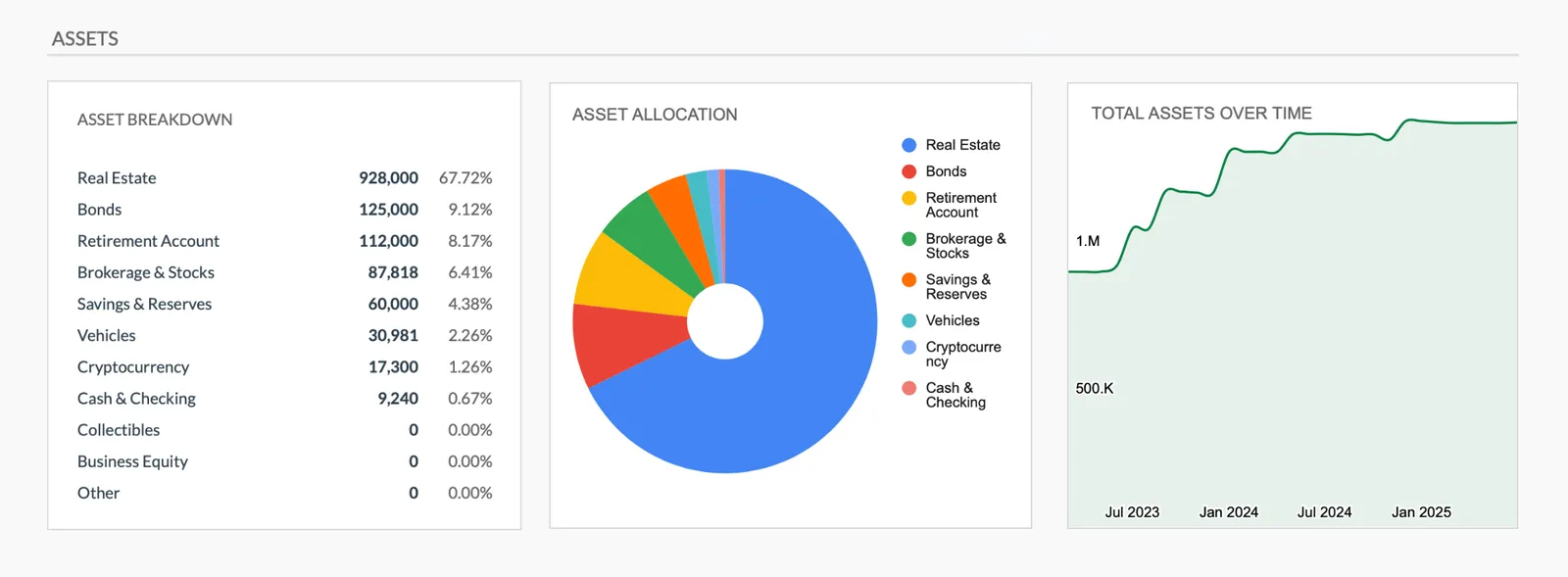
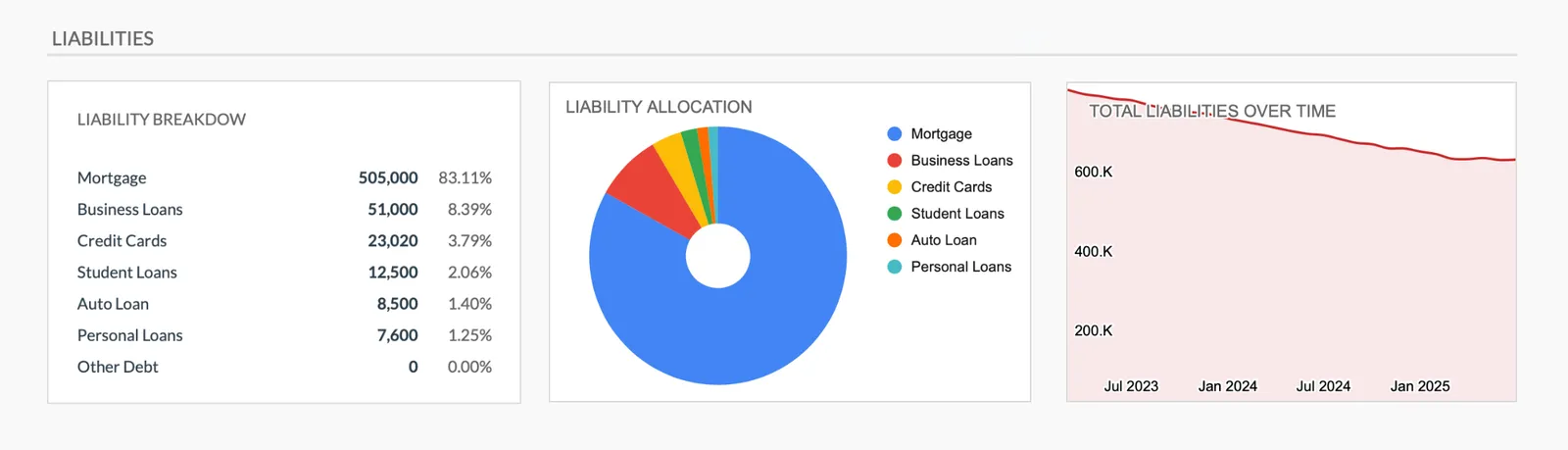

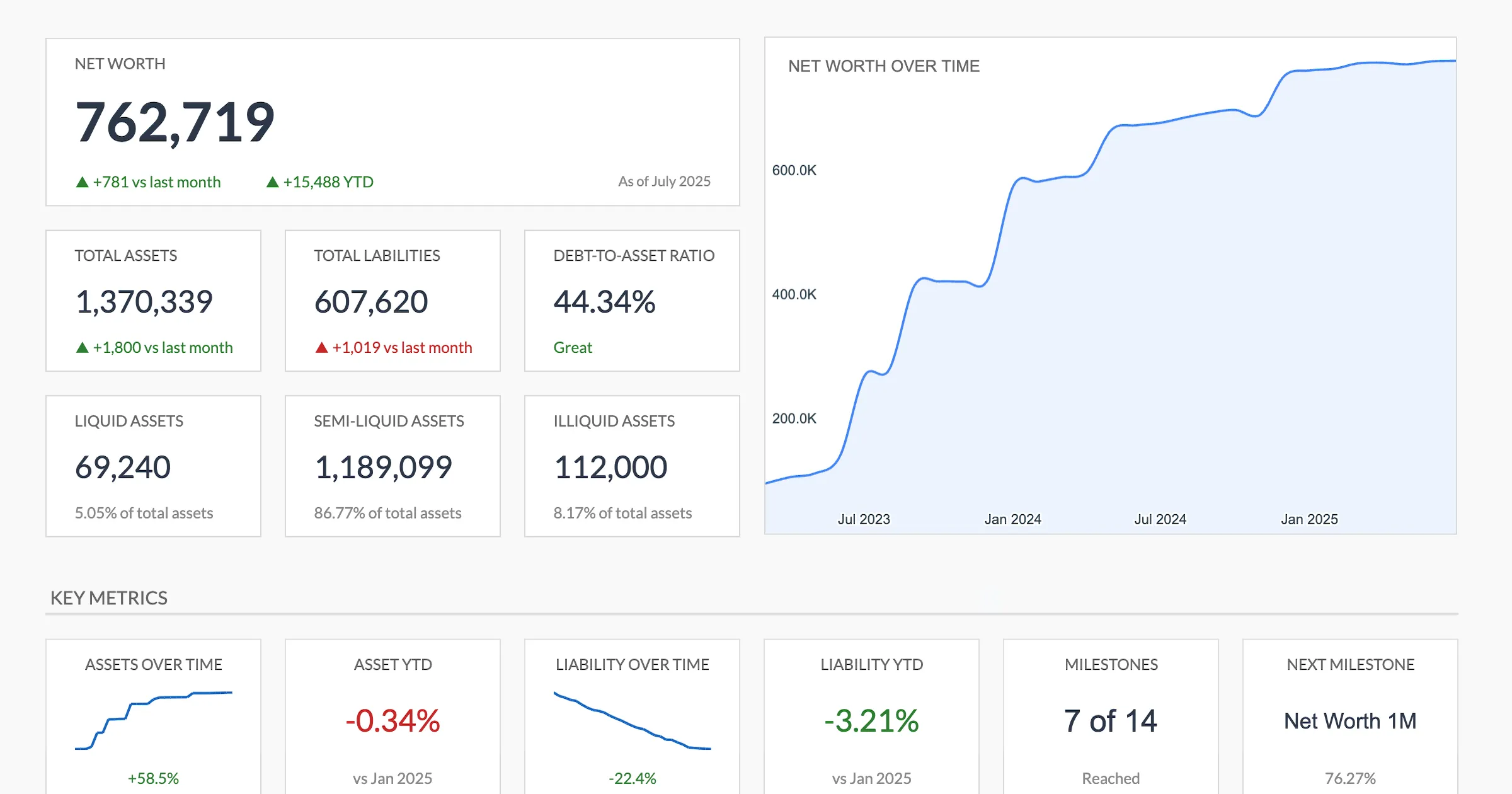
Track your net worth over time with charts
Breakdown of all your assets
Track all debts and liabilities
Key financial health indicators
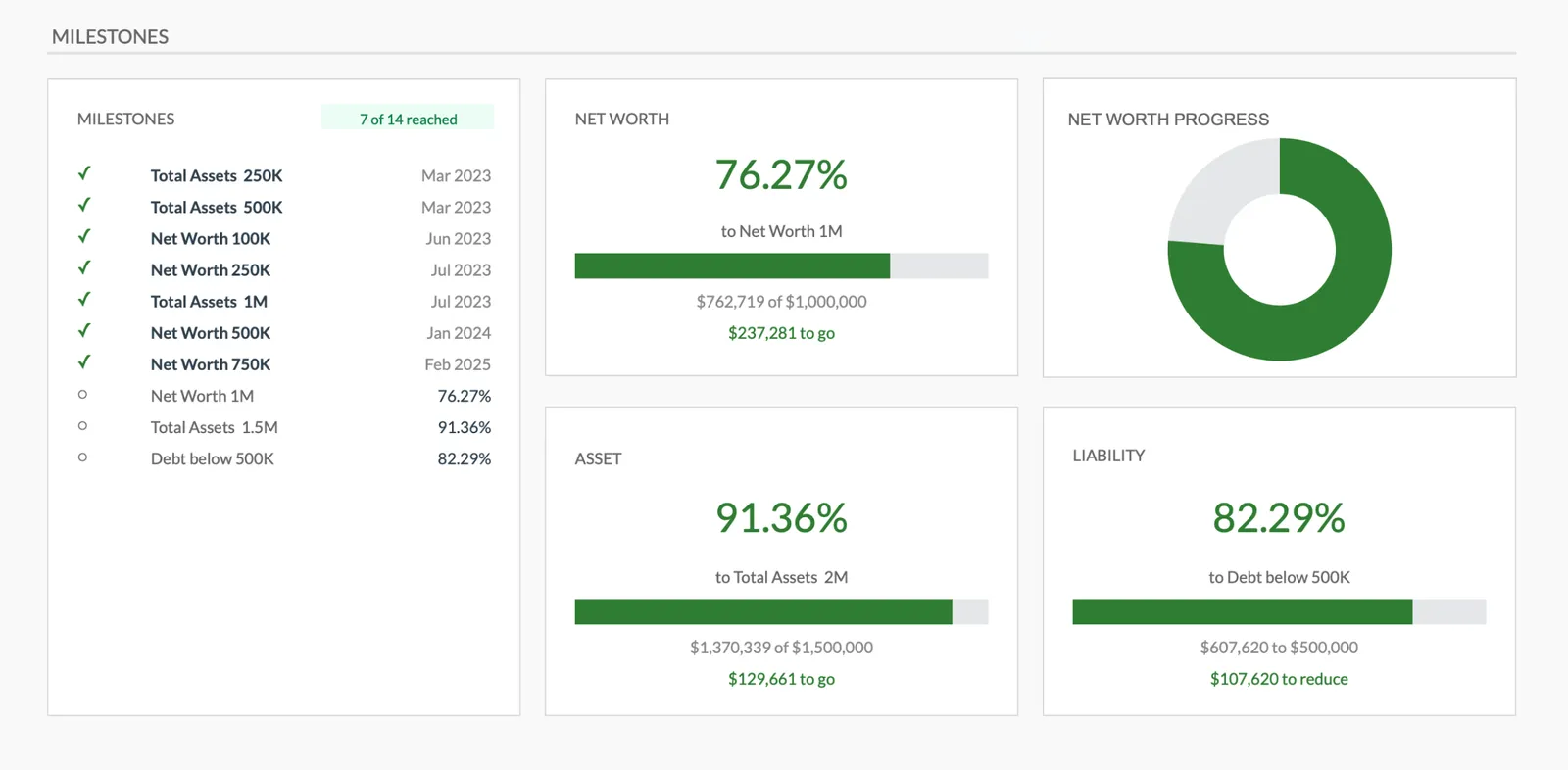
Set and celebrate net worth milestones
Common Questions
Net Worth Tracker for Canada - FAQ
Should I include my home in net worth?
Yes, including home equity (estimated market value minus mortgage) gives a complete picture. Some people also track liquid net worth separately, excluding the home. Both views are useful - total net worth for the big picture, liquid for what's accessible.
How do I value my RRSP for net worth purposes?
Enter the full current balance. Technically, a portion will go to taxes when withdrawn, but for tracking purposes, the full balance is standard. Some people note a rough "after-tax" value beside it for context.
Should student loans be included?
Yes. Include federal and provincial student loans as liabilities. Canadian student loan interest rates (floating and fixed options) and repayment terms are standard debt - unlike UK student loans, they don't expire and should be tracked.
What about the RESP - whose net worth is it?
The RESP subscriber (parent) technically owns the account until funds are withdrawn for the beneficiary's education. Most people include it in their own net worth, noting that it's designated for their child's education and withdrawals have specific rules.
How does Canadian net worth compare to American?
Direct comparisons are complicated by exchange rates, different housing markets, and different retirement systems. The template focuses on tracking your own progress in CAD - which is more useful than cross-border comparisons.
Can't find the answer you're looking for? Contact our team
Explore More
Free Tools for Canada
Ready to get started?
Download instantly and start managing your finances, or contact us to design a custom template package for your needs.