Australia
Financial Planning Template for Australia
Organize your entire financial picture - super, HECS-HELP, savings goals, investments, and long-term plans - in a Google Sheets template you own.
Australia
Financial Planning in Australia: Key Considerations
Australia's financial system combines compulsory super, means-tested government benefits, and a unique property market. A financial planning template helps organize these elements into a coherent plan.
Superannuation is the retirement savings cornerstone
Employers contribute 12% of your ordinary earnings to super (as of July 2025). Over a career, this builds a significant retirement fund. The concessional (before-tax) contributions cap is $30,000/year, including employer contributions. Non-concessional (after-tax) contributions are capped at $120,000/year. Understanding and tracking these limits is central to Australian financial planning.
HECS-HELP affects financial planning for graduates
HECS-HELP debt is indexed to CPI (not interest-bearing in the traditional sense). Compulsory repayments kick in above the income threshold and increase with income. For financial planning purposes, it's worth noting that voluntary repayments reduce the balance faster but offer no tax benefit - and the money could potentially earn more invested elsewhere.
The Age Pension provides a safety net but is means-tested
The Age Pension (maximum ~$1,144 per fortnight for singles, 2025) is subject to both income and assets tests. As super balances grow, some retirees receive a partial pension or none at all. Financial planning that considers the interaction between super withdrawals and Age Pension eligibility can help optimize retirement income.
Property and negative gearing are uniquely Australian
Property investment with negative gearing (where rental losses offset other income for tax purposes) is a distinctly Australian strategy. Capital gains tax discounts (50% for assets held over 12 months) also affect investment planning. A financial plan that includes property alongside super and other investments gives a complete picture.
Get the Financial Planning Template
Getting Started
How to Set Up This Template for Australia
List all accounts and current balances
Enter bank accounts, super fund balance, investment properties (equity), shares, ETFs, term deposits, and any debt (mortgage, HECS-HELP, personal loans, credit cards). Current values provide today's starting point.
Map out super contributions
Track employer super contributions (12% of ordinary earnings), any salary sacrifice arrangements, and after-tax contributions. Note the $30,000 concessional cap and $120,000 non-concessional cap. Your super fund's online portal shows year-to-date contributions.
Project government benefit eligibility
Estimate future Age Pension eligibility based on projected super balance and other assets. The assets test threshold changes regularly - Services Australia provides current figures. This affects how much you need to save privately.
Set financial goals with timelines
Home deposit, emergency fund, investment property, early retirement, children's education - enter each goal with a target amount and timeframe. The template tracks progress toward each.
Review after the end of financial year
July is the natural review point in Australia, when the new financial year begins and you can see final super contribution totals. Update balances and adjust plans based on the prior year's progress.
See It In Action
What the template looks like
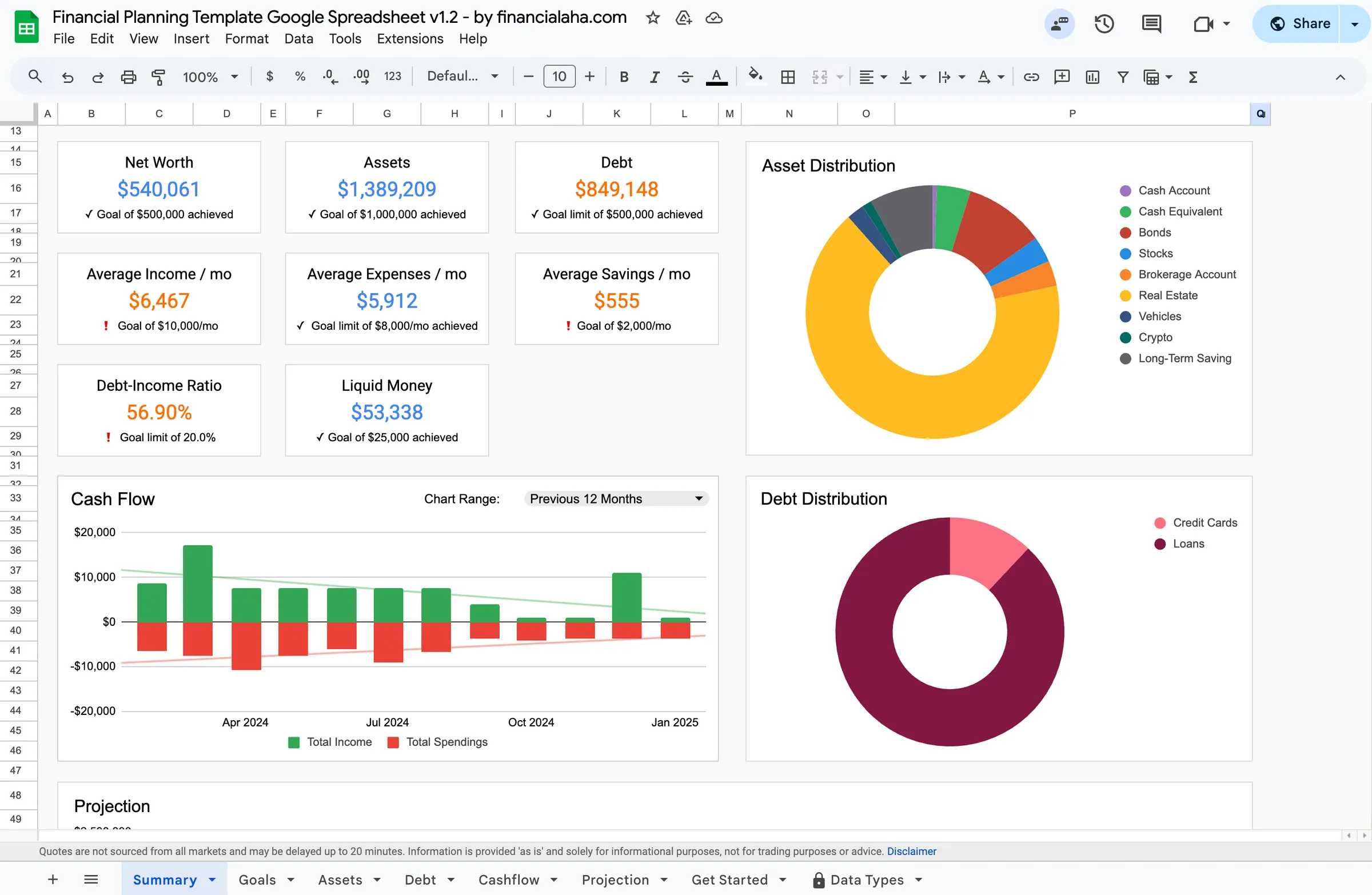
Browse through the template to see how it handles budgeting, categories, and expense tracking - all adaptable to your local financial setup.
- Built-in currency selector
- Customizable categories
- Budget vs actual tracking
- Visual charts and summaries
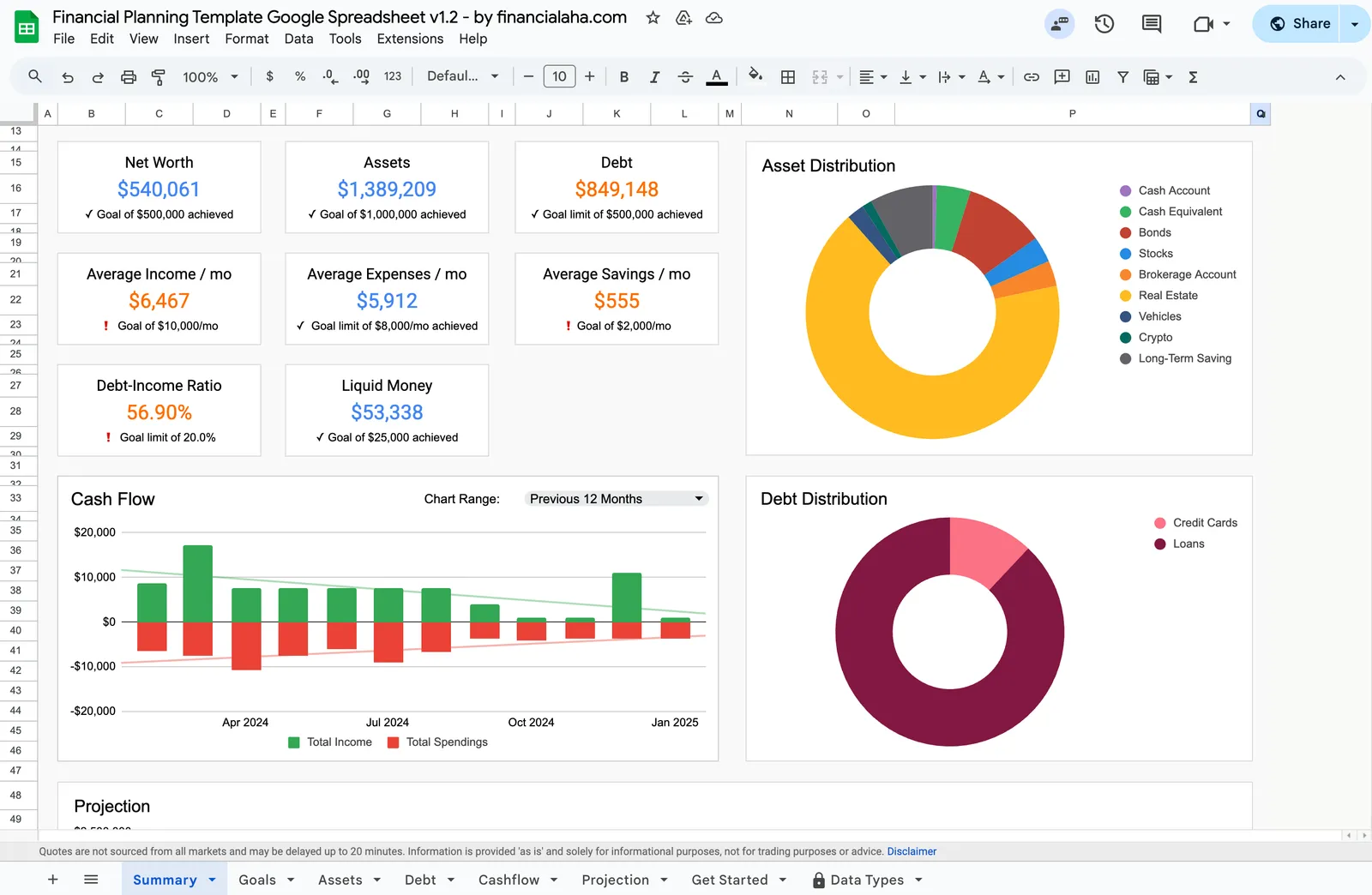
Complete financial overview with net worth and goals
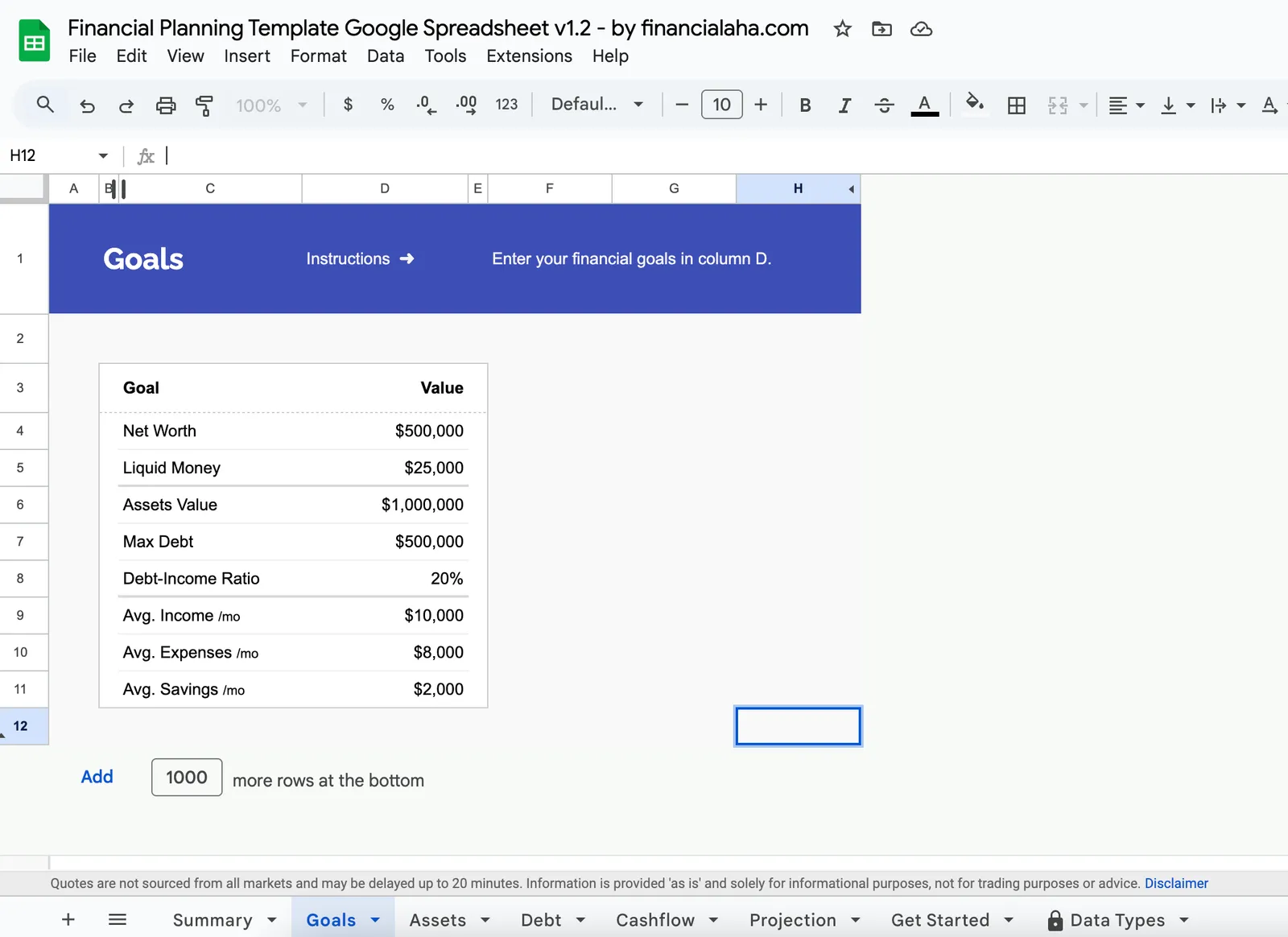
Set and track progress toward financial milestones
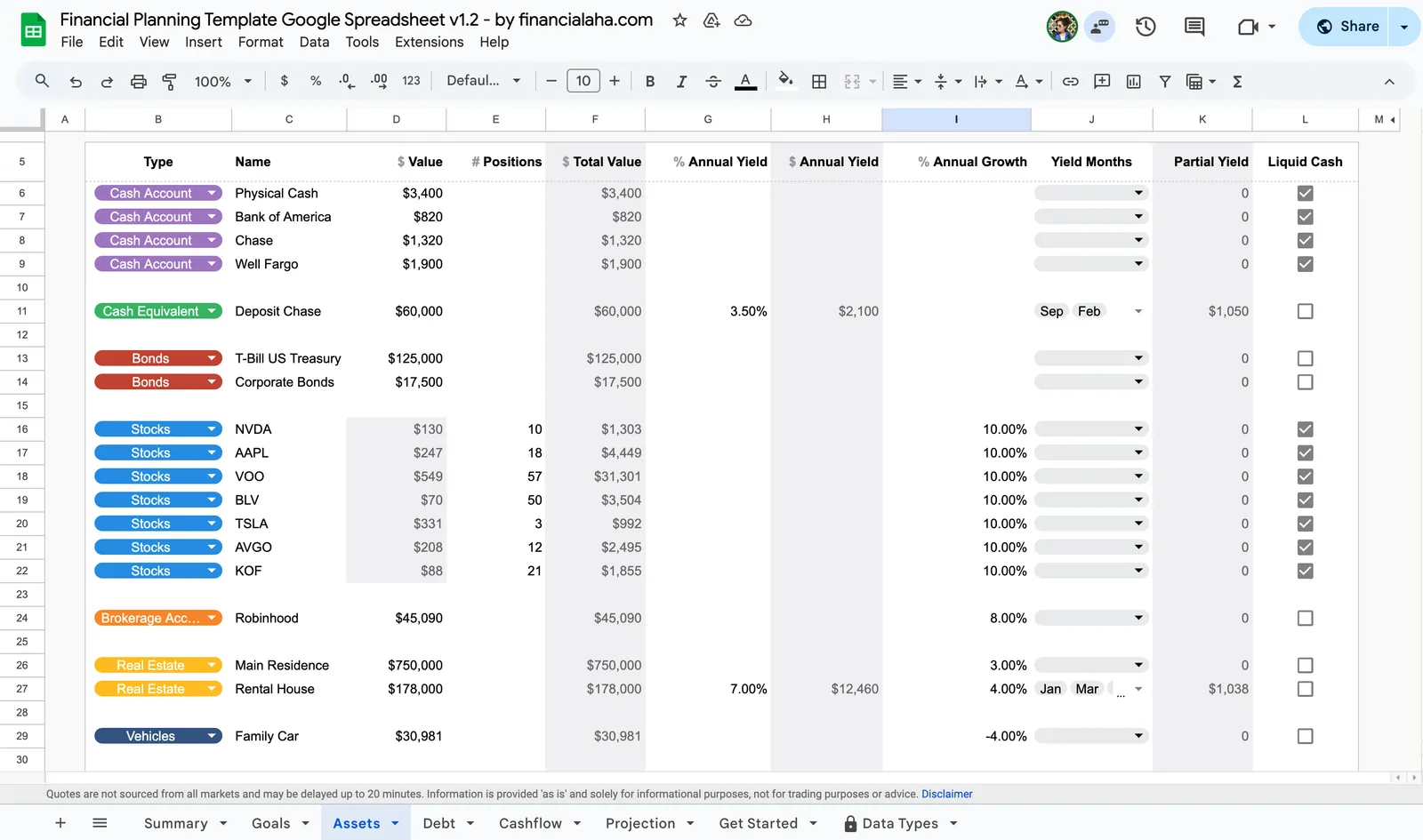
Track all your assets in one place
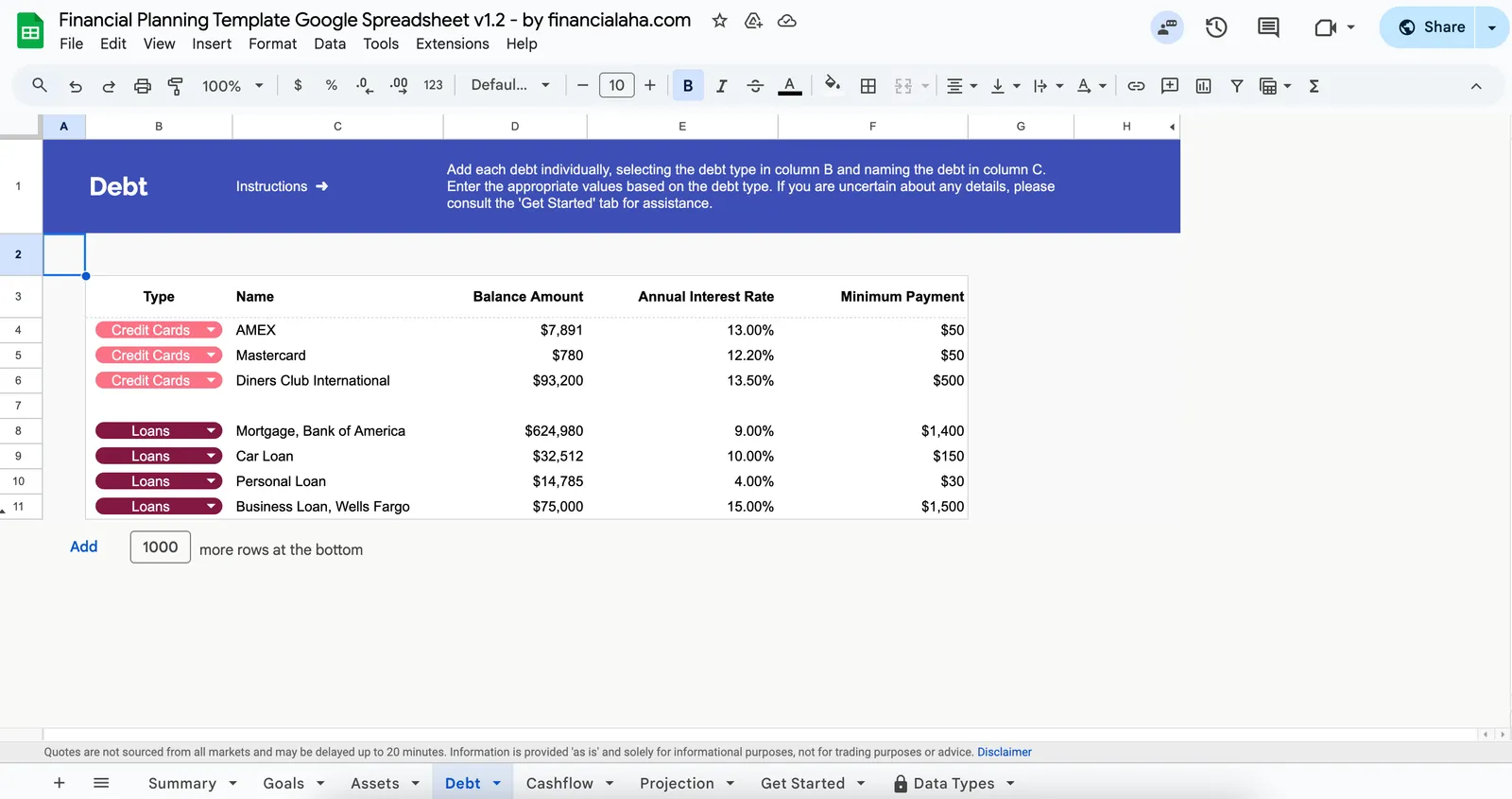
Monitor and plan debt repayment
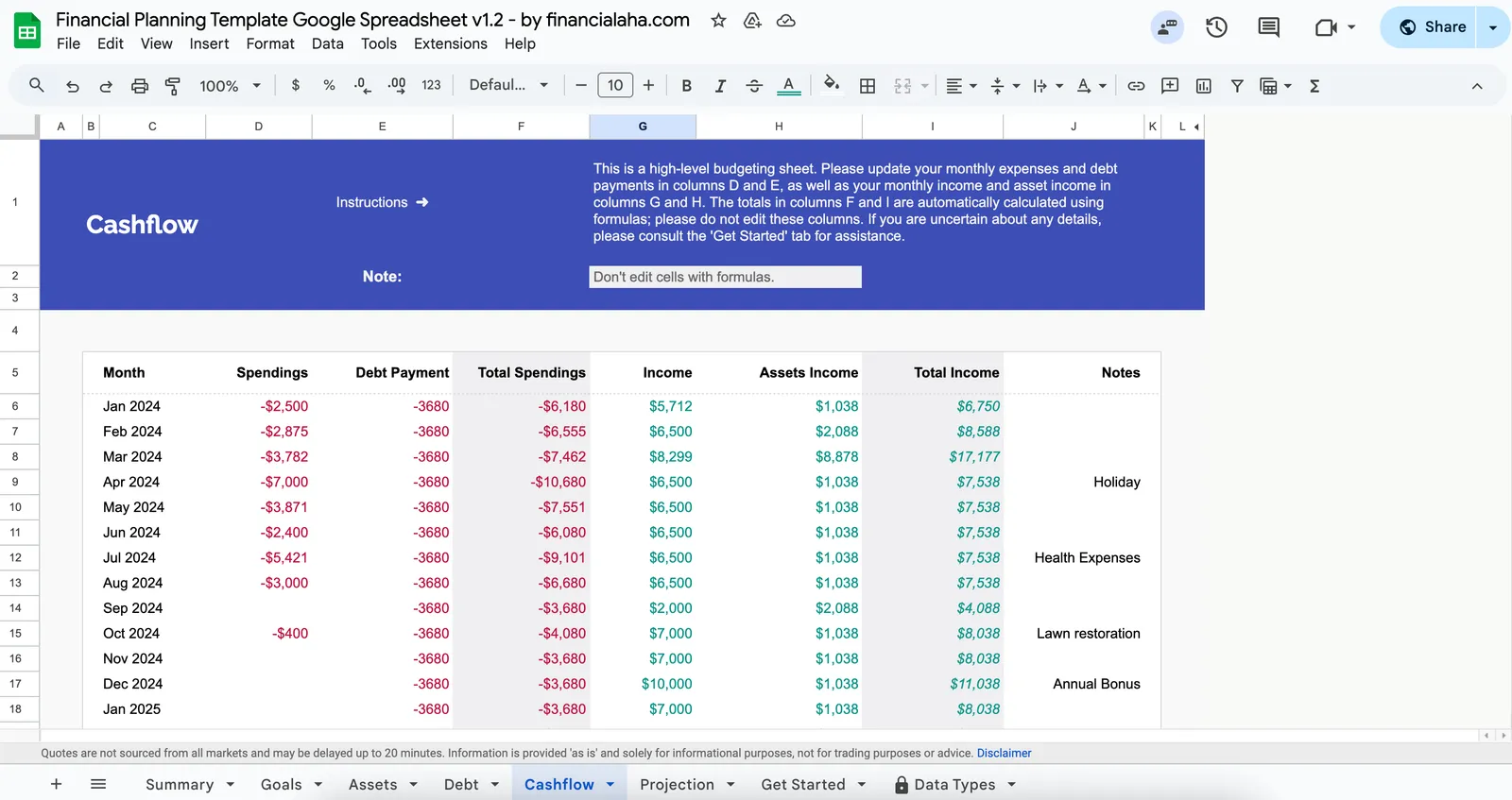
Visualize your income vs spending over time
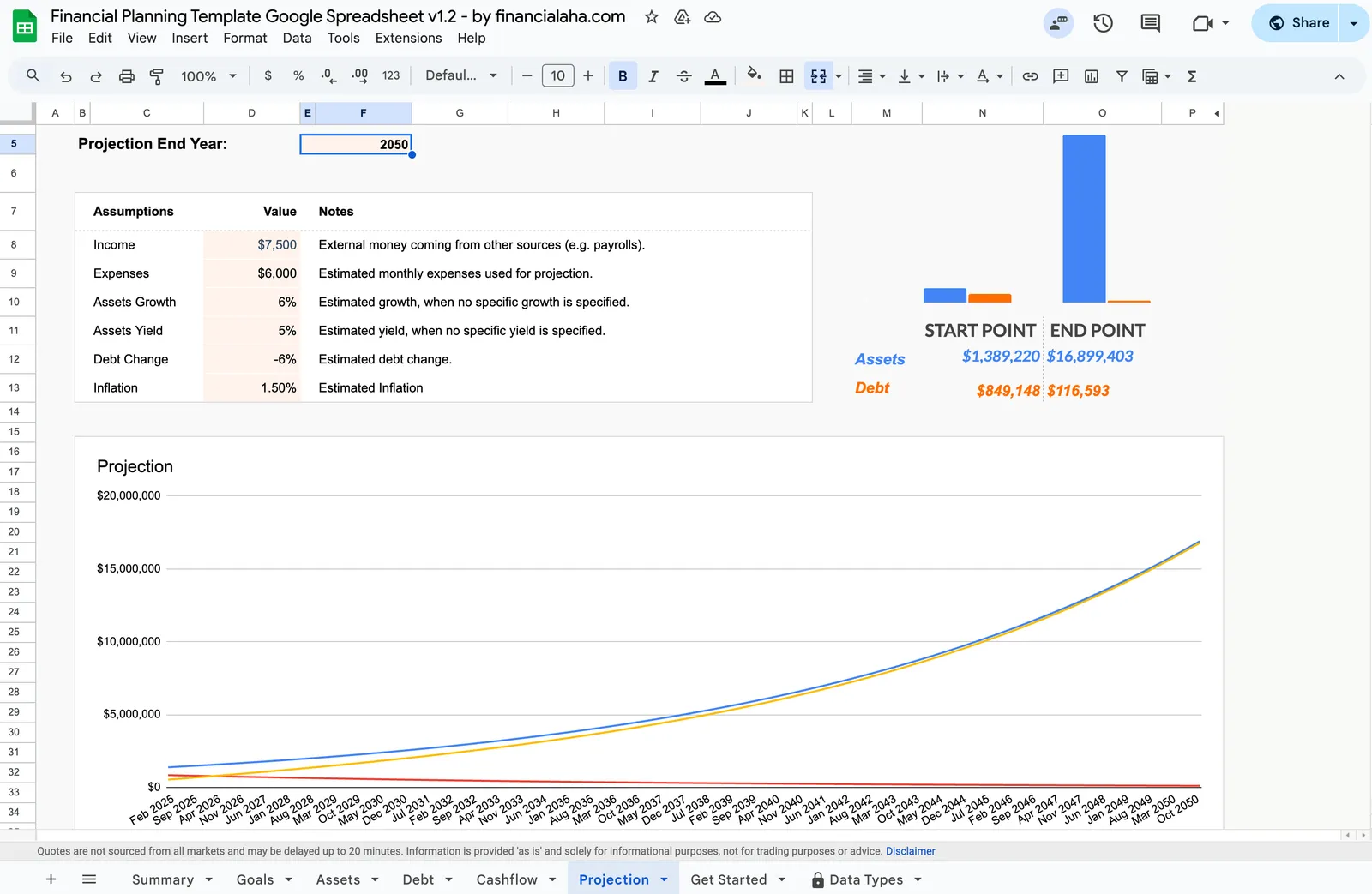
Project your financial future
Common Questions
Financial Planning Template for Australia - FAQ
Can this replace a financial adviser?
This template organizes your financial data - it doesn't provide personal advice. In Australia, personal financial advice must come from a licensed financial adviser (AFSL holder). The template is a useful tool to bring to those conversations, providing a clear picture of where things stand.
How do I include super in my plan?
Add your super fund with its current balance, annual employer contributions, and any voluntary contributions. Since super is locked until preservation age (60 for those born after July 1964), it's worth tracking separately from accessible savings.
Should I pay off HECS-HELP early?
This is a personal decision. HECS-HELP is indexed to CPI (not a commercial interest rate), so the "interest" rate is relatively low. Some people find that investing the money instead could generate higher returns than the indexation rate. Others prefer the psychological benefit of being debt-free. The template can model both scenarios.
How do I plan for the First Home Super Saver Scheme?
The FHSSS allows voluntary super contributions (up to $15,000/year and $50,000 total) to be withdrawn for a first home. Add these contributions as a separate tracking item in your plan, noting they're within super but earmarked for housing.
Can I plan for early retirement?
Yes. For Australians, early retirement planning means bridging the gap between your target retirement age and super preservation age (60). You'll need sufficient non-super investments to cover this period. The template helps map out both the bridge period and the post-60 phase.
Can't find the answer you're looking for? Contact our team
Explore More
Free Tools for Australia
Ready to get started?
Download instantly and start managing your finances, or contact us to design a custom template package for your needs.