Budgeting Method
Values-Based Budget Template for Google Sheets
Spend according to what matters most. A values-based budget starts with personal priorities and builds spending categories around them - so money flows toward what genuinely matters.
Overview
What Is a Values-Based Budget?
A values-based budget starts not with income or expenses, but with personal values. Instead of asking "how much can I spend on dining out?" it asks "what do I value, and how can my spending reflect that?"
The concept draws from the financial independence community and writers like Vicki Robin ("Your Money or Your Life"), who argued that spending should align with personal values rather than social expectations or habits. If travel is a core value but daily takeout isn't, the budget allocates generously to travel and minimally to dining out.
The process starts by identifying 3-5 core values: health, family, education, creativity, security, freedom, experiences. Then each budget category is evaluated: does this spending support a core value? Spending that aligns gets protected or increased. Spending that doesn't is minimized.
For example, someone who values health and creativity might budget $200/month for a gym and quality food, $150 for art supplies and classes, but only $50 for clothing and $0 for cable TV. The total might be the same as any other budget - the allocation just reflects intentional priorities.
This isn't about spending less overall. It's about spending more intentionally - directing resources toward what creates genuine satisfaction and reducing spending on things that don't.
Who it works for
People who earn enough to cover basics but feel their spending doesn't reflect their priorities. Especially useful for anyone who spends freely but ends up feeling unsatisfied with where the money went.
Advantages
- Spending becomes more satisfying because it reflects personal priorities
- Helps identify and eliminate spending that doesn't add value
- Flexible framework that adapts to any income level
- Encourages deeper reflection on what actually matters
- Reduces regret about spending decisions
Tradeoffs
- Requires honest self-reflection about values and priorities
- Values can be hard to define concretely
- Doesn't provide a specific structure or percentages
- Can be difficult when values conflict (security vs. freedom)
Getting Started
How to Set Up a Values-Based Budget in Google Sheets
The Monthly Budget Template from FinancialAha works well for values-based budgeting. Here's how to build it around your priorities:
Identify your core values
Write down 3-5 things that matter most: family time, health, education, financial security, creativity, travel, community. These become the lens through which every spending decision is evaluated.
Map budget categories to values
For each spending category, ask: which value does this support? Groceries might map to "health" and "family." A streaming subscription might not map to any core value. Categories without a value connection are candidates for reduction.
Allocate generously to high-value categories
If health is a core value, the food and fitness budget gets priority. If education matters, book and course spending gets protected. These categories get funded first, even if it means less elsewhere.
Minimize low-value spending
Categories that don't connect to any core value get minimal or zero allocation. This might mean cutting subscriptions, reducing dining out, or downgrading services. The money saved flows to high-value categories.
Review alignment quarterly
Every few months, review whether actual spending matched stated values. The template's spending history shows patterns over time. Values may shift, and the budget can shift with them.
Ready to try values-based budget budgeting?
Compare Methods
Values-Based Budget vs Other Budgeting Methods
Kakeibo Method
Both encourage mindful spending. Kakeibo uses a fixed four-category structure with reflection, while values-based budgeting uses personalized categories based on individual priorities.
50/30/20 Budget
The 50/30/20 method uses fixed percentages regardless of values. A values-based approach might allocate 40% to needs and 35% to values-aligned wants if that reflects priorities.
Zero-Based Budget
Zero-based assigns every dollar, which pairs well with values-based thinking. You can combine both: assign every dollar, but prioritize allocation based on values rather than habit.
See It In Action
What the template looks like
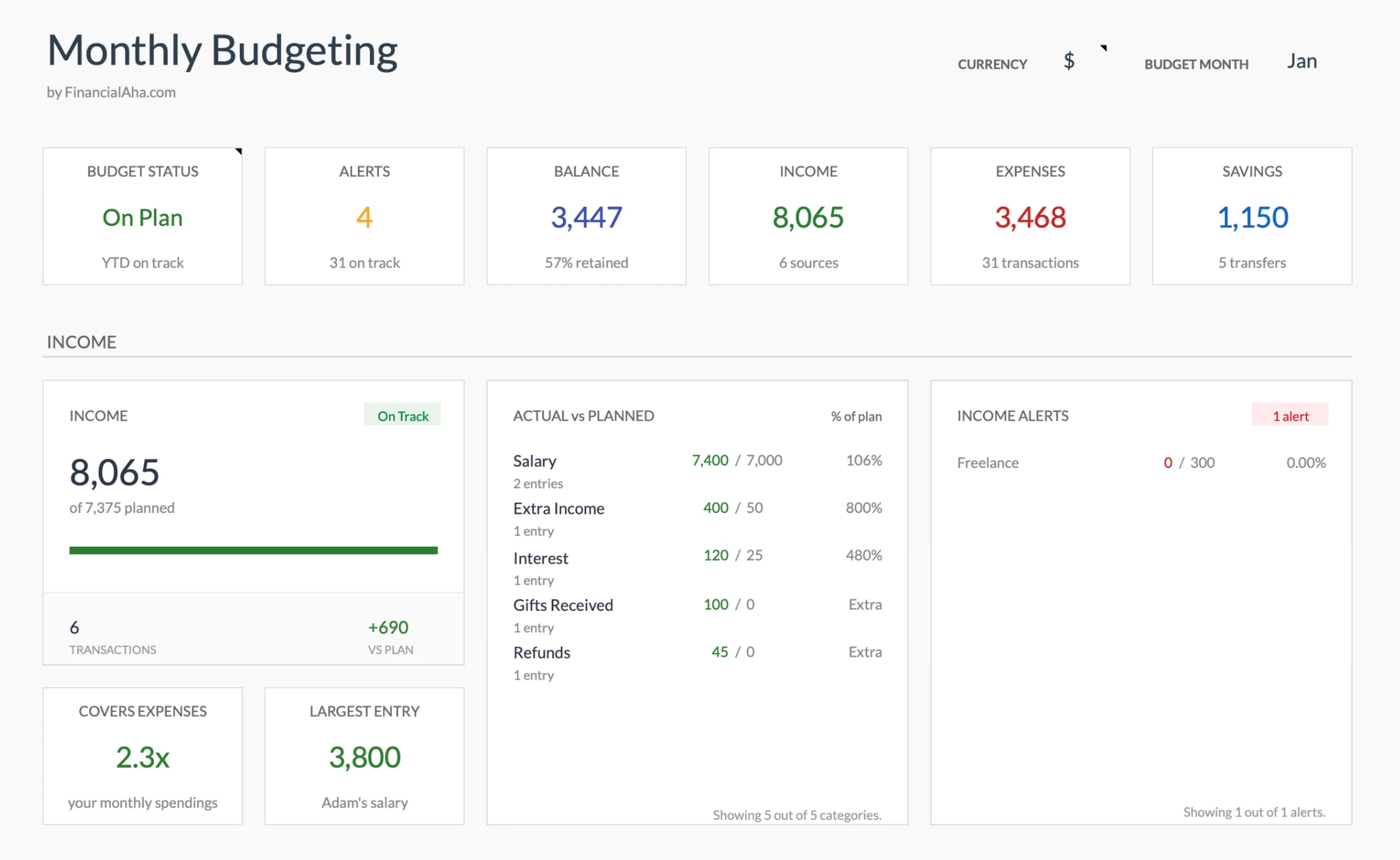
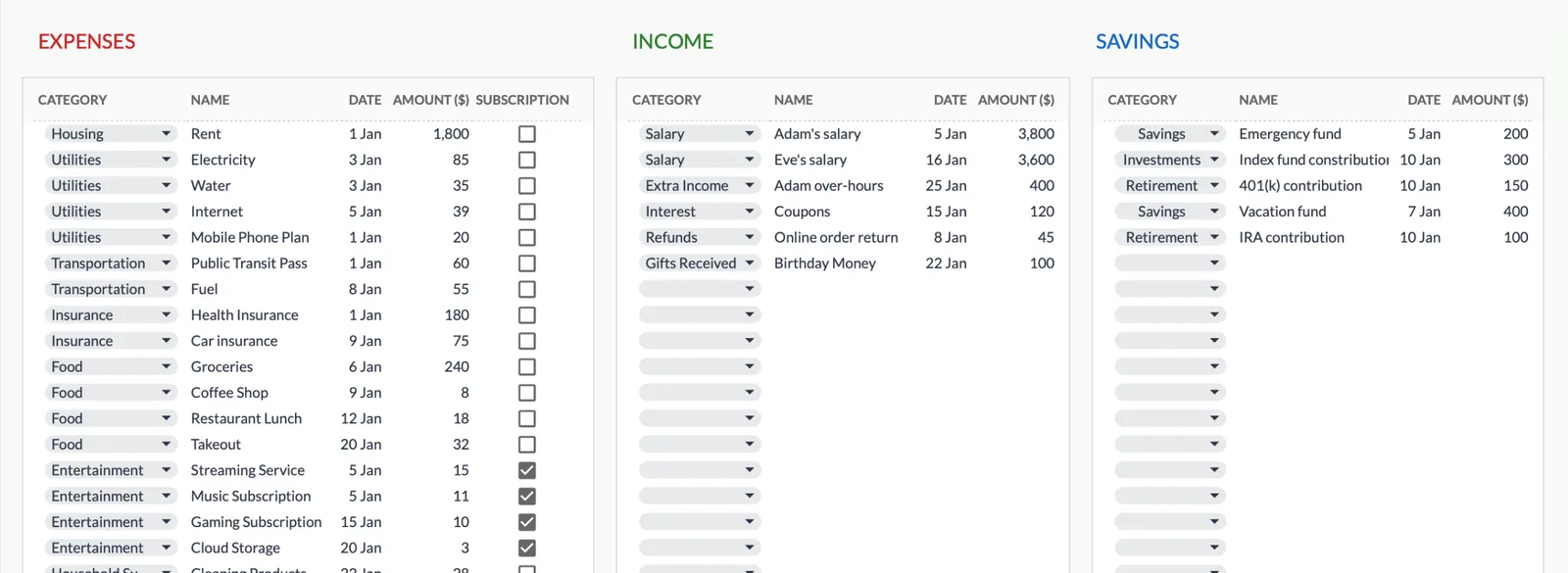
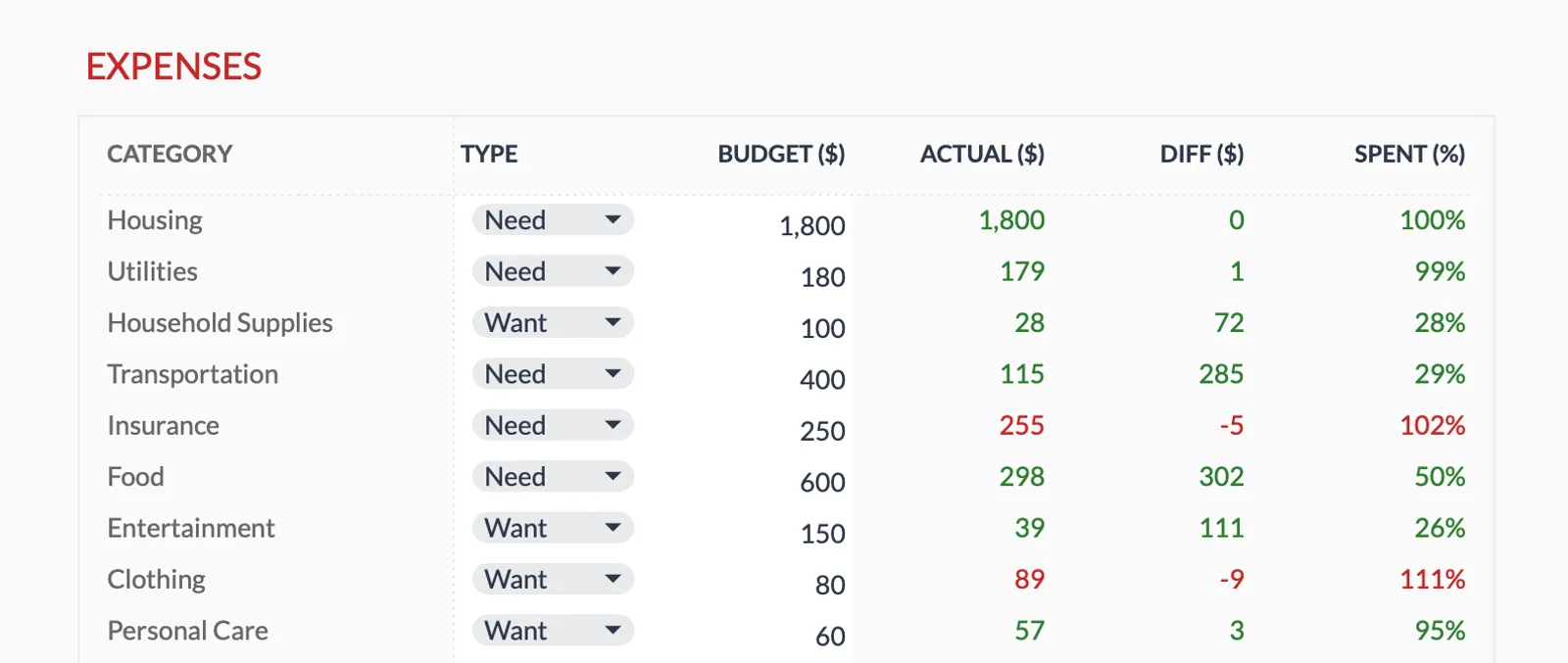
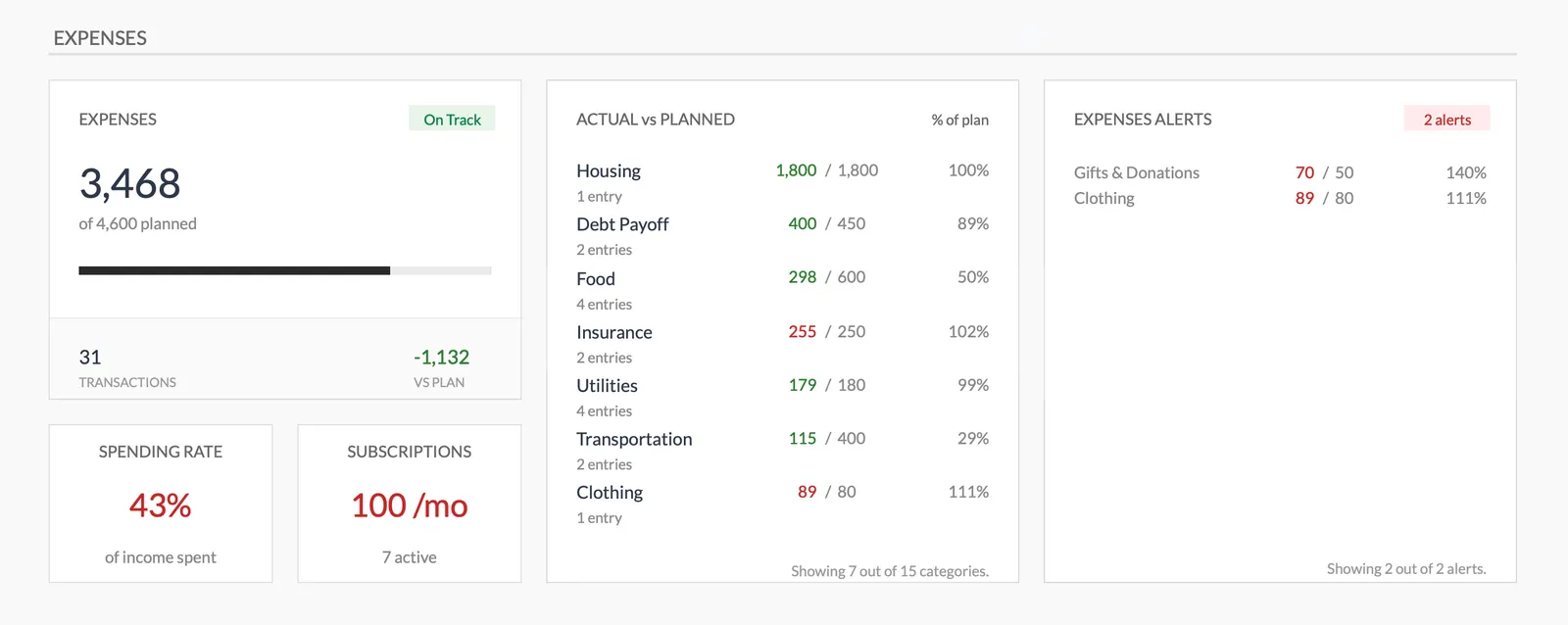
Browse through the template to see how it handles budgeting, expense tracking, savings goals, and spending analysis.
- Dashboard with key metrics
- Budget vs actual comparison
- Savings goal tracking
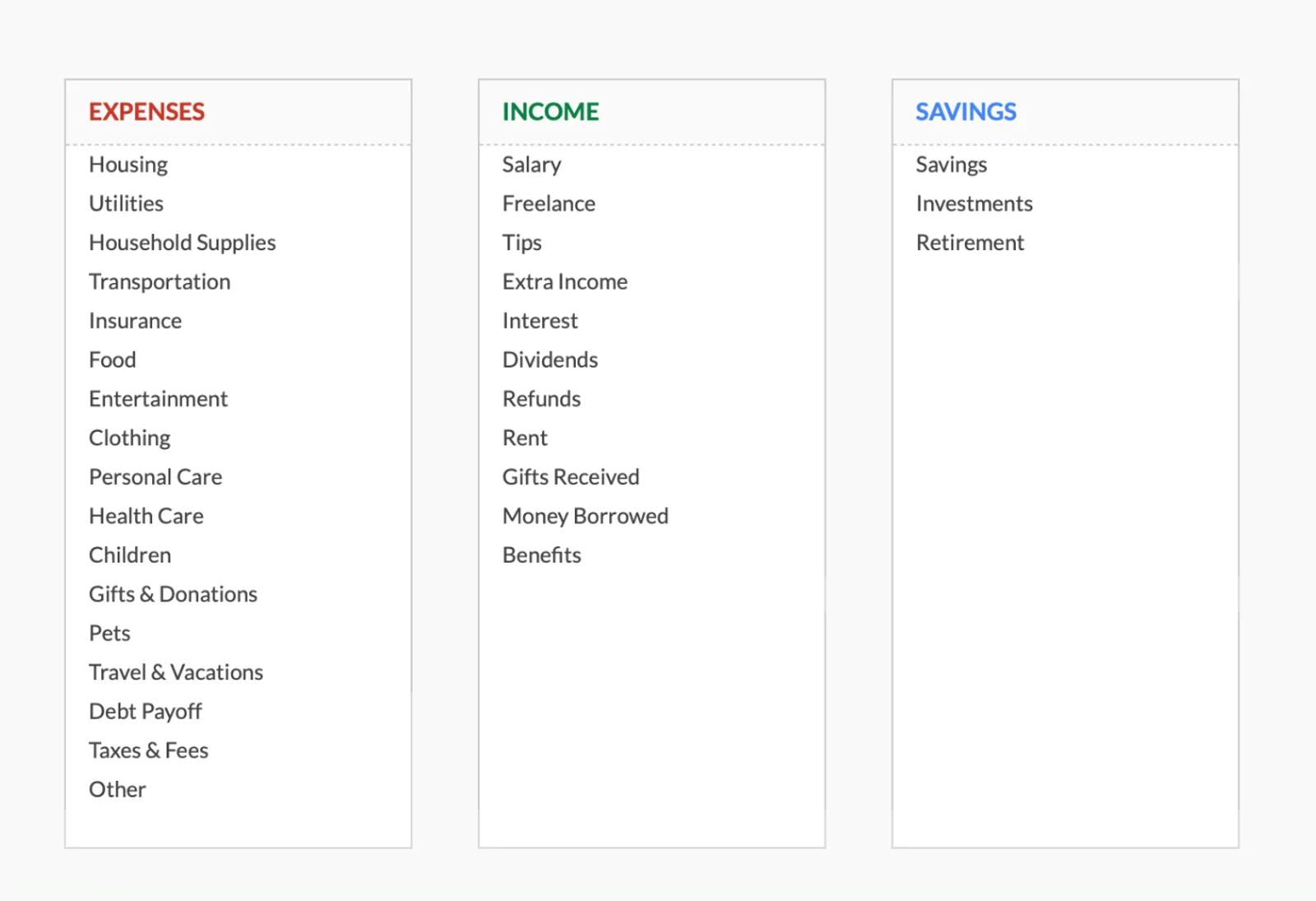
- Fully customizable categories

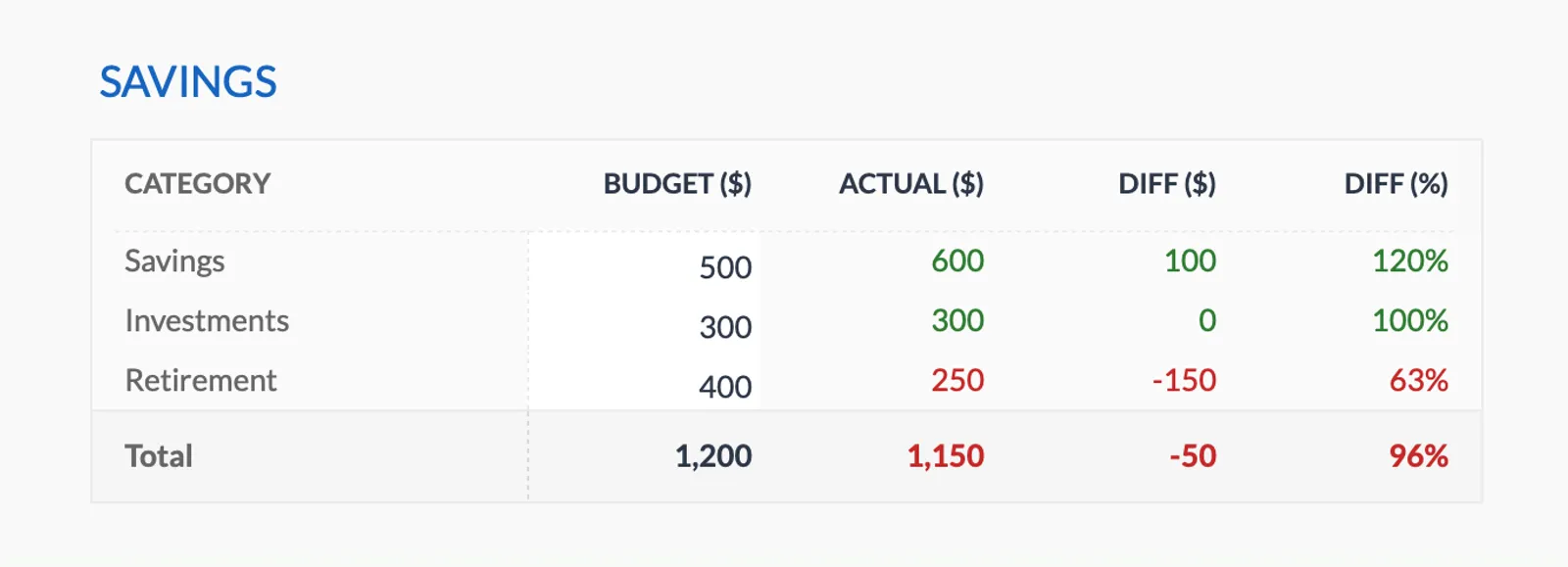
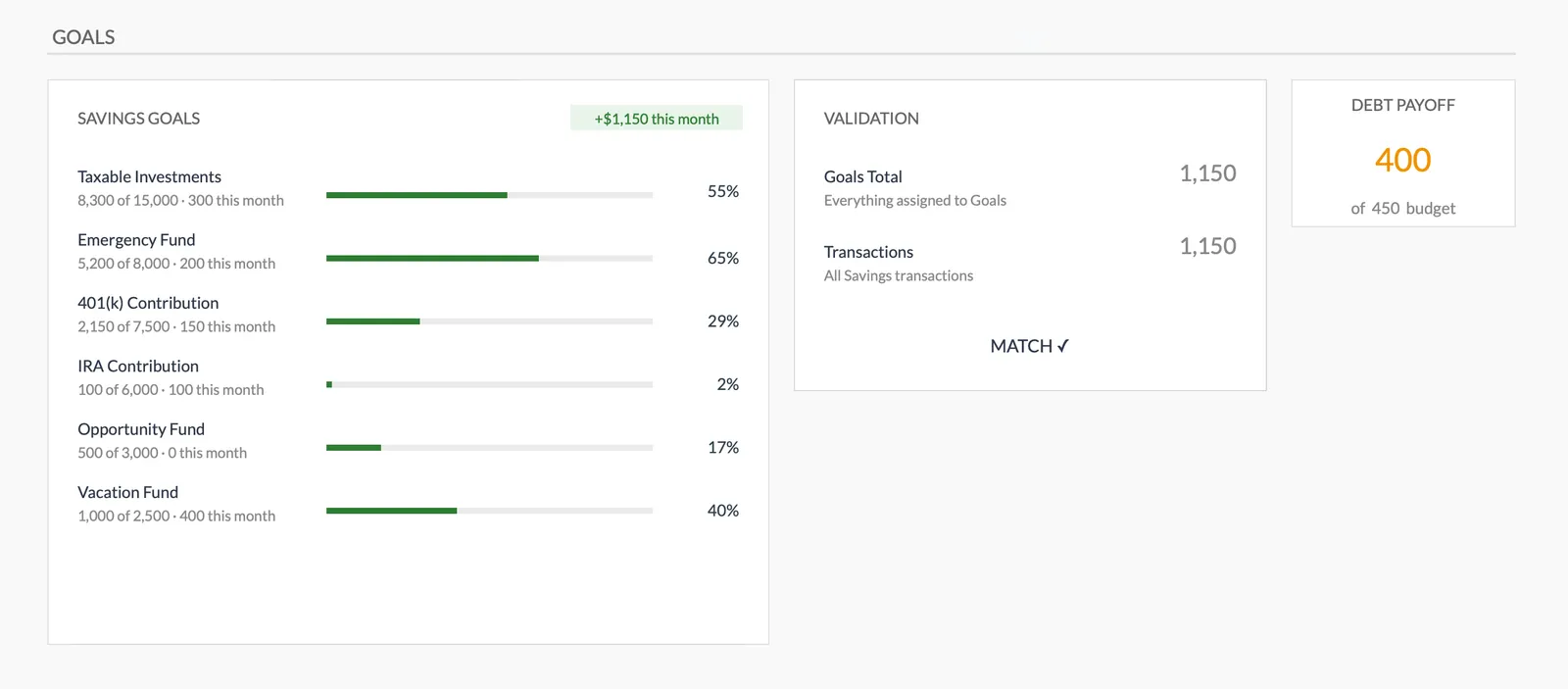
Dashboard with income, expenses, and savings at a glance
Log transactions with automatic categorization
Set targets per category and track actual spending
Visual breakdown of where your money goes
Track savings goals alongside your budget
Monitor progress toward financial goals
Fully customizable expense, income, and savings categories
Common Questions
Values-Based Budget Budgeting - FAQ
How do I figure out my values for budgeting purposes?
Look at where you voluntarily spend time and energy - not money. What activities make you feel most alive or fulfilled? What would you do more of if money weren't a factor? Common values include health, family, learning, security, creativity, and experiences.
What if my values conflict with each other?
This is common - wanting both security (more savings) and experiences (more travel), for example. Prioritize by ranking values, or allocate percentages that balance competing priorities. The budget is a living document that can adjust.
Is this just a fancy way of saying "spend on what you like"?
Not quite. Values and preferences are different. You might prefer takeout but value health. A values-based budget would prioritize groceries and cooking over takeout - which requires going against preferences in service of deeper values.
Can I combine values-based budgeting with another method?
Absolutely. Values-based budgeting is more of a philosophy than a structure. It pairs well with any structural method - zero-based, 50/30/20, or envelopes. The template supports whatever combination works.
Can't find the answer you're looking for? Contact our team
Start values-based budget budgeting today
One-time purchase. No subscription. Your financial data stays in your Google Drive.