Budgeting Method
80/20 Budget Template for Google Sheets
Save first, spend the rest. The 80/20 budget sets aside 20% for savings and gives full flexibility with the remaining 80%.
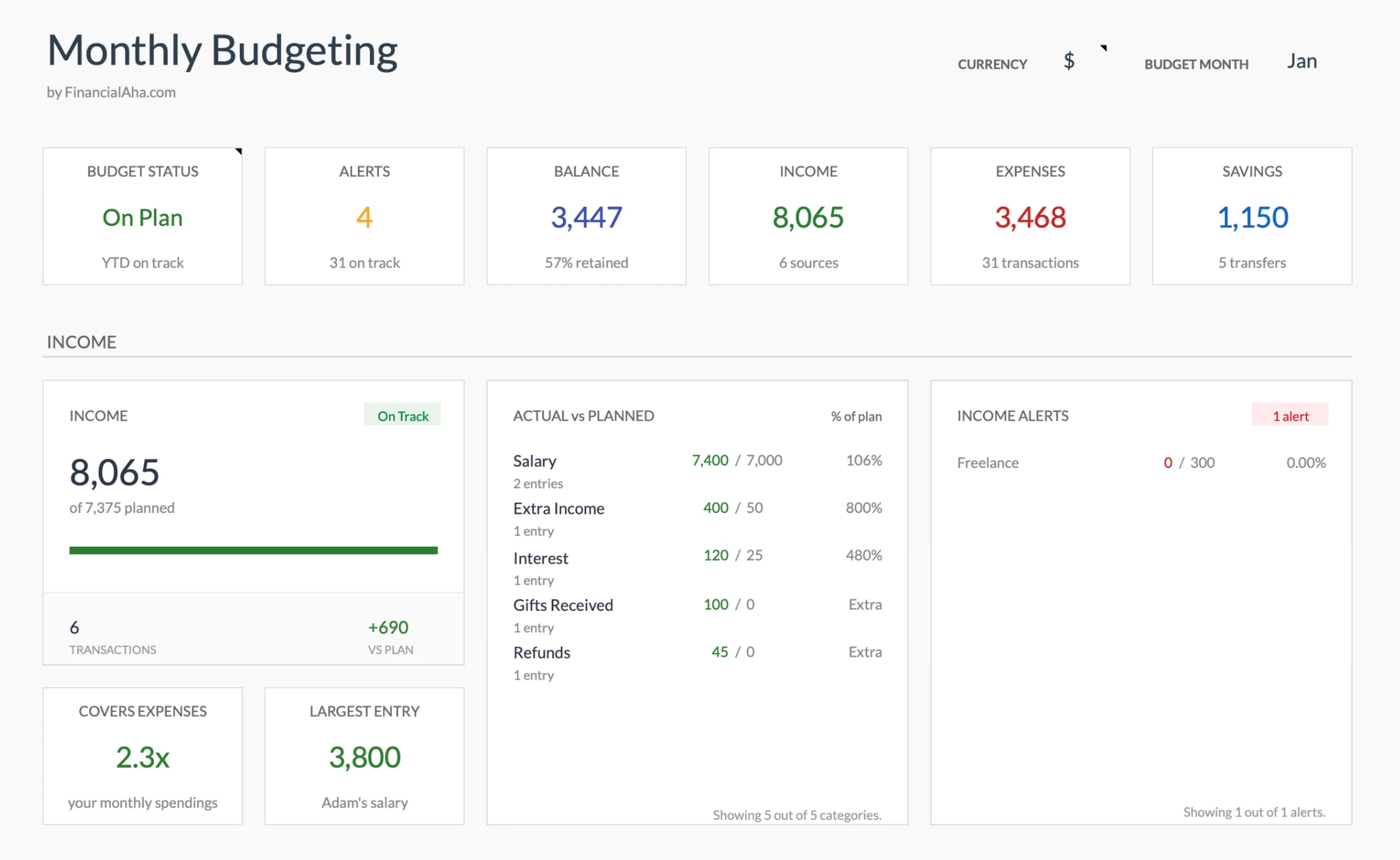
Overview
What Is the 80/20 Budget?
The 80/20 budget is one of the simplest budgeting frameworks. Take your after-tax income, put 20% toward savings and debt repayment, and spend the remaining 80% however you choose. No categories, no envelopes, no tracking individual purchases.
The concept draws on the Pareto Principle - the idea that roughly 20% of actions produce 80% of results. In budgeting terms, the single action of saving 20% upfront handles the most important financial priority without requiring granular spending management.
For example, on $5,000 monthly take-home: $1,000 goes straight to savings or debt repayment, ideally via automatic transfer on payday. The remaining $4,000 covers everything else - rent, groceries, entertainment, transportation - without needing to track where it goes.
This method appeals to people who find detailed budgeting unsustainable. By automating the savings portion, the rest of the budget essentially manages itself. If the bills get paid and savings happen consistently, the spending details matter less.
Who it works for
People who dislike tracking individual expenses but still want to build savings consistently. Works well for those with stable income who can comfortably cover their needs with 80% of take-home pay.
Advantages
- Extremely simple - only one rule to follow
- Automates the most impactful financial habit (saving)
- No category tracking or spending logs required
- Low time commitment - minutes per month
- Reduces budgeting fatigue and decision overload
Tradeoffs
- No visibility into where the 80% actually goes
- Doesn't help identify or reduce wasteful spending
- The 20% savings rate may not fit all income levels
- Can mask problems like lifestyle inflation within the 80%
Getting Started
How to Set Up an 80/20 Budget in Google Sheets
The Monthly Budget Template from FinancialAha makes the 80/20 method easy to implement. Here's how:
Enter your after-tax income
Input your total take-home pay for the month. If you earn $4,500 after taxes, that's your starting number. The template uses this to calculate your savings target automatically.
Calculate your 20% savings target
On $4,500, your savings target is $900. Set up an automatic transfer to a savings account or investment account on payday. This is the core of the method - pay yourself first, then live on the rest.
Set a single spending target for the remaining 80%
Your spending ceiling is $3,600. You can break this into categories if you want, but the 80/20 method doesn't require it. Some people just track total spending against this number.
Automate where possible
Set up automatic transfers for savings on payday. Automate fixed bills like rent, utilities, and insurance. The less you need to think about, the more likely the system sticks.
Review monthly totals
At month's end, check two things: did 20% go to savings, and did spending stay within 80%? The template shows this at a glance. If both are on track, the method is working.
Ready to try 80/20 budget budgeting?
Compare Methods
80/20 vs Other Budgeting Methods
50/30/20 Budget
Adds more structure by splitting spending into needs and wants. More insight into spending patterns but requires categorizing every expense.
Pay Yourself First
Very similar in philosophy - save first, spend the rest. Pay yourself first doesn't specify a percentage, making it even more flexible.
Anti-Budget
The anti-budget takes a comparable approach - automate savings and bills, then spend freely. The main difference is framing rather than mechanics.
See It In Action
What the template looks like
Browse through the template to see how it handles budgeting, expense tracking, savings goals, and spending analysis.
- Dashboard with key metrics
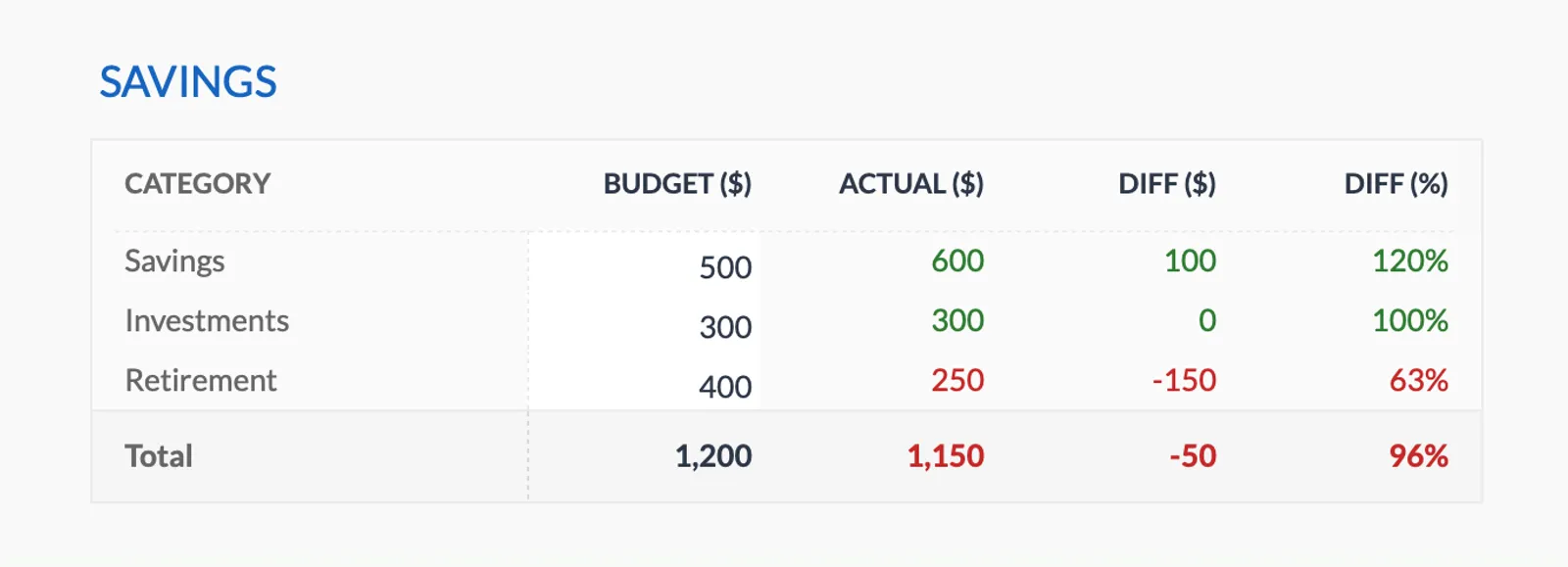
- Budget vs actual comparison
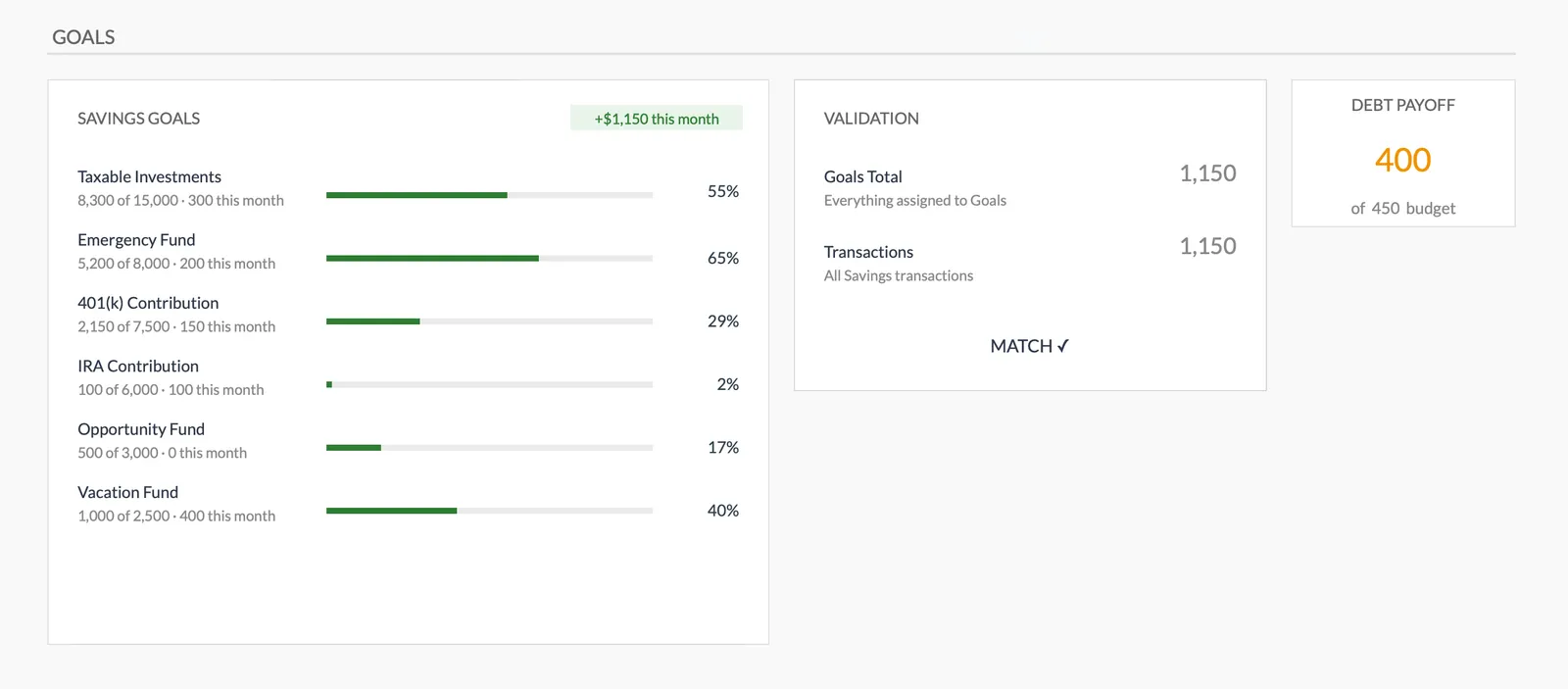
- Savings goal tracking
- Fully customizable categories

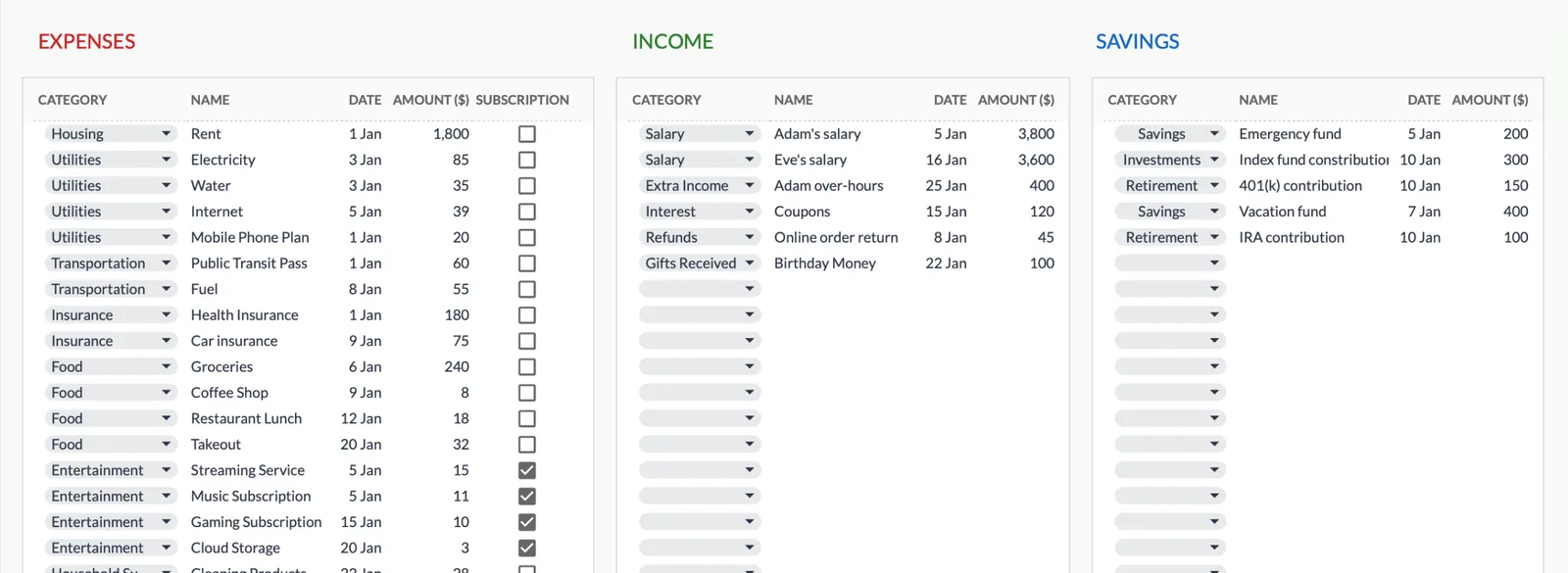
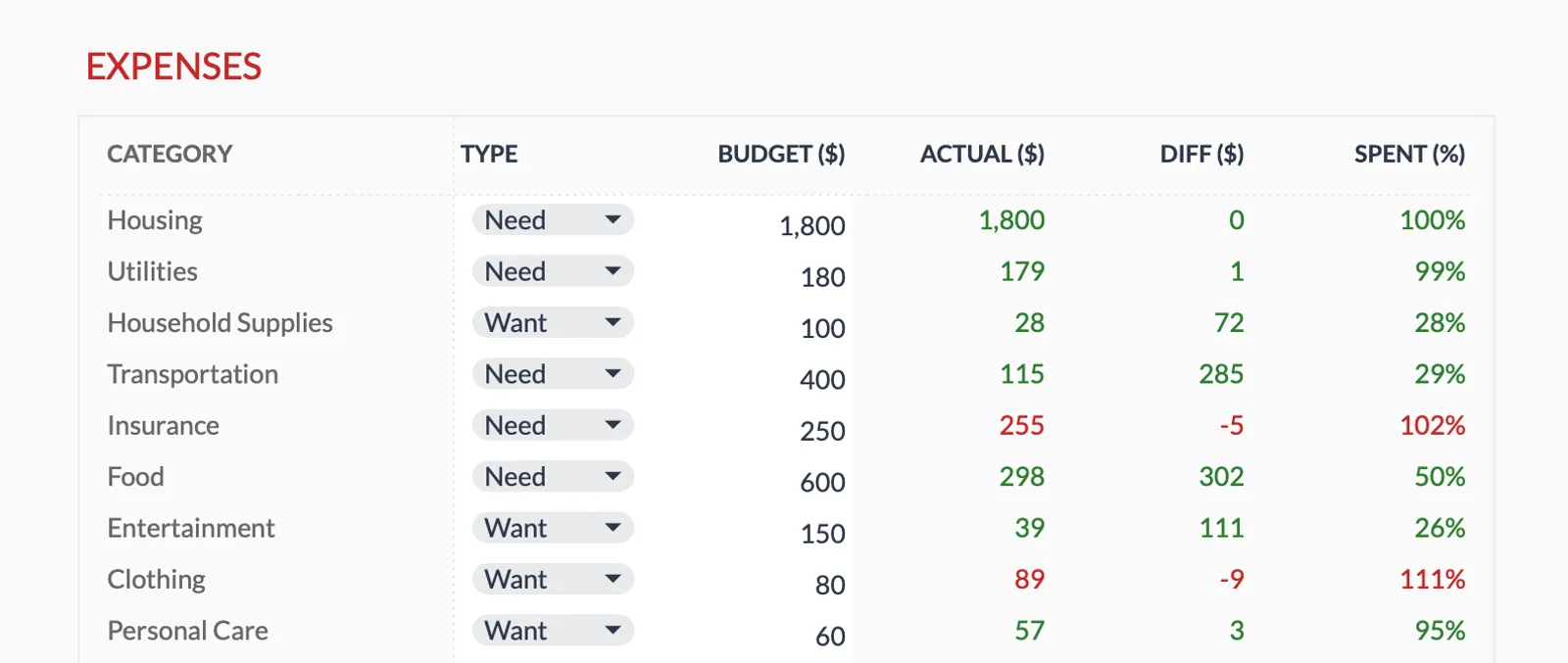
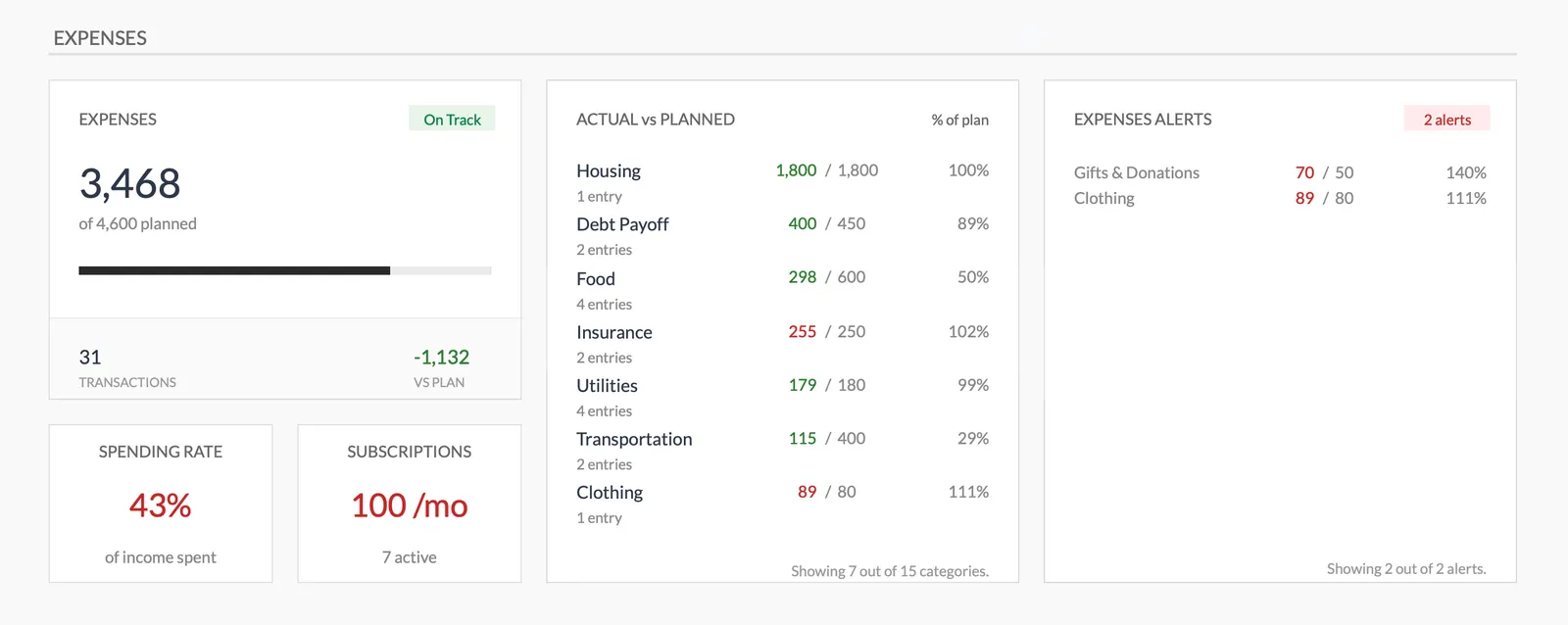
Dashboard with income, expenses, and savings at a glance
Log transactions with automatic categorization
Set targets per category and track actual spending
Visual breakdown of where your money goes
Track savings goals alongside your budget
Monitor progress toward financial goals
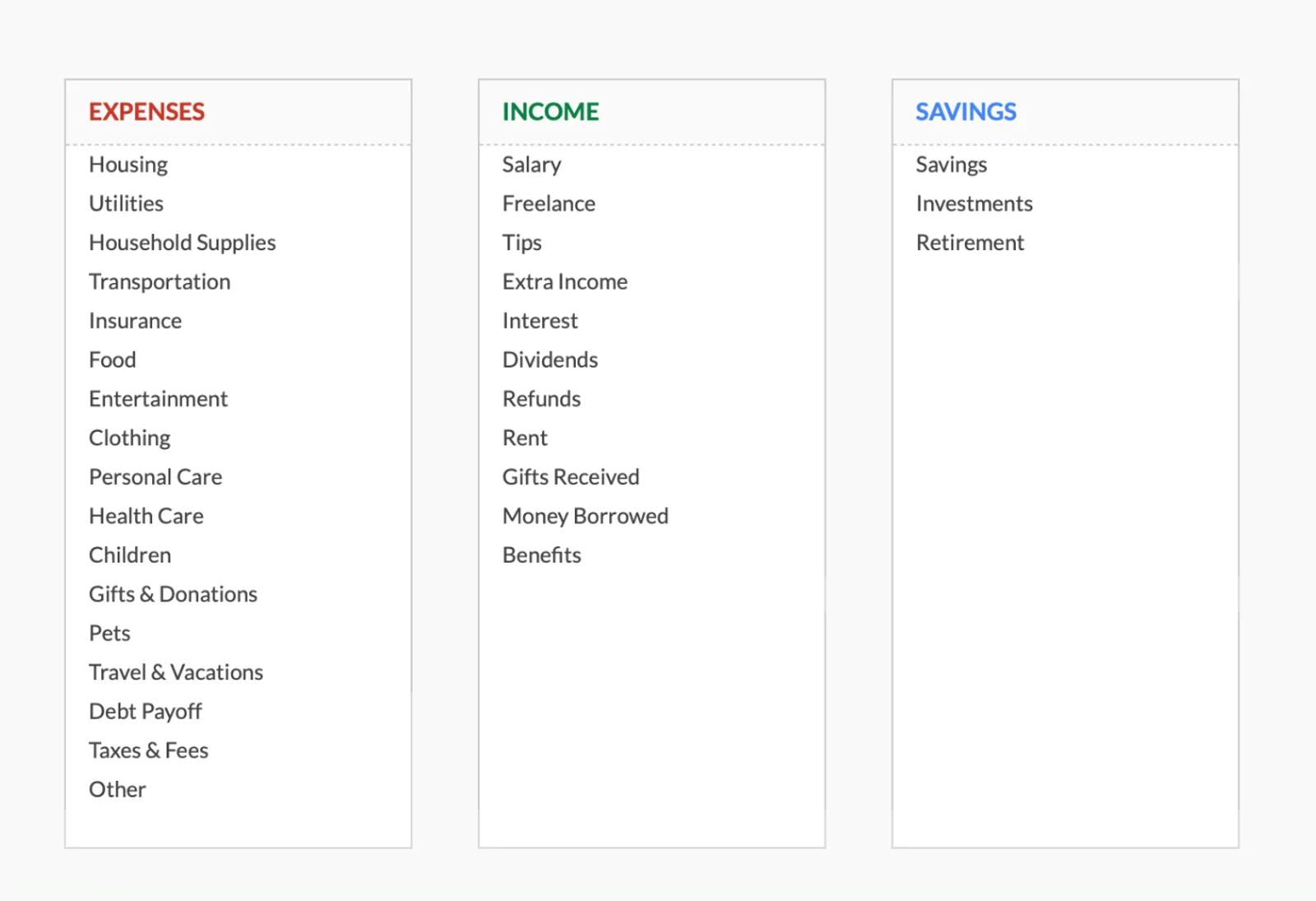
Fully customizable expense, income, and savings categories
Common Questions
80/20 Budget Budgeting - FAQ
What if I can't save 20% right now?
Start with whatever percentage is realistic - even 5% or 10%. The principle still works: automate savings first, spend the rest. Increase the percentage over time as income grows or expenses decrease.
Does the 20% include retirement contributions?
It can. If your employer deducts retirement contributions before your paycheck, some people count that toward the 20%. Others calculate it on gross income. Either approach works as long as it's consistent.
How is this different from just not budgeting at all?
The key difference is the intentional, automated savings component. Without a system, savings often happen with whatever is left over - which is often nothing. The 80/20 method ensures saving happens first.
Can the FinancialAha template support this simple approach?
Yes. Set up two main groups: savings (20%) and everything else (80%). The template tracks your totals against these targets, giving you a quick pass/fail view each month without requiring detailed categorization.
Can't find the answer you're looking for? Contact our team
Start 80/20 budget budgeting today
One-time purchase. No subscription. Your financial data stays in your Google Drive.