Budget Guide
How to Budget for a Wedding
The average US wedding runs $30,000-$35,000, split across 8-12 vendor categories where venue and catering alone eat 40-50% of the total. Mapping every cost in a spreadsheet from day one keeps spending visible and priorities clear.
In Depth
The Financial Side of Wedding Planning Nobody Talks About
Wedding budgets have a tendency to grow in a way that other budgets do not. Each individual vendor decision feels reasonable in isolation - an extra $500 for the photographer's premium package, a $200 upgrade on centerpieces, a "small" addition of a videographer. But these incremental decisions compound. By the time the final invoice arrives, the total often bears little resemblance to the original plan. Tracking every commitment in a spreadsheet as it happens makes this creep visible before it becomes unmanageable.
Deposit timelines are an underappreciated source of cash flow stress during wedding planning. Many vendors require deposits 6-12 months in advance, with final payments due 30-60 days before the event. This creates a lumpy payment schedule that does not align neatly with monthly income. An annual or multi-month budget view that maps out when each payment is due - and when savings need to reach certain milestones - turns an abstract total into a concrete cash flow plan.
Couples who track wedding spending often discover something valuable: the process of budgeting together for a major life event establishes financial communication patterns that serve the relationship long after the wedding. Discussing priorities, making trade-offs, and reviewing spending against a shared plan is essentially a crash course in household financial management. The habits built during wedding planning can carry directly into managing finances as a married couple.
Cost Breakdown
Typical Wedding Costs
Wedding costs vary widely by region, guest count, and style. These ranges reflect common spending patterns, though individual choices can shift any category dramatically.
Venue & Catering
40-50% of total budgetOften the largest single expense - includes food, drinks, and service staff
Photography & Videography
8-12% of total budgetPackages vary widely based on hours of coverage and deliverables
Attire & Beauty
5-10% of total budgetDress or suit, alterations, hair, makeup, and accessories
Flowers & Decor
8-10% of total budgetSeasonal flowers can reduce costs significantly
Music & Entertainment
5-8% of total budgetDJ vs. live band is one of the biggest cost differences here
Rings
3-5% of total budgetA highly personal decision with a very wide price range
Invitations & Stationery
2-3% of total budgetDigital invitations are increasingly common and more affordable
Transportation & Honeymoon
10-15% of total budgetSome couples budget the honeymoon separately
Budgeting Steps
Steps to Build a Wedding Budget
Start with a total number
Before looking at venues or vendors, decide on a total spending limit that feels comfortable. Factor in any contributions from family. Having a firm number prevents the gradual creep that happens when each individual decision seems small.
Prioritize what matters to you
Every couple values different things. Some care deeply about food quality while others prioritize photography. Rank your categories and allocate more to the top priorities. This makes it easier to cut from areas that matter less when the budget gets tight.
Track deposits and payment schedules
Wedding vendors typically require deposits months in advance, with final payments due closer to the date. Map out when each payment is due so there are no surprises. A timeline view across months helps visualize the cash flow impact.
Build in a contingency buffer
Setting aside 5-10% of the total budget for unexpected costs is worth considering. Last-minute additions, vendor surcharges, and forgotten line items are common. Having a buffer means these do not blow the overall budget.
Review and adjust monthly
As decisions get made, the budget shifts. Monthly check-ins help catch overruns early while there is still time to adjust. What looked affordable in the spreadsheet sometimes changes once real quotes come in.
See The Template
Tools for wedding budgeting
Browse the template features that help with wedding financial planning.
- Automatic calculations
- Visual charts and summaries
- Customizable categories
- Works in Google Sheets and Excel
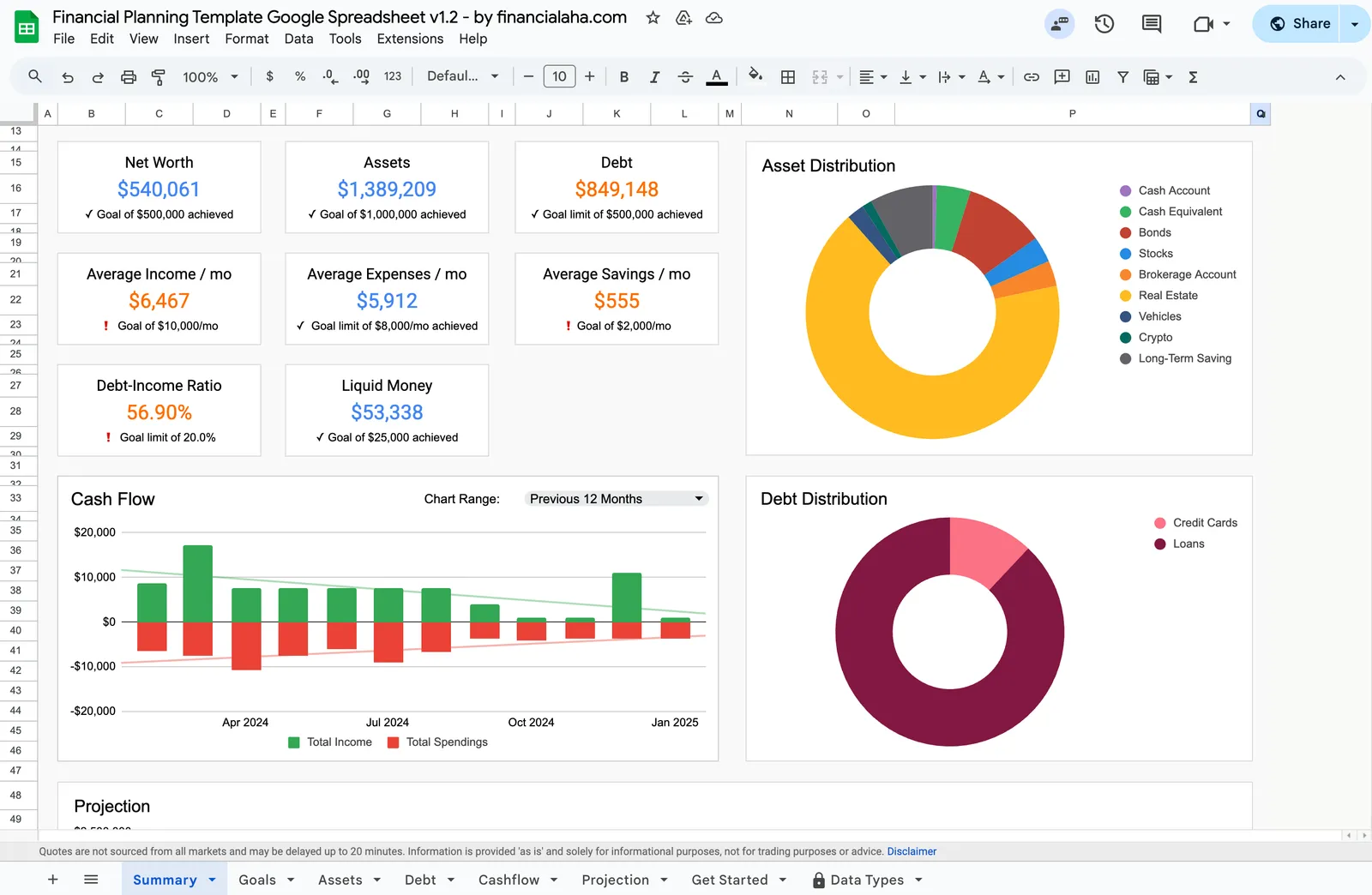
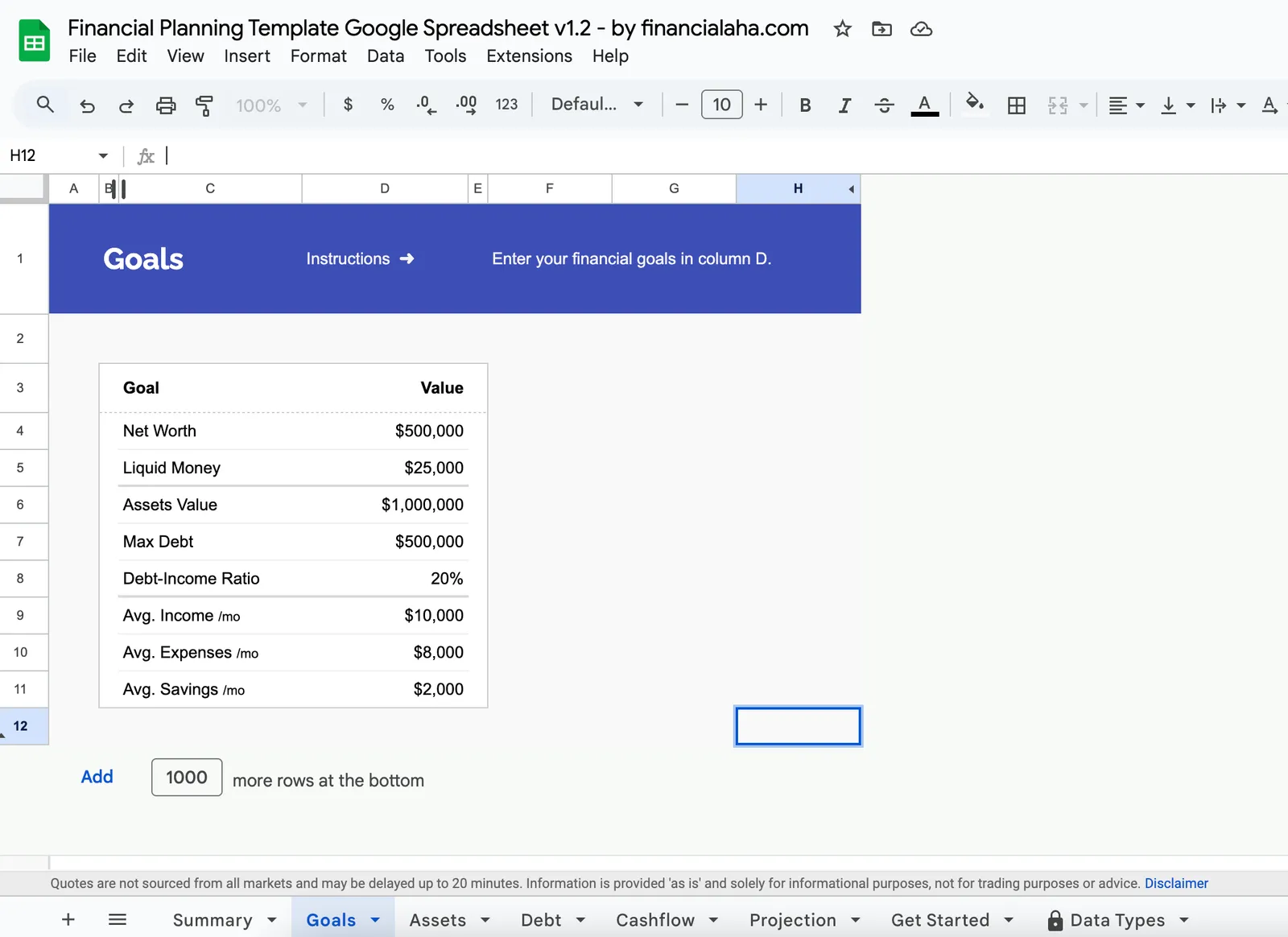
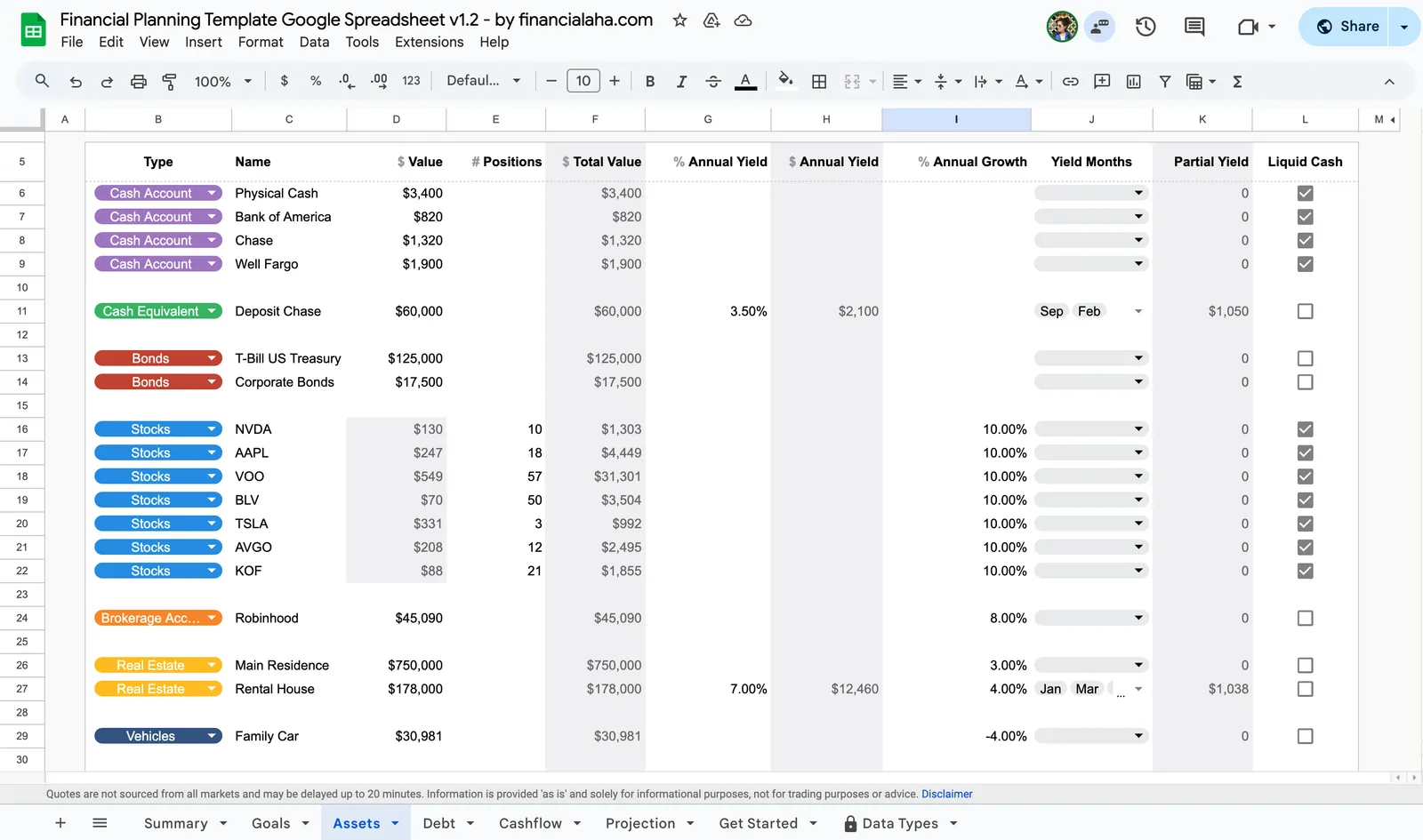
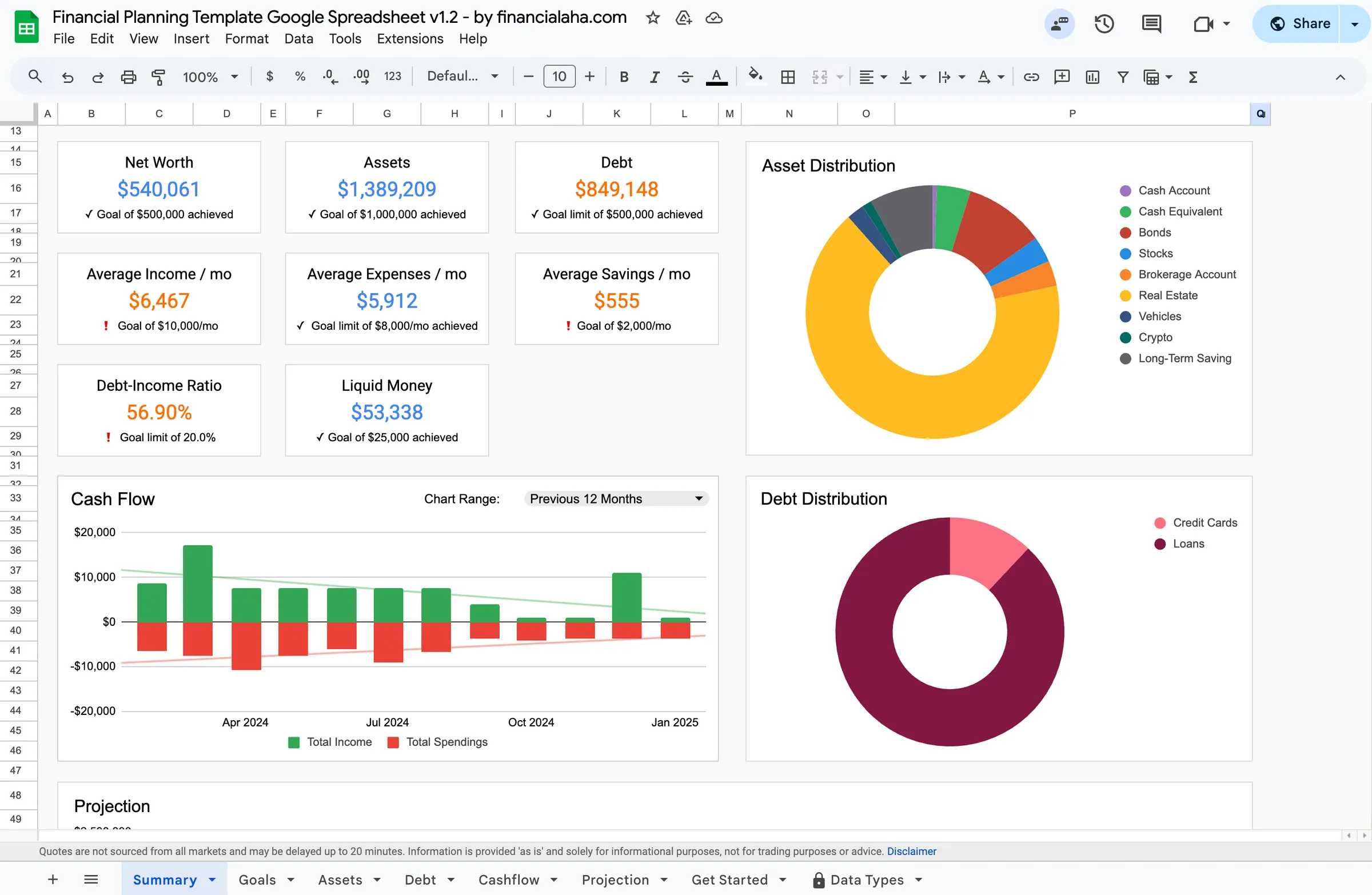
Complete financial overview with net worth and goals
Set and track progress toward financial milestones
Track all your assets in one place
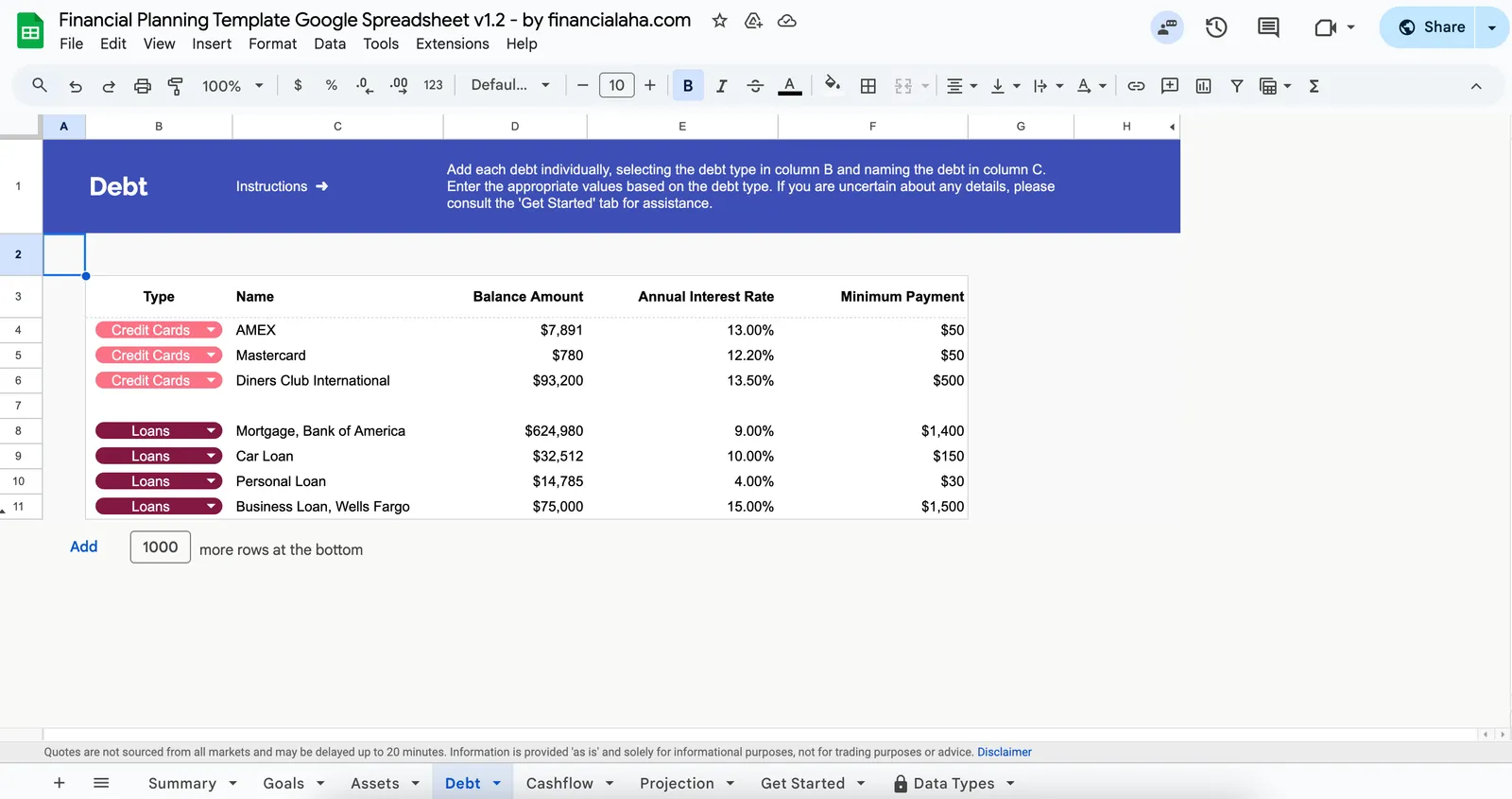
Monitor and plan debt repayment
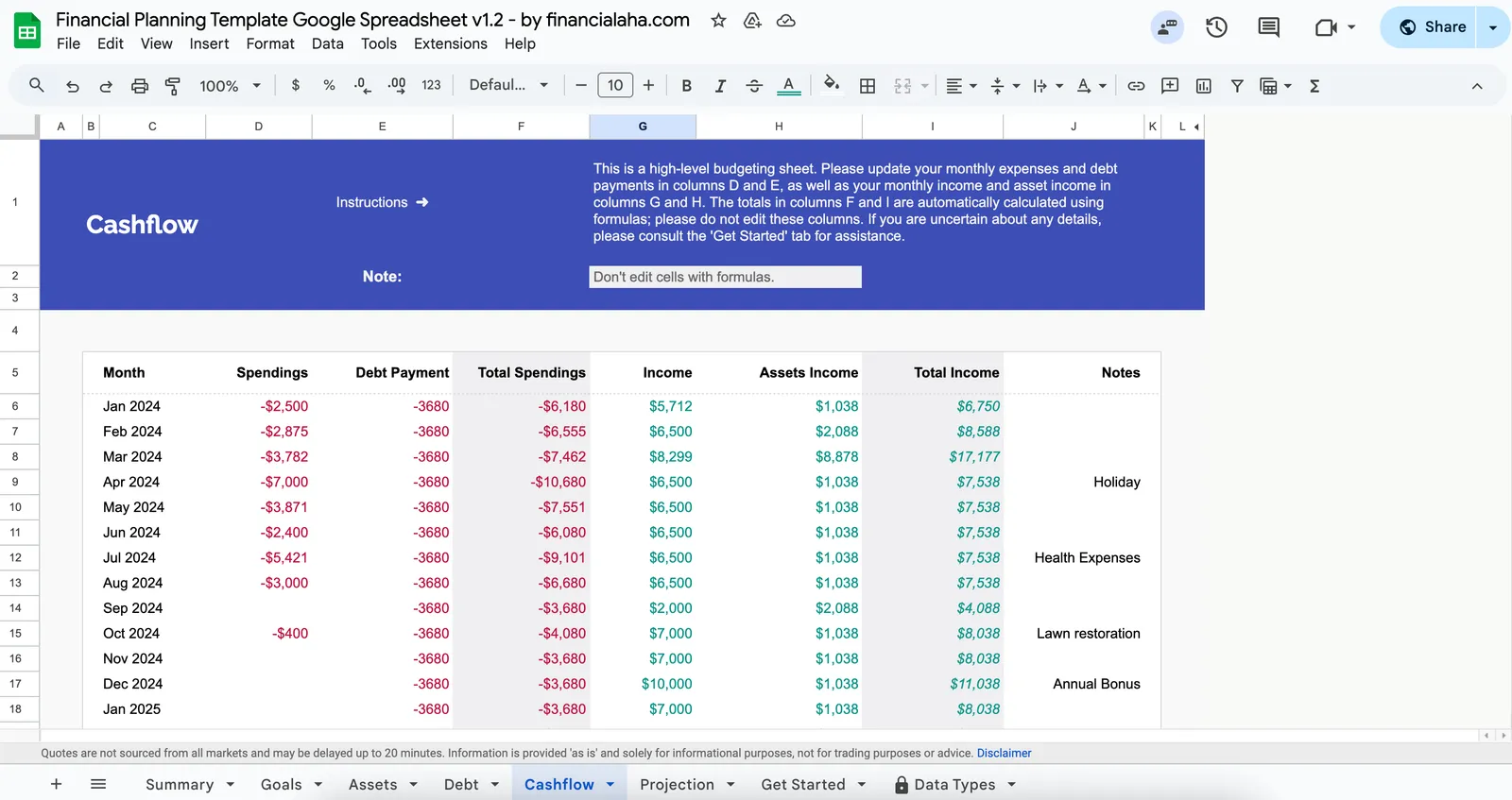
Visualize your income vs spending over time
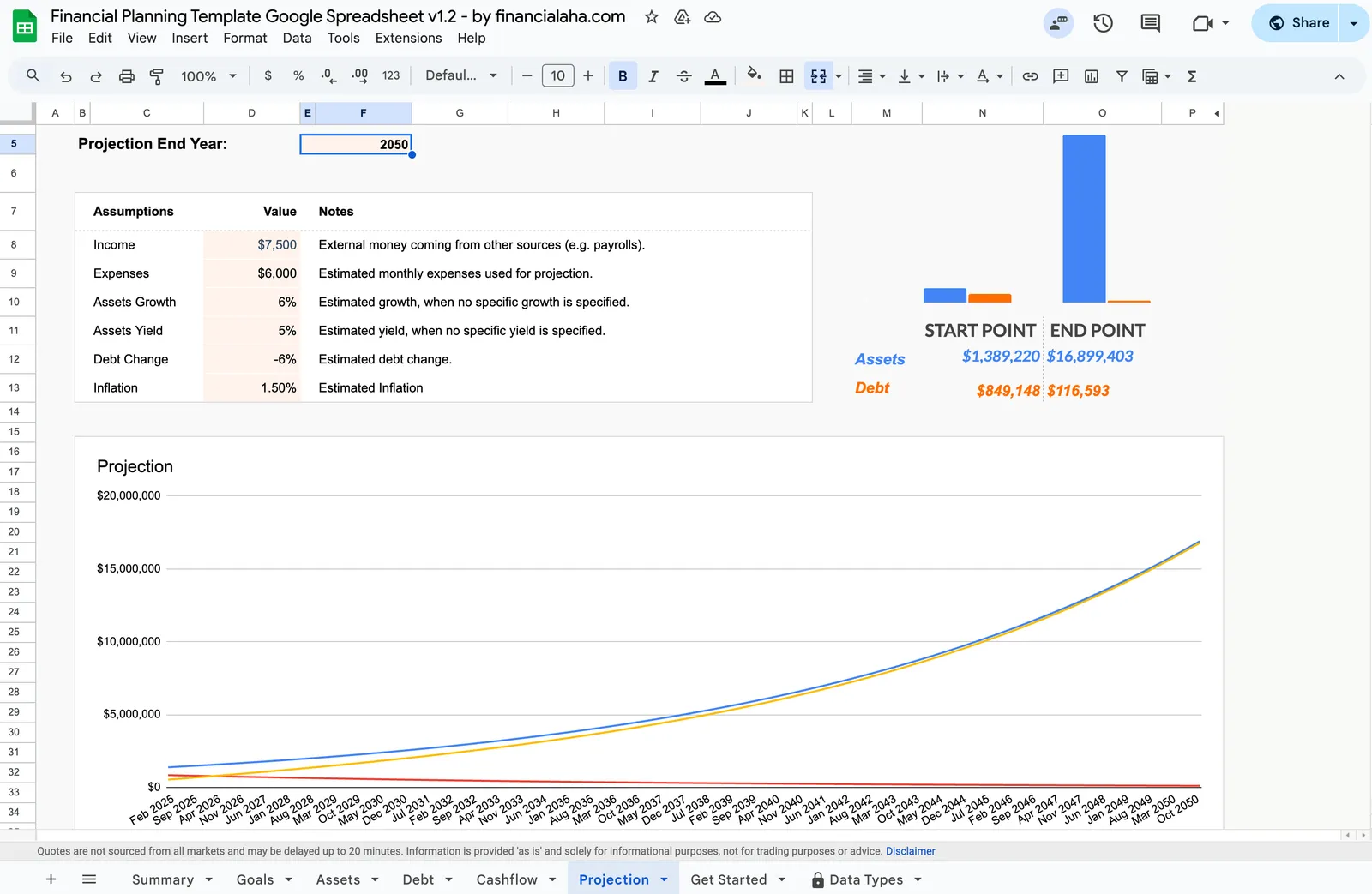
Project your financial future
Recommended Templates
Templates for Wedding Budgeting
Provides a complete financial picture - track wedding savings goals alongside your regular finances, debt, and net worth. See how wedding spending fits into the bigger picture.
View templatePlan wedding expenses across months with a year-long view. Map out deposits, payments, and savings targets on a timeline that matches vendor due dates.
View template Save $58Get the Financial Planning template plus monthly budgeting and annual planning tools - everything needed to manage wedding finances from engagement to honeymoon.
Includes 5 templates
View bundleFree Tools
Calculators to Help You Plan
Common Questions
Wedding Budgeting FAQ
How far in advance should wedding budgeting start?
Many couples start budgeting 12-18 months before the wedding date. This gives time to save, compare vendors, and spread out deposits. Starting earlier also means more flexibility - booking popular venues and vendors often requires long lead times.
What percentage of income is typical for wedding spending?
There is no universal rule. Some couples spend a few months of combined income, others save for years. The key is choosing a number that does not create financial stress after the wedding. Starting married life without wedding debt is something many couples prioritize.
How do couples handle different spending priorities?
This is one of the first major financial decisions many couples make together. Some find it helpful to each independently rank budget categories, then compare and discuss. Areas of agreement get funded first, and areas of disagreement get a conversation about why each person values that category.
What wedding costs do people commonly forget to budget for?
Tips for vendors (often 15-20% for catering staff), alterations, marriage license fees, guest transportation, day-of emergency kit, thank you cards, and post-wedding expenses like dress preservation or name change costs. These smaller items can add up to 5-10% of the total budget.
Is a spreadsheet enough to track wedding expenses?
For most couples, a spreadsheet provides the right balance of flexibility and structure. It allows custom categories, easy sharing between partners, and quick updates as quotes and final costs come in. The key is having a system that both partners will actually use consistently.
Can't find the answer you're looking for? Contact our team
Start planning your wedding budget
A spreadsheet template with automatic calculations, visual summaries, and everything needed to track wedding costs.
Ready to get started?
Download instantly and start managing your finances, or contact us to design a custom template package for your needs.