Budget Guide
How to Budget for a Retirement Savings
Most retirement calculators suggest needing 25x your annual expenses (the 4% rule), which means someone spending $50,000/year needs roughly $1.25 million saved. Getting there requires a clear savings rate, regular tracking, and projections that account for investment growth and inflation.
In Depth
Time Is the Most Powerful Variable in Retirement Math
The mathematics of retirement savings are dominated by two variables: time and consistency. A person who saves $300 per month starting at age 25 may accumulate more by retirement than someone who saves $600 per month starting at age 40 - despite contributing significantly less total money. This is entirely due to compound growth having more years to work. The implication is clear: the single most impactful retirement decision is when to start, not how much to contribute initially.
Employer matching in retirement accounts represents one of the highest-return opportunities in personal finance. A 50% match on contributions up to 6% of salary is an immediate 50% return before any investment growth occurs. Yet surveys consistently show that many employees do not contribute enough to capture the full match. For people building a retirement savings budget, contributing at least enough to get the full match is often the first priority after basic living expenses.
The connection between current spending and retirement readiness is more direct than it appears. Every dollar spent today is a dollar that does not compound for decades. More subtly, current spending levels establish expectations for retirement lifestyle. Someone who spends $6,000 per month today will likely want a similar standard of living in retirement, which requires a larger nest egg than someone spending $4,000 per month. Reducing current spending simultaneously increases savings and decreases the retirement target - a double benefit that accelerates the timeline from both directions.
Cost Breakdown
Retirement Savings Benchmarks
These benchmarks provide reference points, not rules. Individual retirement needs vary based on lifestyle expectations, health, location, and other income sources like Social Security.
Common Savings Rate Target
10-20% of gross incomeIncludes employer match - starting earlier allows a lower percentage
Savings Multiplier by Age 30
1x annual salary savedA common benchmark - behind this does not mean all is lost
Savings Multiplier by Age 40
3x annual salary savedCompound growth starts to accelerate around this point
Savings Multiplier by Age 50
6x annual salary savedCatch-up contributions become available at age 50
Savings Multiplier by Age 60
8-10x annual salary savedThe final stretch - Social Security estimates become more reliable
Total Retirement Nest Egg
10-25x annual expensesBased on the 4% withdrawal rule - varies by retirement age and lifestyle
Budgeting Steps
Steps to Budget for Retirement
Calculate your retirement savings target
Estimating annual retirement expenses and multiplying by 25 gives a rough nest egg target (based on the 4% rule). This number feels large, but breaking it into monthly savings amounts makes it actionable. Online retirement calculators can refine this based on your specific situation.
Maximize employer matching
Employer 401(k) matching is essentially free money. Contributing at least enough to get the full match is often one of the highest-return financial decisions available. For a 50% match up to 6% of salary, that is an immediate 50% return on those contributions.
Automate and increase contributions over time
Setting up automatic payroll deductions makes retirement savings happen before the money hits a checking account. Increasing contributions by 1% annually (especially after raises) builds the savings rate gradually without a noticeable lifestyle impact.
Understand your account options
Traditional 401(k), Roth 401(k), Traditional IRA, Roth IRA - each has different tax implications. The right mix depends on current vs. expected future tax rates. Learning the basics of each account type helps make informed contribution decisions.
Review and adjust annually
Checking retirement account balances, contribution rates, and investment allocation at least once a year keeps the plan on track. Life changes (marriage, children, job changes) often require adjusting the plan.
See The Template
Tools for retirement savings budgeting
Browse the template features that help with retirement savings financial planning.
- Automatic calculations
- Visual charts and summaries
- Customizable categories
- Works in Google Sheets and Excel
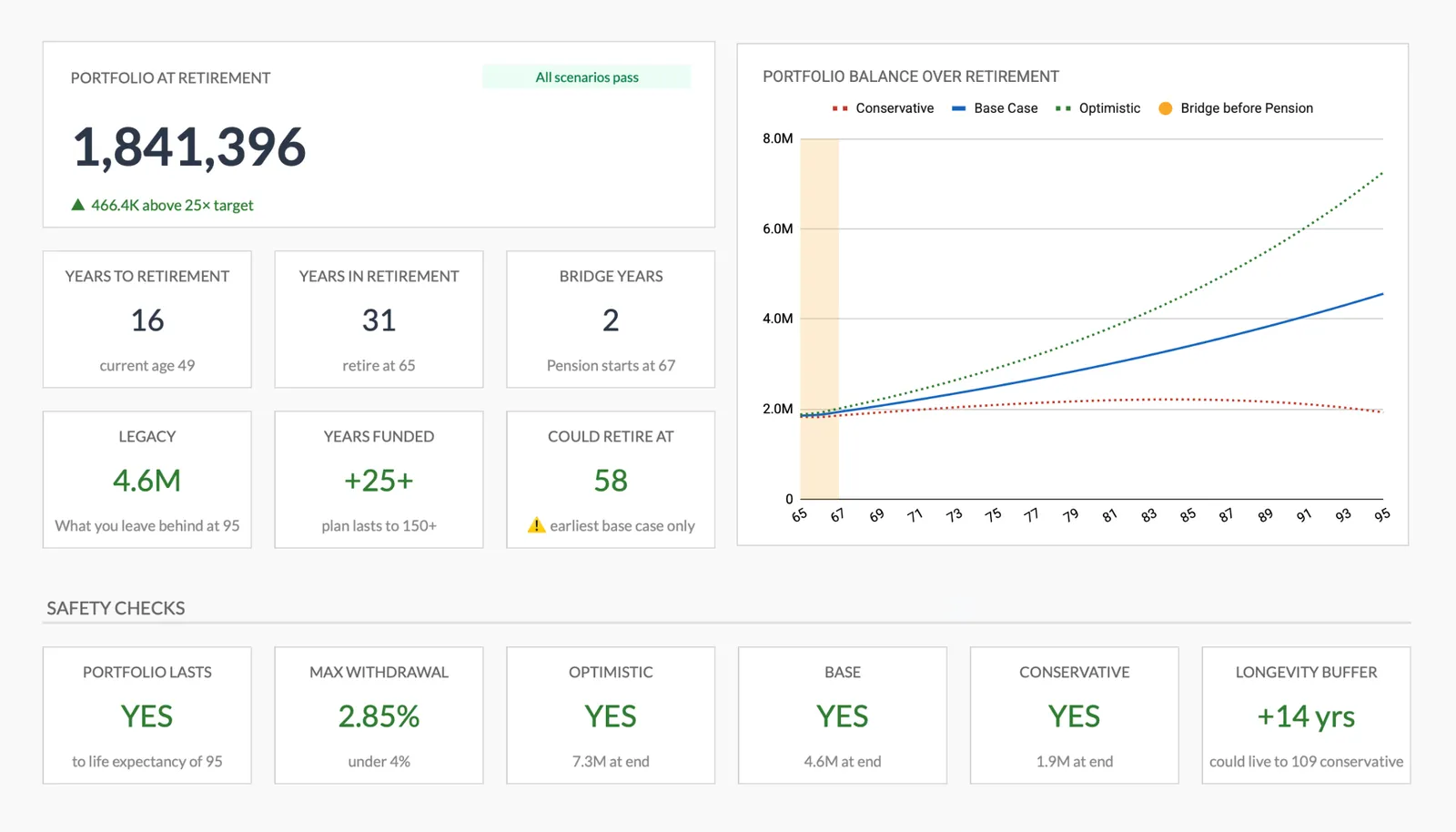
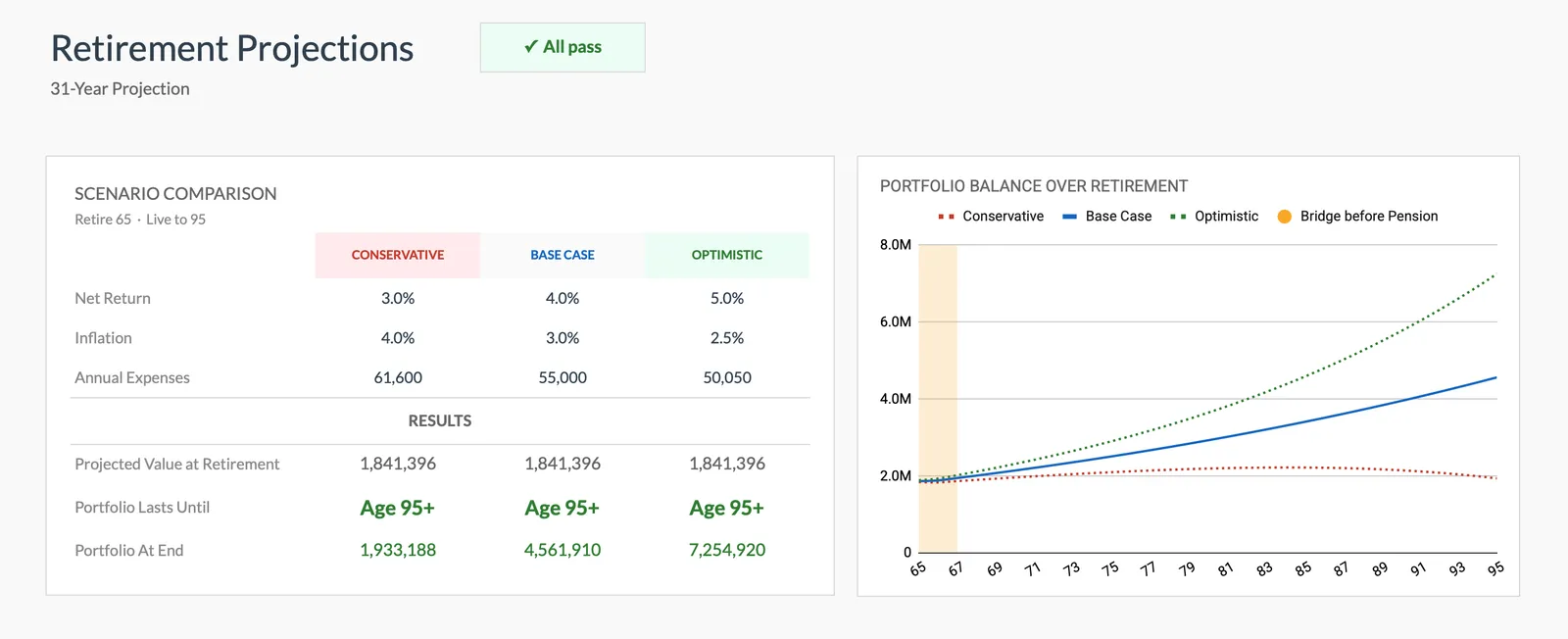
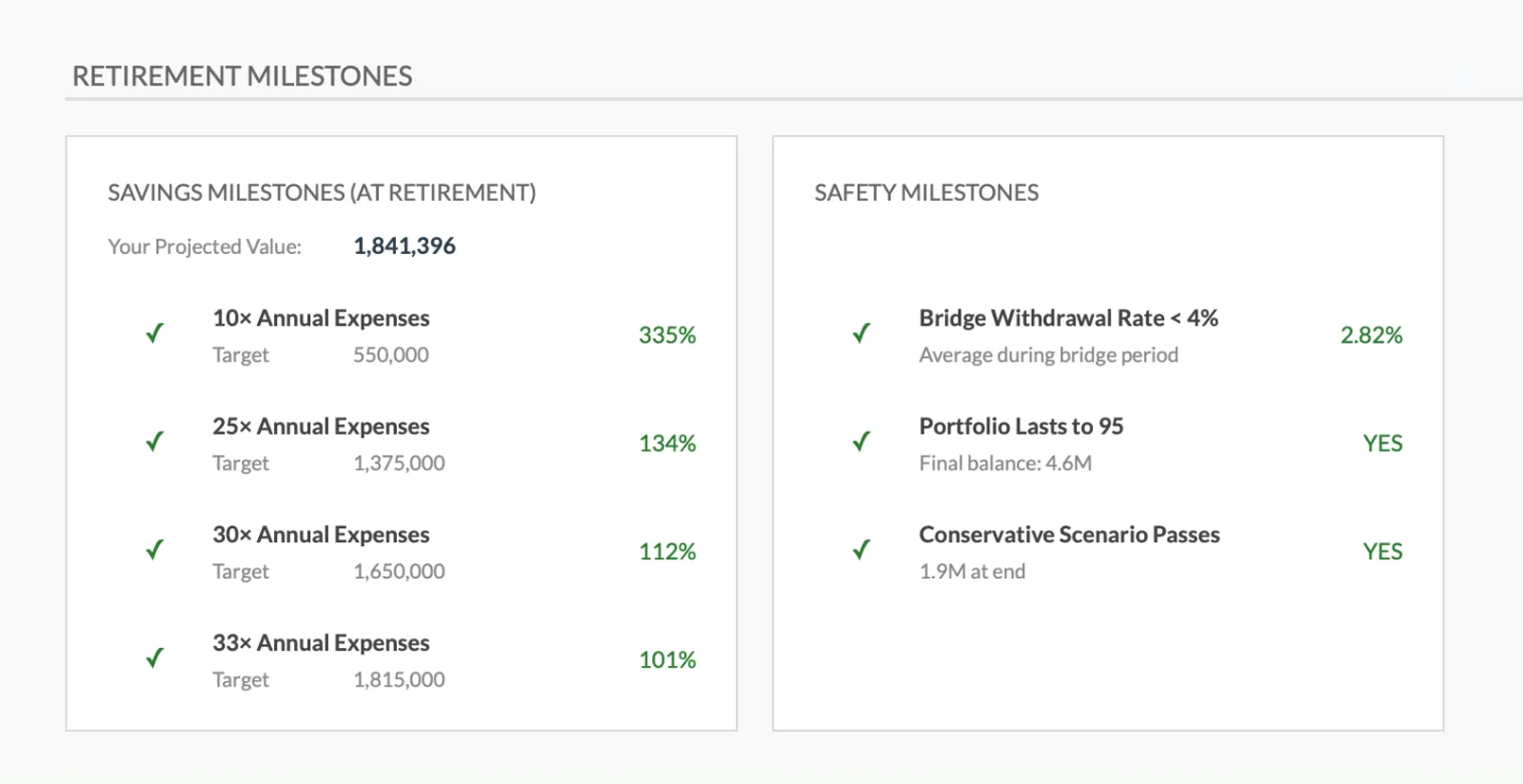
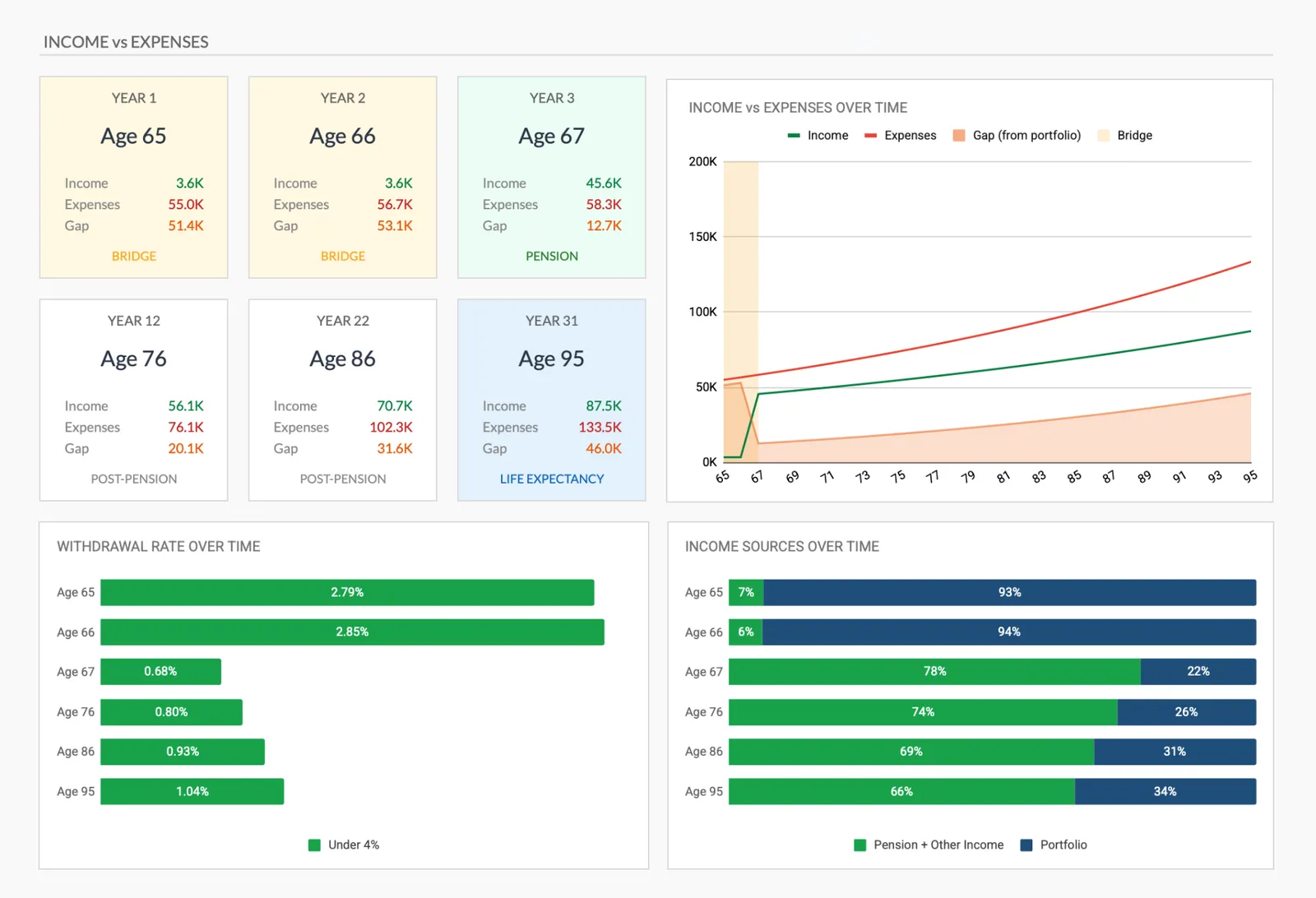
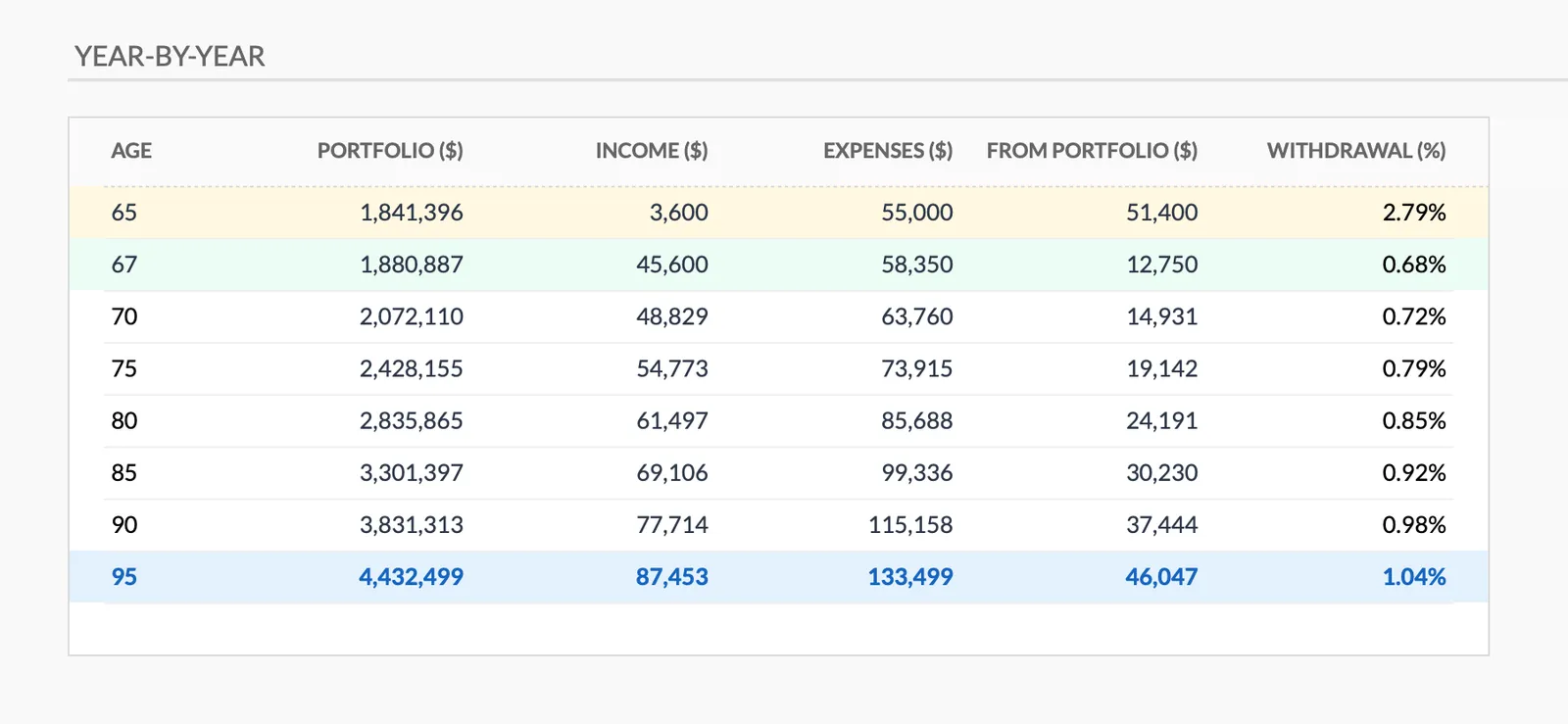
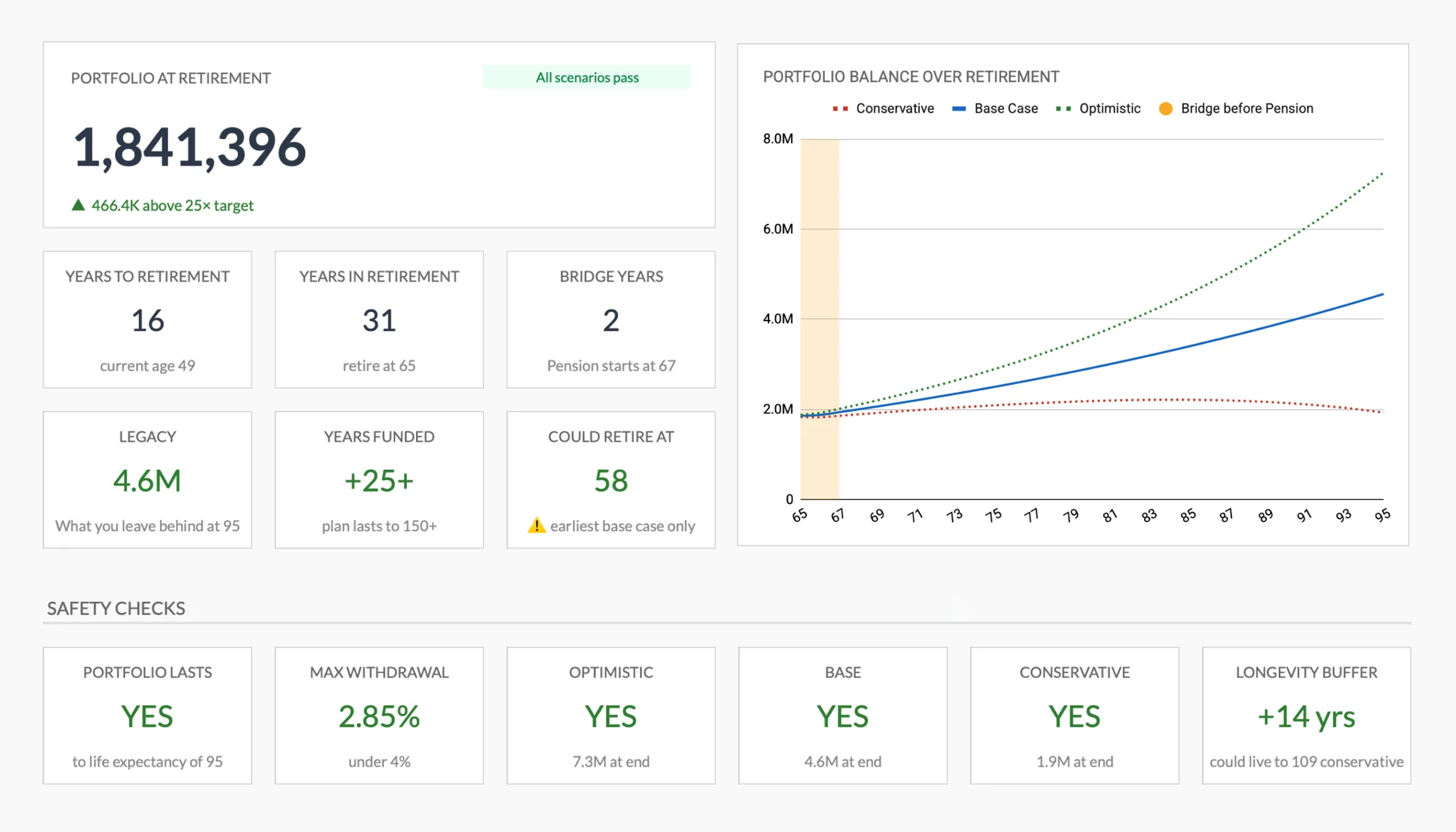
Complete retirement overview with projections
Project your retirement savings growth
Track progress toward retirement goals
Plan your retirement income against expenses
Detailed year-by-year retirement projection
Recommended Templates
Templates for Retirement Savings Budgeting
Built specifically for retirement planning - project savings growth, set milestones, and visualize your path to retirement with year-by-year projections.
View templateTrack retirement accounts alongside all other assets and liabilities. See how retirement savings contributes to your overall financial health.
View template Save $44Get retirement projections, monthly budgeting, and travel planning together. Plan both the savings phase and the retirement lifestyle you are working toward.
Includes 3 templates
View bundleFree Tools
Calculators to Help You Plan
Common Questions
Retirement Savings Budgeting FAQ
How much needs to be saved for retirement?
A common rule of thumb is 25 times annual retirement expenses. If you expect to spend $50,000/year in retirement, that suggests a $1.25 million nest egg. However, Social Security, pensions, and other income sources reduce the amount needed from personal savings.
Is it too late to start saving for retirement at 40 or 50?
Starting later means saving more aggressively, but it is far from too late. Catch-up contributions (extra amounts allowed for those over 50), potentially higher income, and fewer competing financial goals (like paying for children) can accelerate later-in-life savings.
What percentage of income should go to retirement?
Financial guidelines often suggest 10-20% of gross income, including employer matching. Someone starting at 25 might be fine at 10-12%. Starting at 35 might require 15-20%. These are starting points - individual calculations based on actual retirement goals provide more useful targets.
How does compound interest affect retirement savings?
Compound interest is why starting early matters so much. $500/month starting at age 25, growing at 7% annually, becomes approximately $1.2 million by age 65. The same amount starting at age 35 becomes about $567,000. The first 10 years of contributions generate more than half the final balance.
Should retirement savings increase with income?
Increasing contributions when income grows prevents lifestyle inflation from consuming raises entirely. A common approach is directing at least half of any raise toward retirement savings. This allows some lifestyle improvement while accelerating progress toward retirement goals.
Can't find the answer you're looking for? Contact our team
Start planning your retirement savings budget
A spreadsheet template with automatic calculations, visual summaries, and everything needed to track retirement savings costs.
Ready to get started?
Download instantly and start managing your finances, or contact us to design a custom template package for your needs.