Budget Guide
How to Budget for a Emergency Fund
Financial experts typically recommend 3-6 months of essential expenses as an emergency fund target, yet roughly 27% of Americans have no emergency savings at all. Building one means setting a concrete number, automating monthly contributions, and tracking progress toward that goal.
In Depth
The Emergency Fund Serves a Purpose Beyond Money
An emergency fund is fundamentally a tool for reducing financial anxiety. The dollar amount matters, but the psychological effect of knowing a buffer exists often has a larger impact on daily quality of life than the balance itself. People with even modest emergency savings report less financial stress than those with higher incomes but no savings cushion. The fund creates breathing room that changes how people experience unexpected events - from crisis mode to problem-solving mode.
The distinction between essential and total monthly expenses is crucial when calculating an emergency fund target. Total monthly spending might be $5,000, but essential expenses - housing, food, utilities, insurance, minimum debt payments, and transportation - might be $3,500. During an actual emergency, discretionary spending contracts naturally. Basing the emergency fund on essential expenses rather than total spending produces a more realistic and achievable target that still provides genuine security.
Building an emergency fund while managing other financial goals is a balancing act that many people struggle with. Some find success with a sequential approach - build a small starter fund first, then focus on other priorities, then return to grow the emergency fund to its full target. Others prefer a parallel approach - splitting extra money between the emergency fund and other goals simultaneously. Neither approach is inherently superior; the one that maintains consistent progress toward the emergency fund target is the one that works.
Cost Breakdown
Emergency Fund Target Ranges
The right emergency fund size depends on personal circumstances. These ranges reflect common guidelines based on different situations.
Starter Emergency Fund
$500-1,000A first milestone that covers minor unexpected expenses
Basic Emergency Fund
1-3 months of expensesCovers short-term disruptions for those with stable dual income
Standard Emergency Fund
3-6 months of expensesThe most commonly cited target for single-income or variable-income households
Extended Emergency Fund
6-12 months of expensesWorth considering for self-employed, single-income families, or volatile industries
Monthly Expenses to Calculate
Essential costs onlyHousing, food, insurance, transportation, minimum debt payments - not discretionary spending
Replenishment After Use
Same target as originalAfter using emergency funds, rebuilding the balance becomes the priority
Budgeting Steps
Steps to Build an Emergency Fund
Calculate your monthly essential expenses
Add up the expenses that cannot be eliminated: housing, food, utilities, insurance, minimum debt payments, and transportation. This number - not your full spending - is what the emergency fund needs to cover. The difference between total spending and essential spending is often significant.
Set a target that fits your situation
A dual-income household with stable jobs may be comfortable with 3 months of expenses. A freelancer or single-income family might aim for 6-12 months. Starting with a smaller milestone and building up over time keeps the goal feeling achievable.
Automate the savings
Setting up automatic transfers on payday removes the decision from the process. Even small automatic transfers add up over time. Many people find that automatic savings of a fixed amount works better than saving "whatever is left" at the end of the month.
Keep it accessible but separate
A high-yield savings account at a different bank from your checking account provides a good balance. The money earns interest and is accessible within 1-2 business days, but the separation reduces the temptation to dip into it for non-emergencies.
Define what counts as an emergency
Deciding in advance what qualifies as an emergency (job loss, medical emergency, essential home repair) versus what does not (sale on something you want, a vacation opportunity) prevents the fund from being gradually depleted for non-emergency spending.
See The Template
Tools for emergency fund budgeting
Browse the template features that help with emergency fund financial planning.
- Automatic calculations
- Visual charts and summaries
- Customizable categories
- Works in Google Sheets and Excel
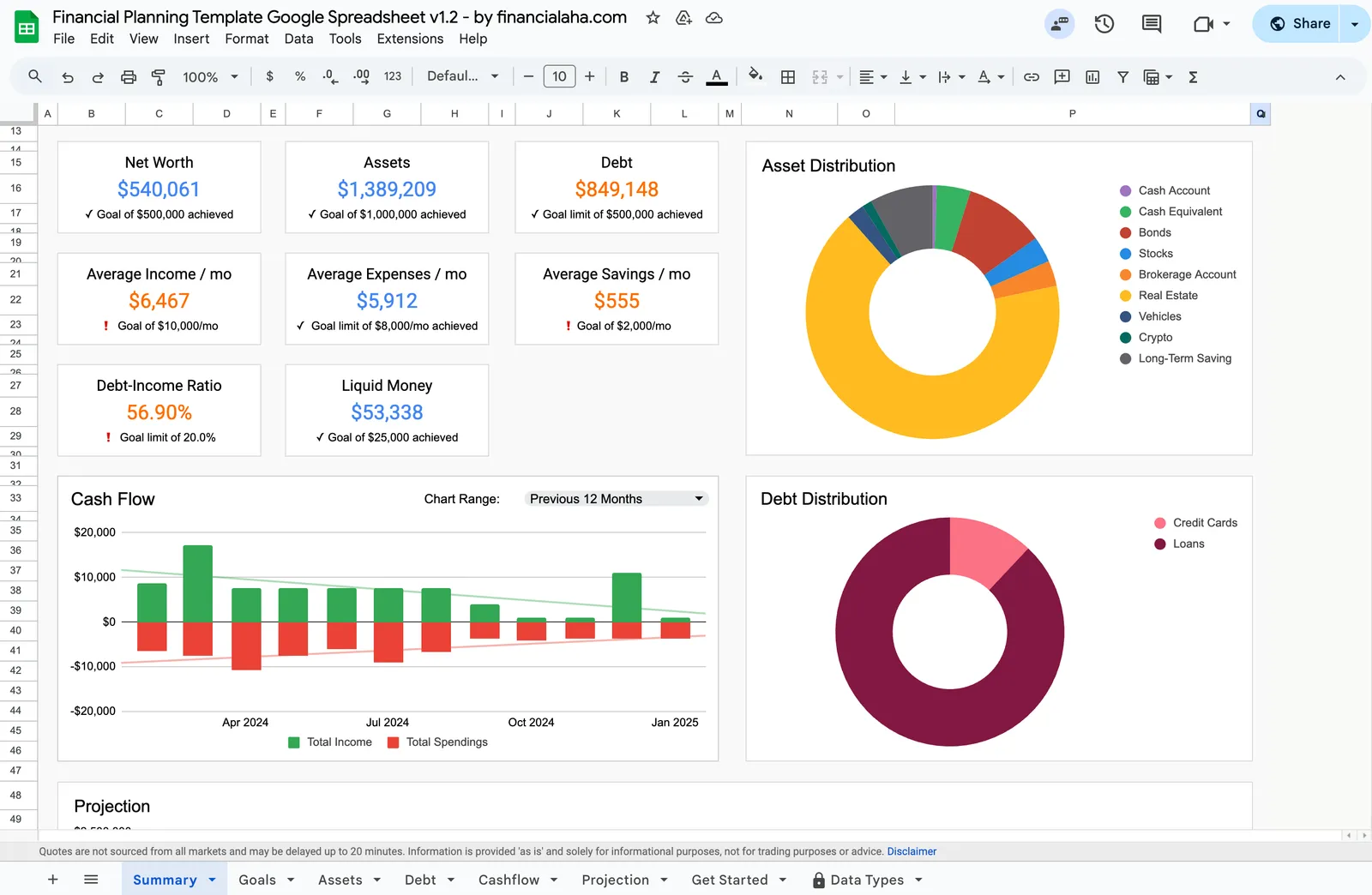
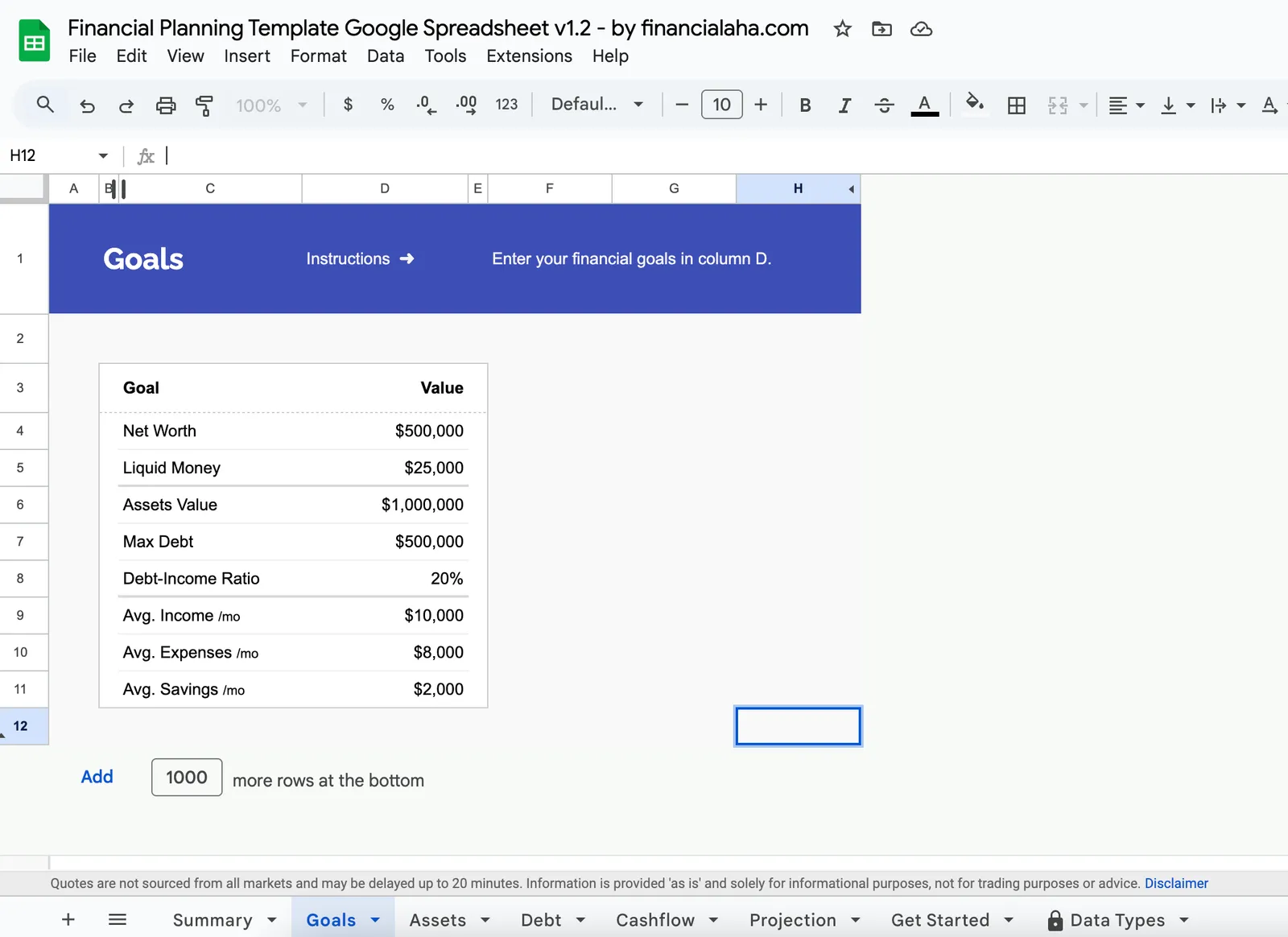
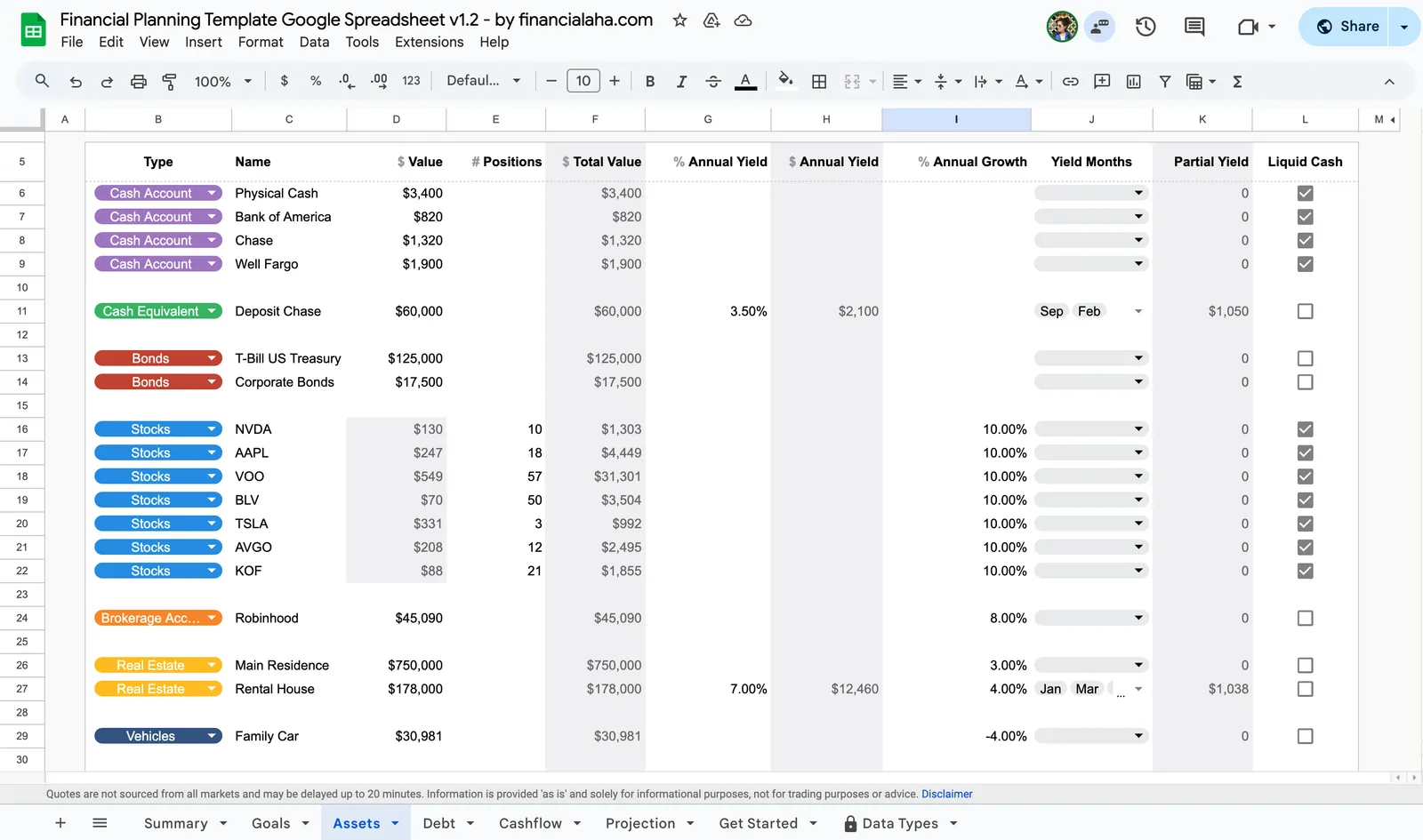
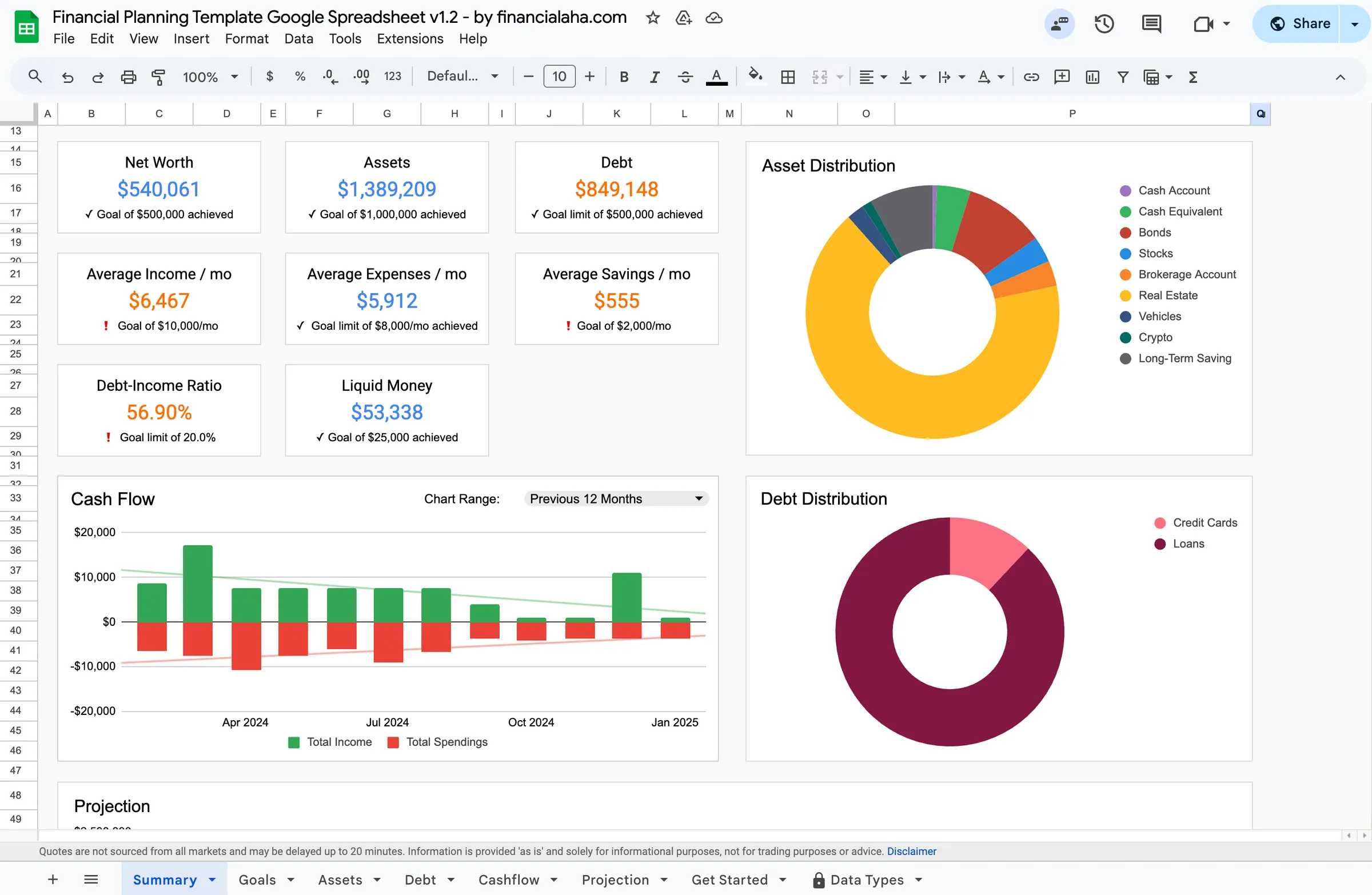
Complete financial overview with net worth and goals
Set and track progress toward financial milestones
Track all your assets in one place
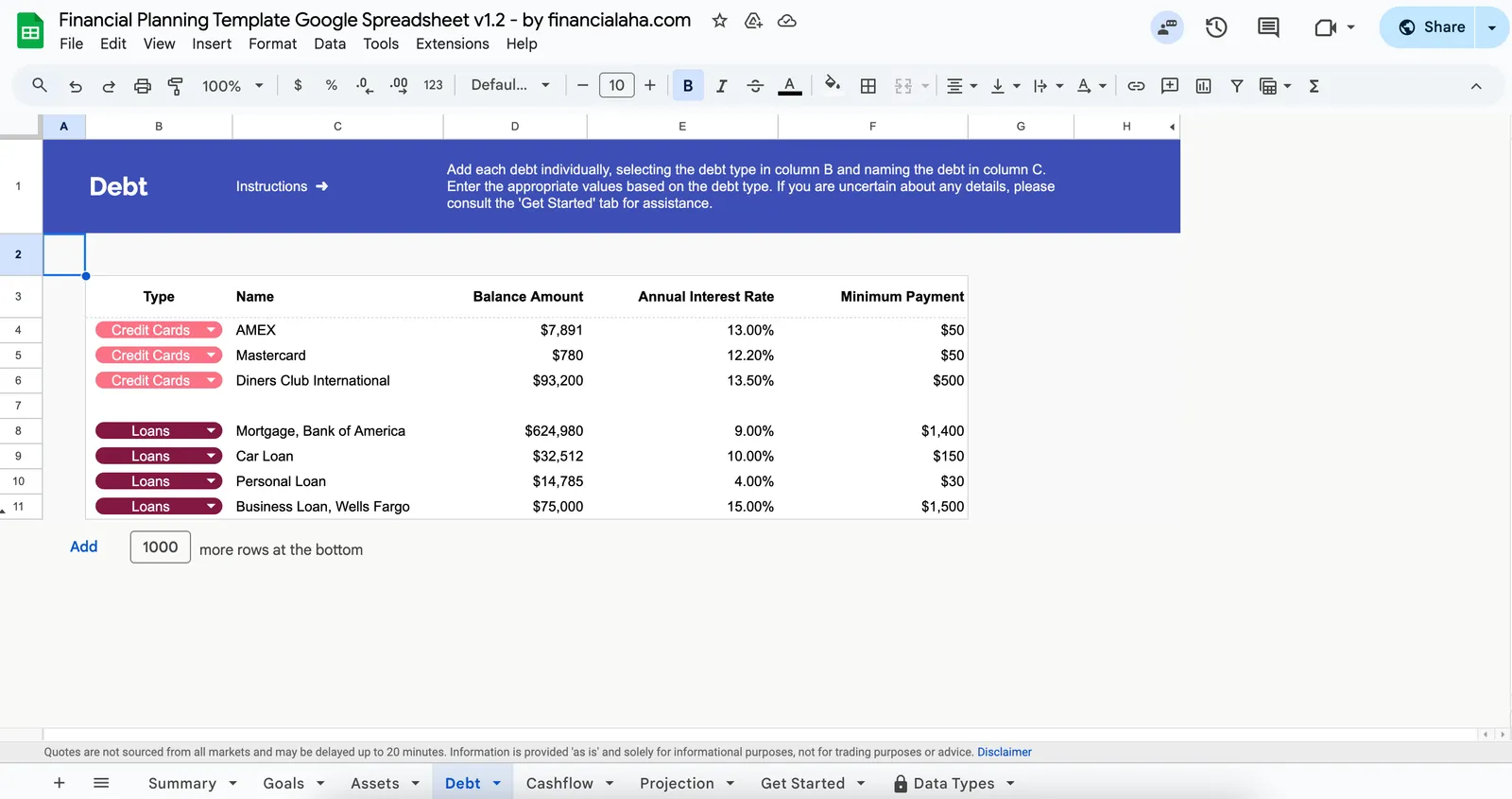
Monitor and plan debt repayment
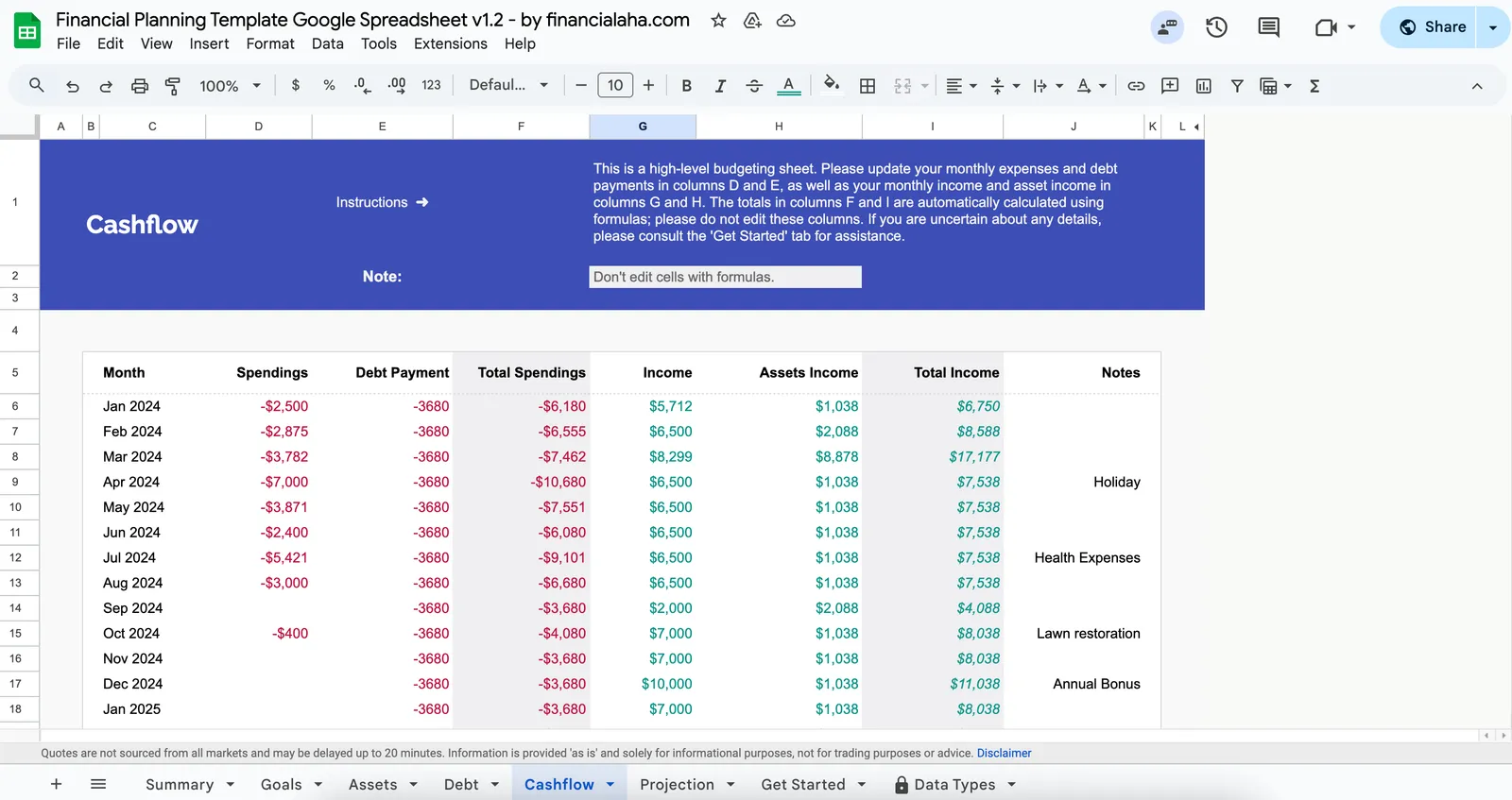
Visualize your income vs spending over time
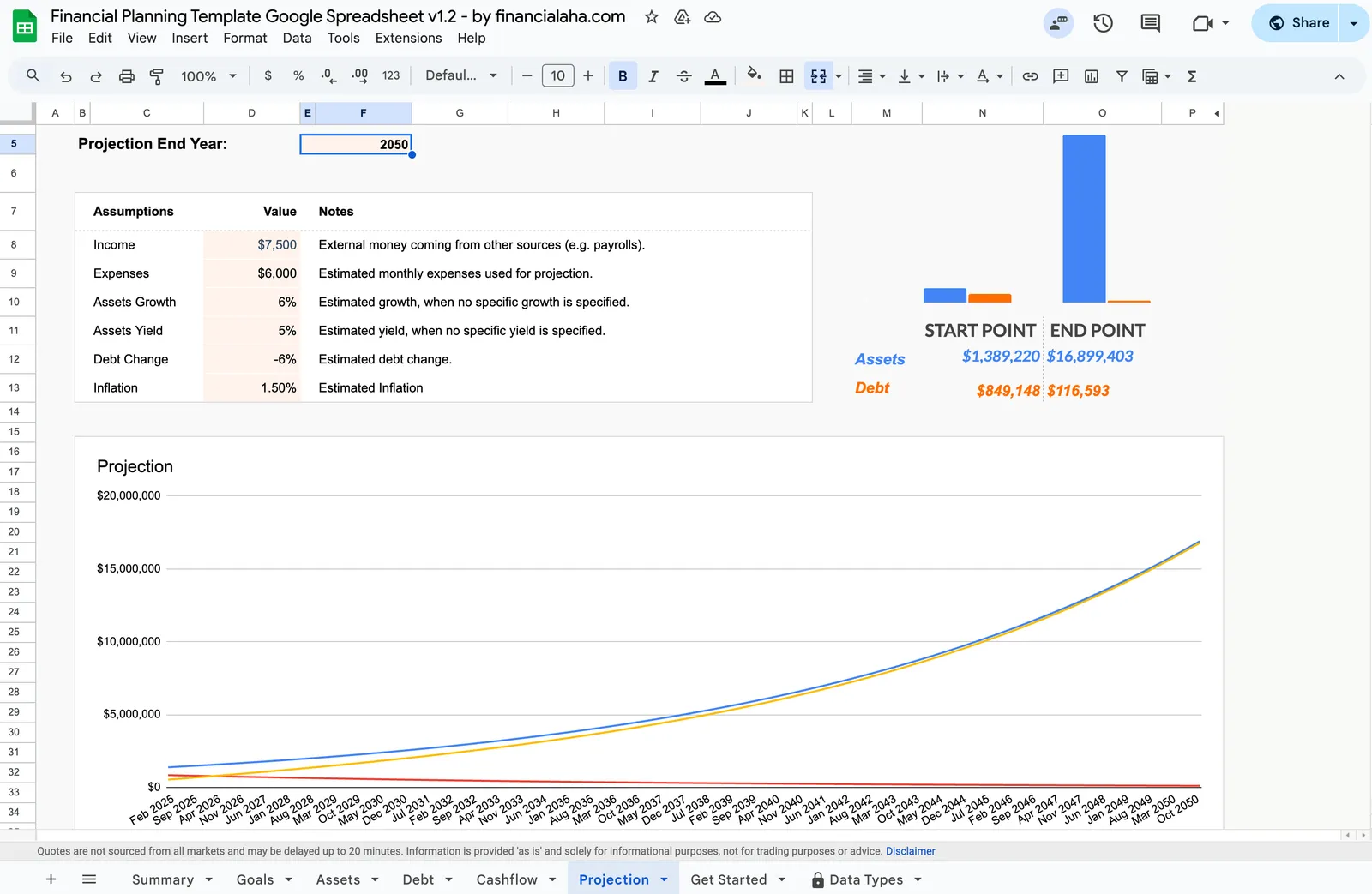
Project your financial future
Recommended Templates
Templates for Emergency Fund Budgeting
See your emergency fund in the context of your complete financial picture. Track savings goals, monitor fund growth, and balance emergency savings against other financial priorities like debt payoff and investing.
View templateTrack your emergency fund as part of your overall net worth. See how building this safety net contributes to your financial health over time.
View template Save $58Get financial planning, net worth tracking, and budgeting tools together. Build your emergency fund while managing your monthly budget and watching your net worth grow.
Includes 5 templates
View bundleCommon Questions
Emergency Fund Budgeting FAQ
How long does it take to build an emergency fund?
At $200/month, a $5,000 emergency fund takes about 25 months. At $500/month, it takes 10 months. The timeline depends entirely on how much can be saved each month. Some people accelerate the process by directing windfalls (tax refunds, bonuses) directly to the fund.
Where should an emergency fund be kept?
A high-yield savings account is the most common choice. It earns more interest than a regular savings account while keeping the money accessible. Money market accounts are another option. The key is that the money is liquid (available within a few days) and not at risk of losing value.
Should debt be paid off before building an emergency fund?
Many financial approaches suggest building a small starter emergency fund ($500-1,000) first, then focusing on high-interest debt, then completing the full emergency fund. Without any emergency savings, unexpected expenses often end up on credit cards, creating more debt.
Is an emergency fund still important with good insurance?
Insurance covers specific risks but typically involves deductibles and copays that still require cash. An emergency fund covers the gaps between what happens and what insurance pays, plus non-insurable events like job loss, family emergencies, or surprise expenses.
How often should the emergency fund target be updated?
Reviewing the target annually or whenever major life changes happen (new job, new home, new family member) ensures the fund keeps pace with actual expenses. As living costs increase, the emergency fund target should grow too.
Can't find the answer you're looking for? Contact our team
Start planning your emergency fund budget
A spreadsheet template with automatic calculations, visual summaries, and everything needed to track emergency fund costs.
Ready to get started?
Download instantly and start managing your finances, or contact us to design a custom template package for your needs.