Budget Guide
How to Budget for a Debt Payoff
US household debt hit $18 trillion in 2025, with credit card balances alone exceeding $1.2 trillion. Paying it off starts with listing every balance, interest rate, and minimum payment in one place - then choosing a strategy (snowball or avalanche) and tracking progress month by month.
In Depth
Debt Payoff Is a Math Problem and a Psychology Problem
The mathematics of debt payoff are straightforward - higher interest debts cost more over time, and extra payments above minimums reduce both the timeline and total interest. But the behavioral side is where most people struggle. Staying motivated through a multi-year payoff requires more than math. It requires visible progress, achievable milestones, and a system that makes the effort feel worthwhile even when the finish line is far away.
The choice between snowball and avalanche methods is often presented as a binary decision, but in practice many people use a hybrid approach. Starting with one or two small debts (snowball-style) to build momentum and then switching to the highest-interest debt (avalanche-style) captures the motivational benefit of early wins and the mathematical benefit of interest optimization. The flexibility to adapt the strategy as circumstances change is one advantage of managing debt payoff in a spreadsheet rather than a rigid app.
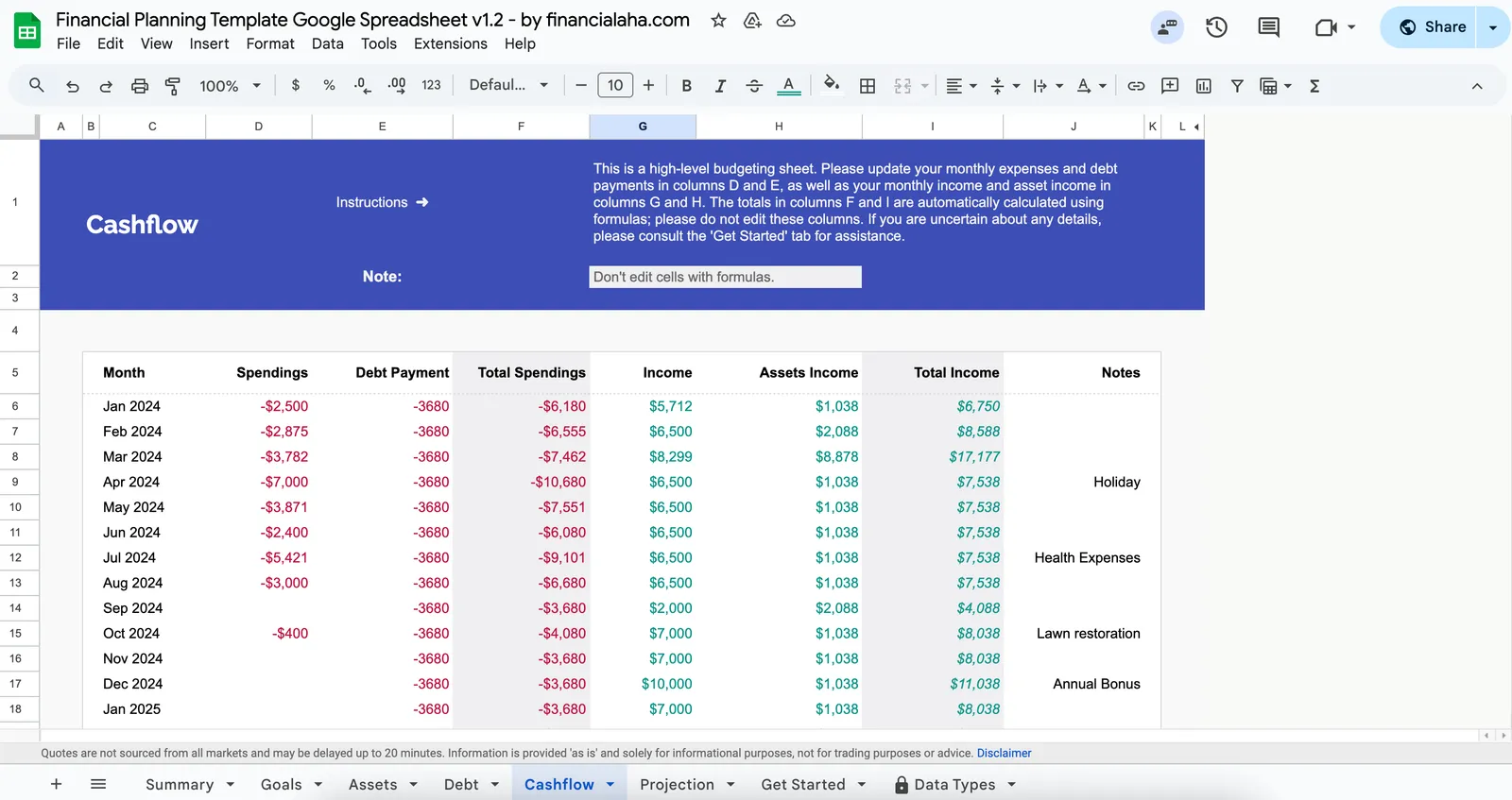
The monthly budget plays a critical supporting role in debt payoff because it is where extra payment money is found. A careful review of spending categories often reveals $50-$200 per month that can be redirected without significant lifestyle impact - unused subscriptions, dining frequency that could be reduced, or convenience purchases that add up. Channeling these found dollars toward debt creates a compounding effect: less debt means less interest, which means more of each payment goes toward principal, which means the debt shrinks faster.
Net worth tracking adds important context to the debt payoff journey. A person who pays off $1,000 of credit card debt has improved their net worth by $1,000 - the same effect as saving $1,000. Seeing debt reduction reflected in a rising net worth figure reinforces the value of each extra payment and provides a broader measure of financial progress that extends beyond the debt balances themselves.
Cost Breakdown
Common Debt Categories and Interest Ranges
Understanding the types of debt and their typical interest rates helps prioritize which debts to focus on. Interest rates significantly affect the total cost of debt over time.
Credit Card Debt
15-28% APR typicalUsually the highest interest rate - often prioritized for payoff
Personal Loans
6-36% APRRate depends heavily on credit score and lender
Student Loans (Federal)
3-8% APROften have income-driven repayment and forgiveness options
Student Loans (Private)
4-14% APRFewer flexibility options than federal loans
Auto Loans
4-12% APRSecured by the vehicle - rates depend on credit score and loan term
Medical Debt
0% if negotiatedOften negotiable - many providers offer interest-free payment plans
Budgeting Steps
Steps to Budget for Debt Payoff
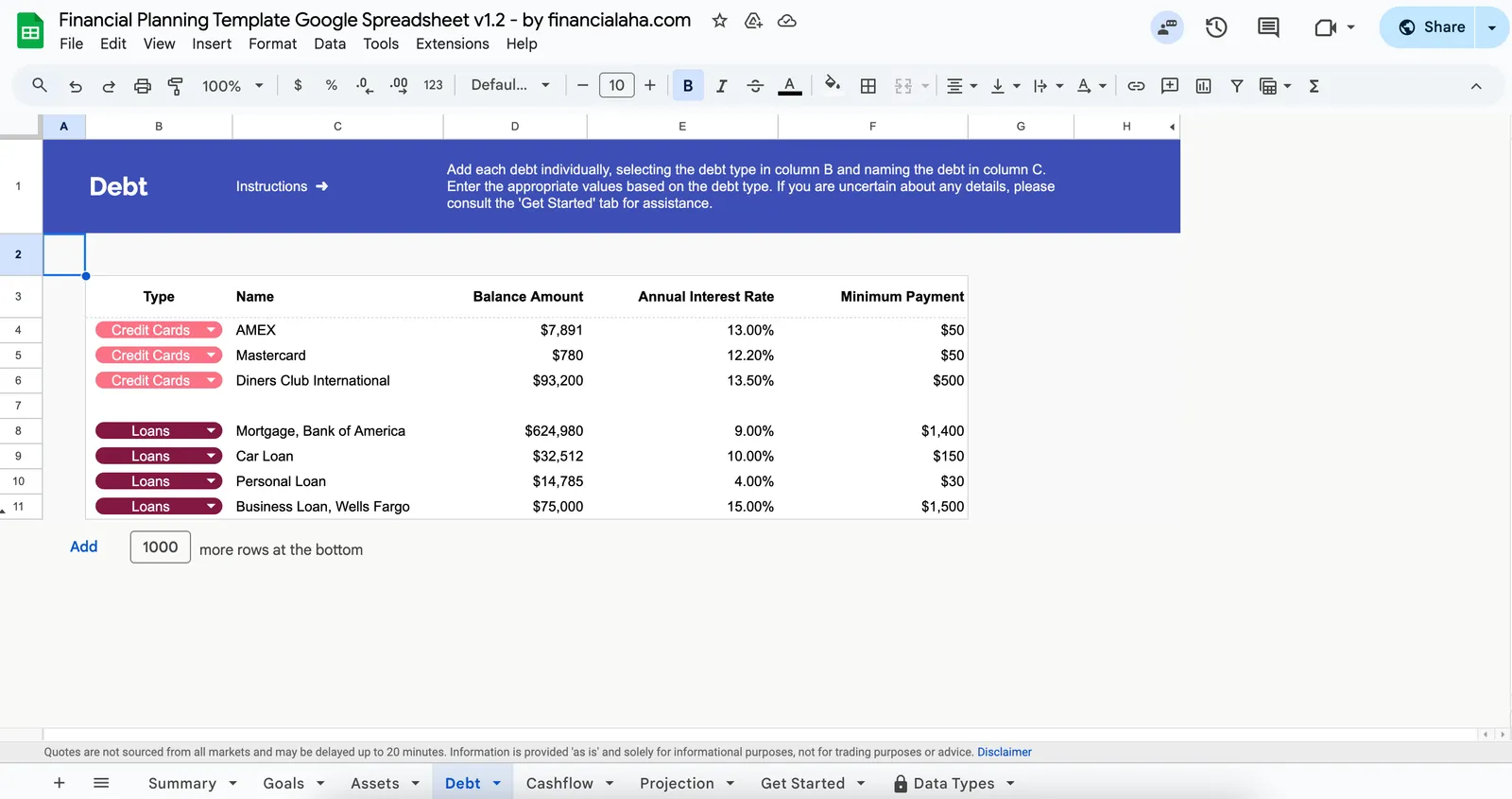
List all debts with balances and rates
Writing down every debt with its balance, interest rate, and minimum payment creates the full picture. Many people are surprised by the total when they see all debts listed together. This list becomes the foundation of the payoff plan.
Choose a payoff strategy
The debt avalanche (highest interest first) saves the most money. The debt snowball (smallest balance first) provides quicker wins for motivation. Both work - the key is sticking with the chosen method. Some people find a hybrid approach works for their situation.
Find extra money in the budget for debt payments
Reviewing current spending often reveals money that can be redirected to debt. Subscriptions, dining out, and impulse purchases are common areas. Even an extra $50-100/month above minimum payments can significantly shorten the payoff timeline.
Automate minimum payments on all debts
Missing a payment hurts credit scores and can trigger penalty rates. Automating at least the minimum payment on every debt prevents missed payments. Any extra money then goes toward the target debt in the chosen payoff strategy.
Track progress and celebrate milestones
Paying off debt is a long-term effort that benefits from visible progress tracking. Watching balances decrease month by month provides motivation. Some people mark milestones (first debt paid off, 25% done, 50% done) to maintain momentum.
See The Template
Tools for debt payoff budgeting
Browse the template features that help with debt payoff financial planning.
- Automatic calculations
- Visual charts and summaries
- Customizable categories
- Works in Google Sheets and Excel
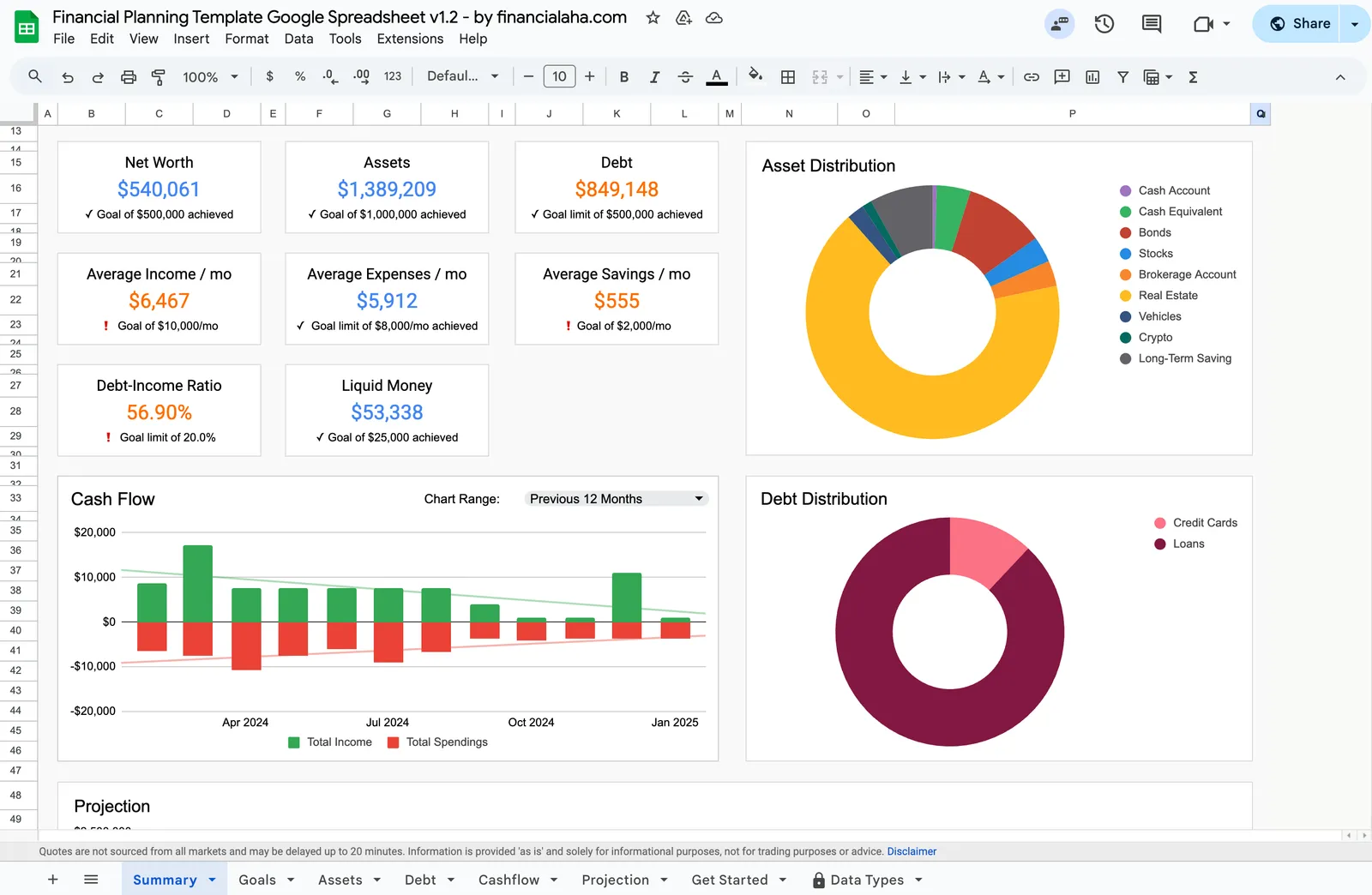
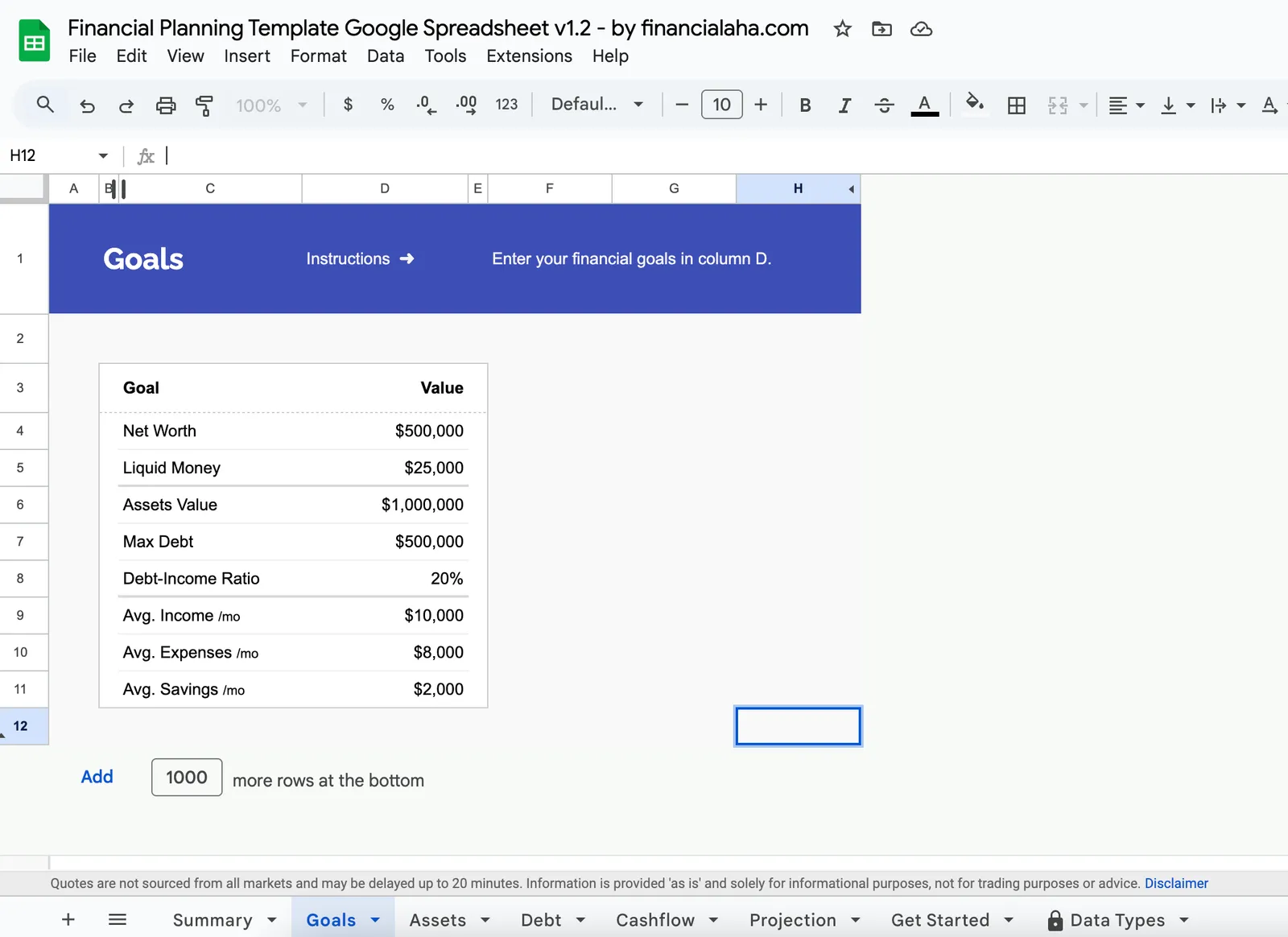
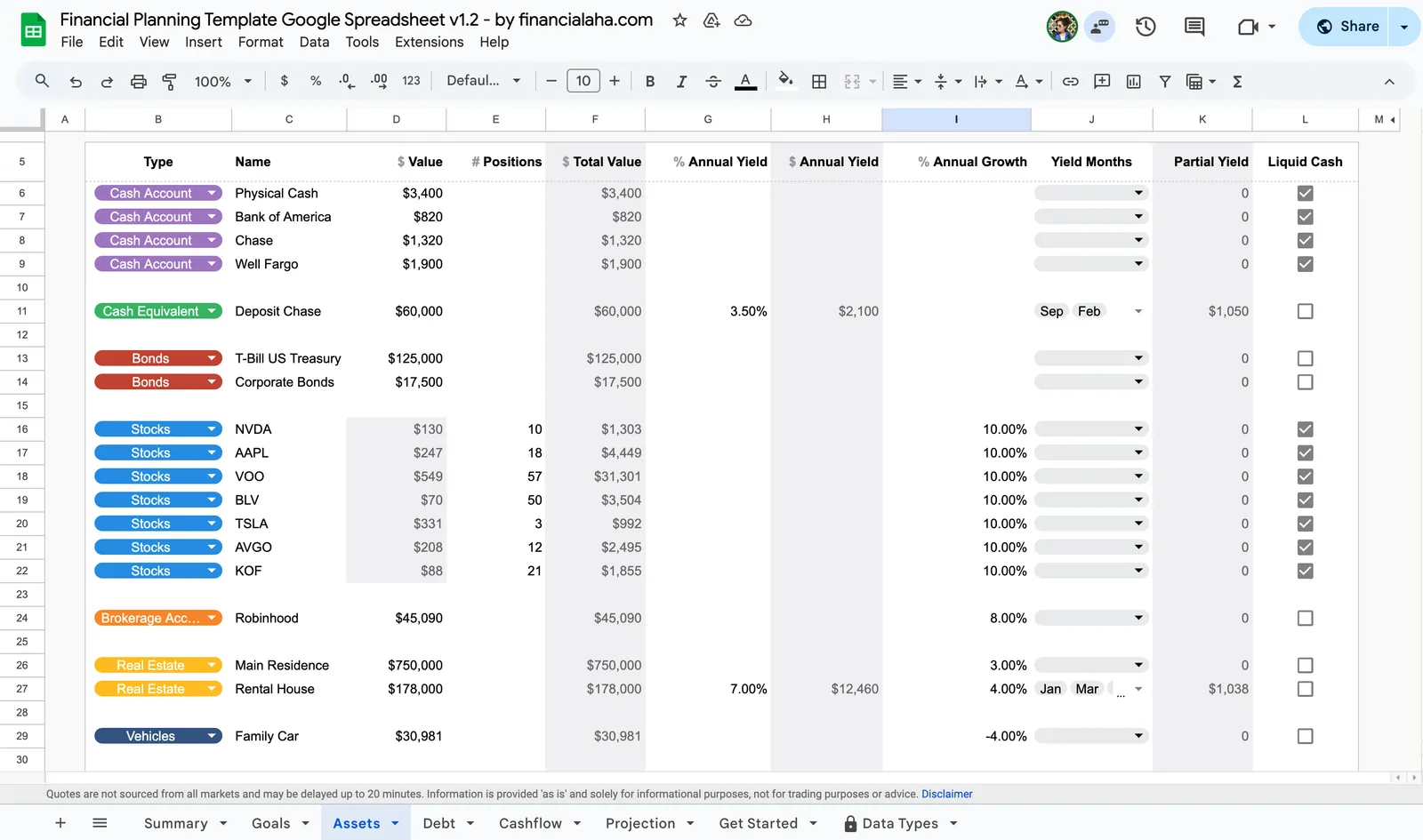
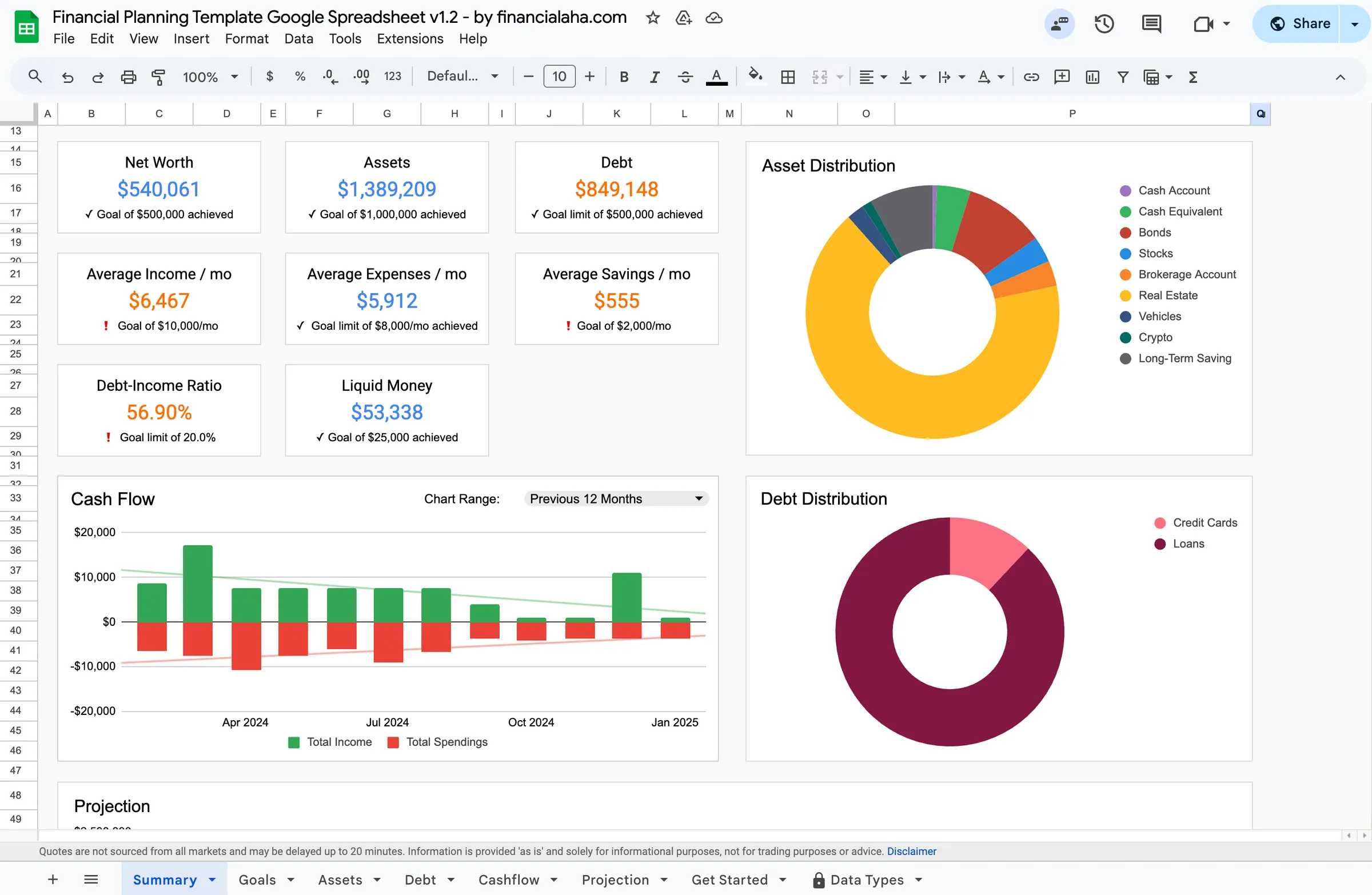
Complete financial overview with net worth and goals
Set and track progress toward financial milestones
Track all your assets in one place
Monitor and plan debt repayment
Visualize your income vs spending over time
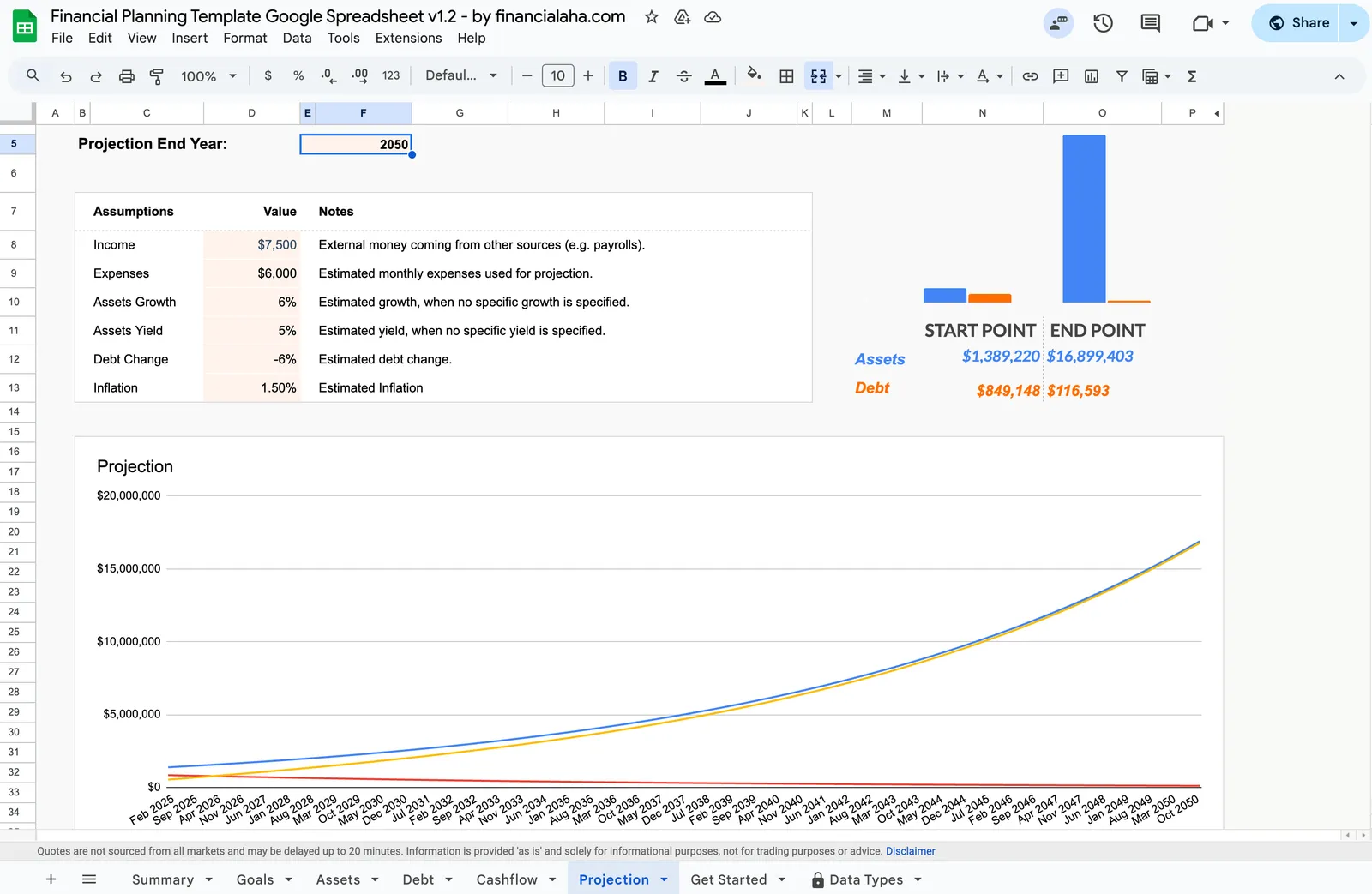
Project your financial future
Recommended Templates
Templates for Debt Payoff Budgeting
Track all debts in one place with balances, interest rates, and payoff projections. See how debt reduction affects your net worth and overall financial trajectory.
View templateManage your monthly budget to free up extra money for debt payments. Track how much goes toward debt each month and monitor spending in other categories.
View template Save $91Get the complete financial toolkit for your debt-free journey. Track debts, manage monthly spending, plan taxes, and watch your net worth grow as balances decrease.
Includes 8 templates
View bundleFree Tools
Calculators to Help You Plan
Common Questions
Debt Payoff Budgeting FAQ
How long does it take to pay off debt?
The timeline depends on total debt, interest rates, and how much extra can be paid above minimums. Credit card debt of a few thousand dollars might take 1-3 years with focused effort. Student loans often take 10-20 years on standard plans. Using a debt payoff calculator with your specific numbers gives the most accurate timeline.
Should emergency savings or debt payoff come first?
A common approach is building a small emergency fund ($500-1,000) first, then focusing on high-interest debt. Without emergency savings, unexpected expenses often go onto credit cards, creating a cycle. Once high-interest debt is paid off, the full emergency fund can be built faster.
Is debt consolidation worth considering?
Consolidation can lower the overall interest rate and simplify payments from multiple creditors to one. It works well when the consolidated rate is genuinely lower and the person avoids accumulating new debt on the freed-up credit cards. The math is straightforward to compare.
How do minimum payments work against progress?
Minimum payments are designed to keep the account in good standing, not to pay off debt quickly. On a credit card with 20% APR, minimum payments can result in paying 2-3 times the original balance over many years. Even small amounts above the minimum dramatically reduce total interest paid.
Does paying off debt affect credit scores?
Reducing credit card balances typically improves credit scores by lowering credit utilization. Closing old accounts after payoff can sometimes lower scores temporarily by reducing available credit. Paying installment loans on schedule and to completion also contributes positively to credit history.
Can't find the answer you're looking for? Contact our team
Start planning your debt payoff budget
A spreadsheet template with automatic calculations, visual summaries, and everything needed to track debt payoff costs.
Ready to get started?
Download instantly and start managing your finances, or contact us to design a custom template package for your needs.