Budget Guide
How to Budget for a College
Four years at a public university averages around $100,000 total (in-state) when you include room, board, books, and fees alongside tuition. Private universities run $200,000+. Starting a savings plan early - and tracking every cost category - makes the number manageable.
In Depth
Education Costs Demand a Long View
College planning is distinctive among major financial goals because of its long time horizon and the powerful effect of compound growth over that period. A family that starts saving $200 per month when a child is born - invested in a diversified portfolio growing at a historical average rate - may accumulate significantly more than a family that starts the same contribution at age 10. The mathematics of compound growth strongly reward early starters, even when the monthly amounts seem modest relative to total projected costs.
The financial aid landscape adds complexity that pure cost calculations do not capture. The net price of college - what a family actually pays after grants, scholarships, and other aid - can be dramatically different from the published sticker price. Some families with moderate incomes pay a fraction of the published cost at private universities with strong endowments. Others pay close to full price at public universities that offer less institutional aid. Running net price calculators on college websites provides a more realistic picture than published tuition figures.
Student loan decisions made at 18 have consequences that extend into a person's 30s and sometimes 40s. The difference between borrowing $20,000 and $80,000 for a degree affects housing choices, career flexibility, family planning timeline, and retirement savings capacity for years after graduation. Framing college costs within a broader financial plan - one that includes post-graduation income projections and loan repayment modeling - helps families and students make more informed decisions about how much to borrow.
Cost Breakdown
Typical College Cost Categories
College costs vary enormously based on institution type, location, and living arrangements. These categories cover the main areas of education spending.
Tuition & Fees
$5,000-60,000+/yearCommunity college to private university - the widest range of any education cost
Room & Board
$8,000-18,000/yearOn-campus vs. off-campus housing creates significant differences
Books & Supplies
$500-1,500/yearDigital textbooks and rentals can reduce this category
Transportation
$1,000-5,000/yearDepends on whether a car is needed and distance from home
Personal Expenses
$2,000-4,000/yearFood beyond meal plan, clothing, entertainment, phone
Technology
$500-2,000 one-timeLaptop, software, and tech supplies - often a first-year expense
Budgeting Steps
Steps to Budget for College
Start saving early if possible
Even small monthly contributions grow significantly over 10-18 years thanks to compound interest. Tax-advantaged accounts like 529 plans can accelerate growth. Starting with any amount is more impactful than waiting for the "right" amount.
Research the true cost of attendance
Colleges publish a "cost of attendance" figure that includes tuition, fees, room, board, and estimated personal expenses. This number is more useful than tuition alone for budgeting purposes. Net cost calculators on college websites show what families typically pay after financial aid.
Understand financial aid and scholarships
Financial aid packages can significantly reduce costs but vary by school and change year to year. Scholarships, grants (free money), and loans (borrowed money) are very different. Understanding the mix helps make informed decisions about which offers are truly most affordable.
Budget for all four years, not just the first
Tuition often increases 3-5% annually. Financial aid packages may change after the first year. Housing and meal plan costs may shift when students move off campus. A multi-year plan prevents surprise funding gaps.
Consider the return on investment
Different degrees and career paths have different earning potential. While education has value beyond income, understanding the financial return helps make informed decisions about how much to borrow. Student loan payments after graduation are an important part of the long-term picture.
See The Template
Tools for college budgeting
Browse the template features that help with college financial planning.
- Automatic calculations
- Visual charts and summaries
- Customizable categories
- Works in Google Sheets and Excel
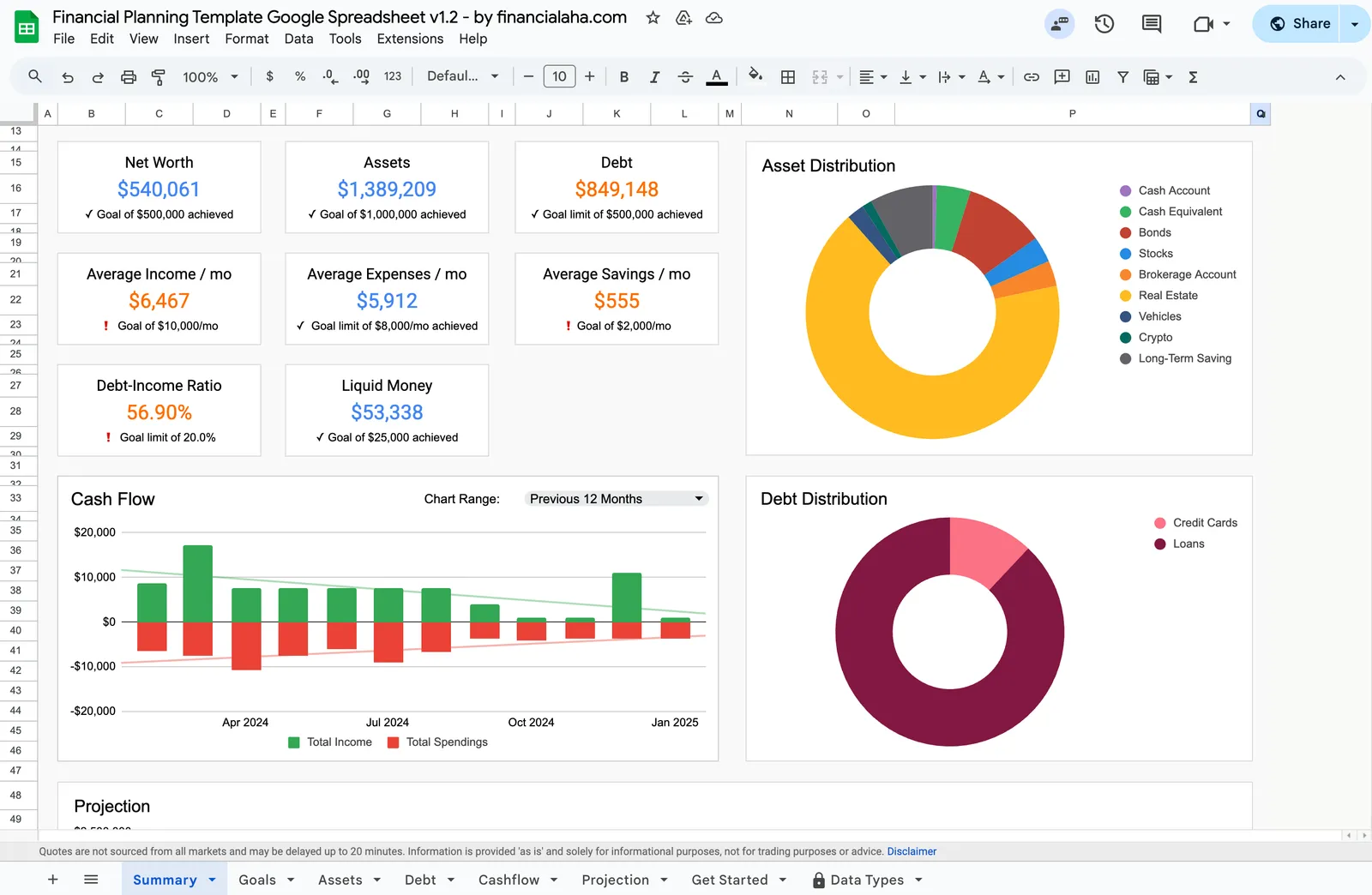
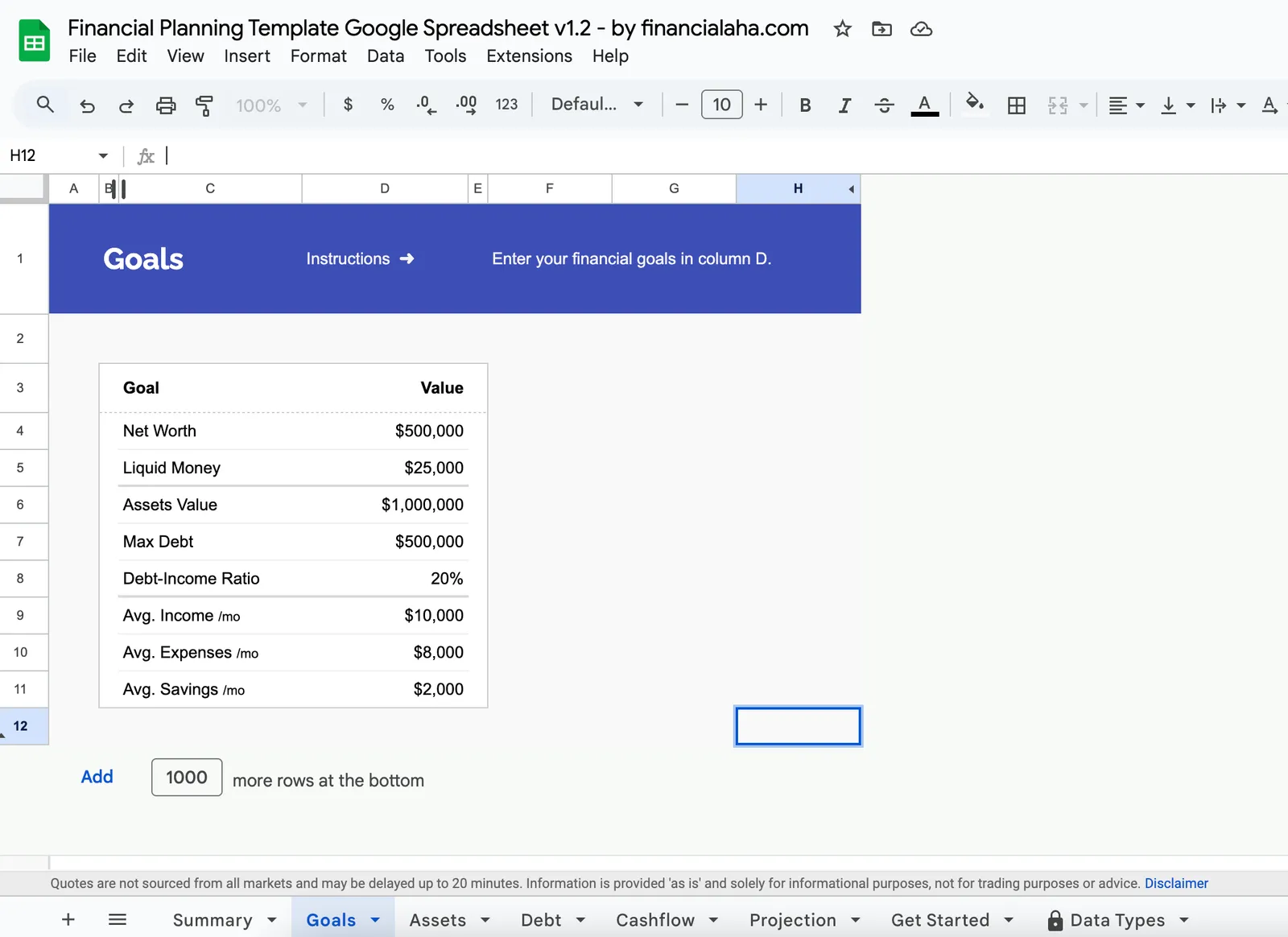
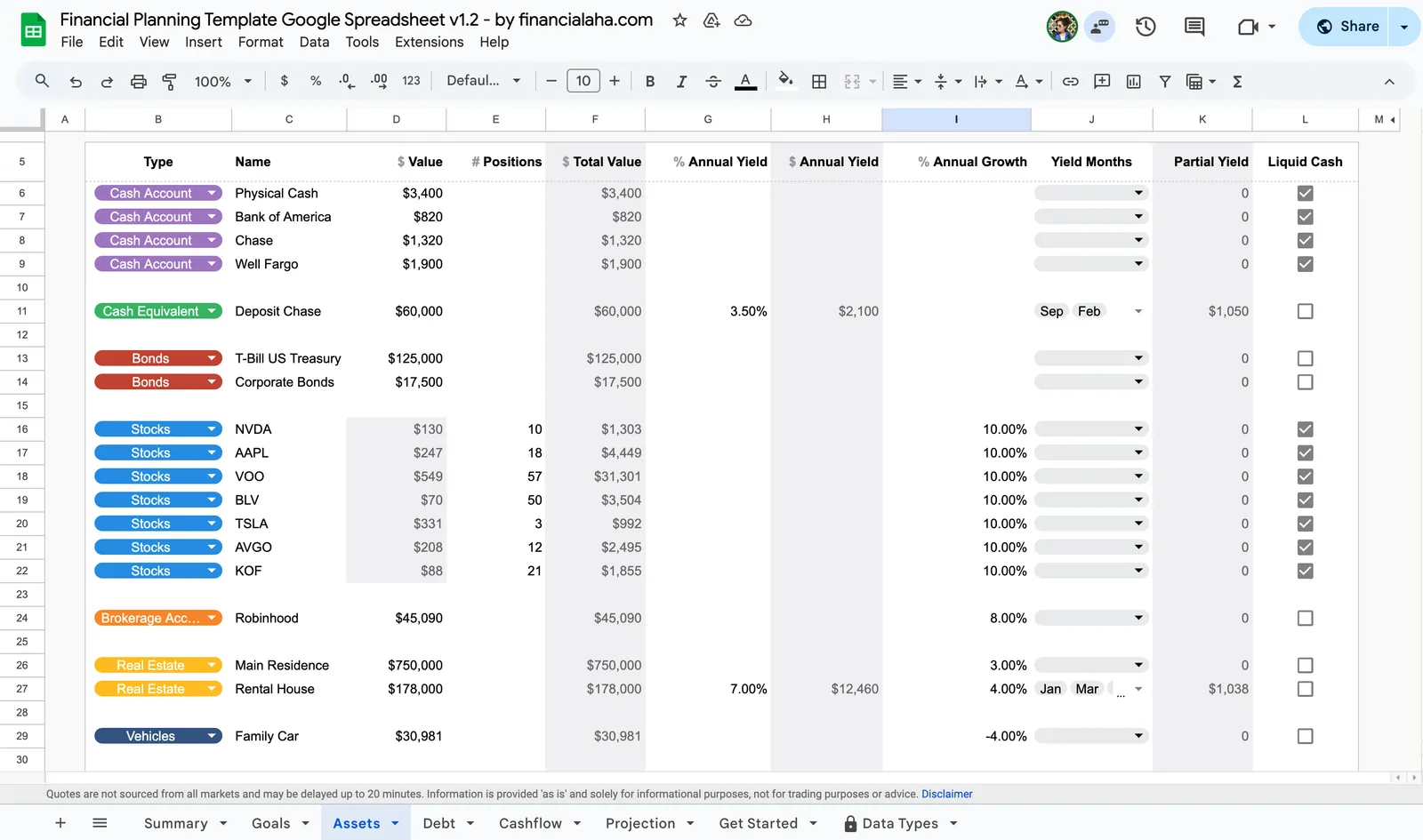
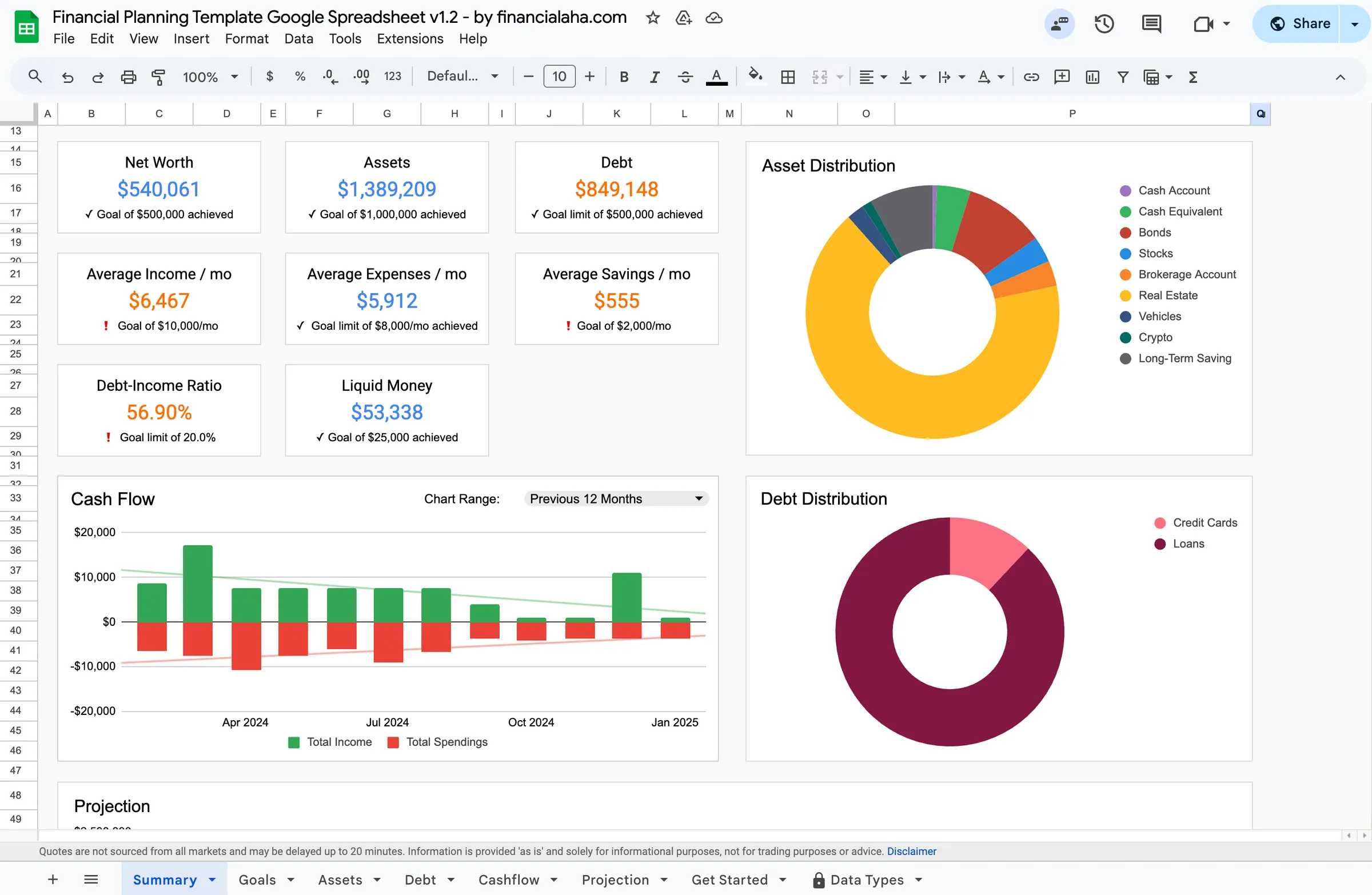
Complete financial overview with net worth and goals
Set and track progress toward financial milestones
Track all your assets in one place
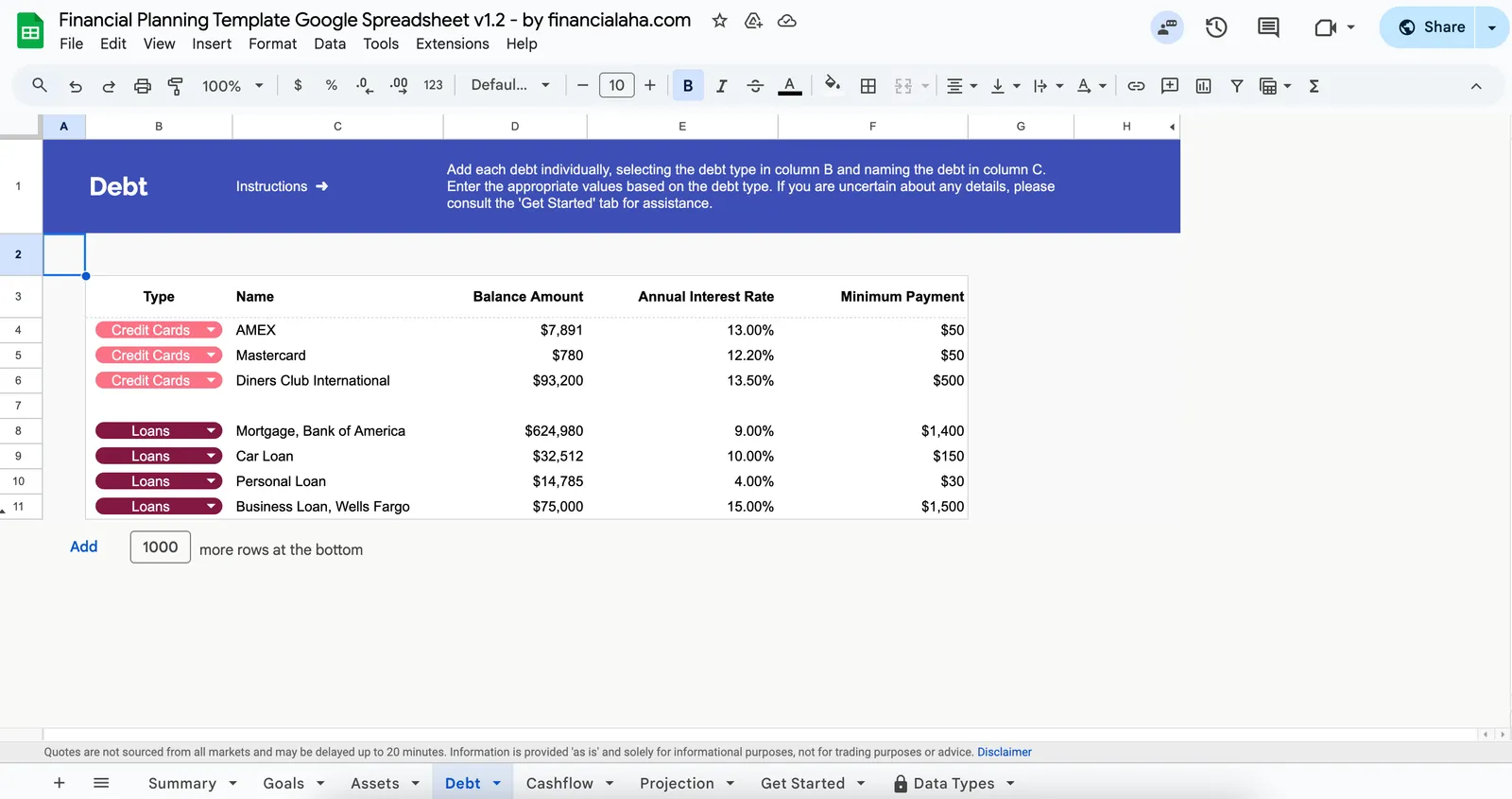
Monitor and plan debt repayment
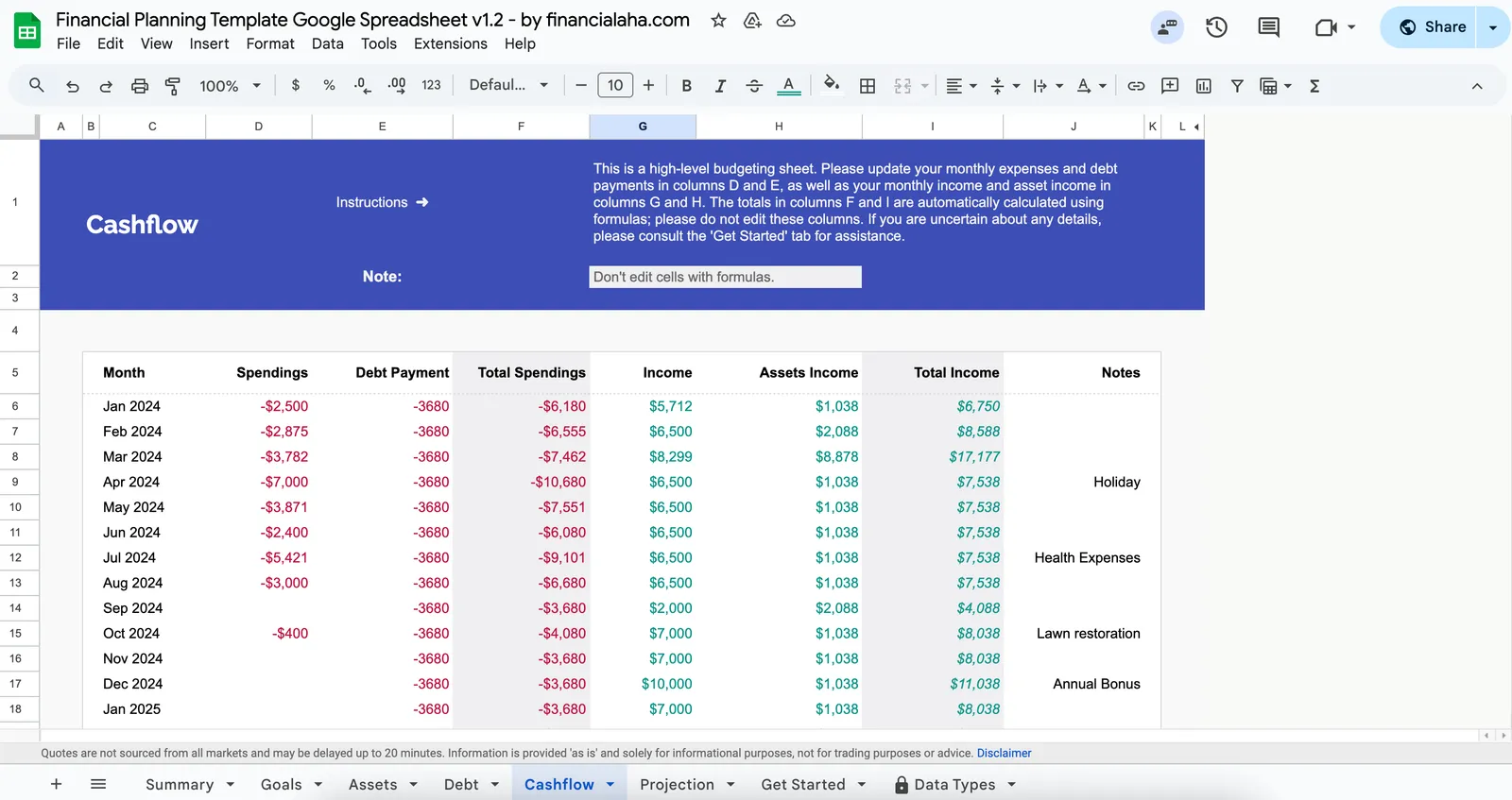
Visualize your income vs spending over time
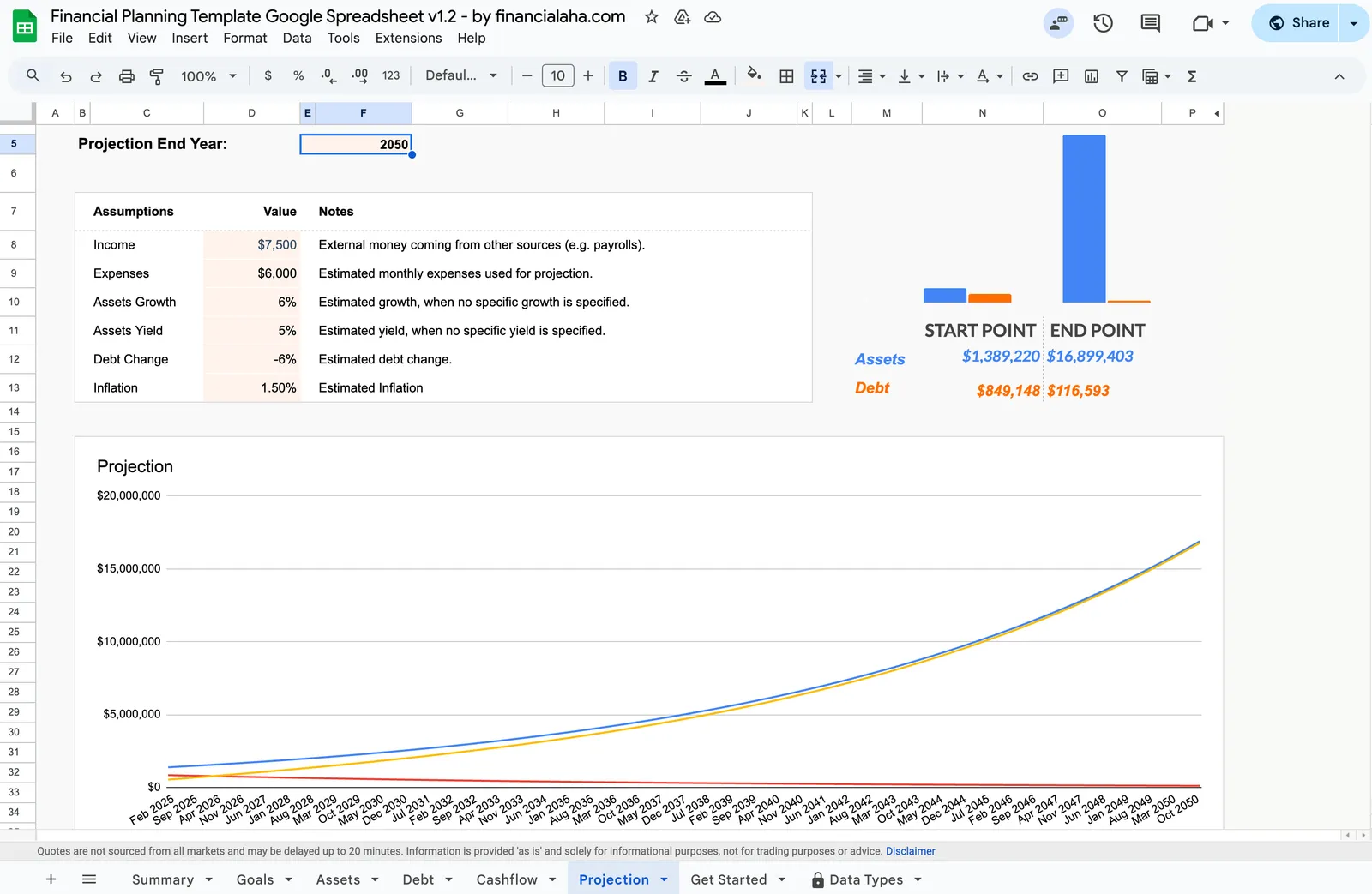
Project your financial future
Recommended Templates
Templates for College Budgeting
Plan long-term education savings alongside your full financial picture. Track 529 accounts, savings goals, and see projections of how your college fund may grow over time.
View templateMap out college costs across the academic year - tuition payments, room and board, and semester expenses laid out month by month.
View template Save $91Get the complete financial toolkit - plan education savings, track monthly expenses during college years, and manage tax implications of education spending.
Includes 8 templates
View bundleFree Tools
Calculators to Help You Plan
Common Questions
College Budgeting FAQ
How much should families save for college?
There is no single target that works for everyone. Some families aim to cover the full cost, others plan to cover a portion with the rest coming from financial aid, scholarships, and student contributions. Even covering a third of expected costs through savings significantly reduces the need for loans.
When should college savings start?
The earlier the better for compound growth. Starting when a child is born gives 18 years of growth. But starting later still helps - even 5-10 years of regular contributions build a meaningful fund. The timing matters less than the consistency of saving.
What is a 529 plan and is it worth it?
A 529 plan is a tax-advantaged savings account specifically for education expenses. Contributions grow tax-free, and withdrawals for qualified education expenses are also tax-free. Many states offer additional tax deductions for contributions. For families planning to save for college, the tax advantages often make 529 plans worth considering.
How do students budget during college?
Tracking income (from jobs, family support, financial aid refunds) against expenses (food, transportation, personal spending) is the foundation. Many students find that tracking spending for even one month reveals surprising patterns. Setting a weekly spending limit for discretionary categories helps maintain control.
How much student loan debt is manageable?
A common guideline suggests total student loan debt should not exceed the expected first-year salary after graduation. With typical 10-year repayment, this keeps monthly payments roughly manageable. However, individual circumstances vary - income stability, career trajectory, and other financial obligations all factor in.
Can't find the answer you're looking for? Contact our team
Start planning your college budget
A spreadsheet template with automatic calculations, visual summaries, and everything needed to track college costs.
Ready to get started?
Download instantly and start managing your finances, or contact us to design a custom template package for your needs.