Germany
Net Worth Tracker for Germany
Gather your Girokonto, Tagesgeld, Riester and Ruerup values, Bausparvertrag, property equity, ETF-Sparplan, and debts into a single balance sheet in EUR.
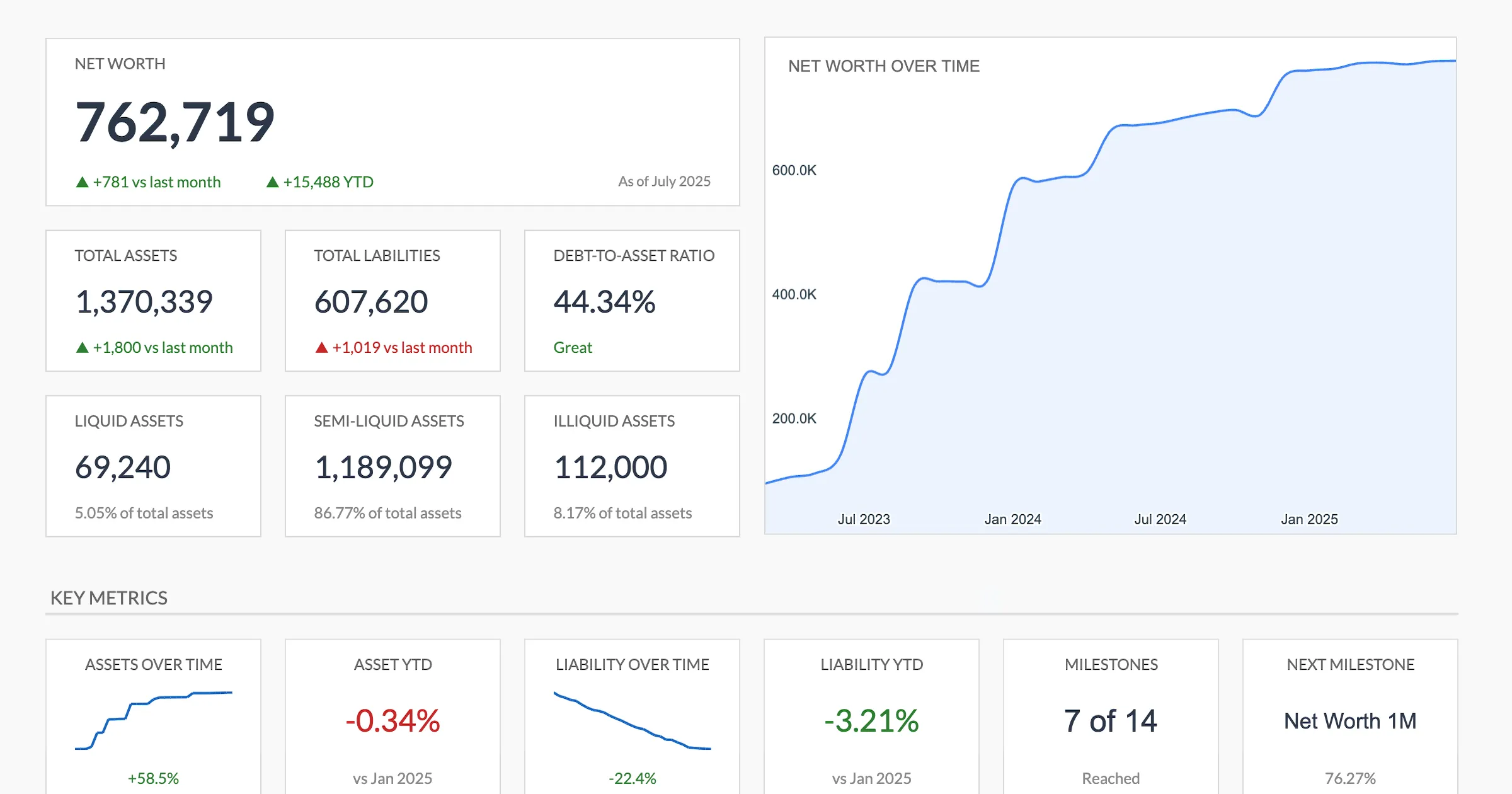
In Depth
Renting Culture, Riester and Rürup, and the Sparerpauschbetrag
Germany stands out in Europe for its high rate of renting. Roughly half of all households rent rather than own their home, and in cities like Berlin and Munich the proportion is even higher. This has a real effect on how net worth accumulates over time - without property equity building in the background, wealth tends to concentrate more heavily in financial assets, pension entitlements, and savings products. Neither approach is inherently better, but the shape of net worth looks quite different from countries with higher homeownership rates.
The Riester-Rente and Rürup-Rente (Basisrente) are two government-incentivized private pension schemes that often form a significant part of long-term savings. Riester contracts come with direct subsidies (Zulagen) and tax benefits, while Rürup contributions are tax-deductible up to a ceiling and are particularly relevant for self-employed individuals. Both lock up capital until retirement, which means their current value is an asset on paper but not one that can be accessed freely.
For liquid savings and investments, the Sparerpauschbetrag (saver's lump sum) of EUR 1,000 per person (EUR 2,000 for couples) provides a tax-free allowance on capital gains and investment income. Above that threshold, the flat Abgeltungsteuer of 26.375% (including Soli) applies. When tracking net worth, some people note both the gross portfolio value and an estimated after-tax figure, since the difference can be meaningful for larger investment balances.
Germany
Net Worth in Germany: What to Track
Germans build wealth through a combination of savings, insurance products, property, and the statutory pension system. A net worth tracker brings all of these together.
Statutory pension entitlements represent significant value
The gesetzliche Rentenversicherung (statutory pension) builds up over your working career. Your annual Renteninformation shows your projected monthly pension. While you can't access this as a lump sum, the present value of future pension payments represents significant wealth. Some people include an estimated capital value; others track it separately as future income.
Savings accounts and Bausparvertraege are common
Germany has a strong savings culture. Tagesgeld (daily savings) and Festgeld (fixed deposit) accounts, along with Bausparvertraege (building savings contracts), are traditional wealth-building tools. While returns have been low in recent years, these represent stable, low-risk assets worth tracking.
Property ownership is less common but significant when held
Germany has one of the lowest homeownership rates in Europe (roughly 50%). For those who own property, it's often a major net worth component. Track market value minus outstanding Baufinanzierung (mortgage). Immobilienscout24 and local comparable sales can help estimate current value.
ETF and investment culture is growing
German investors are increasingly using ETF savings plans (ETF-Sparplaene) through brokers like Trade Republic, Scalable Capital, and comdirect. Including current portfolio values alongside traditional savings gives a complete picture. Note that investment gains above EUR 1,000/year (Sparerpauschbetrag) are subject to Abgeltungssteuer (flat 26.375% including Soli).
获取模板
入门指南
Adapting the Net Worth Tracker for German Accounts
List all assets with current balances
Enter Girokonto, Tagesgeld, Festgeld, Bausparvertrag balance, ETF/investment portfolio, Riester/Ruerup current value, life insurance surrender value (Rueckkaufswert), property market value, and any other assets.
Add Baufinanzierung, BAfoeg, and other debts
Include mortgage (Baufinanzierung) outstanding, car loan (Autokredit), student loan (BAfoeg, which is interest-free), personal loans (Ratenkredit), credit card balances, and any other debts.
Choose EUR as the display currency
Pick EUR from the currency list in the header. Once set, all values display consistently in euros.
Refresh Girokonto and portfolio values regularly
Monthly for bank accounts, investment portfolios, and debt balances. Quarterly or annually for pension estimates, insurance values, and property. The template calculates net worth automatically.
Track the trend over time
German financial planning tends to be conservative and long-term. Seeing net worth grow steadily over time, even if slowly, provides useful perspective on financial progress.
查看实际效果
模板外观
浏览模板,了解其如何处理预算、分类和支出跟踪 - 所有内容均可适配您的本地财务设置。
- 内置货币选择器
- 可自定义分类
- 预算与实际对比跟踪
- 可视化图表和摘要
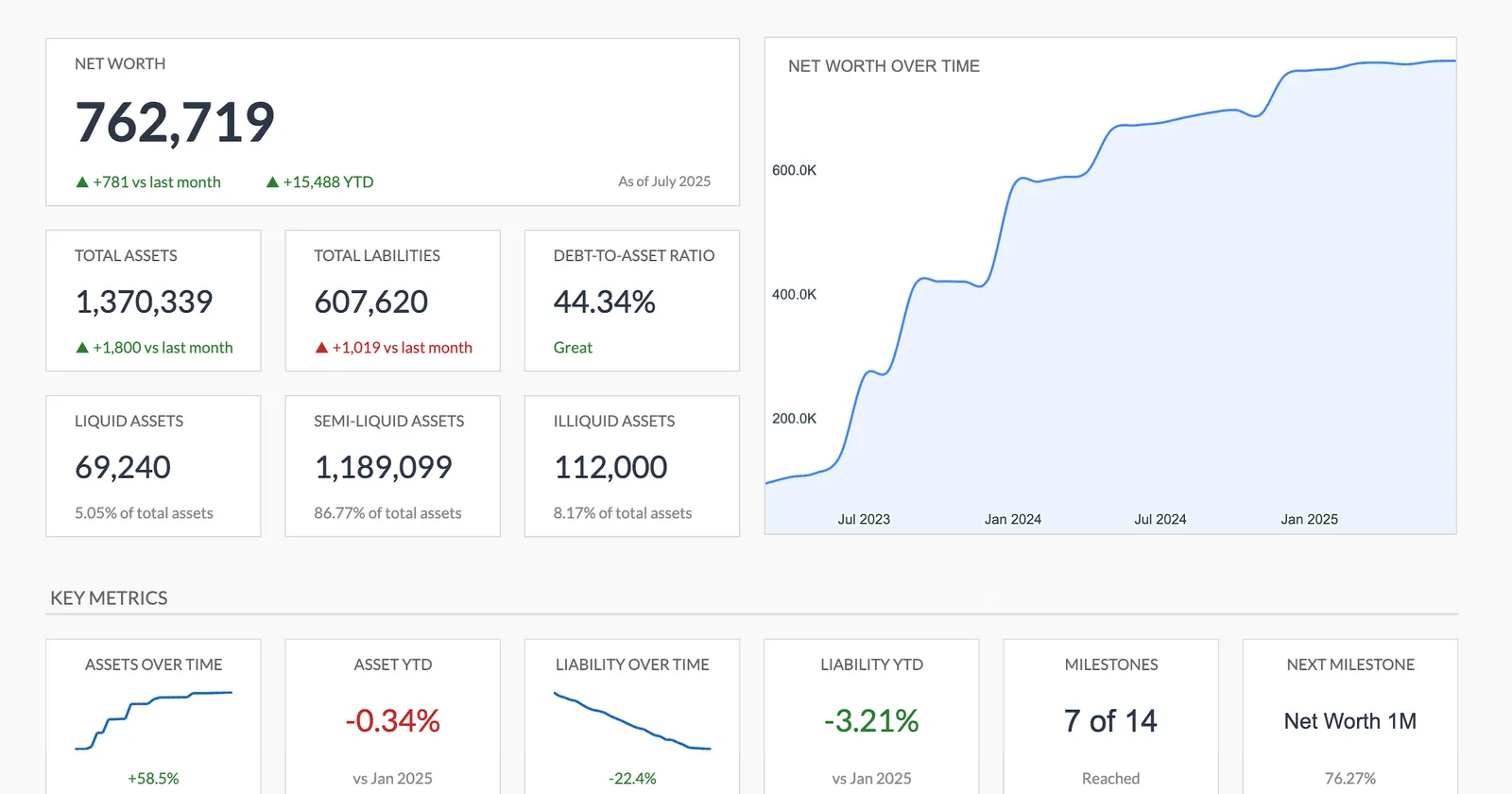

Track your net worth over time with charts
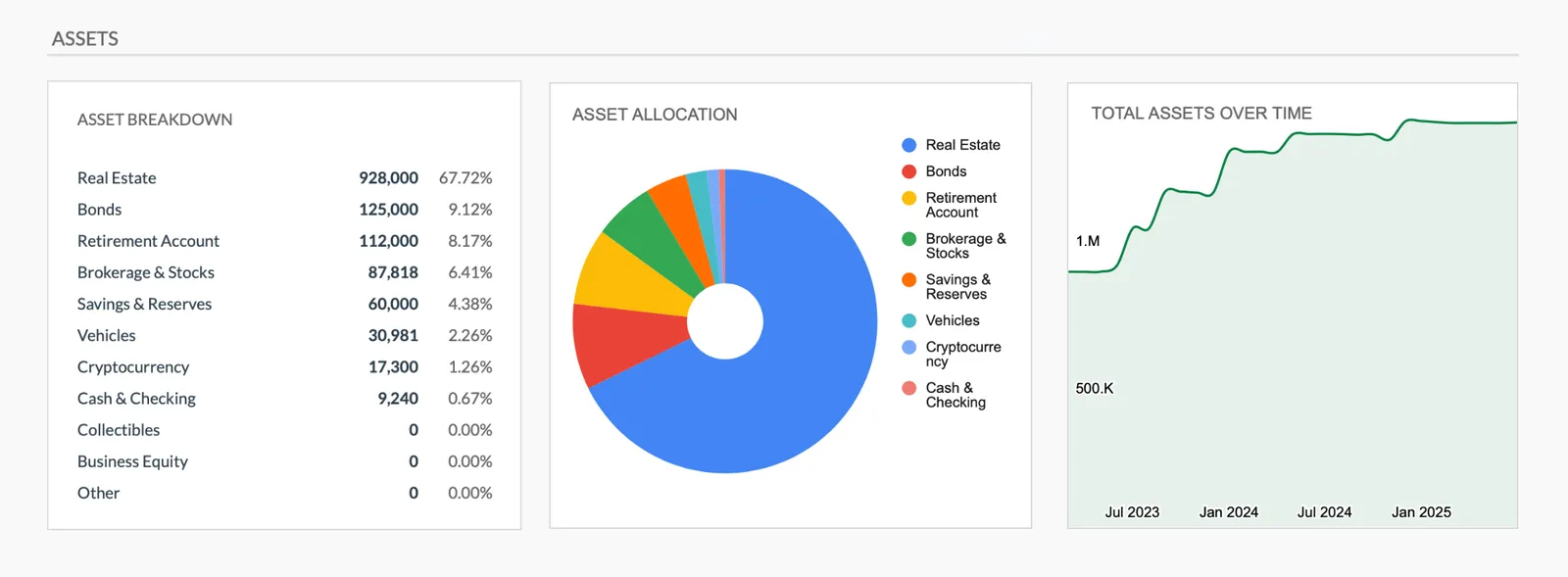
Breakdown of all your assets
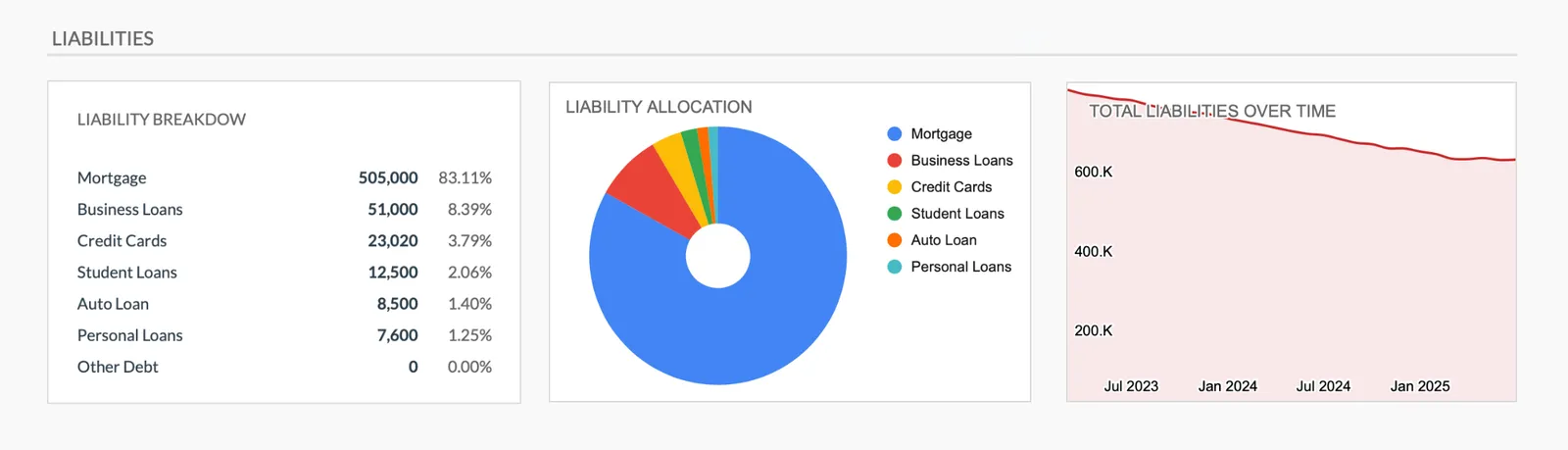
Track all debts and liabilities
Key financial health indicators
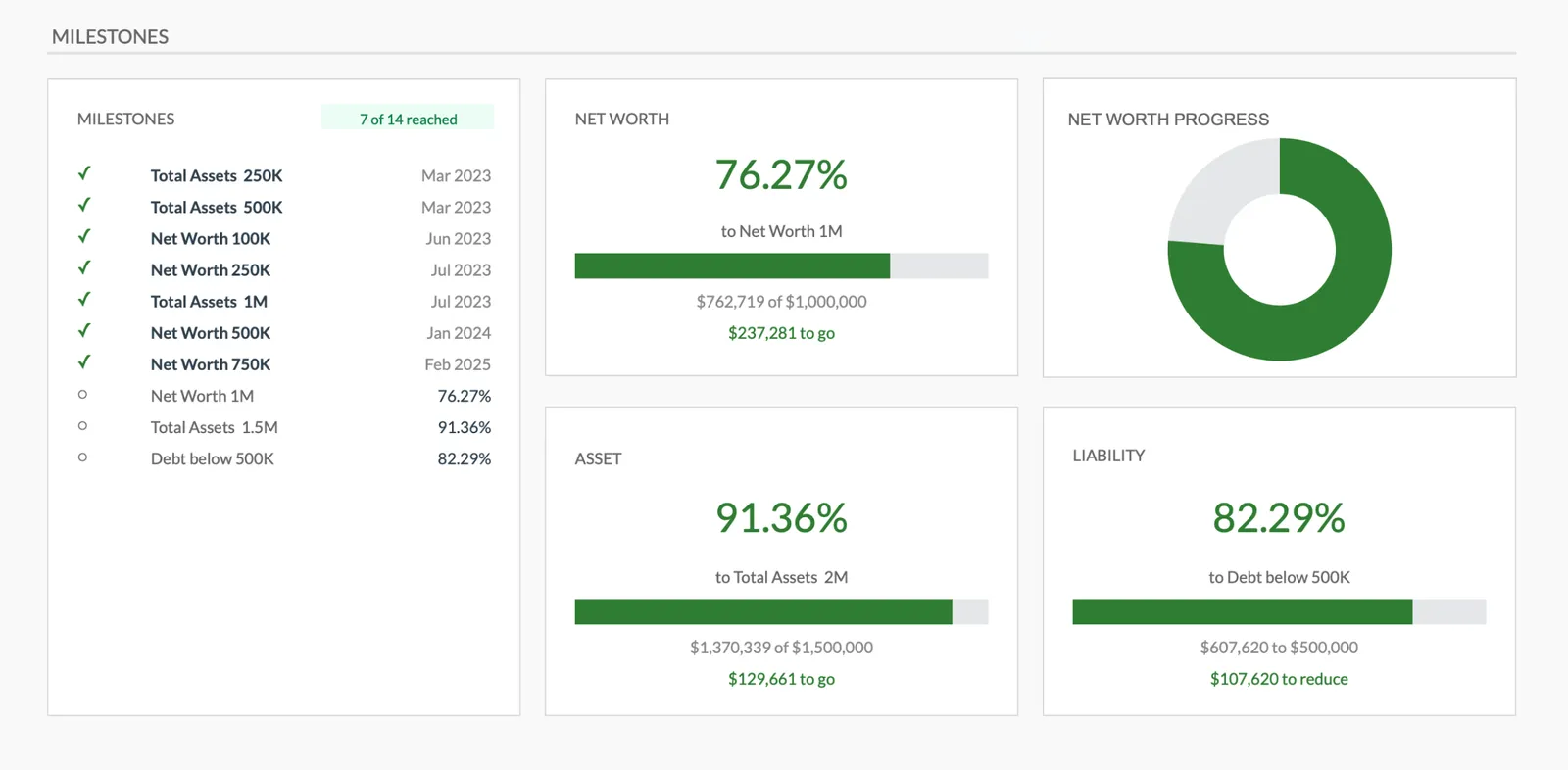
Set and celebrate net worth milestones
常见问题
Net Worth Tracker for Germany - FAQ
Should I include my statutory pension in net worth?
It's a personal choice. Your Renteninformation shows projected monthly pension - you can estimate a capital value (e.g., monthly amount x 12 x expected years of retirement). Some people prefer to track it separately as future income rather than current net worth. Either approach is valid.
How do I estimate property value for tracking in Germany?
Check recent comparable sales in your area on Immobilienscout24 or consult local Grundstueckswerte. The Bodenrichtwert (standard land value) provides a reference for land, but total property value includes the building. Subtract your remaining mortgage for equity.
Should I include the Bausparvertrag?
Yes. Your Bausparguthaben (accumulated savings) is an asset. If you're in the savings phase, include the current balance. If you've already received the Bauspardarlehen (loan), include the remaining loan as a liability.
How do I track ETF-Sparplan investments?
Check your broker (Trade Republic, Scalable, comdirect, etc.) for the current portfolio value. Enter this as an asset. Remember that gains above EUR 1,000/year are taxed at 26.375%, so the net-of-tax value is technically lower, but most people track the gross market value.
How often should I refresh my German net worth numbers?
Monthly for liquid assets and debts. Quarterly for investments and insurance values. Annually for property and pension estimates. The key is consistency - pick a schedule that works for you and maintain it.
Can't find the answer you're looking for? Contact our team