Net Worth Tracker
Net Worth Tracker for Retirees
Monitor your retirement wealth - track how assets, withdrawals, and income sources affect your net worth month to month.
The Challenge
Why Retirees Need to Monitor Net Worth
In retirement, net worth tracking shifts from measuring growth to monitoring sustainability. The question changes from "how fast is it growing" to "will it last."
Drawdowns need context
Watching account balances decline is psychologically difficult. Net worth tracking that includes all income sources and assets shows whether the decline is planned and sustainable or a warning sign.
Multiple income sources create complexity
Social Security, pension, RMDs, investment income, perhaps part-time work - retirement income is a patchwork. Net worth captures the total effect of all inflows and outflows.
Market volatility feels different in retirement
During accumulation, market drops are buying opportunities. During retirement, they reduce the pool you are drawing from. Net worth tracking quantifies the impact.
Longevity risk needs ongoing monitoring
The risk of outliving your money requires active tracking. Net worth declining faster than expected is an early warning that adjustments may be needed.
Ready to take control of your retiree finances?
What You Get
What This Template Includes
Retirement asset tracker
Track IRAs, 401(k)s, taxable accounts, annuities, real estate, and other retirement holdings. See total assets at a glance.
Remaining debt tracker
Any mortgage, loans, or other debts still active in retirement. See how they affect net worth.
Monthly net worth history
Record your net worth each month. The history reveals whether your retirement pace is sustainable.
Drawdown rate visibility
See how your net worth changes relative to withdrawals. Track whether you are drawing faster or slower than planned.
Asset composition tracking
Monitor the mix of your remaining assets. As accounts are drawn down, the composition shifts - tracking this prevents surprises.
Net worth trend visualization
Chart showing your net worth over time. In retirement, a gentle, planned decline is expected - but the rate matters.
See It In Action
What the template looks like
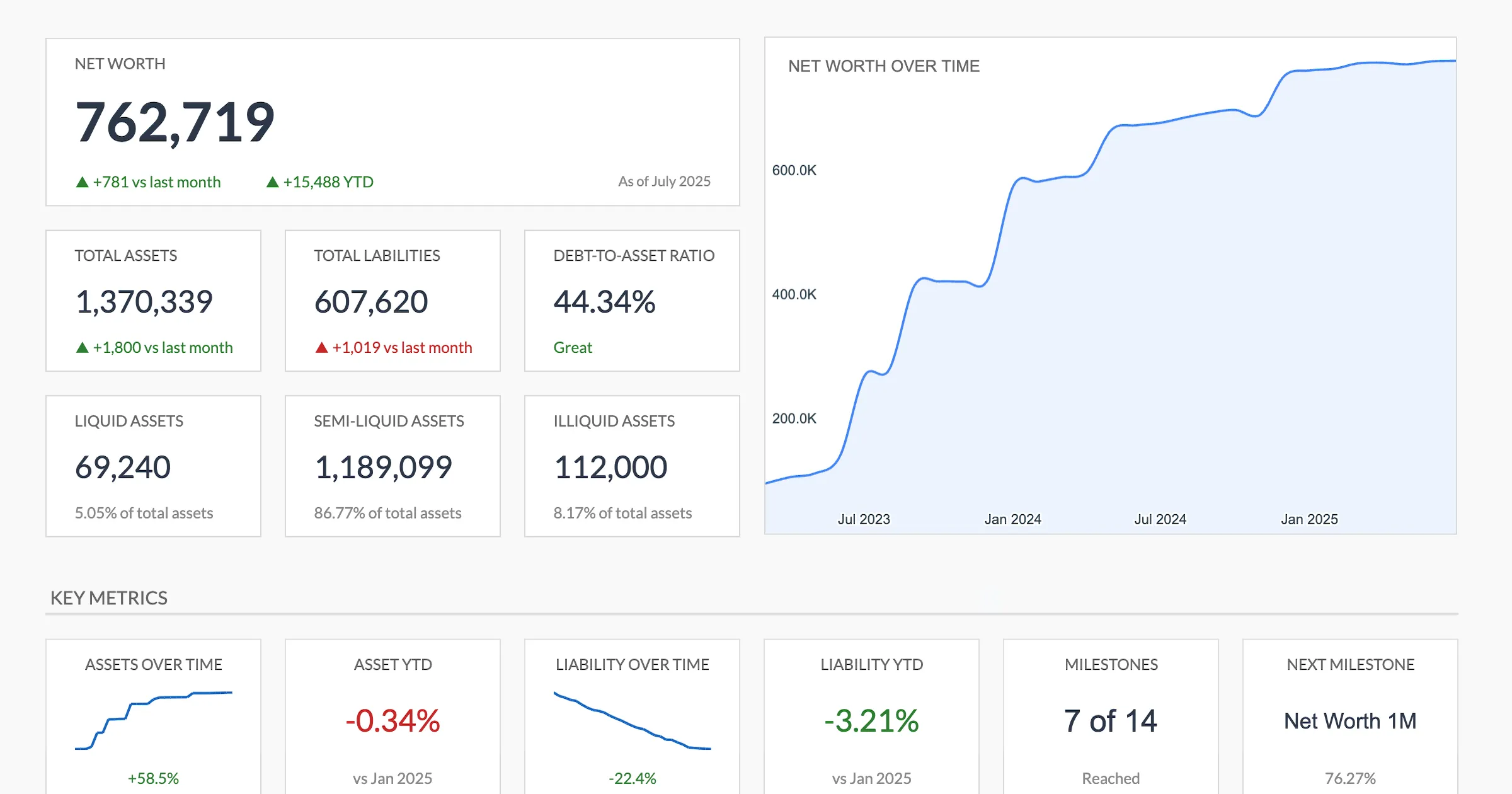
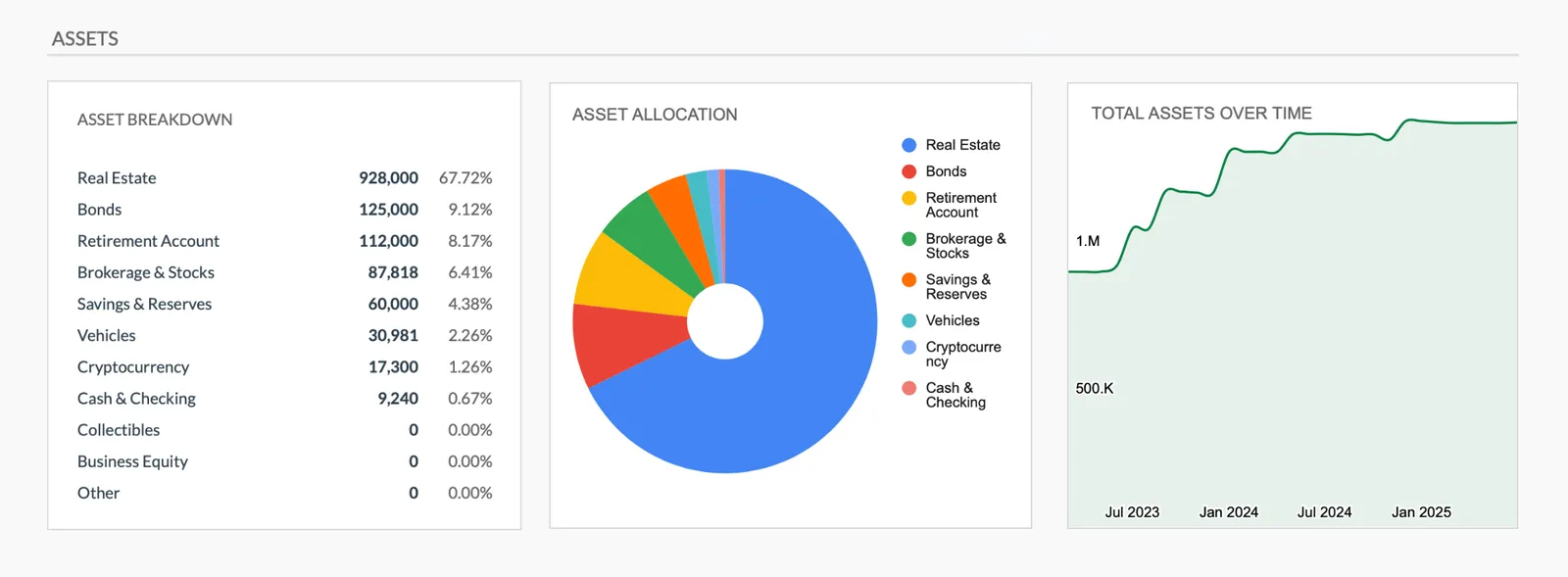
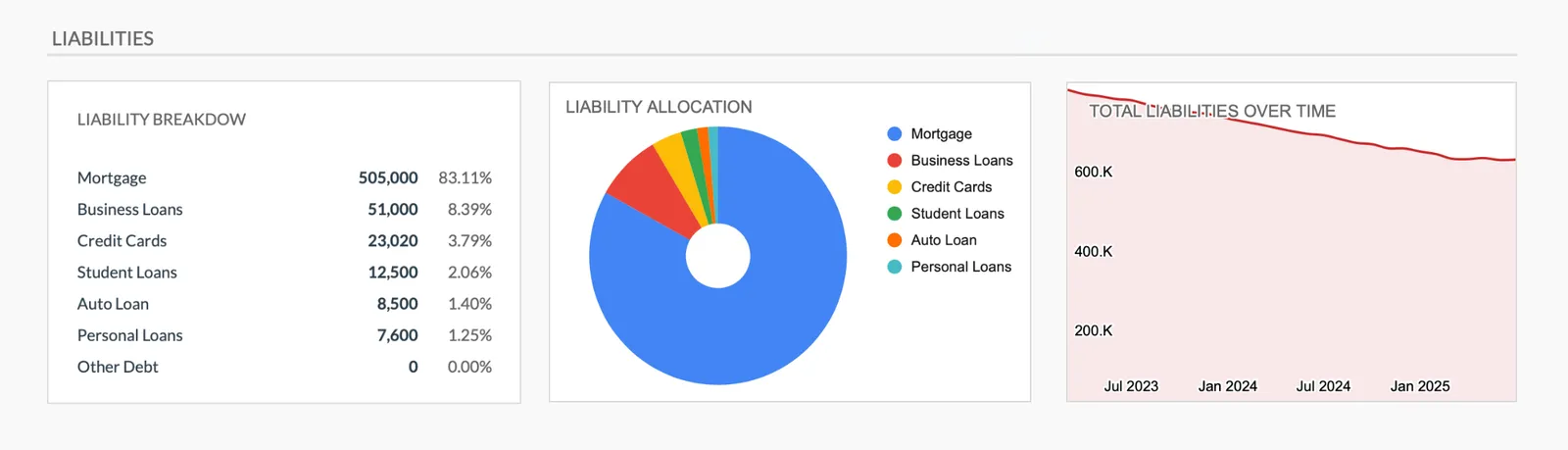
Browse through the template to see how it handles asset tracking, liability management, and net worth analysis over time.
- Net worth dashboard with trends
- Asset and liability breakdown
- Key financial health metrics
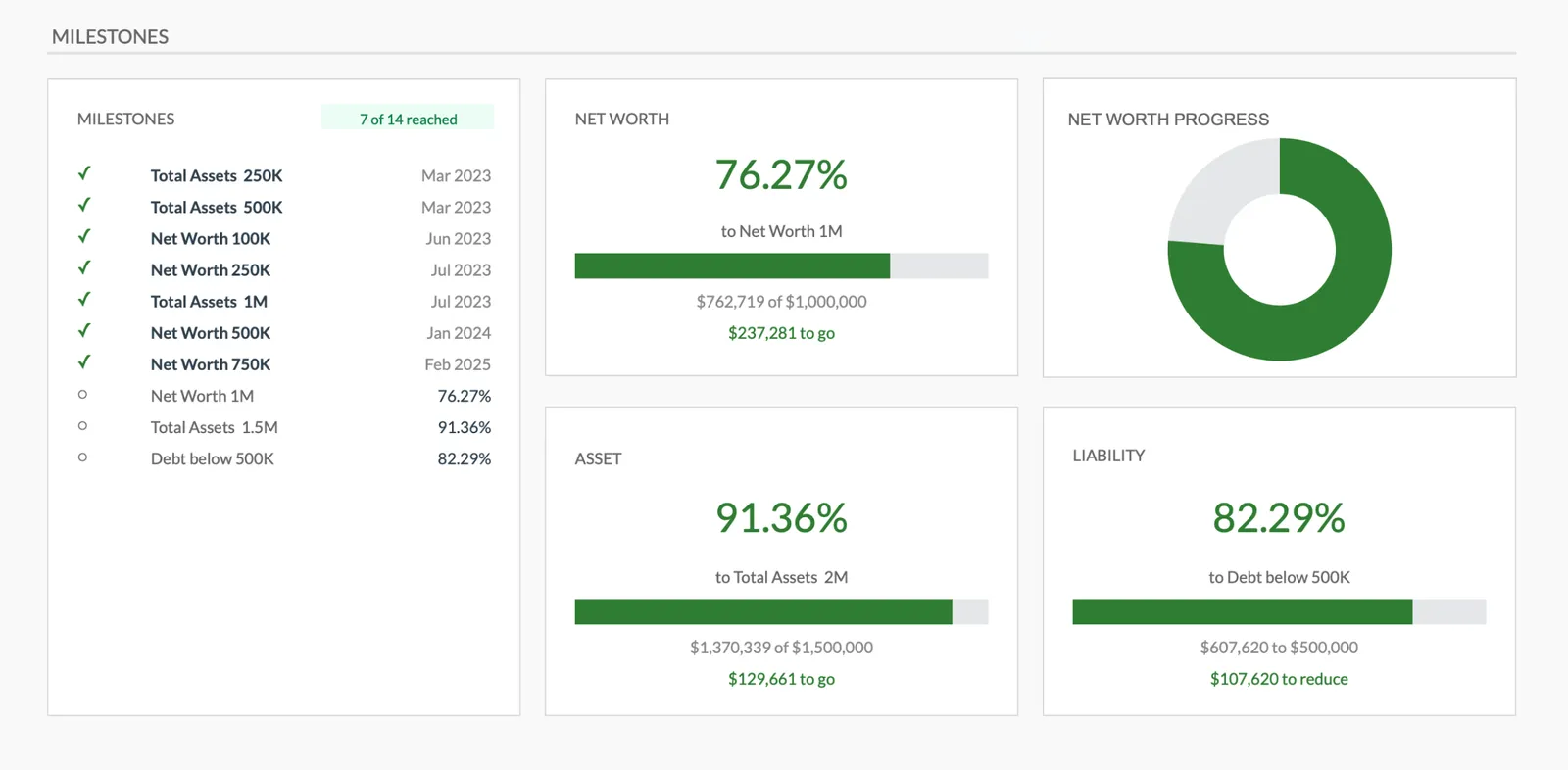
- Milestone tracking
- Historical net worth over time
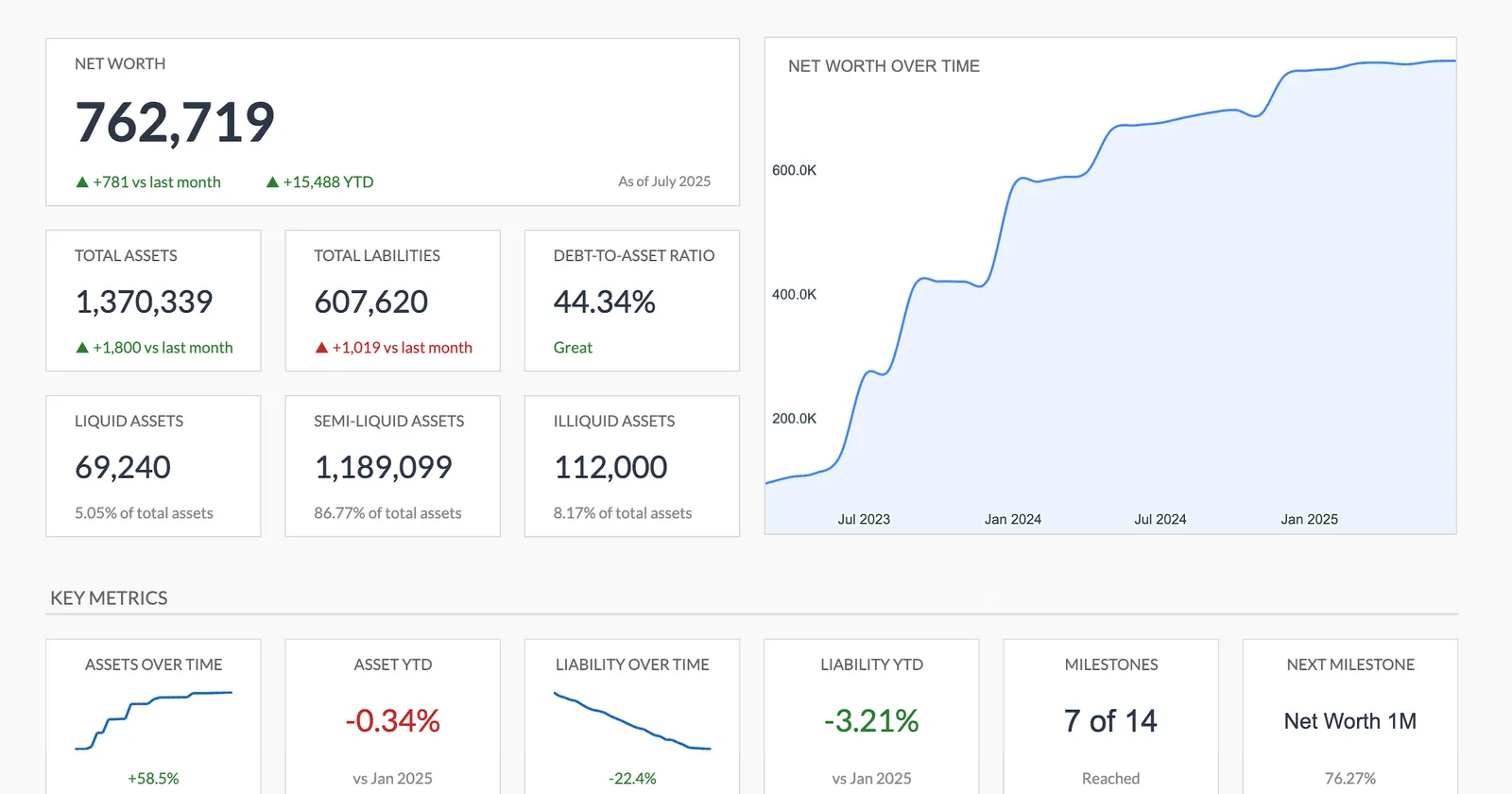

Track your net worth over time with charts
Breakdown of all your assets
Track all debts and liabilities
Key financial health indicators
Set and celebrate net worth milestones
Getting Started
How to Get Started
Record all retirement assets
Enter current values for every retirement account, investment, property, and other asset you hold.
Add any remaining debts
Mortgage balance, home equity loan, or any other obligations. Include everything for an accurate net worth.
Establish your baseline
Your first entry is the starting point. All future entries show how your retirement net worth evolves.
Update monthly
Refresh account balances each month after withdrawals, income, and market changes have been reflected.
Review the trend, not the month
Individual months fluctuate. The 6-month and 12-month trend shows whether your retirement is on track.
Common Questions
Net Worth Tracker for Retirees - FAQ
Is net worth decline normal in retirement?
Yes. Drawing from savings is the purpose of having saved. The question is whether the rate of decline is sustainable for your expected retirement length.
Should I include my home?
Including home equity gives a complete picture. If you plan to downsize or use a reverse mortgage, home equity is a real retirement asset.
How do I handle market drops?
Record actual values. Seeing past drops and recoveries in your own data helps put current volatility in perspective.
What if net worth is dropping too fast?
The trend data gives you early warning. If the decline rate is steeper than planned, it signals a potential need to review spending or withdrawal rates.
Should I include Social Security as an asset?
Social Security is income, not an asset you hold. It shows up indirectly - months with Social Security income will show slower net worth decline than months without it.
How is this different from checking my account balances?
Net worth combines all accounts and subtracts all debts. Checking individual balances misses the total picture, especially when money moves between accounts.
Can't find the answer you're looking for? Contact our team
Start tracking net worth as a retiree
One-time purchase. No subscription. Your financial data stays in your Google Drive.