Cash Flow Forecast
Cash Flow Forecast Template for Photography Businesses
Forecast booking revenue, plan equipment investments, manage seasonal demand patterns, and track deposit and final payment timing - all in a Google Sheets template built for cash flow management.
In Depth
Seasons, Bookings, and the Financial Life of Photography
Photography businesses experience some of the most extreme seasonality of any service industry. A wedding photographer might earn $10,000-$15,000 in a single June weekend and then face weeks of minimal income in February. This concentration of revenue into a few peak months means the financial decisions made during busy season - how much to save, what to invest in, whether to take on additional bookings - ripple through the entire year.
The deposit-and-balance payment structure creates an unusual cash flow pattern. Deposits collected months before events provide early cash that can feel like income but actually represents a commitment to deliver future services. A photographer with $20,000 in collected deposits and events stretching over the next six months has cash in hand but also obligations attached to it. Tracking the difference between cash received and revenue truly earned helps avoid spending money that is still committed to future work.
Equipment costs in photography are substantial and ongoing. Camera technology evolves quickly enough that bodies need replacing every three to five years to remain competitive. A professional kit - bodies, lenses, lighting, editing hardware - represents $15,000-$40,000 in invested capital that depreciates steadily. Some photographers treat equipment replacement as a regular monthly expense, setting aside a fixed amount each month so that the eventual purchase does not create a cash flow shock.
The editing backlog creates a hidden financial dynamic during peak season. A photographer shooting three to four events per week generates hours of post-production work. If final payment is due at delivery, a growing editing queue means a growing amount of earned-but-uncollected revenue. Some photographers find that outsourcing editing during peak season - despite the cost - actually improves cash flow by accelerating delivery and final payment collection.
The Challenge
Cash Flow Challenges for Photography Businesses
Photography businesses face extreme seasonal revenue patterns, high equipment costs, and a booking-to-delivery timeline that creates complex cash flow timing. Understanding these patterns is essential for year-round financial health.
Revenue is heavily seasonal and booking-dependent
Wedding and portrait photographers often generate 50-70% of annual revenue between May and October. A photographer earning $80,000 annually might make $12,000/month during peak season and $3,000/month during the slow season. Corporate and commercial photographers may see different patterns tied to marketing budgets and fiscal year-end spending. This extreme seasonality requires building reserves during peak months to fund winter operations.
Payment timing creates gaps between work and final collection
Most photographers collect a deposit (25-50%) at booking, which might be 6-12 months before the event. The final payment comes at delivery or on the event date. This split means cash arrives in two chunks with a long gap between them. A wedding booked in January with a $2,000 deposit and a September event date means $2,000 received in January and $2,000-$4,000 received in September. Tracking deposits versus earned revenue is important for honest forecasting.
Equipment costs are high and ongoing
Professional camera bodies cost $2,500-$6,500, lenses range from $500-$2,500 each, and lighting equipment adds thousands more. A professional kit might represent $15,000-$40,000 in equipment. Bodies need replacing every 3-5 years, and technology advances create competitive pressure to upgrade. These are large, lumpy expenses that must be planned and funded from operating cash flow or financing.
Editing and delivery time delays final payment
After shooting an event, editing typically takes 2-6 weeks. If final payment is due at delivery, that is 2-6 weeks of delay after the work is performed. For photographers shooting 3-4 events per week during peak season, the backlog of undelivered (and therefore unpaid) work can represent a significant amount of earned but uncollected revenue.
Start forecasting your cash flow
Forecasting Guide
How to Forecast Cash Flow for Your Photography Business
Photography cash flow forecasting starts with your booking calendar and payment schedule. Here is how to structure it using the Cash Flow Forecast template.
Revenue Categories
- Session and event booking deposits
- Final event payments (at delivery)
- Print and album sales
- Licensing and stock photography income
- Mini session and marketing event revenue
- Editing and retouching services
Expense Categories
- Equipment purchases and upgrades
- Software subscriptions (Lightroom, Photoshop, galleries)
- Second shooter and assistant fees
- Insurance (equipment, liability)
- Studio rent (if applicable)
- Marketing and website costs
- Travel expenses
- Props, backdrops, and wardrobe
- Album and print fulfillment costs
- Education and workshop fees
- Self-employment taxes
- Accounting and legal fees
Cash Flow Timing
Map each confirmed booking's deposit and final payment dates onto the monthly forecast. During peak season, expenses for second shooters, travel, and materials increase alongside revenue. The off-season (November-March for wedding photographers) has lower revenue but also lower variable costs. Use the forecast to determine how much of each peak-season dollar needs to be reserved for winter operations.
See It In Action
What the template looks like
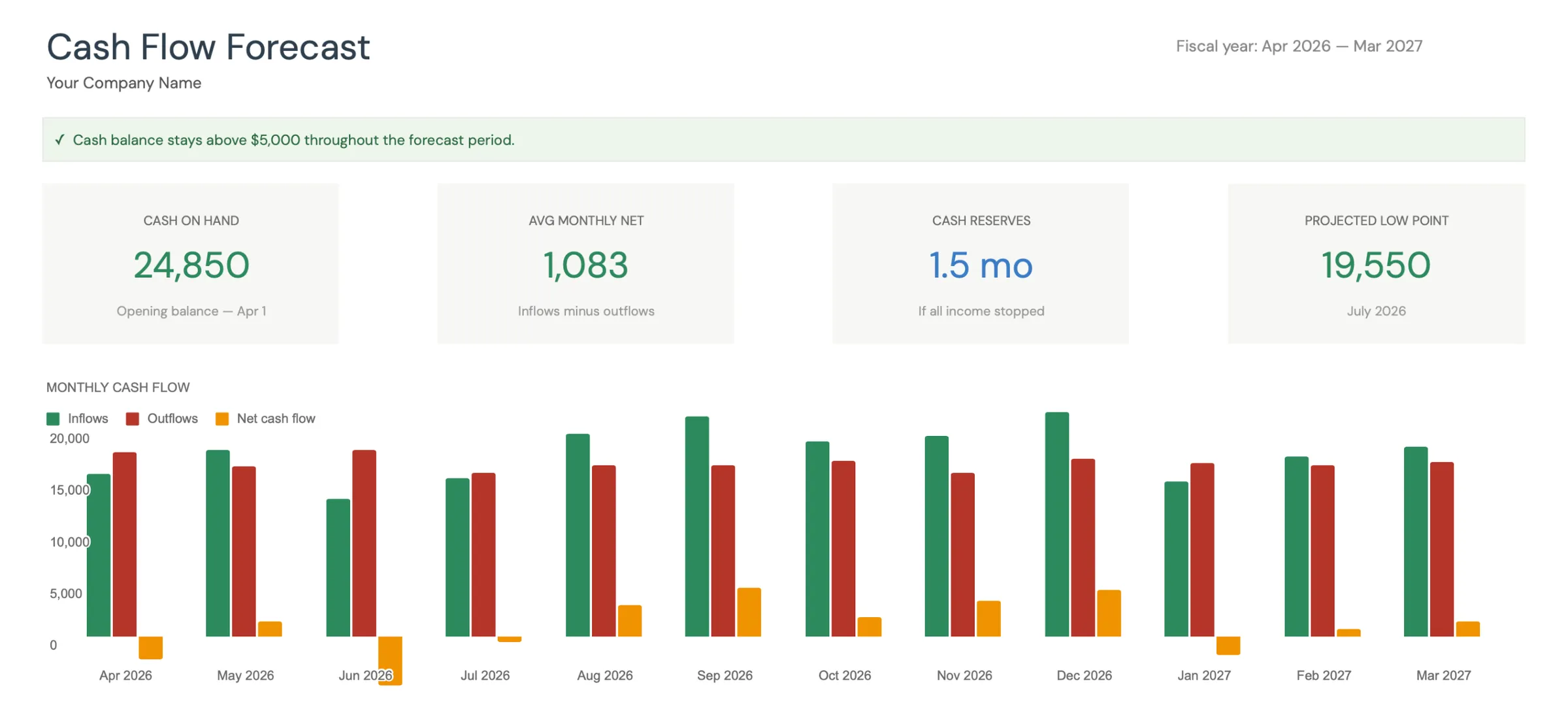
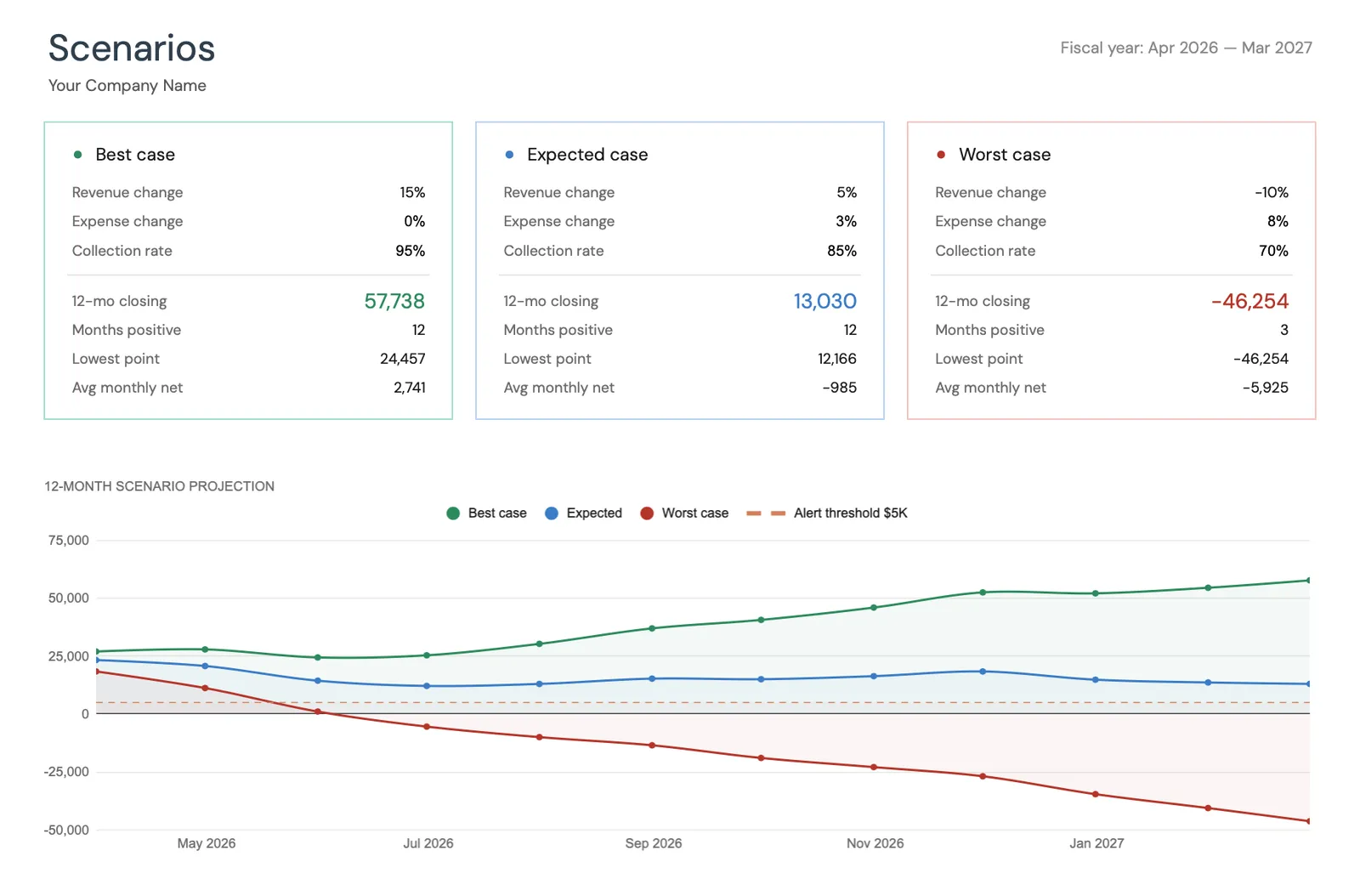
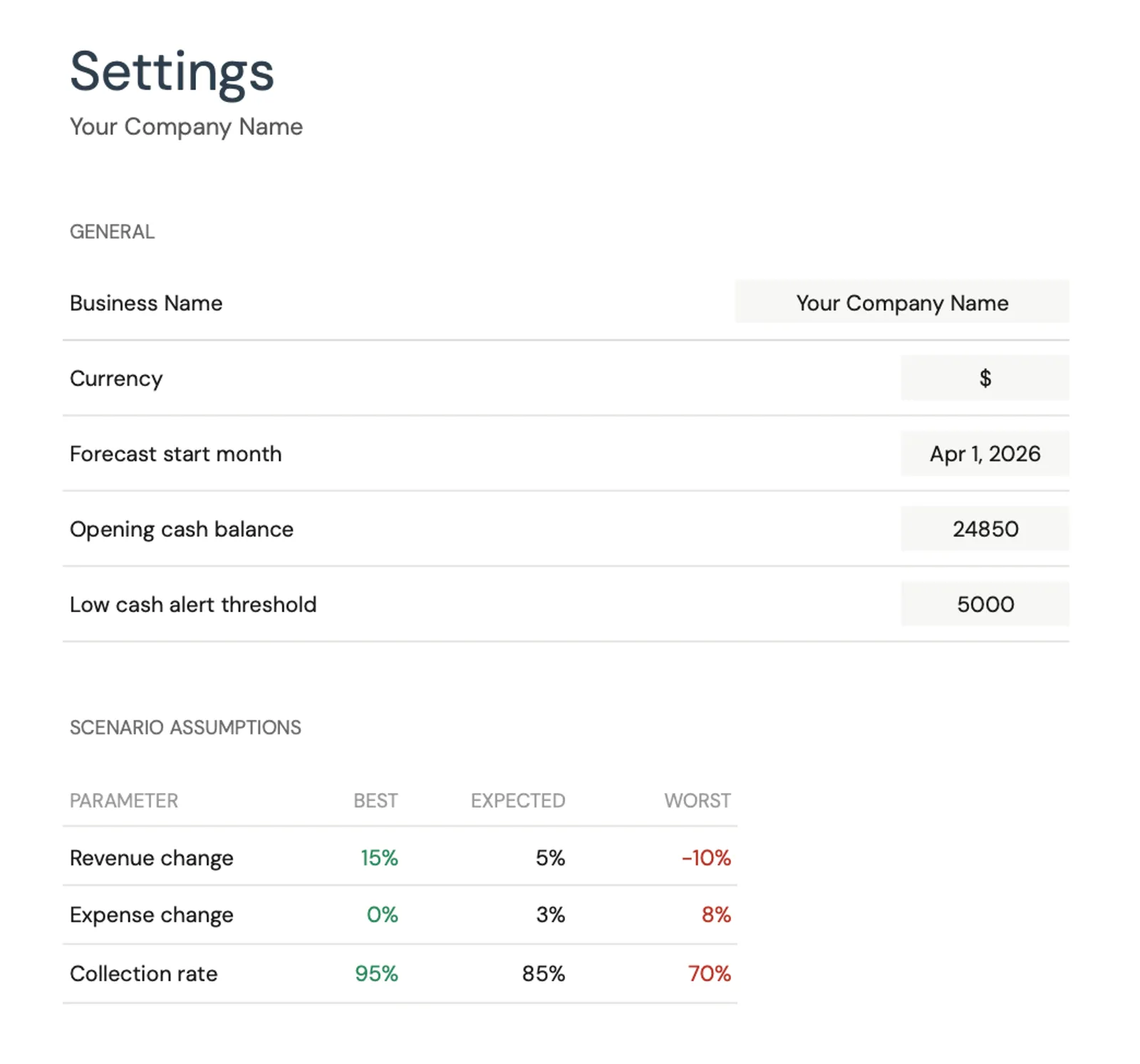
Browse through the template to see dashboards, forecasting, actuals tracking, and scenario planning.
- Visual cash flow dashboard
- Forecast vs actuals comparison
- Scenario planning tools
- Customizable categories
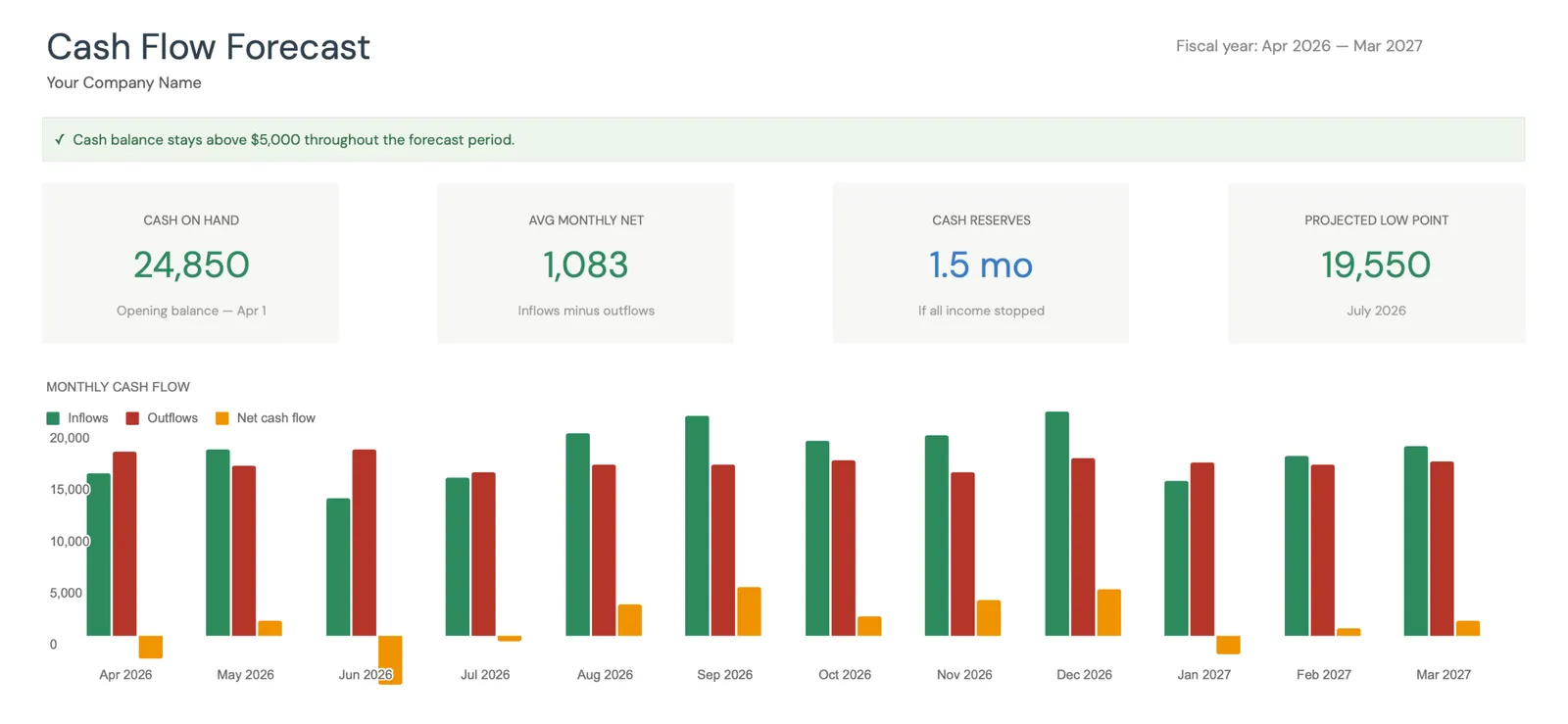
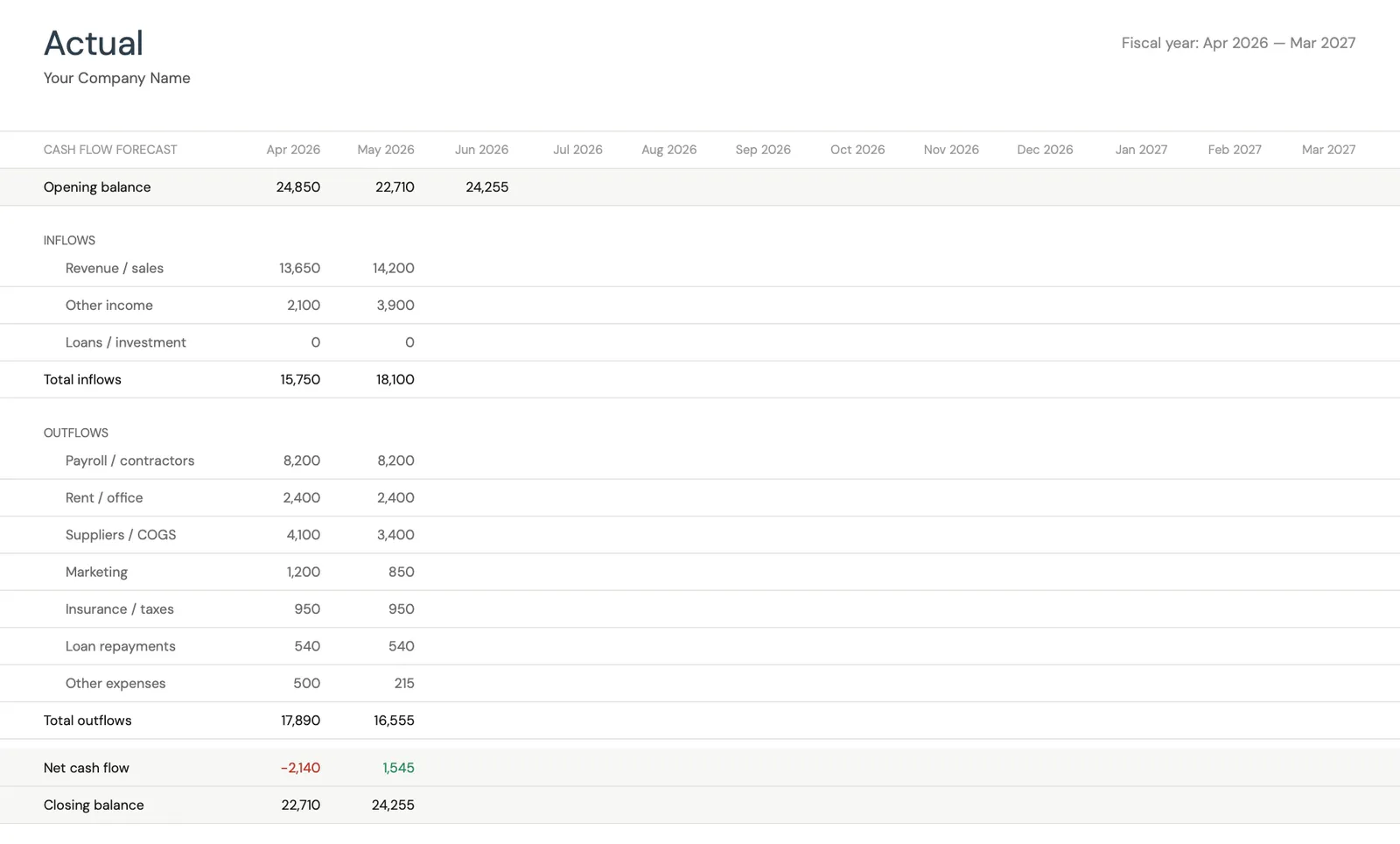
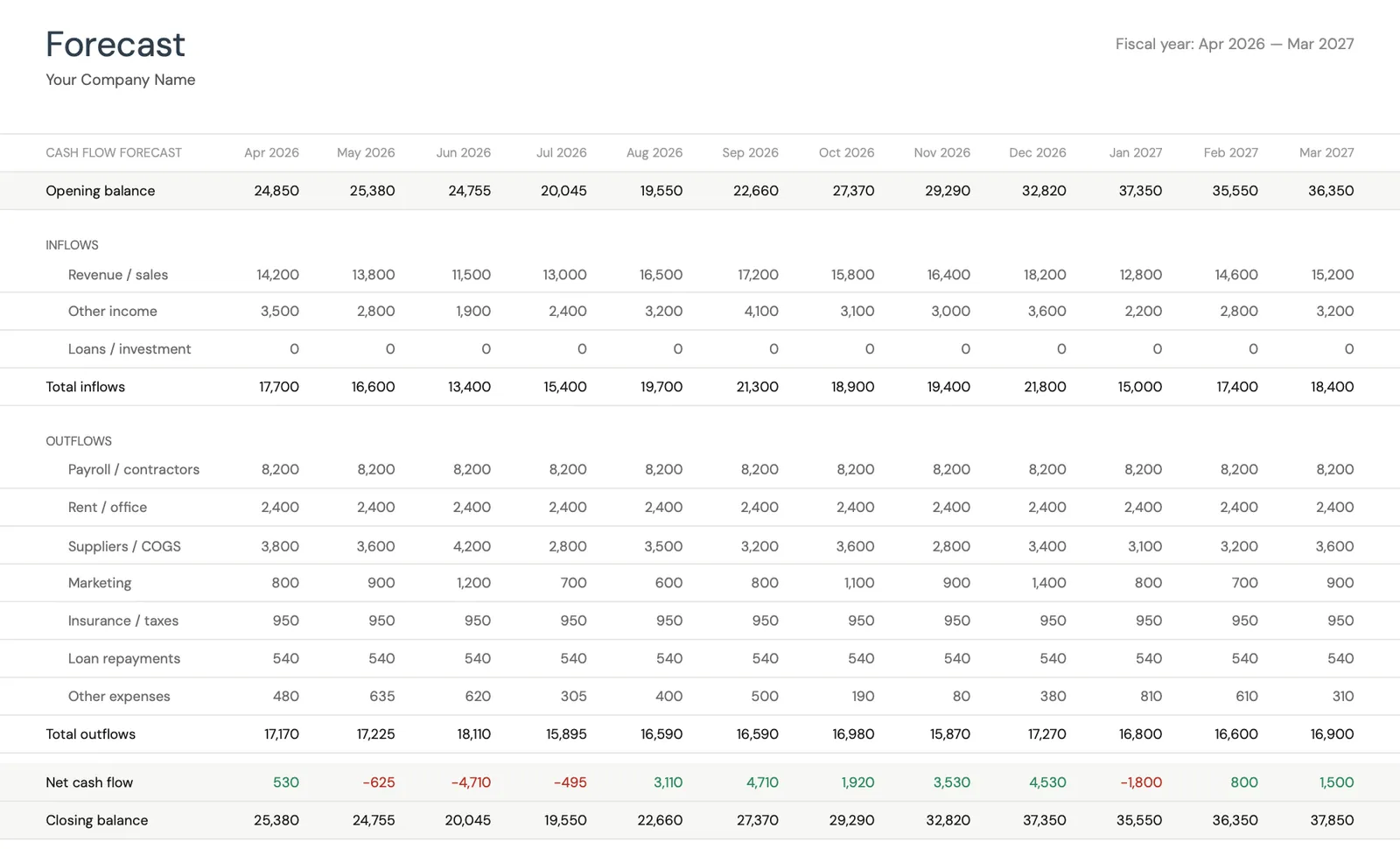
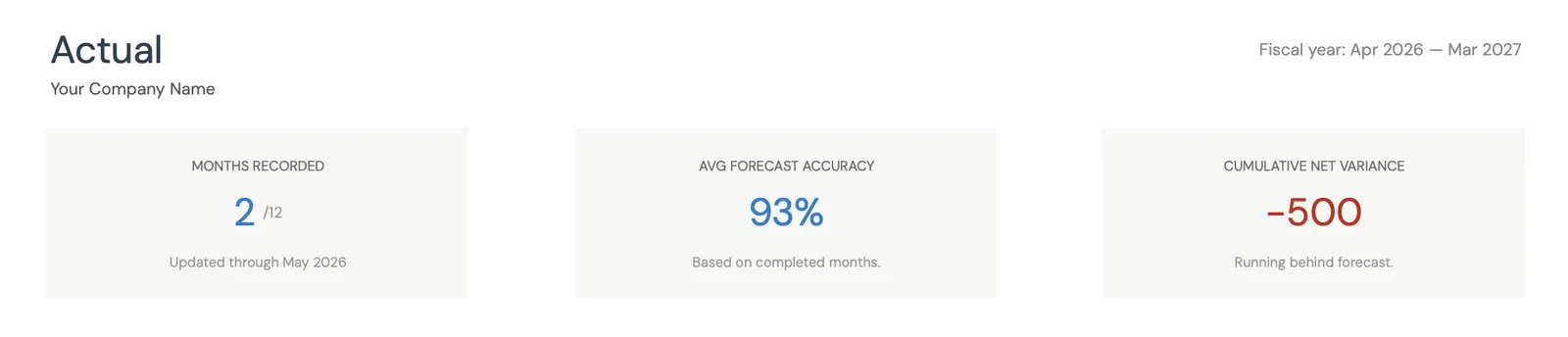
Monthly cash flow overview with KPIs and charts
Track actual cash flow against your forecast
Project cash flow 12 months ahead
Key performance indicators for your cash flow
Model different scenarios for your business
Customize categories for your business type
What You Get
Cash Flow Tools Designed for Photography Businesses
Booking-based revenue tracking
Map each booked event's deposit and final payment to the months they arrive. See your confirmed revenue for months ahead based on your current booking calendar - a significant advantage for planning.
Seasonal cash flow planning
The 12-month view clearly shows the peak-to-off-season transition. Calculate how much monthly reserve contribution is needed during peak months to fund off-season operating costs.
Booked sessions vs forecast dashboard
Compare projected bookings and revenue against actuals. Track your booking conversion rate and average booking value to refine future seasonal projections.
12-month booking season cash outlook
See your projected cash position through full seasonal cycles. Plan equipment purchases for cash-rich months and identify when off-season cash reserves will be tested.
Common Questions
Cash Flow for Photography Businesses - FAQ
What profit margin is typical for photography businesses?
Net margins for photography businesses typically range from 25-45% for solo photographers and 15-30% for studios with employees. These figures include owner compensation. The key driver is revenue per session versus time invested (shooting + editing + administration). Photographers who can increase their average booking value without proportionally increasing time see the biggest margin improvements.
How do I handle deposits in my cash flow forecast?
Enter deposits as revenue in the month received - for cash flow purposes, this is when the cash arrives. Enter the final payment in the month you expect to collect it (event date or delivery date). If you collect a $2,000 deposit in January for a June wedding with a $3,000 balance due, record $2,000 in January and $3,000 in June.
How much should I budget for equipment replacement?
A common approach is reserving 10-15% of annual revenue for equipment. Camera bodies typically need replacing every 3-5 years ($3,000-$6,500), lenses last longer (7-10+ years), and computers need updating every 3-4 years. Setting aside $500-$1,000/month into an equipment fund prevents major purchases from creating cash flow crises.
How do I forecast the off-season cash flow gap?
Calculate your minimum monthly operating costs (insurance, software, marketing, self-employment tax deposits). Compare against expected off-season revenue. The difference, multiplied by the number of slow months, tells you how much reserve you need. If your monthly minimum is $3,000 and off-season revenue averages $1,500, you need $1,500 x 4-5 slow months = $6,000-$7,500 in reserves.
Can this template work for commercial photography?
Yes. Commercial photography has different seasonal patterns (tied to marketing budgets rather than wedding season) and different revenue structures (day rates, usage licensing). Adjust revenue categories for day rates, licensing fees, and post-production charges. The cash flow dynamics are similar - payment timing and equipment costs remain the key forecasting challenges.
Can't find the answer you're looking for? Contact our team
Forecast cash flow for your photography businesse
One-time purchase. No subscription. Your financial data stays in your Google Drive.