Cash Flow Forecast
Cash Flow Forecast Template for Law Firms
Forecast billable revenue, track retainer income, manage accounts receivable timing, and plan for partner distributions - all in a Google Sheets template built for cash flow management.
In Depth
Billing, Collections, and the Cash Reality of Legal Practice
Law firms have a three-stage revenue pipeline that is unlike most businesses: work in progress, billed but uncollected, and finally cash received. At any given time, a firm might have substantial value sitting in each stage. An attorney who worked 40 hours last week created WIP. Last month's invoices sitting in clients' accounts payable are billed but uncollected. Only the checks and transfers that actually arrived represent real cash. The distance between stage one and stage three can be 90 to 120 days or more.
The realization rate - the percentage of worked hours that ultimately convert to collected cash - is a humbling metric for many firms. An attorney might work 2,000 billable hours in a year, but between time written off during billing review, client fee disputes, and accounts that simply never pay, the firm might collect on 1,500 hours worth of work. That 25% gap between effort and collection has real cash flow consequences that compound across multiple attorneys.
Partner compensation structures add a layer of complexity to law firm cash flow that other professional services firms rarely face. Monthly partner draws are essentially fixed cash outflows based on anticipated profits. When collections slow - during summer months, around holidays, or when a major client delays payment - draws continue at the same rate while incoming cash declines. The gap has to come from somewhere, and it usually comes from the firm's operating reserves.
Practice area mix also shapes the cash flow profile. A litigation practice with contingency cases might go years investing attorney time with no revenue from those matters, while hourly corporate work generates steadier billings. A real estate practice sees activity cluster around deal closings. A family law practice often deals with emotionally charged clients who may dispute or delay payment. Each practice area has its own cash flow personality, and diversified firms experience these patterns blended together.
The Challenge
Cash Flow Challenges for Law Firms
Law firms face a persistent gap between earning revenue (billing hours) and collecting it (receiving payment). Time is the product, accounts receivable is the bottleneck, and partner draws add another layer of cash flow complexity.
Accounts receivable typically run 60-120+ days
Law firms are notorious for slow collections. Work performed in January might be billed in February and collected in April - or later. Many firms carry 3-4 months of revenue in outstanding receivables. A firm billing $200,000/month might have $600,000-$800,000 in uncollected fees at any given time. Realization rates (percentage of billed time actually collected) average 85-92% for well-managed firms, meaning not all billed time converts to cash.
Work in progress ties up unbilled revenue
Before time is even billed, it sits as work in progress (WIP). Attorneys who do not bill promptly can accumulate weeks or months of unbilled time. WIP represents completed work that has not yet started the collection clock. A firm with $150,000 in WIP and $600,000 in AR has $750,000 in earned-but-uncollected revenue. Reducing WIP-to-billing time is often the fastest way to improve law firm cash flow.
Matter-based billing creates lumpy revenue
Litigation firms may work hundreds of hours on a case billed monthly but also have contingency cases that pay nothing until settlement. Transactional practices see revenue cluster around deal closings. A real estate practice might close three deals in one week and none for the next three weeks. This lumpiness makes monthly forecasting challenging without matter-level visibility.
Partner distributions and compensation reduce operating cash
In many firms, partners take monthly draws against anticipated profits. These draws represent a significant cash outflow that must be funded from collections. If collections slow but partner draws continue at the same rate, the firm's operating cash depletes quickly. The tension between partner compensation expectations and actual firm cash flow is one of the most common sources of law firm financial stress.
Start forecasting your cash flow
Forecasting Guide
How to Forecast Cash Flow for Your Law Firm
Law firm cash flow forecasting starts with billable hour projections and realistic collection assumptions. Here is how to structure it using the Cash Flow Forecast template.
Revenue Categories
- Hourly billing collections (by practice area or attorney)
- Retainer replenishments
- Flat fee matter payments
- Contingency fee settlements
- Consulting and advisory fees
Expense Categories
- Attorney compensation (salaries and partner draws)
- Support staff wages (paralegals, assistants, office manager)
- Payroll taxes and benefits
- Office rent and utilities
- Legal research tools (Westlaw, LexisNexis)
- Practice management and billing software
- Malpractice insurance
- Marketing and business development
- Continuing legal education
- Court filing fees and litigation costs (if not passed through)
- Client trust account management
- Office supplies and equipment
Cash Flow Timing
Law firm cash flow is driven by the WIP-to-billing-to-collection pipeline. Track three numbers: WIP aging, billing realization, and collection realization. If attorneys bill 90% of their time and the firm collects 90% of billings, effective realization is 81%. Apply this rate to projected billable hours to forecast actual cash collections - then add your average collection lag (often 60-90 days). This gives a realistic cash inflow projection.
See It In Action
What the template looks like
Browse through the template to see dashboards, forecasting, actuals tracking, and scenario planning.
- Visual cash flow dashboard
- Forecast vs actuals comparison
- Scenario planning tools
- Customizable categories
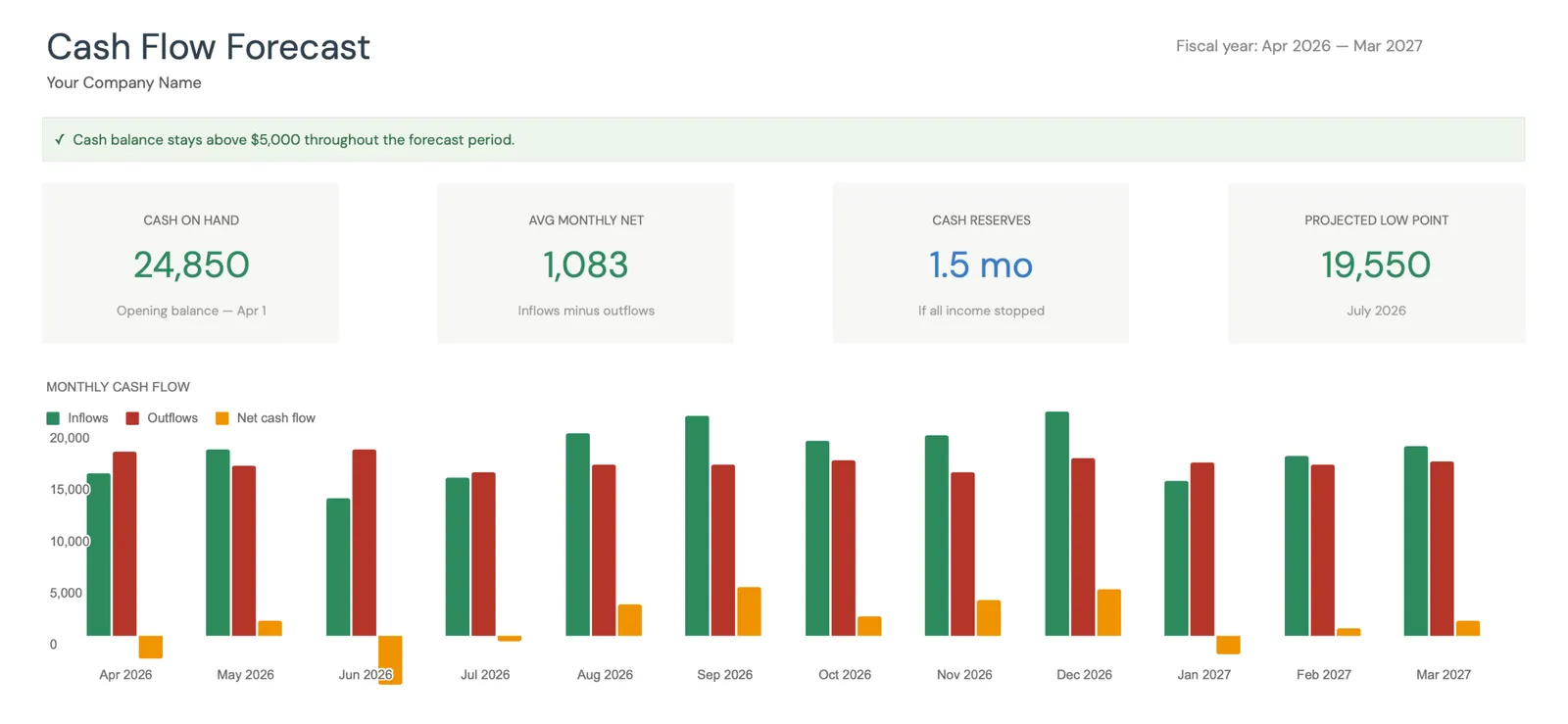
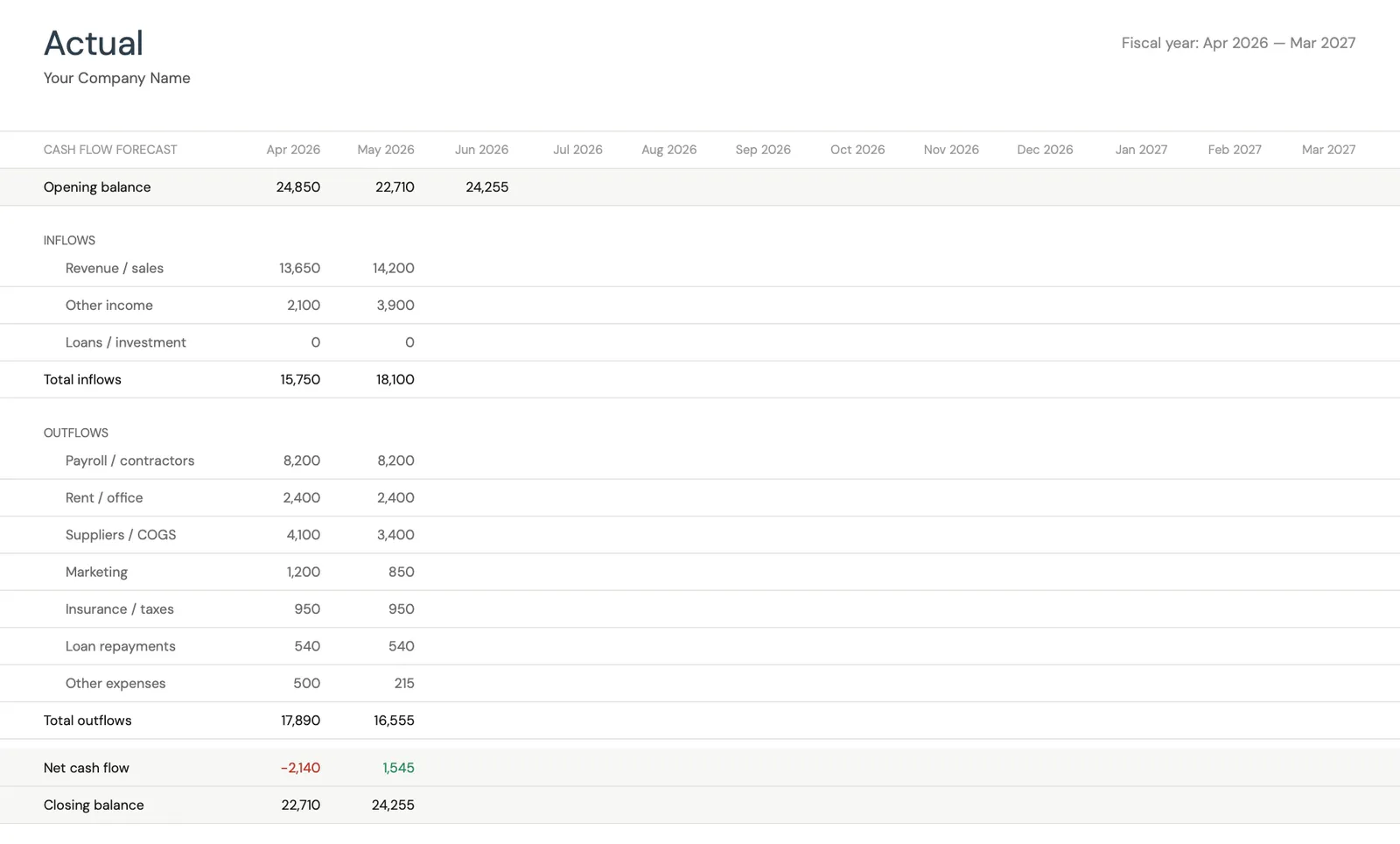
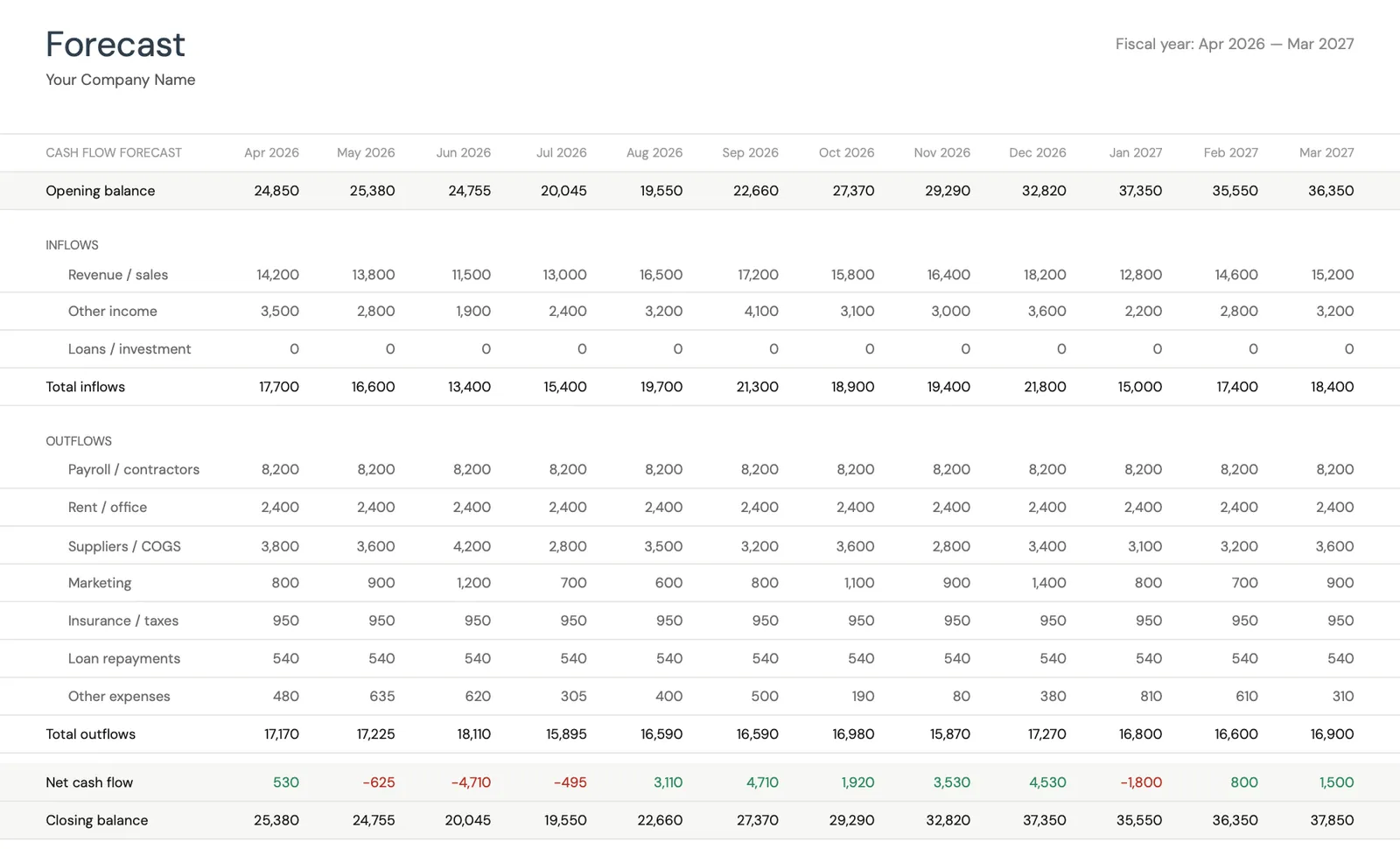
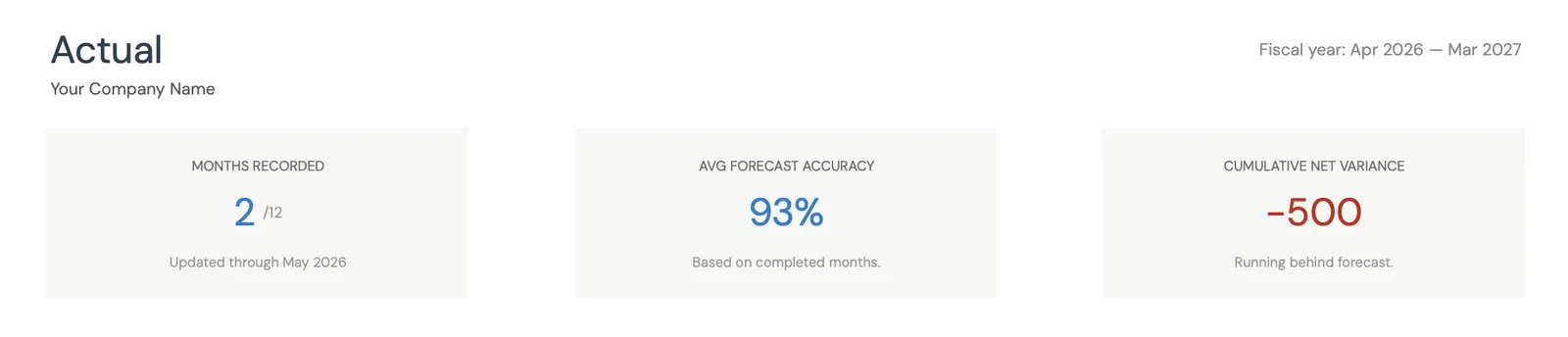
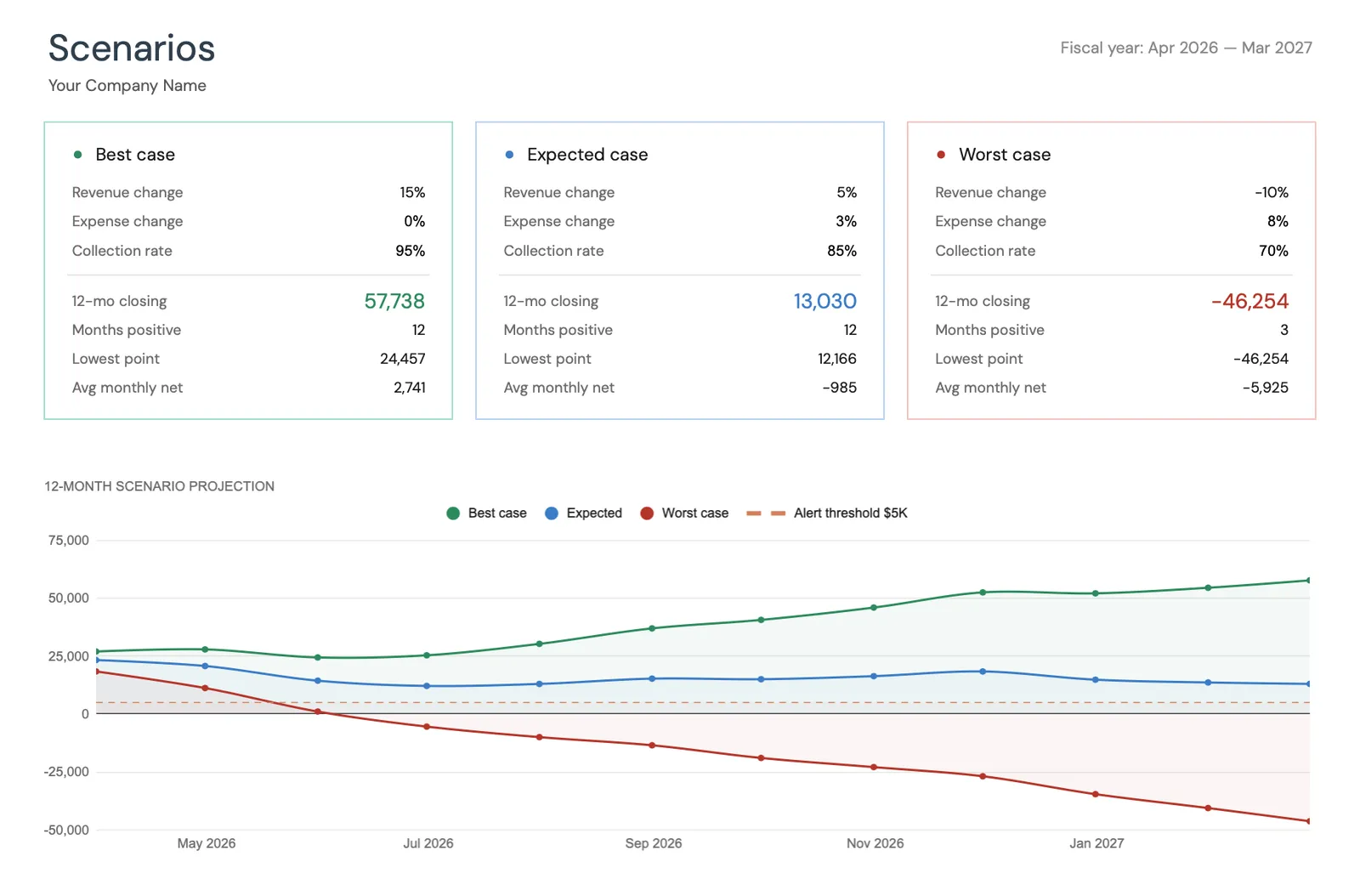
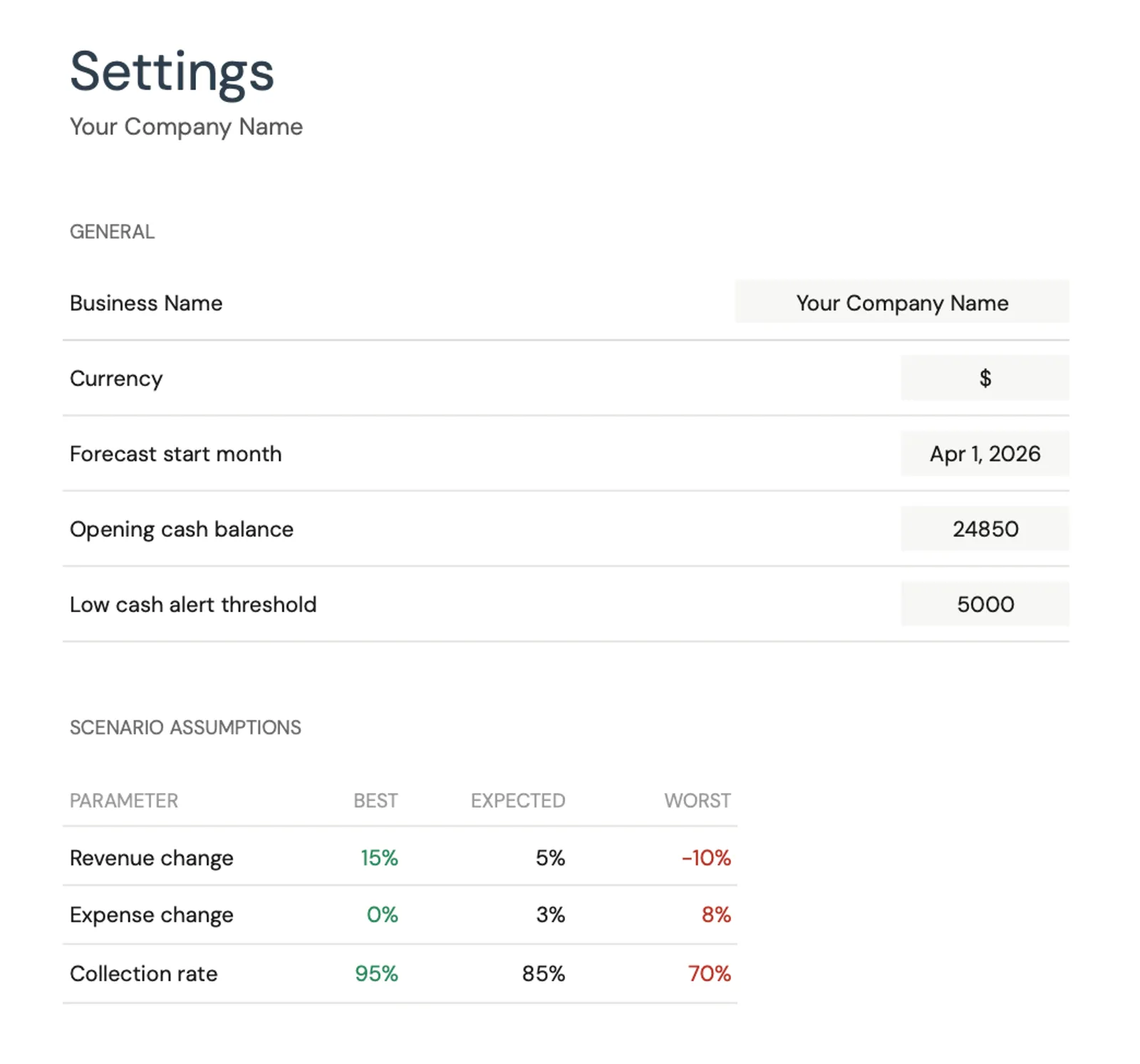
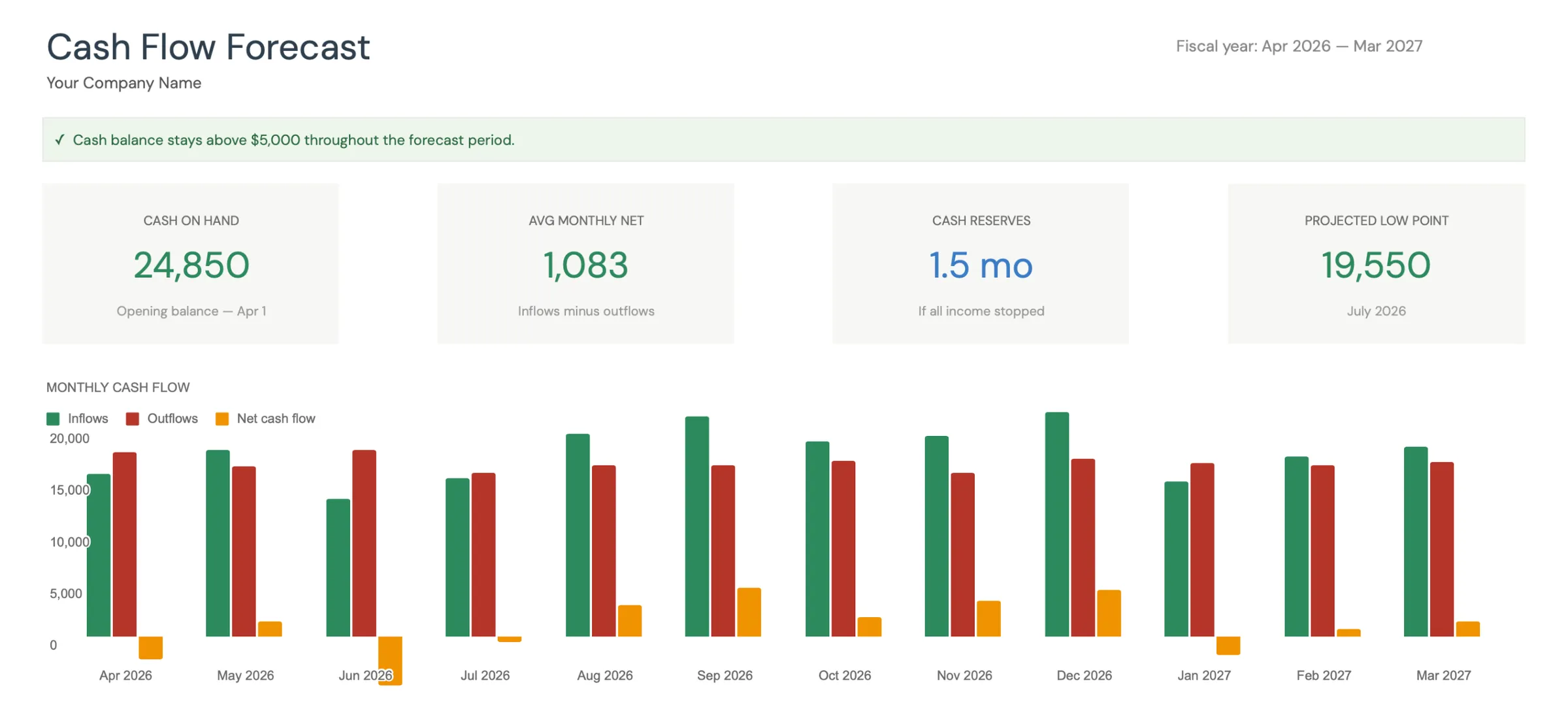
Monthly cash flow overview with KPIs and charts
Track actual cash flow against your forecast
Project cash flow 12 months ahead
Key performance indicators for your cash flow
Model different scenarios for your business
Customize categories for your business type
What You Get
What Law Firms Get With This Cash Flow Template
Collections-based revenue tracking
Track actual cash collections rather than billings. For law firms, the distinction matters enormously. A firm can have record billings and still face a cash crunch if collections lag. The template focuses on when cash arrives.
Accounts receivable aging visibility
Monitor how AR aging affects your cash forecast. If AR over 90 days is growing, future cash projections need to reflect lower collection rates. Early identification of collection problems prevents cash surprises.
Realization rate vs your assumptions
Compare projected collections against actuals to refine your realization rate assumptions. Most firms overestimate collections. Tracking the gap between projections and reality builds more accurate future forecasts.
12-month matter pipeline cash forecast
See your projected cash position based on current matters, pipeline, and historical collection patterns. Plan partner distributions, associate bonuses, and capital expenditures around months with projected cash surpluses.
Common Questions
Cash Flow for Law Firms - FAQ
What profit margin is typical for law firms?
Law firm profitability is usually measured as profit per equity partner rather than traditional margins. Solo practitioners typically take home 40-60% of collections after expenses. Small firms (2-10 attorneys) often achieve 30-45% net margins before partner distributions. The key metric is revenue per lawyer minus their fully loaded cost (compensation + allocated overhead).
How do I improve cash collections at my firm?
The forecast reveals collection patterns that suggest interventions. Common approaches include billing promptly (weekly or biweekly rather than monthly), requiring retainers for new matters, offering payment plans for larger invoices, and following up systematically on overdue accounts. Tracking days-to-collection by client identifies slow payers early.
How do I handle contingency fee cases in the forecast?
Contingency cases are difficult to forecast because the amount and timing are uncertain. One approach: do not include contingency revenue in the base forecast until a settlement is imminent. Instead, track the costs of carrying contingency cases (attorney time, litigation expenses) as pure expense. When settlement is likely, add a probability-weighted revenue estimate.
How should partner draws be reflected in the forecast?
Include partner draws as a regular monthly expense at their expected draw rate. If three partners each draw $15,000/month, that is $45,000 in fixed monthly cash outflow. The forecast then shows whether collections support current draw levels or whether adjustments are needed during slow collection months.
What about trust account funds - do they affect cash flow?
Trust (IOLTA) funds belong to clients and cannot be used for firm operations. They should not appear in your operating cash flow forecast. However, the timing of trust-to-operating transfers (when retainer funds are earned and moved to the operating account) does affect cash flow. Track when retainer drawdowns will be transferred as earned revenue.
Can't find the answer you're looking for? Contact our team
Forecast cash flow for your law firm
One-time purchase. No subscription. Your financial data stays in your Google Drive.