Cash Flow Forecast
Cash Flow Forecast Template for Dental / Medical Practices
Forecast patient revenue, track insurance reimbursement timing, manage staff and supply costs, and plan for equipment purchases - all in a Google Sheets template built for cash flow management.
In Depth
How Dental and Medical Practices Navigate Cash Flow
Healthcare practices operate in a financial environment shaped by a third party that most businesses never deal with - insurance companies. When a dentist completes a crown or a physician performs a procedure, the revenue is not truly earned until the insurance company processes the claim and sends payment. That processing time - 30 to 90 days depending on the payer - means practices are perpetually working with a significant portion of their revenue locked in accounts receivable.
The collection rate - what a practice actually receives versus what it bills - is a metric that surprises many new practice owners. Between contractual adjustments from insurance agreements, denied claims, patient non-payment, and processing write-offs, many practices collect 55-70 cents for every dollar billed. Understanding this ratio is essential for realistic cash flow planning because it means a practice needs to schedule and bill significantly more than its target revenue to actually collect that amount.
The year-end deductible cycle creates a distinctive revenue pattern that experienced practitioners know well. As patients exhaust their annual insurance benefits in the fall, there is often a surge in elective and previously postponed procedures during October and November. Then January arrives with reset deductibles, and patients become more reluctant to proceed with treatment when they face the full deductible out of pocket. This annual swing can represent a 15-25% revenue difference between the strongest and weakest months.
Equipment decisions in healthcare practices carry both clinical and financial weight. A new digital scanner or imaging system might cost $100,000 or more, financed over five to seven years. The monthly payment becomes a fixed obligation, but the equipment should also generate new revenue through expanded service offerings. Some practice owners find it useful to track revenue attributable to specific equipment purchases to understand whether the investment is paying for itself over time.
The Challenge
Cash Flow Challenges for Dental and Medical Practices
Medical and dental practices face a unique cash flow challenge: much of their revenue comes through insurance companies with unpredictable payment timing and discounted rates. The gap between providing care and collecting payment can stretch for months.
Insurance reimbursements create 30-90 day payment delays
A dental practice might perform a $1,200 crown procedure today but not receive payment for 30-90 days. Insurance companies pay on their schedule, not yours. Claims get denied, require resubmission, or are paid at lower-than-expected rates. For practices where 60-80% of revenue comes through insurance, this means the majority of earned revenue sits in accounts receivable at any given time. A practice billing $80,000/month might have $120,000-$200,000 in outstanding claims.
Write-offs and adjustments reduce effective revenue
Insurance contracts require accepting negotiated rates that are often 20-40% below the practice's standard fees. A $200 procedure might reimburse at $130. These contractual adjustments mean the practice's actual collected revenue is significantly less than billed revenue. Add in claim denials, patient bad debt, and collections costs, and many practices collect only 55-70% of their total billed charges.
Staff costs are high and relatively inflexible
Dental hygienists, assistants, office staff, and associate providers represent 25-35% of revenue. These are skilled positions that are difficult to scale up or down with patient volume. A slow month still requires full staffing because appointments are booked weeks ahead. Benefits, continuing education requirements, and competitive labor markets keep these costs rising 3-5% annually.
Equipment and technology require major capital investment
Dental chairs, digital X-ray systems, CBCT scanners, and CAD/CAM equipment cost $50,000-$250,000+ per unit. These purchases are essential for competitive care delivery but represent massive cash outlays - typically financed over 5-7 years. Monthly equipment loan payments of $3,000-$10,000 are common for established practices. Timing these purchases around cash flow is critical.
Start forecasting your cash flow
Forecasting Guide
How to Forecast Cash Flow for Your Dental or Medical Practice
Practice cash flow forecasting requires modeling the gap between providing care and collecting payment. Here is how to structure it using the Cash Flow Forecast template.
Revenue Categories
- Insurance reimbursements (by payer category)
- Patient co-pays and deductibles (collected at time of service)
- Fee-for-service / cash-pay patients
- Cosmetic and elective procedures
- Hygiene and preventive services
- Product sales (dental supplies, skincare)
Expense Categories
- Provider compensation (associate salaries, hygienist wages)
- Support staff wages (front desk, assistants)
- Payroll taxes and benefits
- Dental/medical supplies and materials
- Lab fees (crowns, dentures, prosthetics)
- Rent and facility costs
- Equipment loans and leases
- Malpractice and business insurance
- Technology (practice management software, imaging)
- Continuing education and licensing
- Marketing and patient acquisition
- Billing and collections service fees
Cash Flow Timing
Practice cash flow is heavily influenced by insurance payer mix and collection efficiency. Map your average days to collection by payer - commercial insurance might average 35 days while Medicaid averages 60+ days. Patient co-pays collected at time of service are your most reliable same-day cash. Many practices see a revenue dip in December and January as patients have met deductibles late in the year and are reluctant to start new treatment in January before new deductibles reset.
See It In Action
What the template looks like
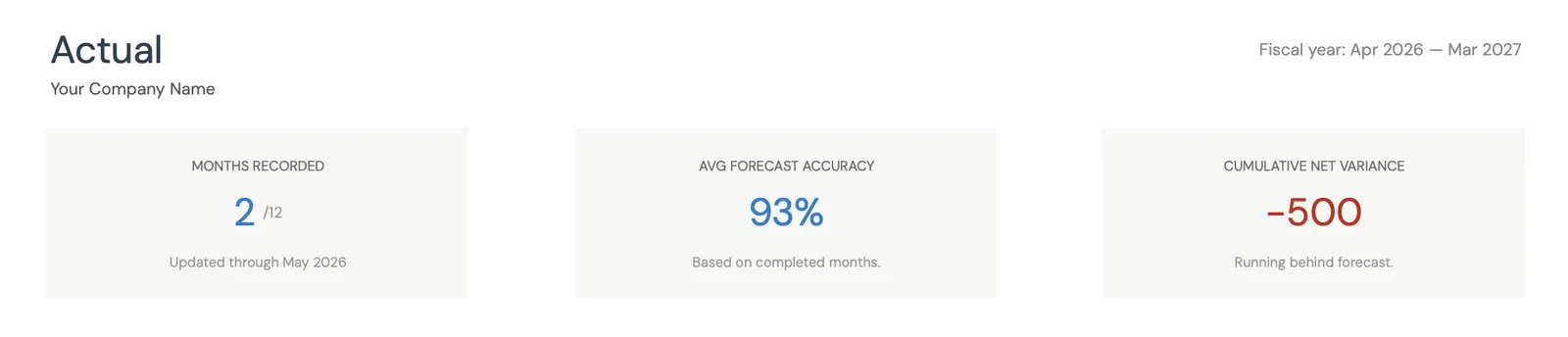
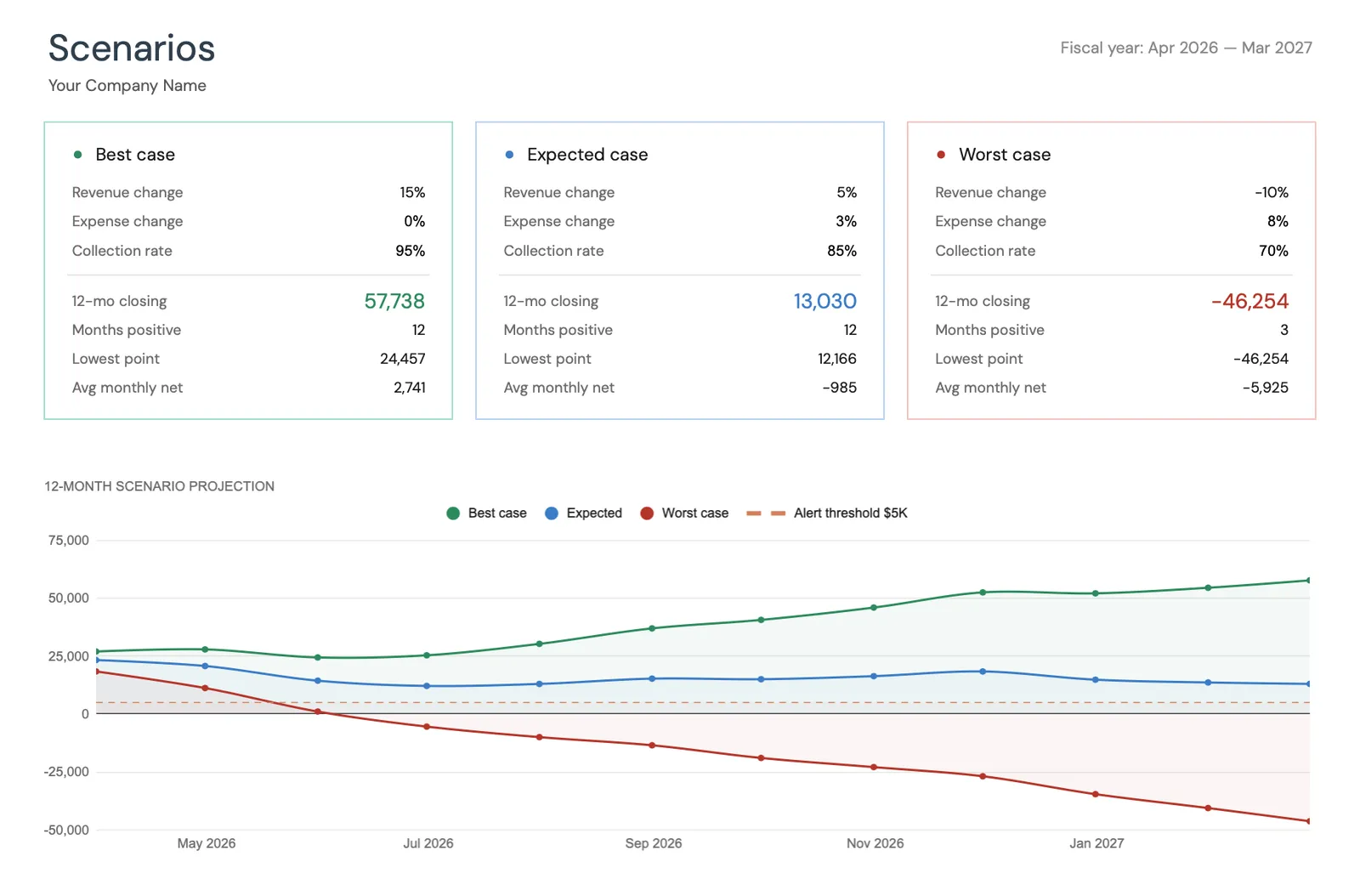
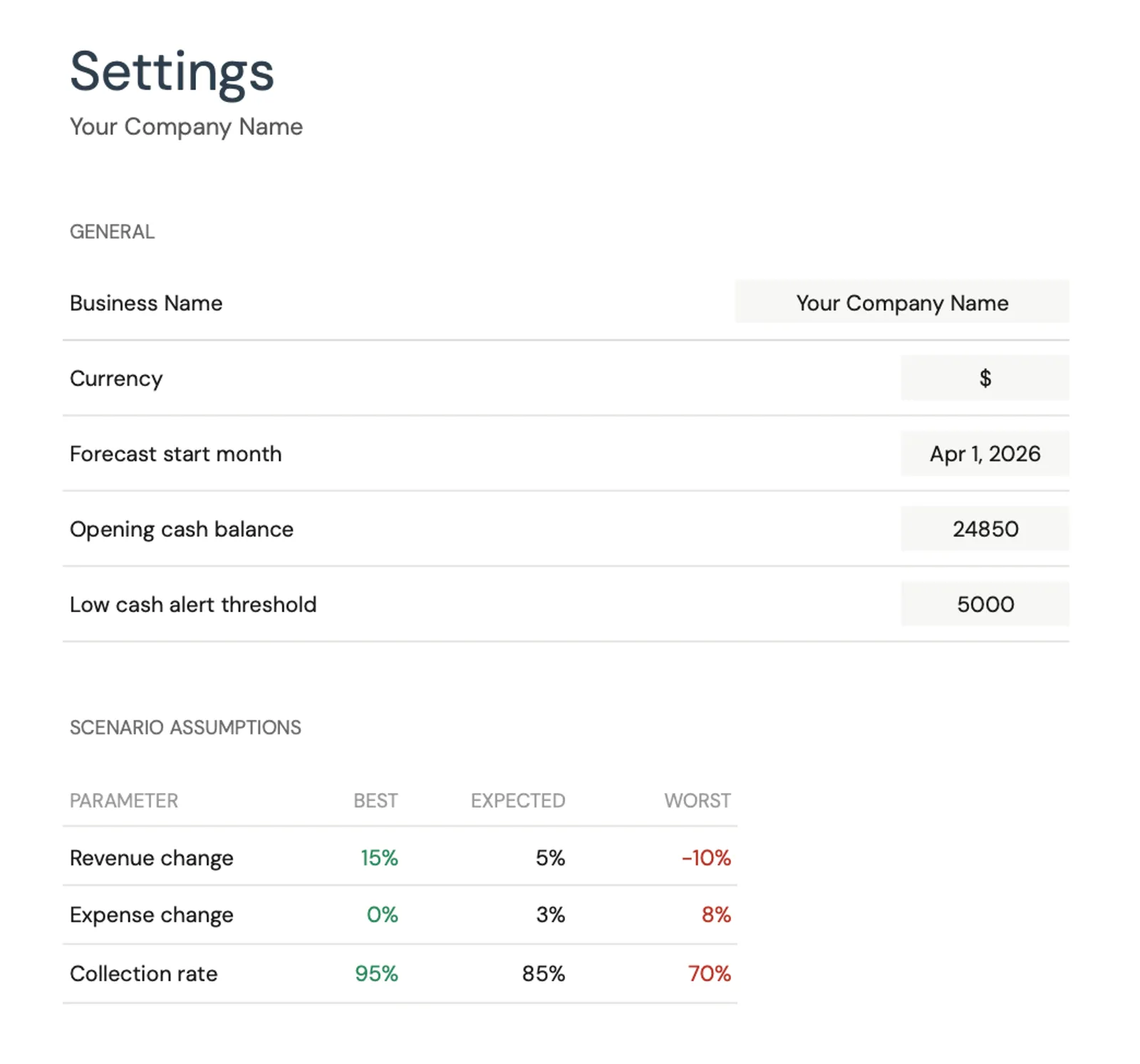
Browse through the template to see dashboards, forecasting, actuals tracking, and scenario planning.
- Visual cash flow dashboard
- Forecast vs actuals comparison
- Scenario planning tools
- Customizable categories
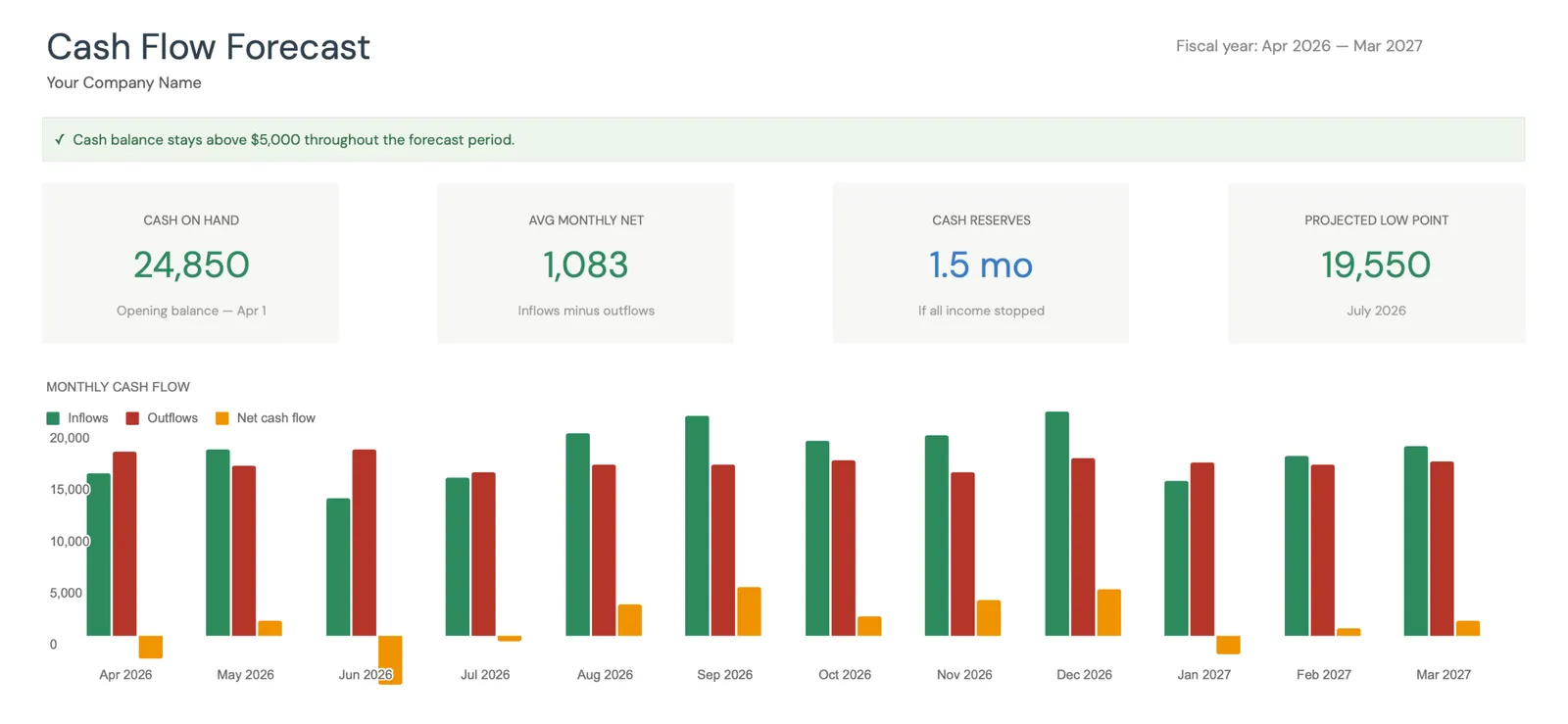
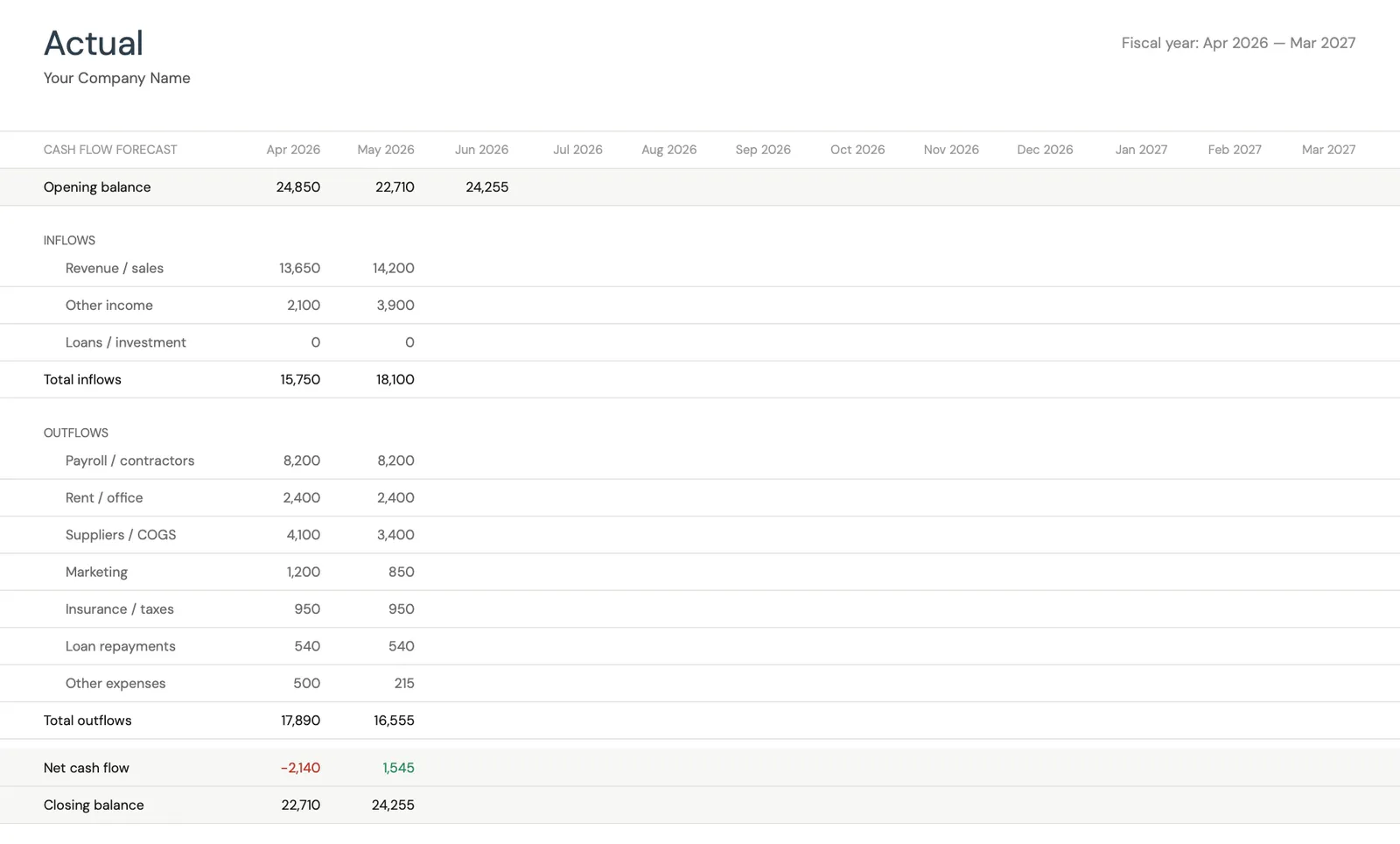
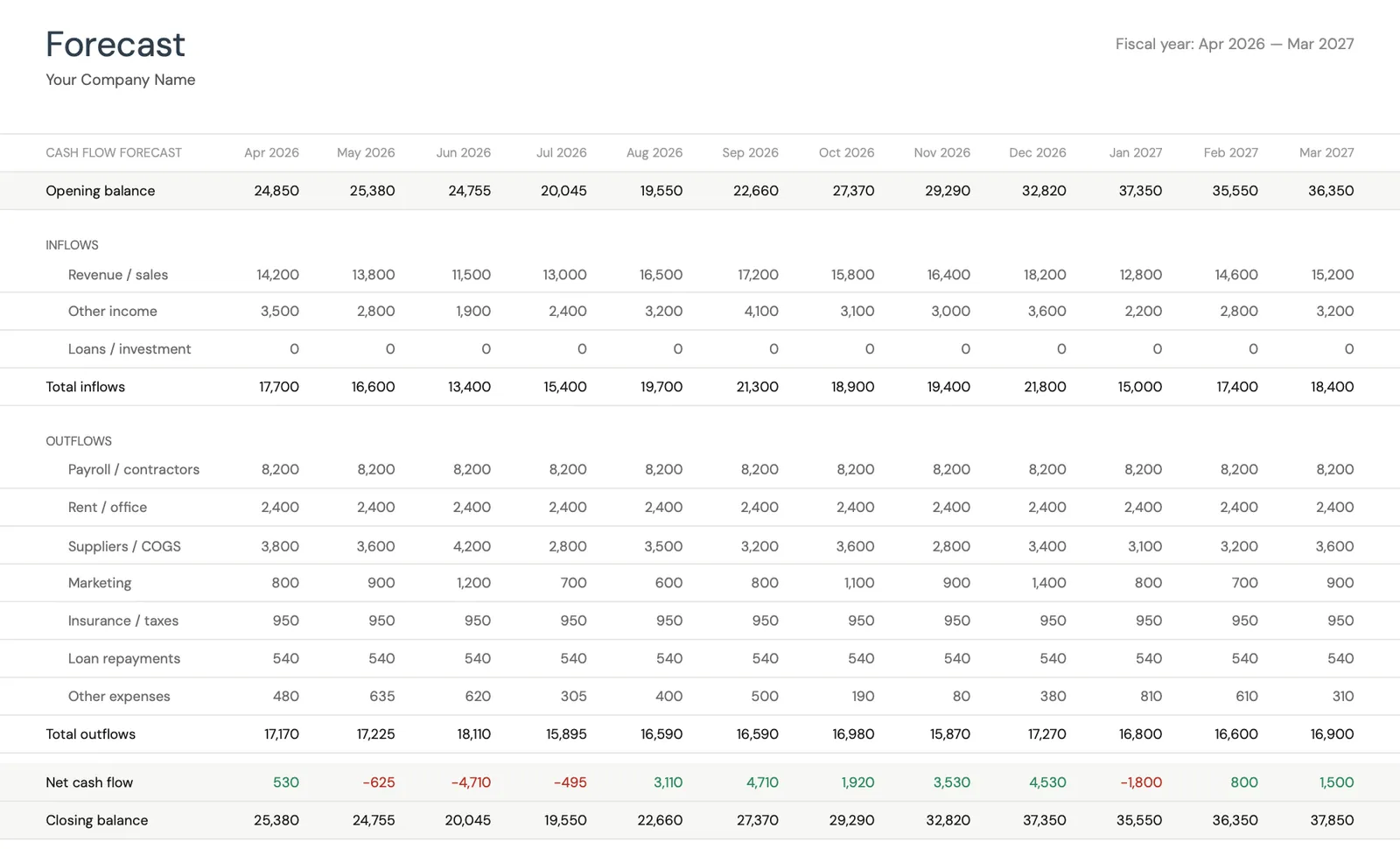
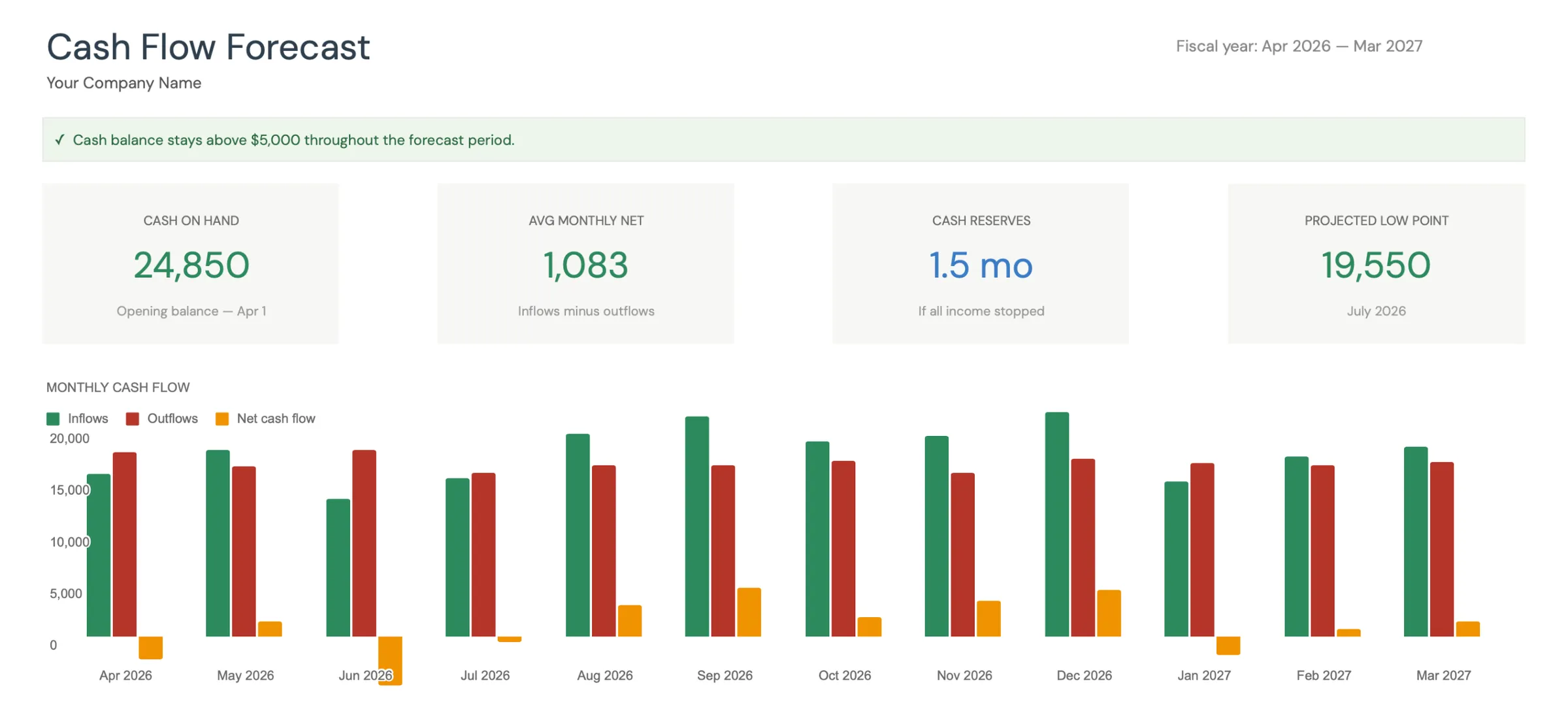
Monthly cash flow overview with KPIs and charts
Track actual cash flow against your forecast
Project cash flow 12 months ahead
Key performance indicators for your cash flow
Model different scenarios for your business
Customize categories for your business type
What You Get
How This Template Fits Dental and Medical Practices
Revenue by payer type
Track revenue from insurance, patient payments, and elective procedures separately. Each has different collection timing, reimbursement rates, and predictability. This breakdown reveals your true revenue mix and collection efficiency.
Collections tracking
Compare billed charges to actual collections by month. Knowing your collection rate (typically 55-70% of gross charges) is essential for accurate forecasting. If collections drop, the forecast immediately reflects the cash flow impact.
Collection rate tracking against plan
Compare projected collections and expenses against actuals. Practices with consistent scheduling can forecast fairly accurately once they know their collection rate and average days to payment by payer.
Year-ahead practice growth planning view
Plan major equipment purchases, associate hires, and practice expansion around your projected cash position. The 12-month view helps time capital investments for months with stronger cash flow and avoid committing during seasonal dips.
Common Questions
Cash Flow for Dental / Medical Practices - FAQ
What profit margin is typical for dental practices?
Solo dental practices typically achieve net margins (after owner compensation) of 30-40% of collections. Group practices and those with associates usually see 15-25% net margins after all provider compensation. Specialty practices (orthodontics, oral surgery) often achieve higher margins due to higher procedure values. These figures assume the owner is paying themselves a market-rate salary.
How do I handle insurance payment delays in the forecast?
Calculate your average days to collection by payer. If your payer mix is 40% Delta Dental (30-day average), 30% Cigna (40-day average), and 30% patient pay (same day), your blended collection period is about 22 days. Forecast revenue not when services are provided but when payment is expected based on these averages.
How do I plan for major equipment purchases?
Most practices finance equipment over 5-7 years. Include the monthly loan payment in your expense forecast and time the purchase for a month with strong cash reserves. Also factor in the revenue the new equipment will generate - a new CBCT scanner might add $5,000/month in diagnostic revenue against a $2,500/month loan payment.
What about the year-end deductible reset effect?
Many practices see a surge in procedures in October-November as patients rush to use remaining insurance benefits before the annual reset. January often dips as patients face new deductibles and are less willing to start treatment. Forecast 15-25% higher revenue in Q4 and 10-15% lower in early Q1 to account for this pattern.
Can this template handle a multi-provider practice?
Yes. Track revenue by provider if needed for compensation calculations, and consolidate at the practice level for cash flow. The template handles total practice cash flow regardless of how many providers contribute to revenue. For practices considering adding an associate, the forecast helps model whether current revenue and growth justify the additional compensation expense.
Can't find the answer you're looking for? Contact our team
Forecast cash flow for your dental / medical practice
One-time purchase. No subscription. Your financial data stays in your Google Drive.