New Hampshire
Modelo de Planejador Fiscal para New Hampshire
Planeje seus impostos federais em New Hampshire no Google Sheets. New Hampshire não tributa renda do trabalho, embora juros e dividendos tenham sido tributados até o ano fiscal de 2024.
In Depth
New Hampshire Após o Imposto sobre Juros e Dividendos
New Hampshire nunca tributou salários ou vencimentos no nível estadual. Durante anos, porém, o estado cobrou um imposto sobre renda de juros e dividendos, o Imposto sobre Juros e Dividendos. Esse imposto foi gradualmente reduzido e agora está completamente revogado, o que faz de New Hampshire um verdadeiro estado sem imposto de renda em todos os tipos de renda. O imposto terminou com o ano fiscal de 2024, então alguns residentes ainda podem se lembrar de apresentar a declaração do imposto I&D.
Sem imposto de renda, New Hampshire depende fortemente de impostos sobre propriedades para receitas do governo local. As alíquotas de impostos sobre propriedades em New Hampshire estão entre as mais altas do país, impulsionadas em parte pelo fato de que não há imposto sobre vendas geral ou imposto de renda para compartilhar o fardo da receita. Municípios financiam escolas, estradas e serviços principalmente por meio de avaliações de propriedades. Isso significa que a linha de imposto sobre propriedades é frequentemente a maior despesa tributária para proprietários de casas em New Hampshire.
O estado "Live Free or Die" também não tem imposto sobre vendas geral, embora tribute refeições, hospedagem (estadias em hotéis) e certos outros itens. Para fins de impostos federais, residentes de New Hampshire só podem deduzir impostos sobre propriedades (até o limite SALT), pois não há imposto de renda estadual para deduzir. Isso torna o limite SALT ligeiramente menos restritivo do que em estados onde tanto impostos de renda quanto sobre propriedades competem pela mesma dedução limitada.
New Hampshire
Planejamento Tributário em New Hampshire
New Hampshire não tributa renda do trabalho (salários). O estado previamente tributava renda de juros e dividendos, mas esse imposto foi completamente revogado. O planejamento tributário federal permanece o foco principal.
Sem Imposto de Renda Estadual
New Hampshire não cobra imposto de renda estadual sobre renda do trabalho. Isso significa que os residentes precisam planejar apenas impostos federais sobre salários. Porém, outros impostos ainda se aplicam.
Impostos Federais Ainda Aplicam
Mesmo sem imposto de renda estadual, residentes de New Hampshire devem impostos federais. O Planejador Fiscal Anual ajuda a acompanhar faixas federais, deduções e créditos para manter sua situação tributária clara.
Imposto sobre Juros e Dividendos Revogado
New Hampshire anteriormente tributava renda de juros e dividendos, mas esse imposto foi completamente eliminado. Os residentes agora não pagam imposto de renda estadual em nenhum tipo de renda.
Considerações sobre Renda de Aposentadoria
A falta de imposto de renda estadual em New Hampshire pode ser favorável para renda de aposentadoria, incluindo Social Security, pensões e distribuições 401(k). O imposto federal sobre renda de aposentadoria ainda se aplica e merece ser acompanhado.
Obter o Planejador Anual de Impostos
Primeiros Passos
Começando com o Planejamento Tributário de New Hampshire
Insira renda sem complicações de impostos estaduais
Adicione todas as fontes de renda - salários, trabalho autônomo, juros, dividendos e investimentos. Como o Imposto sobre Juros e Dividendos de New Hampshire foi completamente revogado em 2025, nenhuma dessa renda enfrenta tributação estadual. O modelo se concentra inteiramente em suas faixas e alíquotas federais, que são o único imposto de renda que residentes de New Hampshire devem.
Acompanhe cuidadosamente o IPTU para a dedução SALT
Os impostos sobre propriedades de New Hampshire estão entre os mais altos do país, e como não há imposto de renda ou imposto sobre vendas geral, o imposto sobre propriedades é geralmente o único item de dedução SALT disponível. Insira seu IPTU por município - as alíquotas variam amplamente entre lugares como Portsmouth, Concord e cidades menores. Em algumas comunidades, o imposto sobre propriedades sozinho pode atingir o limite SALT federal.
Configure pagamentos estimados para trabalho autônomo e renda de investimento
Com o imposto I&D eliminado, os únicos pagamentos estimados que residentes de New Hampshire precisam fazer são federais. Para freelancers, proprietários de pequenas empresas e aposentados com renda de investimento, o rastreador trimestral ajuda a gerenciar prazos do IRS. Não há pagamento de imposto estimado estadual para se preocupar.
Compare sua situação tributária antes e depois da revogação I&D
Se você pagava anteriormente o Imposto sobre Juros e Dividendos, sua situação tributária geral ficou mais simples. O modelo agora mostra uma obrigação puramente federal. Para residentes com renda significativa de juros ou dividendos, a revogação significa que esses valores são tributados apenas uma vez, no nível federal, em vez de enfrentar tanto o imposto federal quanto o antigo Imposto sobre Juros e Dividendos estadual [1].
Ver em Ação
Como é o planejador de impostos
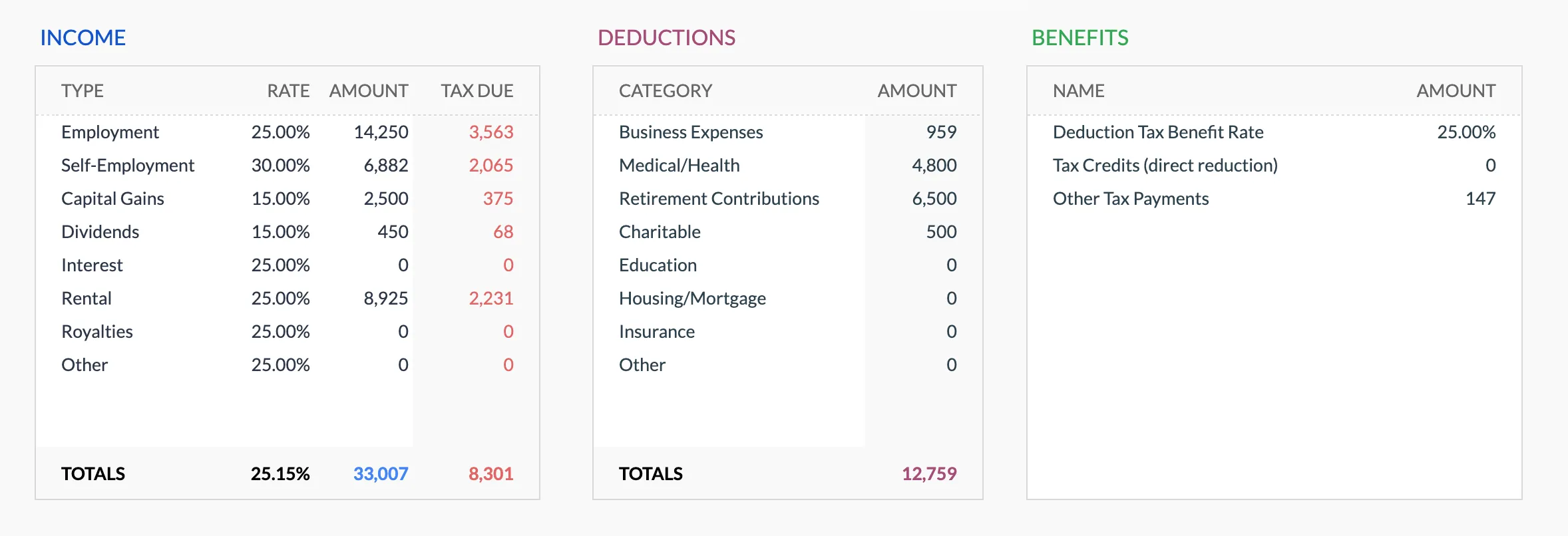
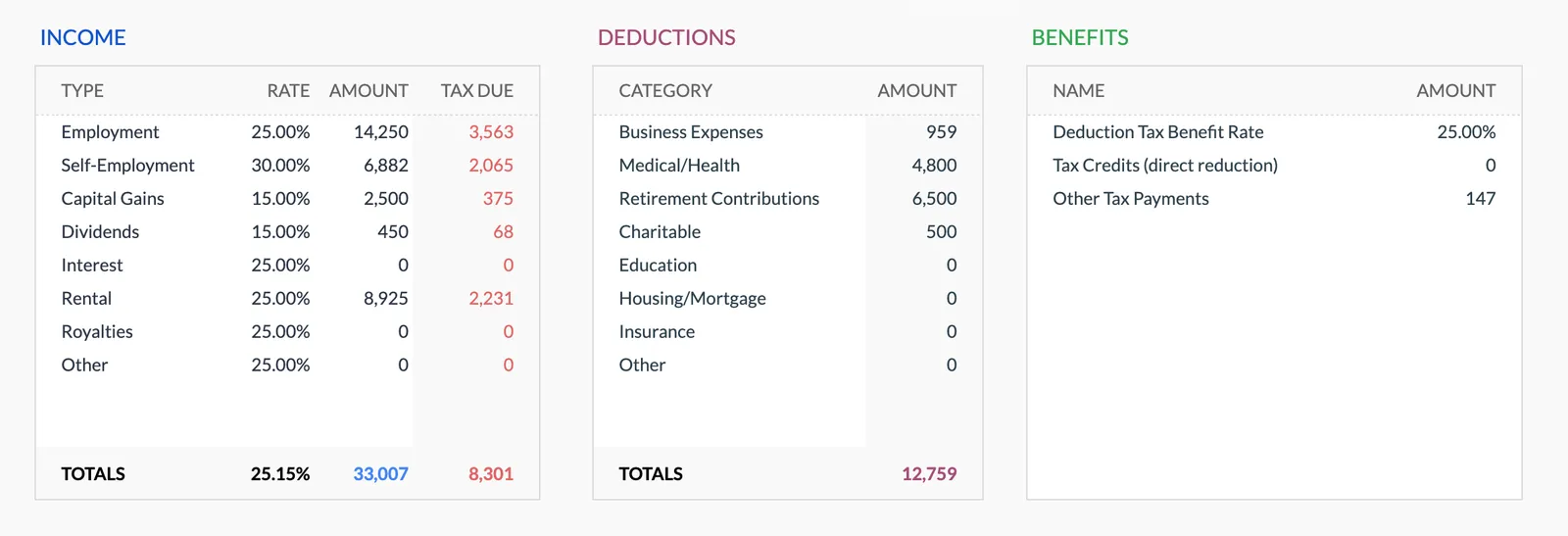
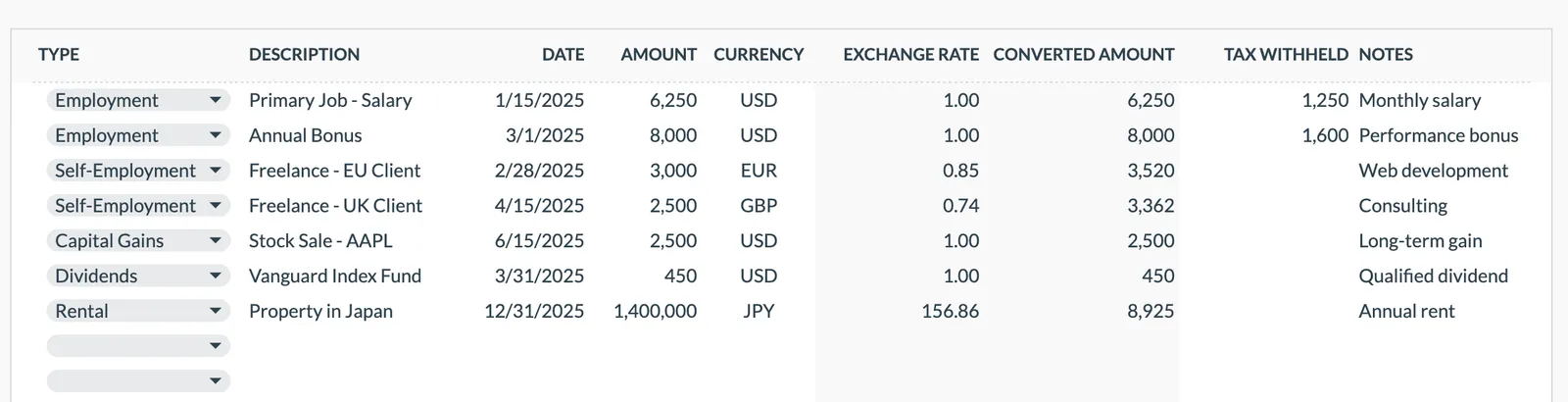
Explore o modelo para ver como ele registra renda, deduções, créditos e pagamentos trimestrais estimados.
- Painel geral de impostos anuais
- Acompanhamento de renda por fonte
- Organizador de deduções e créditos
- Rastreador de pagamentos trimestrais
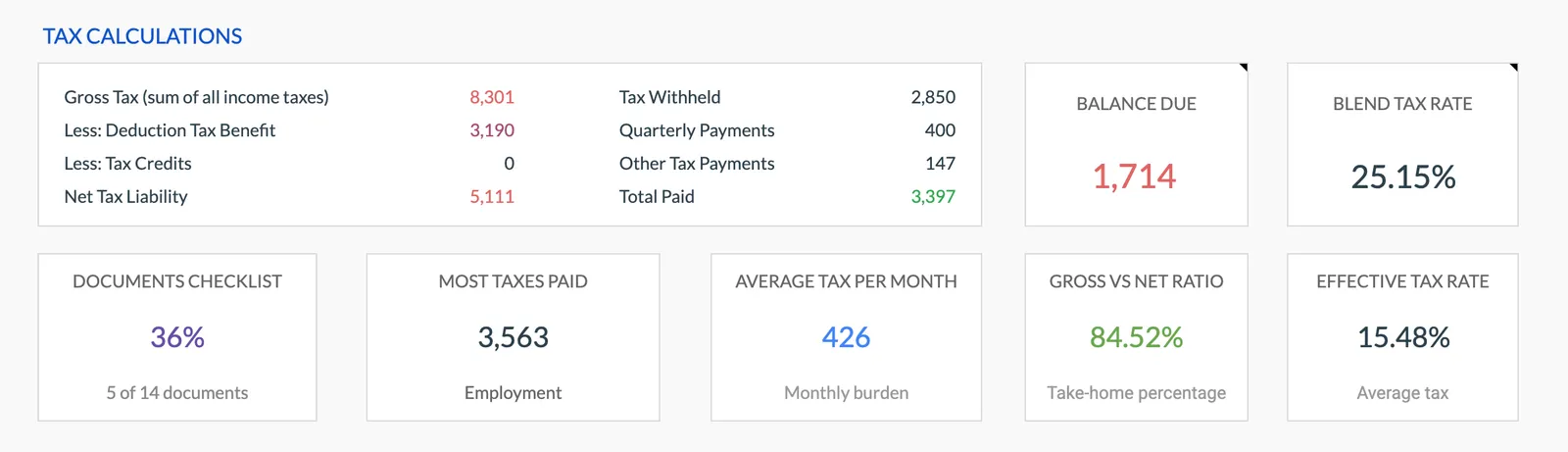
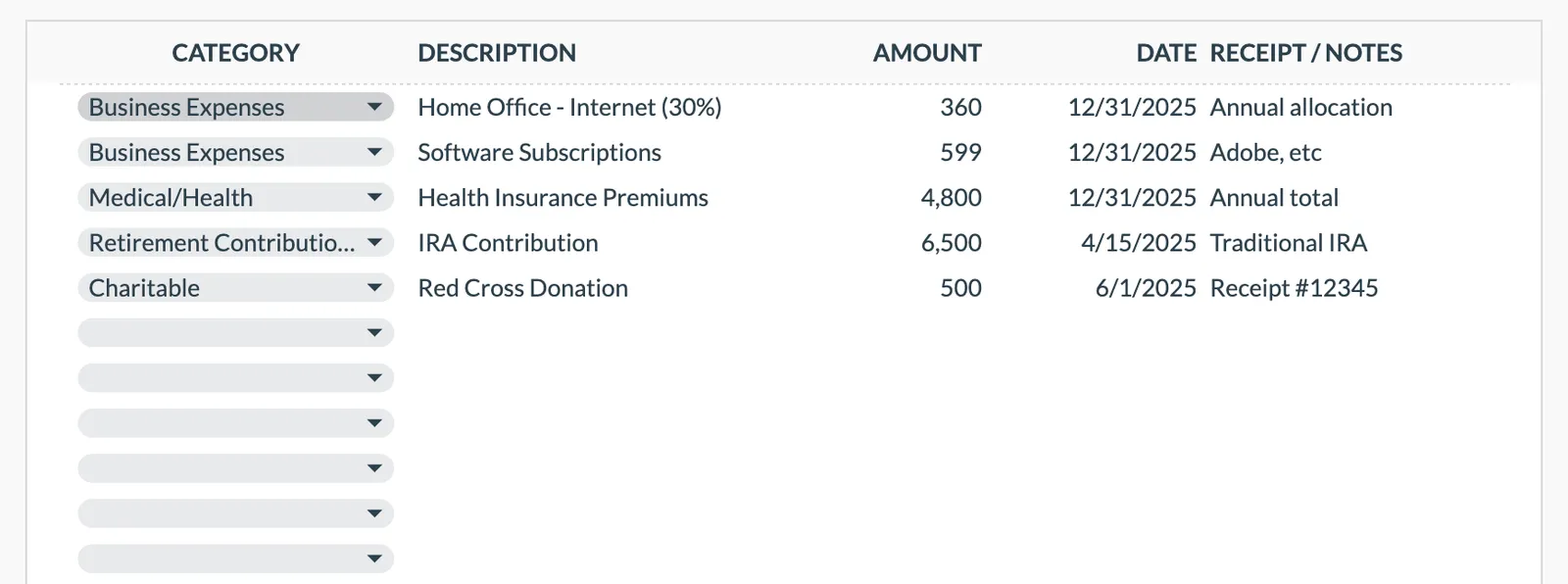
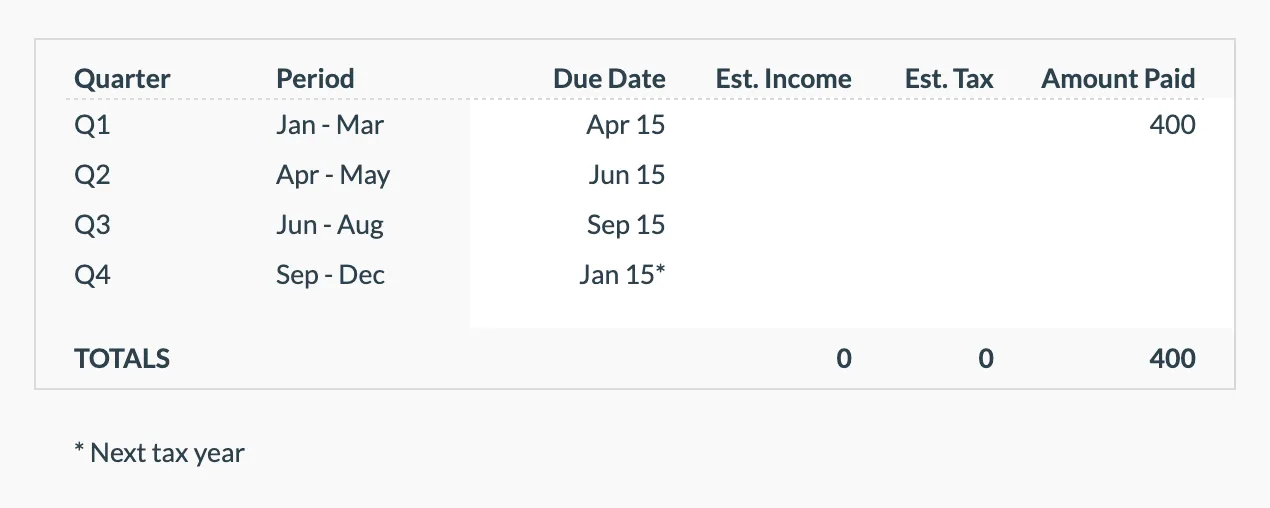
Annual tax overview with key figures
Detailed tax breakdown and projections
Track all income sources for tax purposes
Organize and track tax deductions
Plan and track quarterly estimated tax payments
Perguntas Frequentes
Planejamento tributário em New Hampshire - Perguntas Frequentes
New Hampshire tributa qualquer renda agora?
Não. New Hampshire nunca tributou salários ou vencimentos, e o Imposto sobre Juros e Dividendos que se aplicava anteriormente à renda de juros e dividendos foi completamente revogado a partir de janeiro de 2025. Os residentes agora não pagam imposto de renda estadual em nenhum tipo de renda. O imposto de renda federal é a única obrigação de imposto de renda para residentes de New Hampshire.
Como os altos impostos sobre propriedades de New Hampshire afetam o planejamento tributário?
New Hampshire depende fortemente de impostos sobre propriedades para financiar serviços locais e escolas, pois não há imposto de renda ou imposto sobre vendas geral. As alíquotas de impostos sobre propriedades estão entre as mais altas [2] do país, e variam significativamente por município. Para planejamento tributário federal, o imposto sobre propriedades é frequentemente o único item que residentes de New Hampshire podem reivindicar para a dedução SALT. Em alguns municípios, o imposto sobre propriedades sozinho pode se aproximar ou exceder o limite SALT.
Existe imposto sobre vendas em New Hampshire?
New Hampshire não tem imposto sobre vendas geral. O estado tributa refeições e hospedagem (estadias em hotéis) a uma alíquota fixa, mas não há imposto sobre vendas em mercadorias. Isso significa que residentes de New Hampshire não podem reivindicar uma dedução de imposto sobre vendas em sua declaração federal - a dedução SALT é limitada apenas a impostos sobre propriedades. Alguns residentes acham que isso simplifica a decisão de deducção federal.
O que mudou com a revogação do Imposto sobre Juros e Dividendos?
New Hampshire costumava cobrar um imposto de 5% sobre renda de juros e dividendos acima de um pequeno valor de isenção. Este imposto foi gradualmente reduzido ao longo de vários anos e completamente revogado a partir de 2025. Residentes com contas de investimento, juros de poupança ou ações que pagam dividendos não precisam mais apresentar a declaração de imposto I&D separada que era anteriormente necessária. Toda renda de investimento agora está sujeita apenas ao imposto federal.
Por que usar um planejador tributário no estado "Live Free or Die"?
O imposto de renda federal ainda se aplica completamente e pode ser complexo - múltiplas faixas, decisões de deduções, elegibilidade de créditos e prazos de pagamento estimados. Para trabalhadores autônomos ou aqueles com renda de investimento, acompanhar pagamentos federais estimados trimestrais é a principal necessidade de planejamento. O modelo também ajuda a acompanhar o IPTU para a dedução SALT federal, que importa em um estado onde os impostos sobre propriedades são tão altos quanto em New Hampshire.
Não encontrou a resposta que procura? Entre em contato com nossa equipe
Recursos Fiscais Oficiais
Para alíquotas atuais, formulários e prazos de declaração específicos para New Hampshire:
Sources
Organize seu planejamento tributário para New Hampshire
Compra única. Sem assinatura. Seus dados financeiros ficam no seu Google Drive.
Tax rules, rates, and contribution limits change, and official publications can themselves lag behind the law in force. We review these figures on a best-effort basis against sources we consider authoritative, but we cannot guarantee they are current, complete, or that better sources do not exist, and nothing here is tax, legal, or financial advice. For decisions, the relevant government authority is the reference. Last reviewed: August 2026.