India
Retirement Planning Template for India
Bring your EPF, PPF, NPS, and mutual fund balances together with projected retirement expenses - all in one Google Sheets template.
In Depth
EPF, NPS, and the Compound Interest Question
India does not have a universal public pension in the way that many Western countries do. For most private-sector workers, retirement income comes from personal savings - EPF, PPF, NPS, and mutual fund investments. This means the responsibility falls almost entirely on individual planning, and starting a few years earlier can make a material difference thanks to compounding over long time horizons.
EPF currently earns around 8.15% interest, and PPF offers roughly 7.1% - both attractive rates for guaranteed-return instruments. But even with these, the accumulated corpus after a 25-30 year career may fall short of what is needed for a comfortable retirement lasting another 25-30 years. NPS adds market-linked growth potential with an extra INR 50,000 tax deduction under Section 80CCD(1B), though 40% of the NPS corpus must be used to purchase an annuity at withdrawal.
Inflation is the factor that changes everything in Indian retirement arithmetic. At 5-6% annually, expenses that cost INR 50,000 per month today could exceed INR 1.3 lakh per month in 20 years. Using real returns - after subtracting inflation from nominal growth rates - gives a more honest projection, even if the numbers look less encouraging. Conservative assumptions tend to serve retirement planning better than optimistic ones.
India
Retirement Planning in India: Key Factors
Retirement planning in India involves a mix of government-backed schemes, market-linked instruments, and the reality that social security coverage is limited for most people.
EPF and PPF provide a foundation but may not be sufficient
EPF (with employer matching) and PPF offer guaranteed returns with tax benefits. EPF currently earns around 8.15% interest, and PPF around 7.1%. While these are solid instruments, the accumulated corpus often falls short of what's needed for a comfortable retirement - especially with rising healthcare costs and longer life expectancy.
NPS offers market-linked growth with tax benefits
The National Pension System allows investment in equity and debt with an additional tax deduction of INR 50,000 under Section 80CCD(1B). At retirement, 60% of the NPS corpus can be withdrawn tax-free while 40% must be used to purchase an annuity. Understanding how NPS fits alongside EPF and PPF helps create a more complete retirement picture.
Inflation and healthcare costs require attention
India's inflation has averaged 5-6% over the past decade, which erodes purchasing power significantly over a 20-30 year retirement. Healthcare costs, largely out-of-pocket for many Indians, have risen even faster. Factoring in realistic inflation assumptions is important when estimating how much you'll need.
No universal social security means self-reliance
Unlike countries with robust public pension systems, most Indians don't have a government pension (except government employees). This means retirement income comes almost entirely from personal savings, investments, and family support. Starting early and maintaining a disciplined approach becomes particularly important.
Obter o Modelo
Primeiros Passos
Personalizing the Retirement Planner for India
Enter current retirement savings
List every retirement-related balance: EPF (check EPFO passbook), PPF, NPS, mutual fund SIPs earmarked for retirement, fixed deposits, and any other long-term savings. Current balances provide the starting point for projections.
Note EPF, PPF, NPS, and SIP contributions
Enter how much goes into each instrument annually - EPF contributions (employee + employer), PPF deposits, NPS contributions, and retirement-focused SIPs. This drives the growth projections in the template.
Estimate retirement expenses
Project monthly expenses in retirement - housing, healthcare, food, utilities, travel, and insurance. A common starting point is 70-80% of current expenses, but healthcare costs tend to increase with age. Factor in inflation to project future costs.
Set realistic return assumptions
Use conservative estimates: 8-9% for equity mutual funds, 7-8% for EPF/PPF, and 5-6% for debt instruments. Subtract expected inflation (5-6%) to get real returns. Over-optimistic assumptions can create a false sense of security.
Run different scenarios
Duplicate the template to test different retirement ages, spending levels, and return assumptions. India doesn't have a fixed retirement age for private sector workers, so exploring options between age 50-65 helps clarify how much more savings each additional working year provides.
Ver em Ação
Como o modelo se parece
Explore o modelo para ver como ele gerencia orçamento, categorias e acompanhamento de despesas - tudo adaptável à sua realidade financeira local.
- Seletor de moeda integrado
- Categorias personalizáveis
- Acompanhamento de orçamento vs. realizado
- Gráficos e resumos visuais
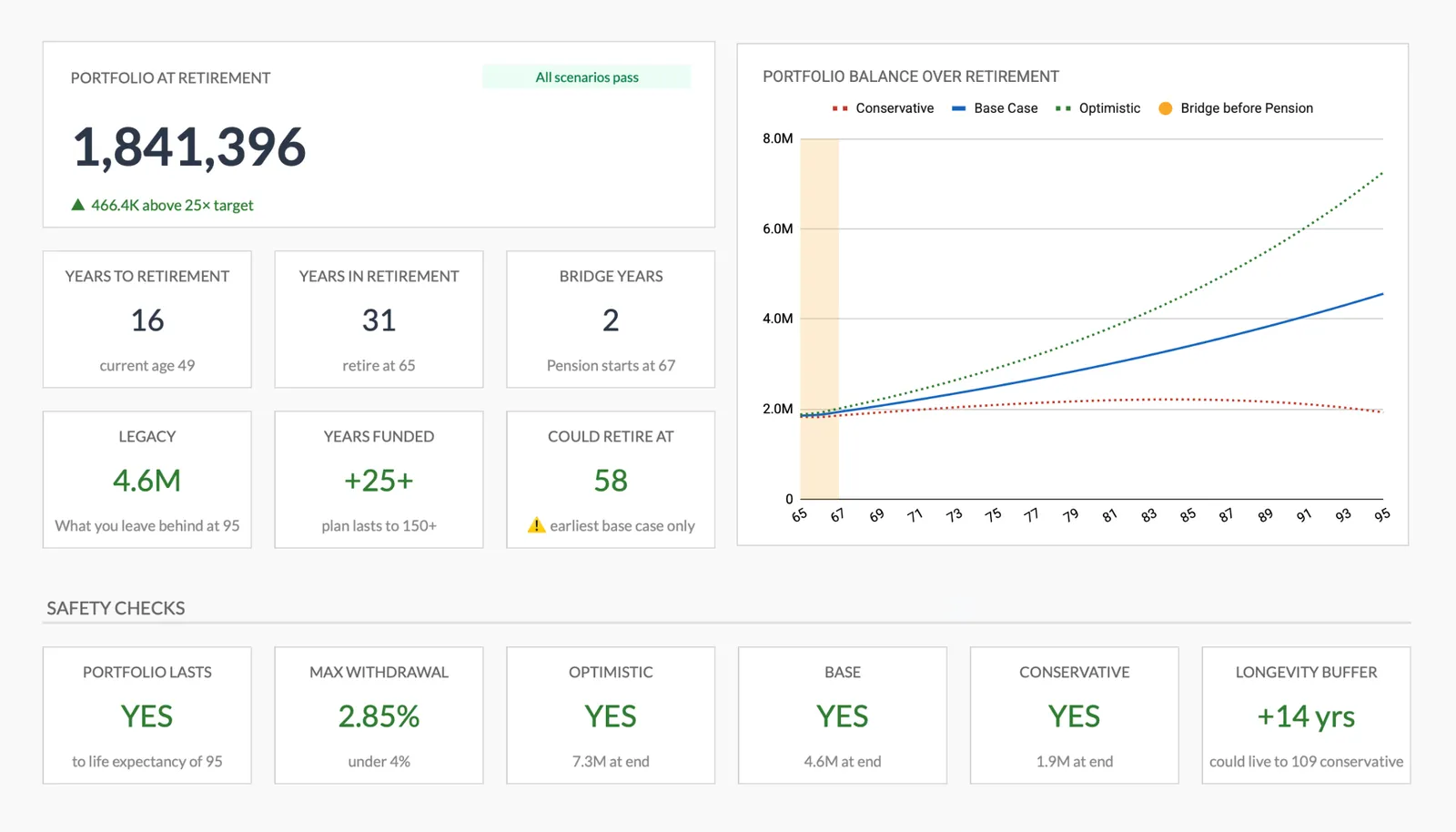
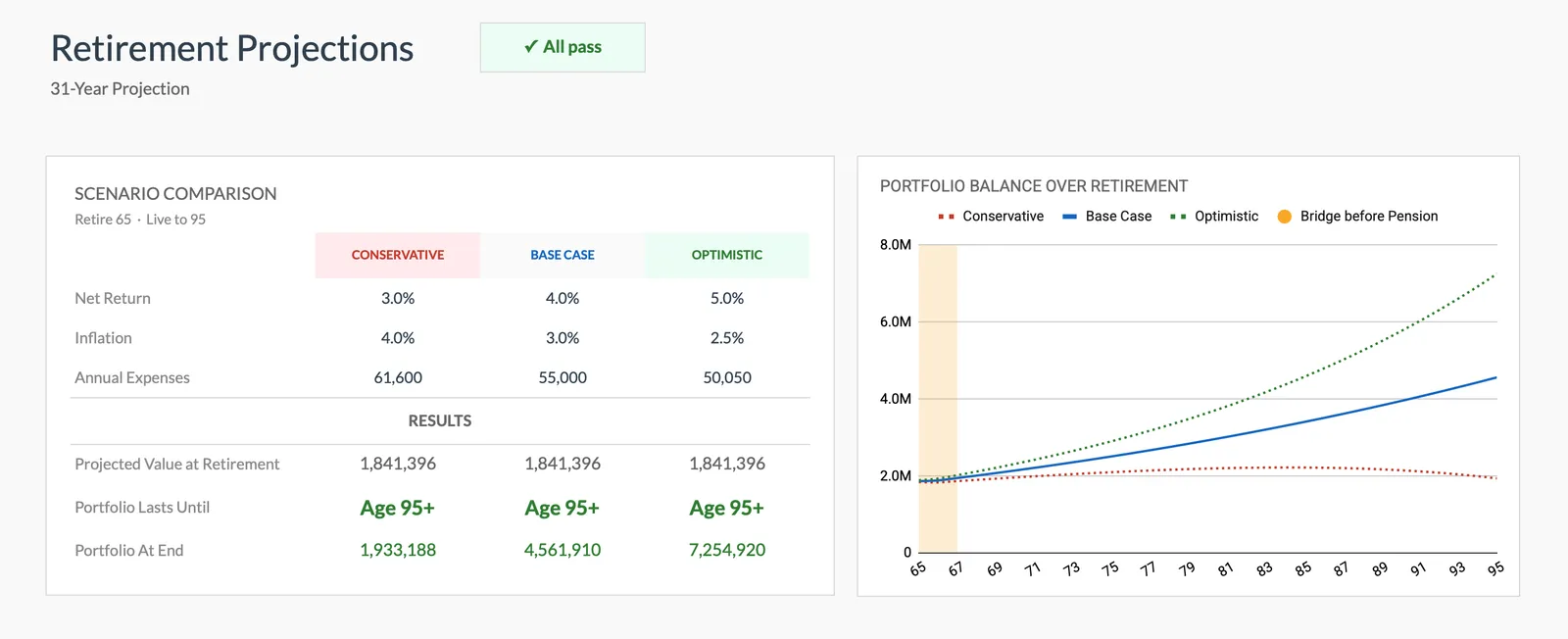
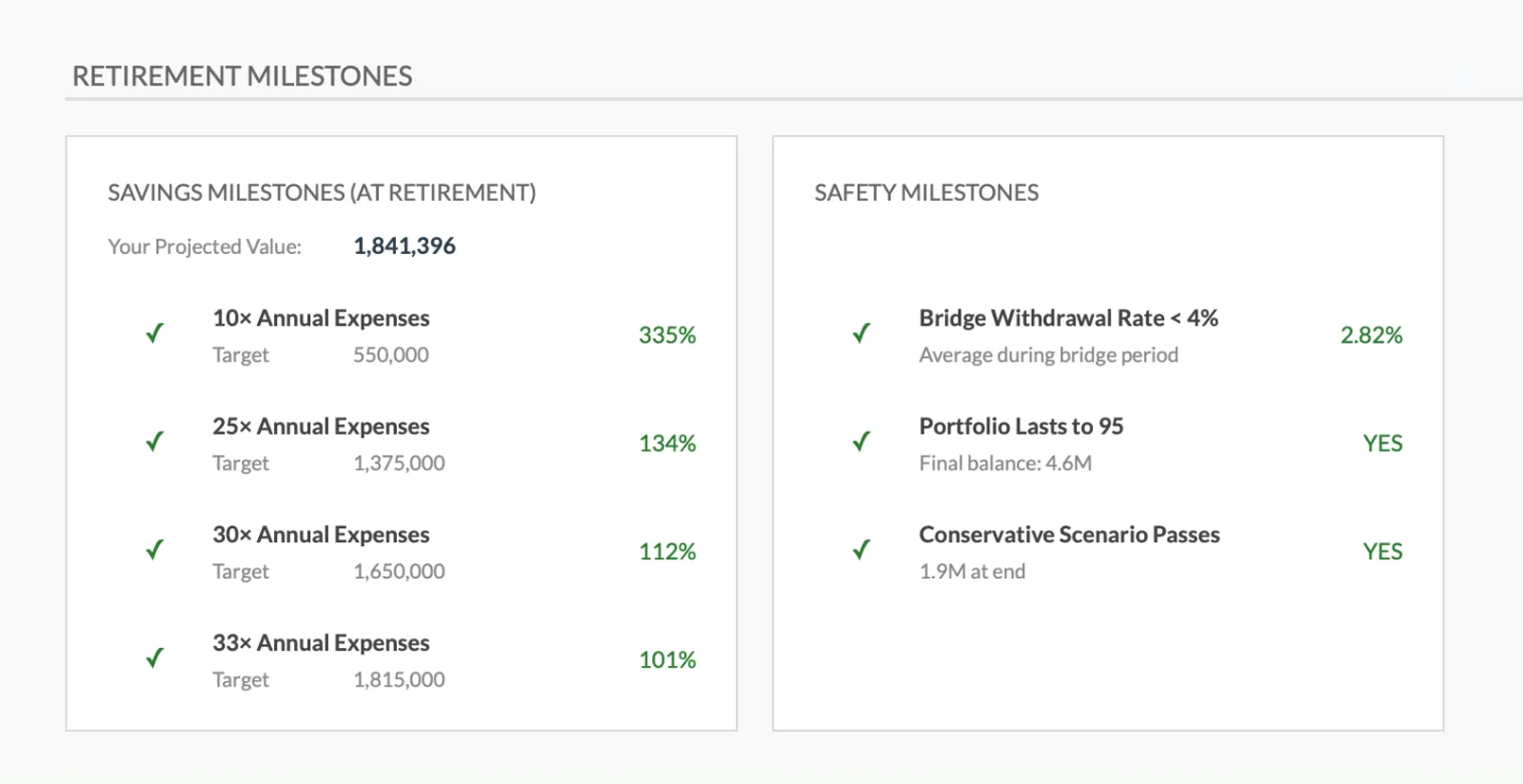
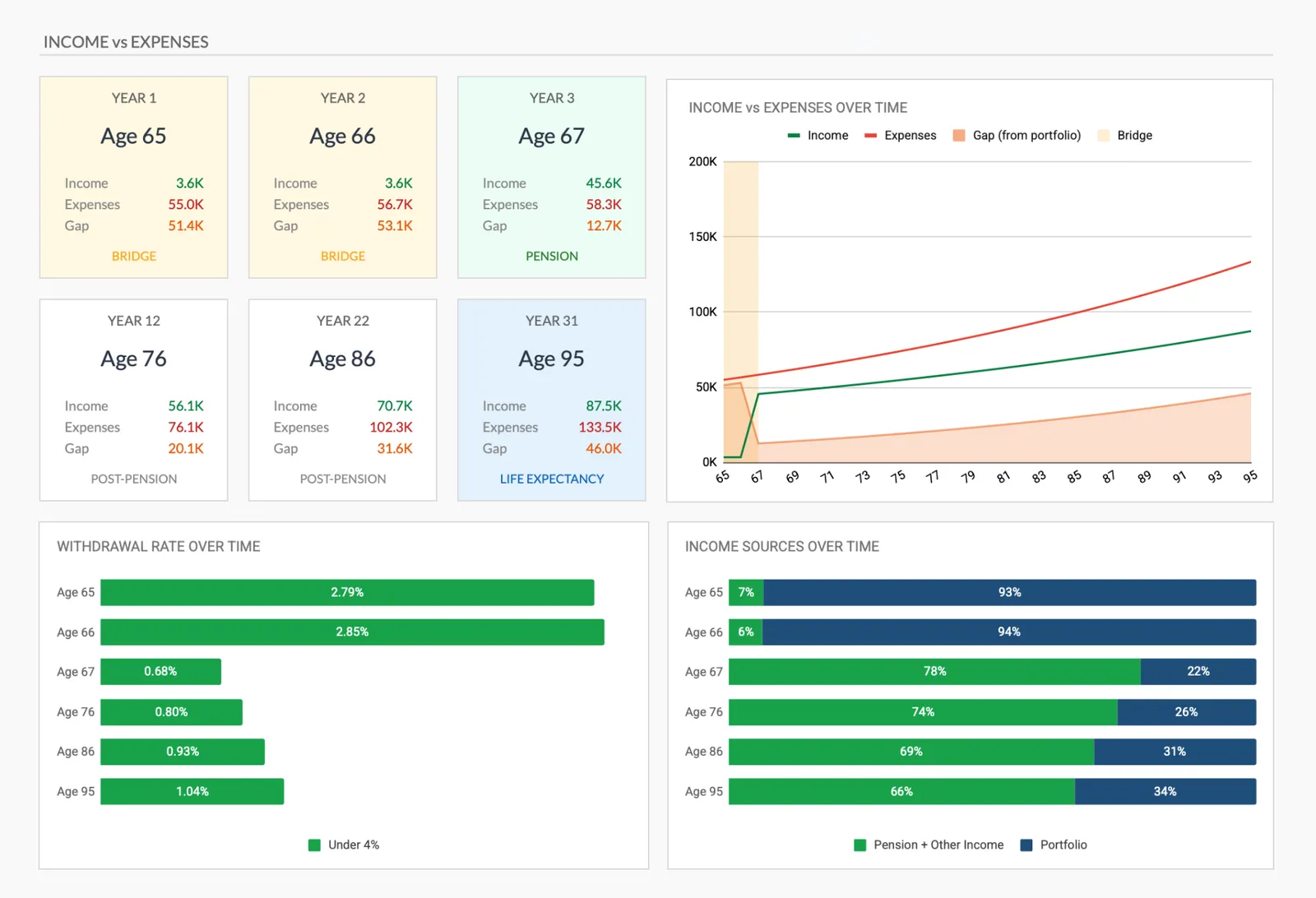
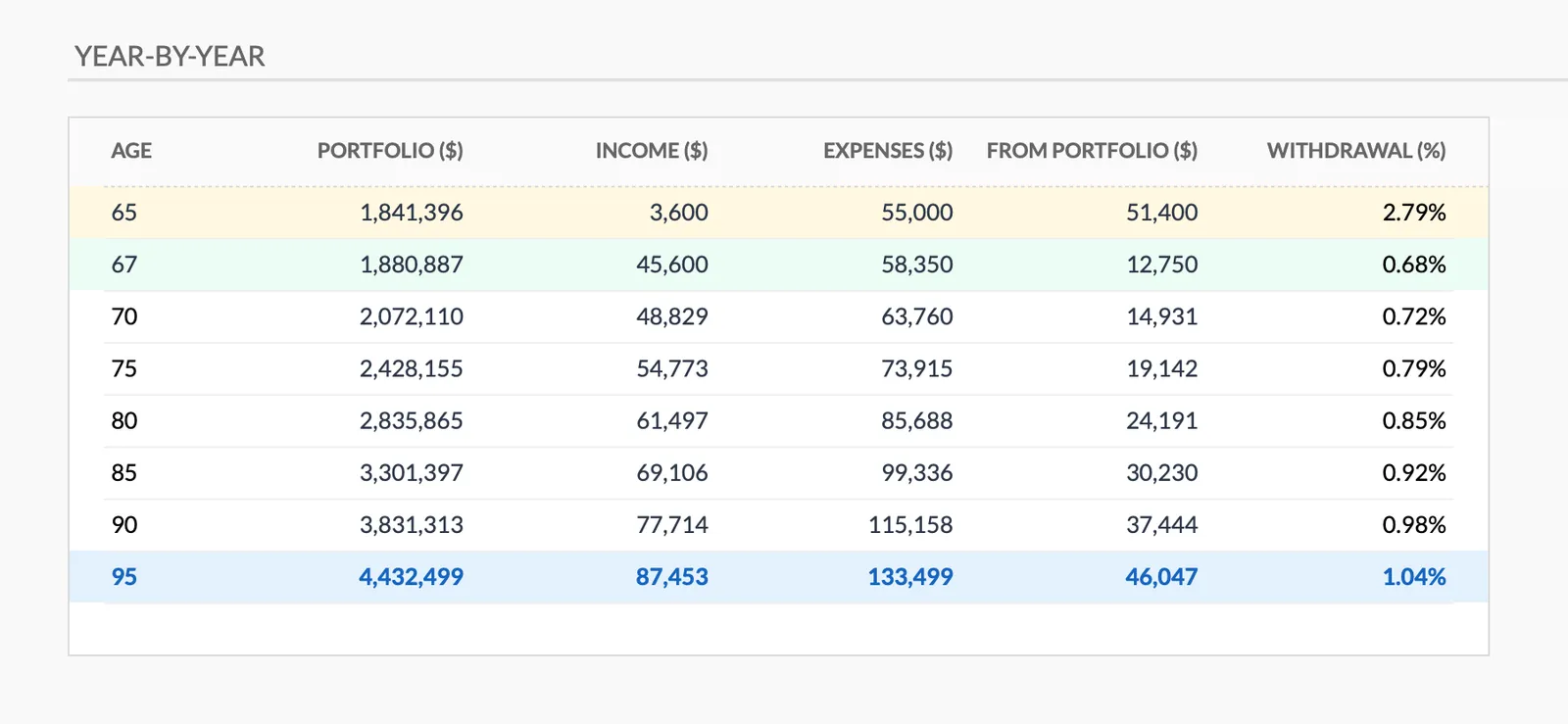
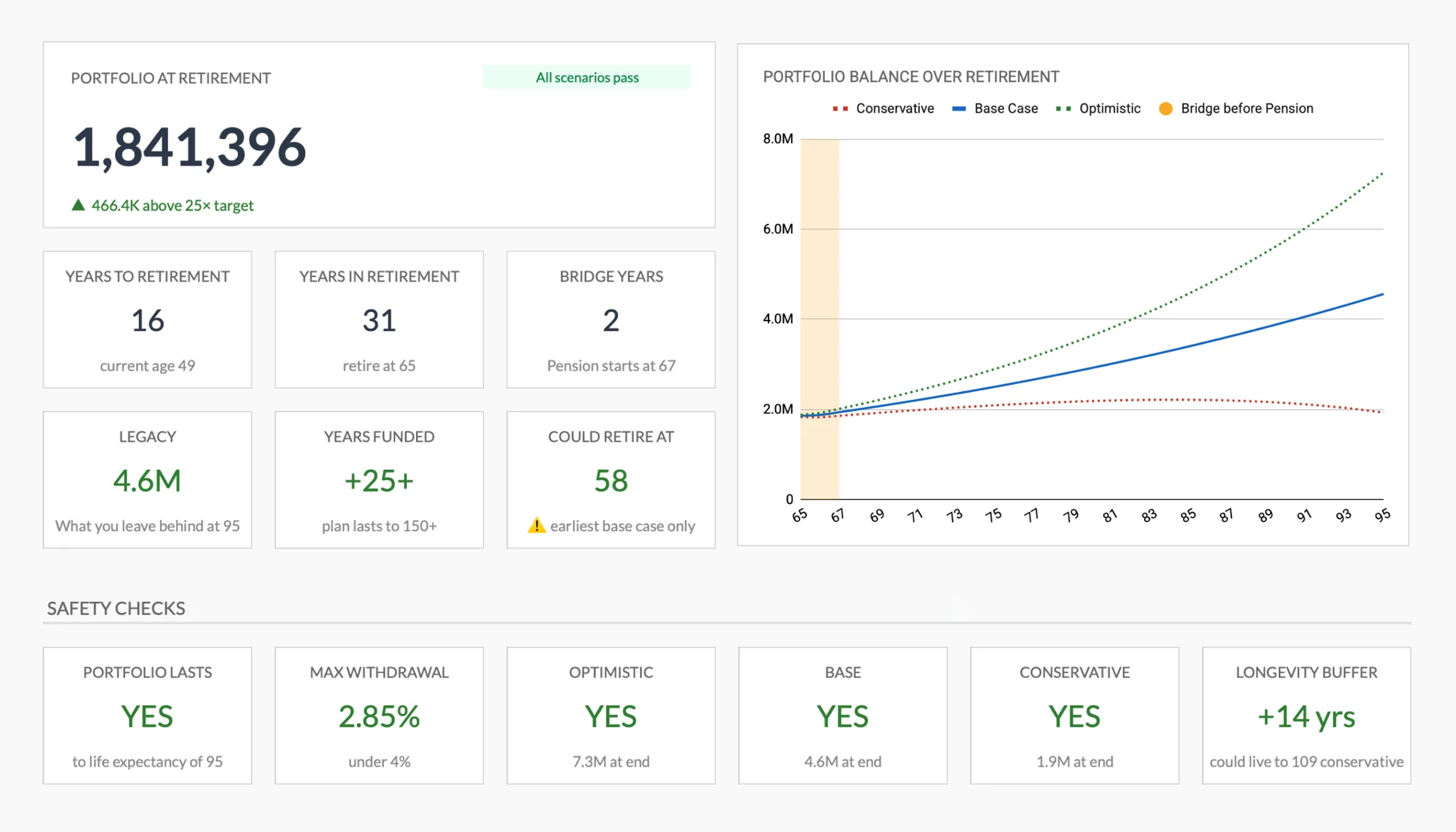
Complete retirement overview with projections
Project your retirement savings growth
Track progress toward retirement goals
Plan your retirement income against expenses
Detailed year-by-year retirement projection
Perguntas Frequentes
Retirement Planning Template for India - FAQ
How much do I need to retire in India?
There's no single answer. A common approach is to estimate annual expenses in retirement and multiply by 25-30 (accounting for longer life expectancy and Indian inflation rates). Someone expecting INR 50,000/month in expenses might target INR 2-2.5 crore. The template helps you work through your specific numbers.
Can I withdraw EPF before retirement?
Partial EPF withdrawal is allowed for specific purposes like home purchase, medical emergencies, or education. Full withdrawal is possible after 2 months of unemployment or at age 58. Early withdrawal reduces the corpus significantly due to lost compound interest - worth considering carefully.
Is NPS better than mutual funds for retirement?
Each has trade-offs. NPS offers an additional tax deduction (INR 50,000) and has low fund management charges, but locks money until 60 and requires 40% annuity purchase. Mutual funds offer more flexibility but no additional tax benefit beyond Section 80C. Many people use both.
How do I account for inflation in India?
Use 5-6% as a baseline inflation assumption. This means expenses that cost INR 50,000/month today could cost over INR 1.3 lakh/month in 20 years. Using inflation-adjusted (real) returns rather than nominal returns in your projections gives a more realistic picture.
What about family support in retirement?
While family support is part of Indian culture, relying on it as a primary retirement plan carries risks. Financial planning that assumes self-sufficiency, with family support as a bonus rather than a necessity, tends to be more robust.
Can I plan for early retirement in India?
Yes. The template works for any retirement age. Early retirement in India requires careful planning around healthcare costs (no Medicare-equivalent), accessing locked retirement instruments (EPF/NPS restrictions), and potentially longer retirement periods of 40+ years that require more conservative withdrawal assumptions.
Can't find the answer you're looking for? Contact our team
Explorar Mais
Free Tools for India
Pronto para comecar?
Baixe instantaneamente e comece a gerenciar suas financas, ou entre em contato conosco para criar um pacote de modelos personalizado para suas necessidades.