Spreadsheet Guide
Net Worth Spreadsheet
Net worth - assets minus liabilities - is the single most comprehensive measure of financial health. Tracking it over time reveals progress that monthly income and expenses alone cannot show.
In Depth
Net Worth Tells the Story That Income Cannot
Income is often treated as the primary measure of financial success, but it captures only half the picture. Two people earning identical salaries can have vastly different net worths depending on their spending habits, debt levels, investment returns, and property values. Net worth - total assets minus total liabilities - is the single number that synthesizes all of these factors into one comprehensive measure of financial position.
The trend matters more than the absolute number. A net worth of $50,000 could represent very different situations: a 25-year-old building from zero is on a strong trajectory, while a 55-year-old at the same number faces a different outlook. What matters at any age is the direction and rate of change. Is net worth increasing each month? Each quarter? Each year? A spreadsheet that records these periodic snapshots creates a trend line that is far more informative than any single data point.
For people whose net worth is currently negative - a common situation for those with student loans, mortgages, or other significant debts - tracking net worth might seem discouraging. But the opposite is often true. Watching a negative net worth move from -$80,000 to -$65,000 over a year provides tangible evidence of progress that individual debt payments do not convey. The net worth tracker transforms debt repayment from an obligation into a visible journey toward a specific milestone: zero, and then beyond.
Overview
What a Net Worth Spreadsheet Does
A net worth spreadsheet lists all assets (what you own) and all liabilities (what you owe), calculating the difference. Assets include bank accounts, investments, retirement accounts, property, and vehicles. Liabilities include mortgages, student loans, car loans, credit card balances, and any other debts. The spreadsheet tracks net worth over time, showing the trend that matters most: is it going up, going down, or staying flat?
How It Works
How to Track Net Worth
List all assets with current values
Include every asset: checking and savings accounts, investment accounts, retirement accounts (401k, IRA), real estate (estimated market value), vehicles (realistic resale value), and any other significant assets. Use current market values, not what was paid.
List all liabilities with current balances
Include every debt: mortgage balance, student loans, auto loans, credit cards, personal loans, medical debt, and any other obligations. Use the current payoff balance, which may differ from the original loan amount.
Calculate and record net worth monthly
Subtract total liabilities from total assets. This number can be negative (especially early in a career with student loans) - that is normal. The trend over time matters more than the current number. Recording monthly builds a historical picture.
Analyze changes and set milestones
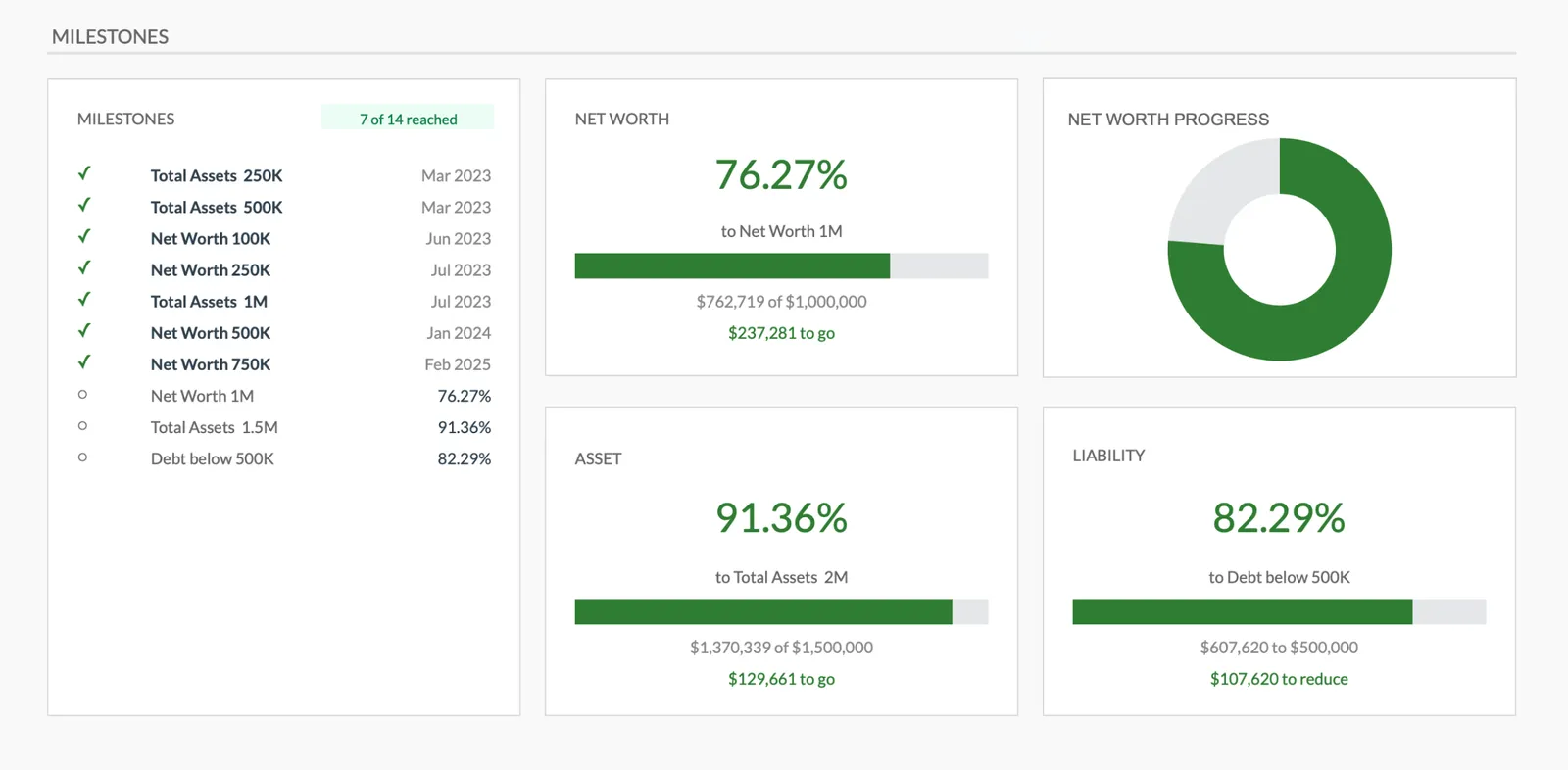
Each month, note what drove the change: market gains, debt reduction, increased savings, property value changes. Setting milestones (first $10,000, first $100,000, debt-free net worth) provides goals to work toward.
See The Template
A ready-made net worth tool
Instead of building from scratch, start with a template that has the structure, formulas, and visuals already in place.
- Pre-built formulas and calculations
- Visual charts and dashboards
- No setup required
- Works in Google Sheets and Excel
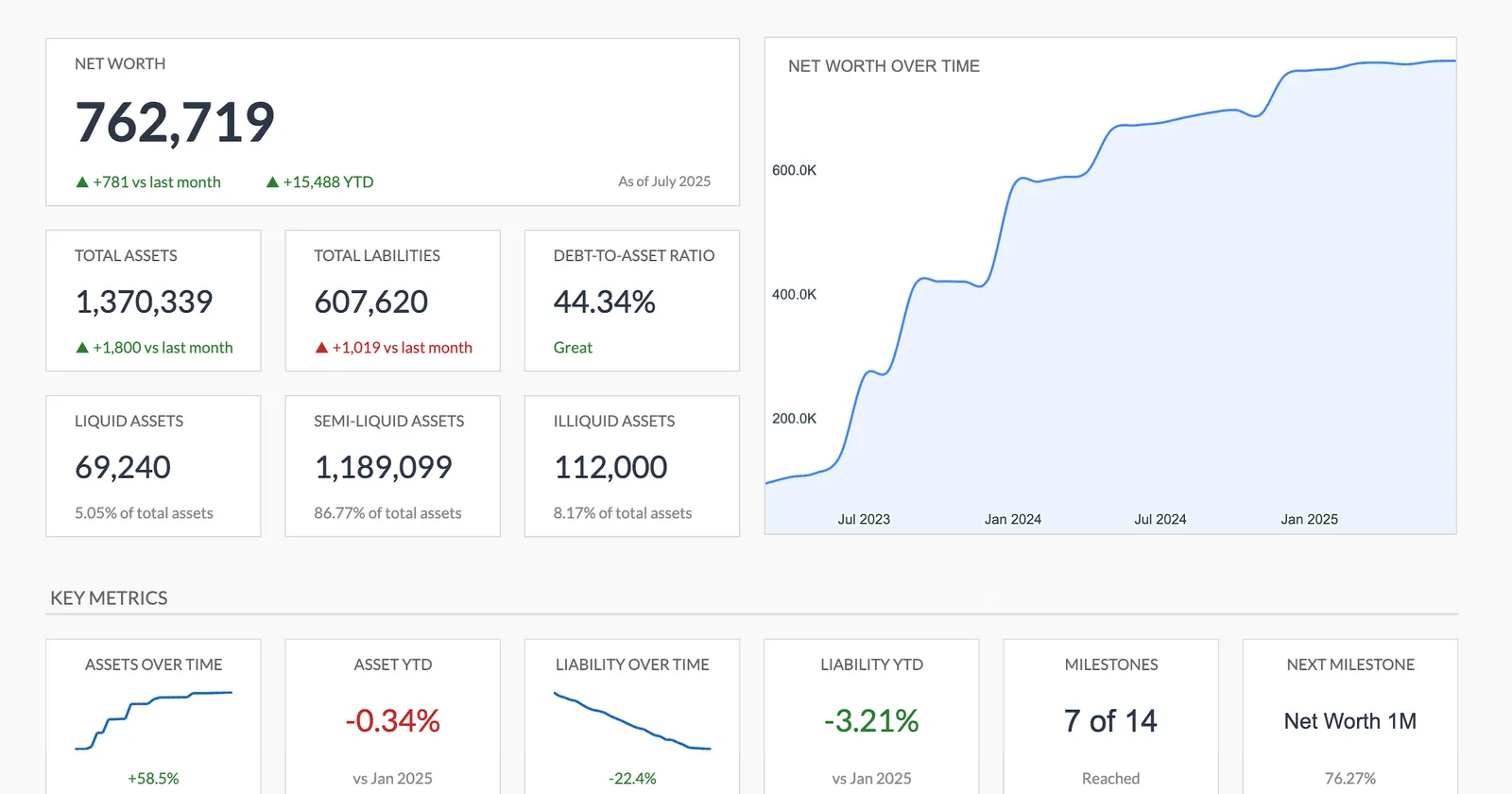
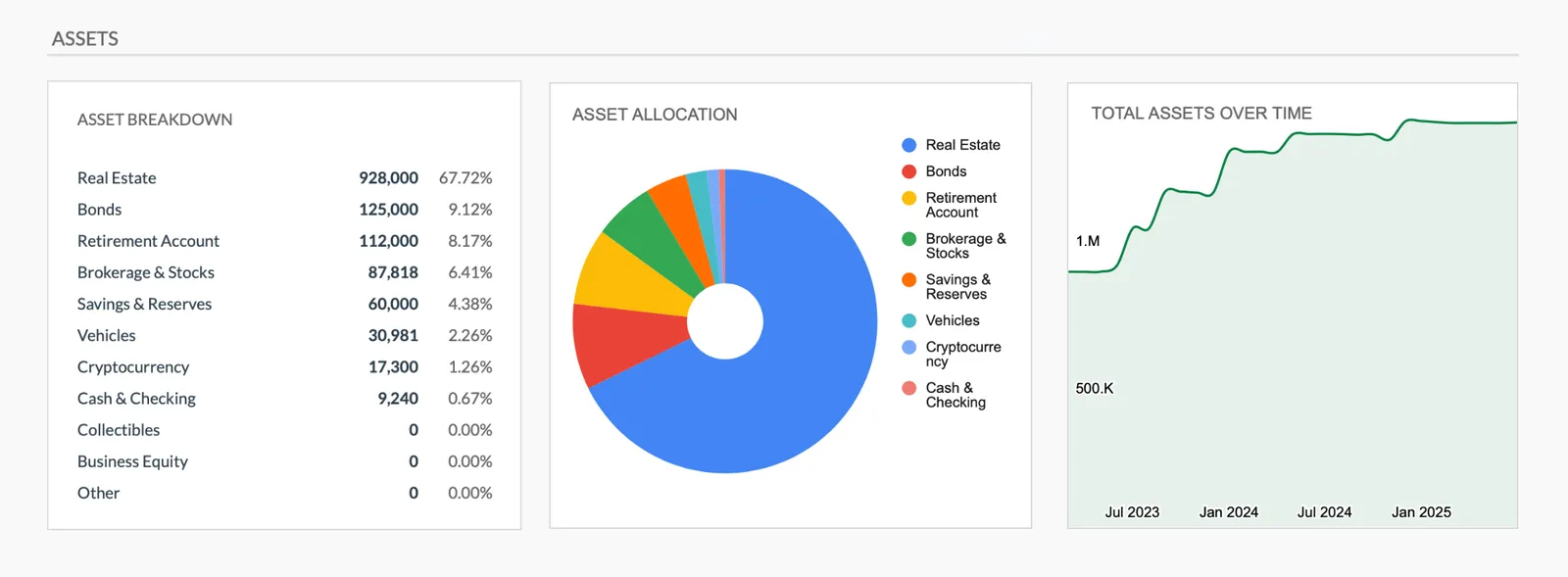
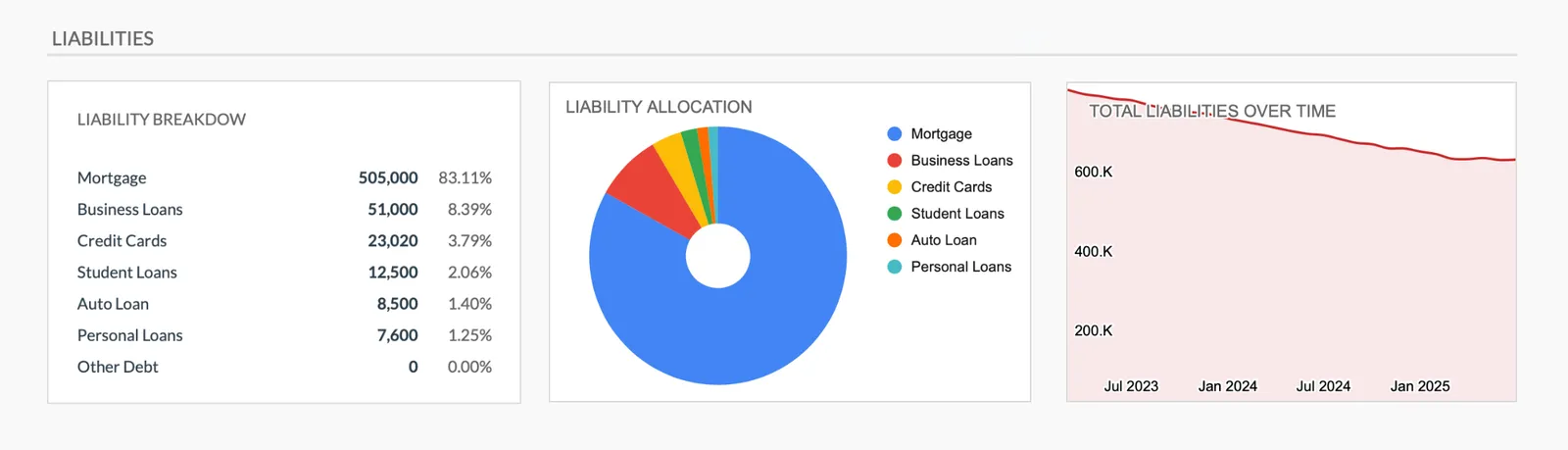

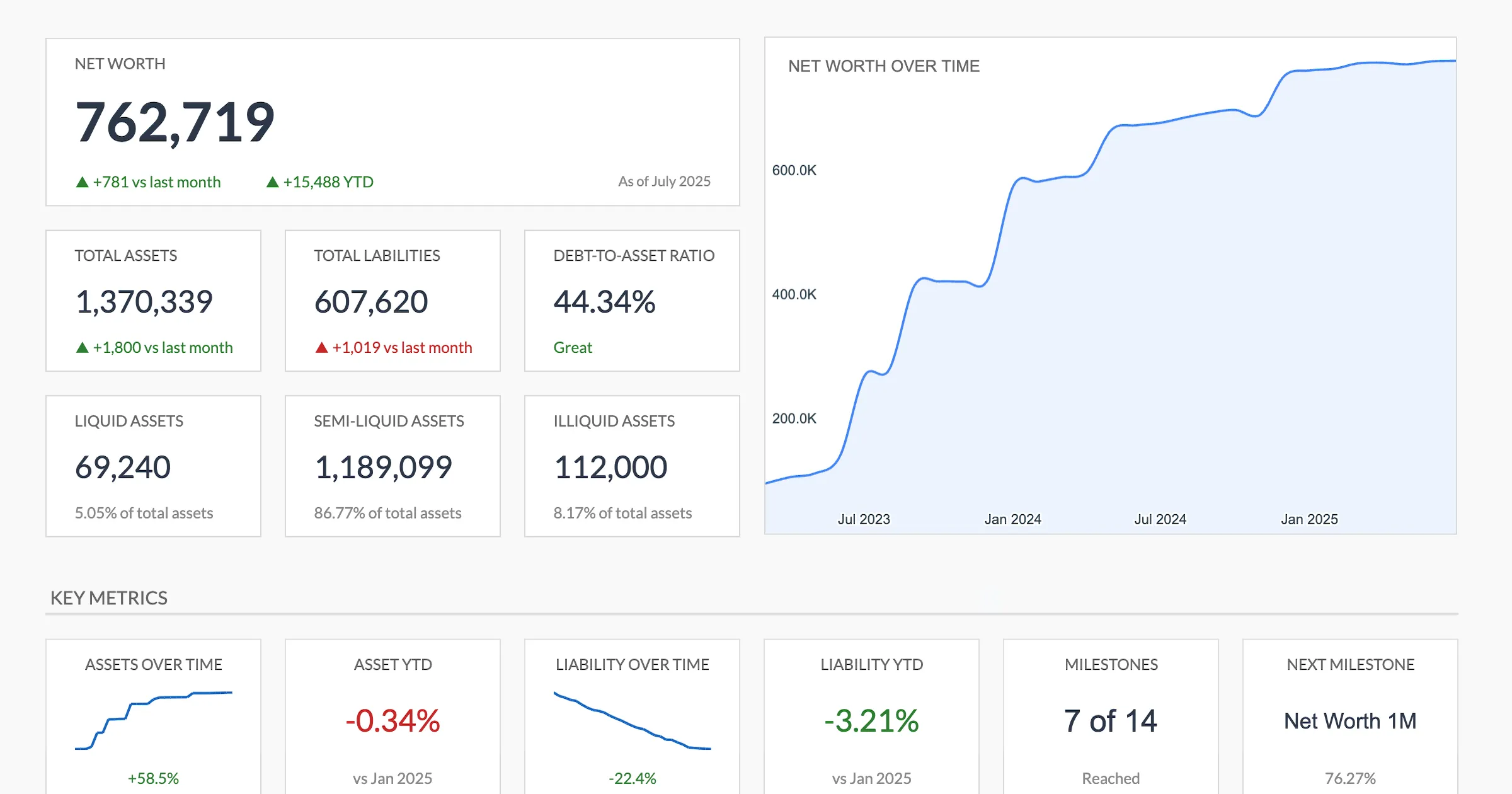
Track your net worth over time with charts
Breakdown of all your assets
Track all debts and liabilities
Key financial health indicators
Set and celebrate net worth milestones
Common Questions
Net Worth Spreadsheet FAQ
How often should net worth be calculated?
Monthly updates provide a good balance between tracking progress and not obsessing over short-term fluctuations. Investment values change daily, but monthly snapshots smooth out the noise and show the meaningful trend. Some people update quarterly if monthly feels too frequent.
Should a home be included in net worth calculations?
Yes, but with a realistic estimate of market value rather than the purchase price or a hopeful selling price. The mortgage balance counts as a liability. For consistency, many people update the estimated home value annually rather than monthly, since real estate values do not change as quickly as financial accounts.
What if net worth is negative?
A negative net worth is common, especially for people early in their careers with student loans or those who recently purchased a home with a large mortgage. It does not mean anything is wrong - it means liabilities currently exceed assets. The key is ensuring the trend is moving in the right direction over time.
Should vehicles be included as assets?
Including vehicles provides a more complete picture, but using a realistic current resale value (not what was paid) is important. Vehicles depreciate quickly, so the asset value decreases while the auto loan liability decreases more slowly. Some people exclude vehicles for simplicity.
What is a good net worth for different ages?
Net worth benchmarks vary widely by age, income, and location. A common formula suggests net worth by age X should be roughly (age x annual income / 10). However, these benchmarks are very general. Comparing to your own past net worth is more useful than comparing to averages or benchmarks.
Can't find the answer you're looking for? Contact our team
Get a ready-made net worth spreadsheet
Skip the setup and start with a professionally designed spreadsheet template. All formulas, charts, and tracking built in.
Ready to get started?
Download instantly and start managing your finances, or contact us to design a custom template package for your needs.