Spreadsheet Guide
Expense Report Spreadsheet
An expense report spreadsheet organizes spending into clear categories with dates, amounts, and notes. Whether for personal tracking, self-employment taxes, or reimbursement, structured expense reporting saves time and money.
In Depth
Expense Tracking as the Raw Material of Financial Clarity
Expense reports are the most granular level of financial tracking - individual transactions recorded with dates, amounts, categories, and descriptions. While this level of detail might seem excessive for personal use, the data it produces feeds every higher-level financial view. Monthly budgets are built from categorized expenses. Annual spending summaries aggregate monthly data. Tax deduction totals come from properly categorized business expenses. The expense report is the foundation that makes all other financial analysis possible.
The discipline of recording expenses as they happen - rather than reconstructing them from statements at the end of the month - produces significantly more accurate and complete records. Memory is unreliable, especially for small cash transactions, split payments, and purchases that span multiple categories. Real-time logging, even if it is just a quick entry on a phone, captures the details that after-the-fact reconstruction invariably misses.
For self-employed individuals and small business owners, well-maintained expense records have direct financial value at tax time. Every deductible expense that is properly documented reduces taxable income. A year of categorized expenses can be summarized in minutes for tax preparation, while reconstructing the same information from bank statements takes hours and inevitably misses deductions. The time invested in daily or weekly expense logging pays for itself many times over in tax savings and preparation efficiency.
Overview
What an Expense Report Spreadsheet Does
An expense report spreadsheet records individual expenses with date, amount, category, description, and payment method. It automatically totals expenses by category and time period, making it easy to see where money goes. For self-employed individuals, proper expense categorization simplifies tax deduction tracking. For employees, it provides the documentation needed for reimbursement requests.
How It Works
How to Use an Expense Report
Record expenses as they happen
Logging expenses immediately (or at least daily) produces the most accurate record. Include the date, amount, merchant/payee, category, and a brief description. Waiting until the end of the month to enter expenses results in missing items and inaccurate records.
Categorize consistently
Using consistent categories makes the data useful for analysis and tax purposes. Standard categories include: housing, transportation, food, utilities, healthcare, entertainment, and personal care. For business expenses, categories often align with tax deduction categories.
Keep receipts organized
For tax-deductible expenses, matching receipts to the expense report entries provides documentation if needed. Photos of receipts stored digitally (with the expense date and amount noted) prevent the common problem of faded or lost paper receipts.
Review summaries monthly
The category totals and monthly summaries reveal spending patterns. Comparing month over month shows trends - are food costs creeping up? Is transportation spending stable? These insights inform budget adjustments and financial decisions.
See The Template
A ready-made expense report tool
Instead of building from scratch, start with a template that has the structure, formulas, and visuals already in place.
- Pre-built formulas and calculations
- Visual charts and dashboards
- No setup required
- Works in Google Sheets and Excel
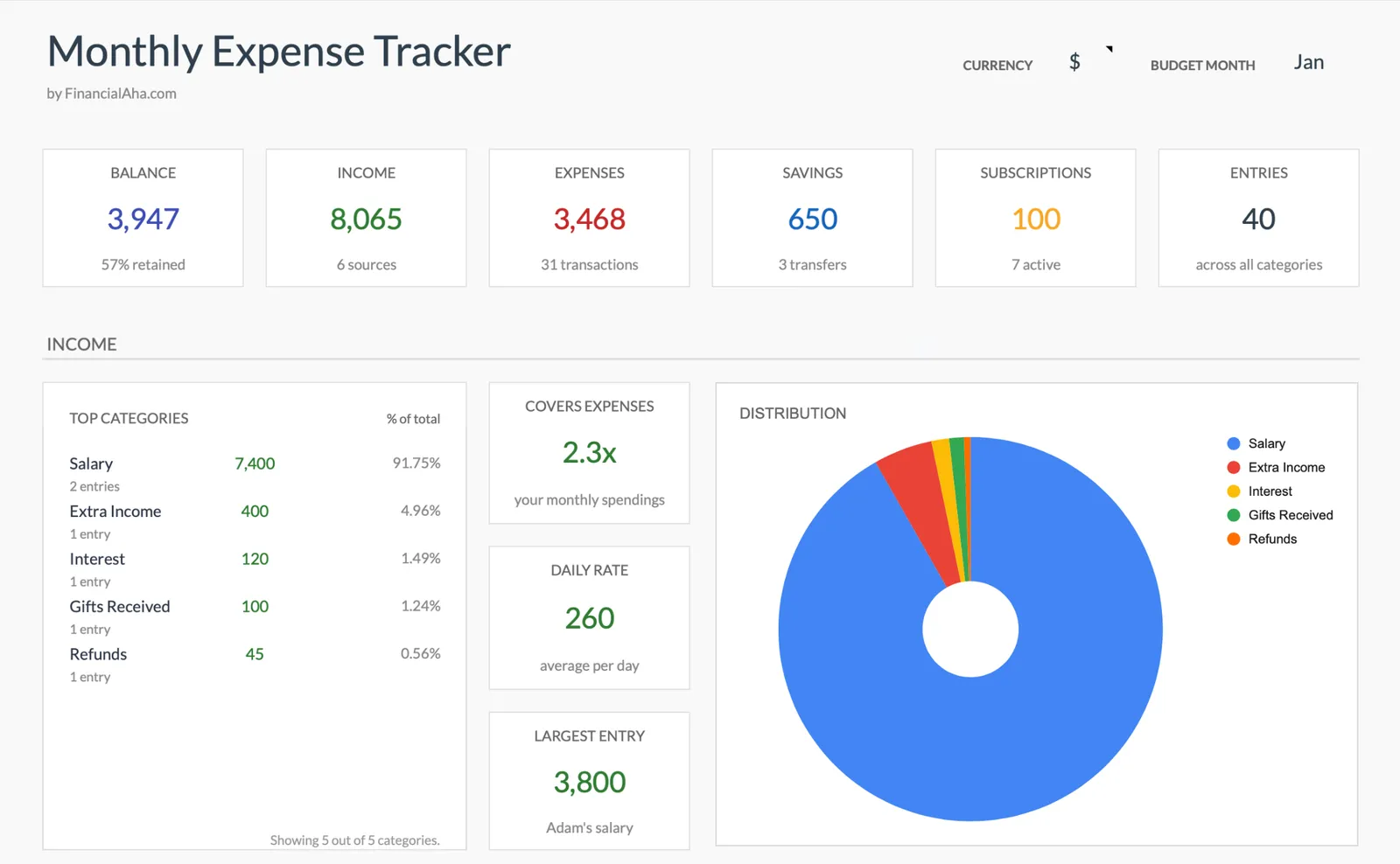
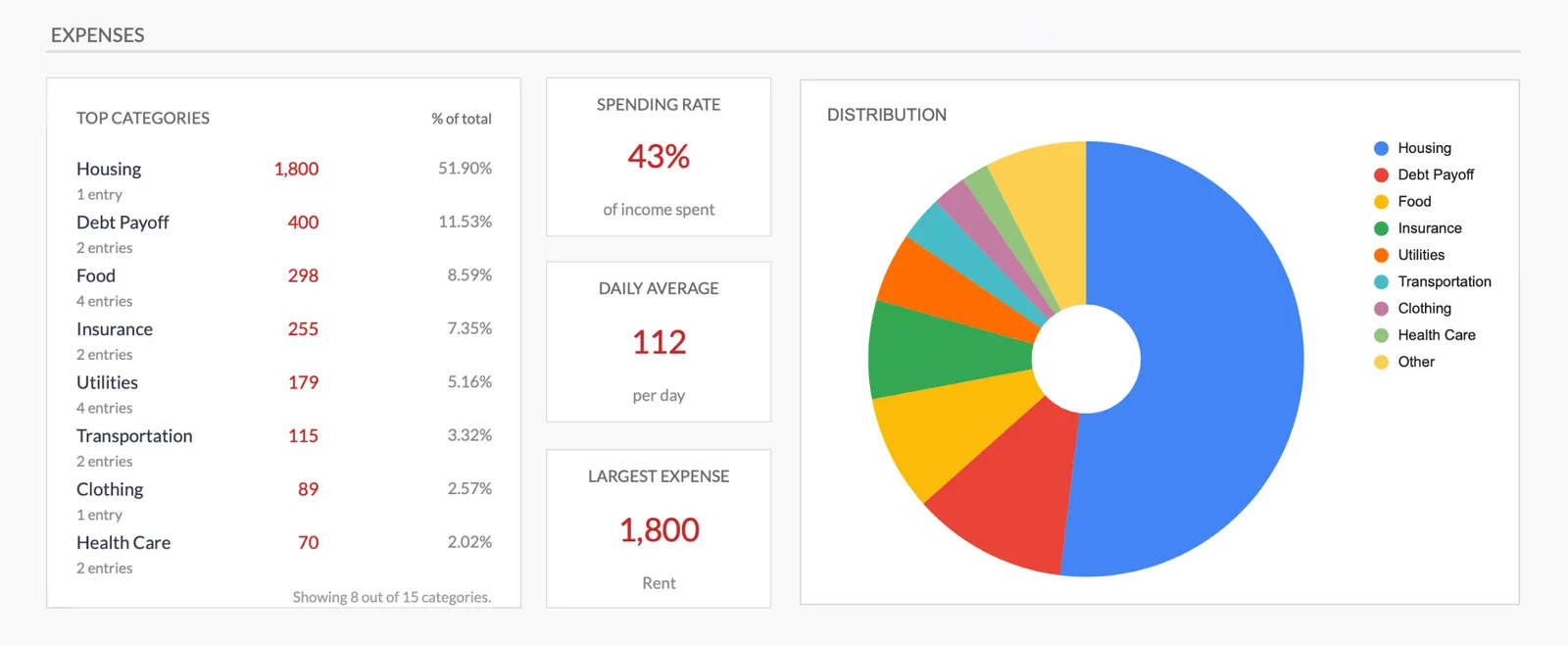
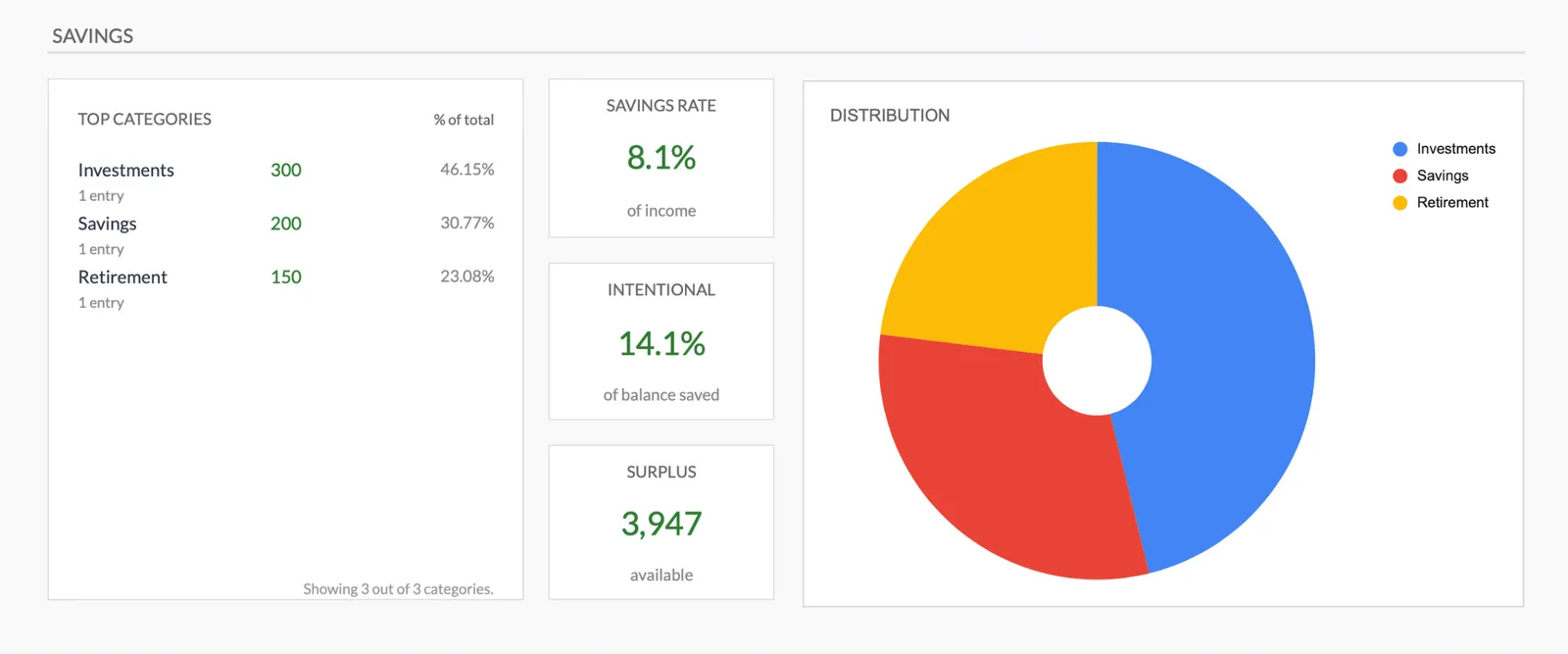
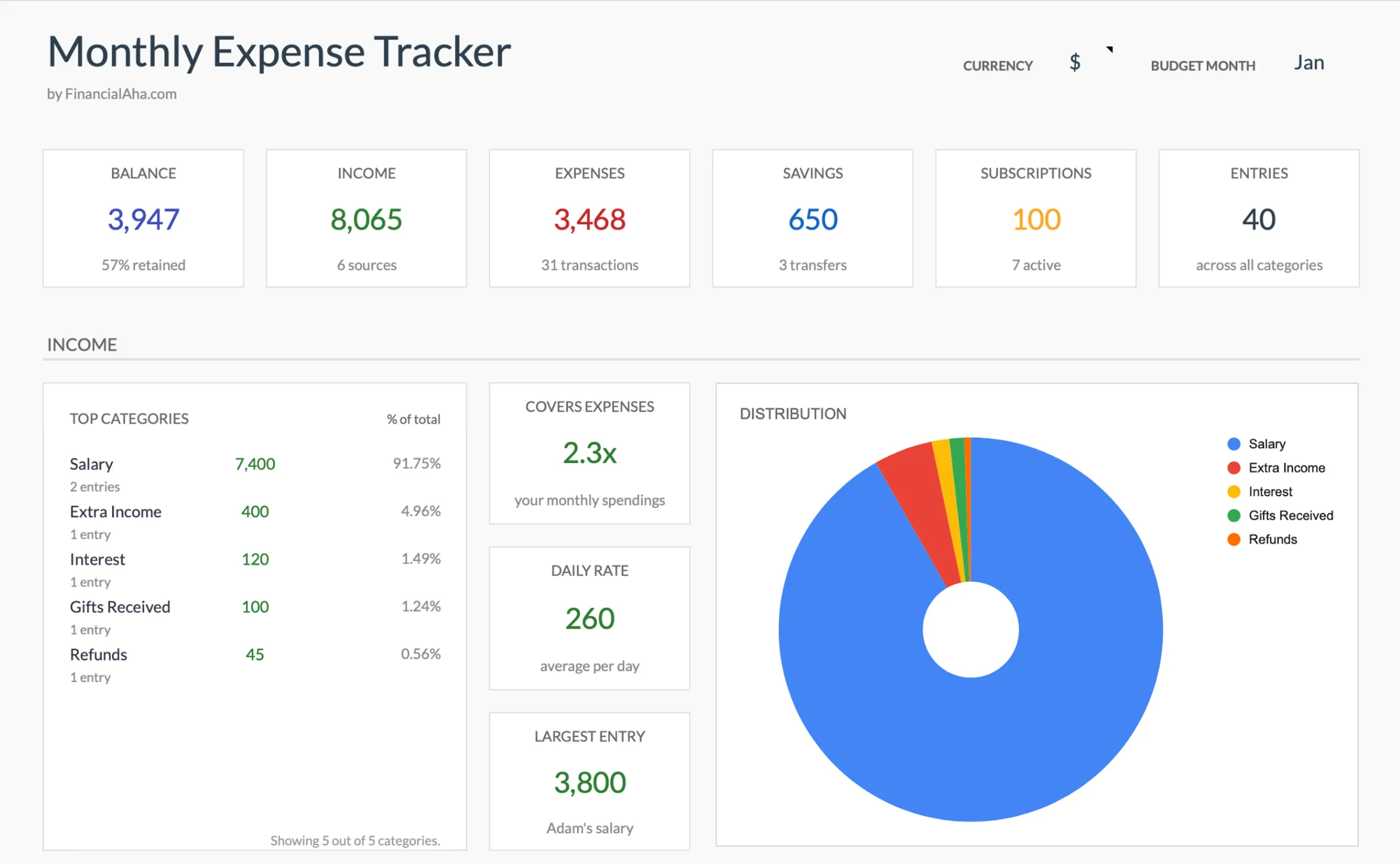
Monthly expense overview with charts
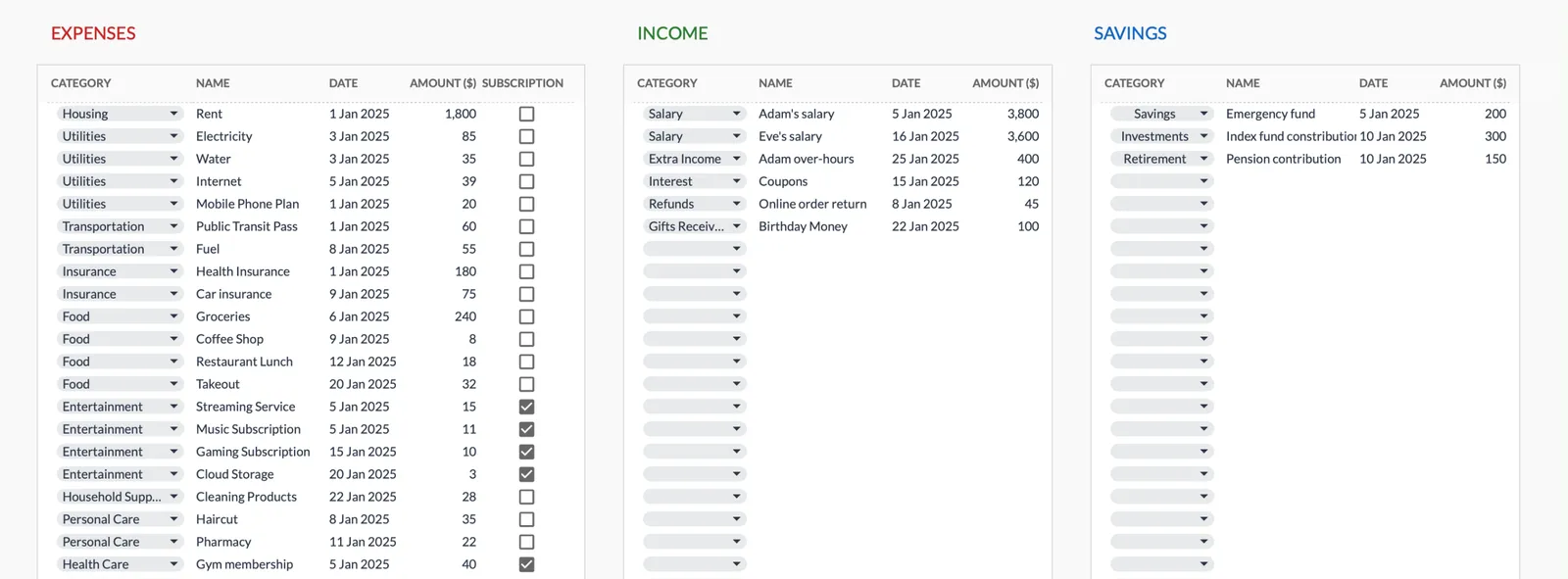
Log every expense with dates and categories
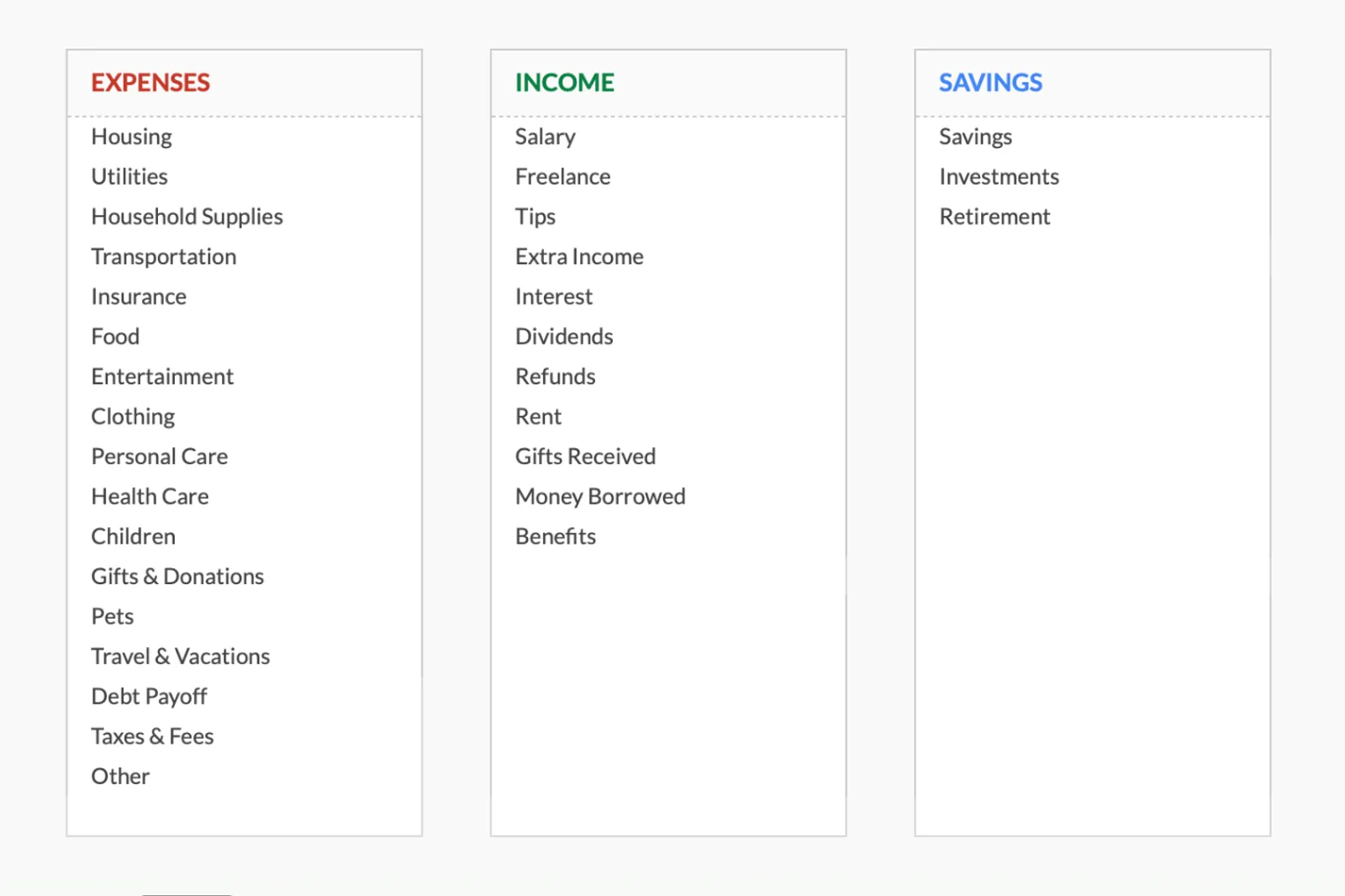
Organize spending into customizable categories
Detailed breakdown of all expenses
Track savings alongside expenses
Get Started
Template for This Use Case
Track all expenses with categories, automatic totals, and visual summaries. Built for ongoing expense tracking with monthly reporting that shows exactly where money goes.
View template Save $91Get expense tracking plus tax planning, budgeting, and financial planning. Especially valuable for self-employed individuals who need expense tracking for both personal budgeting and tax deduction purposes.
Includes 8 templates
View bundleCommon Questions
Expense Report Spreadsheet FAQ
What is the best way to categorize expenses?
Start with broad categories (housing, food, transportation, utilities, healthcare, entertainment, personal) and add sub-categories only if more detail is needed. For tax purposes, align categories with deduction categories (business travel, home office, professional development, etc.). Consistency matters more than the specific categories chosen.
How detailed should expense tracking be?
Enough detail to understand spending patterns and meet tax requirements, but not so much that tracking becomes a burden. At minimum, record date, amount, and category. Adding a brief description helps when reviewing expenses later. The level of detail should match the purpose of tracking.
Should cash expenses be tracked?
Yes, if accuracy matters. Cash expenses are the most commonly untracked spending. Some people find that withdrawing a set amount of cash for discretionary spending and tracking only the total withdrawal is a practical compromise between accuracy and effort.
How long should expense records be kept?
For tax-related expenses, the IRS generally recommends keeping records for at least 3 years from the date of filing. For personal budgeting, 1-2 years of history provides useful comparison data. Digital records take up negligible space, so keeping them longer has little downside.
Can expense reports help with tax preparation?
Well-categorized expense reports significantly simplify tax preparation, especially for self-employed individuals. Having a full year of categorized expenses means the annual tax summary can be generated quickly rather than reconstructing a year of spending from bank statements. The time saved is substantial.
Can't find the answer you're looking for? Contact our team
Get a ready-made expense report spreadsheet
Skip the setup and start with a professionally designed spreadsheet template. All formulas, charts, and tracking built in.
Ready to get started?
Download instantly and start managing your finances, or contact us to design a custom template package for your needs.