Spreadsheet Guide
Debt Tracker Spreadsheet
A debt tracker brings all debts into one view - credit cards, loans, and any other obligations. Seeing the complete picture is the first step toward a payoff plan.
In Depth
Seeing All Debts in One Place Changes the Conversation
Most people know roughly how much they owe on their largest debts - the mortgage, the car loan, maybe student loans. But the complete picture, including credit card balances, medical bills, personal loans, and smaller obligations, often totals more than expected. The act of listing every debt in a single view is, for many people, the first time they have confronted the full scope of their obligations. This moment of clarity, while sometimes uncomfortable, is almost always the starting point for meaningful progress.
A debt tracker differs from a debt payoff calculator in an important way: it focuses on current state rather than future projections. Where payoff calculators answer "when will I be debt-free?", a tracker answers "what do I owe right now, to whom, at what rate, and when is each payment due?" Both questions matter, but the tracker provides the operational foundation that keeps payments current and prevents the compounding consequences of missed obligations - late fees, penalty interest rates, and credit score damage.
The trend line that a debt tracker produces over months is one of the most motivating data points in personal finance. Even when individual months feel like slow progress, a chart showing total debt declining from $45,000 to $38,000 over eight months tells a clear story of forward movement. This historical perspective is impossible without consistent tracking, and it provides evidence of progress that feelings alone cannot reliably deliver.
Overview
What a Debt Tracker Spreadsheet Does
A debt tracker spreadsheet consolidates all debts into a single dashboard. It records each debt with its lender, balance, interest rate, minimum payment, and due date. The spreadsheet calculates total debt, average interest rate, monthly payment obligations, and tracks how balances change over time. Unlike a payoff calculator, a tracker focuses on the current state of all debts and makes sure nothing falls through the cracks.
How It Works
How to Use a Debt Tracker
Enter all debts with current details
List every debt: credit cards, student loans, auto loans, personal loans, medical debt, and any other obligations. Include the lender name, current balance, interest rate, minimum payment, and payment due date. This complete inventory is often eye-opening.
Update balances monthly
After each payment cycle, update the current balance for each debt. The spreadsheet tracks the change over time, showing whether overall debt is increasing, decreasing, or staying flat. This trend line is one of the most important numbers in personal finance.
Monitor payment dates and minimum obligations
Missing a payment can trigger late fees and credit score damage. A debt tracker that shows all due dates in one place prevents missed payments. Some people set the tracker as a monthly reminder to verify all payments were made.
Use the data to build a payoff strategy
With all debts visible in one place, patterns emerge. Which debt costs the most in interest? Which could be paid off quickly? This information feeds into choosing a payoff strategy - whether snowball, avalanche, or another approach.
See The Template
A ready-made debt tracker tool
Instead of building from scratch, start with a template that has the structure, formulas, and visuals already in place.
- Pre-built formulas and calculations
- Visual charts and dashboards
- No setup required
- Works in Google Sheets and Excel
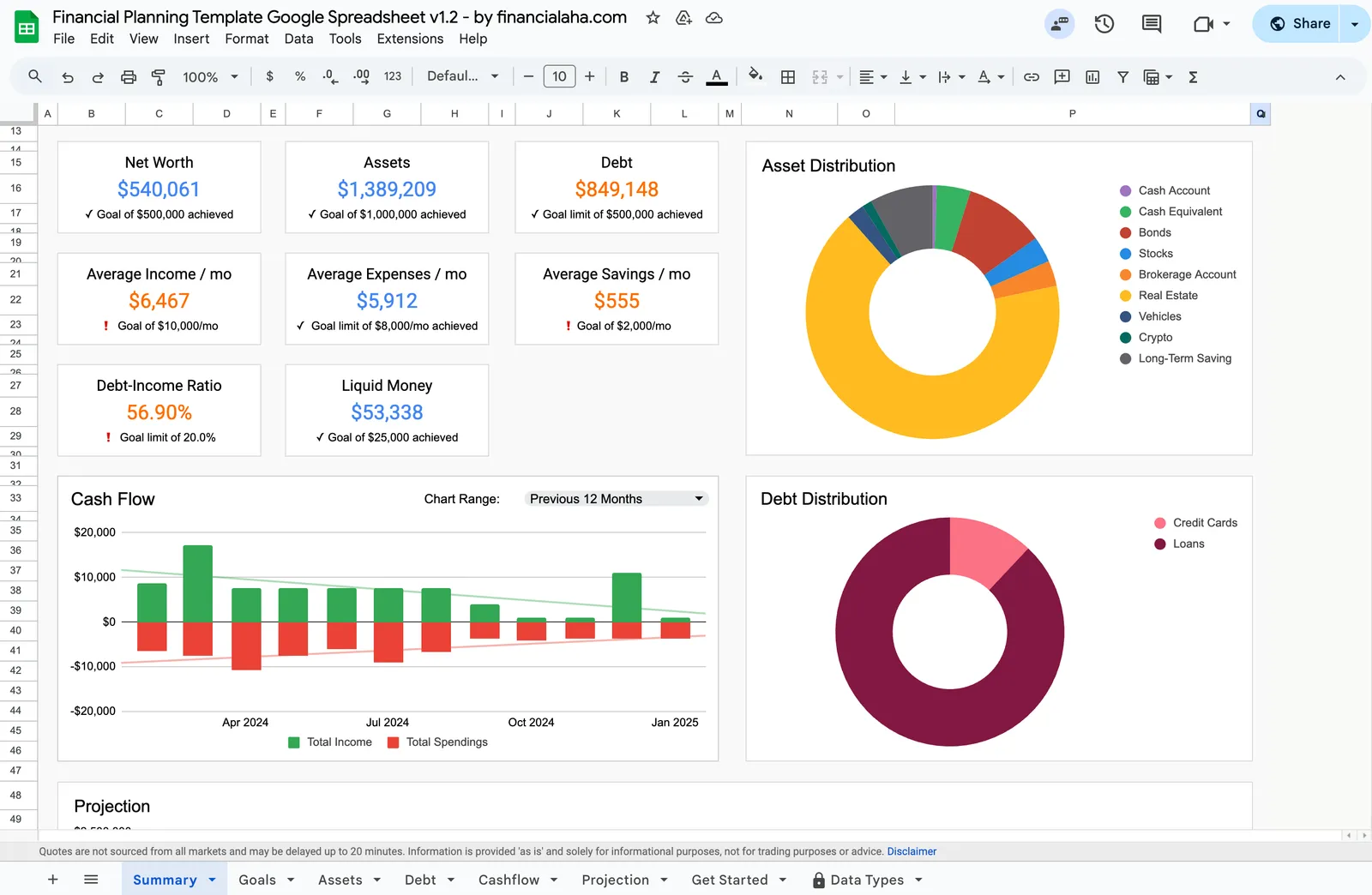
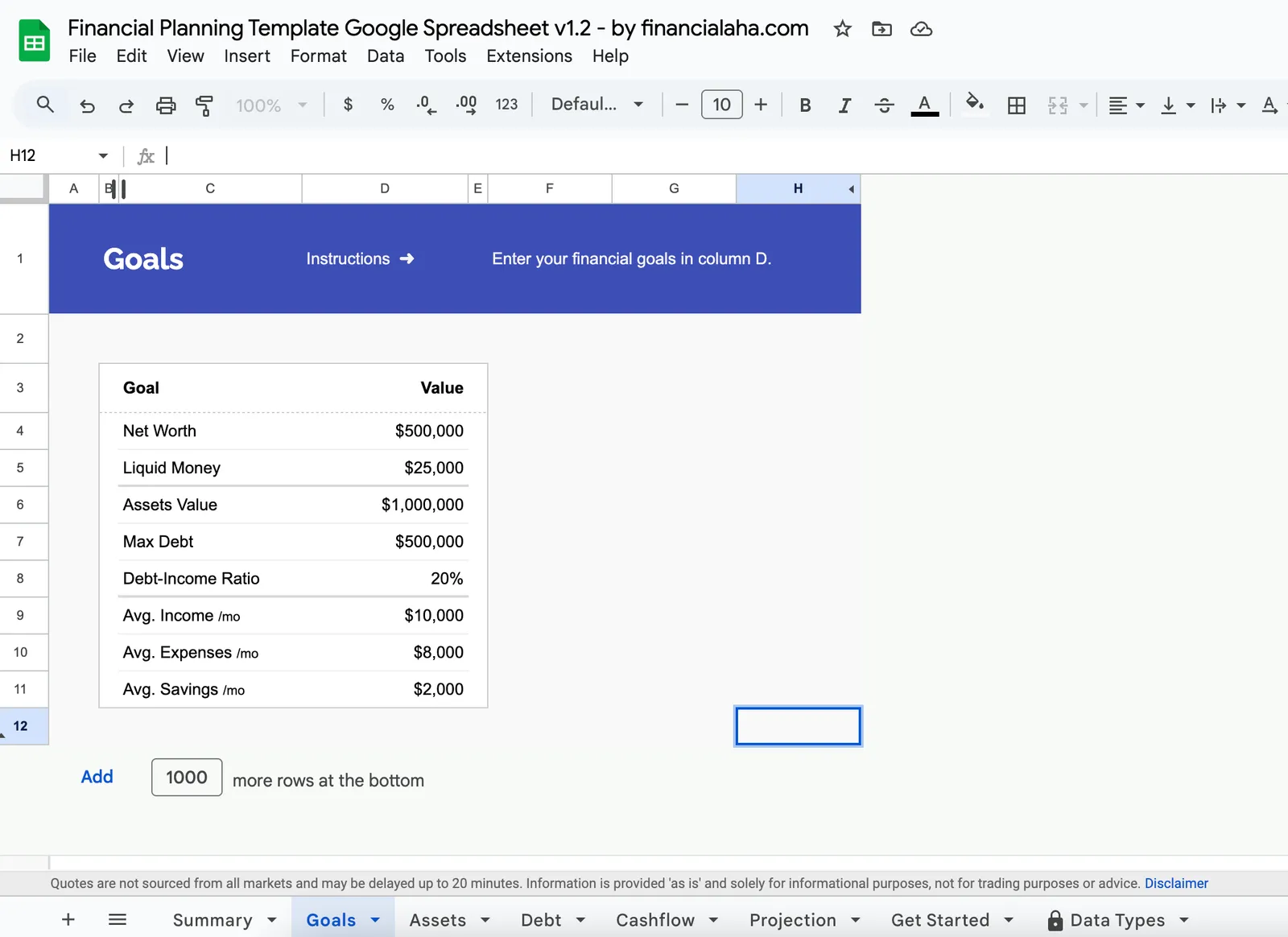
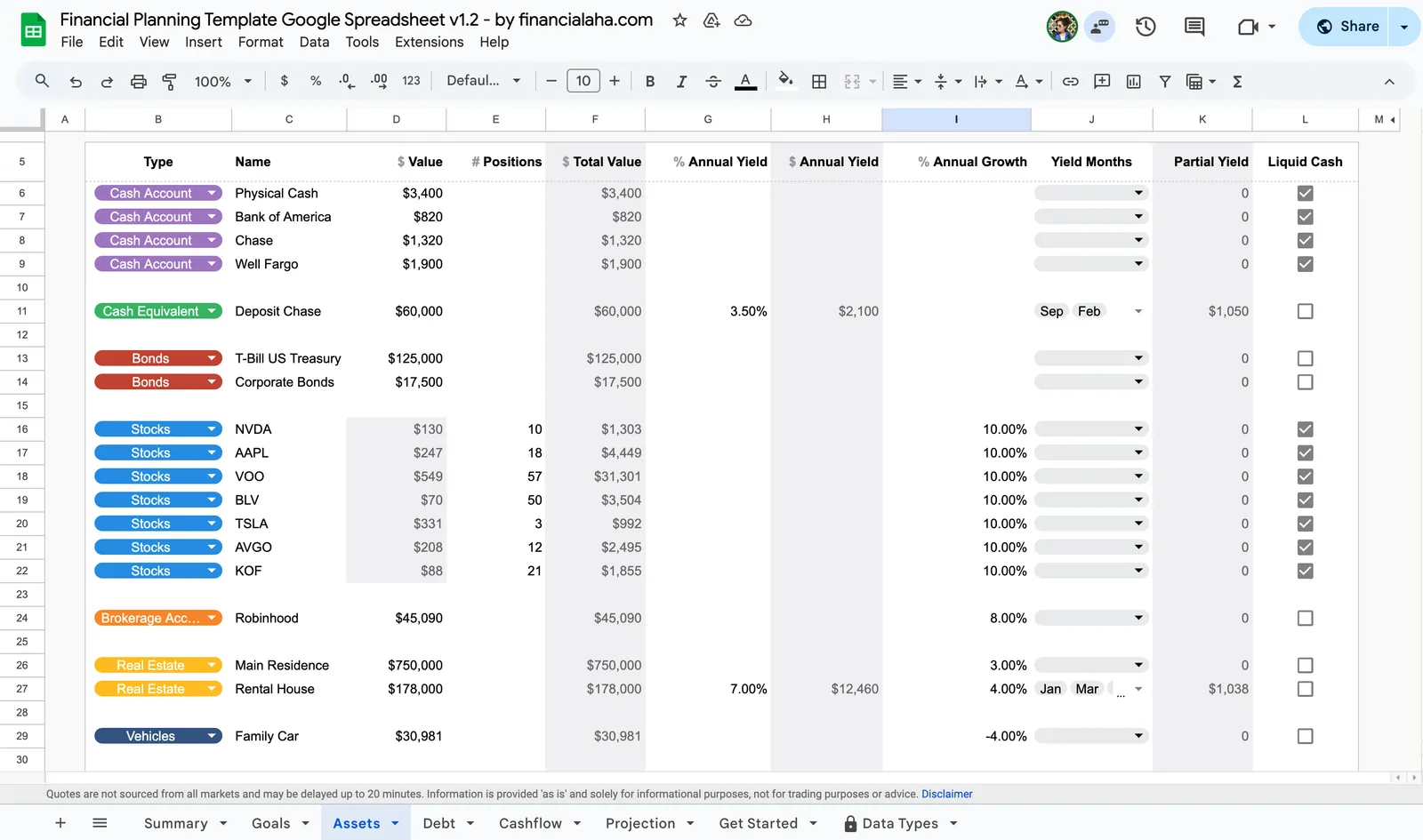
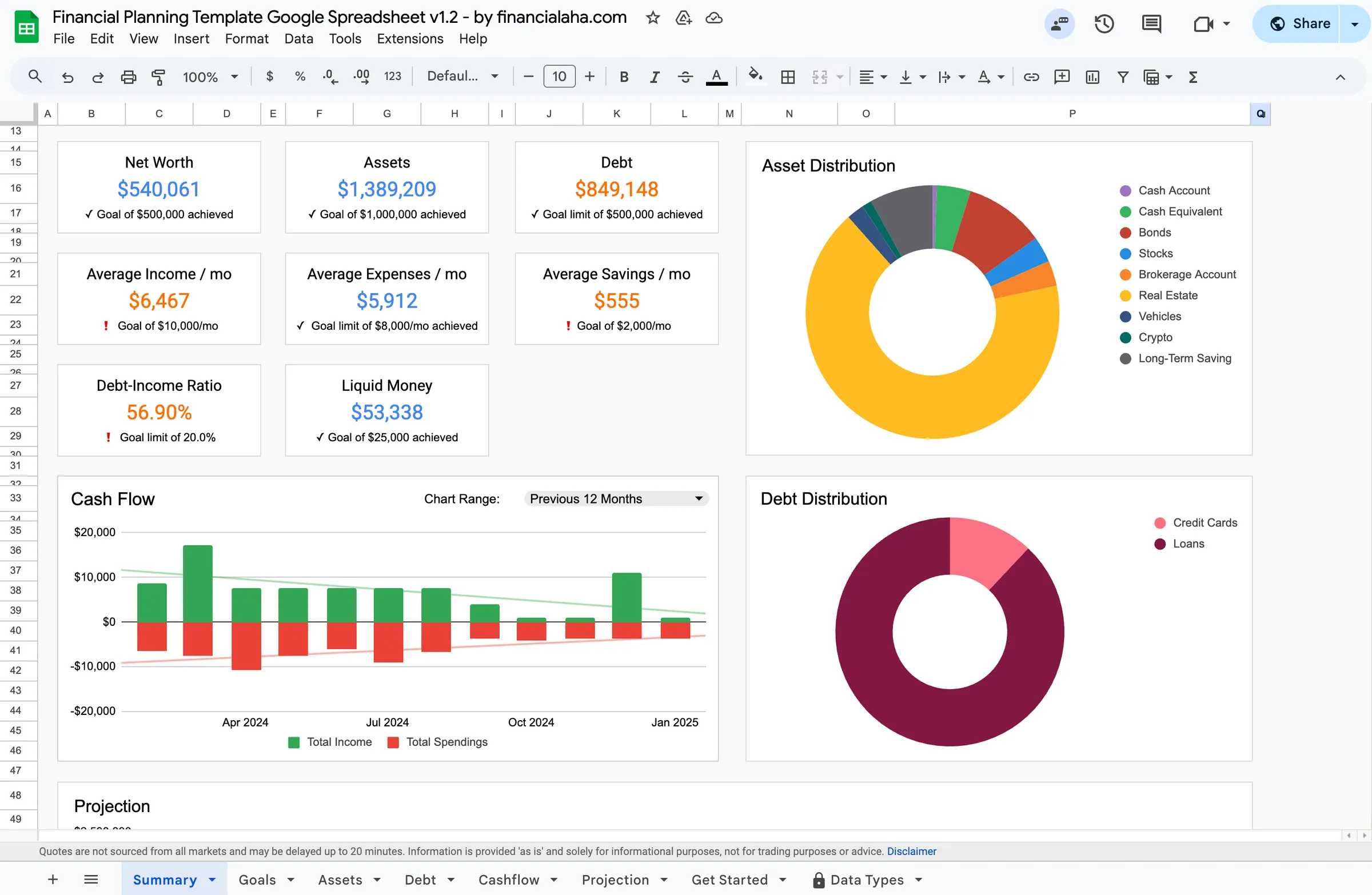
Complete financial overview with net worth and goals
Set and track progress toward financial milestones
Track all your assets in one place
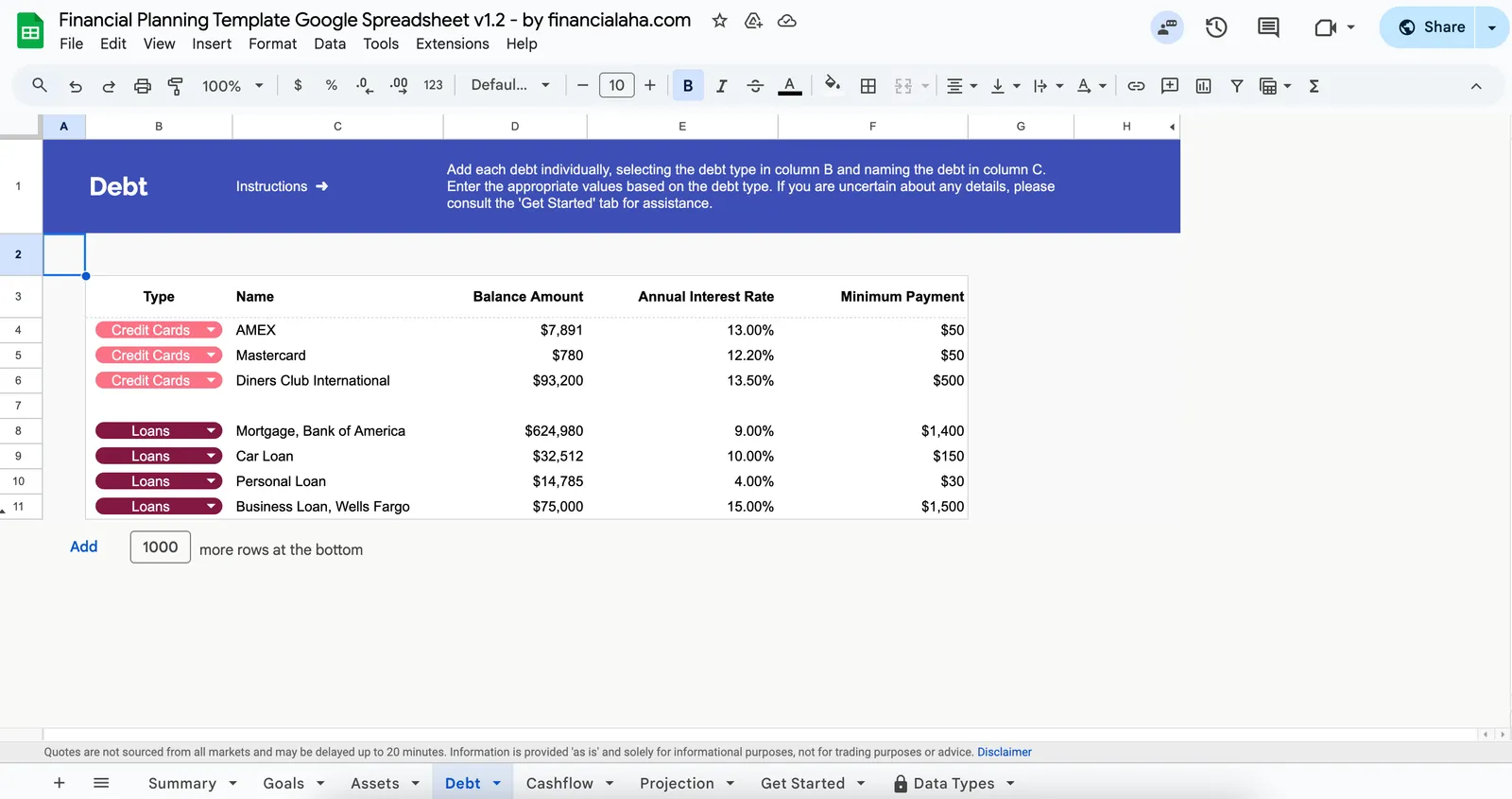
Monitor and plan debt repayment
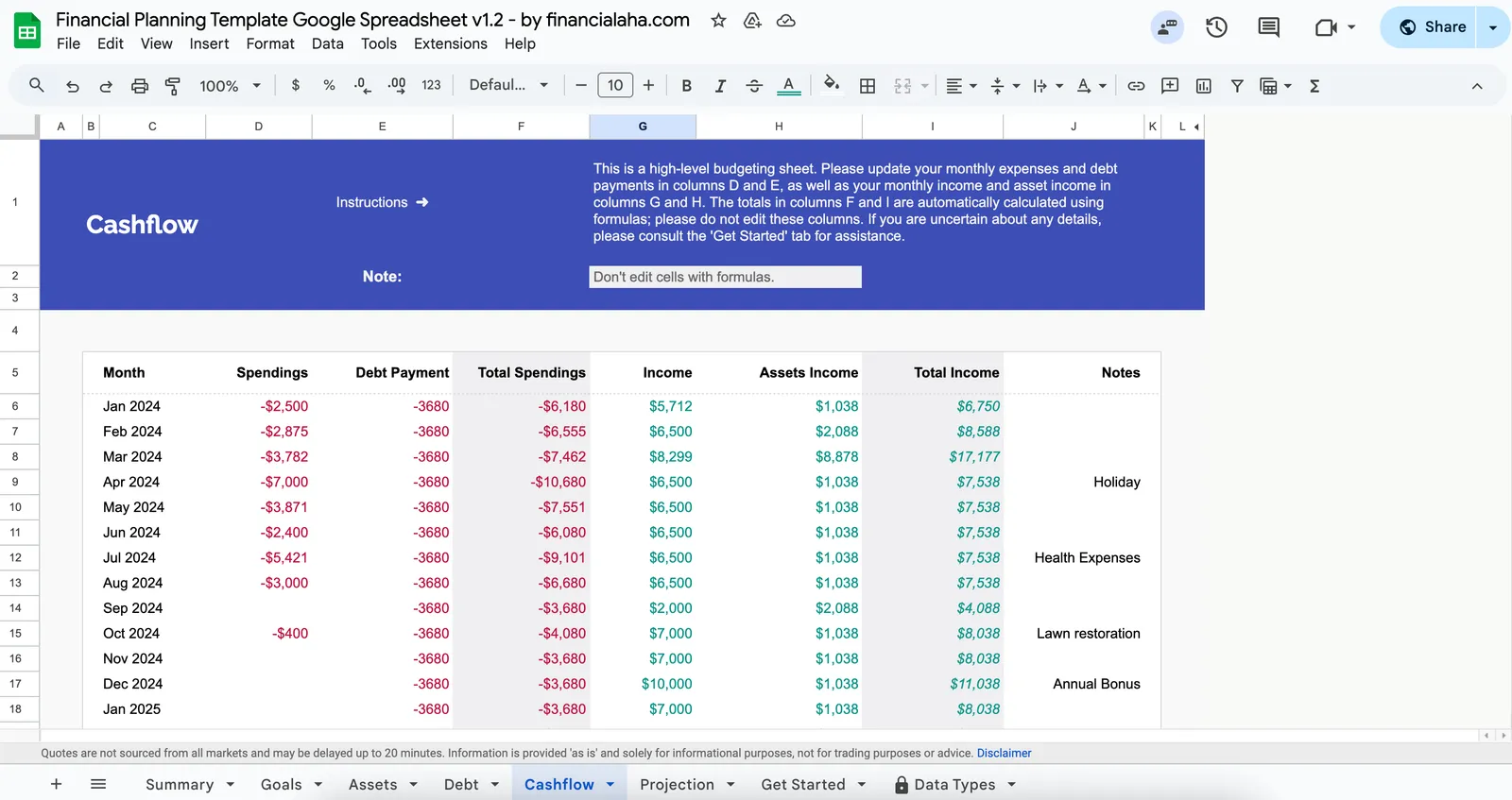
Visualize your income vs spending over time
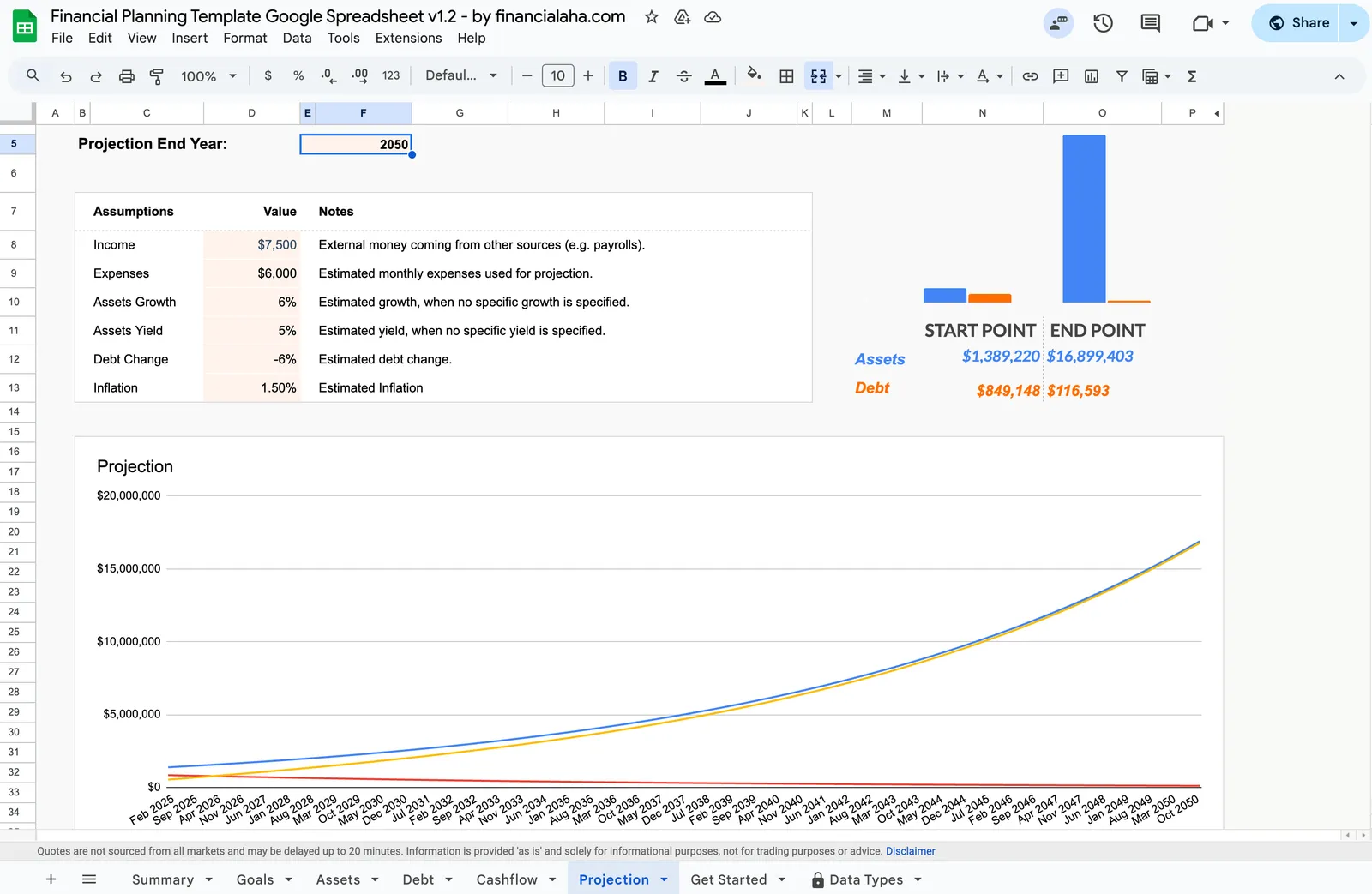
Project your financial future
Get Started
Template for This Use Case
Goes beyond basic debt tracking - see all debts in context with assets, income, and financial goals. The debt section includes balances, rates, and projections, while the broader template shows how debt affects your complete financial picture.
View template Save $58Get financial planning, net worth tracking, and budgeting tools together. Track debts, monitor how payoff improves your net worth, and manage the monthly budget that funds extra debt payments.
Includes 5 templates
View bundleCommon Questions
Debt Tracker Spreadsheet FAQ
What information should a debt tracker include?
At minimum: lender/creditor name, current balance, interest rate, minimum payment, and due date. Useful additions include original balance, payment history, projected payoff date, and total interest paid to date. The right level of detail depends on how many debts are being tracked.
How often should a debt tracker be updated?
Monthly updates after statement dates or payment confirmations keep the tracker accurate. Some people update after every payment, while others do a monthly review. Consistency matters more than frequency - the tracker only works if it reflects current reality.
Should a mortgage be included in a debt tracker?
Including the mortgage provides the most complete picture of total obligations. Some people track the mortgage separately since it is typically on a fixed schedule with a much longer timeline than consumer debts. Either approach works - the key is having visibility into all financial obligations.
What is the difference between a debt tracker and a debt payoff calculator?
A debt tracker records current state - what is owed, to whom, at what rate. A debt payoff calculator projects the future - how long until debts are paid off given certain payment amounts. Many people use both: the tracker for monitoring and the calculator for planning.
Can a spreadsheet replace debt management software?
For most people with a manageable number of debts, a spreadsheet provides all the functionality needed. It is more flexible than most apps, works offline, and does not require a subscription. Dedicated software may add value for complex debt situations or people who prefer automated imports.
Can't find the answer you're looking for? Contact our team
Get a ready-made debt tracker spreadsheet
Skip the setup and start with a professionally designed spreadsheet template. All formulas, charts, and tracking built in.
Ready to get started?
Download instantly and start managing your finances, or contact us to design a custom template package for your needs.