Spreadsheet Guide
Debt Snowball Spreadsheet
The debt snowball method focuses on paying off the smallest debt first while making minimum payments on everything else. A spreadsheet makes the progress visible and the math automatic.
In Depth
Why Early Wins Matter in Debt Repayment
The debt snowball method exists because of a simple insight: motivation is as important as mathematics in long-term financial goals. Paying off a $300 store credit card in two months provides a psychological boost that paying down a $15,000 student loan by $300 does not. The balance disappears, the monthly payment obligation drops, and the sense of progress is concrete. These emotional milestones sustain effort through what can be a years-long process.
The spreadsheet component of the snowball method serves a specific purpose beyond simple tracking. Seeing all debts listed with their balances and projected payoff dates creates a roadmap that makes the journey feel finite. Without this view, debt payoff can feel like an endless treadmill. With it, each month's payment is a measurable step toward a visible endpoint. The act of updating balances and watching payoff dates move closer provides regular reinforcement of progress.
One nuance that often gets lost in snowball versus avalanche debates is that the difference in total interest between the two methods is frequently smaller than people assume. For someone with $20,000 in mixed debts, the interest cost difference might be a few hundred dollars spread over several years. For many people, the motivational advantage of the snowball approach more than compensates for this difference in sustained engagement with the payoff plan.
Overview
What a Debt Snowball Spreadsheet Does
A debt snowball spreadsheet lists all debts ordered from smallest to largest balance. It tracks minimum payments on each debt and shows where extra payments go - always toward the smallest remaining balance. As each debt is paid off, the freed-up payment amount "snowballs" into the next smallest debt, creating increasingly larger payments. The spreadsheet calculates payoff dates, total interest paid, and shows the motivating progress of debts disappearing one by one.
How It Works
How the Debt Snowball Method Works
List all debts from smallest to largest balance
Record each debt with its current balance, interest rate, and minimum monthly payment. Order them by balance size, ignoring interest rates. This ordering is what makes the snowball method different from the avalanche method.
Pay minimums on everything except the smallest debt
Make the minimum required payment on all debts to stay current. Any extra money available for debt payoff goes entirely toward the smallest balance. This concentrated approach pays off the first debt as quickly as possible.
Roll payments forward as debts are eliminated
When the smallest debt is paid off, take its entire payment amount (minimum + extra) and add it to the minimum payment on the next smallest debt. The payment amount grows with each debt eliminated, accelerating the payoff speed.
Track progress and maintain momentum
The psychological power of the snowball method comes from seeing debts disappear. Tracking the number of debts remaining, total balance decrease, and projected payoff dates keeps motivation high through what can be a multi-year process.
See The Template
A ready-made debt snowball tool
Instead of building from scratch, start with a template that has the structure, formulas, and visuals already in place.
- Pre-built formulas and calculations
- Visual charts and dashboards
- No setup required
- Works in Google Sheets and Excel
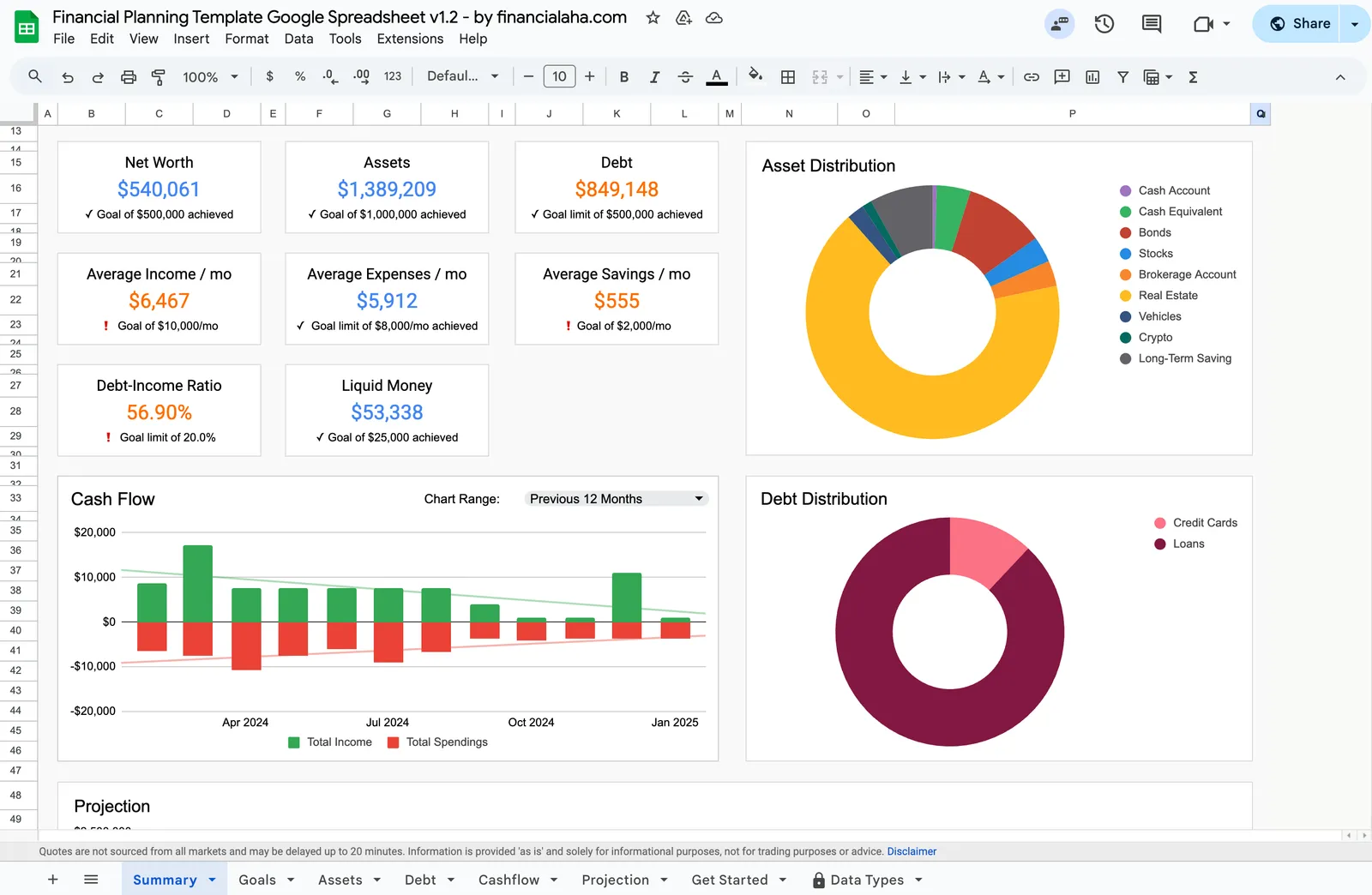
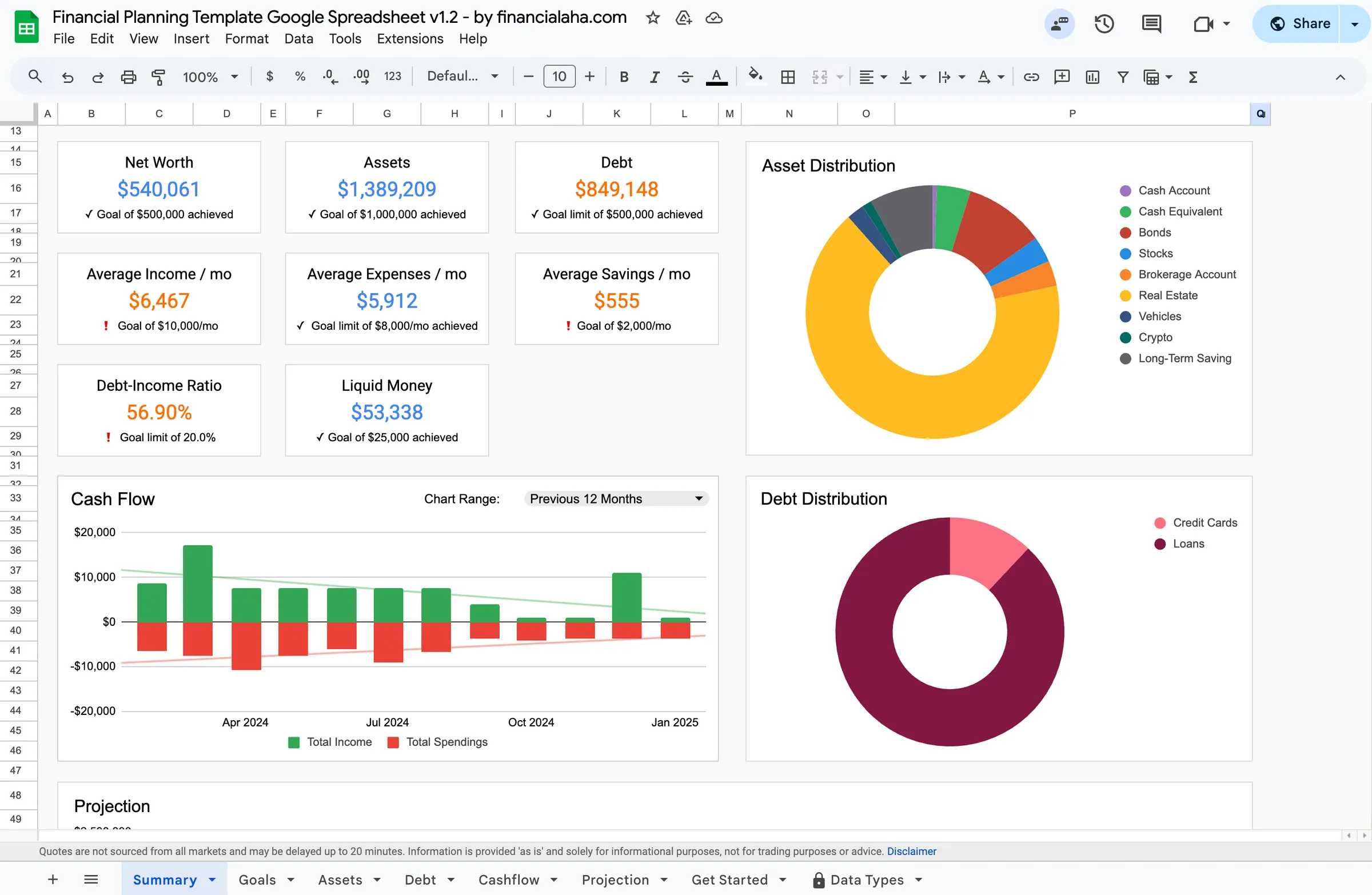
Complete financial overview with net worth and goals
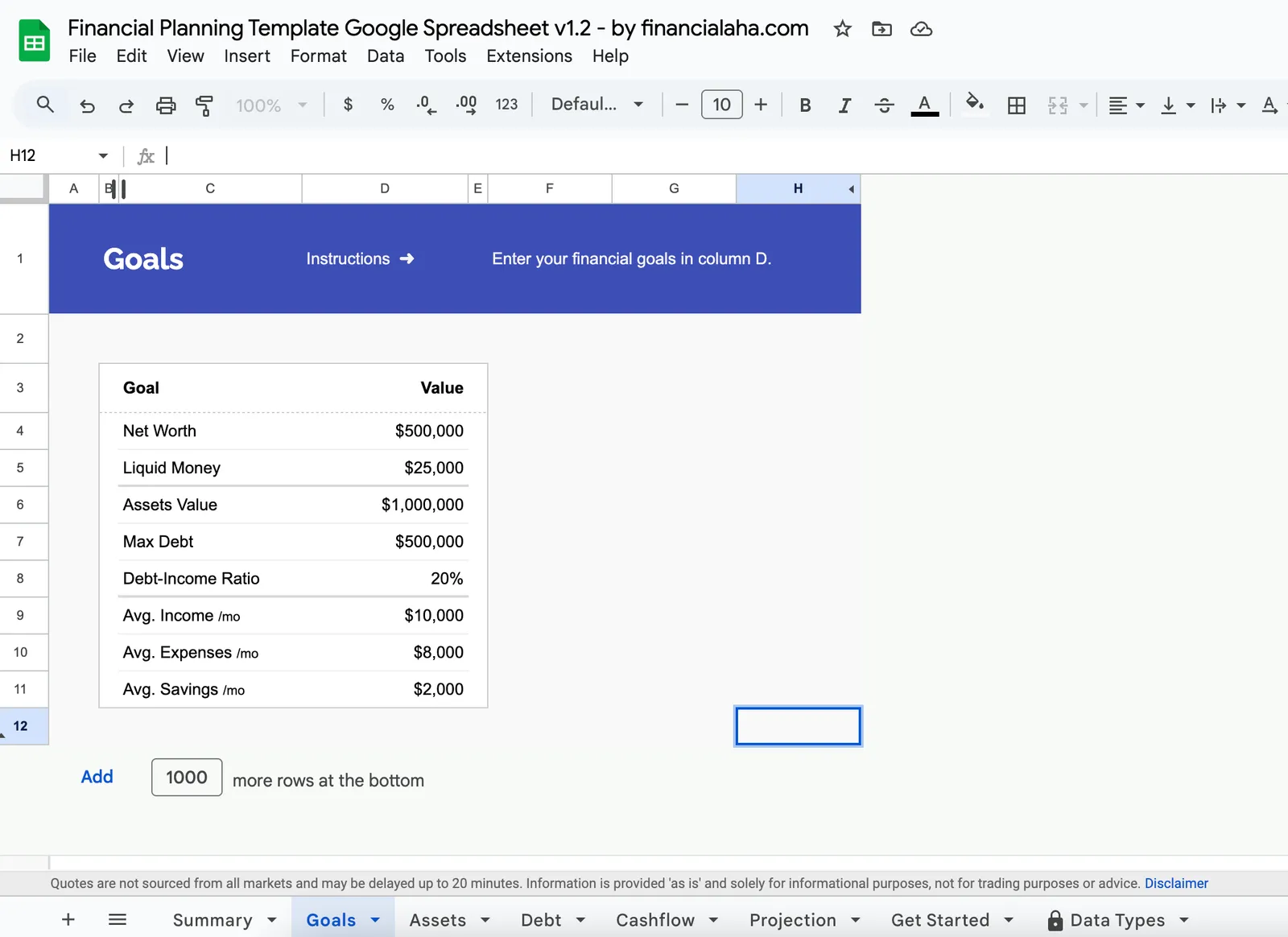
Set and track progress toward financial milestones
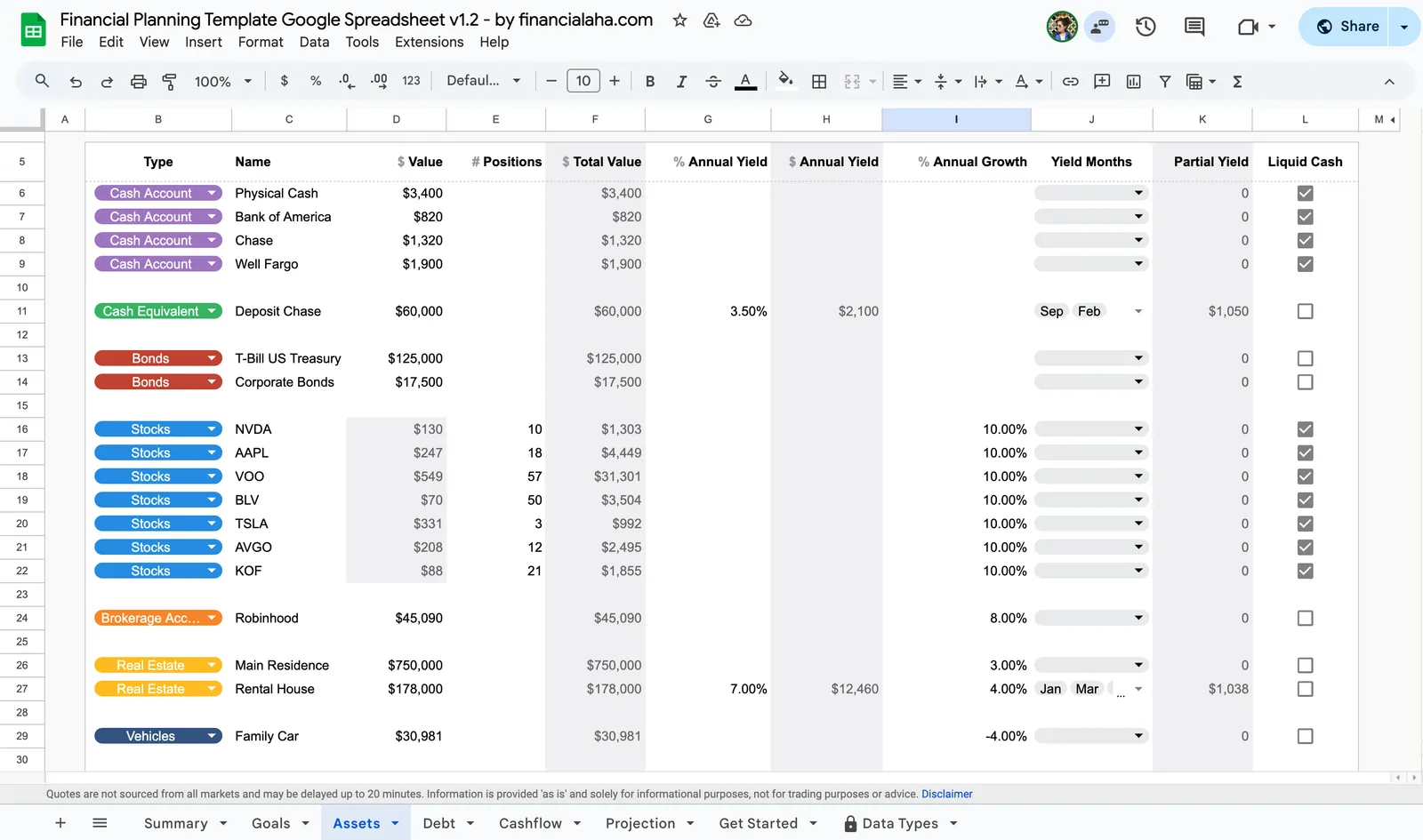
Track all your assets in one place
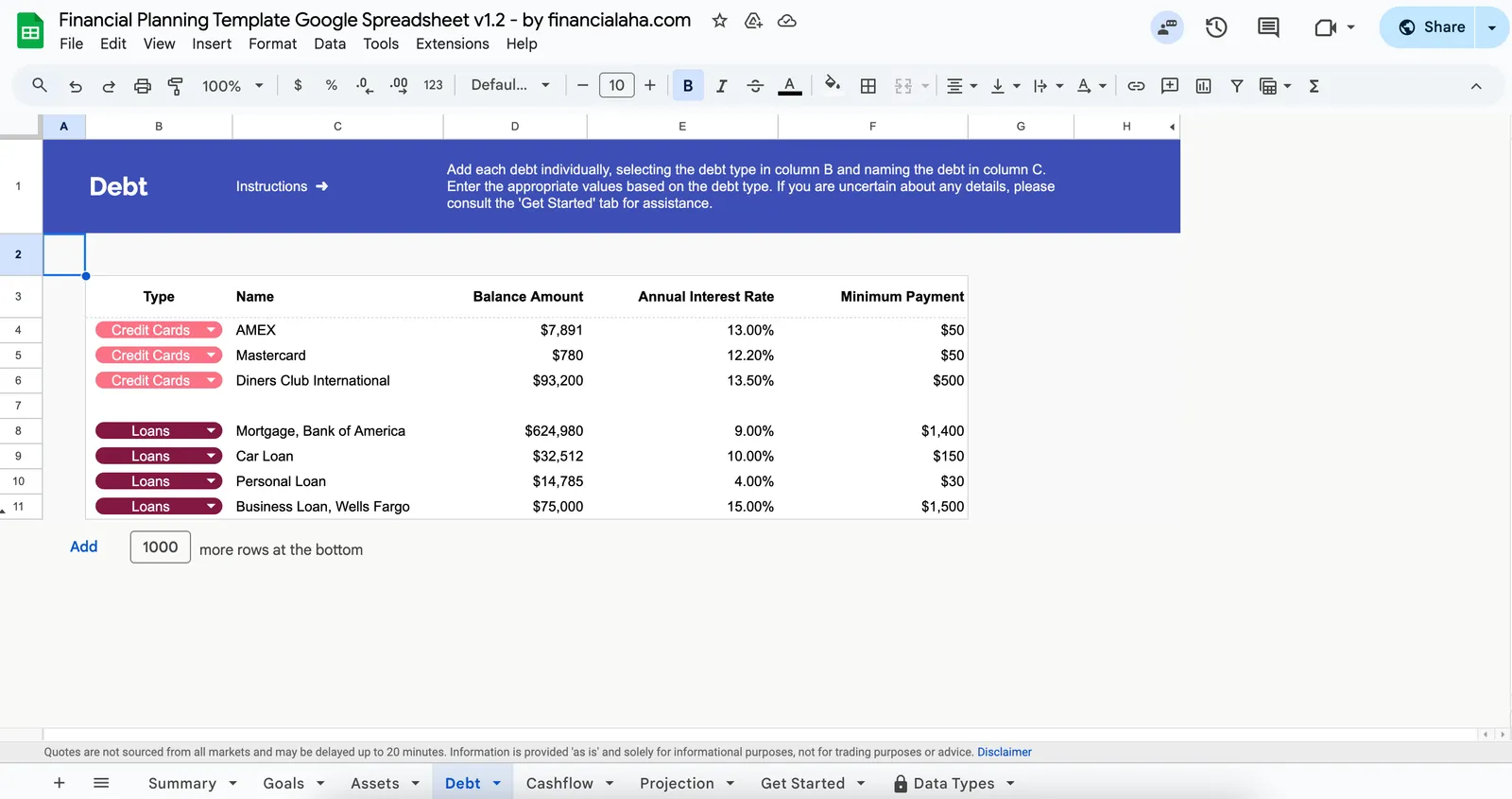
Monitor and plan debt repayment
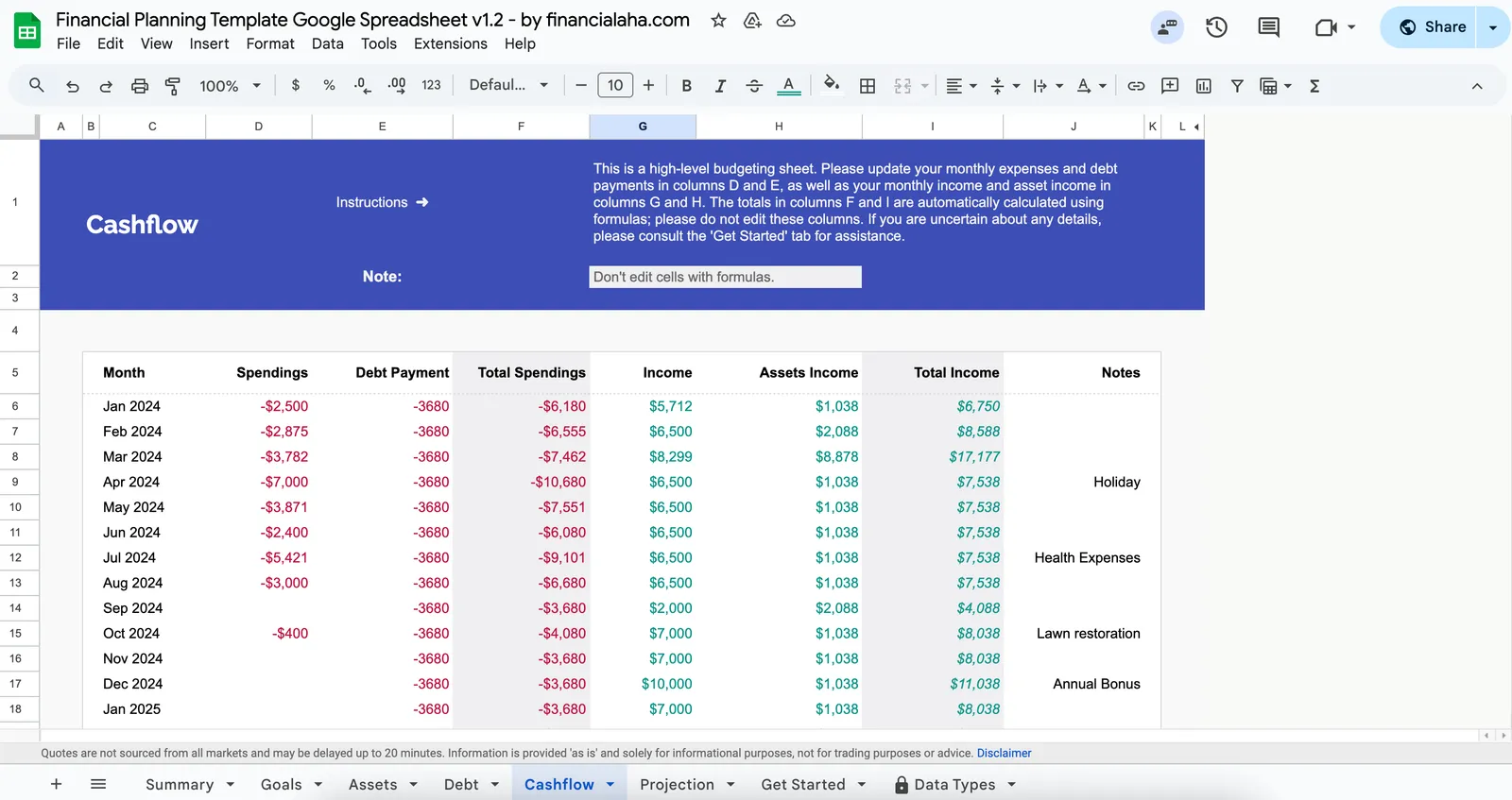
Visualize your income vs spending over time
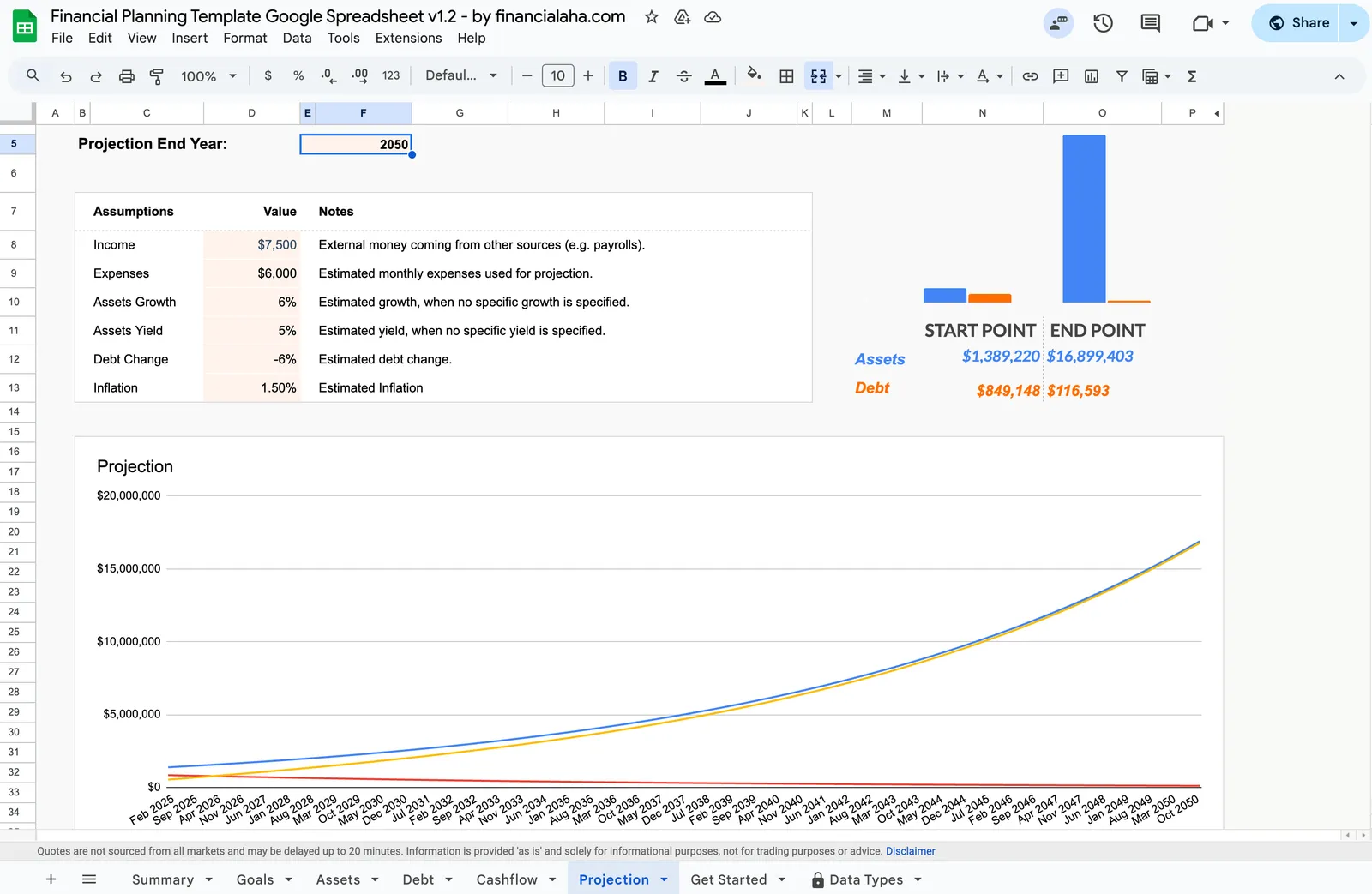
Project your financial future
Get Started
Template for This Use Case
Track all debts alongside your complete financial picture. See balances, payments, and projections in context with your assets, net worth, and cash flow - giving a comprehensive view of how debt payoff improves your overall financial health.
View template Save $91Get the financial planning template plus monthly budgeting, expense tracking, and tax planning. Manage the entire debt payoff journey from finding extra money in the budget to tracking the final payment.
Includes 8 templates
View bundleCommon Questions
Debt Snowball Spreadsheet FAQ
Is the debt snowball method effective?
Research suggests the debt snowball method works well because of the motivational boost from early wins. While the avalanche method (highest interest first) saves more on interest, many people find the snowball approach easier to stick with long-term because small debts are eliminated quickly.
How is the snowball different from the avalanche method?
The snowball orders debts by balance (smallest first) while the avalanche orders by interest rate (highest first). The avalanche saves more money mathematically, but the snowball provides quicker psychological wins. Both methods work - the one a person will actually stick with is the one that works for them.
How much extra should go toward debt each month?
Any amount above minimum payments helps. Even an extra $50/month makes a meaningful difference over time. Reviewing the monthly budget for areas to reduce spending can free up additional money. Some people direct windfalls (bonuses, tax refunds) entirely toward debt.
Can the snowball method work with a mortgage?
Most people exclude the mortgage from the snowball and focus on consumer debts (credit cards, personal loans, student loans, auto loans). The mortgage is typically addressed after all other debts are paid off, though some people include it as the final debt in their snowball.
How long does the debt snowball take?
The timeline depends entirely on total debt, interest rates, and extra payment amount. A few thousand dollars of credit card debt might take 6-18 months. Larger debt loads including student loans could take several years. A debt payoff calculator can show projections based on specific numbers.
Can't find the answer you're looking for? Contact our team
Get a ready-made debt snowball spreadsheet
Skip the setup and start with a professionally designed spreadsheet template. All formulas, charts, and tracking built in.
Ready to get started?
Download instantly and start managing your finances, or contact us to design a custom template package for your needs.