Spreadsheet Guide
Debt Avalanche Spreadsheet
The debt avalanche method targets the highest-interest debt first, saving the most money over time. A spreadsheet tracks the math and shows exactly how much interest is being saved.
In Depth
Optimizing for Interest Savings Over Time
The debt avalanche method appeals to people who prefer mathematical optimization over psychological tactics. By targeting the highest-interest debt first, the total interest paid across all debts is minimized. For someone carrying a 24% credit card alongside a 5% auto loan, the interest cost difference between avalanche and snowball ordering can be substantial - potentially thousands of dollars over the full payoff timeline.
The challenge with the avalanche approach is patience. If the highest-interest debt also has a large balance, it can take months or even years before that first debt is fully paid off. During that time, the total number of debts remains the same, minimum payments on all other debts continue, and the sense of progress comes only from watching one balance slowly decline. A well-maintained spreadsheet that tracks the interest savings - showing how much has been saved compared to making minimum payments only - provides an alternative source of motivation when debt count remains unchanged.
Some people find that the avalanche method works particularly well when there is a clear high-interest outlier in their debt portfolio. A single credit card at 22% alongside several loans in the 4-7% range creates a compelling case for focused elimination of that expensive debt. The spreadsheet makes this priority obvious by showing how much interest accumulates on each debt per month - a number that often surprises people when they see it for the first time.
Overview
What a Debt Avalanche Spreadsheet Does
A debt avalanche spreadsheet organizes all debts by interest rate, from highest to lowest. It calculates how much extra payment goes toward the highest-rate debt each month while minimums are paid on everything else. The spreadsheet projects payoff dates, total interest costs, and shows the interest savings compared to making only minimum payments. As high-interest debts are eliminated, payments cascade to the next highest rate.
How It Works
How the Debt Avalanche Method Works
Order debts by interest rate, highest first
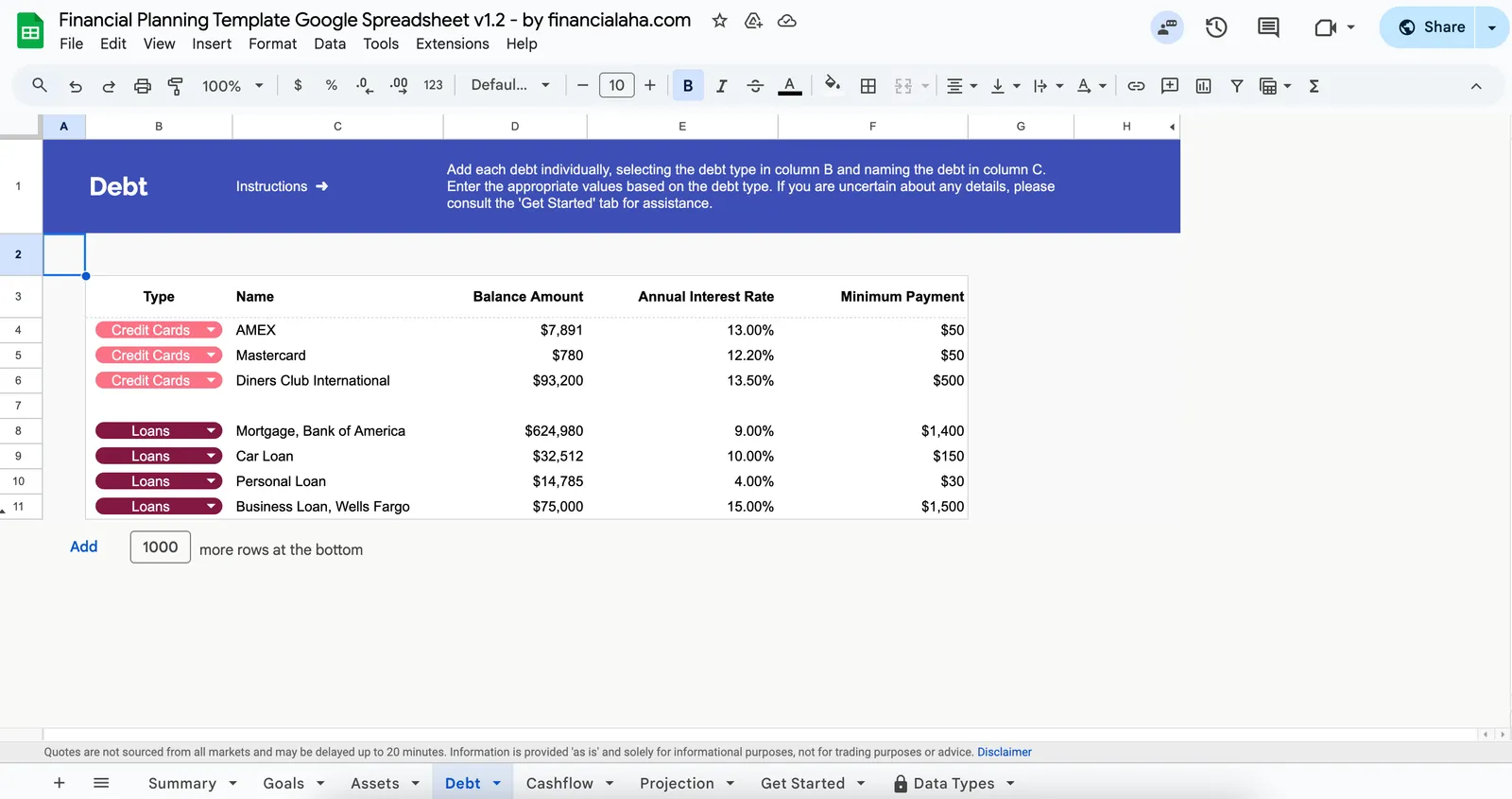
List every debt with its balance, interest rate, and minimum payment. Sort by interest rate from highest to lowest. This ordering ensures that the most expensive debt (in terms of daily interest accumulation) is eliminated first.
Direct all extra payments to the highest-rate debt
While making minimum payments on all debts, put every extra dollar toward the debt charging the highest interest rate. This minimizes the total interest paid across all debts over the payoff period.
Cascade payments as debts are paid off
When the highest-rate debt is eliminated, the entire payment amount rolls to the next highest-rate debt. Like the snowball, the available payment grows over time - but the interest savings are maximized by this ordering.
Compare interest savings vs. other methods
A well-built spreadsheet can show the total interest difference between avalanche, snowball, and minimum-payment-only approaches. This comparison highlights the financial advantage of the avalanche method and helps maintain motivation.
See The Template
A ready-made debt avalanche tool
Instead of building from scratch, start with a template that has the structure, formulas, and visuals already in place.
- Pre-built formulas and calculations
- Visual charts and dashboards
- No setup required
- Works in Google Sheets and Excel
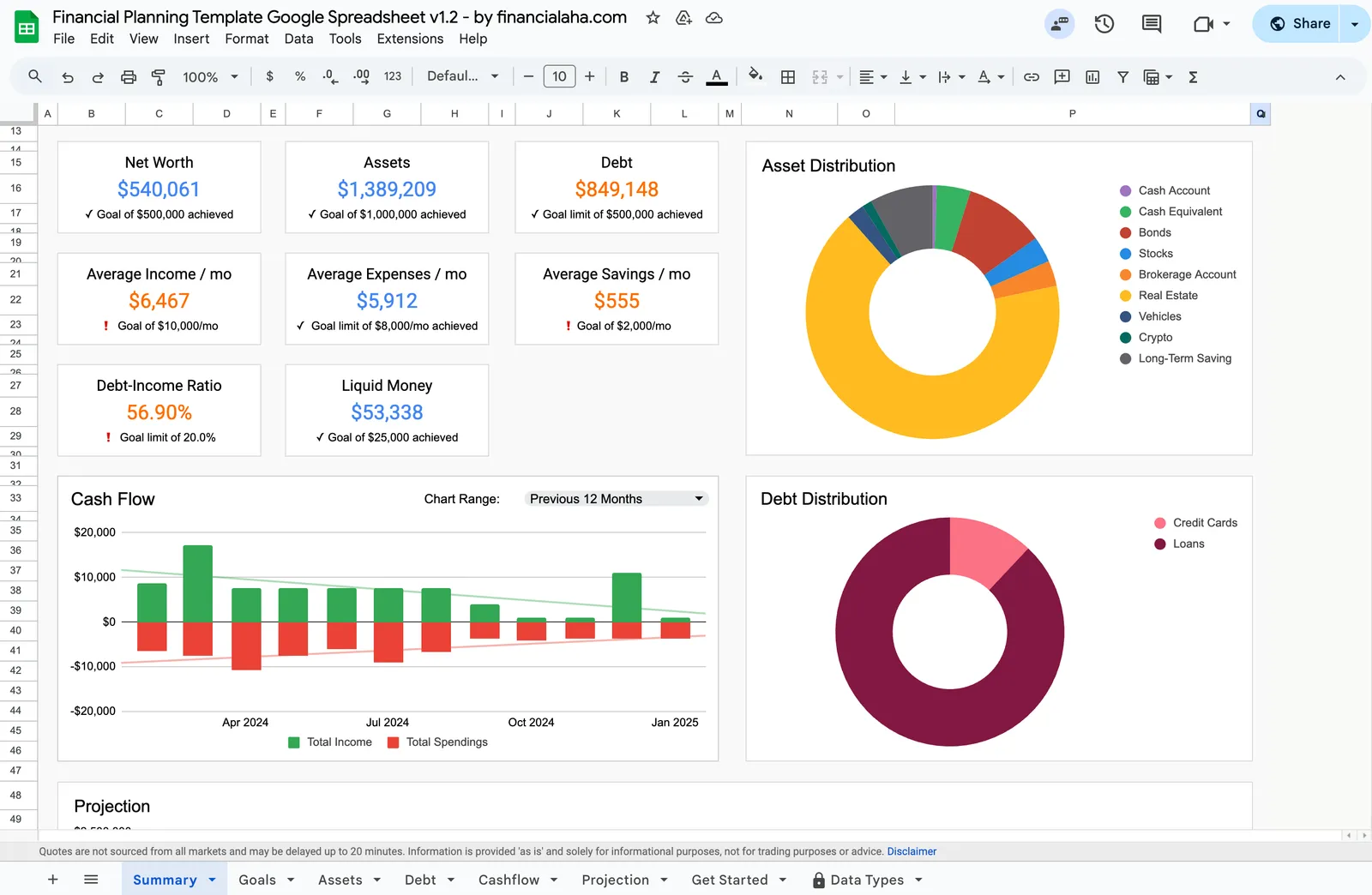
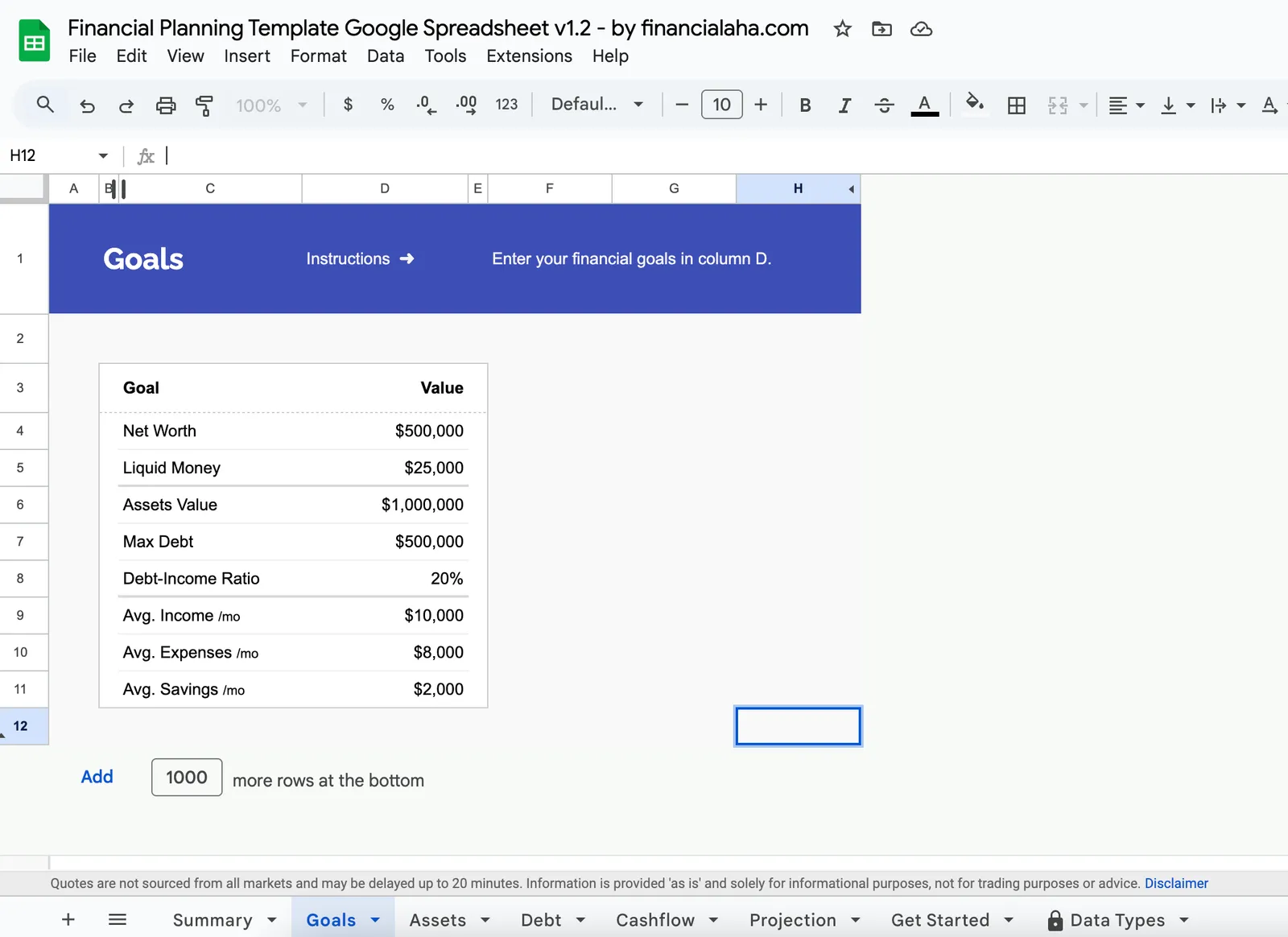
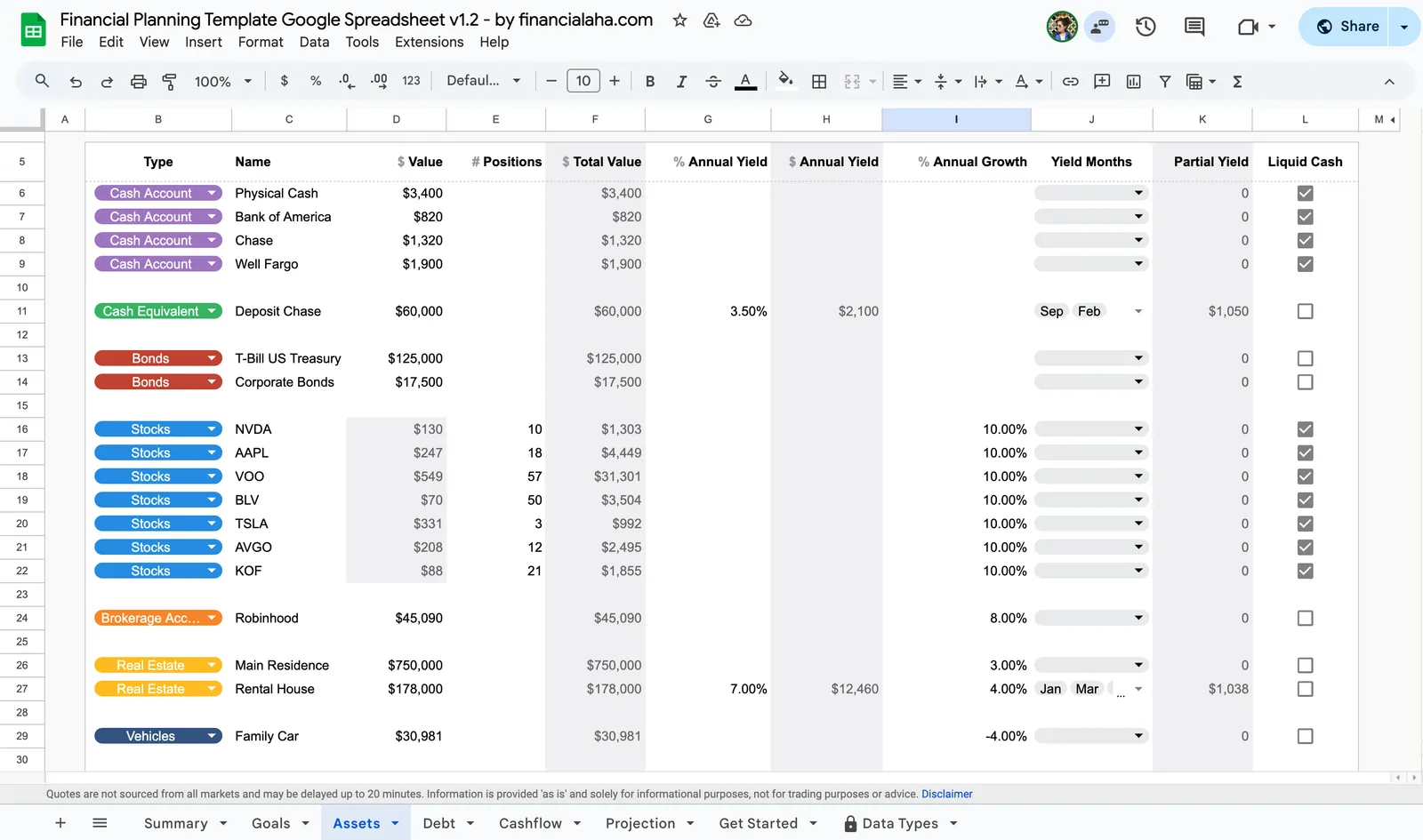
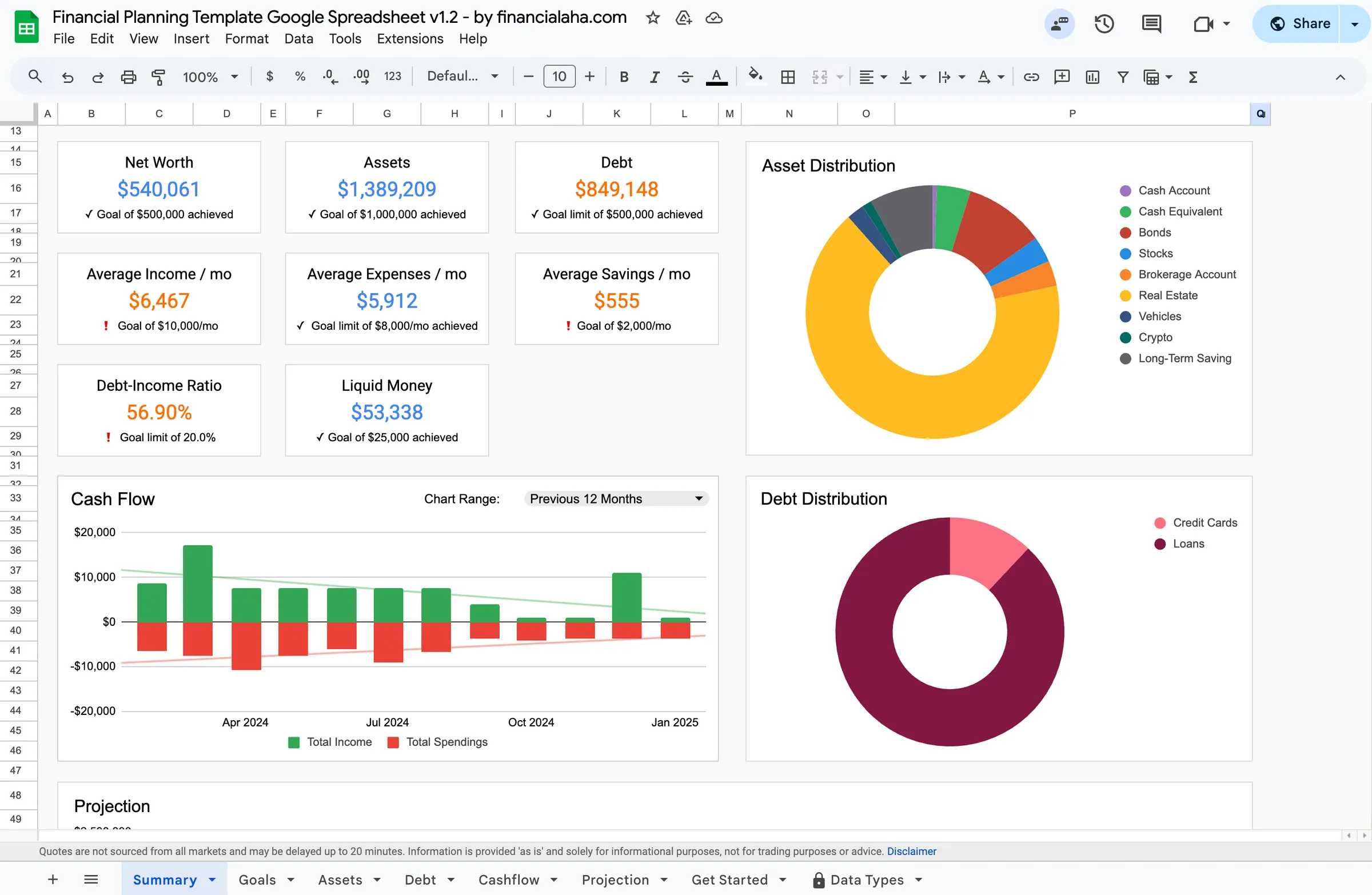
Complete financial overview with net worth and goals
Set and track progress toward financial milestones
Track all your assets in one place
Monitor and plan debt repayment
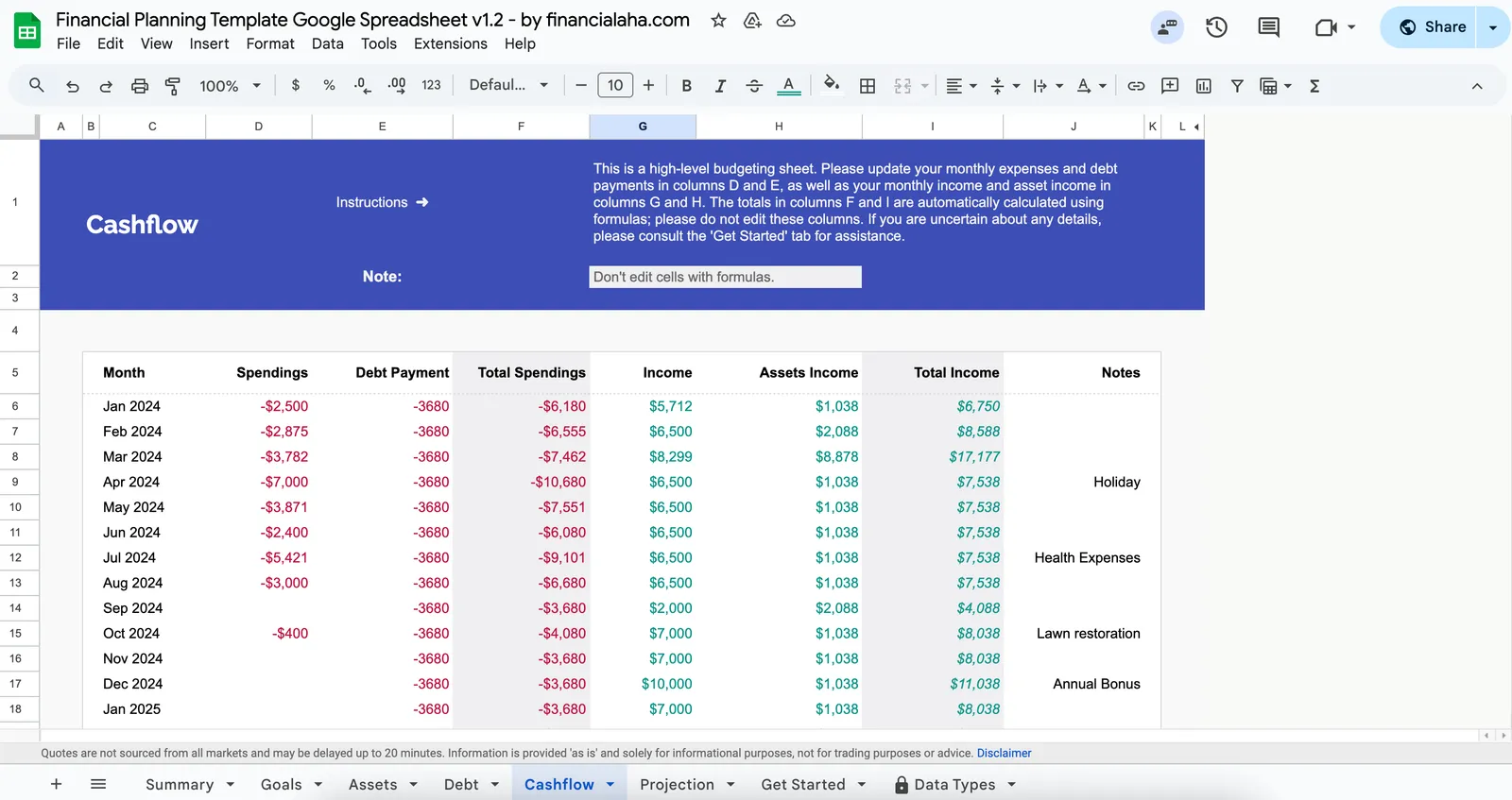
Visualize your income vs spending over time
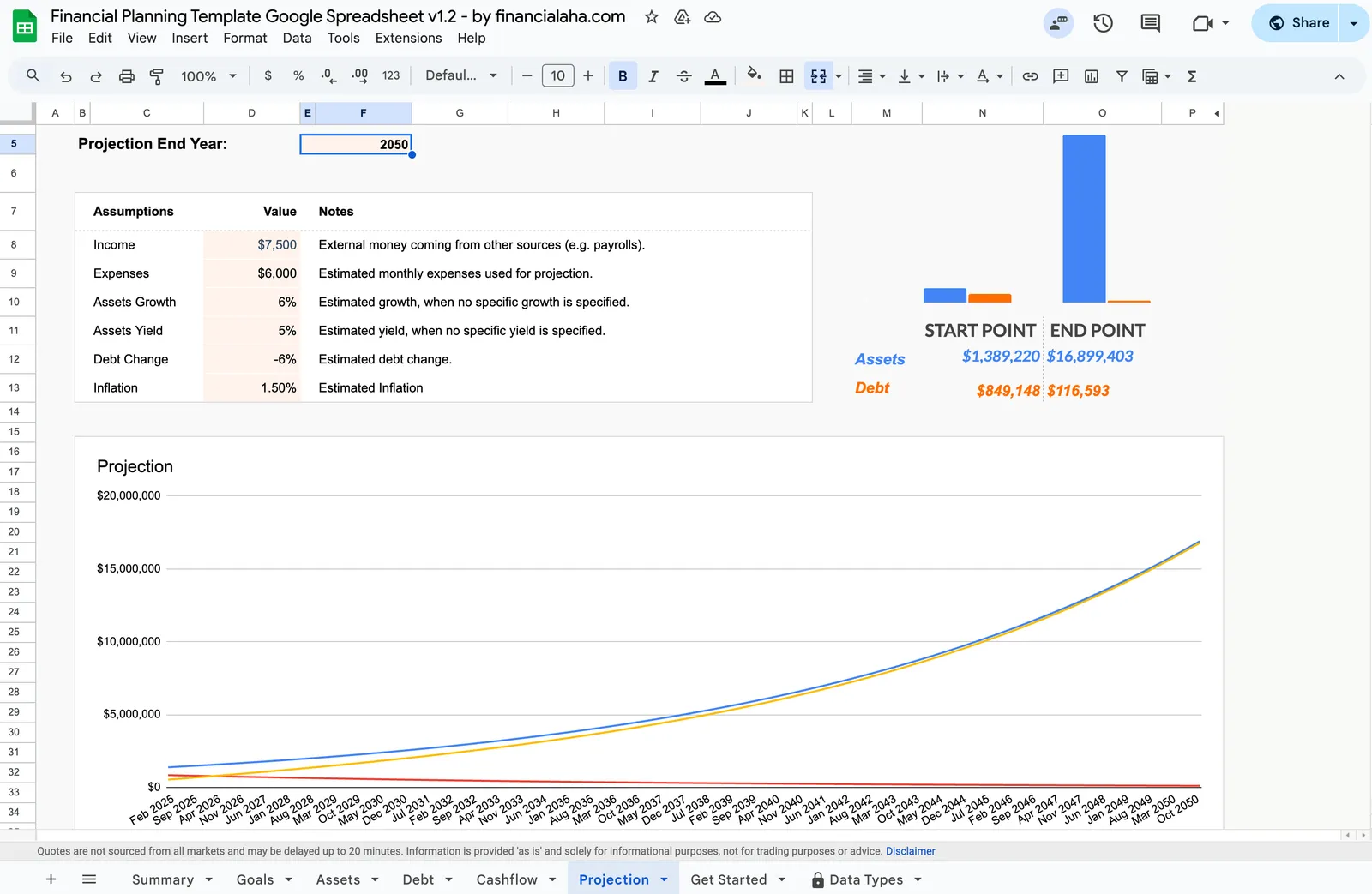
Project your financial future
Get Started
Template for This Use Case
Track all debts with interest rates and balances alongside your complete financial picture. See projections of how aggressive debt payoff affects your net worth and long-term financial trajectory.
View template Save $91Get the full financial toolkit - track debts, manage monthly spending, plan taxes on any debt forgiveness, and watch your net worth grow as high-interest balances decrease.
Includes 8 templates
View bundleCommon Questions
Debt Avalanche Spreadsheet FAQ
How much money does the avalanche method save compared to the snowball?
The savings depend on the specific debts involved. With a mix of high and low interest rates, the avalanche can save hundreds to thousands of dollars in interest. When rates are similar across all debts, the difference is smaller. A debt payoff calculator can show the exact comparison for individual situations.
Why would someone choose the snowball over the avalanche?
The snowball provides faster early wins by eliminating small debts quickly, which some people find more motivating. If the debt with the highest interest rate also has the largest balance, it can take a long time to see progress with the avalanche. The behavioral aspect matters - the method someone sticks with is the one that works.
Does the avalanche method work for all types of debt?
The avalanche method works for any debt with an interest rate. It is most impactful when there is a significant spread between interest rates (like a 24% credit card and a 5% auto loan). For debts with similar rates, the ordering matters less and other factors (balance size, emotional weight) might guide the decision.
Can the avalanche and snowball methods be combined?
Some people use a hybrid approach - paying off one or two small debts first for quick wins, then switching to the avalanche order for the remaining debts. This captures some motivational benefit while still prioritizing high-interest debt for the bulk of the payoff.
How often should the debt avalanche spreadsheet be updated?
Monthly updates after making payments keep the projections accurate. Interest rate changes (variable rate debts), new debts, or changes in available payment amount all affect the plan. Regular updates also provide the motivational benefit of seeing progress.
Can't find the answer you're looking for? Contact our team
Get a ready-made debt avalanche spreadsheet
Skip the setup and start with a professionally designed spreadsheet template. All formulas, charts, and tracking built in.
Ready to get started?
Download instantly and start managing your finances, or contact us to design a custom template package for your needs.