Australia
Annual Tax Planner for Australia
Organize your Australian tax picture - employment income, work deductions, super contributions, Medicare levy, and capital gains - in a Google Sheets template you own.
Australia
Tax Planning in Australia: Key Considerations
Australia's tax system runs on a July-June financial year with self-assessment for many taxpayers. Understanding the main deductions and offsets helps you plan effectively.
Individual tax rates and the tax-free threshold
The first $18,200 of income is tax-free. Rates then step up: 16% ($18,201-$45,000), 30% ($45,001-$135,000), 37% ($135,001-$190,000), and 45% above $190,000 (2024-25 rates following Stage 3 tax cuts). The Medicare levy adds 2% to most taxpayers. Knowing your marginal rate helps evaluate the value of deductions.
Work-related deductions can be significant
Australians can claim work-related expenses: uniforms, tools, home office costs (67 cents per hour for the revised fixed rate method), professional development, union fees, and work-related travel. From 2022-23, the $300 "no receipt needed" shortcut ended - records are required for all claims. Tracking these throughout the year maximizes legitimate deductions.
Super contributions offer tax advantages
Salary-sacrificed super contributions are taxed at 15% (within the concessional cap of $30,000/year), compared to your marginal rate on regular income. For someone in the 37% bracket, salary sacrifice saves 22 cents per dollar contributed. After-tax super contributions don't provide an upfront tax benefit but grow in a low-tax environment.
Capital gains tax and the 50% discount
Profits from selling assets (shares, property, crypto) held for more than 12 months receive a 50% CGT discount - only half the gain is added to taxable income. Assets held less than 12 months are taxed on the full gain. The main residence is exempt from CGT. Tracking purchase prices (cost base) throughout the year makes CGT calculations at tax time straightforward.
Get the Annual Tax Planner
Getting Started
How to Set Up This Template for Australia
Enter all income sources
List employment income (from your PAYG payment summary), interest and dividends (including franking credits), rental income, capital gains, and any other assessable income. Use the gross figures.
Track work-related deductions year-round
Log deductible expenses as they occur: home office hours, work uniforms and laundry, professional subscriptions, self-education, work-related travel, and tools/equipment. Keep receipts - the ATO increasingly expects documentation for all claims.
Monitor super contributions
Track concessional contributions (employer + salary sacrifice) against the $30,000 cap. Your super fund shows year-to-date contributions. Going over the cap means the excess is taxed at your marginal rate rather than the 15% super rate.
Record investment income and costs
For shares, track dividends received and franking credits attached. For rental properties, track rental income alongside deductible expenses (interest, repairs, depreciation, agent fees). For capital gains, record purchase and sale dates and prices.
Prepare for tax time in July-October
The Australian financial year ends June 30, with tax returns due by October 31 (or later if using a registered tax agent). Having everything organized makes filing faster and ensures you claim all legitimate deductions.
See It In Action
What the template looks like
Browse through the template to see how it handles budgeting, categories, and expense tracking - all adaptable to your local financial setup.
- Built-in currency selector
- Customizable categories
- Budget vs actual tracking
- Visual charts and summaries
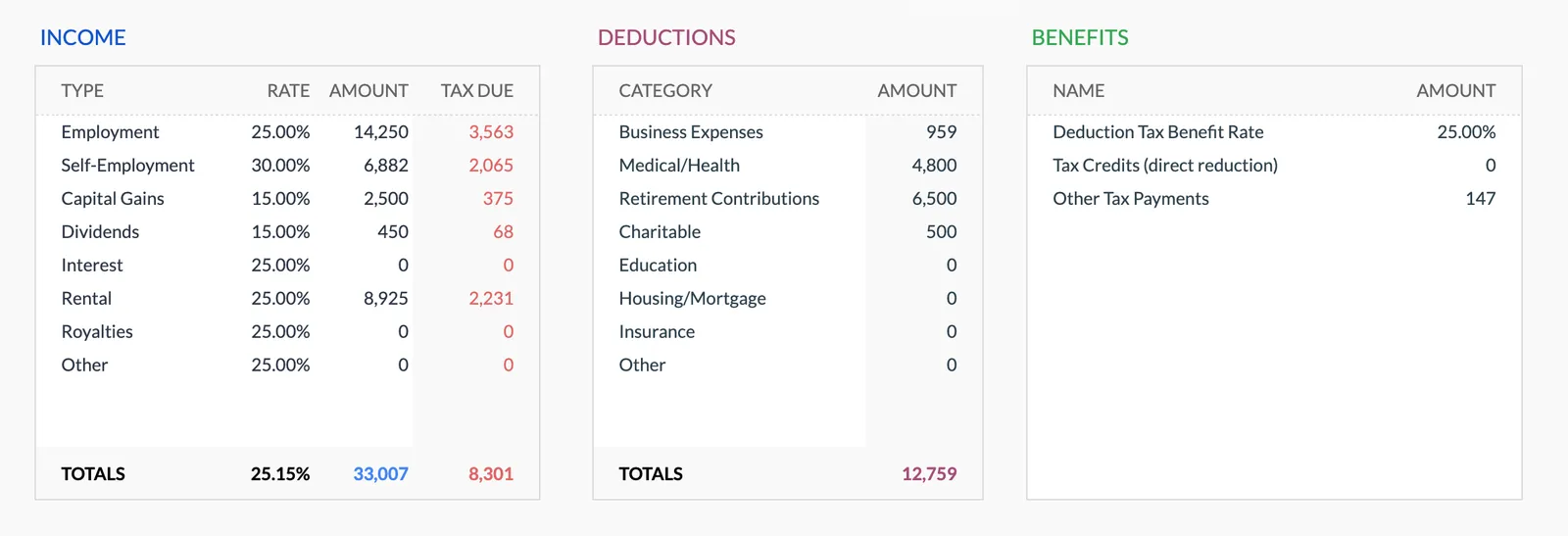
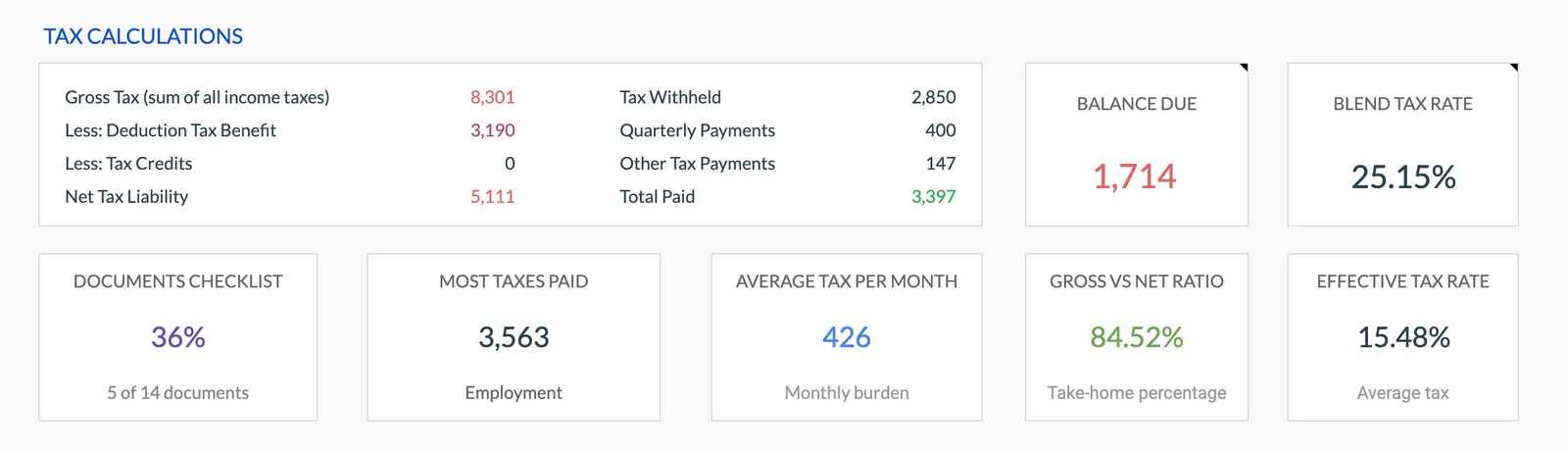
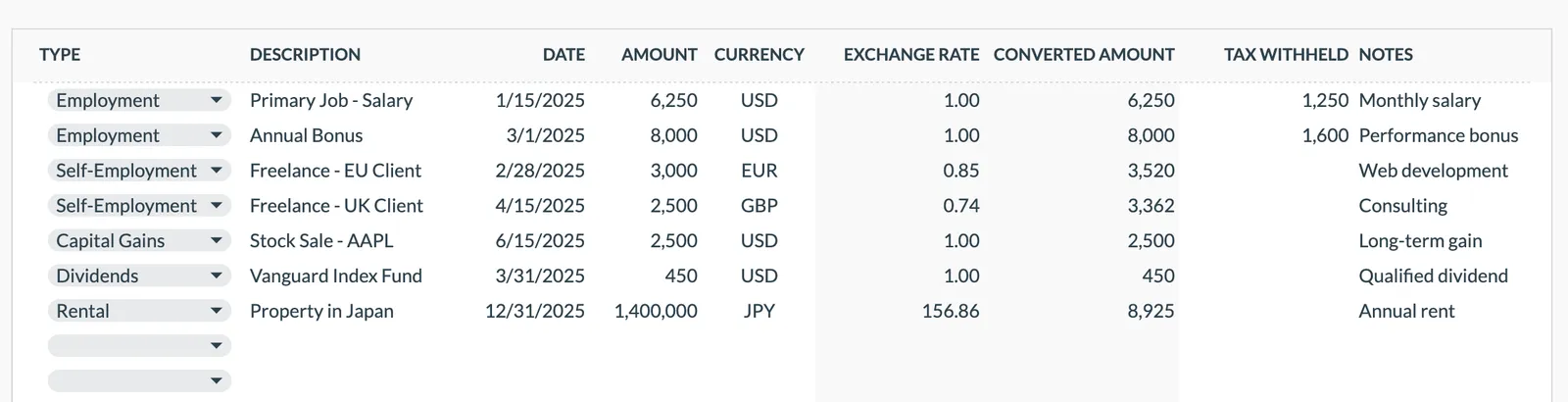
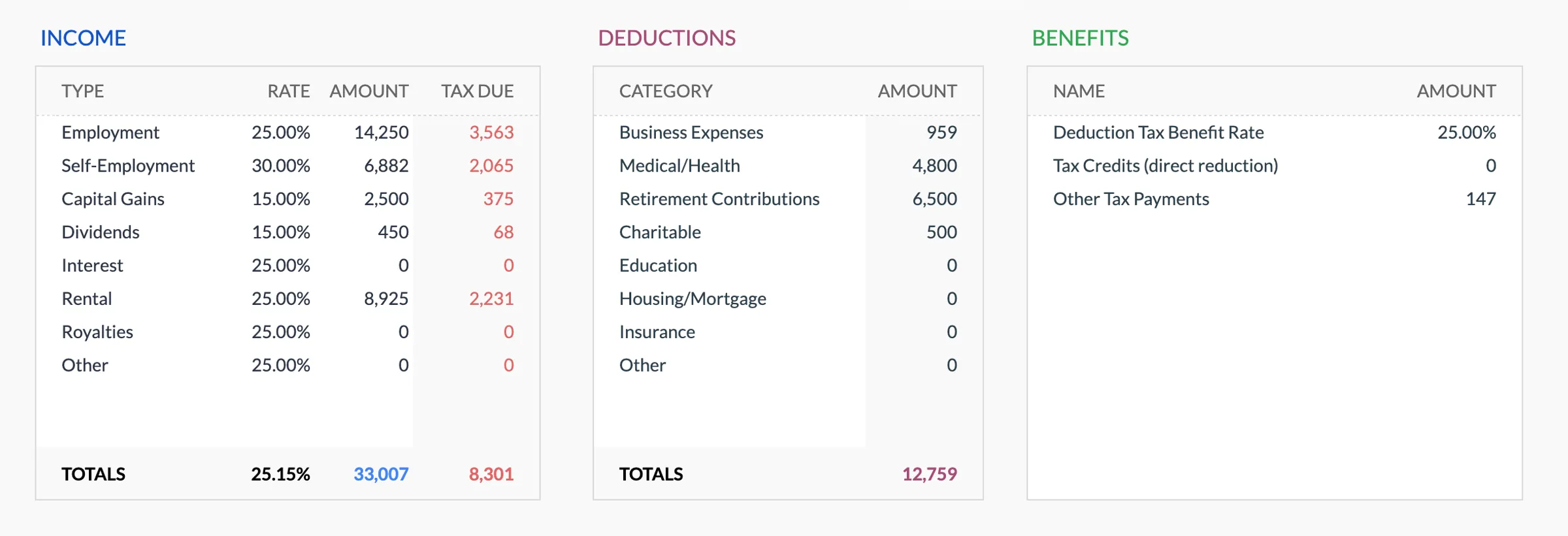
Annual tax overview with key figures
Detailed tax breakdown and projections
Track all income sources for tax purposes
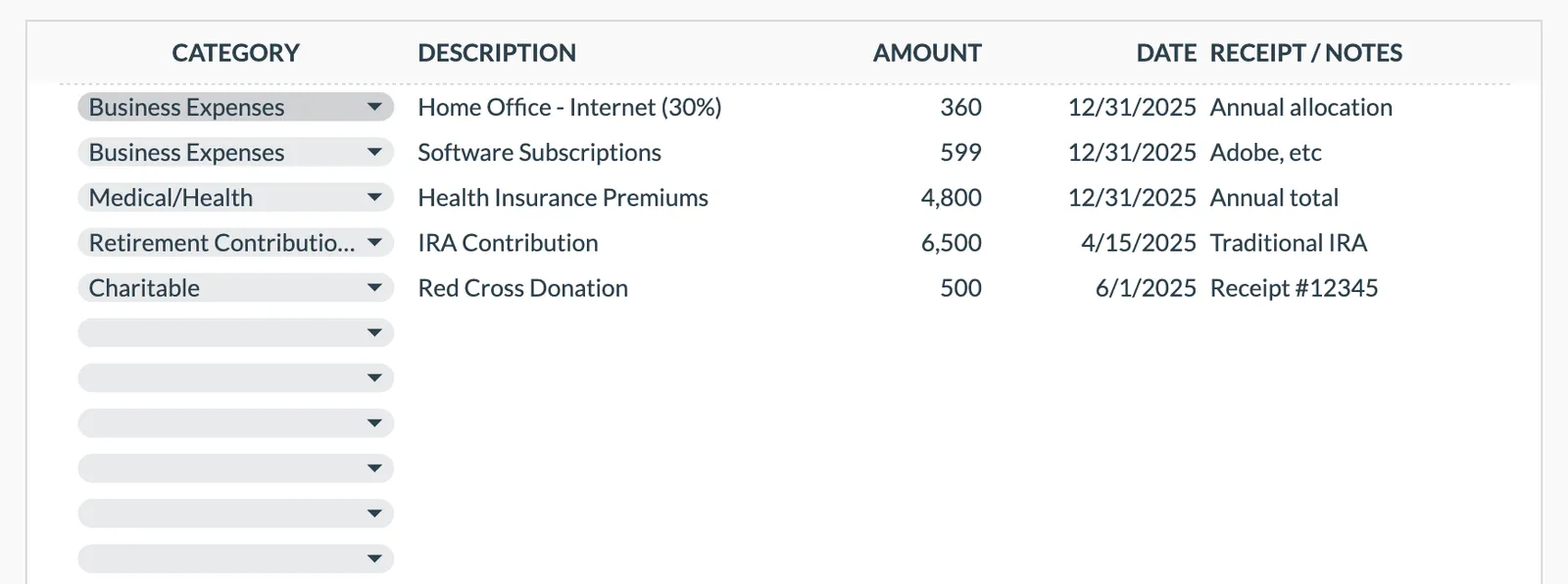
Organize and track tax deductions
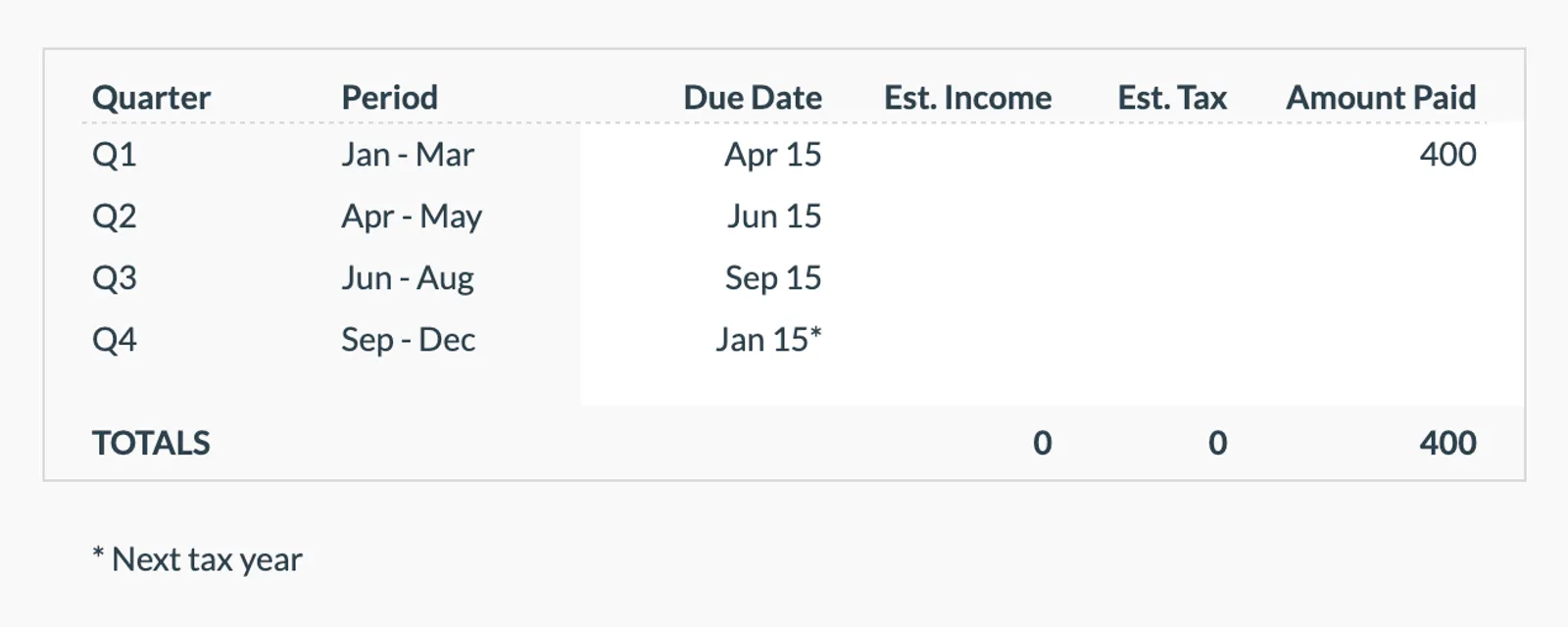
Plan and track quarterly estimated tax payments
Common Questions
Annual Tax Planner for Australia - FAQ
Is this a tax filing tool?
No. This template helps organize your tax information throughout the financial year. You still need to lodge your return through myTax (ATO online service) or a registered tax agent. The template makes that process easier by having everything in one place.
Does it calculate my tax refund?
The template organizes income and deductions but doesn't calculate the final tax bill. For estimates, use the ATO's online tax calculator or the free income tax calculator on this site.
How do I track franking credits?
When you receive a franked dividend, record both the dividend amount and the franking credit. Franking credits are added to your assessable income but also provide a tax offset dollar-for-dollar. If your credits exceed your tax bill, you may receive a refund of the excess.
Can I track negative gearing deductions?
Yes. Add your rental property income and all deductible expenses (interest, council rates, repairs, depreciation, insurance, property management fees). If expenses exceed income, the loss reduces your other taxable income - that's negative gearing.
When does the Australian financial year start?
July 1. The financial year runs July 1 to June 30. Tax returns for the completed year can be lodged from July 1, with the deadline of October 31 for self-lodgers. If you use a registered tax agent, you may have a later deadline.
Can't find the answer you're looking for? Contact our team
Explore More
Free Tools for Australia
Ready to get started?
Download instantly and start managing your finances, or contact us to design a custom template package for your needs.