Budgeting Method
Kakeibo Method Template for Google Sheets
A mindful approach to money from Japan. Kakeibo (pronounced "kah-keh-boh") uses four simple spending categories and reflective journaling to build awareness of where money goes.
Overview
What Is the Kakeibo Method?
Kakeibo is a Japanese budgeting method that translates to "household financial ledger." It was invented in 1904 by Hani Motoko, Japan's first female journalist, as a way for homemakers to manage household finances. It emphasizes mindful spending over rigid rules.
The method organizes all spending into four categories: Needs (essentials like rent, groceries, utilities), Wants (non-essential items that bring pleasure), Culture (books, music, theater, education, museums), and Unexpected (repairs, medical bills, gifts). This four-way split is distinctive - separating cultural enrichment from general wants gives it its own priority.
At the start of each month, you record your income, subtract fixed expenses, set a savings goal, and divide the remainder across the four categories. Throughout the month, you track every expense by hand - the physical act of writing is considered central to the method's effectiveness.
At month's end, Kakeibo includes reflection questions: How much did I spend? How much did I save? How much did I want to save? What went well? What could improve next month? This reflective cycle is what distinguishes Kakeibo from pure number-tracking.
Who it works for
People who want a mindful, reflective relationship with money. Particularly appealing to those who find that simply tracking numbers doesn't change behavior - the journaling component adds an emotional awareness layer.
Advantages
- Builds genuine awareness of spending habits through reflection
- Simple four-category system is easy to understand
- The "Culture" category encourages spending on personal growth
- Monthly reflection drives continuous improvement
- No complex formulas or apps needed
Tradeoffs
- Manual tracking of every expense takes time
- Reflection journaling requires consistency and honesty
- The four categories may not fit all spending patterns
- Originally designed for handwriting, which some find impractical
Getting Started
How to Set Up Kakeibo in Google Sheets
The Monthly Expense Tracker from FinancialAha can be adapted for the Kakeibo method. Here's how:
Set up the four Kakeibo categories
Create four spending groups: Needs (rent, groceries, utilities, transportation), Wants (dining out, shopping, entertainment), Culture (books, courses, museums, music, hobbies), and Unexpected (repairs, medical, gifts). This is the core organizational structure.
Record your monthly income and fixed expenses
Enter total income, then subtract fixed obligations (rent, bills, subscriptions). The remainder is what you have to work with across the four categories plus savings.
Set a savings goal for the month
Before allocating to spending categories, decide how much to save. Kakeibo traditionally asks: "How much money do I want to save this month?" Set this as a target before dividing the rest across categories.
Track every expense mindfully
Record each purchase with a brief note about why you bought it. The expense tracker makes it easy to log amounts and categories. The "why" is important - it builds awareness of spending motivations.
Reflect at month's end
Review the month: How much was spent in each category? Did savings hit the target? What purchases brought genuine satisfaction? What felt wasteful? Use these reflections to set next month's targets. The tracker's summary view supports this review.
Ready to try kakeibo method budgeting?
Compare Methods
Kakeibo vs Other Budgeting Methods
Zero-Based Budget
Zero-based focuses on allocation precision - every dollar assigned. Kakeibo focuses on spending awareness through reflection. Zero-based is more analytical; Kakeibo is more contemplative.
Envelope Budget
Similar in having defined spending categories with limits. The envelope method is purely about limits and tracking; Kakeibo adds the reflective journaling component.
Values-Based Budget
Both methods encourage mindful spending aligned with what matters. Values-based is more personalized in categories; Kakeibo uses a fixed four-category structure with structured reflection.
See It In Action
What the template looks like
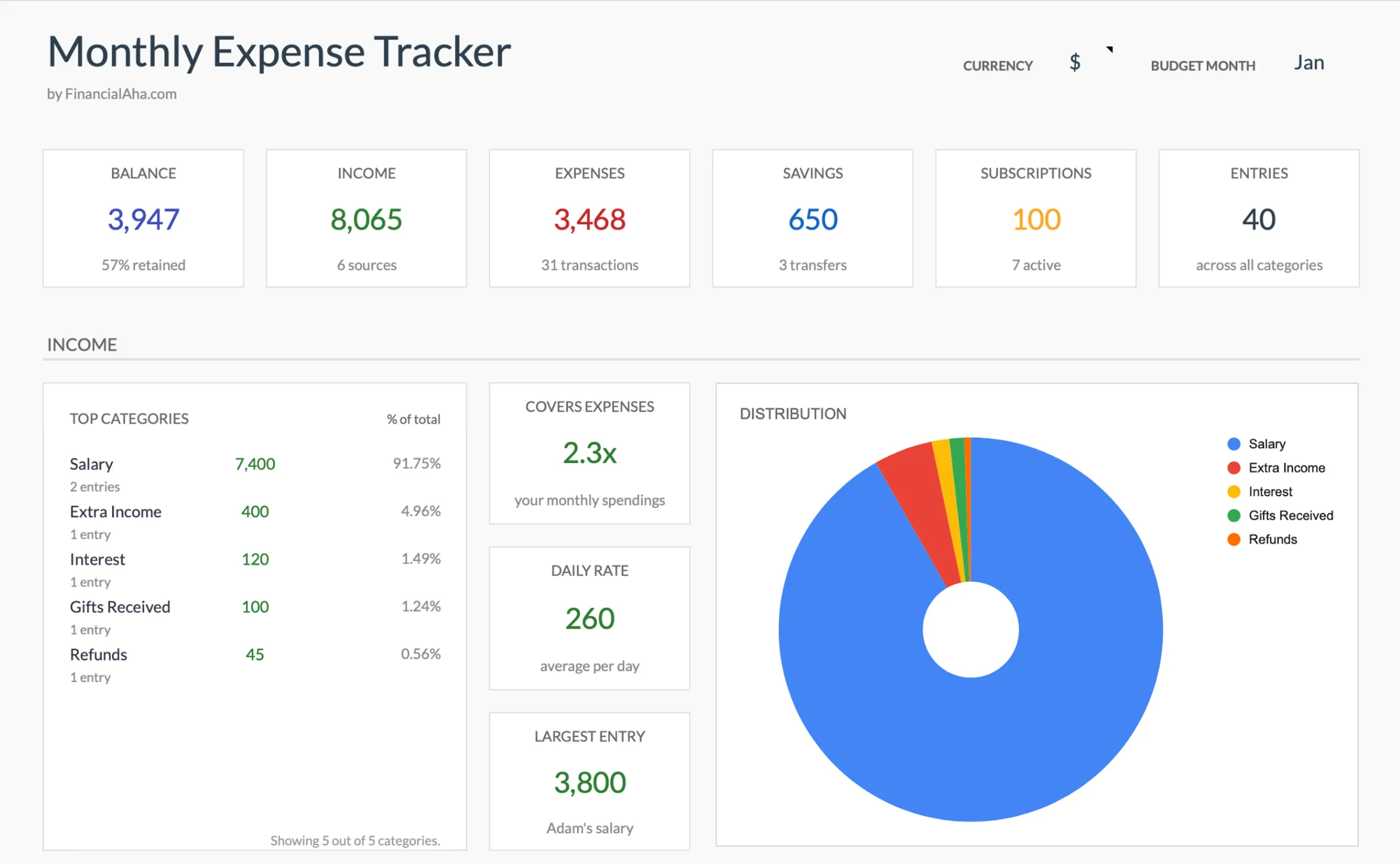
Browse through the template to see how it handles budgeting, expense tracking, savings goals, and spending analysis.
- Dashboard with key metrics
- Budget vs actual comparison
- Savings goal tracking
- Fully customizable categories
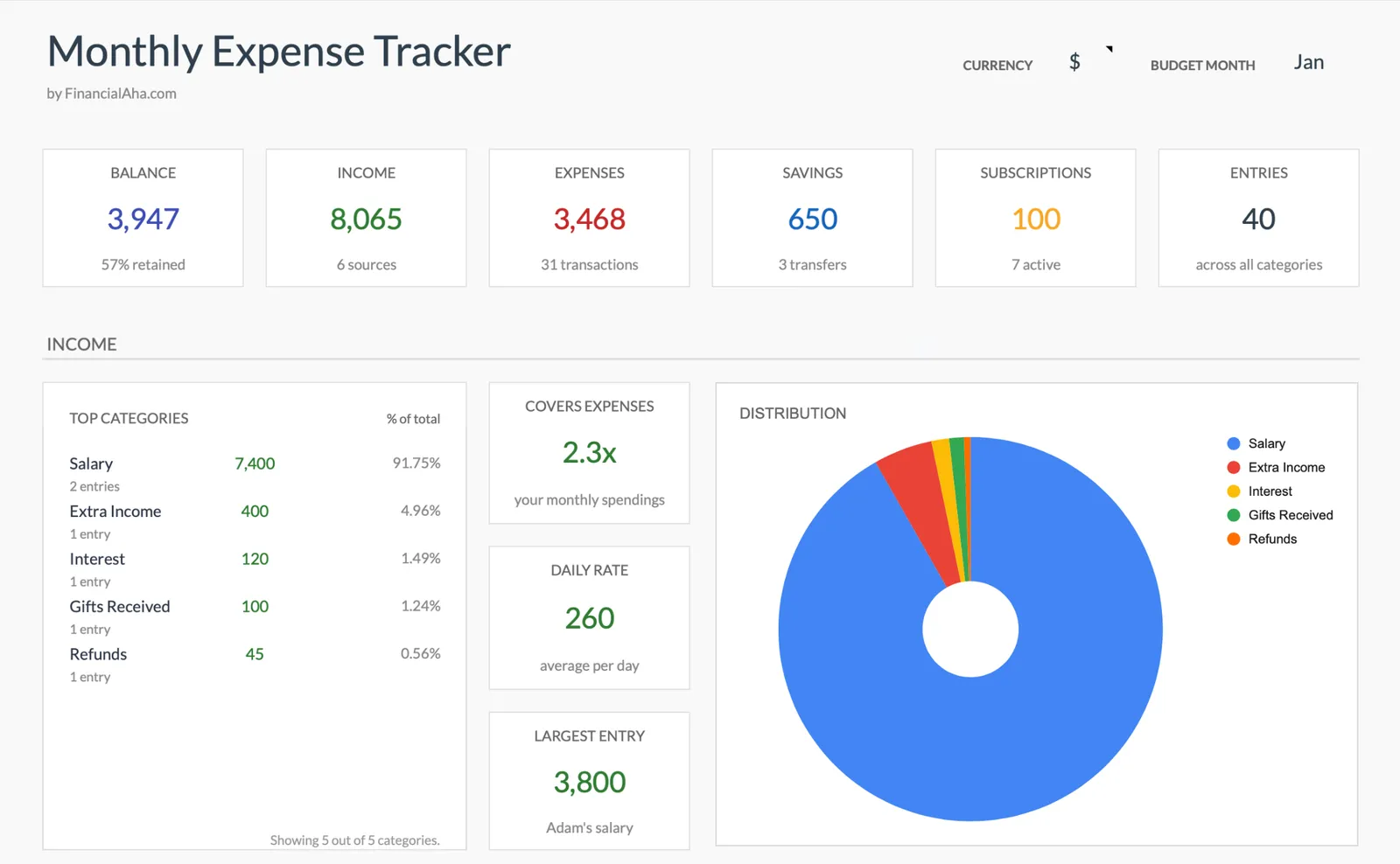
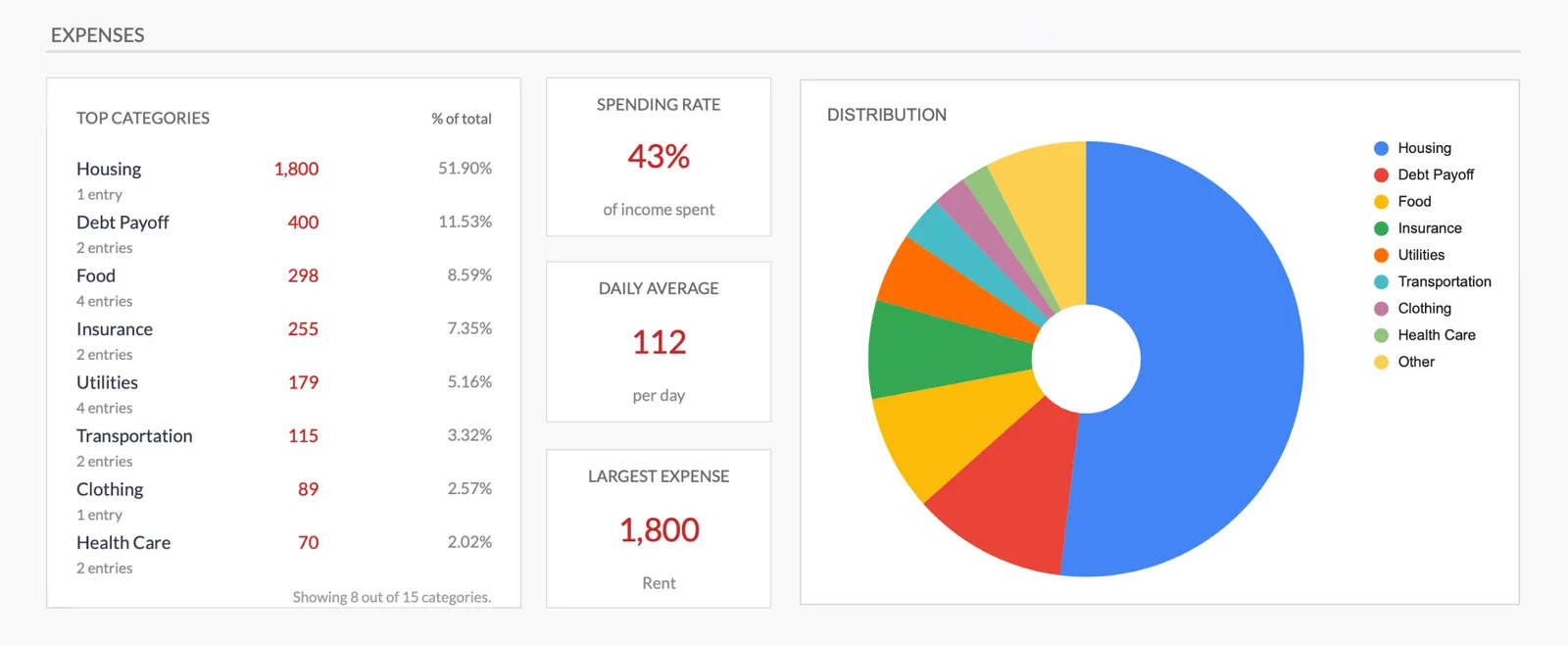
Monthly expense overview with charts
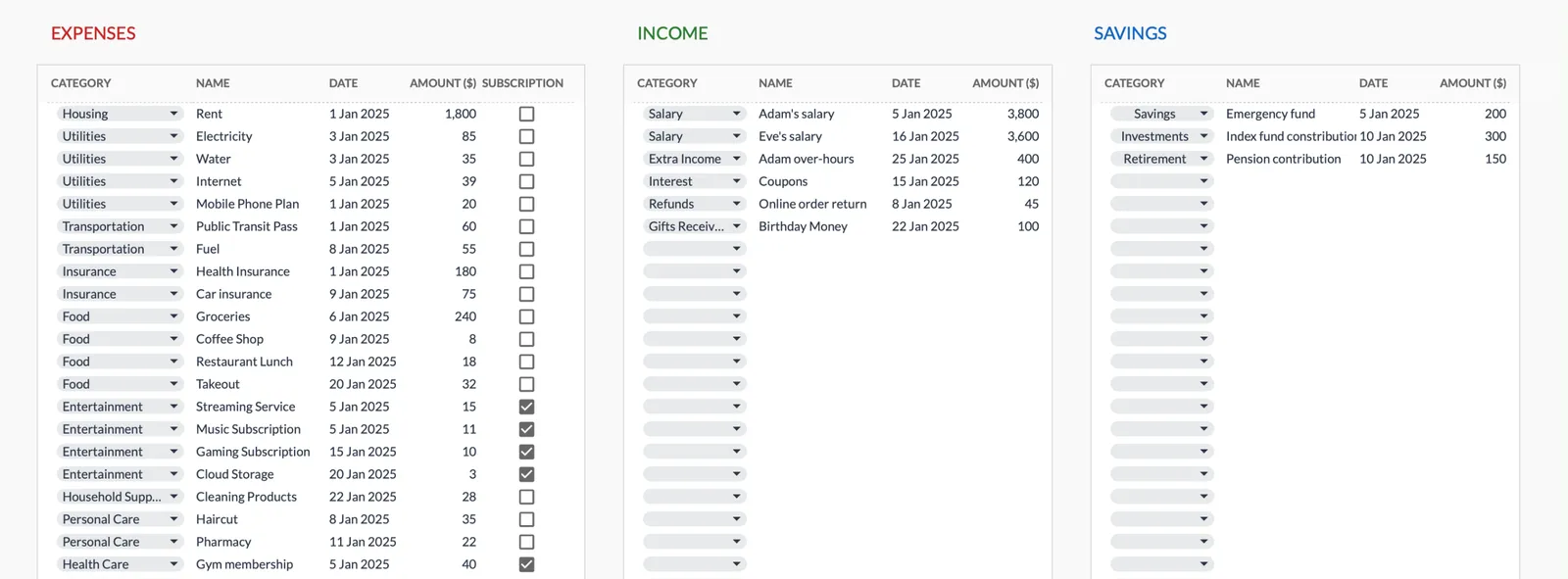
Log every expense with dates and categories
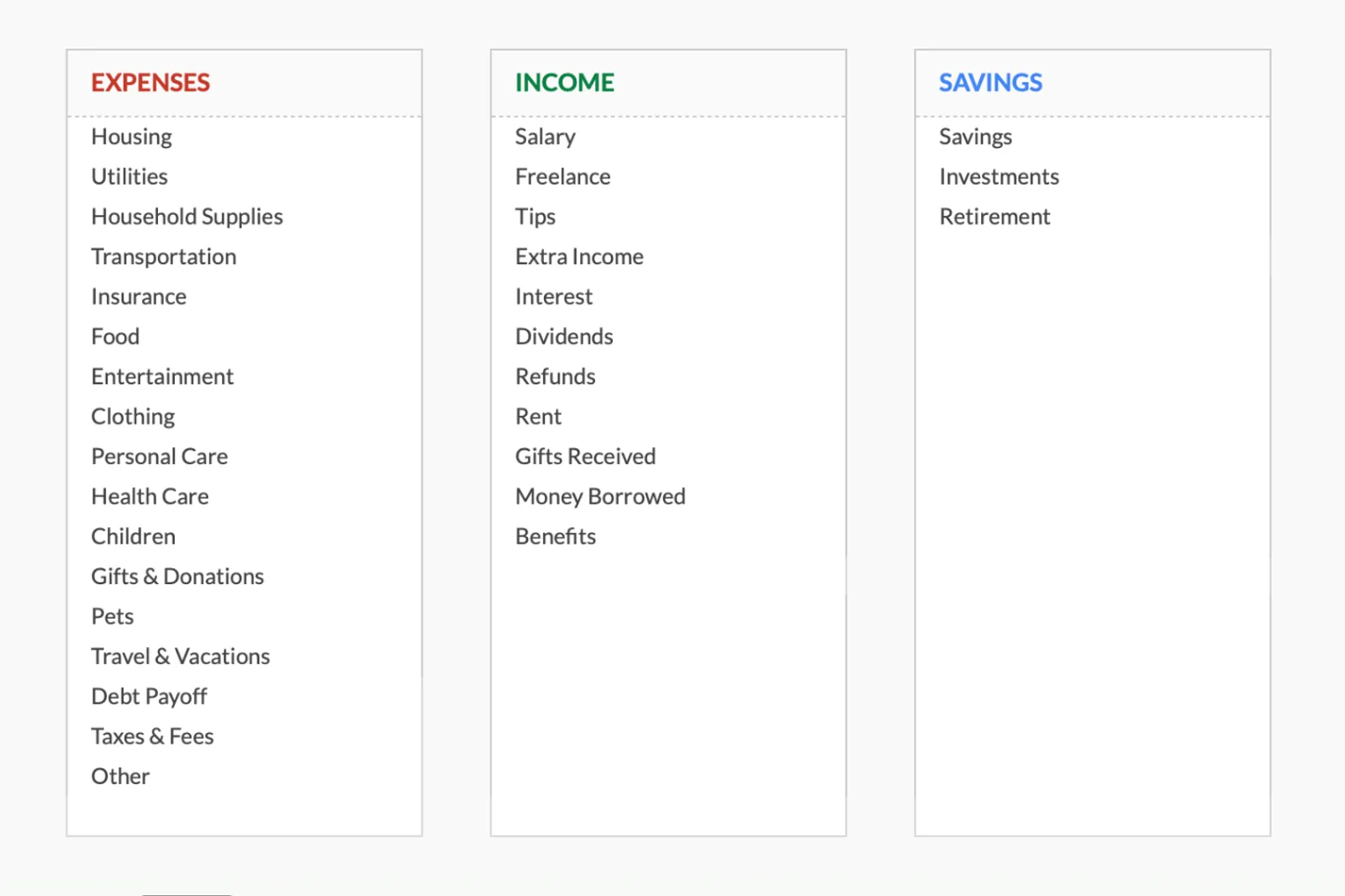
Organize spending into customizable categories
Detailed breakdown of all expenses
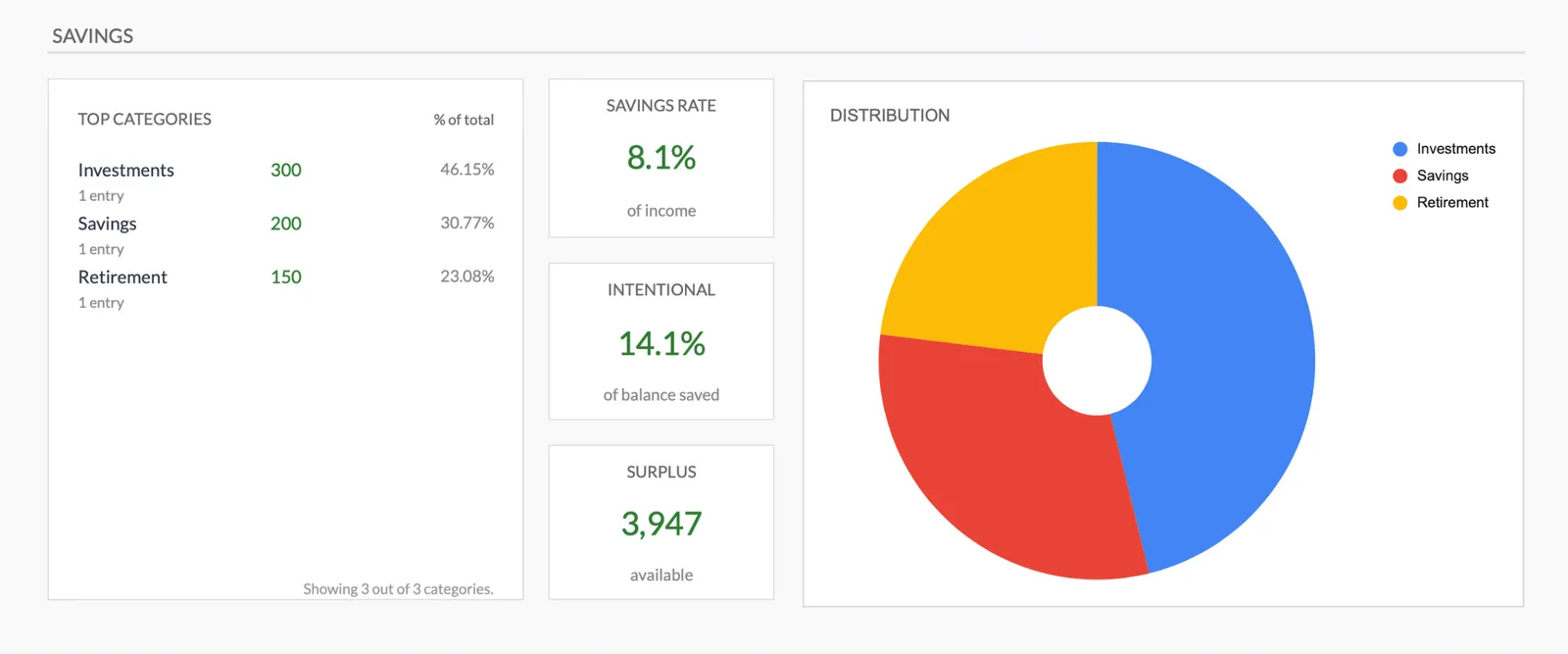
Track savings alongside expenses
Common Questions
Kakeibo Method Budgeting - FAQ
What makes Kakeibo different from just tracking expenses?
The reflection component. Tracking tells you where money went. Kakeibo asks why it went there, whether the spending aligned with priorities, and what to change. It's a mindfulness practice applied to money.
Do I have to write by hand for Kakeibo to work?
Traditional Kakeibo emphasizes handwriting because the physical act reinforces awareness. However, the principles work in any format. A spreadsheet with regular reflection achieves the same goal, especially if you add notes to each entry.
What goes in the "Culture" category?
Books, magazines, museum visits, concert tickets, art supplies, online courses, educational subscriptions, theater, music - anything that contributes to personal growth or cultural enrichment. It's distinct from entertainment or general wants.
Can the FinancialAha template replicate the Kakeibo categories?
Yes. The Monthly Expense Tracker allows custom categories. Set up the four Kakeibo groups (Needs, Wants, Culture, Unexpected), assign subcategories, and use the notes field for the reflective component.
Can't find the answer you're looking for? Contact our team
Start kakeibo method budgeting today
One-time purchase. No subscription. Your financial data stays in your Google Drive.