Budget Guide
How to Budget for a Side Hustle
Side hustlers often owe 25-35% of net earnings in combined income and self-employment taxes, and quarterly estimated payments may be required once you earn above $1,000/year. Tracking every dollar in and out from day one - separately from your main job finances - makes tax season straightforward.
In Depth
The Hidden Tax Reality of Side Income
Side hustle income comes with a tax burden that many people do not anticipate until their first tax filing. Unlike employment income where Social Security and Medicare taxes are split between employer and employee, self-employment income bears the full 15.3% self-employment tax on top of regular income tax. A side hustle that earns $10,000 per year might face $1,530 in self-employment tax alone, before income tax is calculated. This means the true tax rate on side income can reach 35-40% for many earners.
The concept of true hourly rate is one of the most revealing calculations a side hustler can perform. Gross revenue from a freelancing gig or marketplace sale is the number people typically focus on. But after subtracting platform fees (often 5-30%), direct expenses, and the full tax burden, the actual earnings per hour of work invested can be strikingly different from the apparent rate. Some side hustles that look profitable at the surface level yield less per hour than the person's primary employment when all costs are accounted for.
Tracking side hustle finances separately from day job income serves both tax and planning purposes. From a tax perspective, clean records of business income and deductible expenses simplify quarterly estimated payments and annual filing. From a planning perspective, seeing side hustle net profit as a distinct income stream helps with intentional allocation - directing it toward a specific goal like debt payoff or an investment account rather than letting it blend into general spending where it often evaporates without impact.
Cost Breakdown
Common Side Hustle Financial Categories
Side hustle finances include both income and expenses. Understanding the full picture - including taxes - reveals the true profitability of side work.
Gross Side Income
Varies widelyTrack all earnings separately from day job income
Self-Employment Tax
15.3% of net earningsSocial Security and Medicare taxes on self-employment income
Income Tax on Side Earnings
Marginal tax rateSide income is taxed at your highest marginal rate
Business Expenses
Varies by hustle typeSupplies, software, marketing, mileage - all potentially deductible
Platform Fees
5-30% of grossMarketplace and payment processing fees vary by platform
Time Investment
Hours x opportunity costWorth calculating the effective hourly rate after all expenses and taxes
Budgeting Steps
Steps to Budget for a Side Hustle
Track income and expenses from day one
Even if the side hustle starts small, establishing a tracking system immediately saves enormous effort later. Every payment received and every expense paid should be recorded. This habit becomes critical at tax time and helps understand actual profitability.
Set aside money for taxes immediately
Side hustle income is not taxed at the source, so the full tax burden arrives later. Setting aside 25-35% of net earnings (after deductible expenses) into a separate account prevents the surprise of a large tax bill. Quarterly estimated payments may be required.
Keep business and personal expenses separate
A dedicated bank account or credit card for side hustle transactions simplifies tracking and tax preparation. Even a simple separation makes it much easier to identify deductible expenses and calculate actual profit.
Calculate your true hourly rate
After subtracting expenses, platform fees, and taxes from gross income, dividing by actual hours worked reveals the real earnings rate. Some side hustles that look profitable on the surface become less attractive when the true hourly rate is calculated.
Decide where side income goes
Having a plan for side hustle income before it arrives prevents it from disappearing into general spending. Common approaches include directing it entirely toward a specific goal (debt payoff, savings, investment) or splitting between goals and lifestyle improvement.
See The Template
Tools for side hustle budgeting
Browse the template features that help with side hustle financial planning.
- Automatic calculations
- Visual charts and summaries
- Customizable categories
- Works in Google Sheets and Excel
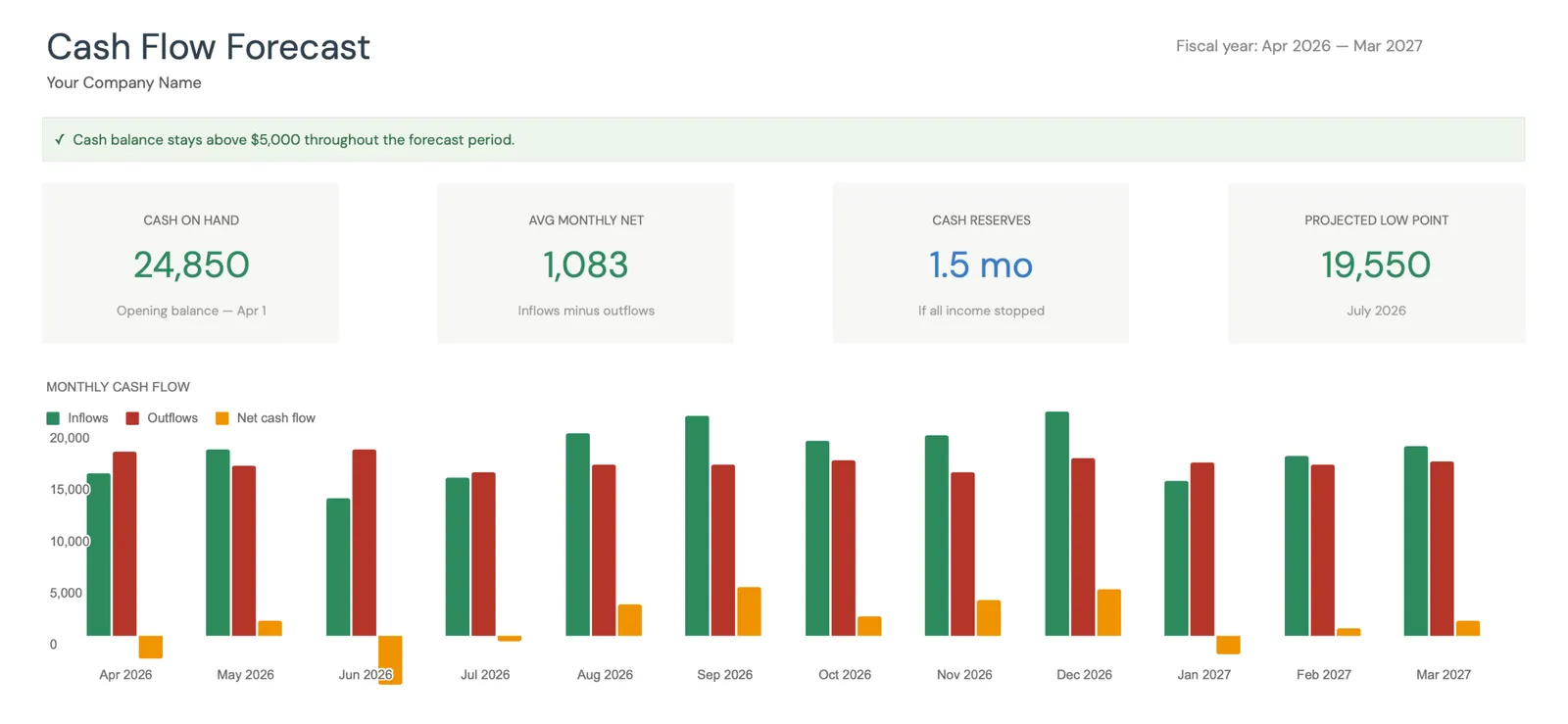
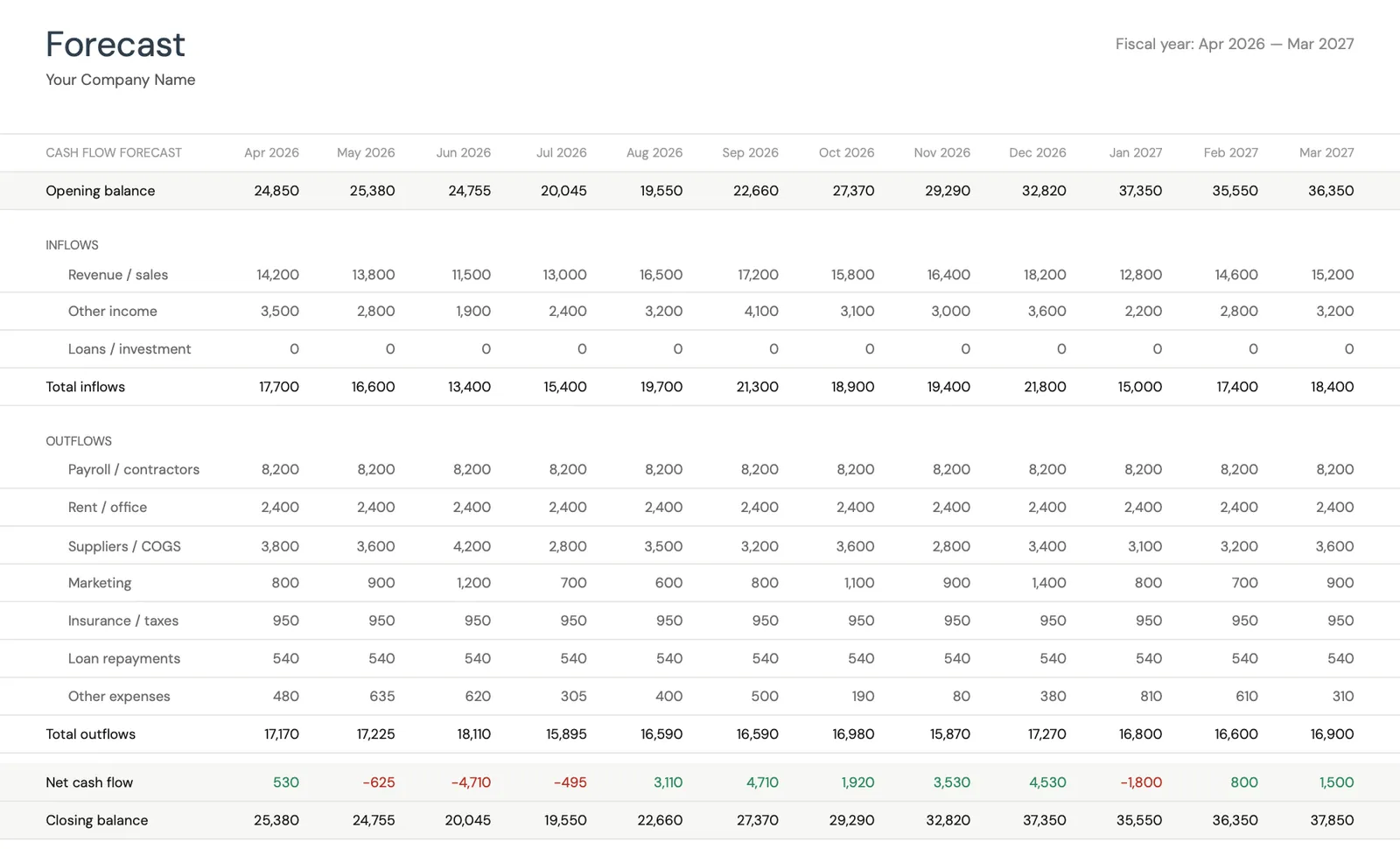
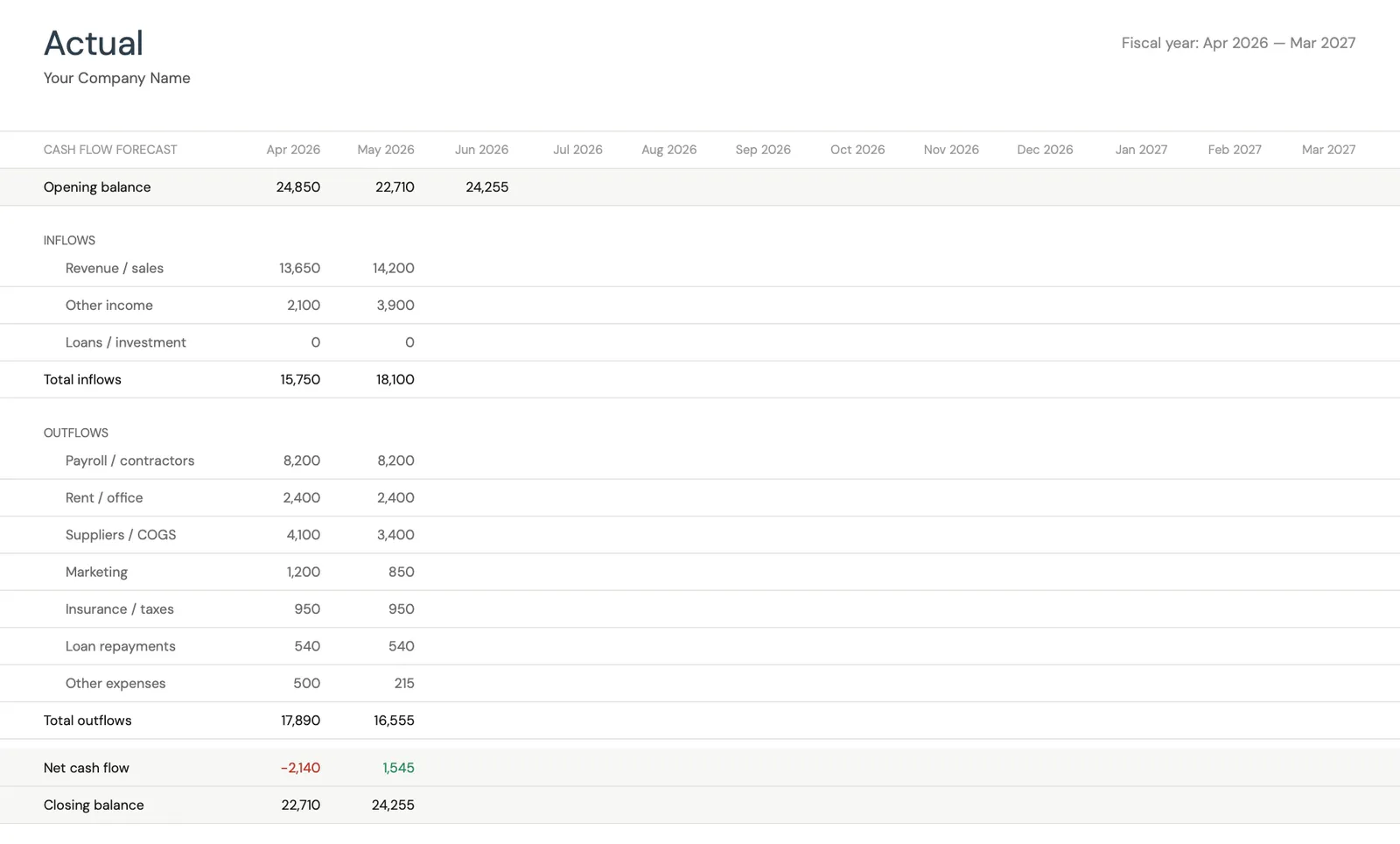
Visual dashboard with cash flow projections and trends
Monthly cash flow forecast with income and expenses
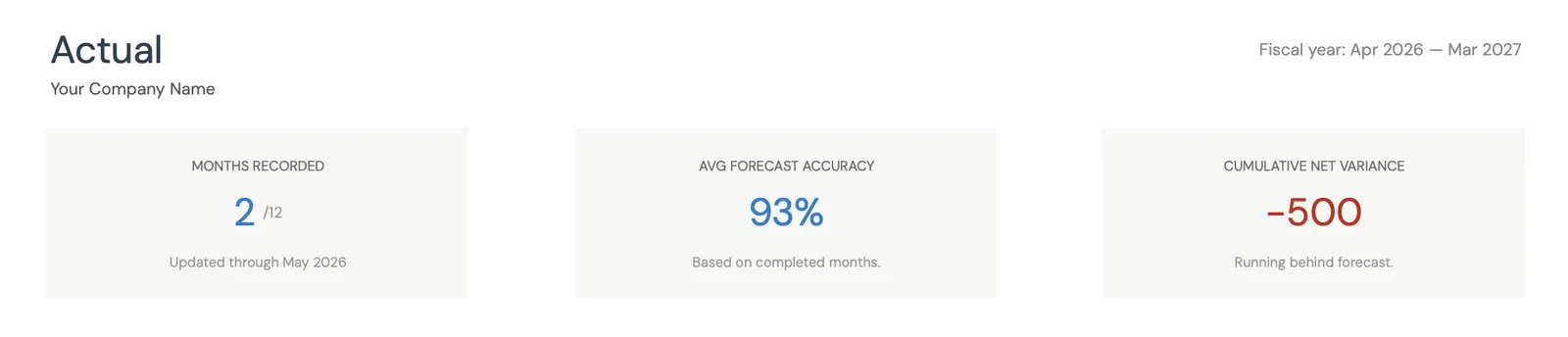
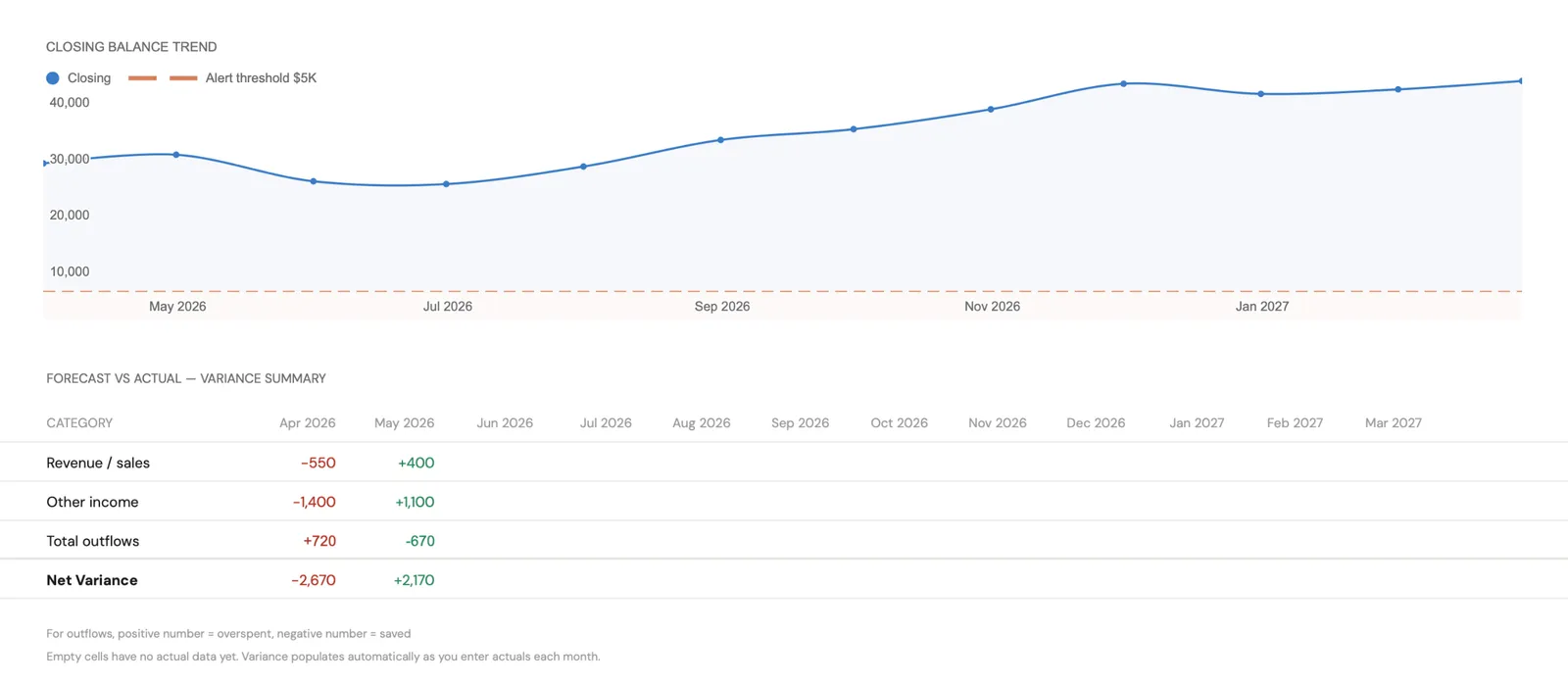
Track actual cash flow against your forecast
Key performance indicators for your cash flow
Monitor closing balances over time
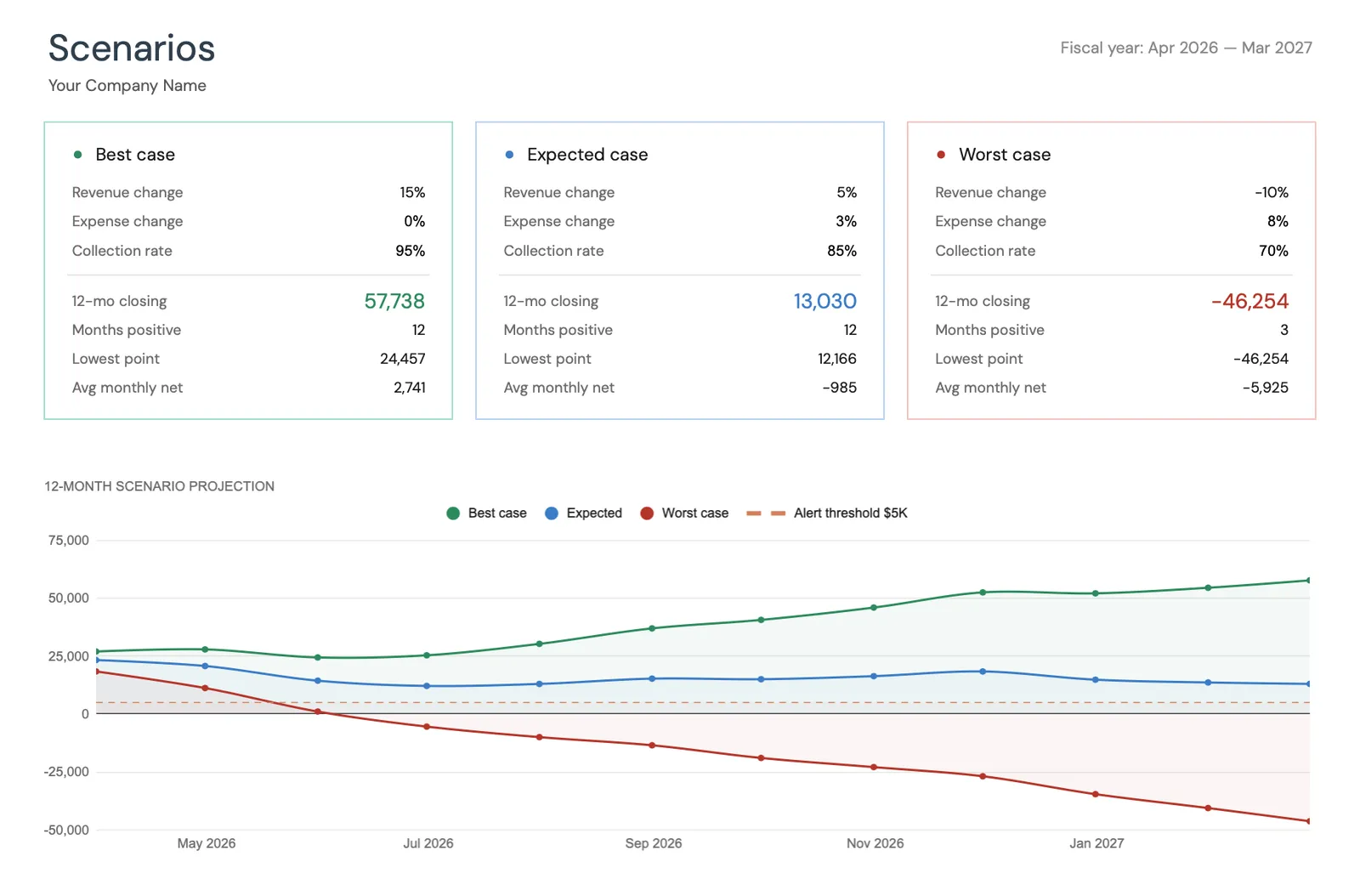
Model different business scenarios and their impact
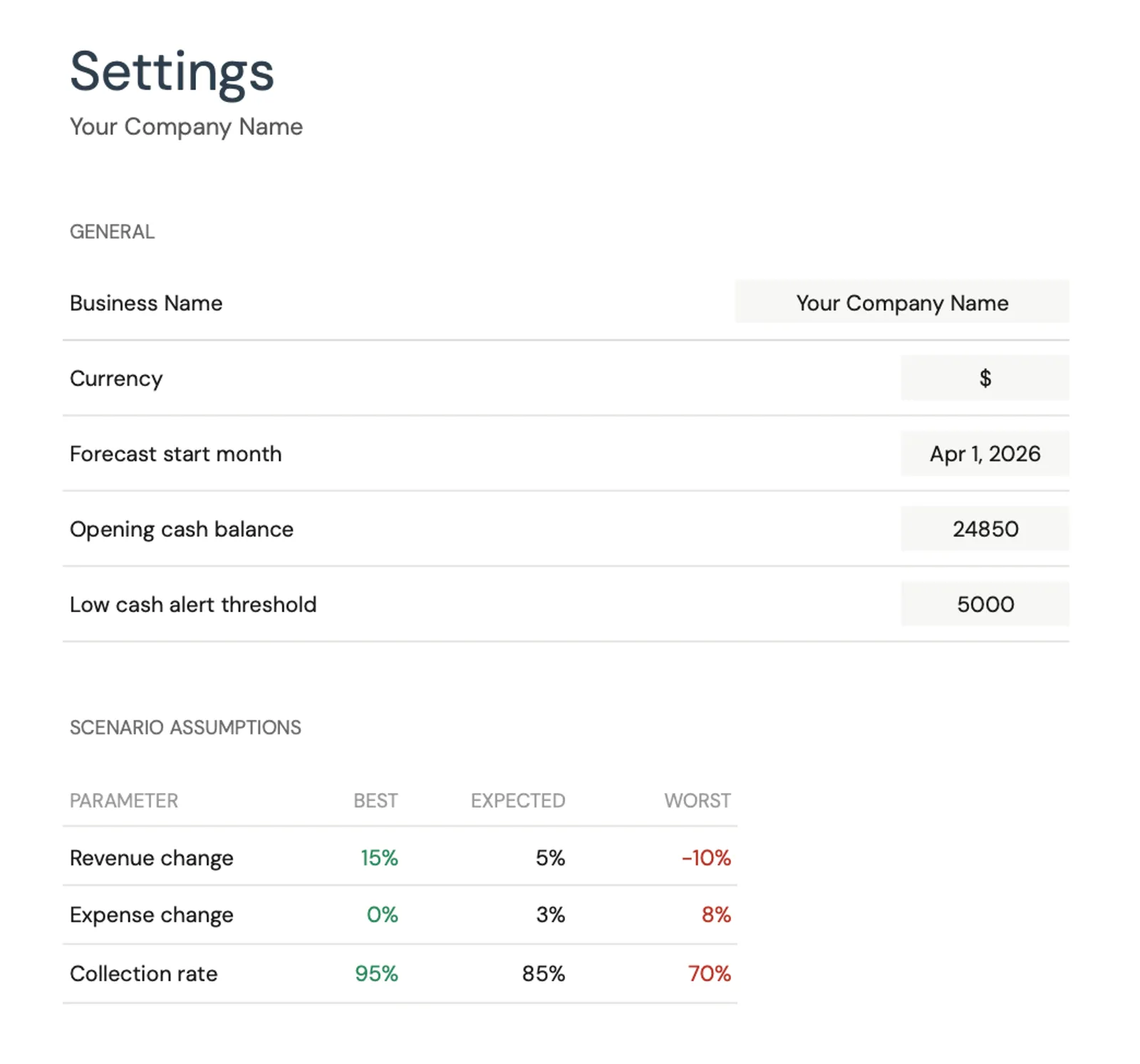
Configure income categories and settings
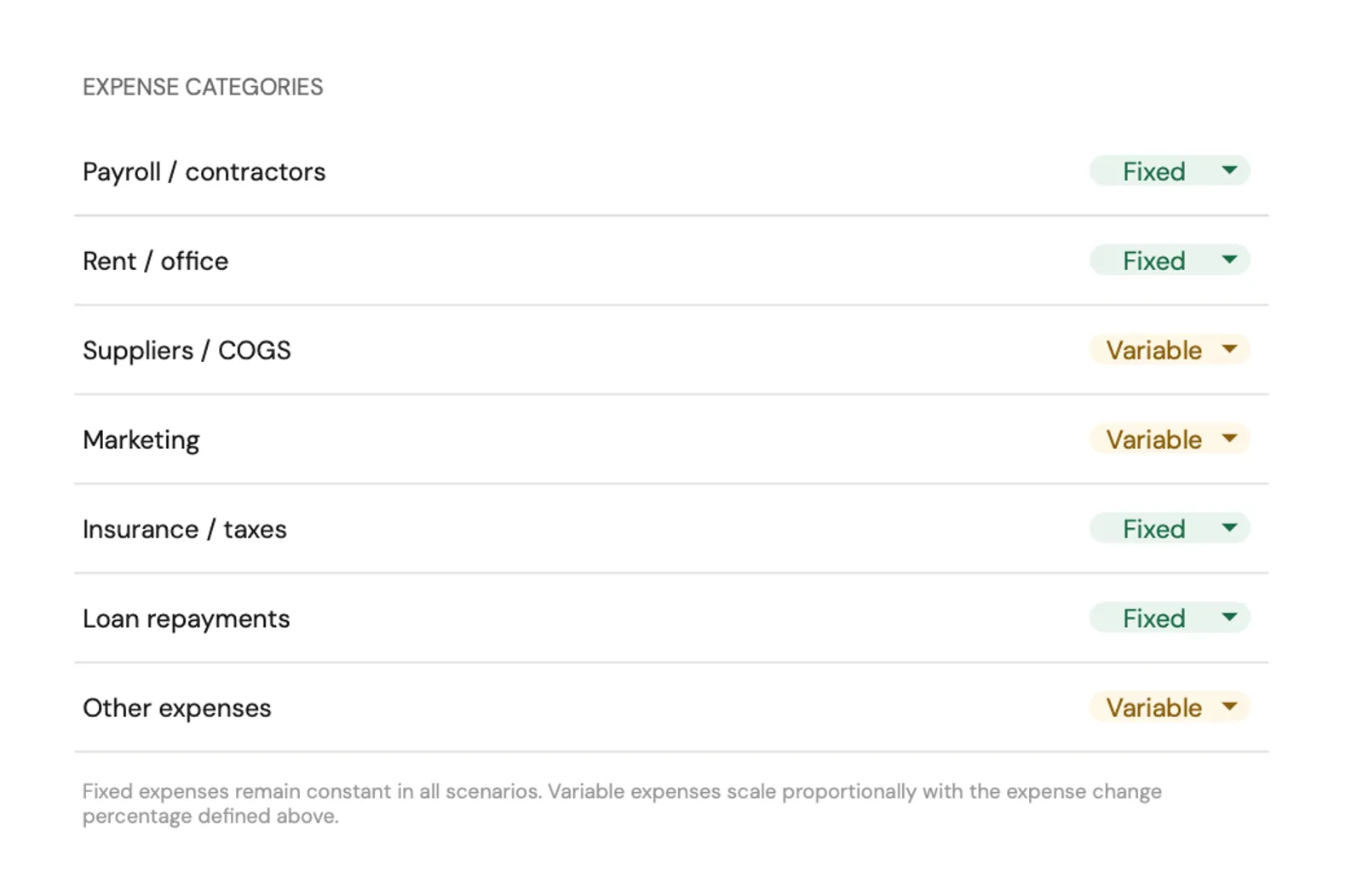
Set up expense categories for your business
Recommended Templates
Templates for Side Hustle Budgeting
Track side hustle income and expenses with a clear cash flow forecast. See actual earnings vs projections, model different scenarios, and understand the true profitability of your side work.
View templateStay on top of side hustle tax obligations throughout the year. Track deductions, plan for quarterly estimated payments, and keep a clear record of all earnings for tax season.
View template Save $91Get cash flow forecasting, tax planning, expense tracking, and budgeting tools together. Manage both your day job finances and side hustle income in one complete system.
Includes 8 templates
View bundleFree Tools
Calculators to Help You Plan
Common Questions
Side Hustle Budgeting FAQ
When do side hustle taxes need to be paid?
If side hustle income will result in owing more than $1,000 in taxes for the year, the IRS expects quarterly estimated payments (April 15, June 15, September 15, January 15). Underpayment can result in penalties. Many side hustlers set aside 25-35% of net income to cover both income and self-employment taxes.
What side hustle expenses are deductible?
Expenses that are ordinary and necessary for the business are generally deductible. This can include supplies, software subscriptions, a portion of phone/internet bills, mileage for business driving, home office space, marketing costs, and professional development. Keeping receipts and records is essential.
Should a side hustle have its own bank account?
While not legally required for sole proprietors, a separate account makes tracking dramatically easier. It creates a clean record of business income and expenses that simplifies tax preparation and provides clear financial data about the business.
How much side hustle income is worth the effort?
This is highly personal. Calculating the true hourly rate (after expenses, fees, and taxes) and comparing it to the value of that time helps make the decision. Some people find non-financial benefits (skill building, creative outlet, career exploration) make a lower hourly rate worthwhile.
Does side hustle income affect regular employment taxes?
Side hustle income is added to employment income for income tax purposes, which may push some earnings into a higher tax bracket. Self-employment tax (Social Security and Medicare) is calculated separately on side hustle net earnings. Understanding this interaction helps set accurate tax-aside percentages.
Can't find the answer you're looking for? Contact our team
Start planning your side hustle budget
A spreadsheet template with automatic calculations, visual summaries, and everything needed to track side hustle costs.
Ready to get started?
Download instantly and start managing your finances, or contact us to design a custom template package for your needs.