Colorado
Plantilla de planificación fiscal para Colorado
Realiza un seguimiento de la planificación fiscal federal y estatal de Colorado en Google Sheets. Colorado utiliza una tasa fiscal única que simplifica los cálculos del impuesto estatal.
In Depth
El Impuesto Único de Colorado y el Factor TABOR
Colorado es uno de un número creciente de estados que utilizan un impuesto sobre la renta único, donde cada dólar de ingresos gravables enfrenta la misma tasa. Esto hace que proyectar la responsabilidad fiscal estatal sea directo - multiplica ingresos gravables por la tasa, y esa es esencialmente la factura de impuestos estatales antes de créditos. La tasa en sí es moderada, situándose por debajo de los brackets superiores de la mayoría de estados de tasa graduada pero por encima de las tasas en algunos estados cercanos sin impuesto sobre la renta.
Lo que hace a Colorado genuinamente único es TABOR, la Declaración de Derechos del Contribuyente, consagrada en la constitución estatal desde 1992. TABOR limita cuántos ingresos puede recaudar y retener el gobierno estatal. Cuando los ingresos reales exceden el límite (calculado con base en el crecimiento poblacional más la inflación), el excedente se devuelve a los contribuyentes. En los años en que la economía marcha con fuerza, estas devoluciones TABOR pueden ser una adición significativa al ingreso del hogar, y bajo la orientación del IRS generalmente no son gravables a nivel federal para los declarantes que toman la deducción estándar.
Colorado también proporciona sustracciones de ingresos de jubilación basadas en la edad. Los residentes de 55 a 64 años pueden sustraer un monto establecido de ingresos de pensión y anualidad del ingresos imponible estatal, y quienes tienen 65 años o más obtienen una sustracción mayor. A los beneficios del Seguro Social les va aún mejor: son totalmente sustraíbles para quienes tienen 65 años o más, y desde el año fiscal 2025 para quienes tienen entre 55 y 64 años bajo límites de ingresos establecidos. Estas disposiciones, combinadas con el impuesto de tasa única y los impuestos sobre la propiedad relativamente bajos, configuran un entorno fiscal que difiere notablemente del de estados vecinos como Nuevo México o Nebraska.
Colorado
Planificación Fiscal en Colorado
Colorado tiene una tasa de impuesto sobre la renta única, lo que hace que las proyecciones de impuestos estatales sean relativamente directas. El estado también tiene un mecanismo de devolución de contribuyentes (TABOR) que puede resultar en reembolsos en años en que los ingresos excedan los límites.
Impuesto sobre la Renta Único
Colorado tiene una tasa de impuesto sobre la renta única del 4.4% [1] que se aplica a todos los ingresos gravables, lo que hace que los cálculos de impuestos estatales sean simples y predecibles. La tasa es moderada en comparación con otros estados de tasa única.
Devoluciones TABOR
Colorado es el único estado con una Declaración de Derechos del Contribuyente (TABOR) que limita el crecimiento de ingresos gubernamentales [2]. Cuando los ingresos exceden los límites, los residentes pueden recibir devoluciones - vale la pena rastrear en tu planificación fiscal.
Ingresos de Jubilación
Colorado ofrece una sustracción de ingresos de jubilación para contribuyentes de 55 años o más. El monto de la sustracción varía según el grupo de edad, con un monto mayor disponible para quienes tienen 65 años o más. Los contribuyentes de 65 años o más pueden sustraer en su totalidad los beneficios del Seguro Social gravables a nivel federal, y desde el año fiscal 2025 quienes tienen entre 55 y 64 años también pueden hacerlo cuando el ingreso queda por debajo de límites establecidos.
Impuesto sobre la Propiedad
Las tasas de impuesto sobre la propiedad de Colorado son relativamente bajas en comparación con el promedio nacional. La tasa efectiva varía por condado pero es generalmente inferior al promedio.
Obtener el Planificador Fiscal Anual
Primeros Pasos
Cómo Usar la Plantilla para Impuestos de Colorado
Comienza con ingresos imponibles federales como tu base de Colorado
Colorado utiliza ingresos imponibles federales como punto de partida para el impuesto estatal. Ingresa todas las fuentes de ingresos y deducciones en la plantilla - tu cifra de ingresos imponibles federales se alimenta directamente al cálculo de Colorado. Esto significa que la decisión estándar versus desglosada que tomes a nivel federal se transfiere automáticamente a tu declaración estatal.
Realiza un seguimiento de las implicaciones de reembolso TABOR
Si recibiste un reembolso TABOR, anótalo en la plantilla. Si es gravable a nivel federal depende de si desglosaste en el año anterior. Utiliza la sección de notas para registrar el monto del reembolso y tu método de deducción del año anterior para que puedas contabilizarlo adecuadamente en tu ingresos federales.
Aplica la sustracción de ingresos de jubilación de Colorado
Si tienes 55 años o más y estás recibiendo ingresos de pensión, anualidad o Seguro Social, registra el monto de la sustracción en tus notas de impuestos estatales. El límite de sustracción depende de tu grupo de edad - 55-64 o 65 y más. Esto reduce tu ingresos imponibles de Colorado por debajo de lo que tus ingresos imponibles federales muestran.
Calcula tu responsabilidad fiscal estatal de tasa única
Una vez que tengas tu ingresos imponibles de Colorado ajustado (ingresos imponibles federales menos sustracciones estatales, más adiciones estatales), multiplica por la tasa del 4.4%. Los campos personalizados de la plantilla pueden rastrear este cálculo junto con tu proyección basada en brackets federales para una imagen completa.
Monitorea anuncios TABOR a mitad de año
Los montos de devolución TABOR generalmente se anuncian durante el año en función de los ingresos del año anterior. Cuando sepas el reembolso esperado, agrégalo a tu planificación. El reembolso reduce efectivamente tu costo fiscal de Colorado para el año, y conocer el monto ayuda con proyecciones estatales y federales.
Véalo en Acción
Cómo se ve el planificador fiscal
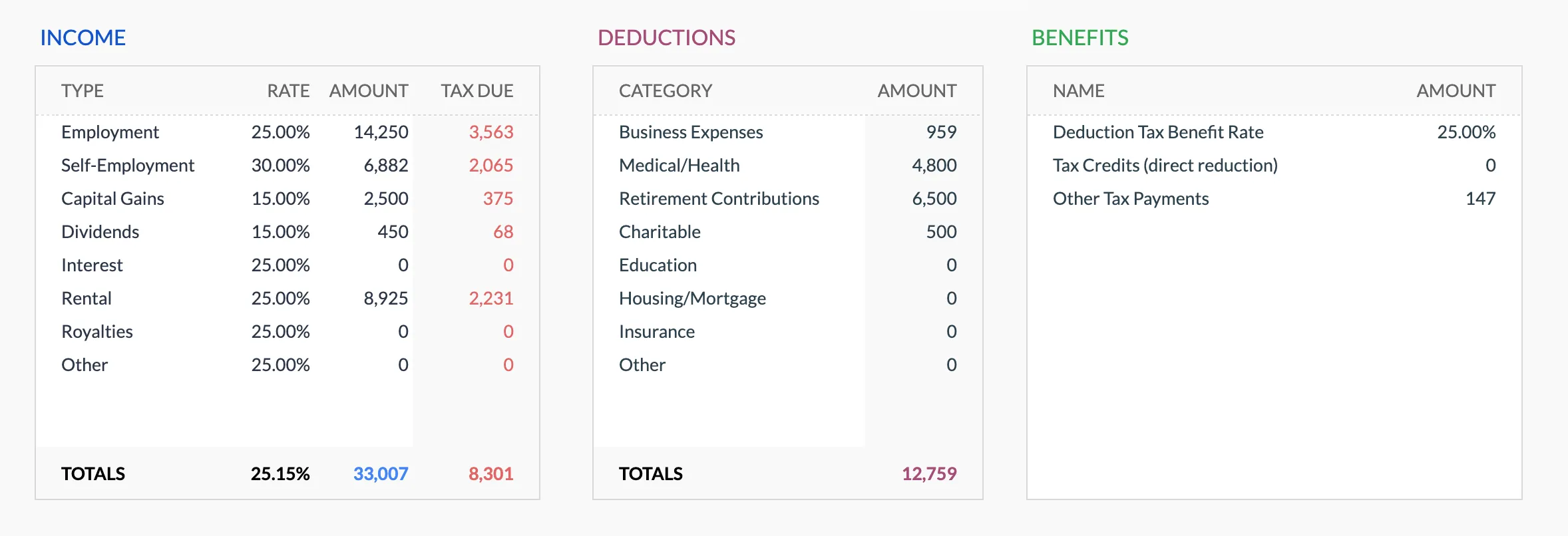
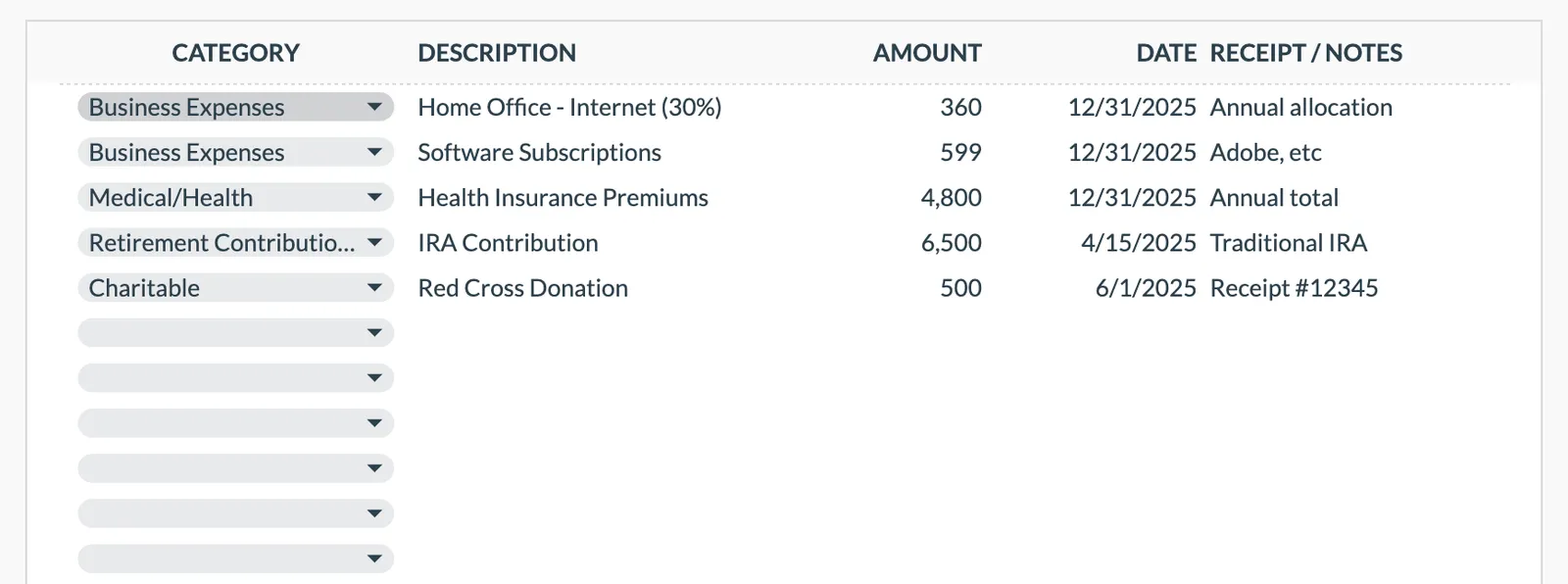
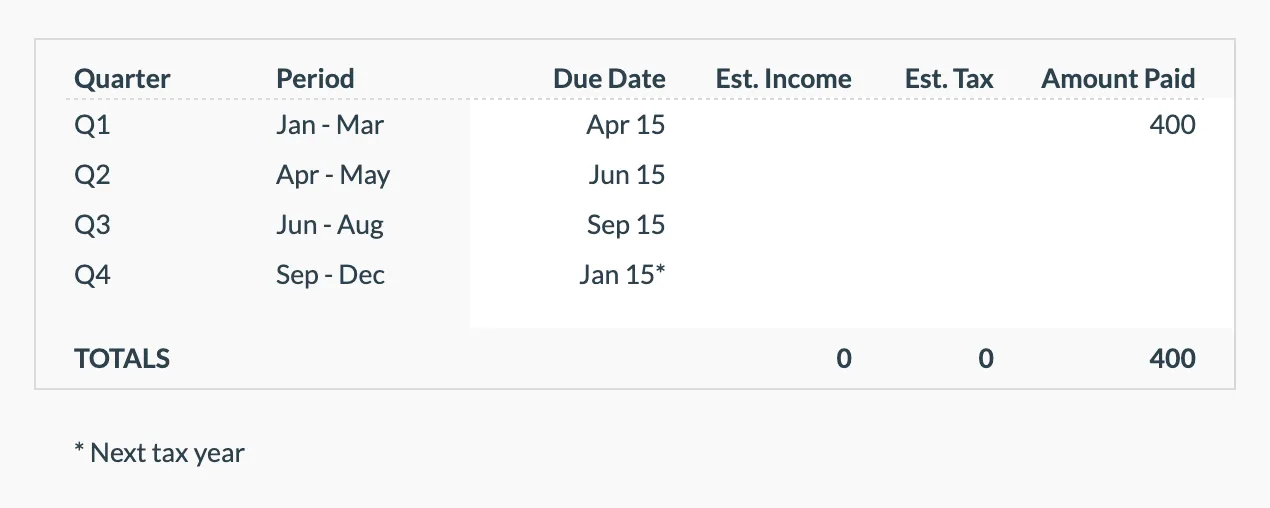
Explora la plantilla para ver cómo registra ingresos, deducciones, créditos y pagos trimestrales estimados.
- Panel de resumen fiscal anual
- Seguimiento de ingresos por fuente
- Organizador de deducciones y créditos
- Rastreador de pagos trimestrales
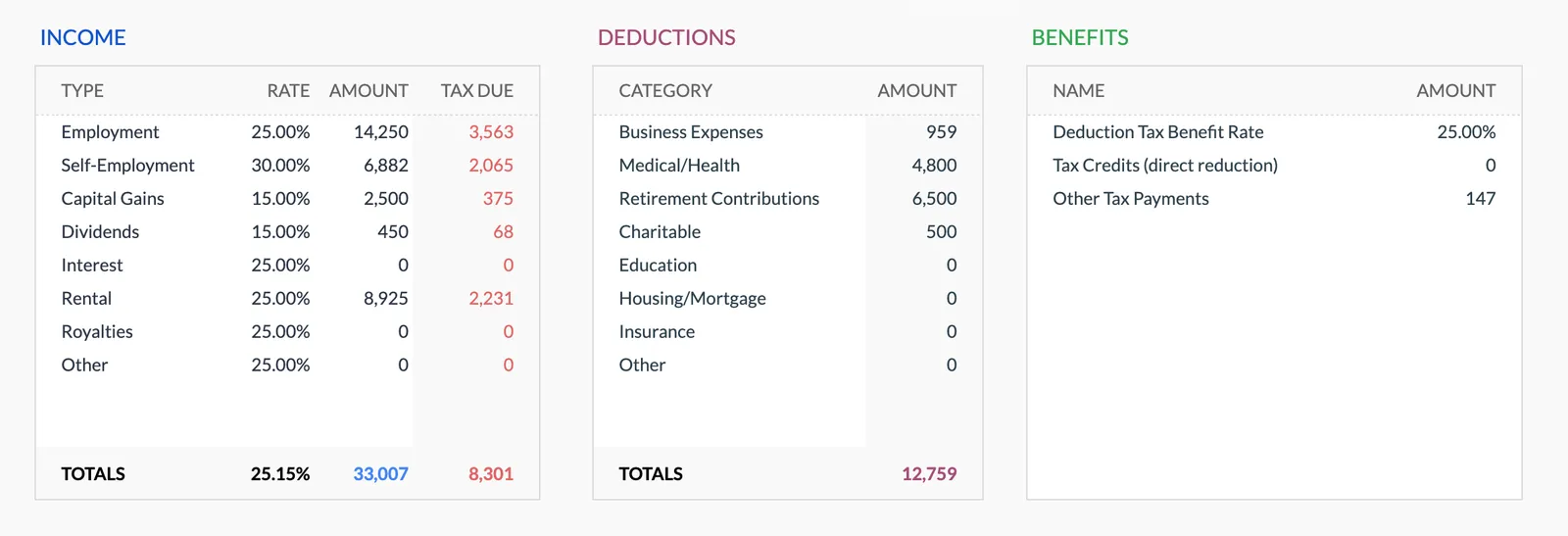
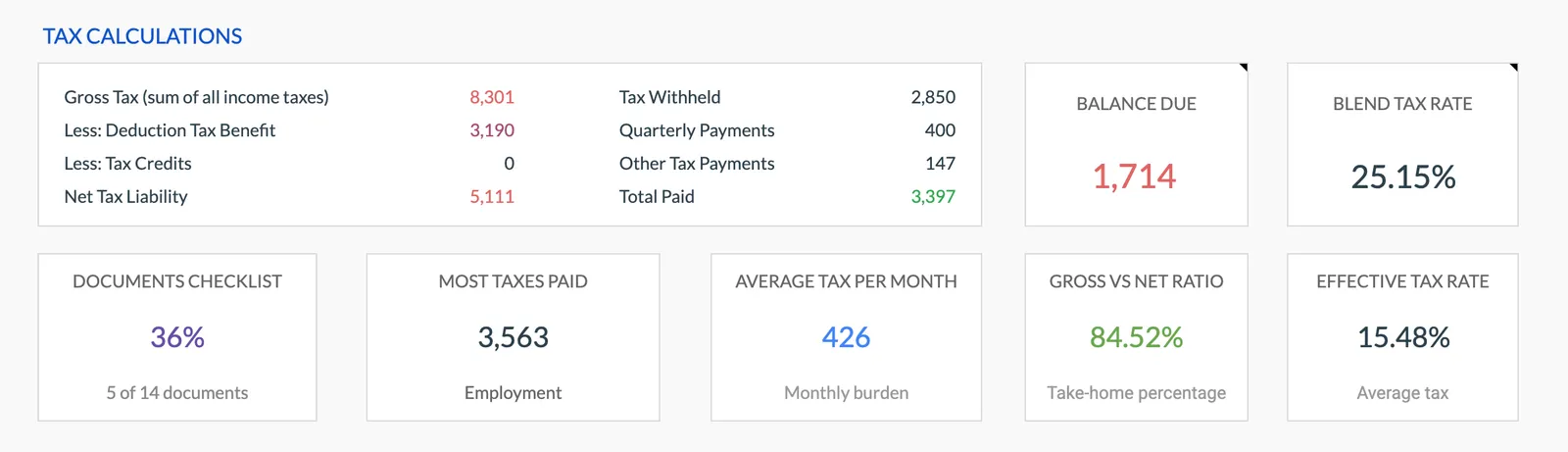
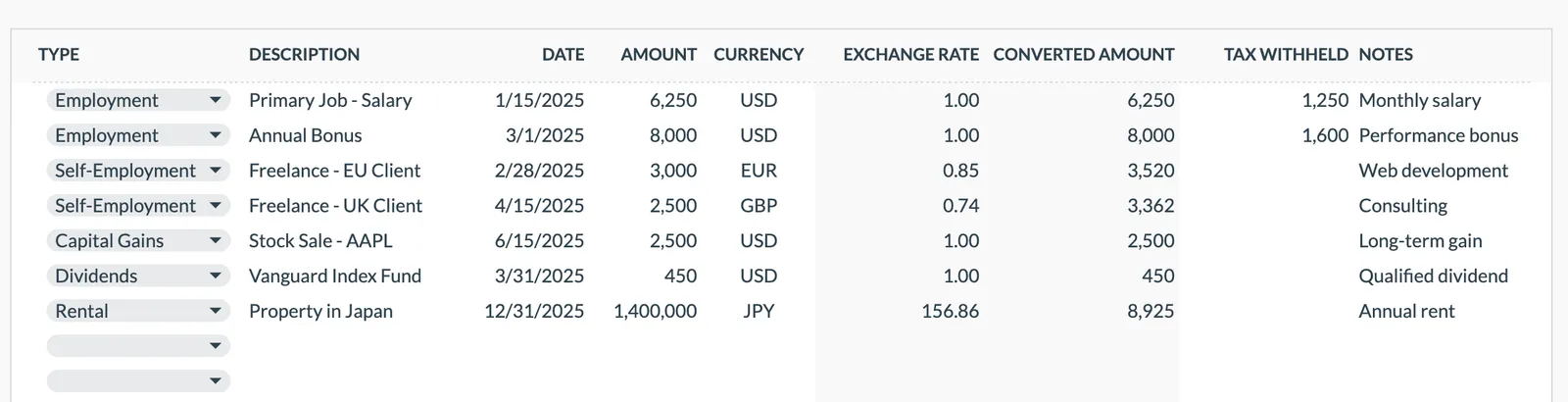
Annual tax overview with key figures
Detailed tax breakdown and projections
Track all income sources for tax purposes
Organize and track tax deductions
Plan and track quarterly estimated tax payments
Preguntas Frecuentes
Planificación fiscal en Colorado - Preguntas Frecuentes
¿Qué son las devoluciones TABOR y cómo afectan la planificación fiscal de Colorado?
Colorado es el único estado con una Declaración de Derechos del Contribuyente (TABOR) que limita el crecimiento de los ingresos gubernamentales. Cuando los ingresos estatales reales exceden el límite, calculado a partir del crecimiento poblacional más la inflación, el excedente se devuelve a los contribuyentes. El monto y el método de la devolución varían según el año, y han incluido reembolsos del impuesto sobre las ventas, reducciones de la tasa del impuesto sobre la renta y pagos directos. Bajo la orientación del IRS, estas devoluciones generalmente no son gravables a nivel federal para los declarantes que toman la deducción estándar, aunque quienes desglosan y dedujeron impuestos estatales y locales sobre las ventas pueden necesitar reportarlas.
¿Cómo calcula Colorado el ingresos imponible estatal de manera diferente a lo federal?
Colorado comienza con ingresos imponibles federales como base para cálculos estatales, luego aplica adiciones y sustracciones específicas del estado. Una sustracción clave es para devoluciones de impuestos sobre la renta estatal recibidas en el año anterior (si fueron deducidas a nivel federal). Colorado también tiene su propia sustracción para ciertos ingresos de jubilación. Comenzar a partir de ingresos imponibles federales significa que las opciones de deducción federales - estándar versus desglosadas - se transfieren automáticamente al cálculo estatal.
¿Ofrece Colorado sustracciones de ingresos de jubilación?
Colorado proporciona una sustracción basada en la edad para ingresos de pensión y anualidad. Los residentes de 55 a 64 años pueden sustraer hasta un monto establecido, y quienes tienen 65 años o más pueden sustraer un monto mayor. El Seguro Social se trata por separado: los contribuyentes de 65 años o más pueden sustraer en su totalidad los beneficios gravables a nivel federal, y desde el año fiscal 2025 quienes tienen entre 55 y 64 años pueden hacer lo mismo cuando el ingreso bruto ajustado queda por debajo de límites establecidos. Esto puede reducir de manera significativa el ingresos imponible estatal para jubilados con distribuciones de jubilación totales moderadas.
¿Cuál es la tasa única del 4.4% y cómo interactúa con los brackets federales?
Colorado aplica una tasa única del 4.4% al ingresos imponible estatal [1], que se deriva de tu ingresos imponible federal con ajustes estatales. La simplicidad de una tasa única significa que puedes estimar tu impuesto de Colorado multiplicando ingresos imponible estatal ajustado por 0.044. La complejidad en planificación fiscal para residentes de Colorado se encuentra principalmente en el lado federal, donde brackets graduados, eliminaciones y créditos requieren un rastreo más detallado.
¿Se informan las devoluciones TABOR como ingresos en mi declaración federal?
Las devoluciones TABOR generalmente se consideran un reembolso de impuestos estatales. Bajo la orientación del IRS emitida en 2023, los declarantes que desglosaron deducciones y eligieron deducir impuestos estatales y locales sobre las ventas pueden necesitar reportar la devolución como ingreso bajo la regla del beneficio fiscal. Si tomaste la deducción estándar, la devolución típicamente no es gravable. Rastrear el método de deducción del año anterior ayuda a determinar el tratamiento federal.
¿No encuentras la respuesta que buscas? Contacta a nuestro equipo
Recursos fiscales oficiales
Para tasas actuales, formularios y fechas límite de presentación específicos de Colorado:
Sources
Organiza tu planificación fiscal para Colorado
Compra única. Sin suscripción. Tus datos financieros se guardan en tu Google Drive.
Tax rules, rates, and contribution limits change, and official publications can themselves lag behind the law in force. We review these figures on a best-effort basis against sources we consider authoritative, but we cannot guarantee they are current, complete, or that better sources do not exist, and nothing here is tax, legal, or financial advice. For decisions, the relevant government authority is the reference. Last reviewed: August 2026.