Malaysia
Monthly Budget Template for Malaysia
Track your income in MYR, manage EPF contributions, PCB tax deductions, and everyday expenses - all in a Google Sheets template you own.
In Depth
EPF at 11%, Graduated Tax Rates, and RPGT on Property
Malaysian employees see a combined EPF contribution of 23-24% of wages (11% employee, 12-13% employer) directed to the provident fund before take-home pay is calculated. On top of EPF, PCB (monthly tax deduction) is withheld based on Malaysia's graduated income tax rates, which range from 0% on the first RM5,000 to 30% on income above RM2,000,000. For most salaried workers, the effective tax rate is considerably lower than the top bracket, but the combination of EPF and PCB means the gap between gross and net pay is substantial. SOCSO contributions (0.5% employee share) and EIS (0.2%) add further small deductions.
The ringgit has fluctuated against major currencies in recent years, trading in a range that affects purchasing power for imported goods and international commitments. For Malaysians with overseas financial obligations - education fees for children abroad, family support, or foreign-currency debt - exchange rate movements can shift monthly expenses unpredictably. Tracking these costs separately in a budget helps identify when currency swings are quietly eating into discretionary spending.
Property investors face Real Property Gains Tax at rates that depend on how long the property is held - from 30% for disposals within three years down to 0% after five years for Malaysian citizens. Government subsidies on RON95 petrol, electricity, and certain food items keep some everyday costs lower than market rates, though targeted subsidy reforms have been discussed for years and some adjustments have already taken effect. A practical approach to budgeting accounts for current costs while recognizing that subsidy changes could shift certain expense categories meaningfully.
Malaysia
Budgeting in Malaysia: What's Different
Malaysia's financial system has features that shape how budgeting works. Understanding these helps you set up a template that matches your financial reality.
EPF contributions reduce your take-home pay
Employees contribute 11% of their monthly salary to the Employees Provident Fund (EPF), with employers contributing 12-13%. This mandatory deduction means your take-home pay is roughly 89% of gross salary before accounting for income tax. Budgeting from your actual credited salary gives a more accurate picture.
Progressive income tax with generous reliefs
Malaysia's income tax rates range from 0% to 30%. Monthly PCB (Potongan Cukai Berjadual) deductions approximate your annual tax liability. The system offers numerous tax reliefs - medical expenses, education, lifestyle purchases, EPF contributions - that can significantly reduce your tax bill. Tracking qualifying expenses throughout the year can help at tax filing time.
No GST, but SST applies to some items
Malaysia replaced GST with the Sales and Service Tax (SST) system. Service tax of 8% applies to certain services (restaurants, telecommunications, professional services), while sales tax of 5-10% applies to manufactured goods. For budgeting purposes, prices you pay already include applicable taxes.
Malaysian cost of living varies significantly by location
Living costs in Kuala Lumpur differ substantially from Penang, Johor Bahru, or East Malaysia. Housing, transport (car-centric in most areas), and food (from hawker stalls to restaurants) are the main variable categories. A budget tailored to your specific city and lifestyle gives the most useful picture.
SOCSO and EIS are mandatory contributions beyond EPF
Beyond EPF, Malaysian employees contribute to SOCSO (Social Security Organisation) and EIS (Employment Insurance System). SOCSO covers work-related injuries and disability, with employee contributions of 0.5% of wages (capped at RM 86.65/month). EIS, introduced in 2018, provides unemployment benefits and re-employment assistance at 0.2% of wages from each side. These deductions are small individually but add to the gap between gross and net pay.
RPGT applies to property gains based on holding period
Real Property Gains Tax (RPGT) in Malaysia is charged on profits from selling property. For Malaysian citizens, the rate is 30% if disposed within 3 years, 20% in year 4, 15% in year 5, and 0% from year 6 onward. Non-citizens face higher rates and longer holding periods before the rate drops. An exemption applies for gains up to RM10,000 or 10% of the chargeable gain, whichever is greater. This affects the timing and financial outcome of property investment decisions.
获取模板
入门指南
Your First Steps With a Malaysian Budget
Switch the currency to MYR
There's a currency setting at the top of the dashboard where you can switch to MYR or RM. The calculations stay the same - only the display changes.
Enter your after-EPF, after-tax take-home pay
Use the amount actually credited to your bank account after EPF and PCB deductions. Your payslip shows the breakdown - the net pay figure is what to use for budgeting.
Customize expense categories for Malaysian life
Add categories relevant to your situation: rent or home loan, utilities (TNB electricity, water), mobile and broadband, petrol and toll (Touch 'n Go), car loan and insurance, groceries, eating out (mamak to restaurants), medical expenses, and insurance premiums.
Track tax-relief-eligible expenses
Malaysia offers tax reliefs for lifestyle expenses (up to RM2,500), medical expenses, education fees, and more. Adding a note or tag to qualifying purchases during the year makes tax filing easier and ensures you claim everything you're entitled to.
Plan for annual and seasonal expenses
Account for road tax and car insurance renewals, annual medical check-ups, Hari Raya or Chinese New Year expenses, school reopening costs, and any other periodic expenses. Planning for these across the year avoids month-end surprises.
查看实际效果
模板外观
浏览模板,了解其如何处理预算、分类和支出跟踪 - 所有内容均可适配您的本地财务设置。
- 内置货币选择器
- 可自定义分类
- 预算与实际对比跟踪
- 可视化图表和摘要

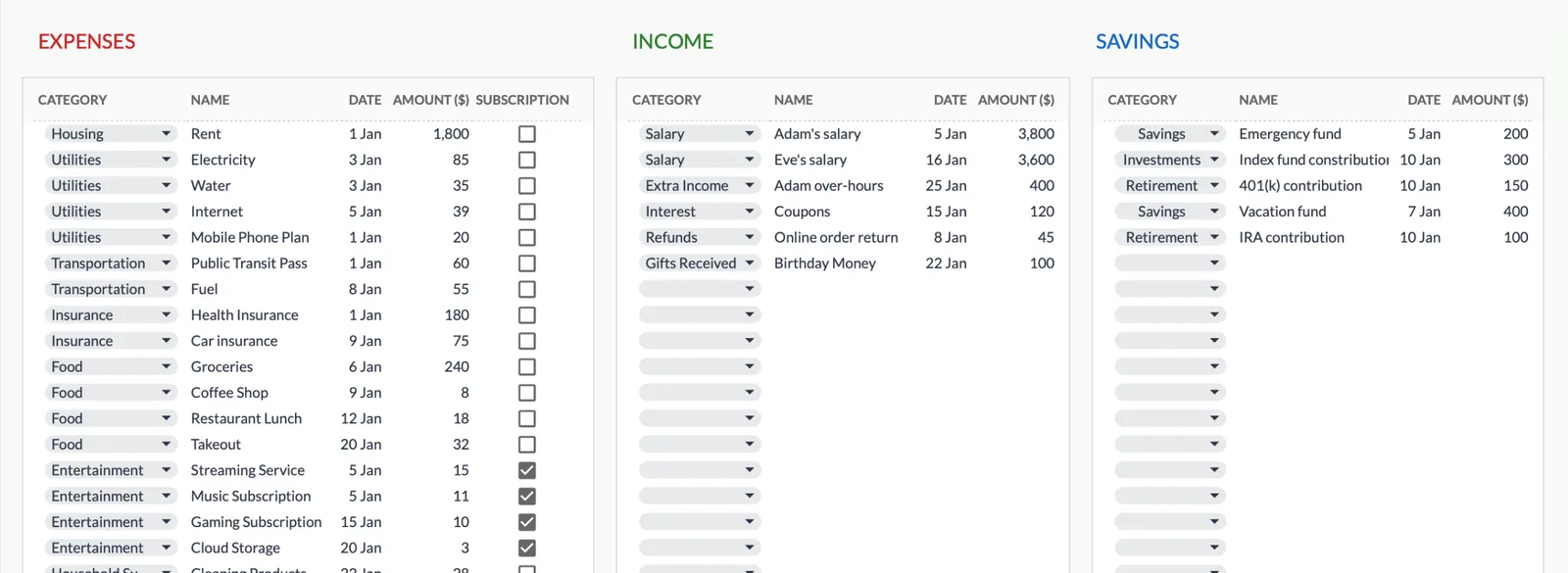
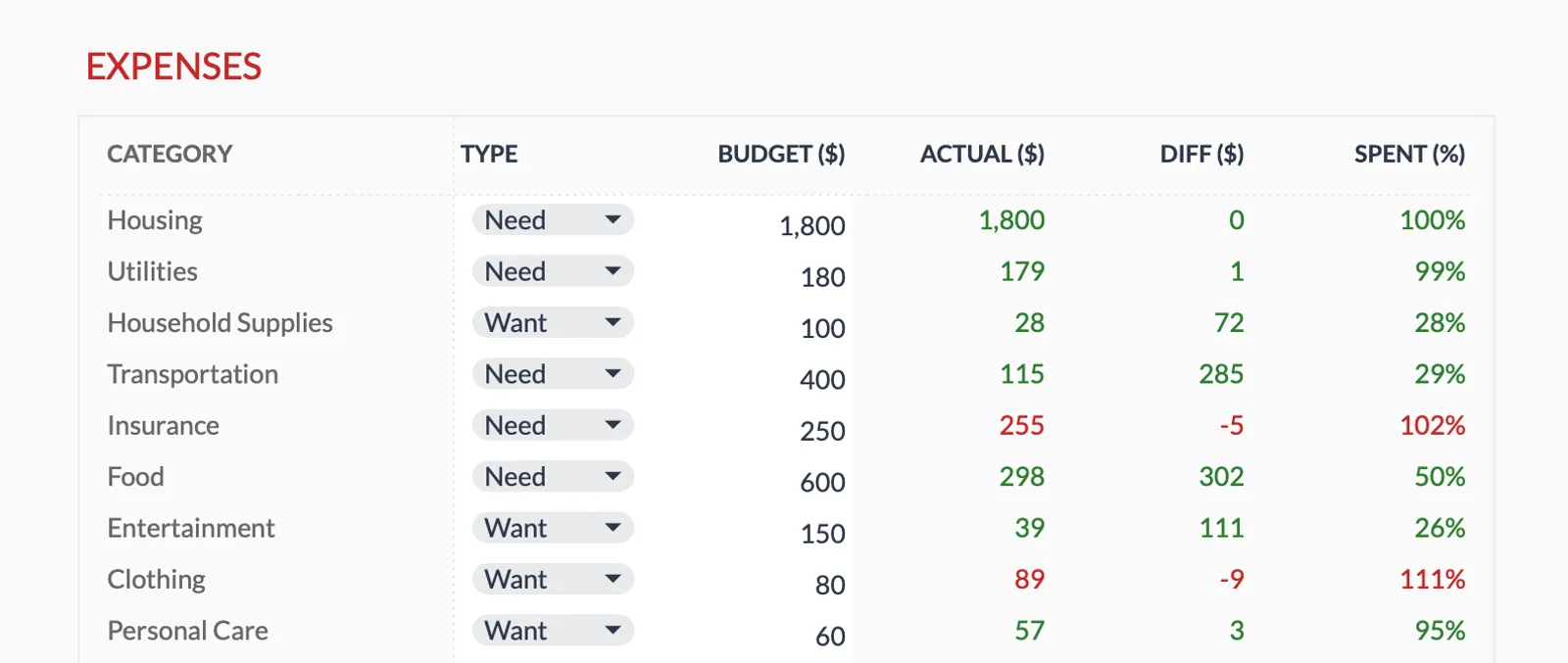
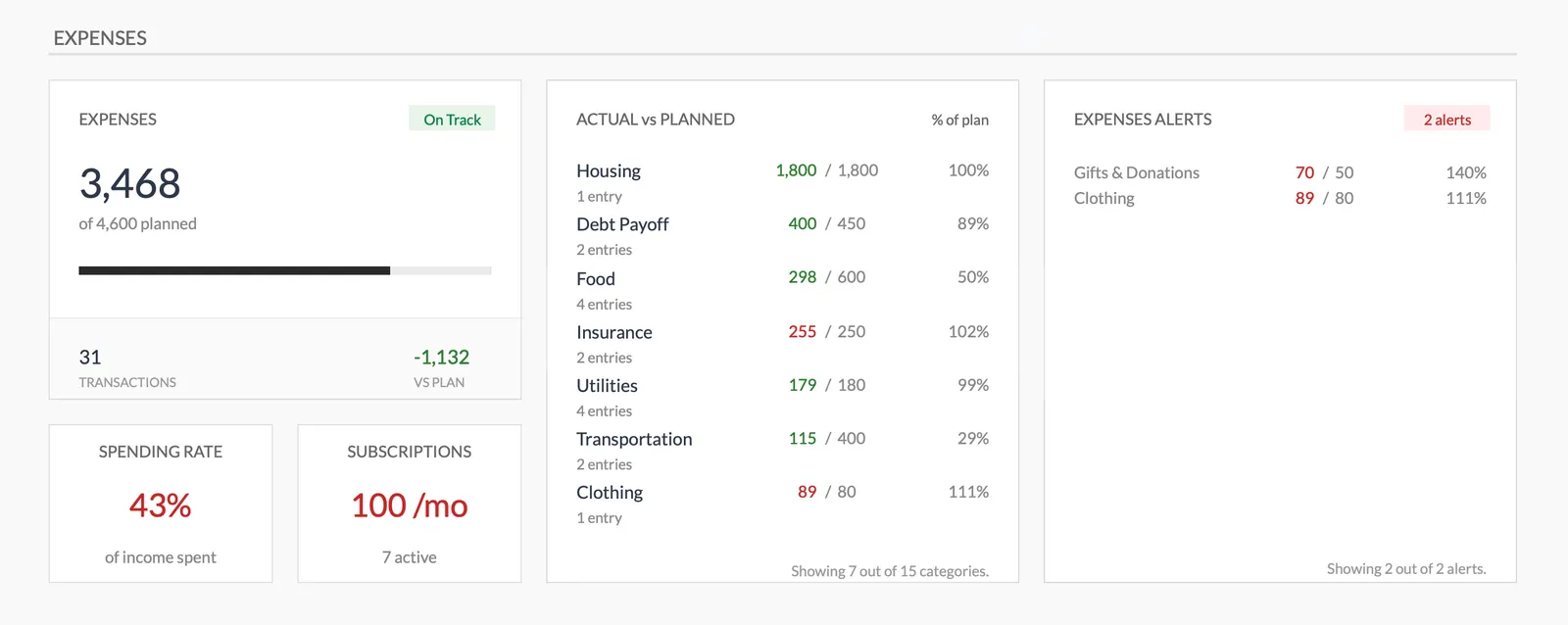
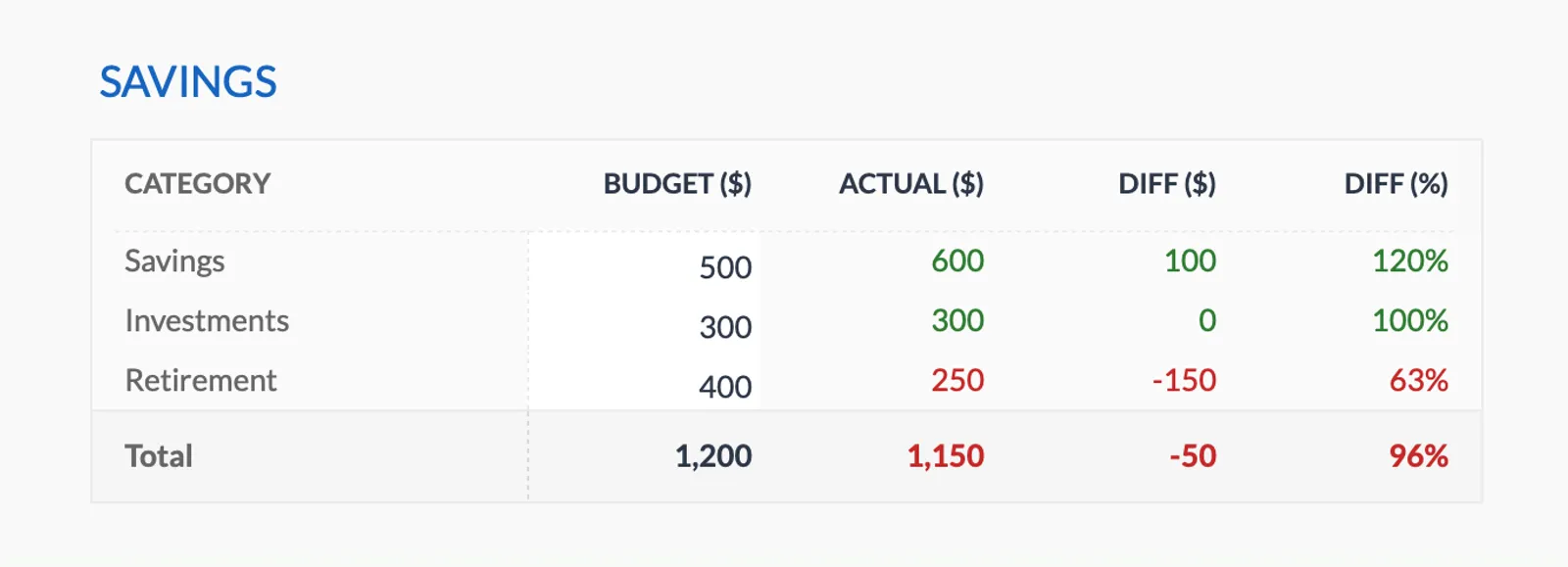
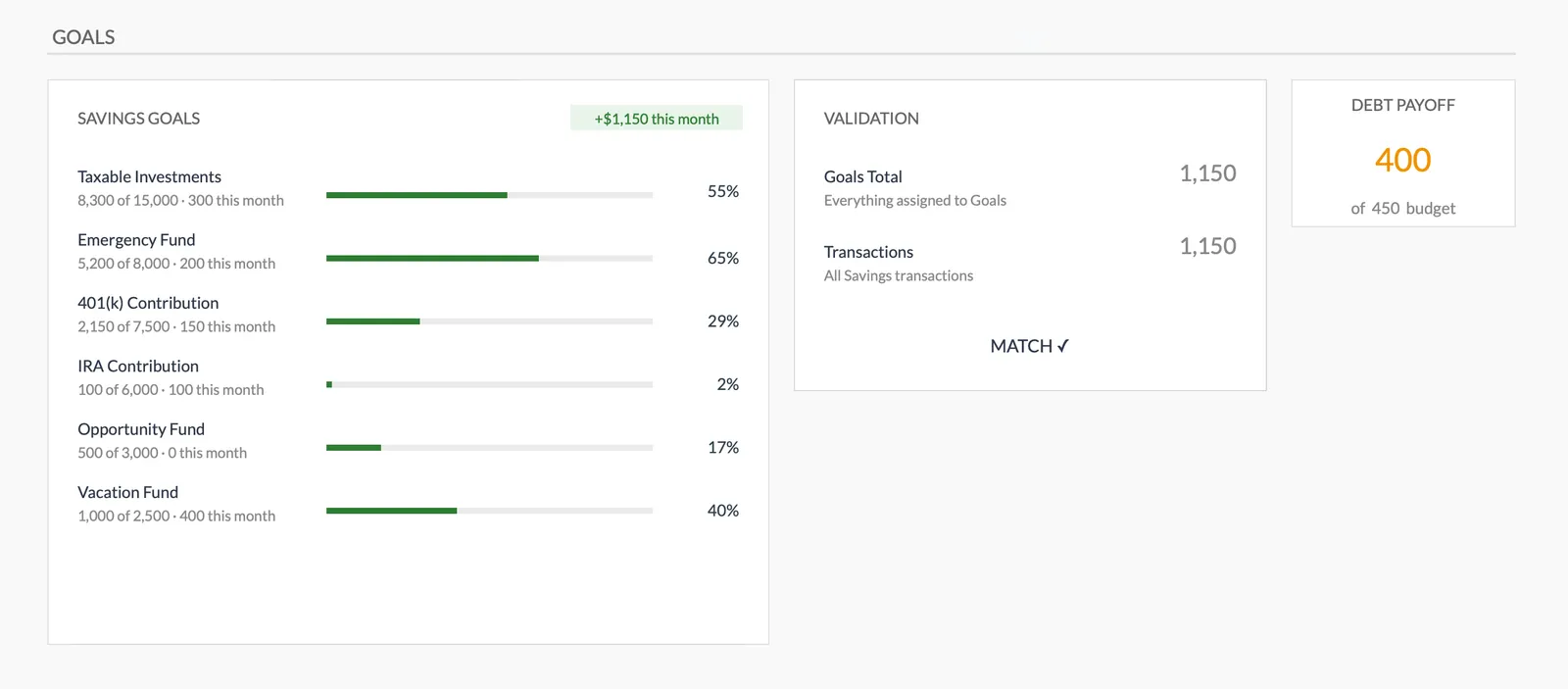
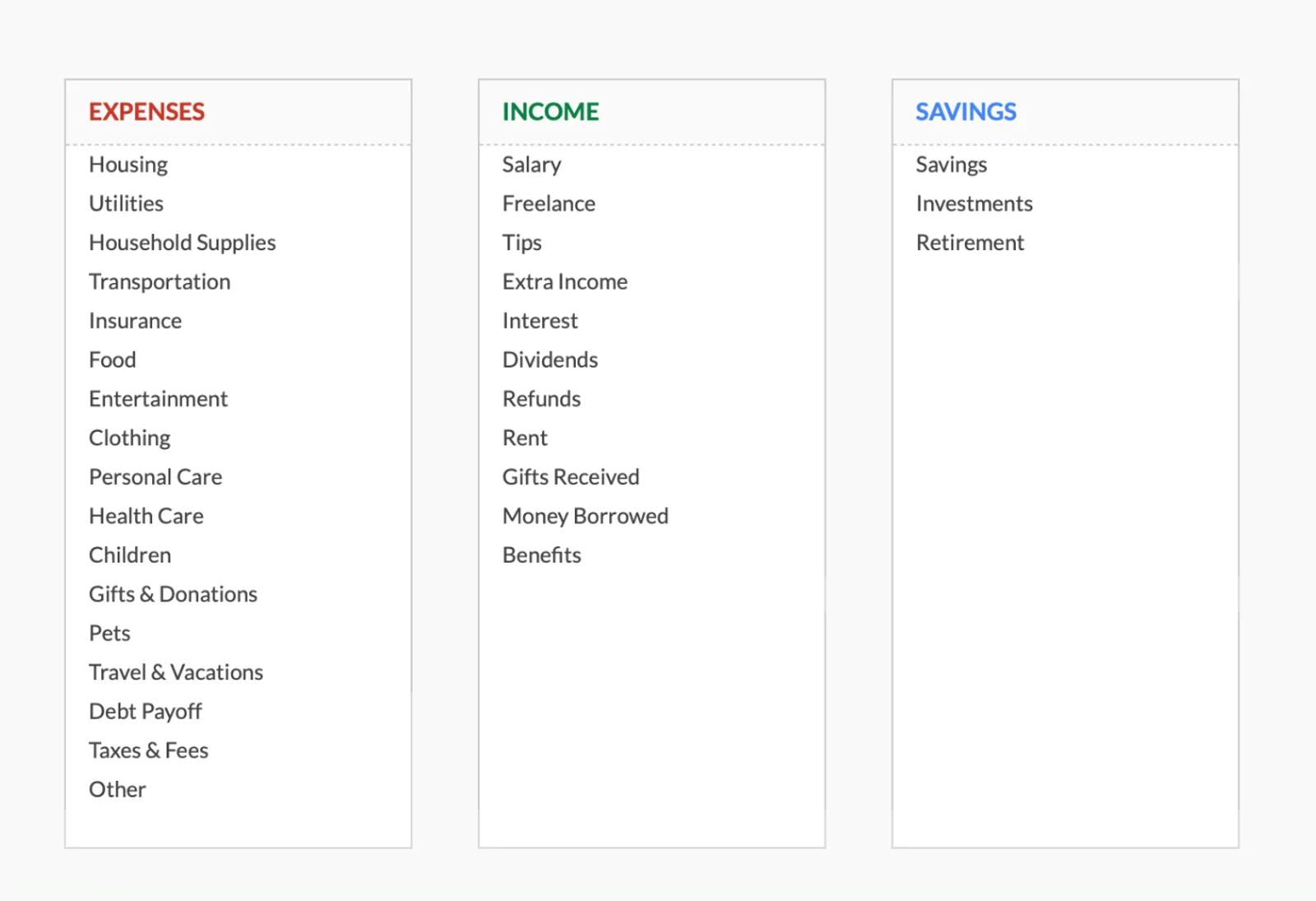
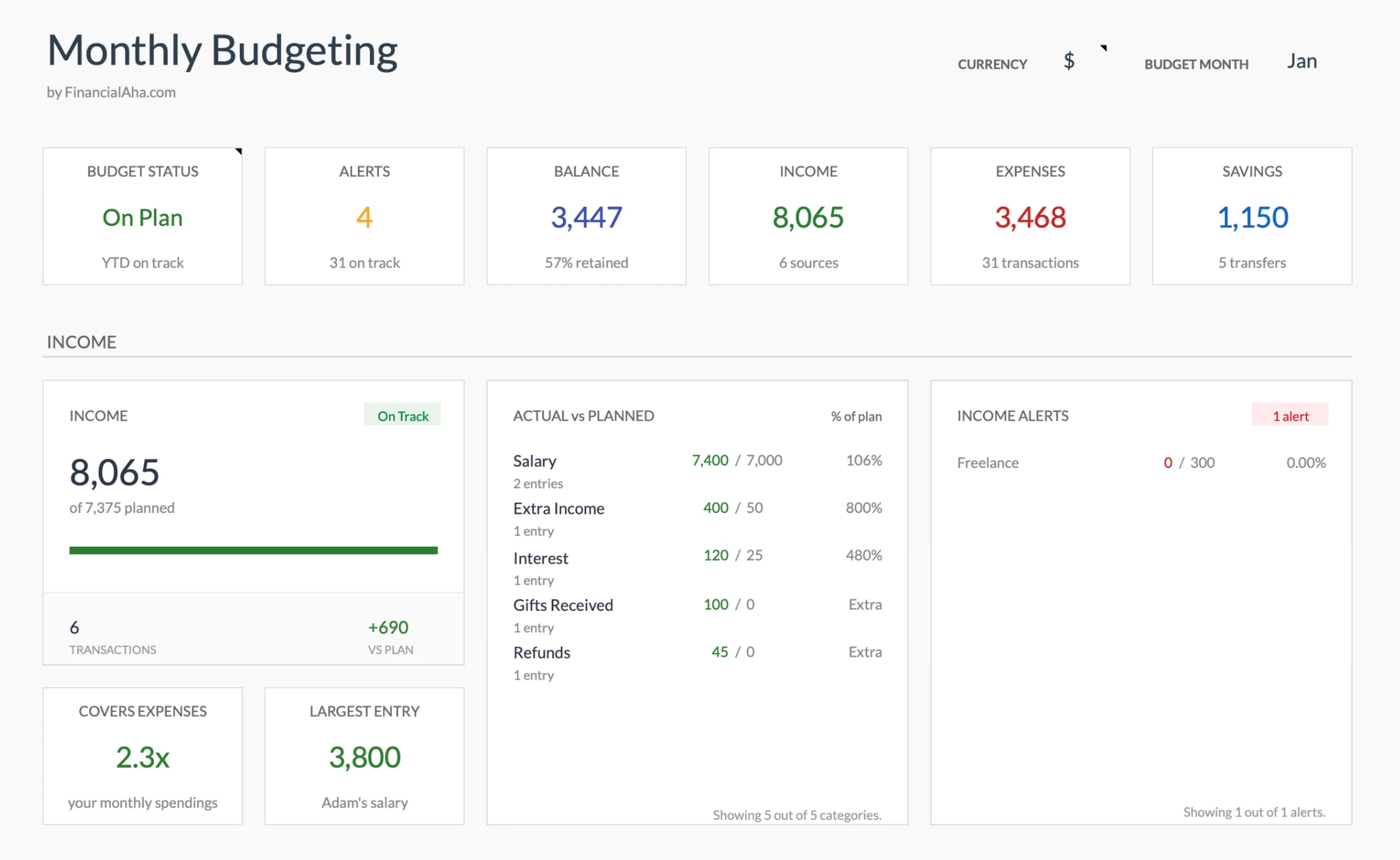
Dashboard with income, expenses, and savings at a glance
Log transactions with automatic categorization
Set targets per category and track actual spending
Visual breakdown of where your money goes
Track savings goals alongside your budget
Monitor progress toward financial goals
Fully customizable expense, income, and savings categories
常见问题
Monthly Budget Template for Malaysia - FAQ
Does this template use Malaysian ringgit?
Yes - switch to MYR or RM using the currency dropdown in the header. The formulas work the same in any currency, so only the display symbol changes.
Should I track EPF contributions in my budget?
EPF is deducted before your take-home pay, so it doesn't need a budget line. Just use your net salary as income. If you make voluntary additional EPF contributions (self-contribution to Account 1), track those separately since they come from your disposable income.
How do I handle variable income like commissions or bonuses?
Add these as separate income lines in the months they arrive. For commissions that vary monthly, using a conservative estimate as your baseline and treating higher months as a bonus helps avoid overspending in lean months.
Can I track PTPTN loan repayments?
Yes. Add PTPTN as a debt repayment category. If you're on salary deduction, it's already reflected in your take-home pay. If you pay separately, track it as a monthly expense to stay on top of repayments.
Is there a Malaysia-specific version of this template?
The template is the same worldwide - designed to be customizable. This page explains how to set it up for Malaysian finances. You can rename categories and adjust the template to match your specific situation.
Can't find the answer you're looking for? Contact our team