Oregon
Tax Planner Template for Oregon
Organize your federal and Oregon state tax planning in Google Sheets. Oregon has relatively high income tax rates and no sales tax.
In Depth
Oregon's Income Tax Focus and the Kicker
Oregon is one of five states with no sales tax, and this shapes the entire state tax picture. Because the state cannot rely on sales tax revenue, income tax rates are higher than they would be otherwise. Even the lowest bracket rate in Oregon exceeds the flat rates of many other states. The top rate is among the highest in the nation and kicks in at a moderate income level, meaning it is not just a concern for the highest earners.
The Oregon kicker is one of the more unusual features in any state's tax code. When the state's actual revenue exceeds the forecasted amount by more than two percent, the entire surplus is returned to individual taxpayers as a credit on the following year's tax return. The kicker amount is calculated as a percentage of the individual's prior-year tax liability. In strong economic years, the kicker can be substantial - it has exceeded several hundred dollars per person in some recent cycles. The kicker is taxable as income on the federal return.
Oregon also has a local income tax in the Portland metro area - the Metro Supportive Housing Services tax and Multnomah County's Preschool for All tax both apply to high earners in the region. These are relatively new additions that layer on top of the state income tax for residents above certain income thresholds. For Portland-area residents with higher incomes, the combined state and local income tax rate can be notably steep.
Oregon
Tax Planning in Oregon
Oregon has a graduated income tax with one of the higher top rates in the country, combined with no sales tax. This makes income tax planning the central focus of state tax management.
High Marginal Rates
Oregon has a graduated income tax with a top rate of 9.9% [1]. Even the lowest bracket rate is higher than many states' flat rates, reflecting Oregon's reliance on income tax as a primary revenue source.
No Sales Tax
Oregon has no state or local sales tax [2]. Income tax is the primary revenue source, which is why rates are higher than average. This also means income tax is the main planning focus.
Kicker Refund
Oregon has a unique "kicker" law - when actual revenue exceeds projections by more than 2%, the surplus is returned to taxpayers [1]. In eligible years, this appears as a credit on your state return.
Retirement Income
Oregon taxes most retirement income at regular rates. Social Security benefits are not taxed for most residents (Oregon follows federal rules, and most Oregon retirees fall below federal taxability thresholds). A retirement income credit is available for lower-income seniors.
Ottieni il Pianificatore Fiscale Annuale
Per Iniziare
Getting Started with Oregon Tax Planning
Enter all income knowing it carries the full tax weight
Add wages, self-employment, investments, and other earnings. Since Oregon has no sales tax, income tax is the state's primary revenue source - which is why rates reach 9.9% at the top bracket. Every dollar of income faces the full graduated rate structure without any sales tax to distribute the load. Categorizing income by type helps with both federal and Oregon tax projections.
Check for Portland-area transit and local taxes
If you live or work in the Portland metro area, additional local income taxes may apply. The Metro Supportive Housing Services tax and Multnomah County's Preschool for All tax each apply to higher earners above separate income thresholds. These layer on top of the state income tax and can push the combined rate well above the state's 9.9% top bracket. Use the notes section to flag which local taxes apply to your situation.
Track the kicker refund in eligible years
Oregon's unique "kicker" law returns surplus revenue to taxpayers when actual collections exceed projections by more than 2%. In eligible years, the kicker appears as a credit on your state return - calculated as a percentage of your prior-year tax liability. The kicker is taxable as income on your federal return, so recording it as income in the template keeps your federal projection accurate.
Review deductions carefully with no sales tax offset
Oregon residents cannot deduct sales tax on their federal return (since there is none to deduct). The SALT deduction for Oregon filers consists of state income tax plus property taxes. Enter both amounts to see how they interact with the $10,000 federal cap. Oregon does allow itemized deductions on the state return, and with rates as high as 9.9%, each deduction carries meaningful state tax savings.
Plan estimated payments for both federal and Oregon
Oregon requires estimated payments when withholding does not cover the full liability. Use the quarterly tracker for both federal and state obligations. Self-employed residents, freelancers, and those with investment income face estimated payment requirements at both levels. Oregon's penalties for underpayment are calculated separately from federal penalties.
Guarda in Azione
Come appare il pianificatore fiscale
Esplora il modello per vedere come tiene traccia di redditi, detrazioni, crediti e pagamenti trimestrali stimati.
- Dashboard di riepilogo fiscale annuale
- Monitoraggio del reddito per fonte
- Organizzatore di detrazioni e crediti
- Registro dei pagamenti trimestrali
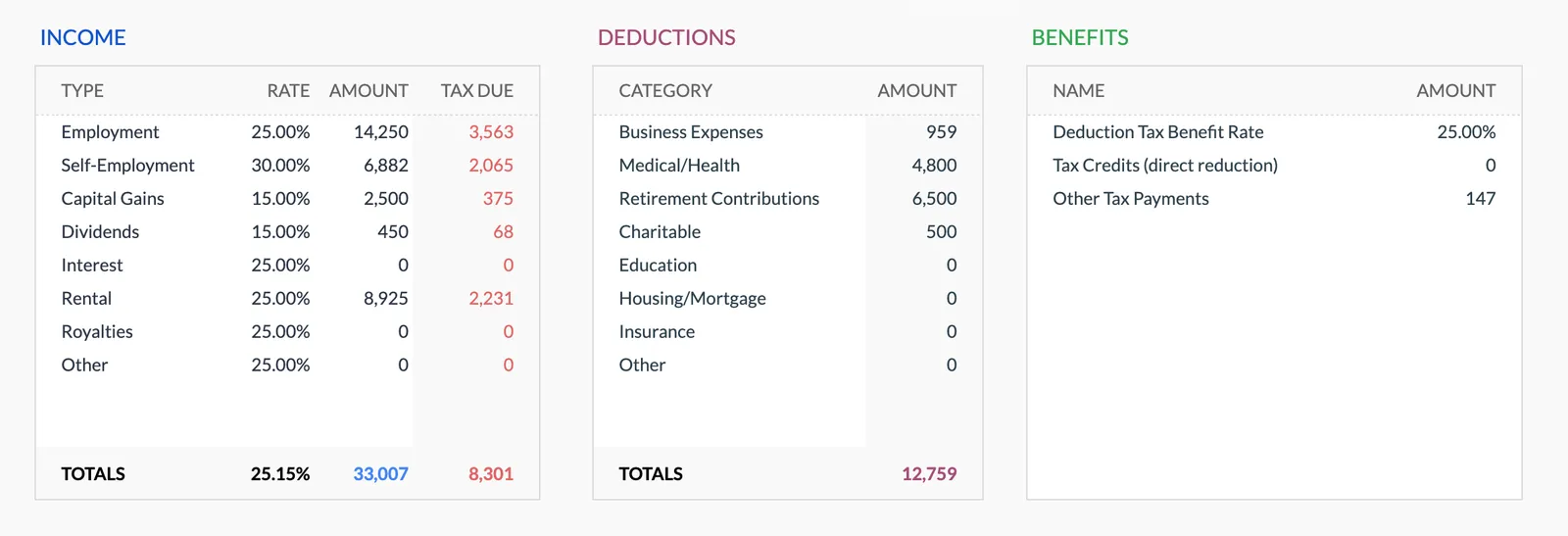
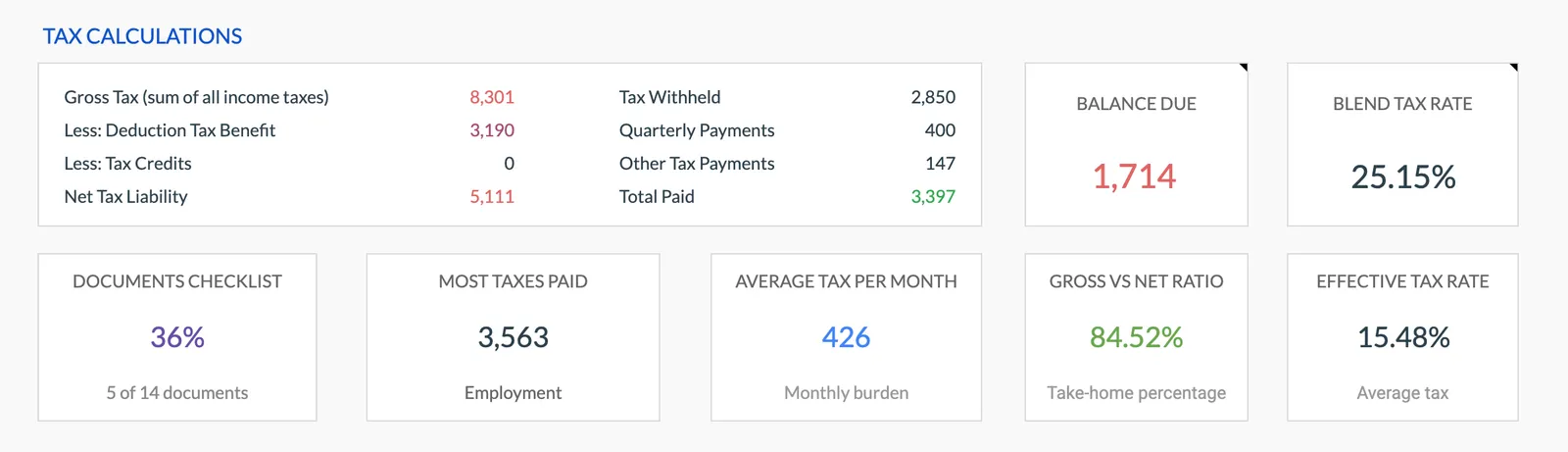
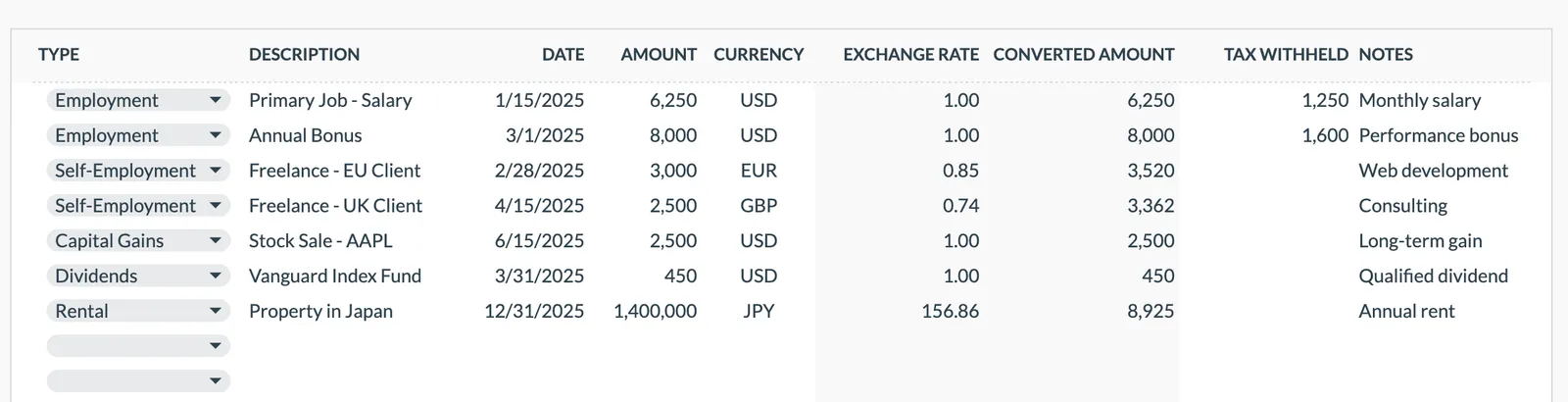
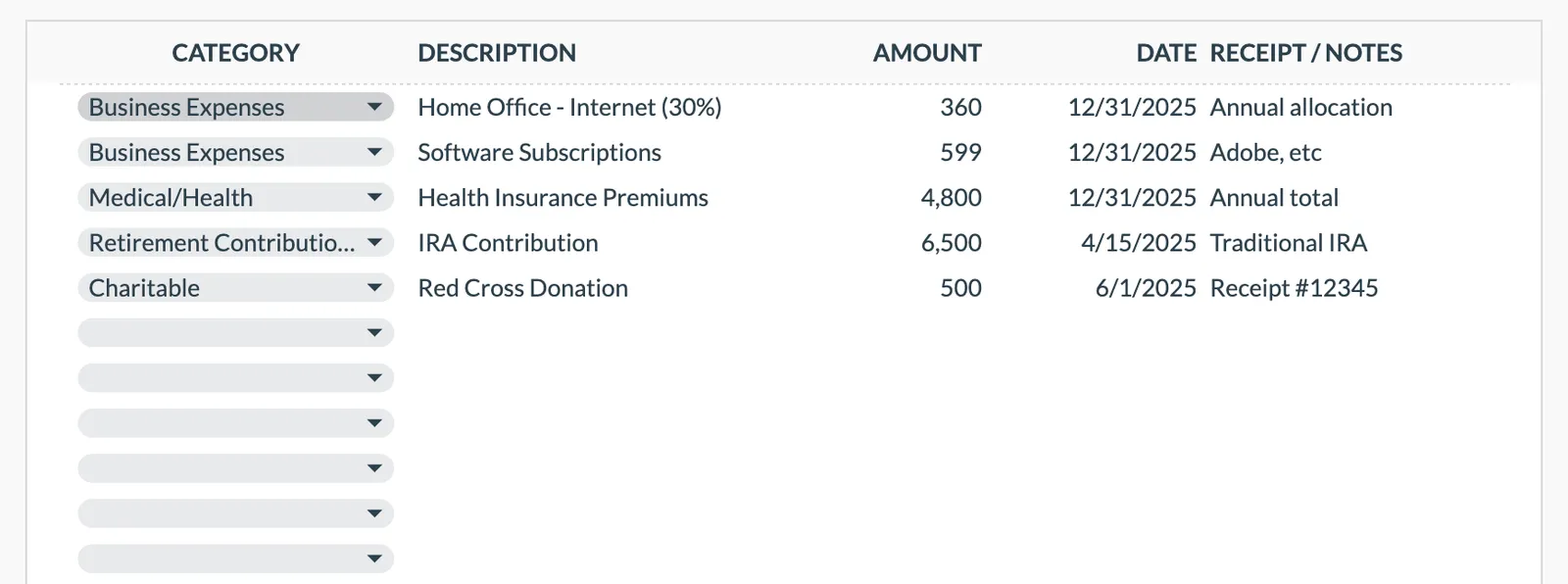
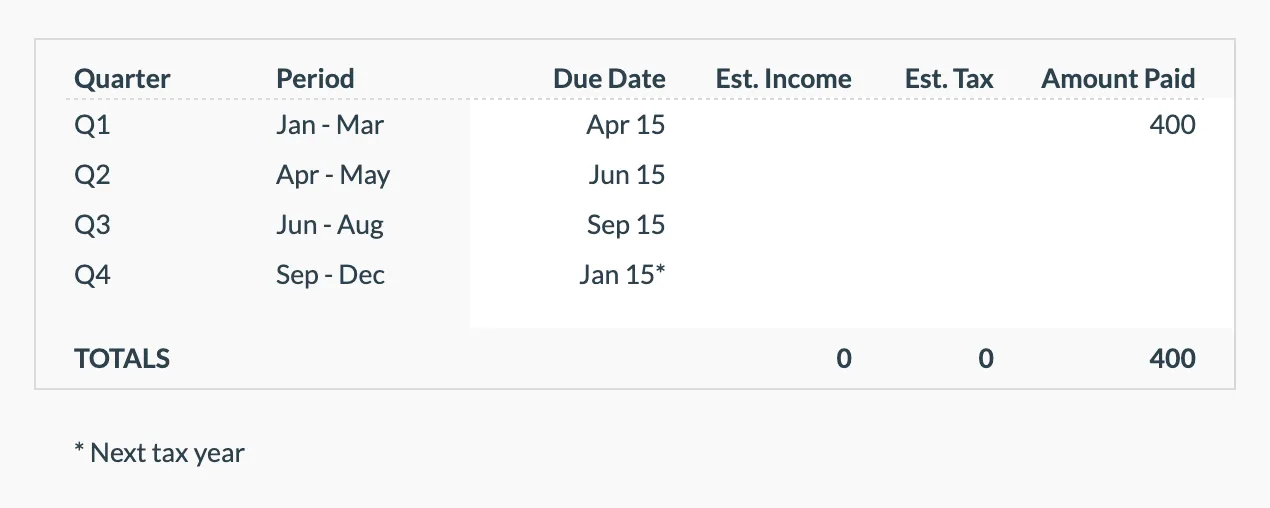
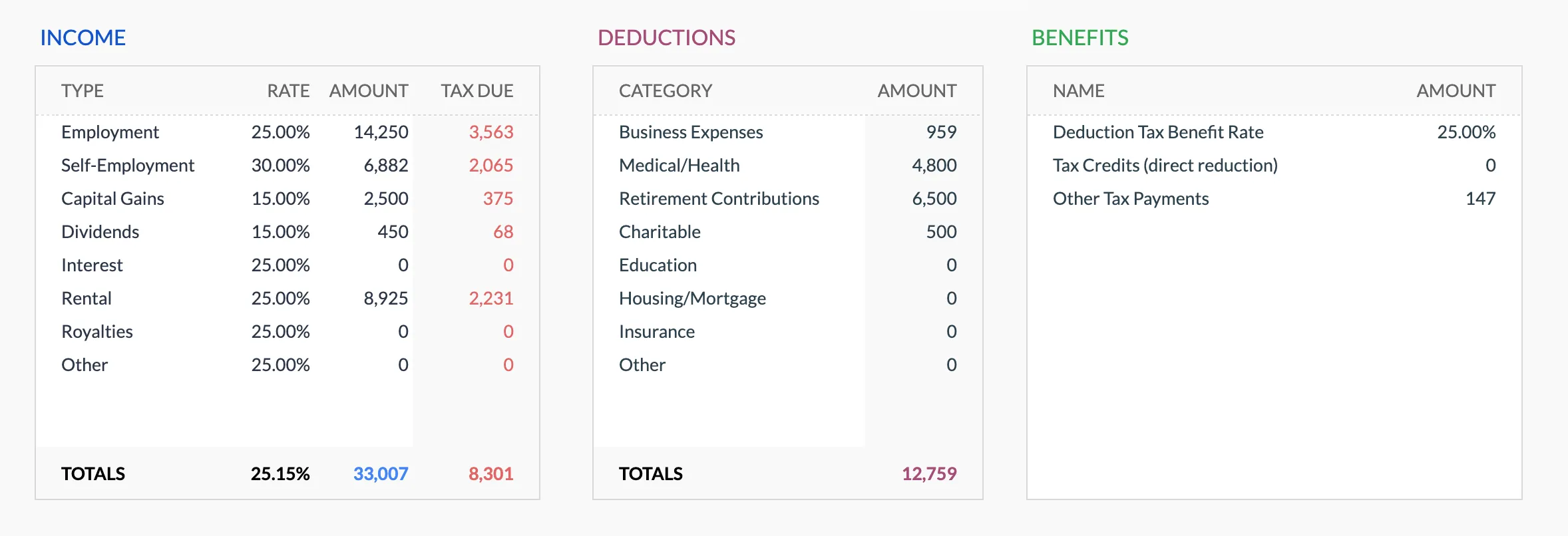
Annual tax overview with key figures
Detailed tax breakdown and projections
Track all income sources for tax purposes
Organize and track tax deductions
Plan and track quarterly estimated tax payments
Domande Frequenti
Tax Planning in Oregon - FAQ
Why are Oregon's income tax rates higher than most states?
Oregon is one of five states with no sales tax at all - no state sales tax and no local sales tax anywhere in the state. This means the state relies more heavily on income tax for revenue than states that have both income and sales taxes. The result is a top rate of 9.9% that kicks in at moderate income levels, with even the lowest bracket rate exceeding the flat rates of many other states. This trade-off means Oregon residents pay more in income tax but nothing in sales tax on purchases.
What is the Oregon kicker and how does it work?
The Oregon kicker is a constitutional provision that requires the state to return surplus revenue to taxpayers when actual general fund collections exceed the forecast by more than 2%. The refund is distributed as a credit on the following year's state tax return, calculated as a percentage of each taxpayer's prior-year state tax liability. In strong economic years, the kicker has been substantial. Worth knowing - the kicker credit is considered taxable income by the IRS, so it increases your federal tax liability in the year you receive it.
What local income taxes apply in the Portland area?
Portland-area residents with higher incomes may face two additional local income taxes: the Metro Supportive Housing Services tax and the Multnomah County Preschool for All tax. Each has its own income threshold, rate, and filing requirements. These taxes are administered separately from the state income tax. For residents above both thresholds, the combined state and local income tax rate can approach or exceed what New York City residents pay - despite Oregon being perceived as a mid-tier tax state.
How does Oregon treat retirement income?
Oregon taxes most retirement income at regular graduated rates. Social Security benefits are generally not taxed for most Oregon retirees because Oregon follows federal taxability rules, and many Oregon retirees fall below the federal thresholds where benefits become taxable. A retirement income credit is available for lower-income seniors to offset some state tax. Pension income from Oregon PERS and other sources is taxable at regular rates.
How does having no sales tax affect federal tax planning for Oregon residents?
Without sales tax, Oregon residents cannot claim a sales tax deduction on their federal return. The federal SALT deduction for Oregon filers consists only of state income tax and property taxes. Some Oregon residents find that state income tax alone approaches or exceeds the $10,000 SALT cap, leaving limited room for property tax deductions. This is a different dynamic from states where residents can choose between deducting income tax or sales tax on their federal return.
Can't find the answer you're looking for? Contact our team
Risorse fiscali ufficiali
Per aliquote aggiornate, moduli e scadenze di presentazione specifici per Oregon:
Organize your tax planning for Oregon
Acquisto una tantum. Nessun abbonamento. I tuoi dati finanziari rimangono nel tuo Google Drive.