New Zealand
Retirement Planning Template for New Zealand
Map out your retirement - KiwiSaver balance, NZ Super, additional investments, and projected expenses - in a Google Sheets template you own.
In Depth
NZ Super, KiwiSaver at 65, and the Kiwi Retirement Picture
Retirement planning in New Zealand centres on two pillars - NZ Super and KiwiSaver - that together form a simpler structure than most comparable countries offer. NZ Super is universal from age 65, providing roughly $520 per week after tax for a single person living alone. Unlike Australia's means-tested Age Pension, NZ Super does not reduce based on other income or assets. This reliability makes it a solid foundation for projecting retirement income.
KiwiSaver funds become accessible at 65, and the accumulated balance supplements NZ Super. The adequacy of that balance depends heavily on contribution rate, fund type, and how many years of contributions have built up. Someone who joined KiwiSaver at its 2007 launch and contributed consistently at 8% will have a very different balance than someone who joined later at the minimum 3%. The Retirement Commission's research suggests many New Zealanders will find a gap between their expected retirement lifestyle and what KiwiSaver plus NZ Super actually provides.
For those planning to step back from work before 65, the challenge is bridging the gap. KiwiSaver cannot be accessed early for retirement purposes (only for a first home, significant financial hardship, serious illness, or permanent emigration). Any pre-65 retirement spending must come from non-KiwiSaver savings and investments. PIE funds, term deposits, or direct share investments provide this bridge, and planning both phases separately - the pre-65 bridge and the post-65 KiwiSaver-plus-Super period - gives a more realistic picture of what is needed.
New Zealand's public healthcare system covers GP visits (with subsidies), hospital care, and many prescriptions at reduced cost. This removes some of the retirement healthcare anxiety that exists in countries without universal coverage. However, dental care, elective procedures, and the cost of rest home or aged care facilities remain significant potential expenses that are worth factoring into long-term retirement projections.
New Zealand
Retirement Planning in New Zealand: Key Factors
New Zealand retirement planning is simpler than many countries - KiwiSaver and NZ Super form the core. But ensuring they add up to enough requires planning.
NZ Super provides universal coverage from 65
NZ Super is available to all eligible residents at 65, regardless of work history or savings. For a single person living alone, it's roughly $520/week after tax (2025). For a couple, roughly $800/week combined. This universal benefit provides a reliable foundation but is typically not enough on its own for a comfortable retirement.
KiwiSaver is the main savings vehicle
KiwiSaver funds are locked until 65 (with limited exceptions for first home or financial hardship). The fund type - conservative, balanced, growth, or aggressive - significantly affects long-term outcomes. A growth fund may return more over 20+ years but with higher volatility. Choosing the right fund for your timeline is a key retirement planning decision.
Non-KiwiSaver investments provide flexibility
Since KiwiSaver is locked until 65, any plans to reduce work or retire before 65 require savings outside KiwiSaver. Managed funds (PIE funds with capped tax rates), direct shares, term deposits, or other investments provide this flexibility. A retirement plan that covers both pre-65 and post-65 phases is more complete.
The Retirement Commission provides useful benchmarks
Te Ara Ahunga Ora - the Retirement Commission (through Sorted.org.nz) provides tools and benchmarks for NZ retirement planning. Their research suggests many New Zealanders are undersaving for the retirement lifestyle they expect. A personalized plan helps determine whether you're on track for your specific goals.
Vorlage erhalten
Erste Schritte
Setting Up for NZ Retirement With KiwiSaver
Enter your KiwiSaver balance and settings
Log into your KiwiSaver provider's portal for your current balance. Note your contribution rate (3%, 4%, 6%, 8%, or 10%), fund type, and provider fees. These details affect your projected retirement balance.
Add NZ Super as future income
Enter the current NZ Super rate as income starting at age 65. For a couple, enter the combined amount. NZ Super is adjusted for inflation periodically, so current rates are a reasonable planning guide.
Include non-KiwiSaver investments
List any other investments - managed funds, shares, term deposits, rental property. These are especially important if you plan to slow down or stop working before 65.
Estimate retirement expenses
Project what you'll spend in retirement. NZ Retirement Commission research suggests single retirees need roughly $750-1,000/week for a comfortable lifestyle (in the main centres). Your target depends on location, health, travel plans, and whether your mortgage is paid off.
Test different scenarios
Try different retirement ages, KiwiSaver contribution rates, and investment returns. Even small changes - like increasing contributions from 3% to 6% - can make a meaningful difference over 20-30 years.
In Aktion sehen
So sieht die Vorlage aus
Schauen Sie sich die Vorlage an, um zu sehen, wie sie Budgetierung, Kategorien und Ausgabenverfolgung handhabt - alles anpassbar an Ihre lokale Finanzsituation.
- Integrierte Währungsauswahl
- Anpassbare Kategorien
- Budget- vs. Ist-Verfolgung
- Visuelle Diagramme und Zusammenfassungen
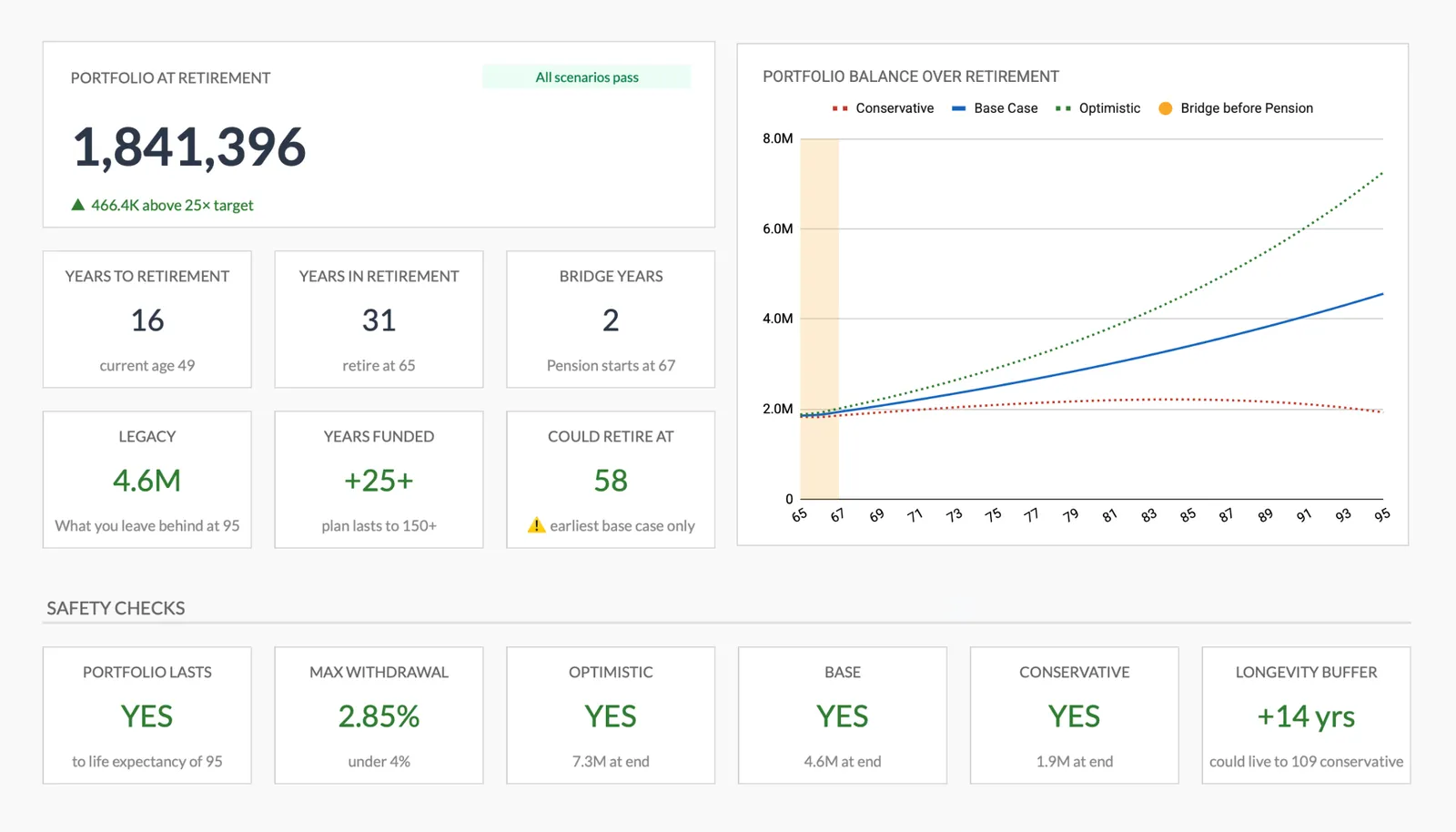
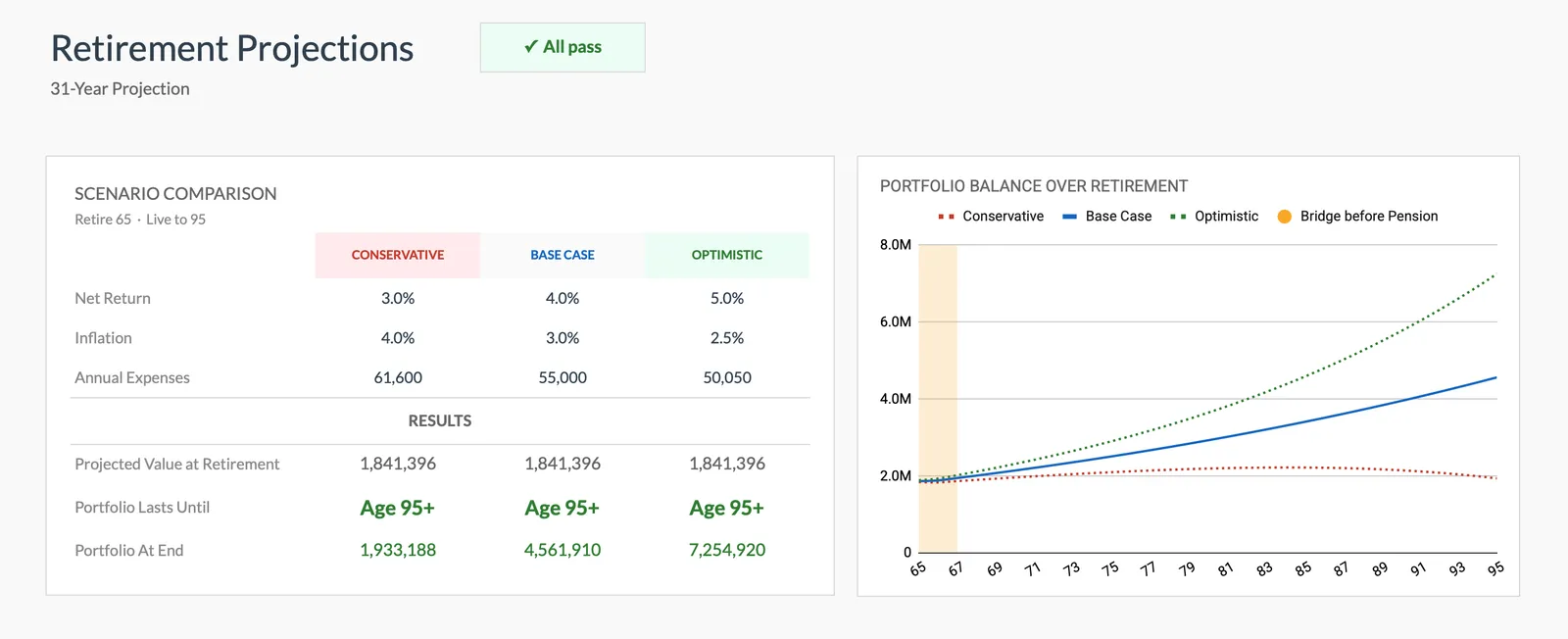
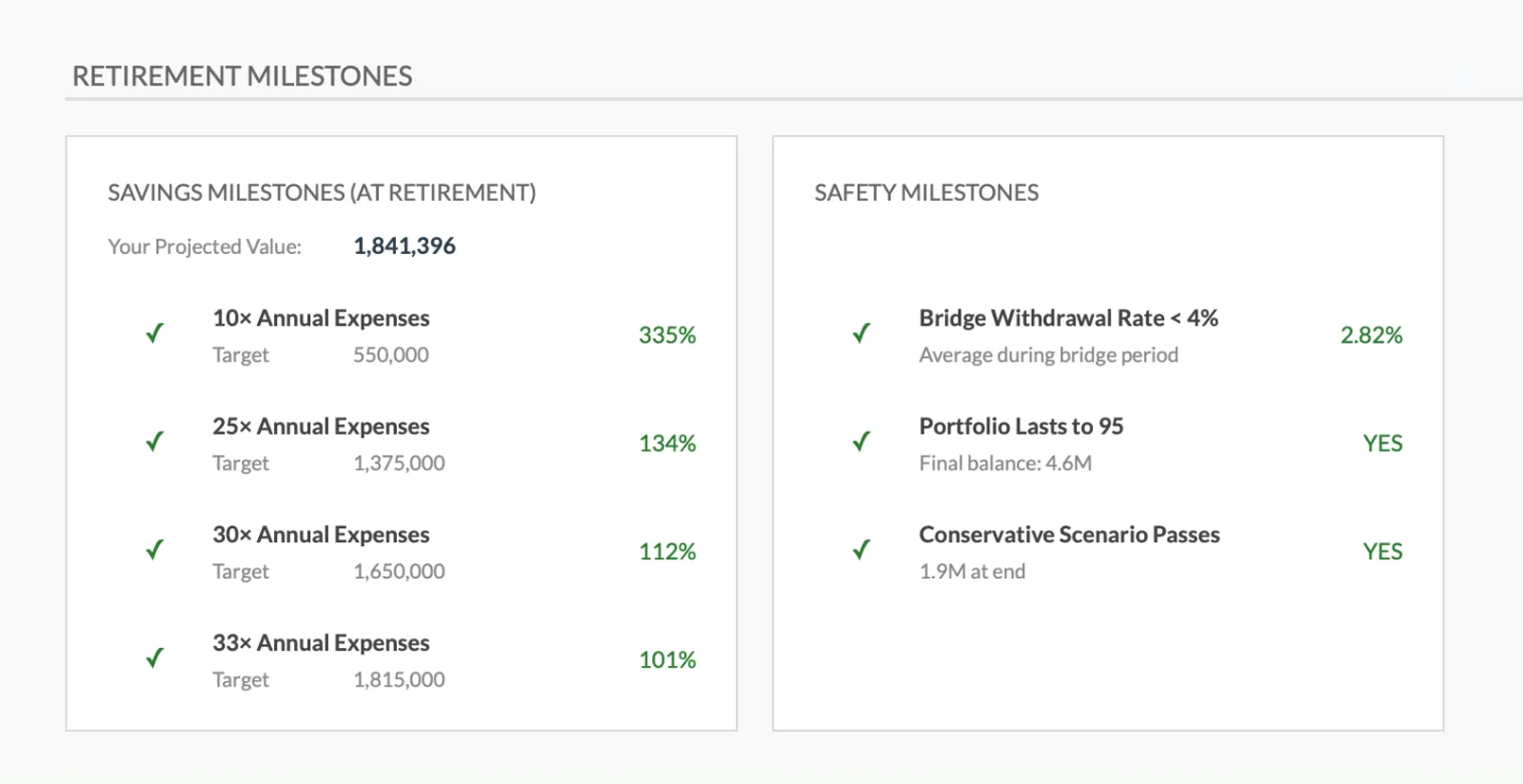
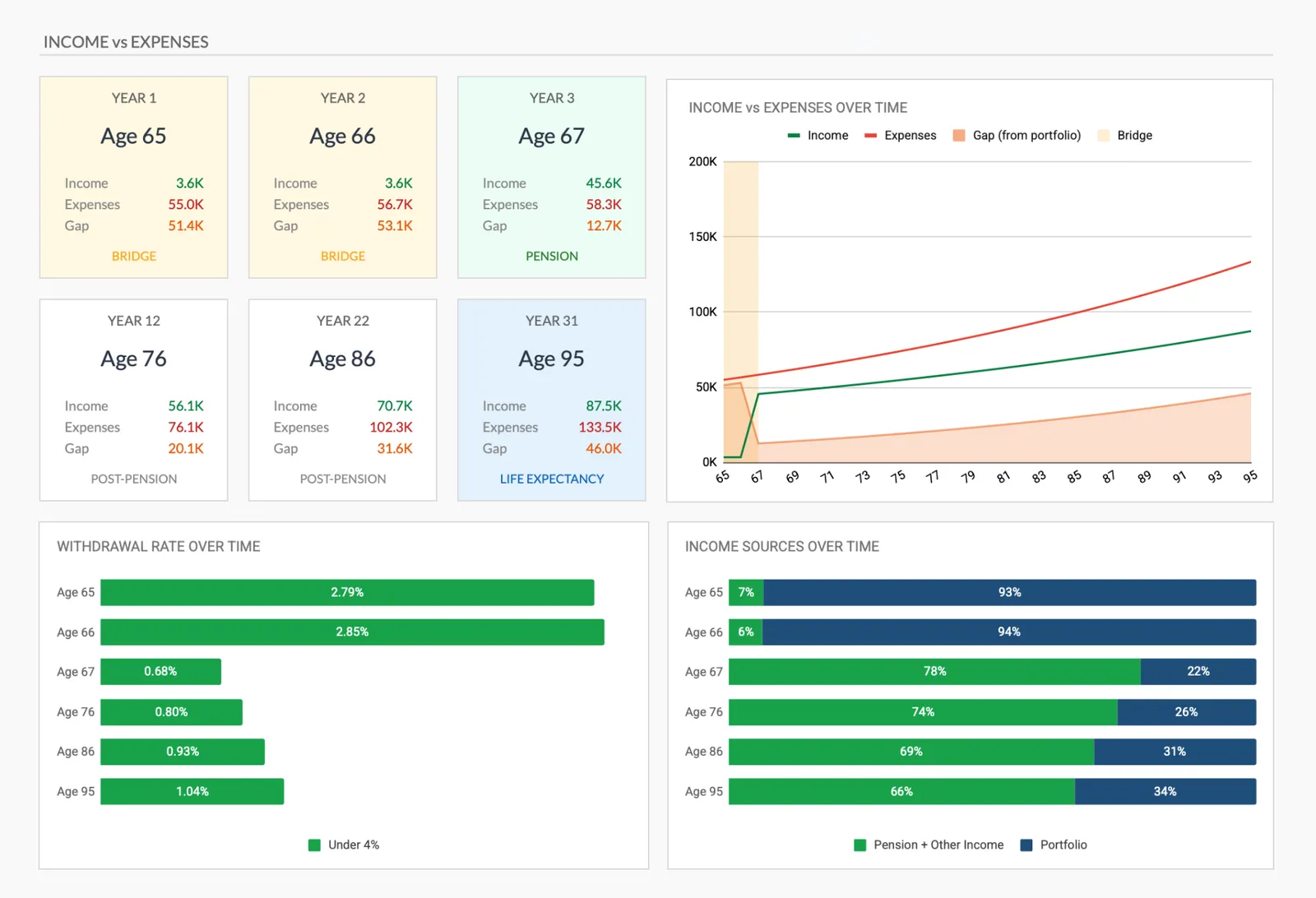
Complete retirement overview with projections
Project your retirement savings growth
Track progress toward retirement goals
Plan your retirement income against expenses
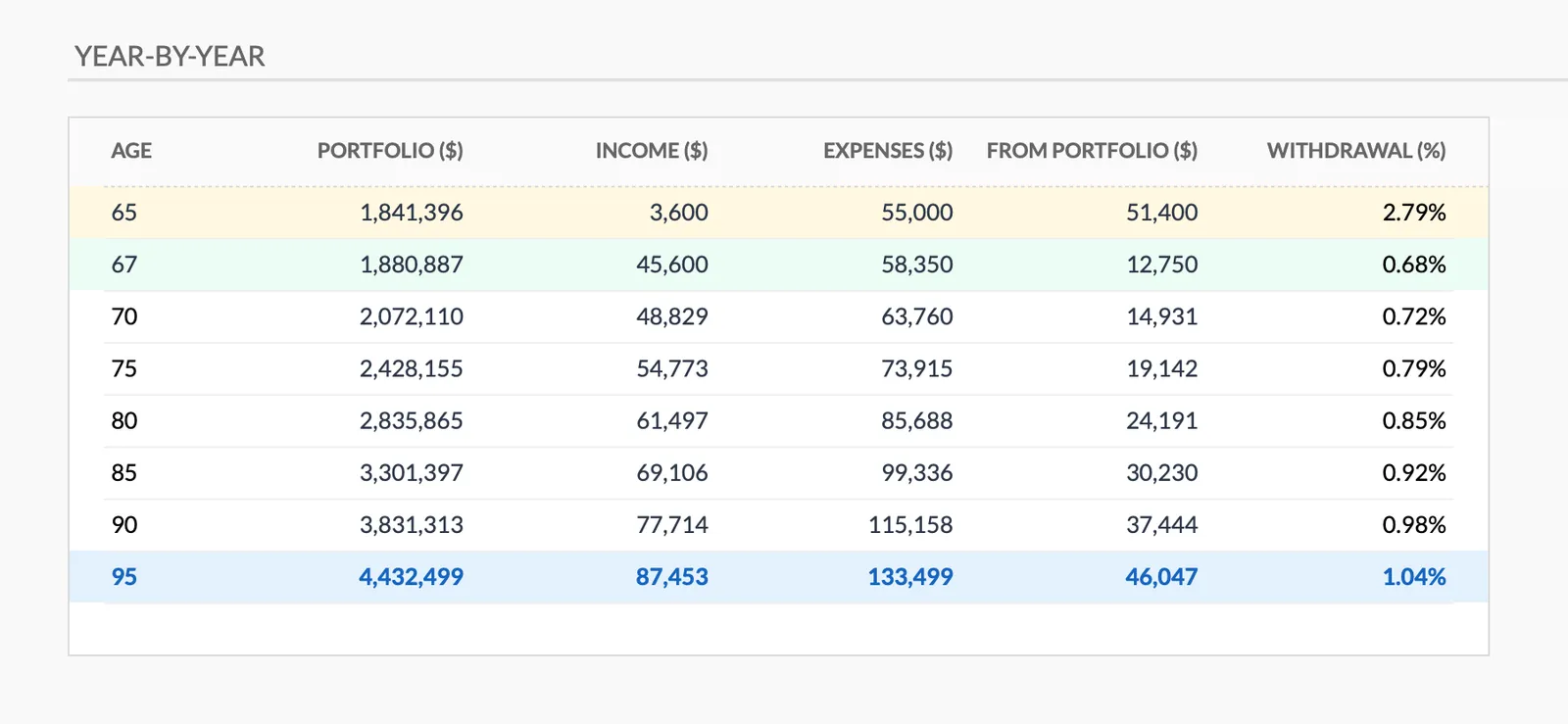
Detailed year-by-year retirement projection
Häufige Fragen
Retirement Planning Template for New Zealand - FAQ
When can I access my KiwiSaver?
KiwiSaver funds become available at age 65. Earlier access is possible for first home purchase (after 3 years of membership), significant financial hardship, serious illness, or permanent emigration. You cannot access KiwiSaver simply for early retirement before 65.
How much KiwiSaver do I need to retire?
It depends on your lifestyle and NZ Super. If NZ Super covers $27,000/year and you want $50,000/year total, your KiwiSaver and other investments need to provide $23,000/year. Using a 4% withdrawal rate, that's roughly $575,000 in savings. Your specific number depends on your spending expectations.
Should I switch to a growth KiwiSaver fund?
If you're more than 10 years from 65, a growth or aggressive fund has historically provided higher returns over long periods, though with more short-term volatility. As you approach 65, switching to a more conservative fund reduces the risk of a market downturn right before you need the money. This is a common approach but depends on individual risk tolerance.
Will NZ Super still exist when I retire?
NZ Super is currently funded from general taxation and has broad political support. While future changes are possible (raising the age or adding means testing have been discussed), it has remained universal since inception. Most financial plans include it as a baseline, which is reasonable given its long history.
Can I retire before 65 in New Zealand?
Yes, but you'll need non-KiwiSaver savings to cover the gap. Since KiwiSaver is locked until 65 and NZ Super starts at 65, early retirees need sufficient investments outside these systems. The template helps calculate how much bridge funding you need.
Can't find the answer you're looking for? Contact our team
Mehr entdecken
Free Tools for New Zealand
Bereit loszulegen?
Laden Sie sofort herunter und beginnen Sie mit der Verwaltung Ihrer Finanzen, oder kontaktieren Sie uns für ein individuelles Vorlagenpaket.