South Dakota
Tax Planner Template for South Dakota
Track your federal tax planning for South Dakota in Google Sheets. With no state income tax [1], federal planning is where the focus belongs.
In Depth
South Dakota - No Income Tax, No Corporate Tax
South Dakota has no individual income tax and no corporate income tax, making it one of the most tax-light states in the country for both individuals and businesses. The state funds government primarily through sales tax, along with tourism-related revenues and other fees. For residents, this means no state tax on wages, investments, retirement income, or any other form of personal income.
South Dakota has also become known for its trust-friendly laws, which attract trust assets from around the country. While this is more relevant to estate and wealth planning than annual income tax, it is part of the broader context of why some high-net-worth individuals establish a South Dakota presence. The lack of income tax means trust income accumulated in South Dakota-based trusts avoids state-level taxation.
Property taxes in South Dakota exist but are moderate by national standards. With no income tax to deduct on a federal return, property tax is the only component that South Dakota residents can use toward the SALT deduction. Sales tax rates vary by municipality - Sioux Falls and Rapid City have slightly different combined rates due to local additions. For federal tax planning, South Dakota residents focus entirely on the federal side, which simplifies the annual planning process.
South Dakota
Tax Planning in South Dakota
South Dakota is one of nine states with no state income tax. The state relies on sales tax and other revenue sources. Federal tax planning is the primary consideration for residents.
No State Income Tax
South Dakota does not levy a state income tax on earned income. This means residents only need to plan for federal income taxes on wages and salary. However, other taxes still apply.
Federal Tax Still Applies
Even without a state income tax, South Dakota residents owe federal income tax. The Annual Tax Planner helps track federal brackets, deductions, and credits to keep your tax picture clear.
Sales Tax Revenue
South Dakota relies on sales tax as a primary revenue source. The state has no corporate income tax either. While sales tax does not affect income tax planning, it is part of the overall financial picture.
Retirement Income Considerations
The lack of state income tax in South Dakota can be favorable for retirement income, including Social Security, pensions, and 401(k) distributions. Federal tax on retirement income still applies and is worth tracking.
获取年度税务规划表
入门指南
Your South Dakota Tax Planning Setup
Enter income with South Dakota's clean tax slate
Add all income sources - wages, farm and ranch income, investments, and retirement distributions. South Dakota has no personal income tax, no corporate income tax, and no personal property tax. The template channels everything directly into your federal tax calculation, which is your only income tax obligation.
Track deductions in a low-SALT-deduction state
With no state income tax to deduct, the SALT deduction for South Dakota residents comes from real property taxes and optionally sales tax. Property tax rates vary between Minnehaha County (Sioux Falls) and Pennington County (Rapid City). Enter your property tax, and consider whether tracking sales tax - which South Dakota charges on most goods including groceries - adds enough to make itemizing worthwhile.
Manage estimated payments for agricultural and variable income
South Dakota's economy includes significant agricultural income, which can vary widely by year. Farmers and ranchers who do not have federal taxes withheld from their income can use the quarterly tracker to stay ahead of IRS deadlines. The IRS offers a special January 15 estimated payment exception for farmers, which is worth knowing when setting up the payment schedule.
Review your purely federal tax projection
The dashboard shows your complete tax picture - which for South Dakota residents is entirely federal. With no state return to file and no state estimated payments, what the template shows is the full obligation. Review it periodically, especially if income fluctuates with crop prices, tourism seasons, or other South Dakota economic cycles.
查看实际效果
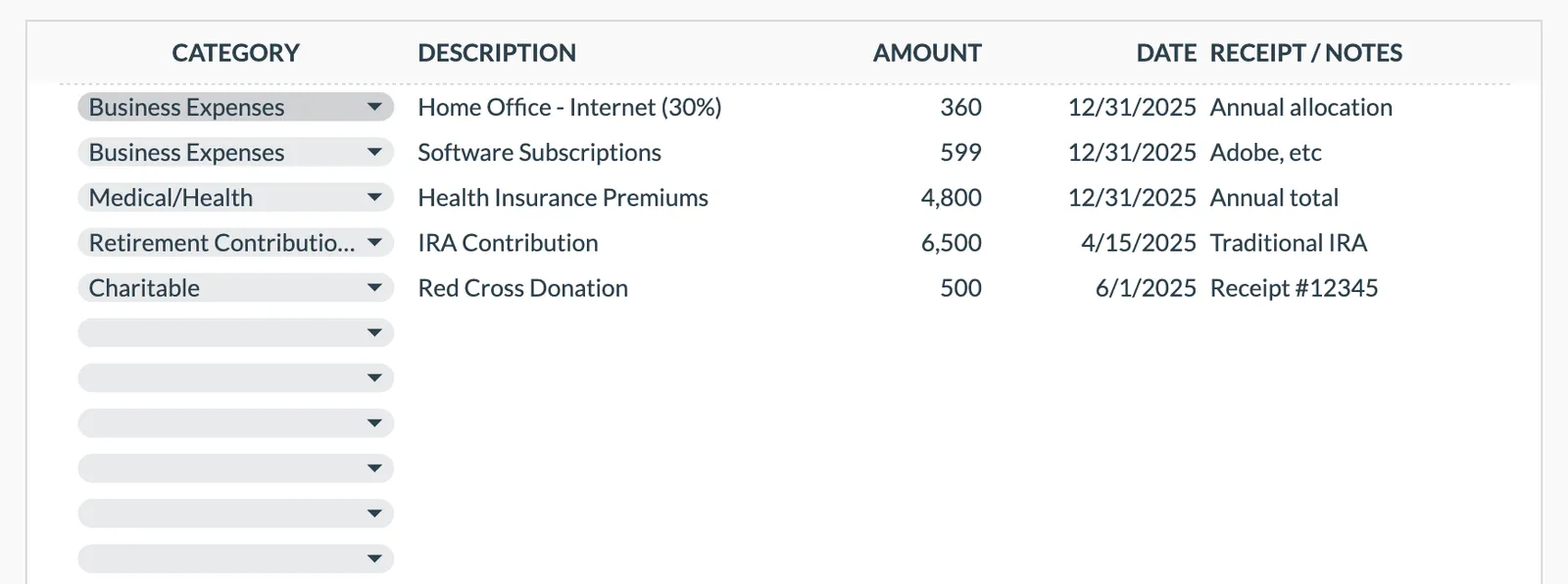
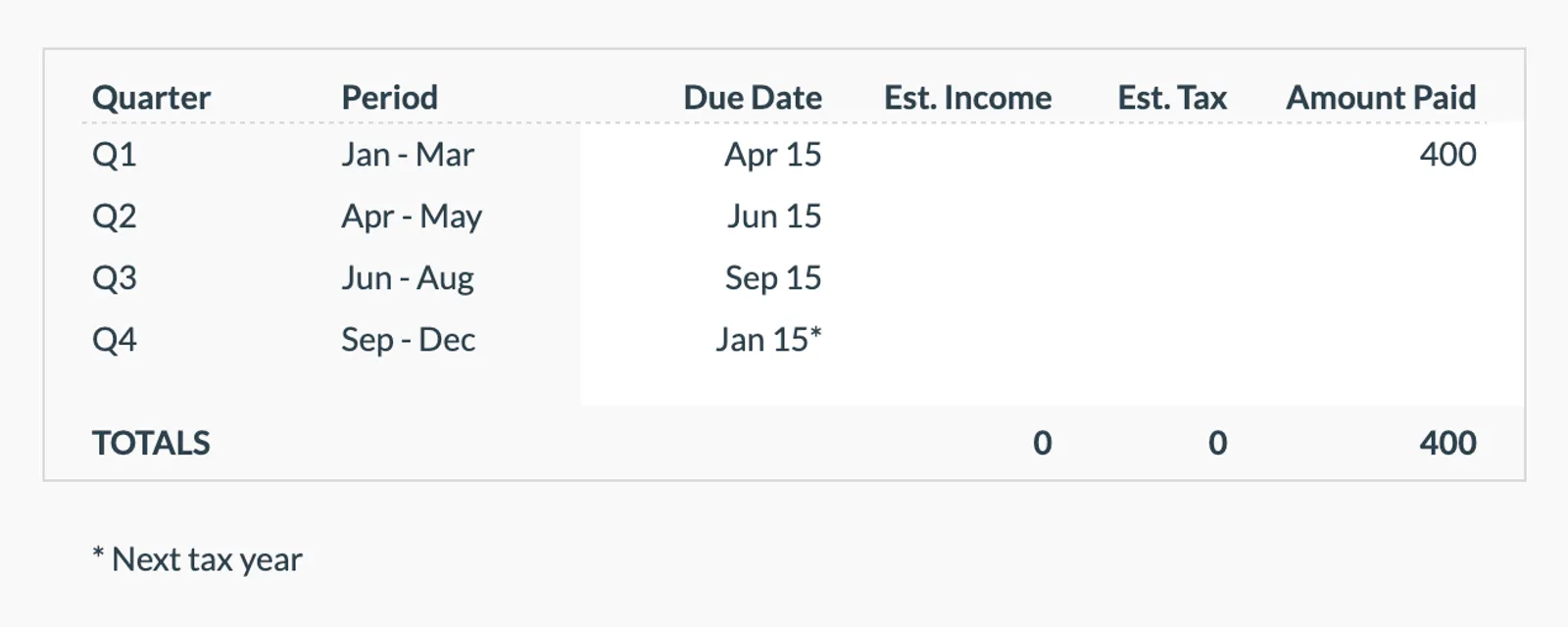
税务规划器的界面预览
浏览模板,了解它如何跟踪收入、扣除项、抵免额以及预估季度税款。
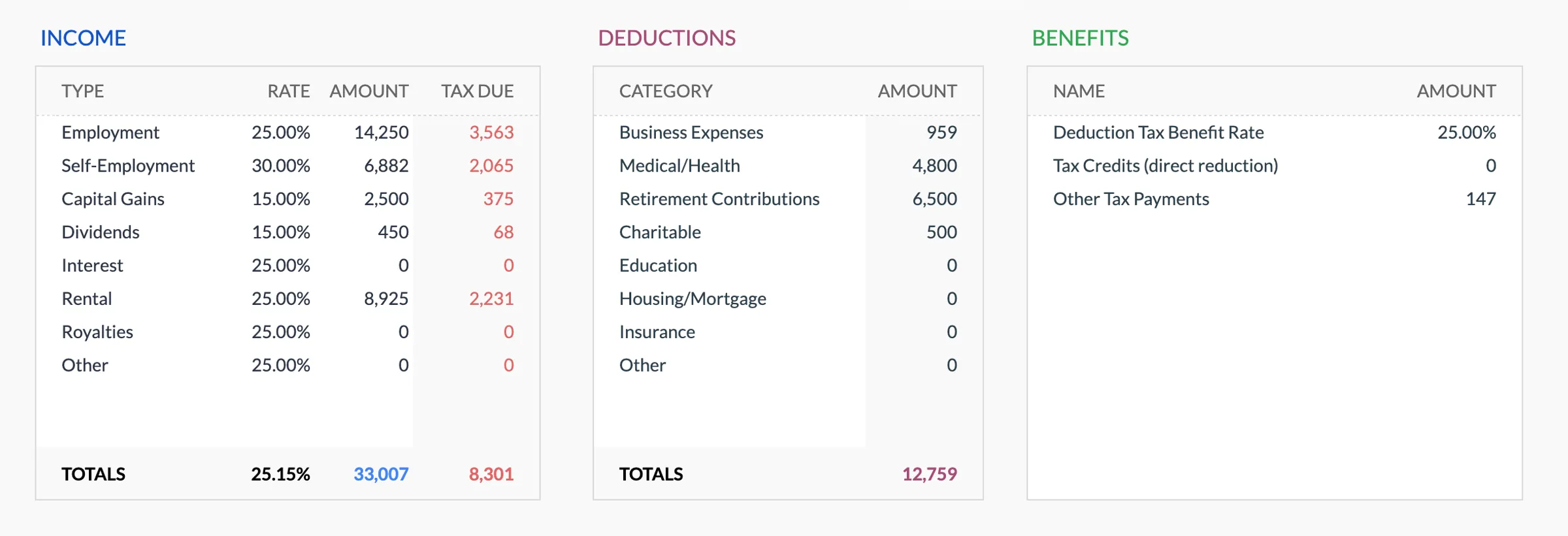
- 年度税务概览仪表板
- 按来源跟踪收入
- 扣除项与抵免额整理工具
- 季度税款追踪器
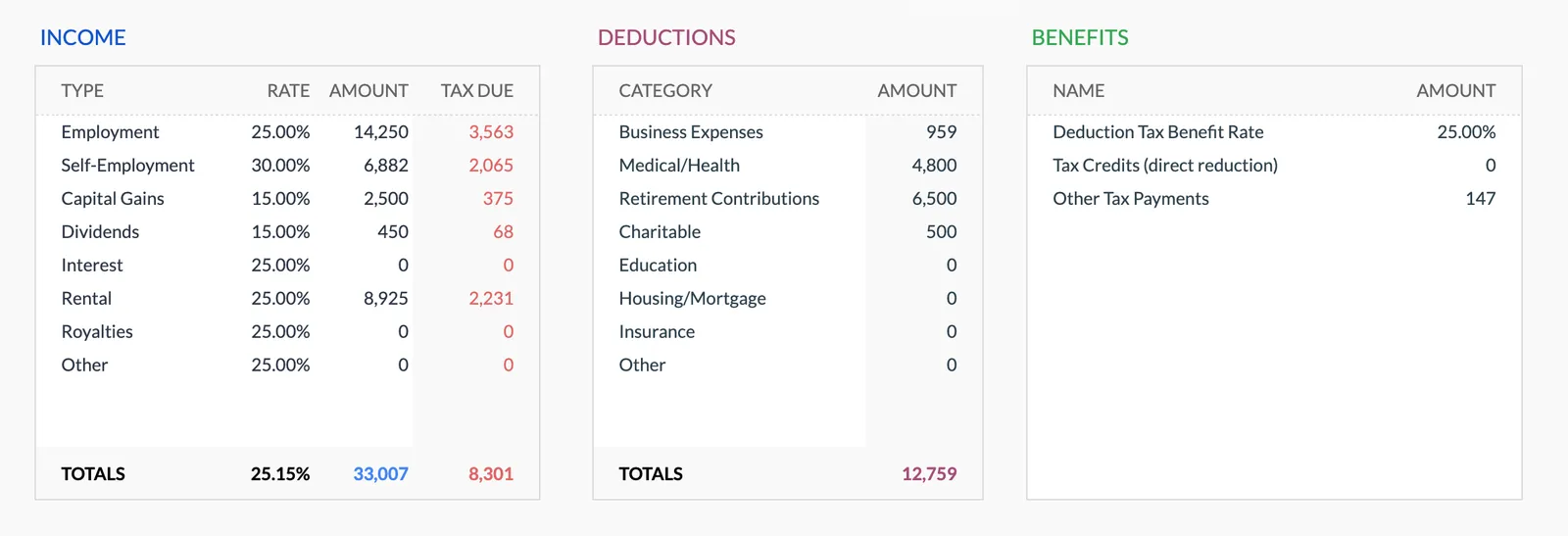
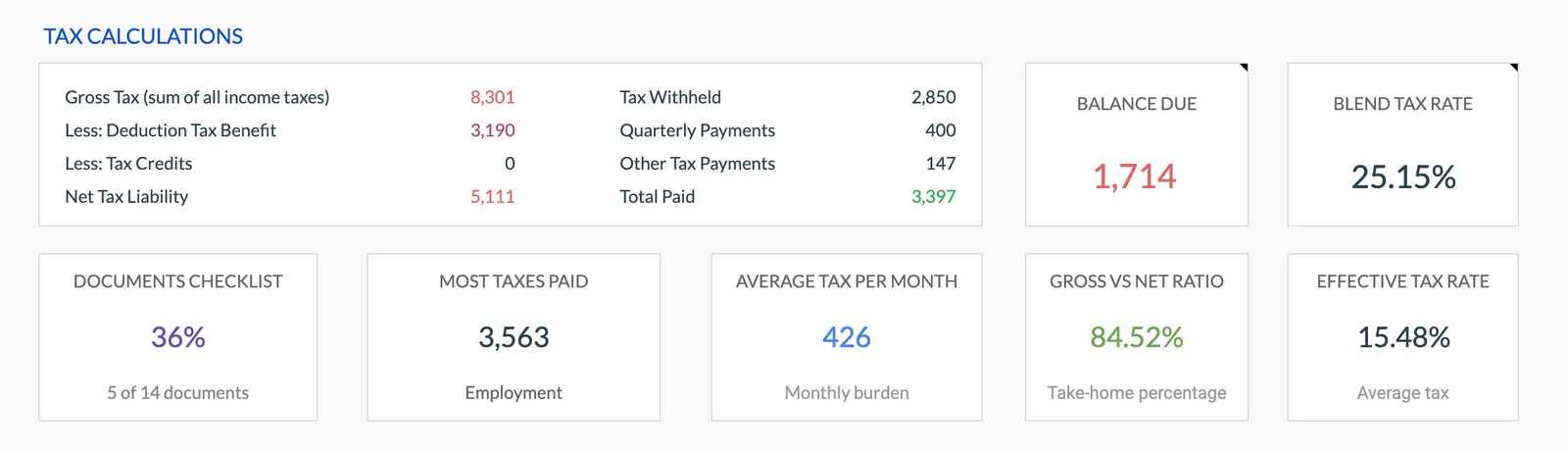
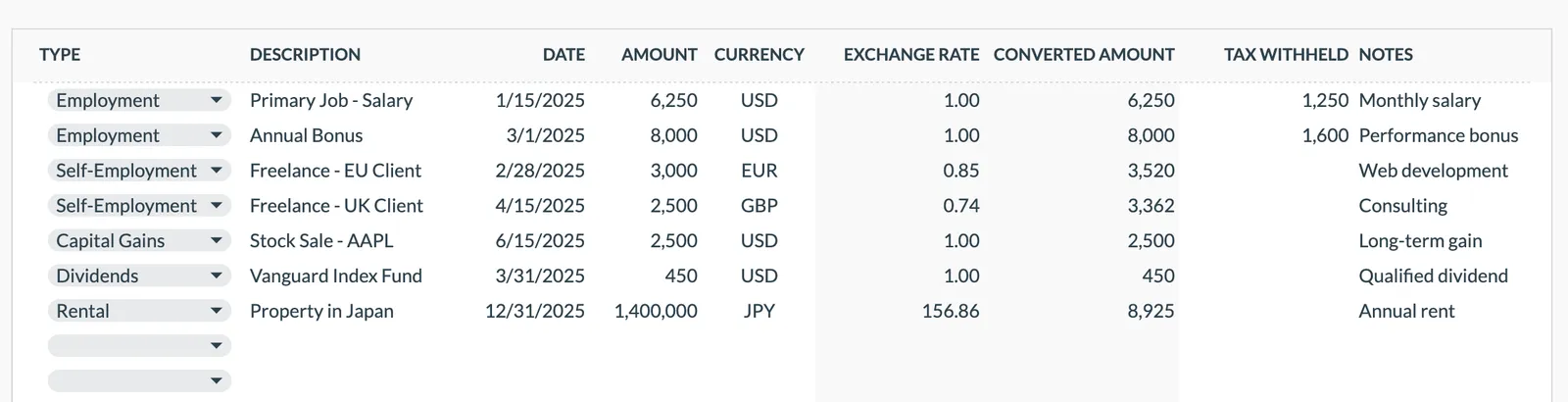
Annual tax overview with key figures
Detailed tax breakdown and projections
Track all income sources for tax purposes
Organize and track tax deductions
Plan and track quarterly estimated tax payments
常见问题
Tax Planning in South Dakota - FAQ
What taxes does South Dakota not have?
South Dakota has no personal income tax, no corporate income tax, no personal property tax, and no inheritance tax. This is one of the lightest state tax profiles in the nation [2]. The state funds government primarily through sales tax, tourism-related revenues, and other fees. For residents, only federal income tax applies to wages, investments, and retirement income.
How does South Dakota's trust-friendly status relate to tax planning?
South Dakota has become known for favorable trust laws that attract trust assets from around the country. Trust income accumulated in South Dakota-based trusts avoids state-level taxation. While this is more relevant to estate and wealth planning than annual income tax, it is part of the broader context. For personal federal tax planning, the template helps track income, deductions, and estimated payments regardless of any trust arrangements.
Is there a personal property tax in South Dakota?
South Dakota does not levy a personal property tax on items like vehicles or equipment. Real property (land and buildings) is subject to property tax, with rates varying by county. Sioux Falls and Rapid City have somewhat different effective rates. The property tax on real estate is deductible on your federal return up to the SALT cap - and since there is no income tax, this is typically the only SALT item available.
Does South Dakota's sales tax affect my federal return?
South Dakota has a state sales tax that applies broadly, including to groceries. Since there is no state income tax to deduct, South Dakota residents who itemize can choose to deduct sales tax on their federal return instead. The IRS provides standard tables based on income and household size, or you can track actual sales tax paid throughout the year.
Why use a tax planner in a state with so few taxes?
Federal income tax is still the primary financial obligation. It involves multiple brackets, deduction choices, credit eligibility, and quarterly estimated payment deadlines. For South Dakota's agricultural community, ranchers, and small business owners with variable income, tracking federal obligations throughout the year can help avoid surprises. The template organizes all of this in one place.
Can't find the answer you're looking for? Contact our team
官方税务资源
有关当前税率、表格及申报截止日期,具体适用于 South Dakota:
Sources
Organize your tax planning for South Dakota
一次性购买。无需订阅。您的财务数据保存在您的 Google Drive 中。